
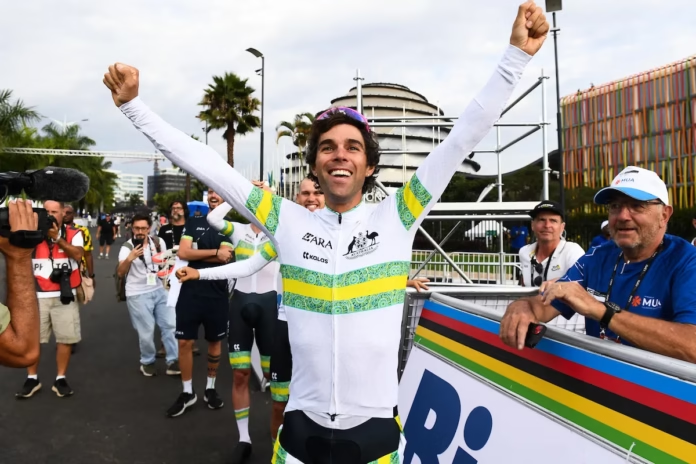
Australia has one of the strongest national groups at the 2026 Tour de France, with 11 riders spread across six teams. It is a bigger and deeper presence than either the British or American contingents, and it gives Australian fans several different storylines to follow across the three weeks.
Team Jayco AlUla carry the obvious Australian centre of gravity, with Ben O’Connor, Michael Matthews, Luke Durbridge, Luke Plapp and Kelland O’Brien all on the start list. That alone gives the home team a major national identity at the race. But Australia’s influence goes wider than Jayco.
Jai Hindley starts for Red Bull-Bora-hansgrohe in a key mountain support role. Michael Storer gives Tudor Pro Cycling Team a climbing stage-hunter. Chris Harper and Damien Howson add Australian depth to Pinarello-Q36.5 Pro Cycling Team around Tom Pidcock. Robert Stannard gives Bahrain Victorious another hard-working option. Sebastian Berwick makes his Tour debut with Caja Rural-Seguros RGA.
The result is not one simple Australian story. It is a broad national block built around stage hunting, mountain support, team time-trial power, experienced road captains and developing climbers. For the wider race picture, see our Tour de France 2026 full route guide and the full start list for the Tour de France 2026.
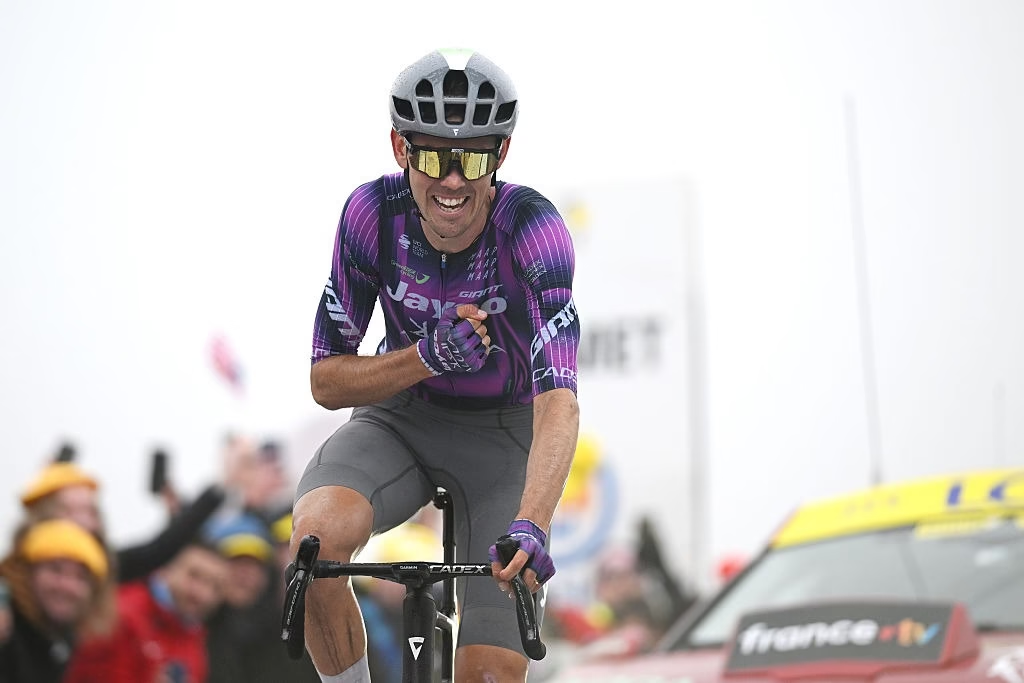 Photo Credit: Getty
Quick answer: which Australian riders are at the 2026 Tour de France?
The Australian riders at the 2026 Tour de France are Ben O’Connor, Michael Matthews, Jai Hindley, Michael Storer, Luke Plapp, Luke Durbridge, Kelland O’Brien, Chris Harper, Damien Howson, Robert Stannard and Sebastian Berwick.
| Rider | Team | Likely role |
|---|---|---|
| Ben O’Connor | Team Jayco AlUla | Stage hunter, mountain leader, possible GC outsider |
| Michael Matthews | Team Jayco AlUla | Puncheur, reduced-sprint option, stage hunter |
| Luke Plapp | Team Jayco AlUla | Time-trial strength, climbing stage hunter, all-round engine |
| Luke Durbridge | Team Jayco AlUla | Road captain, team time-trial engine, experienced worker |
| Kelland O’Brien | Team Jayco AlUla | Tour debutant, team time-trial power, support rider |
| Jai Hindley | Red Bull-Bora-hansgrohe | Mountain support, GC insurance, Grand Tour winner |
| Robert Stannard | Bahrain Victorious | Support rider, breakaway worker, rolling-stage option |
| Michael Storer | Tudor Pro Cycling Team | Climbing stage hunter, mountain breakaway rider |
| Chris Harper | Pinarello-Q36.5 Pro Cycling Team | Climbing support, mountain-stage option |
| Damien Howson | Pinarello-Q36.5 Pro Cycling Team | Experienced support rider, climbing domestique |
| Sebastian Berwick | Caja Rural-Seguros RGA | Tour debutant, climber, breakaway prospect |
The Australian riders at the 2026 Tour de France
Ben O’Connor
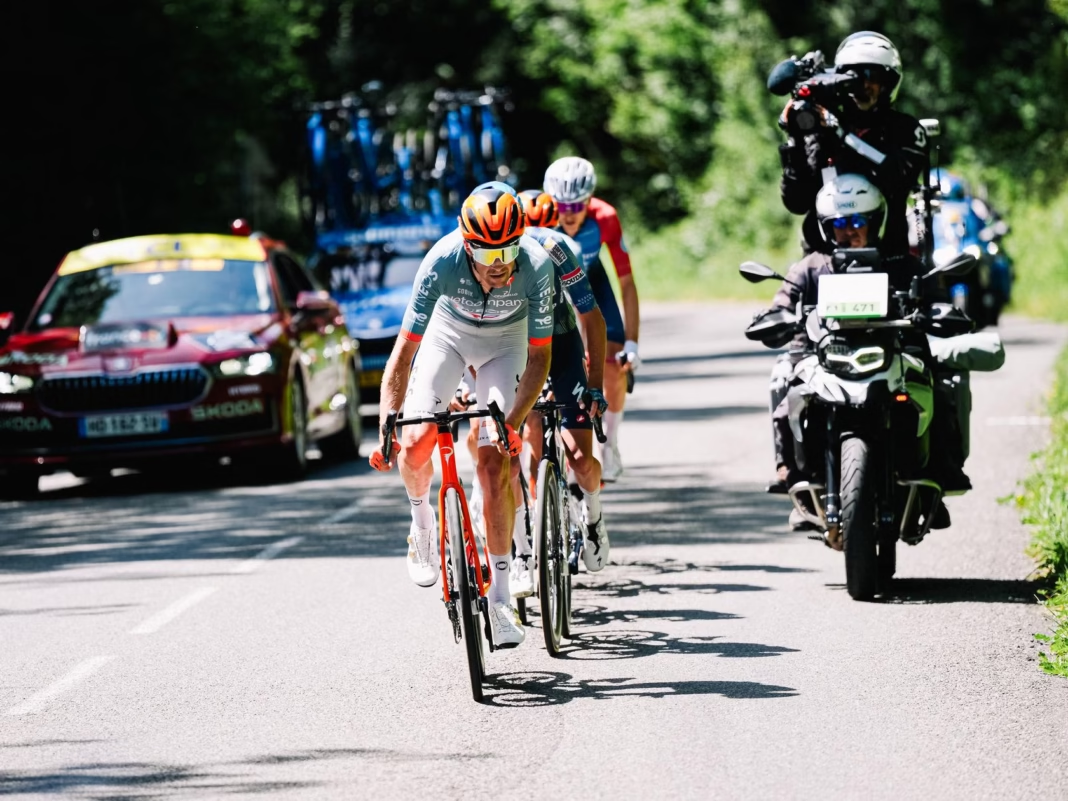
Ben O’Connor is the most obvious Australian name to follow if the question is stage-winning potential in the mountains. He has already won twice at the Tour de France, first at Tignes in 2021 and then on the Col de la Loze in 2025. That makes him one of the few riders in this Australian group with proven Tour-winning range on the hardest terrain.
His 2026 role looks different from a pure general classification campaign. Jayco AlUla are built more around stage opportunities than one all-in yellow jersey project, and that should suit O’Connor. He can conserve energy on days that do not suit him, then use his climbing strength when the race opens.
That does not mean the general classification is irrelevant. O’Connor is good enough to sit high overall if the race falls kindly. But the most realistic Australian headline is a mountain stage, not a podium challenge. His wider race position fits into the picture covered in our Tour de France 2026 contenders preview.
For Australian fans, he is the rider most likely to turn one hard day into a major national moment.
Michael Matthews
Michael Matthews gives Jayco AlUla its most proven Tour de France stage finisher. He is not a pure bunch sprinter in the traditional sense, but that has long been part of his strength. Matthews is at his best when the day has become too difficult for the fastest sprinters, but not hard enough for the pure climbers to take over.
That makes him particularly relevant on rolling stages, uphill drags, reduced bunch finishes and days where the peloton is tired after repeated climbs. He has already won four Tour stages and the points classification in 2017, so his pedigree is not in question.
The interesting part is his condition and opportunity. Matthews has had difficult periods with injury and interruption, but if he reaches the Tour with enough sharpness, he gives Jayco one of its clearest victory routes. He fits naturally into the broader group of Tour de France 2026 stage hunters to watch.
A fifth Tour stage win would be a major achievement, but it is not unrealistic. He remains one of Australia’s best chances on days that sit between sprint and breakaway chaos.
Luke Plapp
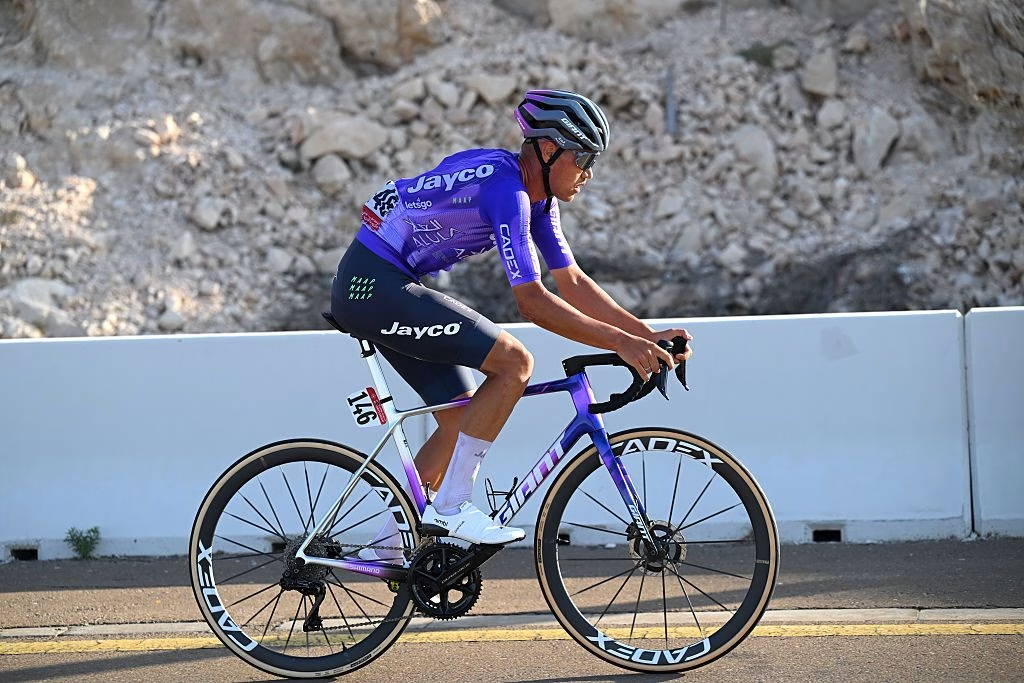
Luke Plapp is one of the more flexible Australian riders at the 2026 Tour. He brings time-trial strength, climbing ability and a willingness to race aggressively, which makes him useful in several different ways for Jayco AlUla.
The opening team time-trial in Barcelona gives him an immediate role. Plapp has the engine to help Jayco start strongly, especially alongside riders such as Durbridge and O’Brien. Later in the race, his value shifts. He can support O’Connor, join breakaways, work on rolling terrain and target selective stages if the team gives him room.
His Giro d’Italia stage victory showed that he can finish off a Grand Tour opportunity when the breakaway suits him. The Tour is a harder stage on which to repeat that, but Plapp has the profile to be dangerous.
He may not be Australia’s most famous rider in this race, but he could be one of the most tactically useful. The opening format is covered in our Tour de France 2026 team time-trial explained guide.
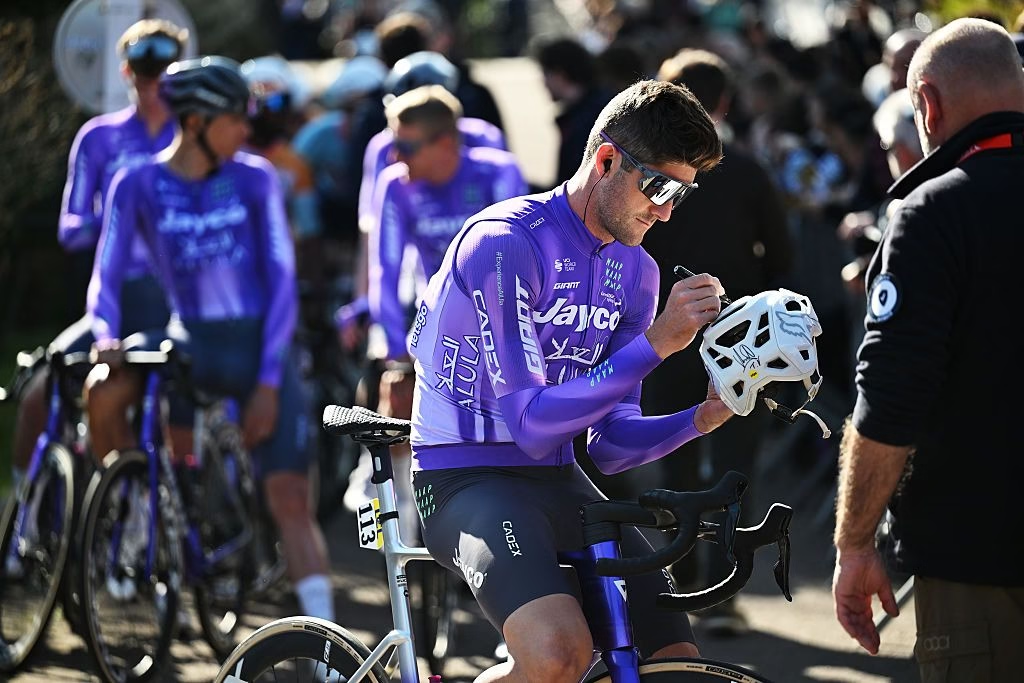 Photo Credit: Getty
Luke Durbridge
Luke Durbridge starts the 2026 Tour as one of the most experienced Australians in the peloton. His role is not glamorous, but it is essential. He is a road captain, an organiser, a powerful rouleur and a rider who helps a team function under pressure.
That matters particularly at a Tour that begins with a team time-trial. Jayco will want to start well in Barcelona, and Durbridge’s power and experience should be central to that. Across the rest of the race, he will be used to control breakaways, position teammates, guide younger riders and contribute to the team’s stage-hunting structure.
For casual viewers, Durbridge may not be the rider shown attacking in the final kilometres. But teams need riders like him to make those final kilometres possible. He is part of Jayco’s engine room, and that engine room is especially important when a team has several different cards to play.
The wider value of that type of work is explained in our guide to how Tour de France teams work. If this is his final Tour, it also gives his race a strong emotional edge.
Kelland O’Brien
Kelland O’Brien brings track pedigree and raw power to Jayco’s Tour squad. As an Olympic team pursuit gold medallist, he understands high-pressure team efforts, and that makes him particularly valuable for the Barcelona team time-trial.
This is his Tour de France debut, so the wider challenge is different. A Tour is not only about one day of power. It is about surviving repeated stress: positioning, transfers, heat, climbs, crashes, recovery and the mental grind of racing every day for three weeks.
O’Brien’s first job should be clear. He gives Jayco strength on the flat, in the team time-trial and in the long working phases of stages where the squad wants to protect O’Connor, Matthews or Plapp. He may not have personal freedom often, but he should be visible when Jayco need to organise the race.
For Australia, he is also part of the broader crossover story between track endurance success and WorldTour road racing.
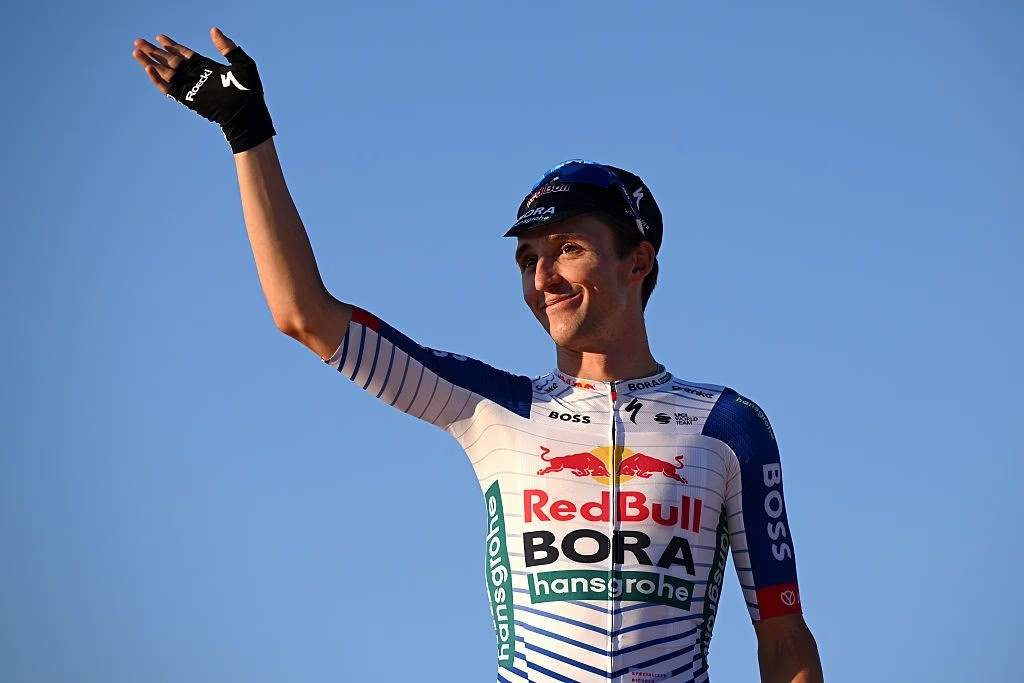
Jai Hindley
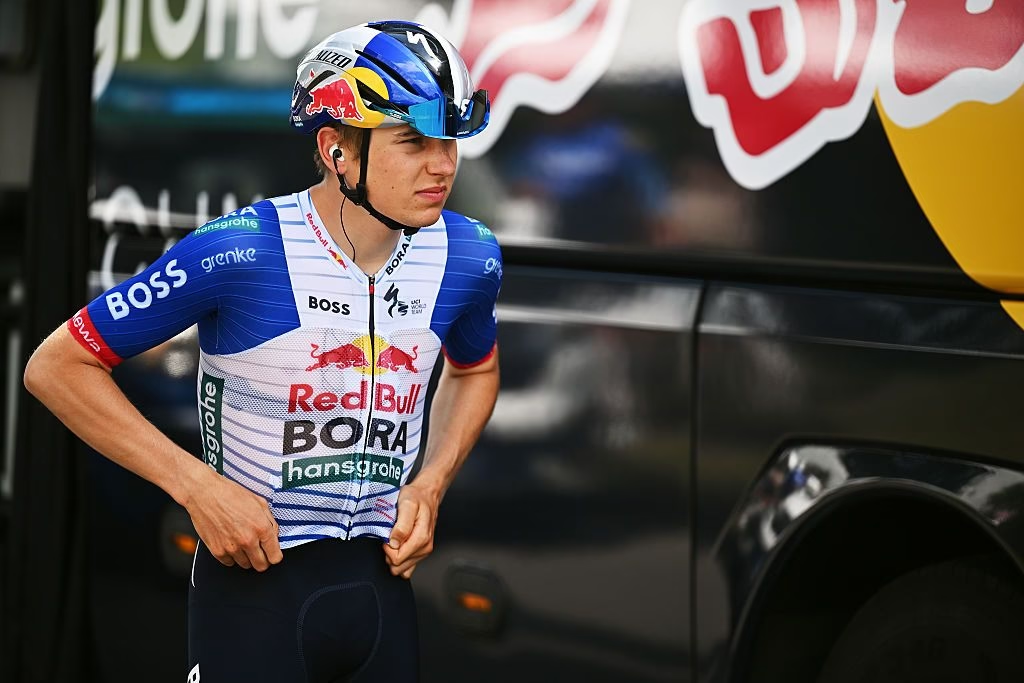
Jai Hindley is one of the most accomplished Australian Grand Tour riders in the 2026 Tour. He won the Giro d’Italia in 2022, has worn the yellow jersey at the Tour and has already taken a Tour stage win. On talent alone, he is one of the biggest names in this national group.
Yet his 2026 role is likely to be shaped by team priorities. Red Bull-Bora-hansgrohe arrive with Remco Evenepoel and Florian Lipowitz as major general classification figures, so Hindley may be used as a climbing lieutenant rather than an outright leader.
That does not reduce his importance. It may actually make him more central to how the race is controlled. Hindley can ride deep into the mountains, protect leaders, bridge moves and act as GC insurance if the team’s plan changes. He is exactly the kind of rider covered in our guide to Tour de France 2026 domestiques who could decide the race.
A personal stage win is possible, but it would probably require tactical freedom or a shift in team circumstances. His most likely Tour impact is helping Red Bull-Bora-hansgrohe stay in the fight when the race reaches its hardest days.
Robert Stannard
Robert Stannard gives Bahrain Victorious a durable Australian option for support work and aggressive racing. He is not one of the obvious headline names in the Australian group, but that does not make his role unimportant.
Bahrain have several ambitions at the Tour, including stage victories and work around climbers such as Lenny Martinez and Antonio Tiberi. Stannard’s value is in helping that structure function. He can work through rolling terrain, support breakaway plans and contribute on days where Bahrain need numbers around their leaders.
His own chance may come if the race breaks open on a rolling stage. Stannard has the profile of a rider who can survive hard days and commit fully to a move, but opportunities at the Tour are always scarce. He is also listed among the darker breakaway names in our Tour de France 2026 breakaway specialists to watch guide.
For Australia, he adds depth. Not every national rider has to carry a headline role. Some shape the race through repeated hard work.
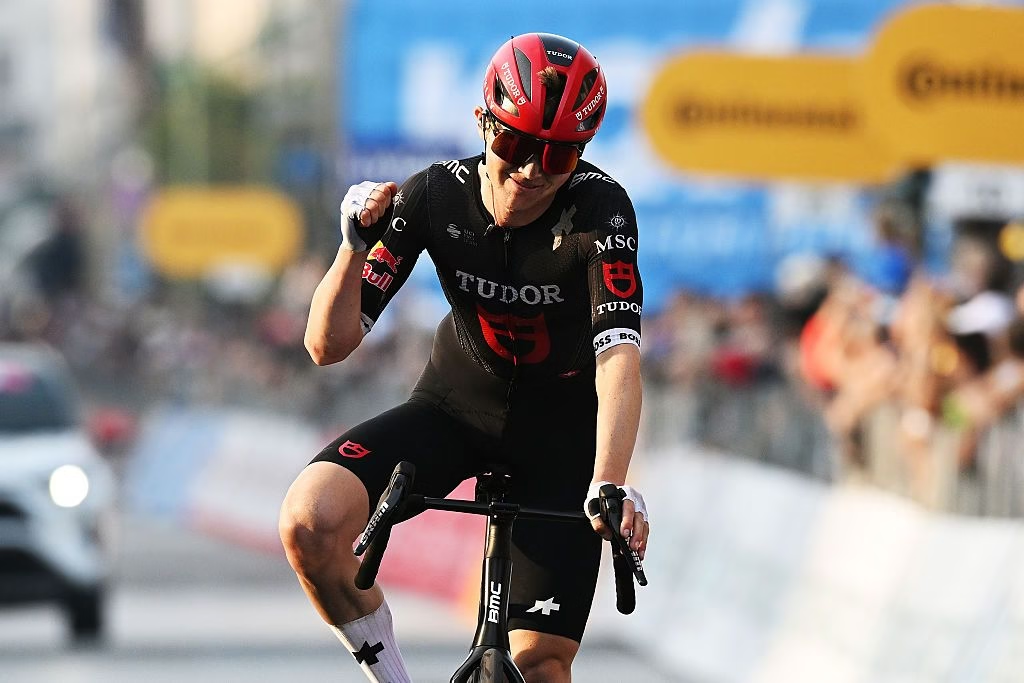 Photo Credit: Getty
Michael Storer
Michael Storer is one of Australia’s most interesting stage-win options because his best days come in the mountains and from the breakaway. He is not a pure GC leader at this Tour, but that may help him. Tudor Pro Cycling Team are likely to chase stages, and Storer’s climbing profile fits that brief clearly.
He has already shown in Grand Tours that he can win from hard mountain breakaways. He is at his best when the race becomes attritional, the favourites hesitate, and a strong climbing group gets enough time to contest the stage.
That gives him a clear route to success. He needs the right day, enough freedom, and a breakaway that contains good climbers but not so many that the group becomes impossible to manage. It is a narrow path, but it is the kind Storer knows how to ride.
Among the Australians at the 2026 Tour, he is one of the riders most worth watching on medium and high mountain breakaway days. The likely terrain for that kind of attack is covered in our guide to the Tour de France 2026 route and the best days for breakaways.
Chris Harper
Chris Harper starts for Pinarello-Q36.5 Pro Cycling Team, where the main attention will fall on Tom Pidcock. That gives Harper a role that may shift between support and opportunity.
As a climber, Harper is valuable to any team trying to make an impact in the harder stages. He can help Pidcock, work in breakaways and contribute when the race becomes selective. He also has enough Grand Tour experience to understand when to conserve and when to commit.
The question is how much freedom he receives. If Pinarello-Q36.5 prioritise Pidcock stage wins, Harper may spend much of the race working for that plan. But if the team goes aggressive across multiple fronts, Harper could find space in a mountain move.
His best route to a personal result is a climbing breakaway where the major GC teams are willing to let the move go. For more on the wider mountain hierarchy, see our best climbers at the Tour de France 2026 guide.
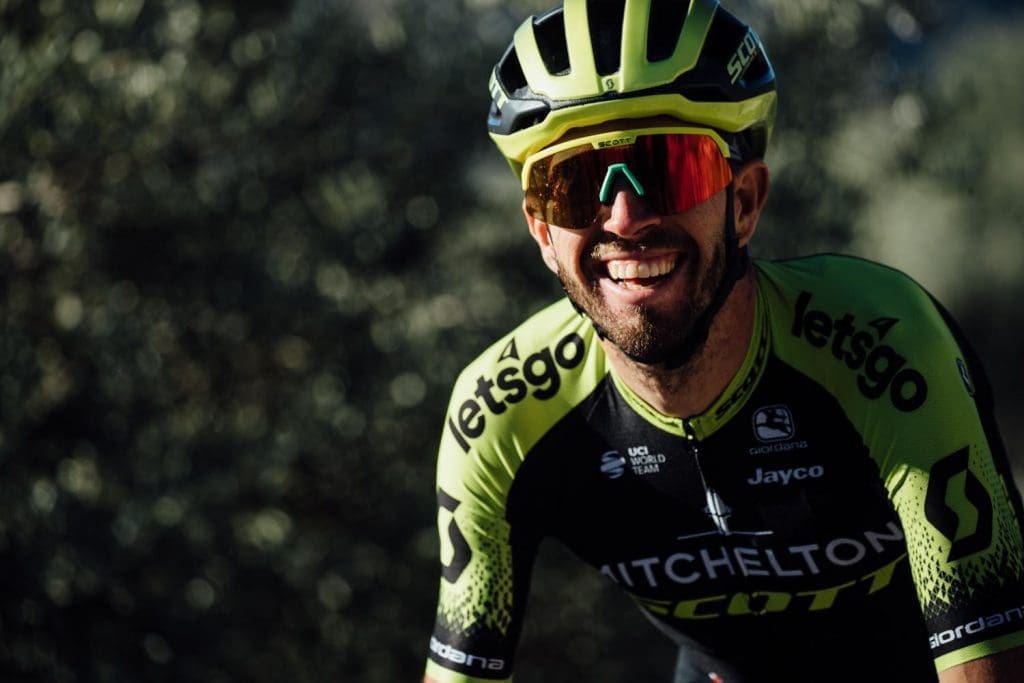
Damien Howson
Damien Howson adds experience and climbing support to Pinarello-Q36.5. He is not the headline rider in the squad, but he brings a long bank of Grand Tour knowledge and a calm support presence around a team making its Tour debut.
That experience matters. Newer Tour teams can have strong riders and still struggle with the rhythm of the race: the daily stress, the positioning battles, the road furniture, the transfers and the sheer size of the event. Howson is the sort of rider who helps smooth those edges.
His role should be primarily supportive. He can help Pidcock and Harper in the mountains, contribute to team organisation and use his experience when the race becomes difficult. A personal result is unlikely to be the main aim, but that does not make his Tour passive.
In a squad trying to establish itself at the world’s biggest race, reliable experience has real value. The broader squad context is covered in our Tour de France 2026 team-by-team guide.
Sebastian Berwick
Sebastian Berwick is the Australian debutant with the clearest climber’s profile. Riding for Caja Rural-Seguros RGA, he enters the Tour with less pressure than the bigger-name Australians but potentially more freedom.
That makes him an intriguing watch. Caja Rural’s race will almost certainly revolve around opportunism, breakaways and visibility. Berwick has the climbing ability to target mountain and hilly stages if he can get into the right move.
The challenge is scale. The Tour de France is a different level of stress from almost any other race. Breakaways are harder to make, the peloton is less forgiving, and every team arrives with a plan. Berwick’s job is to turn his opportunity into visibility without being overwhelmed by the rhythm of the race.
A stage win would be ambitious, but a strong breakaway ride, mountain top-10 or visible debut would already make his Tour meaningful. For newer fans, our explainer on what a breakaway is in the Tour de France gives useful context for the kind of move Berwick may target.
Who is the best Australian rider at the 2026 Tour de France?
Ben O’Connor is the strongest Australian rider if the question is Tour de France stage-winning pedigree and mountain-stage potential. He has already won twice at the race and has the climbing level to target major days again.
Jai Hindley has the strongest Grand Tour CV overall, thanks to his Giro d’Italia victory, but his 2026 Tour role may be more restricted by Red Bull-Bora-hansgrohe’s GC hierarchy.
Michael Matthews remains the most proven Australian finisher at the Tour, especially on reduced sprint and punchy stages. If the question is “who has the clearest route to a stage win?”, O’Connor and Matthews are the two safest answers.
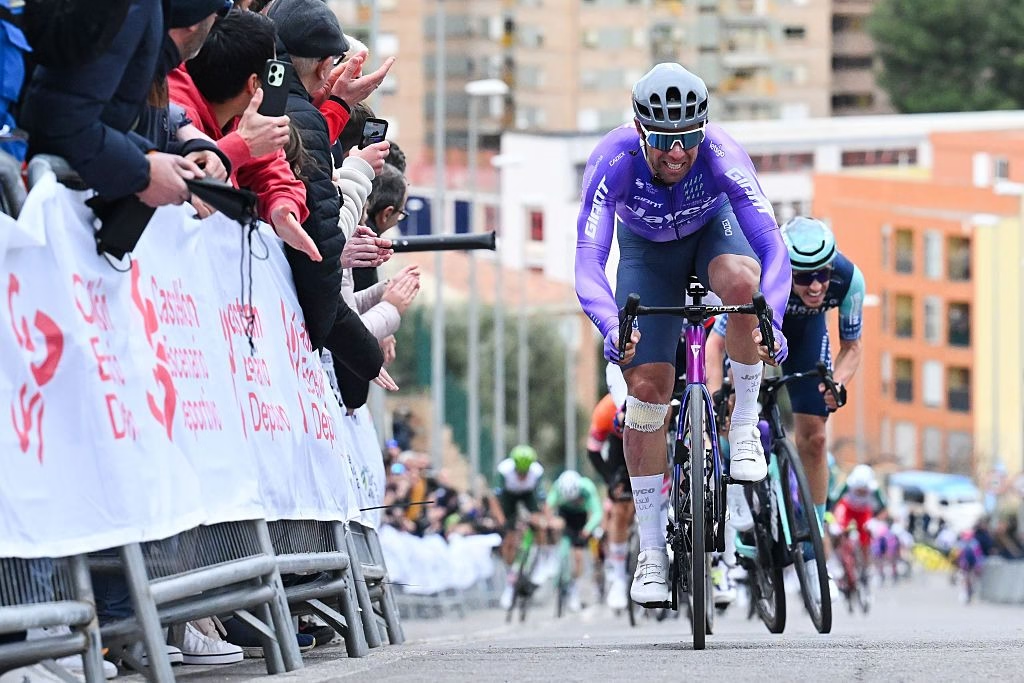 Photo Credit: Getty
Which Australian rider is most likely to win a stage?
Ben O’Connor and Michael Matthews are the two leading Australian stage-win candidates.
O’Connor’s best chance comes in the mountains, especially if Jayco AlUla ride stage by stage rather than protecting a long GC target. Matthews’ best chance comes on rolling or punchy stages where the pure sprinters struggle but the climbers cannot get away.
Michael Storer is another genuine option from a mountain breakaway. Luke Plapp also has a good route to a stage if he gets freedom on the right hilly or time-trial-influenced day. Jai Hindley can win if Red Bull-Bora-hansgrohe’s tactics open the door, though his primary job is likely to be support.
Australian riders to watch by stage type
| Stage type | Australian riders to watch | Why |
|---|---|---|
| Team time-trial | Luke Durbridge, Luke Plapp, Kelland O’Brien, Ben O’Connor | Jayco have a strong Australian engine room for Barcelona |
| Flat and rolling stages | Michael Matthews, Robert Stannard, Luke Durbridge | Matthews can target reduced finishes, while Stannard and Durbridge add work rate |
| Punchy stages | Michael Matthews, Luke Plapp, Chris Harper | Strong fit for riders who can survive climbs and finish hard |
| Mountain breakaways | Ben O’Connor, Michael Storer, Chris Harper, Sebastian Berwick | Australia has several climbers suited to selective escape groups |
| GC pressure days | Jai Hindley, Ben O’Connor, Luke Plapp | Hindley and O’Connor have the highest Grand Tour pedigree |
| Final week | O’Connor, Hindley, Storer, Harper, Berwick | Climbing depth and recovery become more important late in the Tour |
Why Australia has such a strong 2026 Tour group
Australia’s 2026 Tour presence is strong because it is not dependent on one rider. It has depth across several roles.
There are established winners in O’Connor, Matthews and Hindley. There are climbing stage hunters in Storer, Harper and Berwick. There are powerful team riders in Durbridge, Plapp and O’Brien. There are support and breakaway options such as Stannard and Howson.
That spread reflects the current strength of Australian men’s cycling. The country is no longer only associated with sprinters or lead-out riders. It now produces Grand Tour climbers, time-trial engines, punchy stage hunters and durable support riders across the WorldTour and ProTeam levels.
Jayco AlUla’s Australian core gives the story an obvious focal point, but the wider picture is just as important. Australian riders are trusted across major European teams, and several of them have clear jobs in the race’s biggest tactical structures.
Why there is no single Australian yellow jersey campaign
Australia has strong general classification talent at the 2026 Tour, but no rider arrives as an obvious yellow jersey favourite.
O’Connor has the pedigree to ride high overall, but Jayco’s best route may be stage hunting. Hindley has won a Grand Tour, but Red Bull-Bora-hansgrohe’s leadership structure points towards Evenepoel and Lipowitz. Storer, Harper and Berwick are more likely to be judged by stage opportunities than overall position.
That does not weaken Australia’s race. It makes it more flexible. Rather than one all-in GC campaign, the Australian presence is spread across several possible wins: a Matthews punchy finish, an O’Connor mountain attack, a Storer breakaway, a Plapp long-range move, or a Hindley support ride that changes the GC battle.
In a modern Tour, that variety is valuable. The Australian benchmark remains Cadel Evans, still the country’s only Tour de France winner, and that history gives every new Australian Tour group a wider frame. For more on that previous generation, see our feature on Aussies at the 2025 Tour de France aiming to emulate Cadel Evans.
-
 Photo Credit: Gaetan Flamme
FAQs: Australian riders at the 2026 Tour de France
How many Australian riders are at the 2026 Tour de France?
There are 11 Australian riders on the 2026 Tour de France start list: Ben O’Connor, Michael Matthews, Jai Hindley, Michael Storer, Luke Plapp, Luke Durbridge, Kelland O’Brien, Chris Harper, Damien Howson, Robert Stannard and Sebastian Berwick.
Is Ben O’Connor riding the 2026 Tour de France?
Yes. Ben O’Connor is riding for Team Jayco AlUla and is one of Australia’s strongest mountain stage-win options.
Is Michael Matthews riding the 2026 Tour de France?
Yes. Michael Matthews is riding for Team Jayco AlUla and should target punchy stages, reduced sprints and selective finishes.
Is Jai Hindley riding the 2026 Tour de France?
Yes. Jai Hindley is riding for Red Bull-Bora-hansgrohe and is expected to play a major role in the mountains, likely in support of the team’s wider GC plan.
Is Luke Plapp riding the 2026 Tour de France?
Yes. Luke Plapp is riding for Team Jayco AlUla. He should be important in the opening team time-trial and could also target hilly or mountainous stages.
Is Kaden Groves riding the 2026 Tour de France?
No. Kaden Groves is not on the 2026 Tour de France start list.
Which Australian rider can win a stage at the 2026 Tour de France?
Ben O’Connor and Michael Matthews look like Australia’s strongest stage-win candidates. Michael Storer, Luke Plapp, Jai Hindley and Chris Harper could also contend if they get the right tactical opportunity.
Which teams have Australian riders at the 2026 Tour de France?
Team Jayco AlUla, Red Bull-Bora-hansgrohe, Bahrain Victorious, Tudor Pro Cycling Team, Pinarello-Q36.5 Pro Cycling Team and Caja Rural-Seguros RGA all have Australian riders on their 2026 Tour squads.
Final word
Australia has one of the most interesting national groups at the 2026 Tour de France because it has both depth and variety.
Ben O’Connor and Michael Matthews give Jayco AlUla proven Tour stage-winning quality. Luke Plapp, Luke Durbridge and Kelland O’Brien add power, experience and team time-trial strength. Jai Hindley gives Red Bull-Bora-hansgrohe a Grand Tour-winning climber in a crucial support role. Michael Storer, Chris Harper, Damien Howson, Robert Stannard and Sebastian Berwick broaden the Australian presence across breakaways, mountain support and developing opportunities.
The 2026 Tour may not have a single Australian yellow jersey favourite, but it has plenty of ways for Australian riders to matter.
A stage win is realistic. Several visible breakaways are likely. A major support role in the GC battle is almost certain. For Australian fans, that should make the late nights worthwhile.

