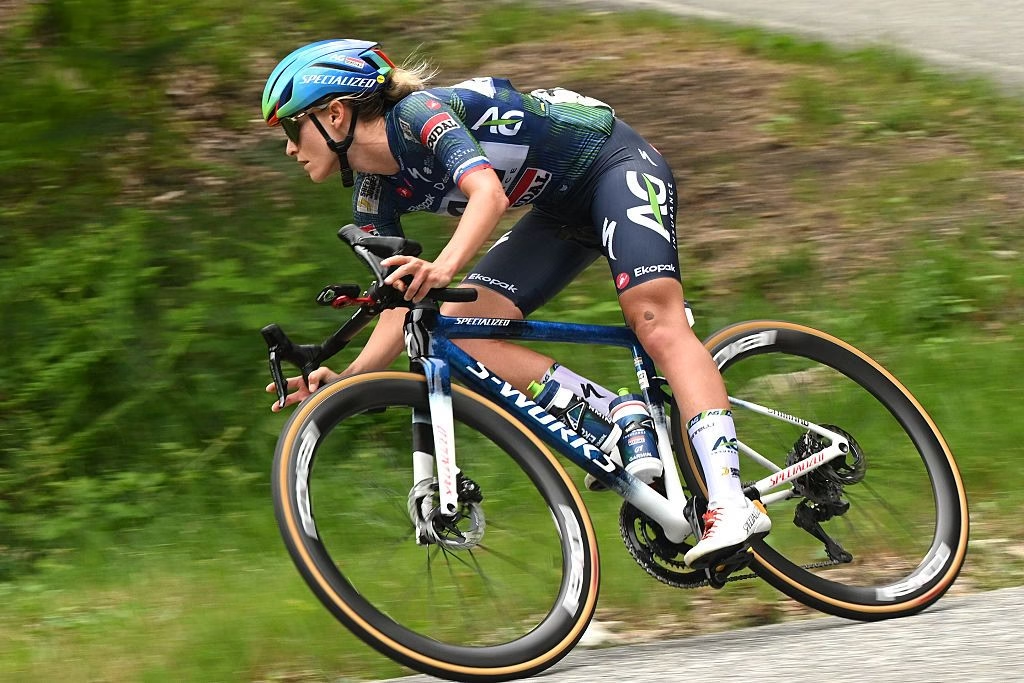
Urška Žigart has been cleared to continue her recovery without surgery after further medical checks on the jaw fracture she sustained at the Tour de Suisse Women.
The AG Insurance-Soudal rider crashed during the race and was later diagnosed with a fractured jaw. Her team has now confirmed that follow-up examinations have brought a more positive update, with surgery no longer required.
That is an important step in Žigart’s recovery. A jaw fracture remains a significant injury, especially in the middle of the racing season, but avoiding surgery should allow for a simpler and more controlled rehabilitation process.
The team also confirmed that Žigart has been able to resume training gradually, under close medical supervision. There is no confirmed return date, with the focus instead on a managed step-by-step rebuild.
 Photo Credit: Getty
Žigart cleared to avoid surgery
The key line from the update is that surgery will not be needed.
That matters because the original diagnosis left open the question of how complicated the recovery might become. A fractured jaw can involve different levels of treatment depending on the location and severity of the break, and the first priority after a crash is always to establish whether surgery, further intervention or a longer period away from training will be required.
In Žigart’s case, the latest assessment is more encouraging.
AG Insurance-Soudal said that after further medical evaluation and follow-up examinations, surgery would not be required. The team described this as allowing Žigart to continue her recovery in a more straightforward way.
That does not mean the injury is minor. It means the next phase can be planned without the additional disruption, recovery time and uncertainty that surgery would have brought.
The original injury was confirmed after Žigart was taken to hospital following her Tour de Suisse Women crash on stage 2.
Gradual return to training begins
The second important part of the update is that Žigart is already back training, albeit carefully.
Her team said she has been able to gradually resume training under the close supervision of its medical staff. That wording is significant. This is not a full racing return, and it should not be read as a sign that she is immediately close to competition.
It is the start of a controlled build.
For a rider like Žigart, that distinction matters. Training after a crash is not just about fitness. It is about pain management, fuelling, breathing, sleep, confidence and how the body responds to repeated workload. With a jaw fracture, even basic recovery routines can be affected, especially eating, hydration and day-to-day comfort.
The team’s step-by-step approach suggests they are prioritising stability over speed. That is the sensible route. The aim is not simply to get Žigart back on a bike. It is to rebuild her towards future targets without creating setbacks.

A difficult crash at Tour de Suisse
Žigart’s injury came after a crash during the Tour de Suisse Women, where she had been racing for AG Insurance-Soudal.
The team’s earlier update confirmed that she was attended to by race medical staff and taken to hospital for examinations after the incident. Those checks diagnosed a fractured jaw, while no other injuries were detected at that stage.
That initial news was a worrying moment for both rider and team. Facial injuries are always concerning after a high-speed fall, and the immediate aftermath of a crash can leave teams waiting on several rounds of assessment before they know the full picture.
The latest update brings the first properly reassuring development since then. No surgery, gradual training and a managed recovery path all point towards a more positive outlook than might have been feared when the fracture was first confirmed.
The wider race context is covered in our Tour de Suisse Women 2026 full route guide, with the start-list picture also available in our full start list for Tour de Suisse Women 2026.
What this means for her season
The team has not set a timeline for Žigart’s return to racing, and that is probably deliberate.
At this stage, any fixed date would be premature. A rider can be cleared for light or structured training without being ready for the demands of racing. The jump from controlled training to a WorldTour peloton is significant, especially after a crash that has required hospital checks and follow-up medical evaluation.
Žigart’s next goals will therefore depend on how smoothly the next phase goes.
If the recovery continues without complications, she can begin to rebuild towards the later part of the season. If there is pain, difficulty with fuelling, fatigue or any delayed reaction to training load, the plan may need to slow down.
The important thing is that the worst-case route has been avoided. Surgery would likely have made the picture more complicated. Without it, Žigart and AG Insurance-Soudal can work from a clearer recovery framework.
Her importance to the calendar is not difficult to understand. Žigart had been part of the broader climbing conversation before the race, including in our Tour de Suisse Women 2026 contenders preview and our look at the best climbers in women’s cycling right now.
 Photo Credit: Getty
AG Insurance-Soudal take cautious approach
The wording of the team’s update is careful and measured.
There is no attempt to promise a fast comeback. There is no race named as a target. Instead, the focus is on medical supervision, gradual training and building back towards future goals.
That is exactly the tone expected after this kind of injury.
Teams are often under pressure to provide timelines, especially when a rider is important to their racing plans. But recovery from crash injuries rarely follows a simple calendar. The fact that Žigart can train again is good news. The fact that the team is avoiding a firm return date is also sensible.
For AG Insurance-Soudal, the priority is to have Žigart return properly rather than quickly. She is a valuable climber and stage-race rider, and there is little benefit in rushing her back before she is ready.
The team’s wider 2026 structure is covered in our AG Insurance-Soudal 2026 Women’s WorldTour team guide.
Žigart’s wider importance to the team
Žigart has become an important part of AG Insurance-Soudal’s stage-race structure.
Her climbing ability gives the team options in harder races, particularly on terrain where the race is decided by repeated climbs, mountain stages or selective GC days. That is why her absence matters, and why the team will want to manage the comeback carefully.
The medical update does not change the fact that she has lost training and racing rhythm. It does, however, give the team a better platform from which to plan.
A rider coming back from a crash needs more than physical clearance. Confidence matters too. Žigart had been racing aggressively before the crash, and the next phase will be about rebuilding both the body and the normal habits of training and racing.
She had been listed among the outside climbing options in our 2026 Giro d’Italia Women favourites guide and was also part of AG Insurance-Soudal’s wider stage-race picture in our 2026 La Vuelta Femenina preview.


No surgery is the key positive
The main takeaway from the update is simple: the recovery path now looks clearer.
Žigart still has an injury to manage. She still needs time. She still needs medical oversight. But avoiding surgery removes one of the biggest possible complications from the process.
That should allow her to focus on controlled training, steady recovery and gradually increasing workload as permitted by the team’s medical staff.
For a rider in the middle of the season, that is a significant relief.
The timing also matters because the Tour de Suisse Women had already fed into wider season assessments, including our updated season form guide after Tour de Suisse Women 2026. Žigart’s crash meant her own race could not be judged in the normal sporting way, but the latest medical update at least gives her a clearer route back.