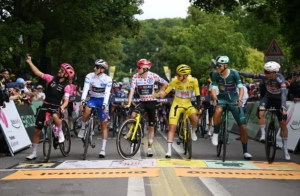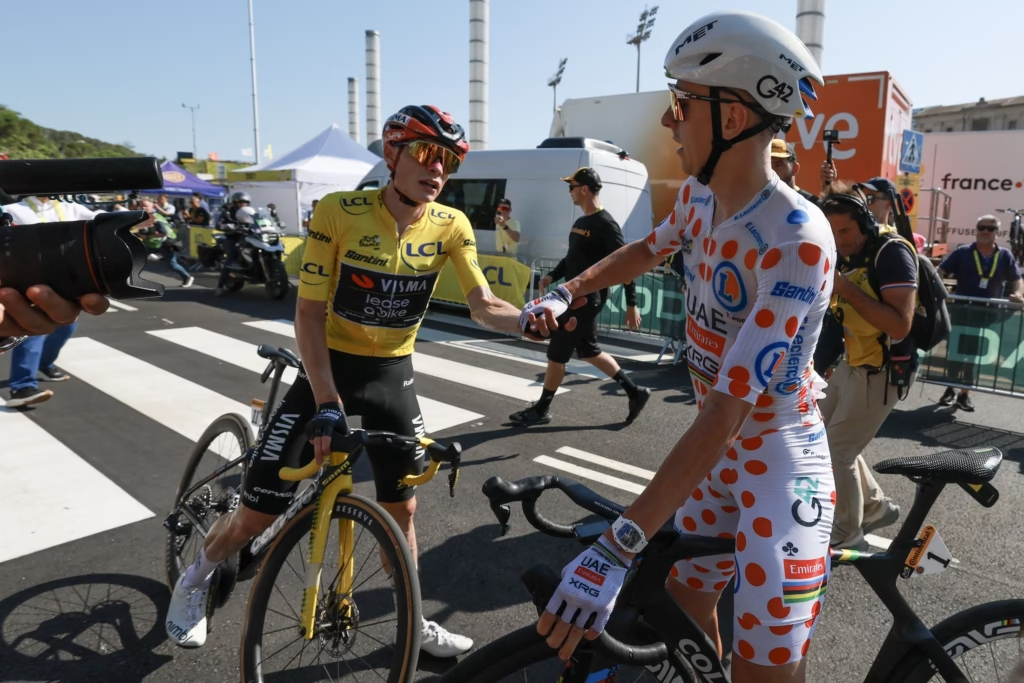
Tadej Pogačar and Jonas Vingegaard are 7:53 down after stage 4 of the Tour de France 2026 because the yellow jersey moved to the breakaway, not because either rider was dropped by the other.
The key point is simple: Torstein Træen gained almost 13 minutes on the main GC group during stage 4 to Foix. He had started the day more than five minutes behind Pogačar, but the breakaway gained enough time for him to leapfrog the favourites and take yellow. Pogačar and Vingegaard finished together in the peloton, so they remain level with each other.
For the full stage story, see our Tour de France 2026 stage 4 report. The updated classification picture is covered in our GC and jerseys after Tour de France 2026 stage 4 round-up.
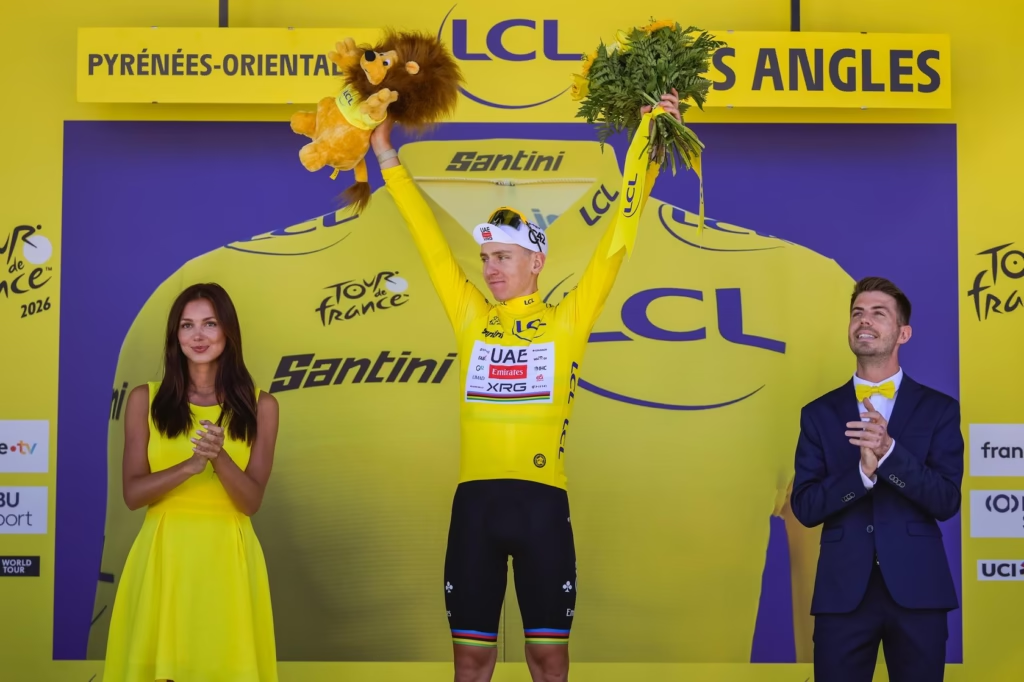 Photo Credit: A.S.O./Charly López
Quick answer: why are Pogačar and Vingegaard 7:53 behind?
Pogačar and Vingegaard are 7:53 behind because stage 4 was won from a large breakaway that finished well ahead of the peloton. Træen was in that front group. Pogačar and Vingegaard stayed in the main GC group, finished together, and lost 12:59 to the stage-winning group. Because Træen had started the day 5:06 behind Pogačar, that 12:59 gain turned into a 7:53 overall lead.
| Key detail | Time |
|---|---|
| Træen’s deficit before stage 4 | 5:06 behind Pogačar |
| Træen’s gain on stage 4 | 12:59 |
| Træen’s new advantage over Pogačar | 7:53 |
| Pogačar v Vingegaard | Still level on time |
It was a breakaway day, not a GC collapse
The 7:53 gap looks dramatic, but it needs context.
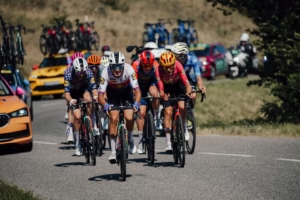
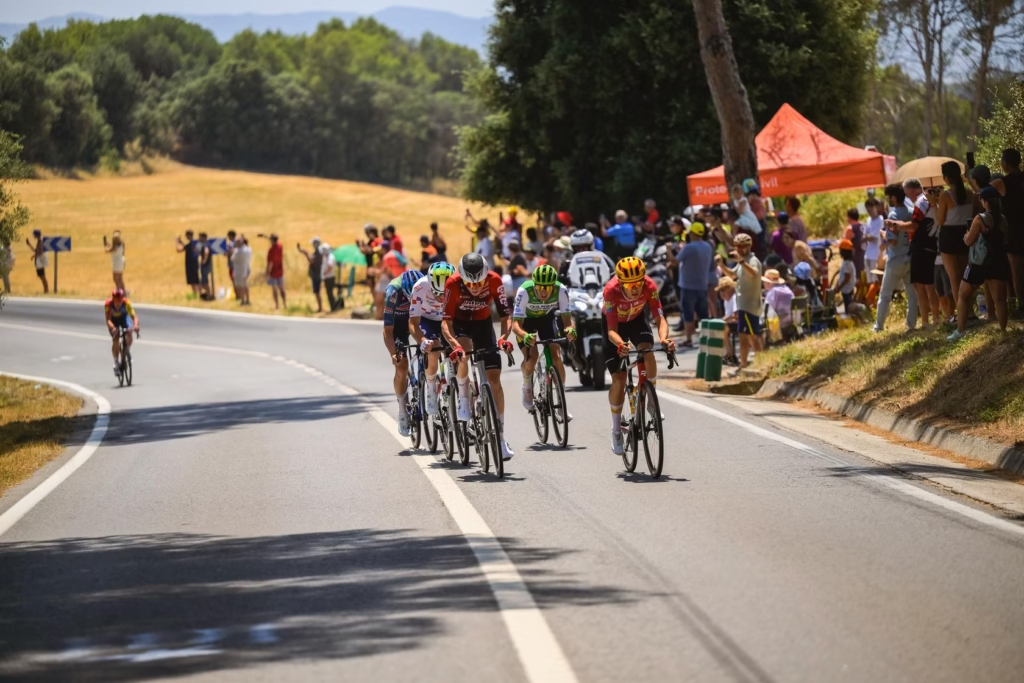
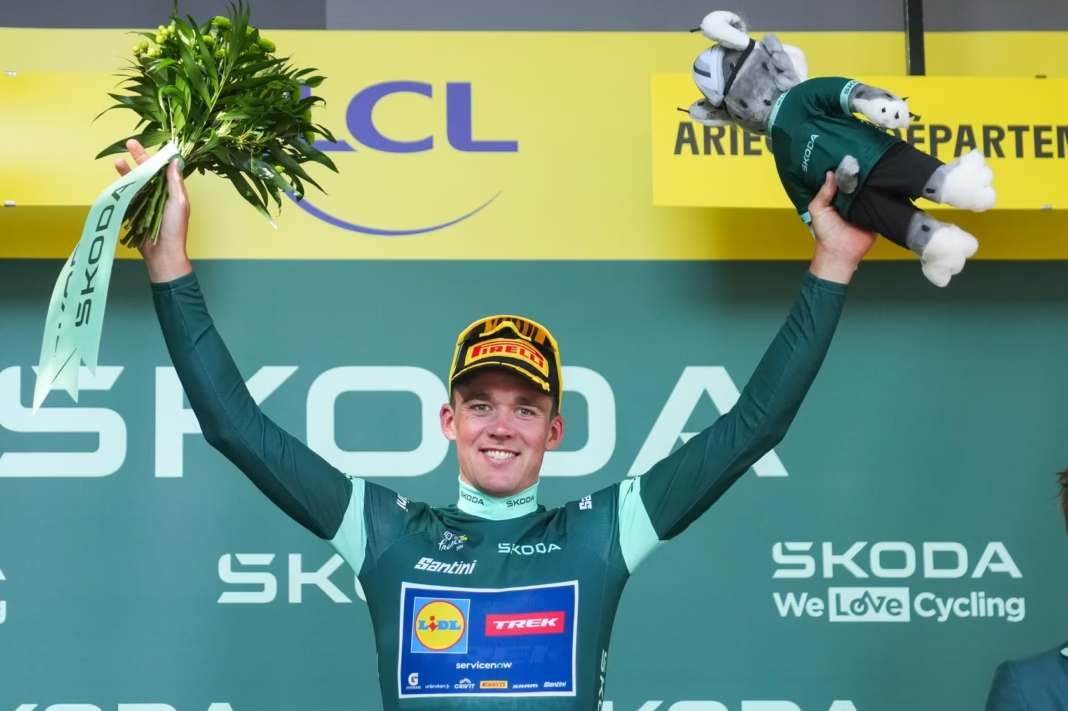
This was not a mountain stage where Træen rode away from Pogačar and Vingegaard head-to-head. It was a hilly transition stage from Carcassonne to Foix where a large breakaway went clear, built a big advantage and stayed away. Mads Pedersen won the stage for Lidl-Trek, with Quinn Simmons second and Raul Garcia Pierna third. Træen finished in the same front group and gained the time that put him into yellow.
Stage 4 had always looked like one of the more dangerous early breakaway days. Our Tour de France 2026 stage 4 preview highlighted the awkward terrain between Carcassonne and Foix, while our guide to the Tour de France 2026 breakaway stages showed why this was a day where the peloton might not want to chase all the way.
Pogačar, Vingegaard, Remco Evenepoel and the rest of the main favourites finished in the peloton at 12:59. That was a tactical decision as much as a sporting outcome. UAE Team Emirates-XRG did not spend the whole day trying to defend yellow at all costs, and the other GC teams were not desperate to help them close the move.
So the headline number is not saying Pogačar and Vingegaard cracked. It is saying the peloton allowed a strong breakaway enough space to change the race lead.
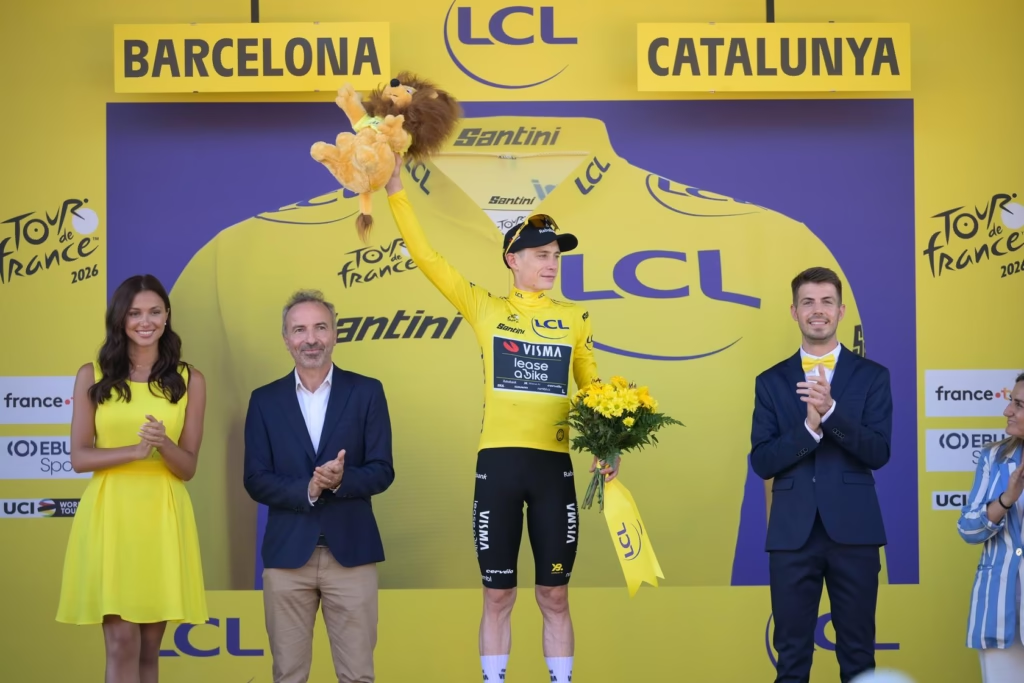 Photo Credit: A.S.O./Charly López
The maths behind the 7:53 gap
This is where the confusion comes from.
If Træen gained 12:59 on Pogačar and Vingegaard, why is his lead not 12:59? Because he was not level with them before the stage.
Before stage 4, Pogačar was in yellow and Vingegaard was level with him on time after the Les Angles finish. Træen was already 5:06 behind Pogačar on GC. Stage 4 then changed the equation.
| Calculation | Time |
|---|---|
| Time Træen gained on stage 4 | 12:59 |
| Træen’s starting deficit | minus 5:06 |
| New GC gap to Pogačar and Vingegaard | 7:53 |
That is why the new standings show Træen leading, while Pogačar and Vingegaard are both at 7:53. It is not an arbitrary gap. It is the result of Træen wiping out his previous deficit and adding nearly eight minutes on top.
For newer fans, our guide to how the Tour de France general classification works explains why total time across every stage matters more than who looks strongest on any single day.
Why did UAE let the breakaway go?
There are several reasons why UAE Team Emirates-XRG may have allowed the move to go.
The first is energy. Defending yellow for three weeks is expensive. It means controlling the breakaway, riding on the front, managing media duties and carrying the tactical responsibility of the race. Letting yellow go to a rider outside the immediate Pogačar-Vingegaard battle can actually reduce that burden.
The second is the timing of the route. The Tour is still in its opening week, but the serious climbing has already started and the Pyrenees are not finished. Stage 6 to Gavarnie-Gèdre brings the Tourmalet and a summit finish, so spending a full day defending yellow on stage 4 could have meant burning energy before a much more important GC test.
The third is the identity of the new race leader. Træen is a strong climber and a serious rider, but he is not seen in the same bracket as Pogačar, Vingegaard or Evenepoel as a final Tour winner. Giving time to a rider like that is not the same as giving time to one of the main favourites.
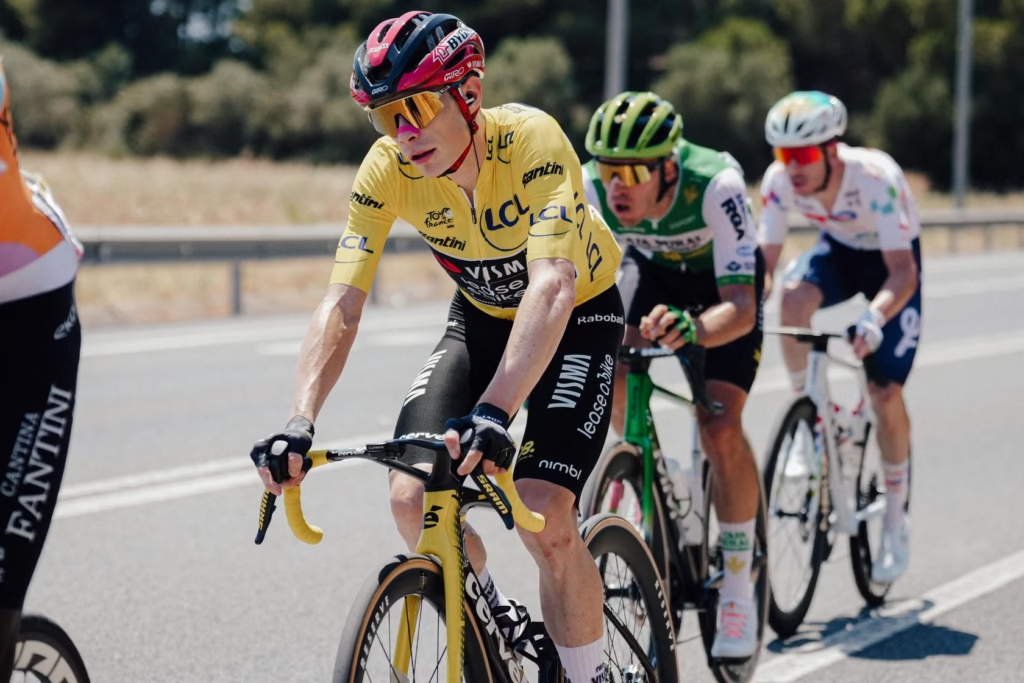 Photo Credit: A.S.O./Thomas Maheux
Why did Visma not chase?
This is the other obvious question. If UAE did not want to defend yellow, why did Visma-Lease a Bike not chase?
The answer is that Visma had little reason to spend energy helping Pogačar keep the jersey. Vingegaard was level with Pogačar before the stage and stayed level with him after it. From Visma’s perspective, the most important thing was not whether Pogačar wore yellow. It was whether Vingegaard lost time to Pogačar.
He did not.
By allowing the breakaway to go, Visma avoided doing work for UAE. They also helped move the yellow jersey away from Pogačar’s shoulders. That may suit them. A Pogačar in yellow has the symbolic lead, but also the daily pressure. A Pogačar sitting fourth overall at 7:53 behind Træen is still the same sporting threat, just without the same visible control of the race.
Are Pogačar and Vingegaard really in trouble?
Not necessarily.
The gap to Træen is large on paper, but the race is still in its opening week. There are major mountain stages still to come, including the Tourmalet, the Massif Central, the Vosges, the Jura and the Alps. A rider can lose several minutes very quickly once the GC teams begin racing properly in the high mountains.
The full route still gives the favourites plenty of terrain to work with, as shown in our Tour de France 2026 full route guide. The most important point is that Pogačar and Vingegaard are still level with each other. Their direct battle has not changed. Pogačar has not gained time on Vingegaard, and Vingegaard has not gained time on Pogačar. Evenepoel is still close to that same favourites’ block.
So the race has changed in terms of the yellow jersey, but not in terms of the direct hierarchy among the biggest names.
Is Træen a threat to win the Tour?
Træen cannot simply be dismissed. He is a good climber, a former Vuelta a España race leader and a rider with the endurance to survive hard stage races. He now has a real advantage, and the others have to take that time back on the road.
But he is still not the obvious favourite to win the Tour. Pogačar, Vingegaard and Evenepoel are better established over repeated high-mountain stages and time-trial pressure. Træen’s challenge is to turn this breakaway gain into sustained resistance.
That starts immediately. Stage 5 to Pau should be manageable if he avoids trouble, but stage 6 to Gavarnie-Gèdre brings the Tourmalet and a summit finish. That will be the first real test of whether Træen is simply borrowing yellow or becoming a deeper part of the GC race.
For more on his background and why his yellow jersey carries extra weight, see our profile on Torstein Træen as the new Tour de France 2026 yellow jersey wearer.
Why this can be good for Pogačar
Losing yellow can actually help Pogačar in the short term.
He no longer has to carry the daily responsibilities of the race leader. He can avoid some of the post-stage demands, reduce the tactical pressure on UAE and let Uno-X Mobility deal with the visible burden of defending yellow.
That does not mean UAE will stop racing. It means they can choose their moments more carefully. They no longer need to chase every breakaway simply because Pogačar is in yellow. They can wait for the mountain stages where Pogačar can take time directly from the riders who matter most.
If Pogačar believes Træen will eventually lose time in the high mountains, then giving away yellow now is not a disaster. It may even be useful.
Why this can be good for Vingegaard
The same logic applies to Vingegaard, but with a different twist.
Visma-Lease a Bike do not have to control the race either. They can let UAE worry about Pogačar, let Uno-X deal with the yellow jersey attention, and focus on the days where Vingegaard can actually hurt his rivals.
Most importantly, Vingegaard did not lose anything to Pogačar. He started the day level with him and ended the day level with him. If Visma’s main objective is to beat Pogačar, stage 4 did not damage that plan.
The gap to Træen is an issue, but it is a shared issue. Pogačar, Vingegaard, Evenepoel and the rest of the favourites now all have to deal with the same rider up the road.
Could this backfire on the favourites?
Yes, but only if Træen proves stronger than expected.
The danger of letting a strong climber take nearly eight minutes is that he may not collapse quickly. Træen does not need to match Pogačar and Vingegaard attack for attack. He only needs to limit his losses. If he loses one minute here, two minutes there and survives the first big mountain blocks, the favourites may start to regret giving him so much room.
That is what makes this situation interesting. The gap is probably manageable for the biggest favourites across the whole Tour. But it is not nothing. They have turned a rider outside the immediate GC script into a rider who now has to be removed.
That changes the tactical shape of the race. The best places to claw that time back are covered in our guide to the best GC attack days at the Tour de France 2026, with stage 6 already looking like the first proper examination of Træen’s lead.
What happens next?
Stage 5 to Pau should give the sprinters their chance and may not change the yellow jersey picture much, unless crashes, splits or crosswinds intervene. The live timings are covered in our Tour de France 2026 stage 5 live viewing and start time update, while our stage 5 preview explains why the route should favour the fast men.
The real test comes on stage 6, with the Tourmalet and the finish at Gavarnie-Gèdre. That is where Træen’s yellow jersey will face its first serious examination. If Pogačar, Vingegaard or Evenepoel attack hard there, the 7:53 gap can begin to shrink quickly. If Træen survives close to them, the story changes again.
The broader Pyrenean context is covered in our Tour de France 2026 Pyrenees guide.
For now, the answer is clear. Pogačar and Vingegaard are 7:53 down because the stage 4 breakaway was allowed to take a huge amount of time, and Træen was the rider in that move who started close enough on GC to take yellow.
They are behind the new race leader. They are not behind each other.