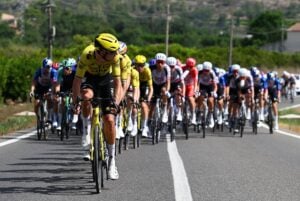
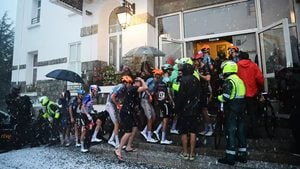
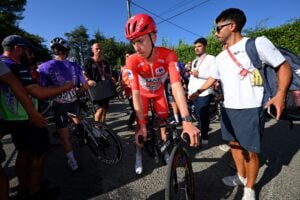
Stage 10 is where the Tour de France 2026 restarts with intent.
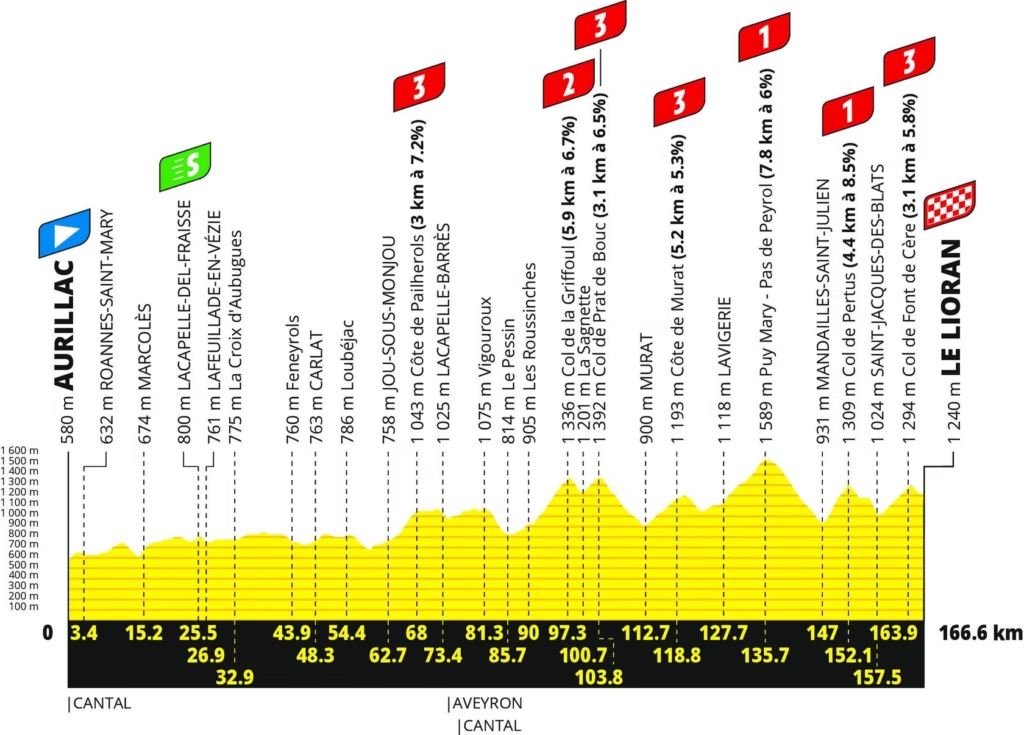
After Monday’s first rest day in Cantal, the race returns on Bastille Day with a 166.6km mountain stage from Aurillac to Le Lioran. It is not an Alpine summit-finish epic, but it is a hard, jagged Massif Central stage with 3,800m of climbing, seven categorised climbs and a finale that leaves very little room to hide.
That makes it a dangerous day for everyone. The GC riders cannot treat it as a simple transition stage. The breakaway riders will see it as one of the best chances of the race. The polka-dot contenders will see a serious points haul available. And the yellow jersey group has to decide whether to keep the day controlled or allow a large move to fight for the stage.
Tadej Pogačar reaches the rest day still in yellow after the heat-shortened stage 9 into Ussel. His advantage over Jonas Vingegaard remains 2:42, with Isaac del Toro still third overall. Our Tour de France 2026 stage 9 preview explains how that shortened day changed the run-in to the rest day.
Stage 10 will show whether that gap is simply being defended, or whether the race is about to be stretched again.
Stage 10 at a glance
| Detail | Stage 10 information |
|---|---|
| Date | Tuesday 14 July 2026 |
| Route | Aurillac to Le Lioran |
| Distance | 166.6km |
| Stage type | Mountain |
| Elevation gain | 3,800m |
| Neutralised start | 13:00 CEST / 12:00 BST |
| Expected finish | 17:02-17:26 CEST / 16:02-16:26 BST |
| Categorised climbs | 7 |
| Finish | Le Lioran |
| Likely winner type | GC rider, elite climber or strong breakaway rider |
The stage is officially a mountain day, but it is not a single-climb test. It is a day of repeated pressure, with the hardest section packed into the final third.
A Bastille Day stage with proper teeth
This is not a ceremonial post-rest-day restart.
The Tour could easily have resumed with something flatter after the first rest day. Instead, it heads straight into a Massif Central stage that repeatedly climbs, descends and climbs again. The difficulty is not only in one single mountain. It is in the accumulation.
Aurillac to Le Lioran is short enough to be raced hard, but long enough to grind. At 166.6km, it is not a monster by distance, yet 3,800m of climbing gives it the feel of a serious mountain stage. The terrain becomes especially concentrated in the second half, where the climbs arrive with very little recovery between them.
That is why this stage sits in an awkward tactical space. It is hard enough for GC movement. It is also open enough for a breakaway. The outcome depends on who wants control.
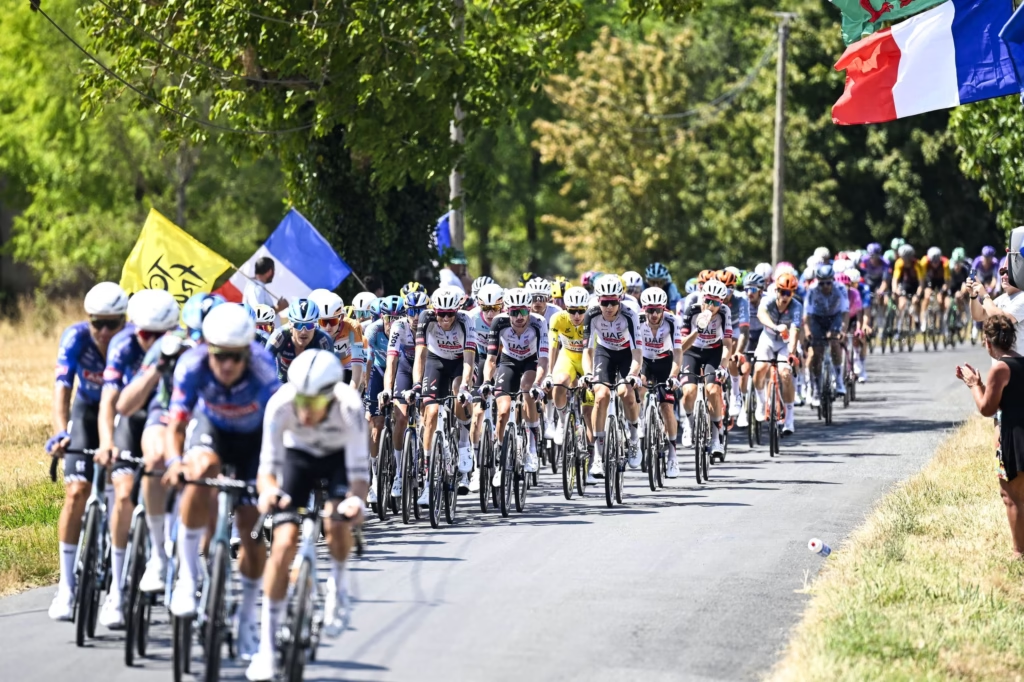
The climbs come in waves
Stage 10 has seven categorised climbs, starting with the Côte de Pailherols and building towards the Puy Mary, Col de Pertus and Col de Font de Cère in the final 35km.
| Climb | Km | Length | Gradient | Category |
|---|---|---|---|---|
| Côte de Pailherols | 68.0km | 3.0km | 7.2% | Cat 3 |
| Col de la Griffoul | 97.3km | 5.9km | 6.7% | Cat 2 |
| Col de Prat de Bouc | 103.8km | 3.1km | 6.5% | Cat 3 |
| Côte de Murat | 118.8km | 5.2km | 5.3% | Cat 3 |
| Puy Mary – Pas de Peyrol | 135.7km | 7.8km | 6.0% | Cat 1 |
| Col de Pertus | 152.1km | 4.4km | 8.5% | Cat 1 |
| Col de Font de Cère | 163.9km | 3.1km | 5.8% | Cat 3 |
The Puy Mary and Col de Pertus are the two category 1 climbs of the day, and they are close enough to the finish to matter for more than just the mountains classification.
That is a meaningful polka-dot opportunity. It also means any breakaway with strong climbers could reshape the mountains classification before the GC favourites even begin to race each other.
Puy Mary starts the real finale
The race should begin to change on Puy Mary – Pas de Peyrol.
At 7.8km at 6%, it is not brutally steep from bottom to top, but the numbers do not tell the full story. The climb arrives deep enough into the stage to matter, and the road tightens the race before the final chain of climbs towards Le Lioran.
This is the point where domestiques should begin to disappear, breakaway groups should start splitting and GC riders will begin watching each other more closely. It may not produce the winning move on its own, but it should decide who still has the right to race for the win.
It is also the moment where stage 10 stops feeling like a rolling Massif Central day and starts feeling like a proper mountain finish in disguise.
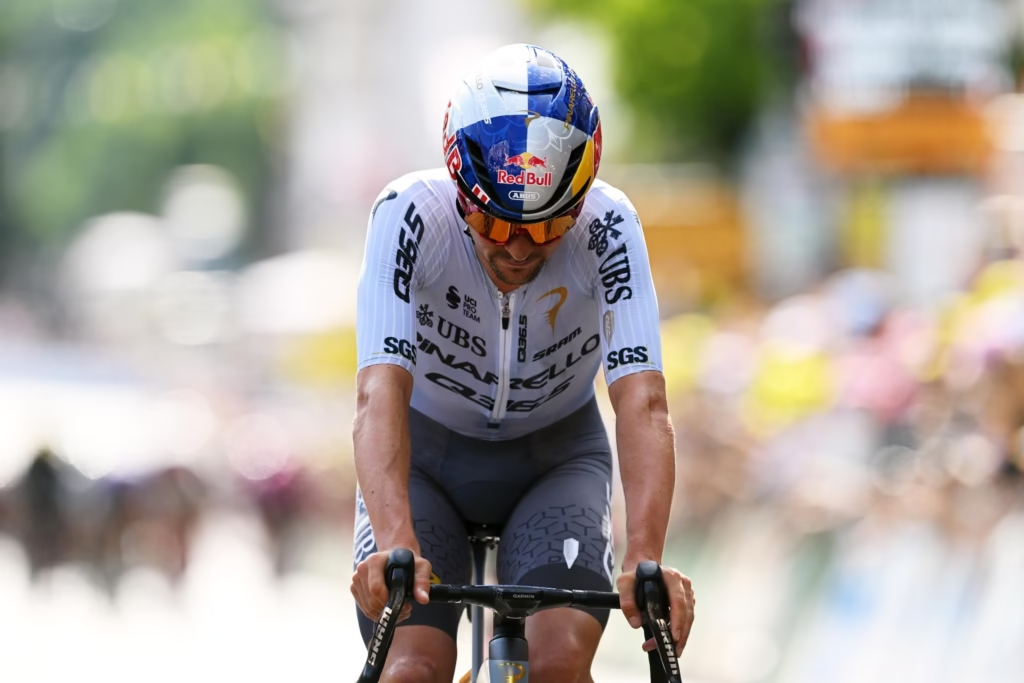 Photo Credit: Getty
Col de Pertus is the hardest punch
If there is one climb that looks built for a decisive move, it is the Col de Pertus.
The official numbers are 4.4km at 8.5%, and the summit comes with 14.5km remaining. That is steep enough and late enough to matter. Any rider who is already struggling after Puy Mary will be in trouble here.
This is where the stage can become a GC day.
A rider does not need to take a minute on Pertus to change the race. A 10-second split over the top, a weak moment from a rival, or a small group forming before the descent could be enough to force a chase into the final climb and run to Le Lioran.
The position of the climb is the key. It is too close to the finish to ignore and too steep to ride passively if the strongest riders decide to test each other.
Le Lioran is not a summit finish, but it still bites
The final categorised climb is the Col de Font de Cère, 3.1km at 5.8%, with the summit 2.7km from the line.
That means the race does not simply finish at the top of the hardest climb. There is a descent and then a final kick to the line in Le Lioran. Even a small group reaching the finish together will still face an explosive final effort.
That finish favours riders who can climb, descend and still sprint uphill. It is not ideal for a pure climber with no acceleration, and it is not kind to a rider who has spent too much energy attacking too early.
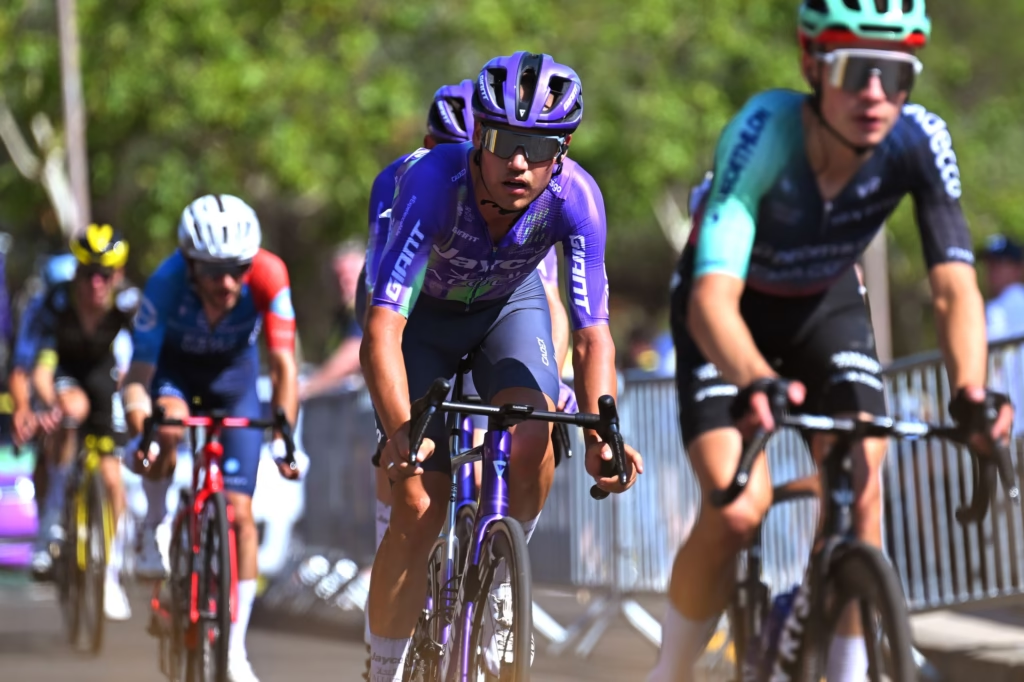 Photo Credit: Getty
The rest day makes the stage harder to read
Stages after a rest day can be strange.
Some riders respond well, others feel blocked. Teams may have reset physically, but rhythm can be awkward after a day without racing. Add in the extreme heat that has shaped the first week, and stage 10 becomes even harder to predict.
The rest day gives stage hunters a chance to recover before going all-in. It also gives GC teams time to plan, cool down and reassess the race. But it can also make the opening hour chaotic, because riders who have been waiting since the Pyrenees may see this as the first real opportunity to attack again.
That is the tactical tension. The breakaway wants freedom. The GC teams want control without wasting energy. The route may not allow both.
Our guide to Tour de France 2026 rest days explains why the day after a pause can be one of the most awkward parts of the race.
The breakaway has a serious chance
This stage could easily go to the break.
The early part of the route gives riders time to form a strong move before the hardest climbs. The GC teams may not want to chase all day, especially with more mountain stages still to come. The points classification teams should not be interested in controlling a 3,800m climbing day. That leaves space for a large, dangerous breakaway.
The right break needs climbers rather than rouleurs. The winner will have to survive Puy Mary, Pertus and Font de Cère, then still have enough left for the final ramp. This is not a day for someone simply getting up the road and hanging on. It is a day for a rider with real climbing quality.
That gives teams without a GC leader a clear objective: put a climber in the move and make the yellow jersey group decide whether the stage matters.
Our guide to the best breakaway stages at the Tour de France 2026 and our list of breakaway specialists to watch both explain why this sort of day is so important for teams outside the GC fight.
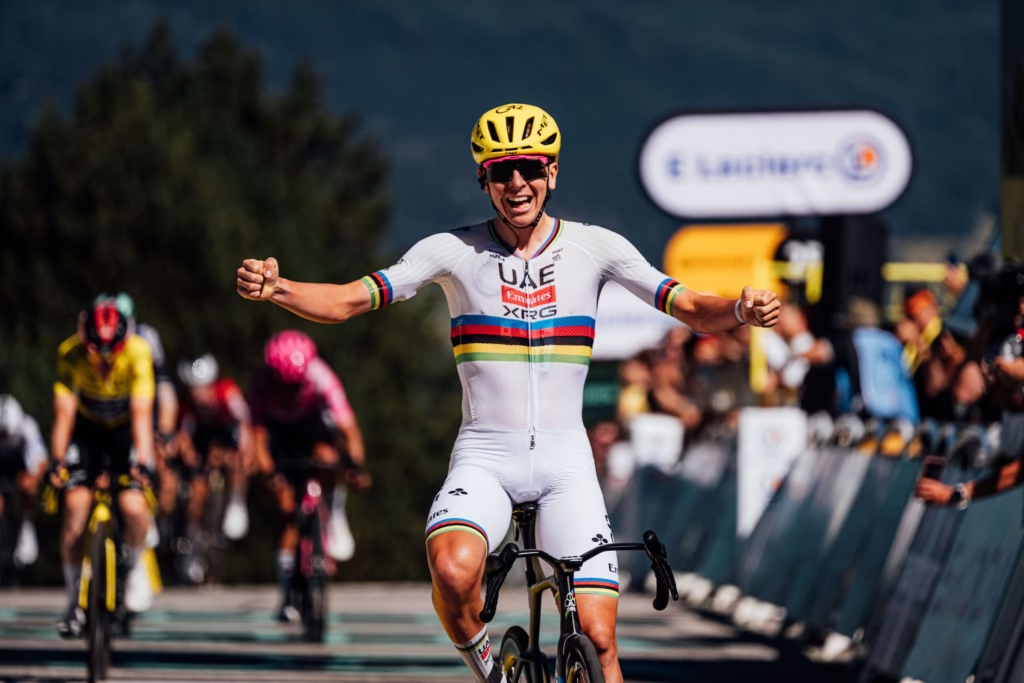 Photo Credit: Getty
Pogačar can choose between control and aggression
Pogačar does not have to attack on stage 10.
His yellow jersey position is strong, and stage 6 at Gavarnie-Gèdre already gave him a clear margin over Vingegaard, Evenepoel, Ayuso, Seixas and the rest. But this is a stage that suits his racing instincts. Repeated climbs, a steep late test, a descent and an uphill kick are all terrain where he can make small gaps look sudden.
The question is whether UAE Team Emirates-XRG want the responsibility.
If they chase the break and keep the stage close, Pogačar becomes one of the obvious favourites. If they let a move go, they can defend yellow more conservatively and avoid unnecessary work after the rest day.
Both choices make sense. The risk is ending up in between: working enough to tire the team, but not enough to bring the stage back.
Vingegaard needs opportunities, but not panic
Vingegaard starts stage 10 still 2:42 behind Pogačar.
That is a large gap, but not a terminal one with so many mountain stages left. The temptation will be to look for every possible opening. The danger is attacking in the wrong place simply because the race is slipping away.
Stage 10 is useful for Visma-Lease a Bike because it offers repeated pressure without requiring an all-or-nothing move. They can test UAE on Puy Mary. They can place riders in the break if the race situation allows. They can make Pertus hard and see who responds.
But Vingegaard probably needs isolation more than theatre. He needs Pogačar without full support, or rivals forced into a chase, before any serious attack becomes worth the cost.
The broader GC picture remains the one set by the Tourmalet. Our GC and jerseys after stage 8 shows how the standings looked heading towards the rest day.
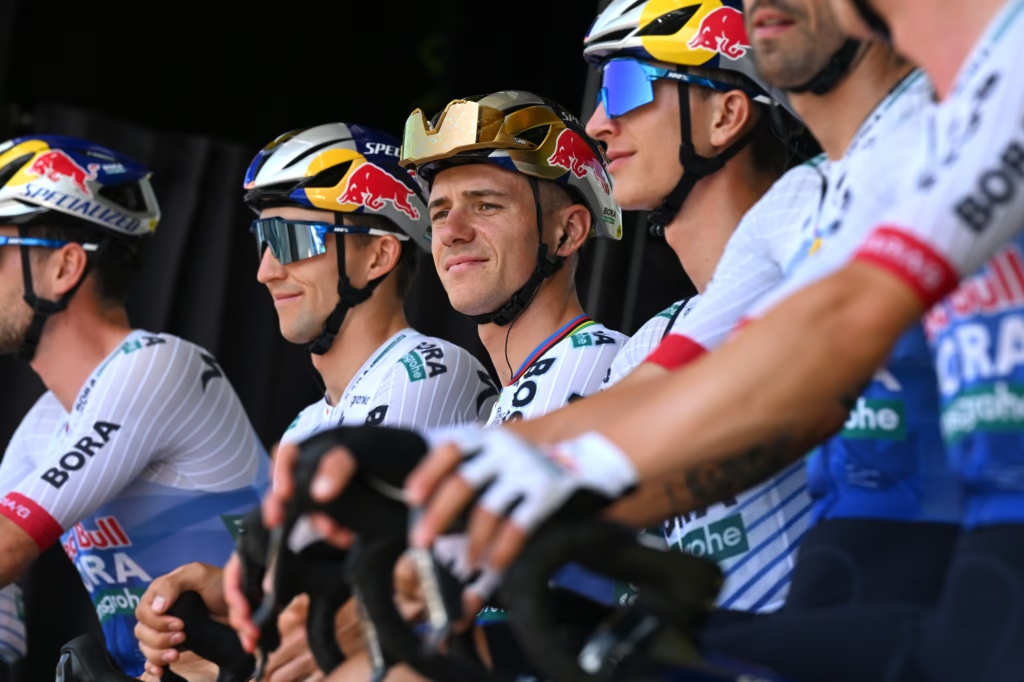 Photo Credit: Getty
Evenepoel, Ayuso and Del Toro are in the danger zone
Behind Pogačar and Vingegaard, the stage is especially important for the podium fight.
Isaac del Toro is third overall, Remco Evenepoel is fourth and Juan Ayuso is fifth, with only seven seconds separating third from fifth after stage 8. That group cannot afford a careless day. Stage 10 has too many places where small gaps can open, especially late.
Evenepoel may like the rolling, power-heavy sections and the descent into the finale. Ayuso and Del Toro should both be comfortable on the climbing, but UAE also have to balance Del Toro’s podium and white jersey position with Pogačar’s yellow jersey defence.
Paul Seixas, Florian Lipowitz, Lenny Martinez and Mattias Skjelmose are also close enough to make the top 10 feel unstable. A bad final 15km could cost more than expected.
The polka-dot jersey could move
The mountains classification has been dominated by the Tourmalet stage so far, with Pogačar officially leading and Vingegaard wearing the jersey on the road because Pogačar is in yellow.
Stage 10 offers enough points to change the shape of that competition.
The Puy Mary and Col de Pertus each carry a serious points reward, while the Col de la Griffoul and the other climbs add more. If a breakaway climber sweeps up the day’s points, they could move quickly into the polka-dot conversation.
That gives the stage a second storyline beyond GC. Riders who are too far down overall to threaten yellow may still see the mountains jersey as a realistic longer-term target.
For a wider look at that contest, see our Tour de France 2026 climbers guide and our guide to the best climbers at the Tour de France 2026.
Green belongs at the start, not the finish
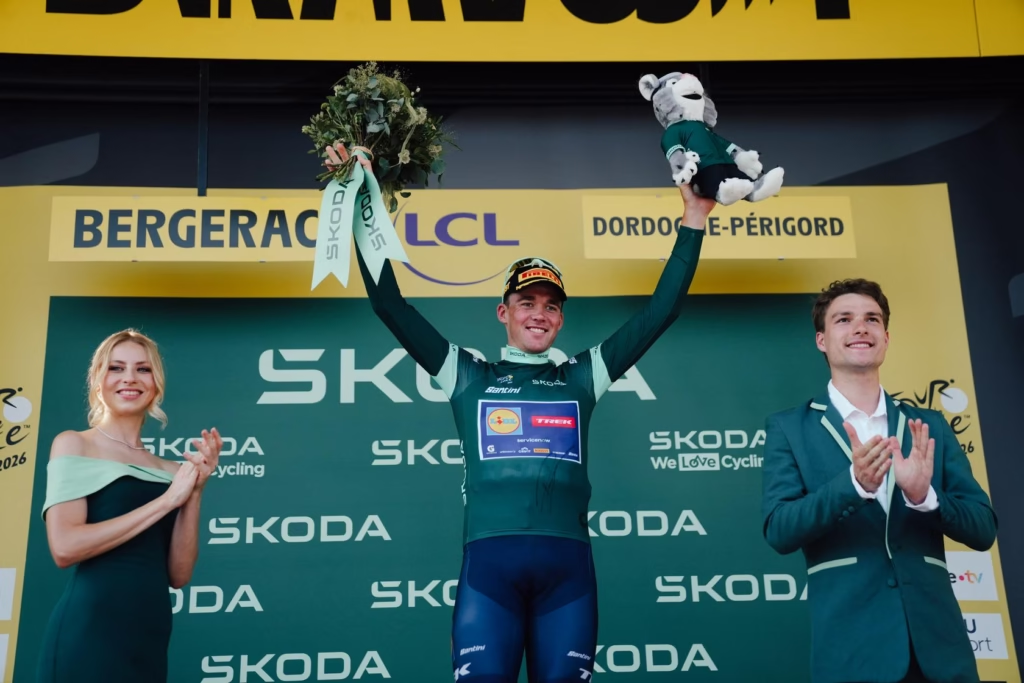
The intermediate sprint comes early at Lacapelle-del-Fraisse, with 25 points available to the first rider across.
That may interest Mads Pedersen, Tim Merlier, Biniam Girmay and the other points contenders if the race situation allows. But the stage finish offers fewer points because this is a mountain stage.
That changes the green jersey logic. This is not a day for the pure sprinters to chase a stage win. It is a day where Pedersen may try to collect early points if they are accessible, then survive the rest of the stage. Merlier’s back-to-back wins in Bordeaux and Bergerac have dragged him close in green, but stage 10 should suit Pedersen’s versatility far more than Merlier’s pure sprint profile.
Our Tour de France 2026 sprinters guide and analysis of whether Mads Pedersen can win green explain why days like this may still matter in the points classification.
The heat question has not gone away
Stage 9 was shortened because of the red heat alert in Corrèze. Stage 10 comes after the rest day, but the wider heat issue remains part of this Tour.
That matters because this is a harder climbing day than Ussel, with more altitude gain and repeated exposed efforts. Even if the temperature is lower, fatigue from the first week and the heatwave will still be in the legs. The rest day helps. It does not erase the accumulated stress of racing in extreme conditions.
Our Tour de France heat protocol explainer explains why cooling, feeding and route management have already become central to this year’s race.
Contenders for stage 10
| Rider | Why he fits |
|---|---|
| Tadej Pogačar | The finish suits his punch, climbing and ability to attack repeatedly |
| Jonas Vingegaard | Needs to test Pogačar and should like the repeated climbing |
| Remco Evenepoel | Could use the rolling terrain and descent if the GC group splits |
| Isaac del Toro | Strong enough for the finale and already defending white and podium position |
| Juan Ayuso | Only seven seconds off Del Toro in white and dangerous on this terrain |
| Lenny Martinez | Climbing punch and mountains points both make sense |
| Richard Carapaz | Ideal breakaway profile if given freedom |
| Ben Healy | Aggressive enough to attack early and strong enough for a hard stage |
| Pello Bilbao | Excellent on rolling mountain stages and tactically smart |
| Tom Pidcock | Suits the technical, explosive finale if allowed freedom |
The stage is open enough that two races may happen at once: the breakaway for the win and the GC group behind for time. If the strongest break goes early, the winner may come from there. If UAE or Visma decide to keep the race close, Pogačar and Vingegaard become central again.
Prediction: breakaway danger, GC sparks late
The most likely outcome is a strong breakaway fighting for the stage, with the GC favourites testing each other late rather than racing flat-out all day.
That said, the Col de Pertus is too steep and too close to the finish to be ignored completely. Even if the break survives, the yellow jersey group should thin heavily there. A small Pogačar-Vingegaard-Evenepoel-Ayuso-Del Toro selection would not be surprising.
The winning move should come either on Pertus, over Font de Cère, or on the final uphill ramp in Le Lioran.
-
 Photo Credit: Getty
Stage 10 verdict
Stage 10 is not the Tour’s biggest mountain stage, but it may be one of its most revealing.
The route does not rely on one giant climb. It asks repeated questions. It puts the hardest terrain late. It comes after a rest day. It follows a heat-shortened stage and a first week that has already reshaped the GC. It offers mountains points, breakaway freedom and enough final difficulty for the yellow jersey group to matter.
For Pogačar, it is a stage to control or kill, depending on how aggressive UAE want to be. For Vingegaard, it is a chance to probe. For Evenepoel, Del Toro and Ayuso, it is a podium danger day. For the breakaway riders, it may be the best mountain-stage opportunity so far.
Le Lioran will not decide the Tour outright. But it should show who has restarted properly after the rest day, and who is already beginning to feel the cost of the first week.
FAQs
What is stage 10 of the Tour de France 2026?
Stage 10 is a 166.6km mountain stage from Aurillac to Le Lioran on Tuesday 14 July 2026. It includes 3,800m of climbing and seven categorised climbs.
What time does stage 10 start?
The neutralised start is scheduled for 13:00 CEST, which is 12:00 BST in the UK.
What time will stage 10 finish?
The expected finish in Le Lioran is between 17:02 and 17:26 CEST, or 16:02-16:26 BST.
What are the main climbs on stage 10?
The main climbs are the Côte de Pailherols, Col de la Griffoul, Col de Prat de Bouc, Côte de Murat, Puy Mary – Pas de Peyrol, Col de Pertus and Col de Font de Cère.
Is stage 10 a GC day?
Yes, potentially. It may go to the breakaway, but the Puy Mary, Col de Pertus and Col de Font de Cère are hard enough and late enough for GC gaps to open.
Who are the favourites for stage 10?
Tadej Pogačar, Jonas Vingegaard, Remco Evenepoel, Isaac del Toro and Juan Ayuso are obvious GC names, while Richard Carapaz, Ben Healy, Pello Bilbao, Lenny Martinez and Tom Pidcock fit the breakaway or attacking profile.