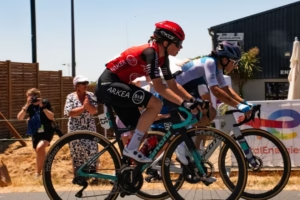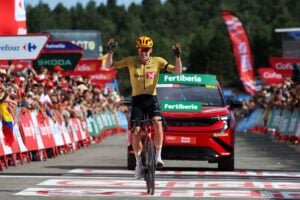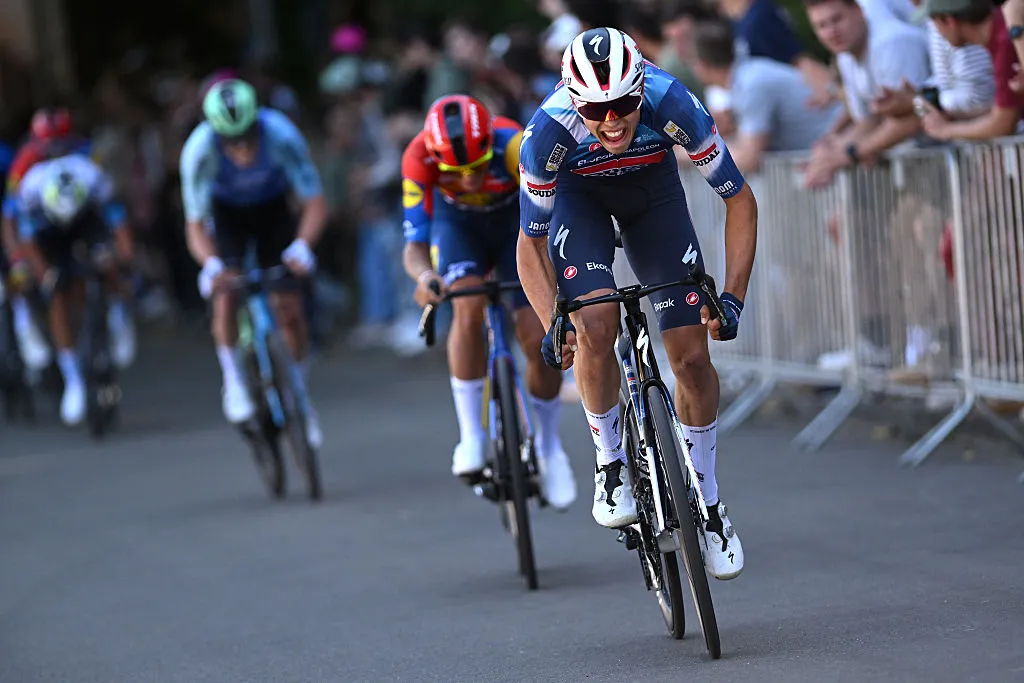
The Renewi Tour is one of the most unpredictable stage races on the men’s WorldTour calendar.
It does not contain the long Alpine or Pyrenean climbs associated with the Tour de France, Giro d’Italia or Vuelta a España. Instead, the race is built around crosswinds, cobbled climbs, narrow roads, bonus seconds and Classics-style finales.
That makes it difficult to control and often means the overall winner is decided by only a few seconds.
The 2026 Renewi Tour takes place from Wednesday 19 August to Sunday 23 August. The five-stage route begins in Diest and finishes in Leuven, with opportunities for pure sprinters, cobbled Classics specialists and powerful all-rounders.
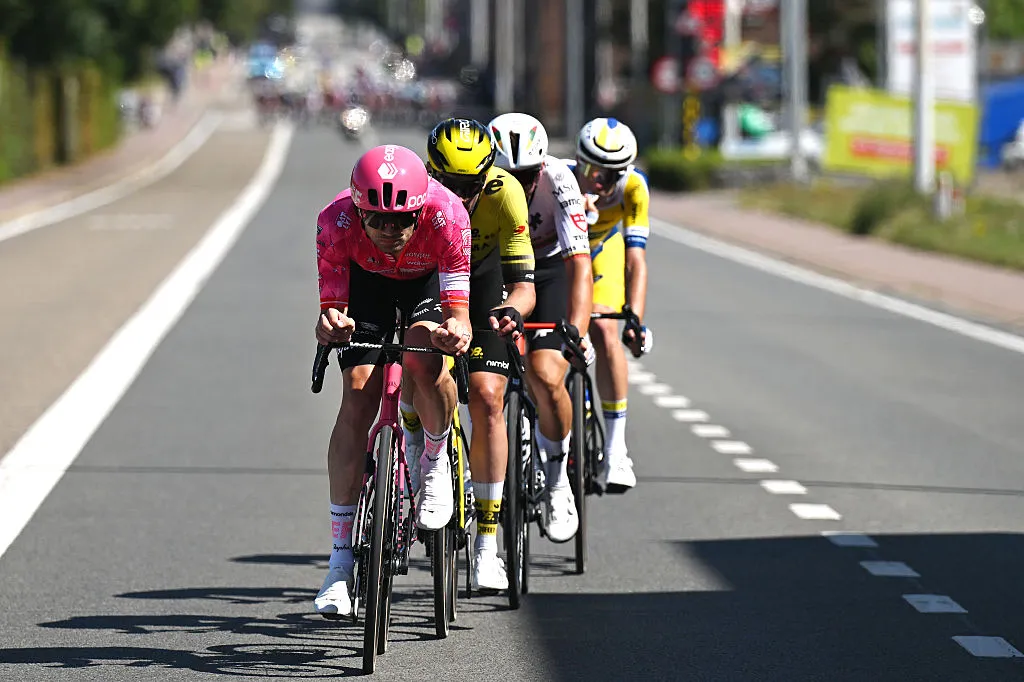 Photo Credit: Getty
Renewi Tour 2026 at a glance
| Detail | Information |
|---|---|
| Dates | 19-23 August 2026 |
| Country | Belgium |
| Number of stages | Five |
| Race level | UCI WorldTour |
| Opening stage | Diest to Diest |
| Final stage | Leuven to Leuven |
| Defending champion | Arnaud De Lie |
| Riders suited to the race | Sprinters, Classics riders, puncheurs and rouleurs |
| Main GC stage | Celles to Geraardsbergen |
| Television | Sporza, Tipik and Eurosport |
What is the Renewi Tour?
The Renewi Tour is a short men’s stage race held in Belgium and, in some editions, the Netherlands.
It combines the structure of a stage race with the terrain and tactics of the spring Classics.
Each day has its own winner, while the rider with the lowest cumulative time at the end of all five stages wins the general classification.
Time gaps are usually small.
Unlike a mountain race, where one rider can gain several minutes on a summit finish, the Renewi Tour is often decided by:
- Bonus seconds
- Small splits in crosswinds
- Cobbled climbs
- Short attacks
- Positioning mistakes
- Time lost behind crashes
- Reduced-group sprints
- The Green Kilometre bonus competition
The race therefore rewards riders who can sprint, climb short hills and remain near the front throughout technical stages.
The overall format follows the same cumulative-time principle explained in our guide to how cycling’s general classification works, but the smaller gaps make every second more valuable.
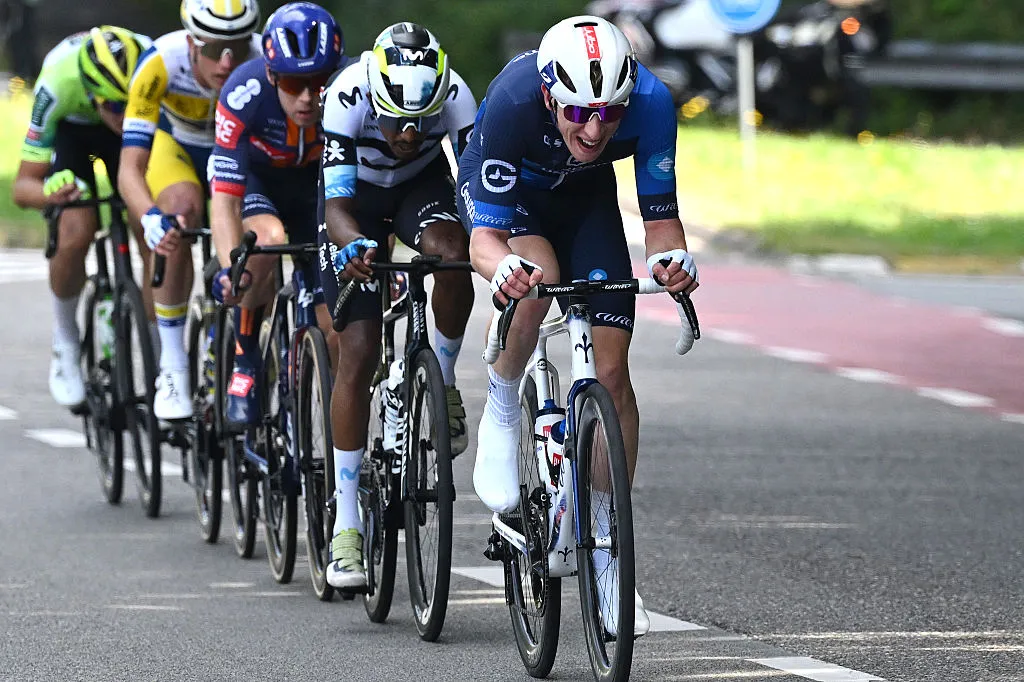 Photo Credit: Getty
When is the Renewi Tour 2026?
The Renewi Tour begins on Wednesday 19 August and finishes on Sunday 23 August 2026.
The team presentation takes place in Diest on Tuesday 18 August.
The confirmed stage schedule is:
| Stage | Date | Route |
|---|---|---|
| 1 | Wednesday 19 August | Diest to Diest |
| 2 | Thursday 20 August | Blankenberge to Ardooie |
| 3 | Friday 21 August | Celles to Geraardsbergen |
| 4 | Saturday 22 August | Riemst to Bilzen-Hoeselt |
| 5 | Sunday 23 August | Leuven to Leuven |
The route remains entirely within Belgium, with the race moving between Flemish sprint roads, cobbled hills and the rolling terrain around Leuven.
Why has the race had several different names?
The race began in 2005 as the Eneco Tour.
It later became the BinckBank Tour and then the Benelux Tour before adopting its current Renewi Tour name.
The identity of the race has remained broadly consistent despite the sponsorship changes.
It is a WorldTour stage race designed around terrain found in Belgium and the southern Netherlands rather than high mountains.
Long-time fans may therefore still refer to it as:
- The Eneco Tour
- The BinckBank Tour
- The Benelux Tour
Those are previous names for the same race rather than separate events.
What kind of race is the Renewi Tour?
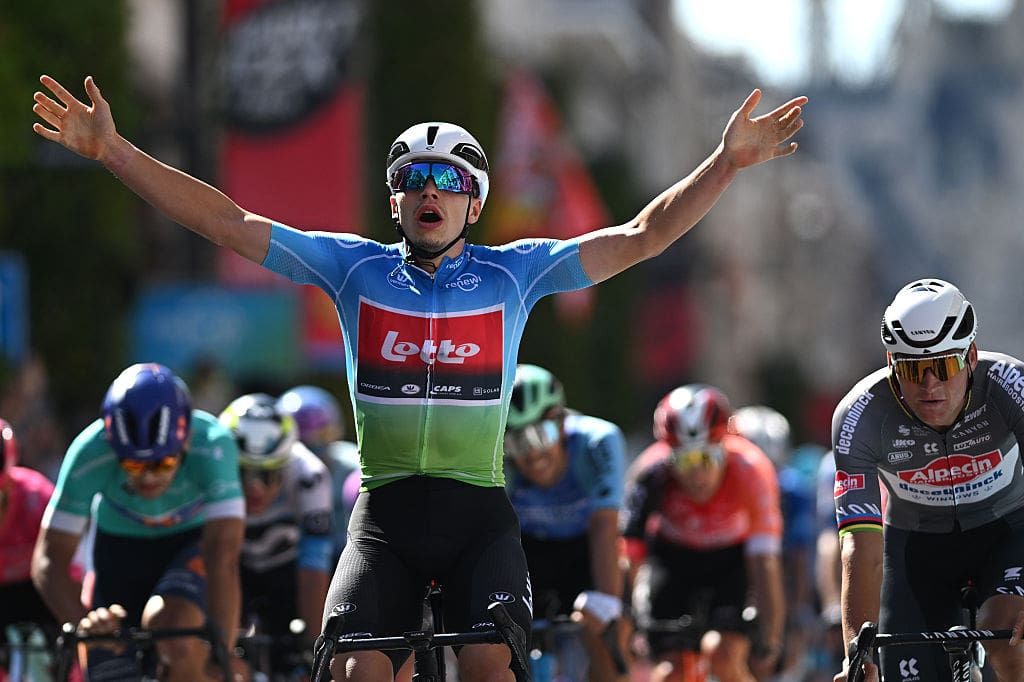
The Renewi Tour sits somewhere between a traditional stage race and a sequence of one-day Classics.
The sprinters usually receive several chances, but the general classification is often decided on cobbled climbs or technical circuits.
The race is particularly suited to riders who can combine several abilities.
An ideal Renewi Tour contender can:
- Stay near the front in crosswinds
- Climb short cobbled ascents
- Sprint from a reduced group
- Collect bonus seconds
- Handle narrow and technical roads
- Recover across five hard days
- Attack without needing a long mountain
This is classic puncheur and all-round Classics terrain.
That is why riders such as Mathieu van der Poel, Tim Wellens, Matej Mohorič, Sonny Colbrelli and Arnaud De Lie have succeeded in the race.
How is the overall winner decided?
The general classification works like most stage races.
Each rider’s finishing times are added together across all five stages. The rider with the lowest total time wins.
However, bonus seconds can make a much larger difference at the Renewi Tour than they do at a three-week Grand Tour.
A rider may earn time bonuses at stage finishes and during designated intermediate bonus sections.
If the strongest riders reach the finish together, a few seconds gained through sprinting can decide the entire race.
The principle is the same as in our explainer on how bonus seconds work in cycling, but the Renewi Tour’s short format gives them even greater influence.
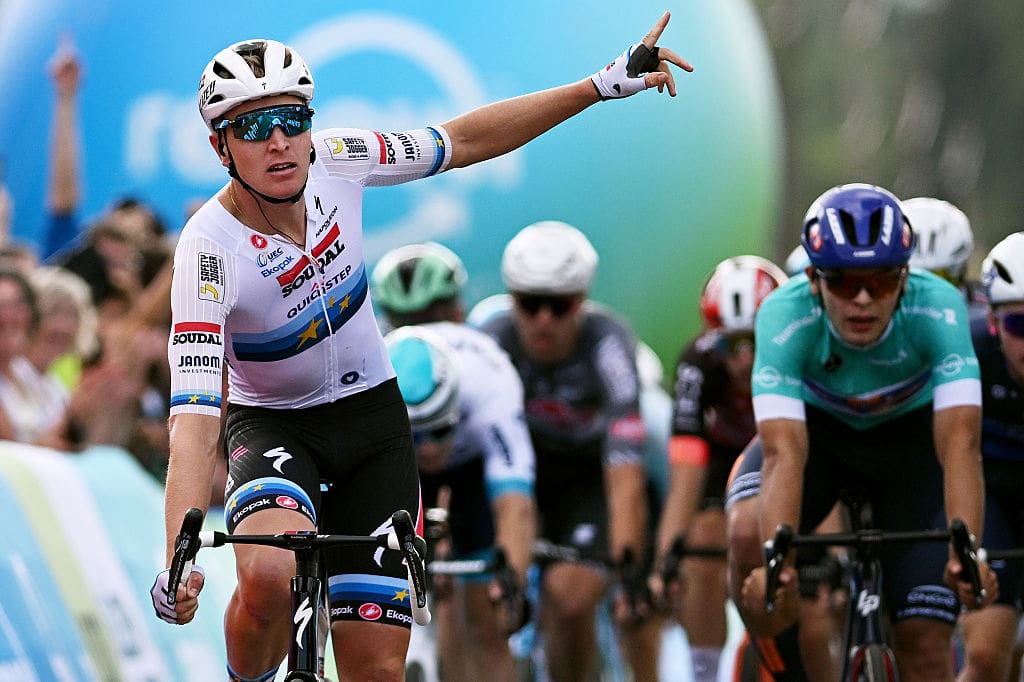
The 2025 edition demonstrated that clearly. Arnaud De Lie won the final stage in Leuven and secured the overall title ahead of Mathieu van der Poel, with Tim Wellens completing the podium.
What is the Green Kilometre?
The Green Kilometre is one of the Renewi Tour’s distinctive features.
It consists of three bonus sprints positioned within one kilometre.
Riders can collect time bonuses at each point, creating a short but intense tactical section in the middle or later part of a stage.
The Green Kilometre can change the general classification without a rider needing to win the stage.
A contender may gain several seconds over a rival simply by accelerating at the correct moments and placing themselves near the front.
This creates several tactical possibilities.
A rider can attack before the Green Kilometre and attempt to collect all the available bonuses. A team can also control the approach and lead out its GC contender rather than its sprinter.
The bonuses encourage aggressive racing because a gap of three or four seconds can prove decisive by the end of the week.
Why are bonus seconds so important?
The Renewi Tour rarely contains long climbs capable of producing major time gaps.
Most leading contenders finish the flat stages together. Even the harder Classics stages may separate the best riders by only a few seconds.
That places greater value on bonuses.
A rider who consistently finishes inside the top three can build a meaningful advantage without ever attacking alone.
Sprinters can therefore become genuine overall contenders.
A fast rider who survives Geraardsbergen and Leuven may gain enough bonuses on the easier stages to defeat a stronger climber or attacker.
This is one reason the race remains open until the final kilometres.
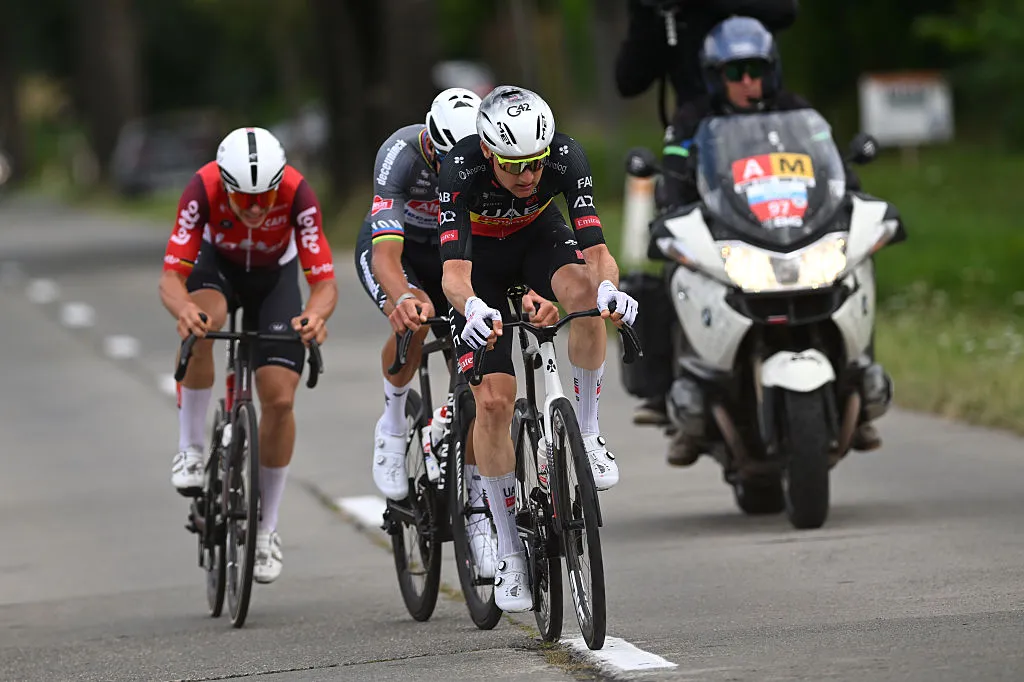 Photo Credit: Getty
Renewi Tour 2026 stage 1: Diest to Diest
The race begins with a stage starting and finishing in Diest.
The city also hosts the team presentation on the previous evening and will return as a Renewi Tour stage location in future editions.
The opening stage should give the sprinters an early opportunity, although racing around Diest is not guaranteed to be completely straightforward.
The roads can be narrow, exposed and difficult to control.
Teams will need to manage the breakaway while keeping their general classification riders safe near the front.
The first leader’s jersey is likely to go to the stage winner because the main favourites should begin on the same time.
Bonus seconds at the finish immediately create small gaps in the overall standings.
Renewi Tour 2026 stage 2: Blankenberge to Ardooie
Stage 2 begins on the Belgian coast in Blankenberge and heads inland to Ardooie.
This is the most obvious pure sprint stage of the race.
The profile may be flat, but the coastal start introduces the possibility of crosswinds.
Wind can split the peloton into echelons before the race reaches the more sheltered roads inland.
That makes positioning important from the beginning.
A GC contender who misses a crosswind split can lose more time here than on one of the officially harder stages.
Our guide to riding and racing in crosswinds explains why shelter moves diagonally across the road and why only a limited number of riders can remain protected.
If the wind remains calm, the major sprint teams should control the breakaway and deliver a full bunch finish in Ardooie.
The lead-out tactics involved in that finale are explained in our guide to how a bunch sprint works.
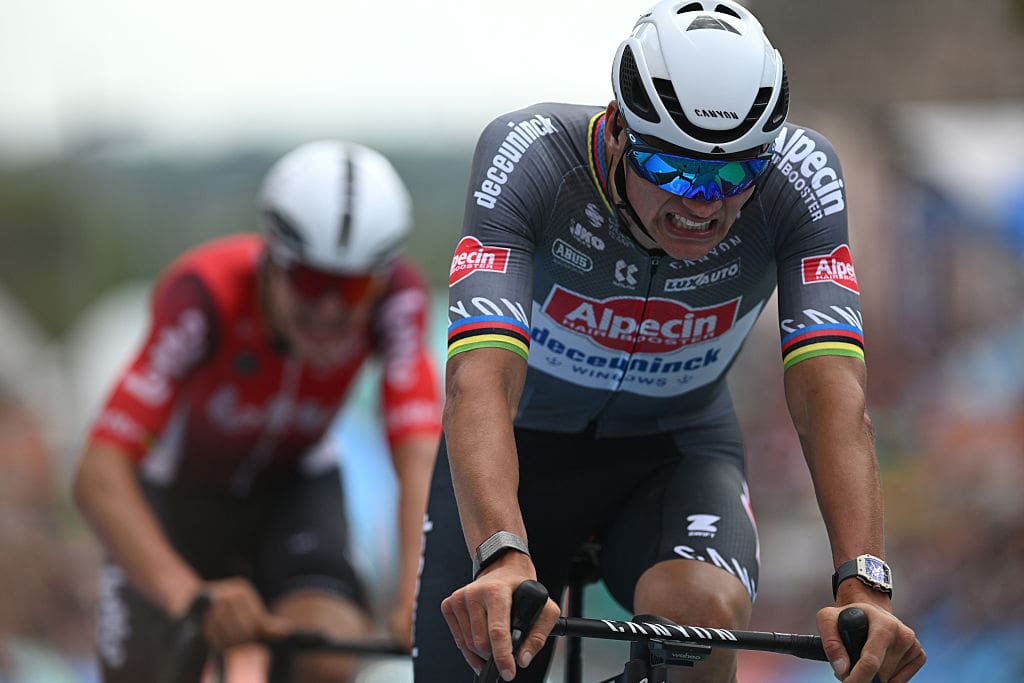 Photo Credit: Getty
Renewi Tour 2026 stage 3: Celles to Geraardsbergen
Stage 3 is expected to be the most important day for the general classification.
The race begins in Celles and finishes in Geraardsbergen, one of the most famous towns in Belgian cycling.
The route includes repeated passages over the Muur van Geraardsbergen.
The Muur is short, steep and partly cobbled. It is not a mountain climb, but its gradients and road surface can split a group quickly.
Riders reach it after already racing at high speed over narrow roads and other short hills.
The stage should favour:
- Cobbled Classics specialists
- Puncheurs
- Strong one-day racers
- Riders with a fast reduced-group sprint
- GC contenders comfortable on technical roads
Pure sprinters may struggle if the pace is high on the repeated climbs.
The Muur is likely to create attacks rather than one long, controlled selection. Riders who hesitate or enter the climb too far back can lose contact before they have the chance to respond.
Why is the Muur van Geraardsbergen important?
The Muur is one of the most recognisable cobbled climbs in cycling.
It rises through Geraardsbergen towards the chapel at the summit and has played a major role in races such as the Tour of Flanders, Omloop Het Nieuwsblad and the Renewi Tour.
Its importance comes from more than its gradient.
The approach is narrow and positioning is difficult. The cobbles reduce traction and make it harder to maintain rhythm. The climb also becomes more selective after repeated passages.
A rider who is strongest on the first ascent may struggle later as fatigue builds.
Our full guide to the Muur van Geraardsbergen and Kapelmuur looks at the climb’s gradients, cobbles and place in Flemish cycling history.
The wider riding area is also explored in our guide to cycling in Geraardsbergen and the Pajottenland.
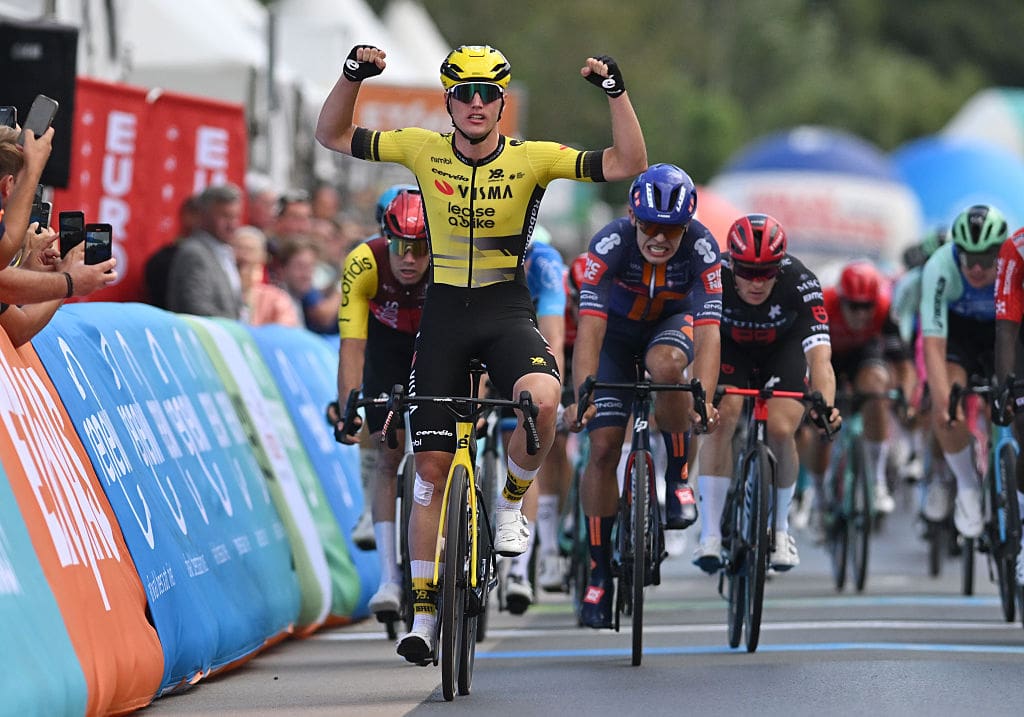 Photo Credit: Getty
Renewi Tour 2026 stage 4: Riemst to Bilzen-Hoeselt
Stage 4 returns to Limburg, beginning in Riemst and finishing in Bilzen-Hoeselt.
The area contains rolling roads rather than the steep cobbled climbs of Geraardsbergen.
That gives the sprinters another opportunity, but the finish may favour riders who can survive repeated short rises.
The stage is also positioned immediately after the hardest GC day.
Some teams may try to exploit fatigue by attacking rather than allowing the race to settle into a simple sprint.
The general classification leader will need to remain alert.
A breakaway containing a rider only a few seconds behind could force the leader’s team to work for much of the day.
The route may therefore become more tactical than its profile suggests.
Renewi Tour 2026 stage 5: Leuven to Leuven
The final stage begins and finishes in Leuven.
The city has hosted the decisive conclusion to recent editions, with circuits that reward strong Classics riders and fast finishers.
The rolling roads around Leuven provide repeated opportunities to attack.
The stage is unlikely to create the same climbing difficulty as Geraardsbergen, but it arrives with the overall standings often separated by only seconds.
That encourages aggressive racing.
The leader may need to chase bonus seconds, respond to attacks and remain near the front through the technical final circuit.
The 2025 race was decided on the final stage when De Lie won in Leuven and moved ahead of Van der Poel in the overall classification.
The 2026 edition could again remain open until the finish line.
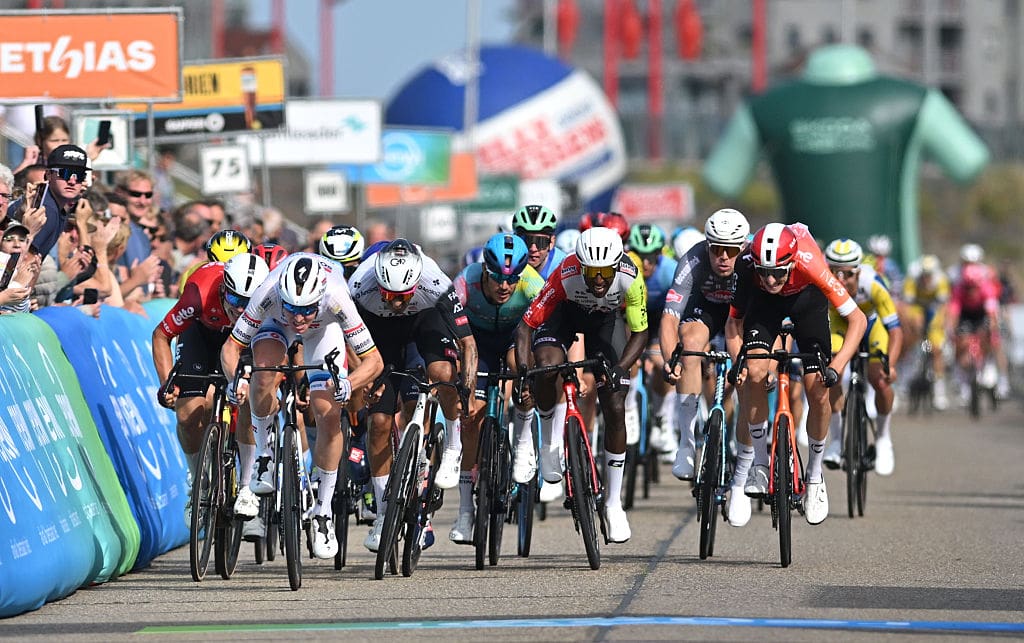 Photo Credit: Getty
Who can win the Renewi Tour?
The ideal winner is usually a Classics rider with a fast finish.
Pure climbers are at a disadvantage because there are no long mountains where they can gain large amounts of time.
Pure sprinters can collect bonuses but must survive the Muur and the harder circuits.
Time-trial specialists may also find fewer opportunities than in editions containing an individual test against the clock.
The strongest contenders are likely to come from the following groups.
Cobbled Classics stars
Riders such as Van der Poel are naturally suited to the Geraardsbergen stage and the final circuit in Leuven.
They can attack on short climbs, handle cobbles and sprint from a reduced group.
The Muur’s role in modern racing was demonstrated again when Van der Poel used it to decide the 2026 Omloop Het Nieuwsblad.
Powerful sprinters
De Lie showed in 2025 that a sprinter with strong Classics ability can win the entire race.
Riders in this category can collect finish bonuses on flat stages and remain competitive on the harder days.
Puncheurs
Short-climb specialists can use the Muur and Leuven circuits to create separation.
They may lack the sprint speed of De Lie or Van der Poel but can compensate through attacking.
Rouleurs and crosswind specialists
Strong riders who position well and remain alert in the wind can gain time when the peloton splits.
They may also enter tactical breakaways and collect Green Kilometre bonuses.
Which riders are expected to race?
The final 2026 start list has not yet been confirmed.
Early start-list pages contain team entries but few reliable rider selections, so individual names should remain provisional until teams announce their squads.
The profile would naturally suit riders such as:
- Arnaud De Lie
- Mathieu van der Poel
- Tim Wellens
- Tim Merlier
- Olav Kooij
- Mads Pedersen
- Biniam Girmay
- Jasper Philipsen
- Thibau Nys
- Matej Mohorič
- Paul Magnier
- Pavel Bittner
That is a list of riders suited to the race rather than a confirmed start list.
The final field will become clearer after the Tour de France, national championships and early-August stage races.
Is Arnaud De Lie the defending champion?
Yes.
De Lie won the 2025 Renewi Tour after taking the final stage in Leuven.
Van der Poel had looked likely to secure the overall victory, but De Lie’s finishing speed and bonus seconds changed the classification in the final metres.
The Belgian finished ahead of Van der Poel overall, with Wellens in third.
His victory demonstrated why the Renewi Tour suits powerful sprinters.
De Lie was able to remain competitive on the harder terrain and then use his faster finish to gain the seconds required for the overall win.
Who has won the Renewi Tour most often?
Tim Wellens holds the record with four overall victories.
He won in 2014, 2015, 2023 and 2024.
Wellens is particularly well suited to the race because he can attack on short hills, ride strongly in crosswinds and perform consistently across five stages.
Other notable former winners include:
- Mathieu van der Poel
- Matej Mohorič
- Tom Dumoulin
- Sonny Colbrelli
- Niki Terpstra
- Zdeněk Štybar
- Lars Boom
- Edvald Boasson Hagen
- Arnaud De Lie
André Greipel holds the record for the most stage victories, with seven.
Why do sprinters have a chance of winning overall?
Sprinters can win the Renewi Tour because of bonus seconds and the absence of long climbs.
A rider who wins two flat stages may build a useful advantage before the race reaches Geraardsbergen.
If that rider can remain with the leading Classics group on the Muur, the bonuses can survive until the finish.
The challenge is that not every sprinter climbs or positions well enough.
The purest fast finishers may be dropped on stage 3 or caught behind splits caused by crosswinds.
The race therefore favours durable sprinters rather than riders who rely entirely on top speed.
The qualities that separate pure sprinters from more resilient fast finishers are covered in our guide to the greatest Tour de France sprinters.
Can a time-triallist win?
Yes, although the 2026 route does not currently include an announced individual time trial.
Previous editions have sometimes featured a race against the clock, giving specialists an obvious opportunity to gain time.
Without a time trial, a rouleur must find other ways to build an advantage.
That may involve:
- Attacking in crosswinds
- Joining a strong breakaway
- Collecting Green Kilometre bonuses
- Escaping late on a rolling stage
- Limiting losses on the cobbled climbs
A rider who lacks a sprint faces a difficult task because rivals can collect repeated finish bonuses.
How do crosswinds affect the race?
Crosswinds can turn a flat Renewi Tour stage into a major GC day.
When wind blows across the road, riders cannot all shelter directly behind the cyclist ahead.
The strongest teams form diagonal lines known as echelons.
The road may only be wide enough for a limited number of riders to receive protection. Everyone else becomes exposed and gaps begin to open.
Once one group loses contact, the leading teams can increase the speed and make the split permanent.
This is especially relevant on stage 2 from the coast.
A rider can lose the overall race before reaching Geraardsbergen if they begin a windy section too far back.
Our guide to riding in a cycling group explains how echelon formations change the usual shape of the draft.
Why is positioning so important?
The roads used by the Renewi Tour are often narrow and technical.
Teams fight for the front before:
- Cobbled climbs
- Roundabouts
- Village centres
- Crosswind sections
- Narrow bridges
- Technical descents
- Bonus sprints
- Final circuits
A rider who enters the Muur in 40th position may already be too far back to respond when the favourites attack.
Moving forward during a climb requires far more energy than beginning near the front.
Positioning is therefore a physical skill as well as a tactical one.
Teams use several riders to protect their leader and guide them towards each important section.
How does the Renewi Tour differ from a Grand Tour?
The Renewi Tour lasts five days rather than three weeks.
It has no high mountains and usually produces much smaller time gaps.
| Renewi Tour | Grand Tour |
|---|---|
| Five stages | 21 stages |
| Classics-style roads | Wide range of terrain |
| Small GC gaps | Potential gaps of several minutes |
| Few or no long climbs | Multiple mountain stages |
| Bonus seconds often decisive | Mountain and time-trial gaps usually more important |
| Sprinters can challenge overall | Pure sprinters cannot win GC |
| Positioning crucial every day | Some transition stages less decisive |
The Renewi Tour is shorter, but that does not make it easier.
There is little room to recover from a mistake.
Losing ten seconds in a crosswind can end a rider’s overall challenge.
How does it differ from the Tour of Flanders?
The Tour of Flanders is a one-day Monument.
The Renewi Tour is a five-day stage race.
Both use short climbs, cobbles, narrow roads and Classics tactics, but the strategic objectives are different.
A rider can spend all their energy attacking in the Tour of Flanders because there is no next stage.
At the Renewi Tour, riders must consider recovery and the overall classification.
A spectacular attack may win one stage but leave the rider too tired to defend the lead the following day.
Teams also need to balance stage wins, sprint opportunities and GC ambitions across the week.
What jerseys are awarded?
The Renewi Tour includes several classifications.
The precise sponsor names and jersey colours can change, but the main competitions generally include:
- General classification
- Points classification
- Combativity or attacking classification
- Team classification
- Daily stage winner
- Green Kilometre bonus competition
The overall leader is the rider with the lowest cumulative time.
The points leader scores through stage finishes and designated sprints.
The classifications can overlap, allowing one rider to lead several competitions at once.
How many riders and teams take part?
As a WorldTour race, the Renewi Tour attracts the leading men’s teams alongside selected invited squads.
Teams normally start with seven riders, although the final team and rider list must be confirmed closer to the race.
The expected field includes WorldTeams and invited ProTeams with strong Belgian or Classics interests.
That usually produces a start list packed with sprinters and one-day specialists rather than Grand Tour climbers.
The race sits alongside the other major late-summer events in the men’s cycling race hub.
Where can the Renewi Tour be watched?
The organisers have confirmed live coverage on Sporza through VRT and Tipik through RTBF in Belgium.
Eurosport provides coverage outside Belgium.
UK viewers should expect the race to be available through the broadcaster carrying Eurosport cycling coverage at the time of the event.
Exact daily start times and broadcast windows are normally confirmed closer to the opening stage.
The final kilometres of every stage are particularly important because bonus seconds and late attacks can change the overall standings.
Current viewing information for the major men’s races is collected in our men’s cycling TV guide hub.
Which stage should beginners watch?
Stage 3 into Geraardsbergen is the essential stage.
It should contain repeated passages over the Muur and offers the clearest chance for the Classics specialists to create meaningful GC gaps.
Stage 5 in Leuven is also important because the race may remain undecided until the final sprint.
Beginners unable to watch the entire race should prioritise:
- The final 60km of stage 3
- The final 40km of stage 5
- Any windy section during stage 2
- The Green Kilometre on each stage
- The final ten kilometres of the sprint stages
The winner may be decided by a bonus sprint that initially appears less important than a stage finish.
What should viewers look for?
The Renewi Tour becomes easier to understand once viewers stop concentrating only on the stage leader.
Watch for:
- Which GC riders are near the front before a climb
- Whether wind is splitting the peloton
- Who collects bonus seconds
- Which teams still have several riders together
- Whether sprinters survive the Muur
- Which riders attack before the Green Kilometre
- How many seconds separate the leading contenders
- Whether a stage winner moves into the overall lead
- Which riders have used too much energy before Leuven
A rider finishing fifth may still have gained time through intermediate bonuses.
Another rider can win a stage but remain behind overall because they lost seconds earlier in the race.
Renewi Tour terminology explained
| Term | Meaning |
|---|---|
| General classification | The overall standings based on cumulative time |
| Green Kilometre | A one-kilometre section containing three bonus sprints |
| Echelon | A diagonal group formed to find shelter in crosswinds |
| Puncheur | A rider suited to short, steep climbs |
| Rouleur | A powerful rider suited to flat and rolling roads |
| Reduced sprint | A sprint from a smaller group after difficult racing |
| Cobbled climb | An ascent surfaced partly or entirely with cobblestones |
| Bonus seconds | Time deducted from a rider’s overall time |
| Classics rider | A rider suited to long, tactical one-day races |
| GC contender | A rider challenging for the overall classification |
-
 Photo Credit: Getty


Who is most likely to win the Renewi Tour 2026?
A firm prediction should wait until the start list and detailed stage profiles are confirmed.
The route favours a rider who can combine a fast finish with strong cobbled and hilly racing.
The main winning profile is likely to be:
- A durable sprinter such as De Lie
- A cobbled superstar such as Van der Poel
- A versatile all-rounder such as Wellens
- A fast puncheur capable of gaining bonuses
- A Classics leader with several strong teammates
Stage 3 should remove the weakest climbers, while stage 5 may allow the remaining contenders to fight directly for the final seconds.
Renewi Tour 2026 summary
The Renewi Tour is a five-stage WorldTour race held in Belgium from 19 to 23 August 2026.
It begins in Diest and finishes in Leuven, with sprint opportunities in Diest, Ardooie and Bilzen-Hoeselt.
The key general classification stage runs from Celles to Geraardsbergen and includes repeated passages over the Muur.
The race is decided through a combination of cobbled climbs, crosswinds, positioning and bonus seconds rather than long mountain stages.
De Lie returns as defending champion after winning the 2025 race ahead of Van der Poel and Wellens.
The final start list remains unconfirmed, but the course should once again attract the world’s leading sprinters and Classics specialists.
For beginners, the most important point is simple.
The Renewi Tour may look flat on a route map, but almost every stage contains a way to lose the race.