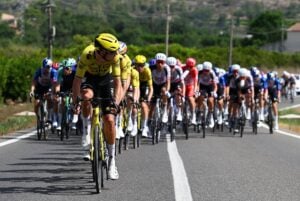
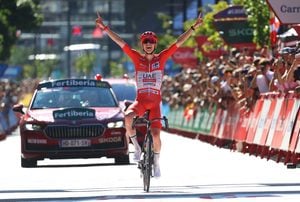
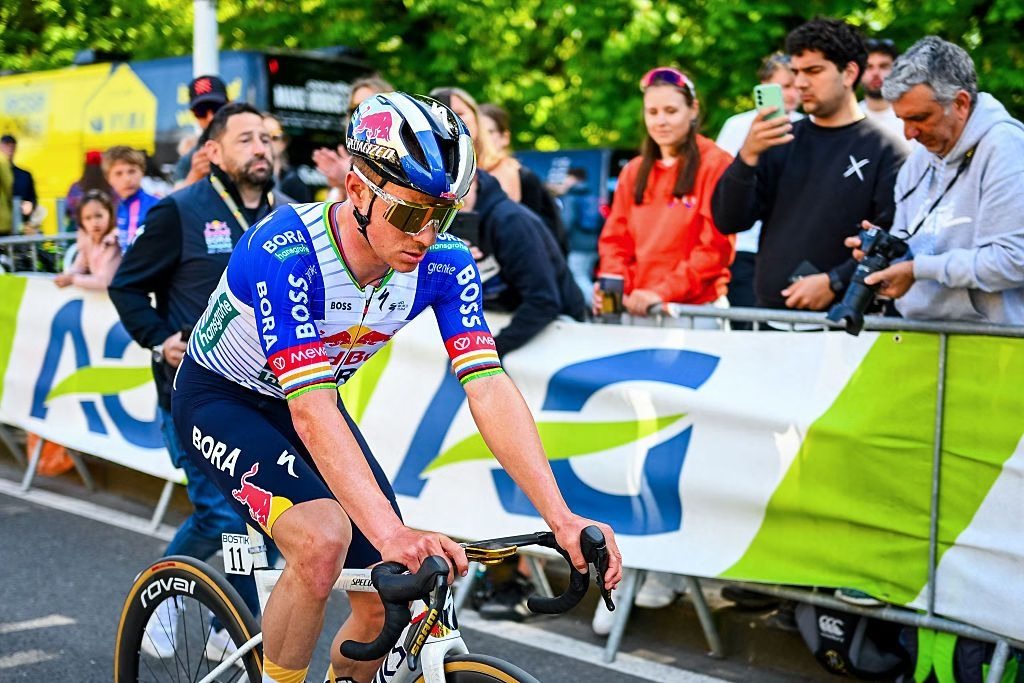
Tom Pidcock has not suddenly become a yellow jersey contender, but he has made himself impossible to dismiss in the battle for the Tour de France podium.
His aggressive ride on Stage 13 of the 2026 Tour de France transformed the shape of his race. Pidcock finished third in Belfort after spending the day in the breakaway, gaining more than seven minutes on the main general classification group and climbing into fourth overall.
The British rider is now only nine seconds behind Remco Evenepoel in third place. A top-10 finish is no longer the limit of his ambitions. With eight stages remaining, the podium has become a realistic target.
Reaching Paris in the top three will still require Pidcock to survive some of the hardest terrain in the race. Le Markstein, Plateau de Solaison, the individual time trial and the two stages finishing at Alpe d’Huez all provide opportunities for the standings to change again.
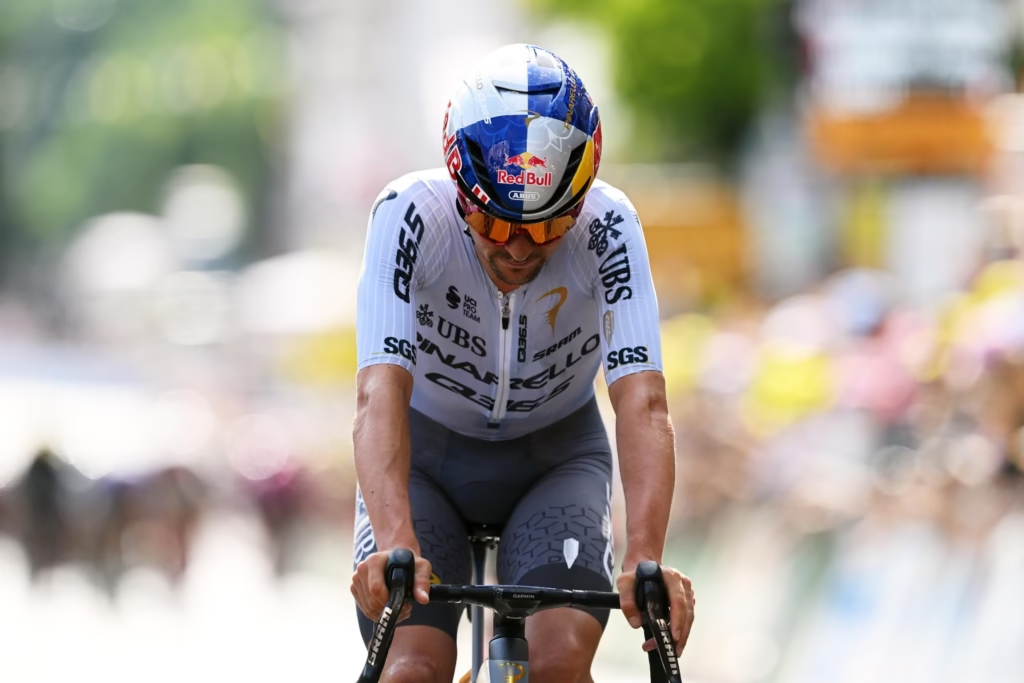 Photo Credit: Getty
Tour de France standings after Stage 13
Tadej Pogačar continues to lead the Tour by 3:36 over Jonas Vingegaard, with the two established Grand Tour champions still separated from the rest of the race.
The more open contest is directly behind them.
Evenepoel remains third, but Pidcock is now only nine seconds away from the final podium position. The British rider trails Pogačar by 4:15, placing him 39 seconds behind Vingegaard and close enough to become part of every tactical discussion surrounding the leading group.
That does not mean Pidcock should suddenly be considered an equal favourite alongside Pogačar, Vingegaard and Evenepoel. His advantage came partly because the leading teams allowed the Stage 13 breakaway to gain more than seven minutes.
However, time gained through a breakaway counts exactly the same as time gained through a mountain attack. Pidcock has placed himself in contention. It is now up to the riders around him to remove him again.
Stage 13 changed the way Pidcock must race
Before Belfort, Pidcock still had the freedom to ride aggressively.
He could enter breakaways, target stage wins and approach the mountains without carrying the full responsibility of a general classification contender. Q36.5 did not need to control the race, while the strongest squads were more concerned about one another.
That freedom had already helped make Pidcock’s 2026 Tour increasingly interesting. It then allowed him to turn Stage 13 into a major GC opportunity.
Pidcock now occupies a very different position. Evenepoel and the other podium contenders can no longer allow him to disappear into another dangerous move. He will be watched more closely, particularly on stages where a breakaway could again gain several minutes.
His team must also begin protecting him more deliberately. That means keeping him out of trouble, positioning him before decisive climbs and ensuring he has support for as long as possible.
A day spent chasing a stage victory has turned into a genuine three-week GC campaign.
Le Markstein provides the first answer
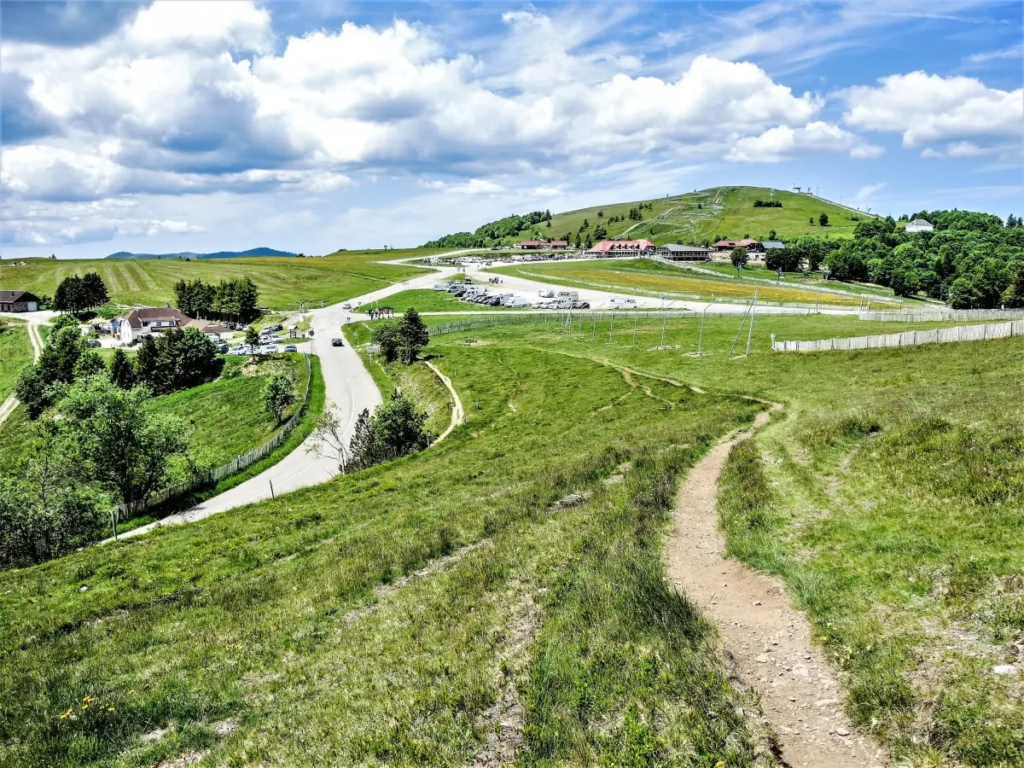
Stage 14 offers the first immediate test of whether Pidcock’s new position can survive.
The route from Mulhouse to Le Markstein contains 3,800 metres of climbing across only 155.3km. The Col du Haag is likely to create the decisive selection, climbing for 11.2km at 7.3% before cresting less than six kilometres from the finish.
As explained in our history of Le Markstein at the Tour de France, this is not a conventional summit finish. The late descent and short run towards the line create room for tactical racing, particularly if small groups form over the final climb.
That should suit Pidcock better than a straightforward uphill test.
He no longer needs to attack from distance. His priority should be staying with Evenepoel and the other podium contenders for as long as possible. If he reaches Le Markstein without losing meaningful time, the podium discussion becomes much more serious.
Pidcock does not need to beat Pogačar or Vingegaard. His immediate race is against Evenepoel and anyone close enough behind to threaten fourth place.
Plateau de Solaison could expose the limits
The more difficult examination comes one day later.
Stage 15 finishes at Plateau de Solaison after 183.9km and approximately 3,950 metres of climbing. The final ascent averages around 9%, while the steep Col de la Croisette approach to Le Salève means riders will reach the last climb with significant fatigue already in their legs.
It is why Plateau de Solaison ranks among the hardest mountain stages of the 2026 Tour de France.
Long, steep summit finishes have not always been Pidcock’s strongest terrain. His explosive acceleration and technical ability are most valuable on irregular climbs, fast descents and stages where positioning matters almost as much as sustained climbing power.
Plateau de Solaison is less complicated. It is a direct test of watts per kilogram, recovery and the ability to maintain a high climbing pace for an extended period.
If Evenepoel or another rival wants to place Pidcock under pressure, this is an obvious opportunity.
The time trial favours Evenepoel
Pidcock must also consider the Stage 16 individual time trial from Évian-les-Bains to Thonon-les-Bains.
The 26.1km test should favour Evenepoel, one of the strongest time trial riders in the world. Pidcock has improved considerably against the clock, but he is unlikely to begin the stage expecting to gain time on the Belgian.
That changes the calculation.
Being nine seconds behind Evenepoel is enough to create a podium battle, but it is not necessarily enough to carry into the time trial. Pidcock may need to gain time at Le Markstein or Plateau de Solaison simply to give himself a buffer.
The wider sequence is covered in our full Tour de France 2026 route guide. Two mountain stages are followed by the second rest day and then the time trial, leaving little room for a rider to recover from one difficult performance.
Pidcock cannot treat the mountains as a defensive exercise alone. At some point, he may need to attack.
The final Alps leave no room to hide
Even surviving the weekend and the time trial would not secure the podium.
Stage 18 finishes at Orcières-Merlette before the Tour reaches its decisive final weekend. Stages 19 and 20 both finish at Alpe d’Huez, with the second of those stages containing around 5,600 metres of climbing and three hors catégorie ascents.
The Tour de France 2026 Alps guide shows how each day creates a different kind of GC test. Orcières-Merlette offers a more traditional summit finish, Stage 19 is short and explosive, while the queen stage combines the Galibier, Col de Sarenne and Alpe d’Huez.
Back-to-back mountain stages create a separate challenge.
Pidcock has shown that he can produce exceptional performances on individual days. The remaining question is whether he can repeat those efforts while carrying accumulated fatigue through the third week of a Grand Tour.
He finished third at the 2025 Vuelta a España, so the demands of a three-week podium campaign are no longer unfamiliar. That result showed he can manage his effort, recover and remain competitive deep into a Grand Tour.
The Tour, however, is offering a much harsher final week. The back-to-back Alpe d’Huez finishes could decide not only the yellow jersey but every place on the podium.
Why Pidcock can reach the podium
There are strong reasons to take Pidcock’s challenge seriously.
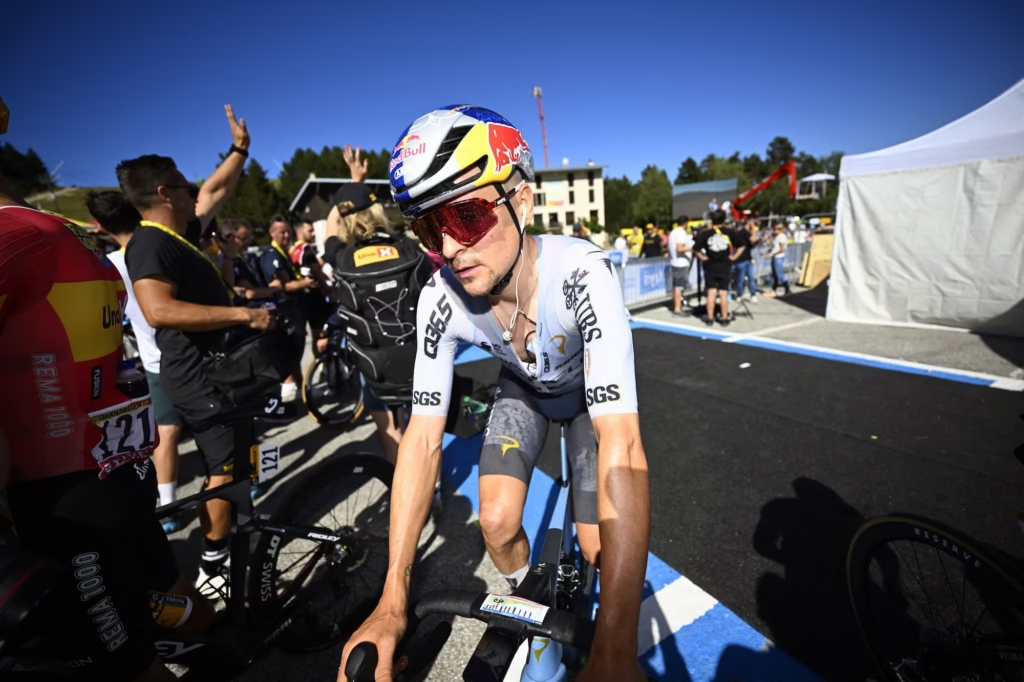
His climbing form appears to be improving as the race develops. He has already survived difficult days, remained tactically active and shown the confidence to commit to a move capable of transforming his Tour.
Pidcock is also an outstanding descender. That gives him tactical options on mountain stages where the finish does not come immediately after the final summit. Rivals may be reluctant to give him even a small gap over the top of a technical descent.
His team’s approach could also work in his favour. Q36.5 entered the race without the expectation of controlling the yellow jersey battle. Even with Pidcock now fourth, the pressure remains greater on the larger teams around him.
Most importantly, the gap to third place is nine seconds. At that distance, bonus seconds, positioning and small splits can matter almost as much as a major mountain attack.
Why the podium remains difficult
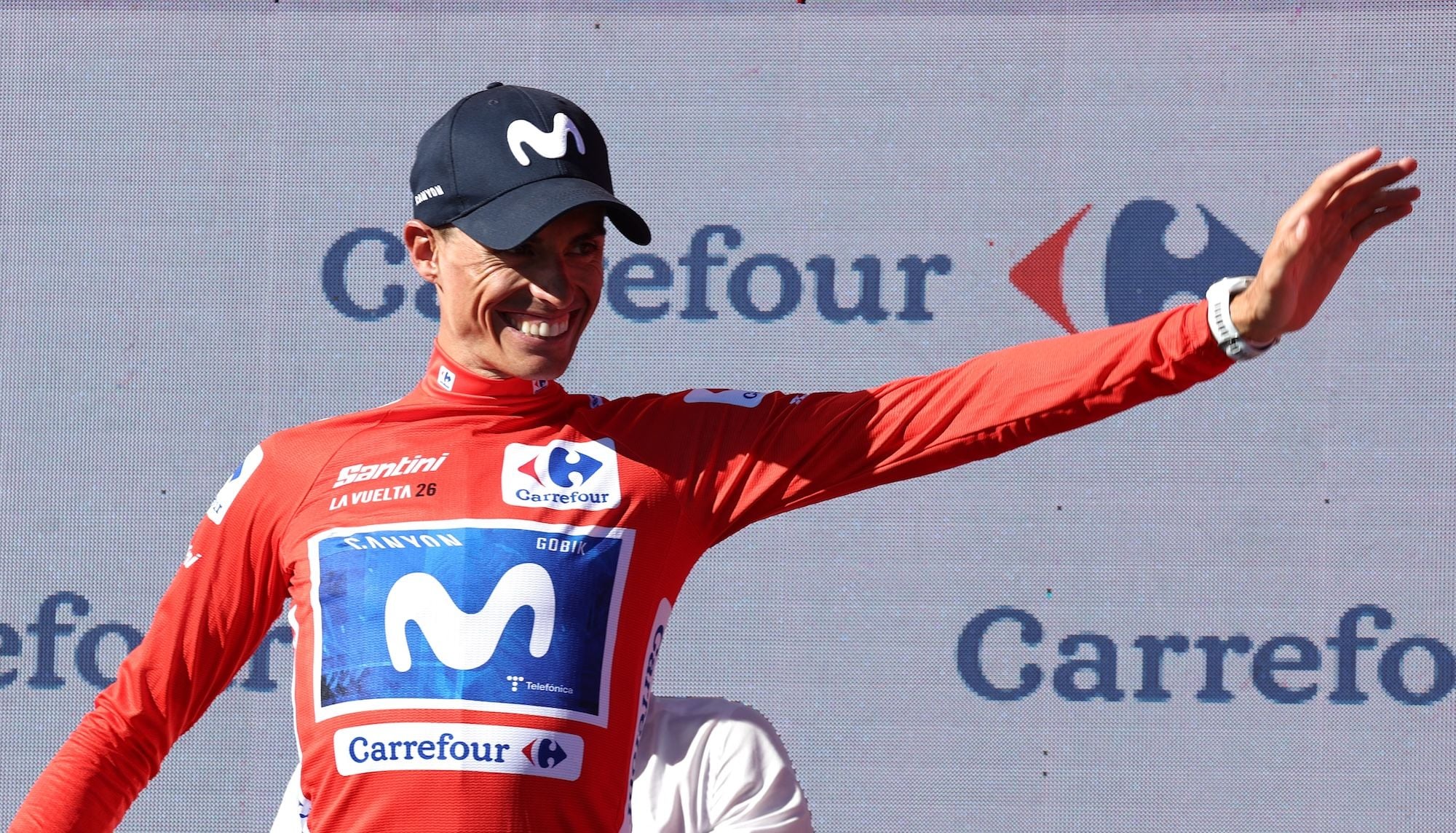
Evenepoel remains the more proven Tour de France GC rider and should gain time in the individual time trial.
Pidcock must also prove he can match the best climbers on repeated high-mountain stages. His Stage 13 gain was tactically brilliant, but it did not come from dropping Evenepoel in a direct climbing contest.
There is also a danger that defending fourth place changes the way he rides. Pidcock is often at his best when racing instinctively and aggressively. Becoming too cautious could remove some of the unpredictability that made him dangerous in the first place.
The podium fight will not involve only Pidcock and Evenepoel either. Riders behind them still have several mountain stages in which to recover lost time, while illness, crashes and one difficult day could completely reorder the standings.
Pidcock began the race as one of the most difficult riders to place among the Tour de France 2026 GC outsiders. Stage 13 has not removed all those uncertainties, but it has raised the potential reward considerably.
Can Pidcock finish on the Tour de France podium?
Yes, but Stage 13 has created an opportunity rather than provided an answer.
Pidcock is close enough to Evenepoel for the podium fight to be real. He has Grand Tour podium experience, strong descending skills and the tactical confidence to exploit an unusual race situation.
The harder question is whether he can defend that position through long summit finishes, a time trial that favours Evenepoel and an exceptionally difficult final week in the Alps.
Le Markstein should reveal whether Pidcock can stay in the contest. Plateau de Solaison may show whether he can put Evenepoel under pressure. The time trial will test how much progress he has made against the clock.
Then come the Alps.
Pidcock no longer needs to rescue a top-10 finish or search only for a stage win. After Stage 13, the podium is directly in front of him. The challenge now is staying there.