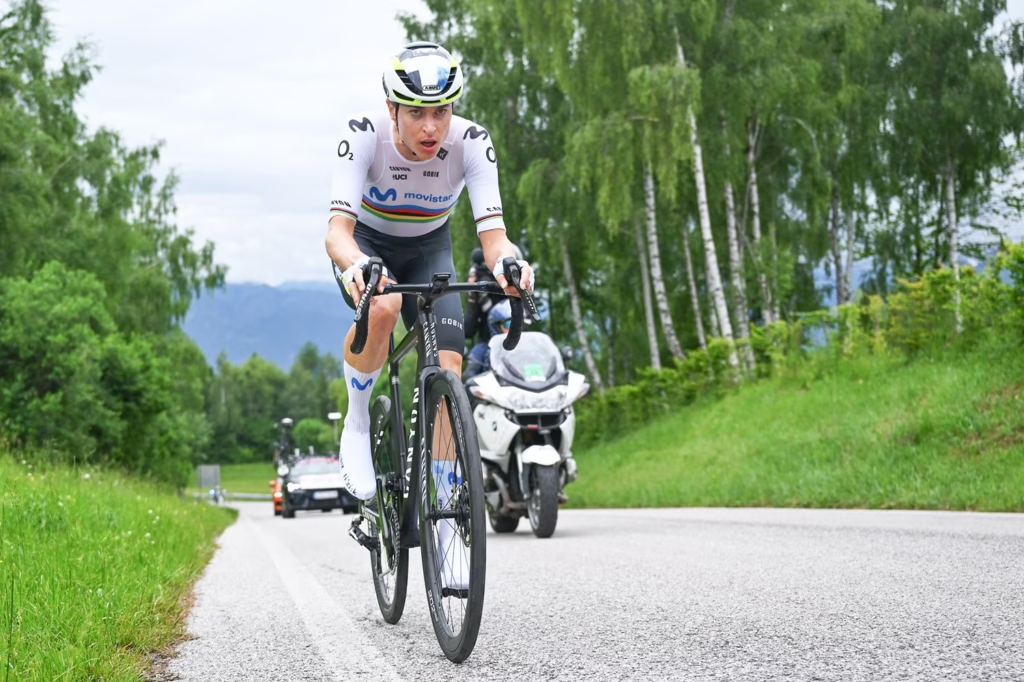
Movistar have confirmed their seven-rider squad for the Tour de France Femmes 2026, with Marlen Reusser leading the team’s general classification challenge and Liane Lippert providing another major option on the hilly and mountainous stages.
Reusser and Lippert will be joined by Francesca Barale, Sara Martín, Tota Magalhães, Arlenis Sierra and Paula Ostiz for the nine-stage race from Lausanne to Nice.
The selection gives Movistar a clear structure around Reusser for the GC while retaining plenty of freedom elsewhere. Lippert can target stages or support the overall challenge, Sierra provides speed for selective finishes and Barale, Martín, Magalhães and Ostiz give the team several riders capable of racing aggressively when opportunities develop.
The squad reflects the wider direction of the Movistar 2026 Women’s WorldTour team, which has built a clearer stage-racing identity around Reusser while retaining several versatile riders around her.
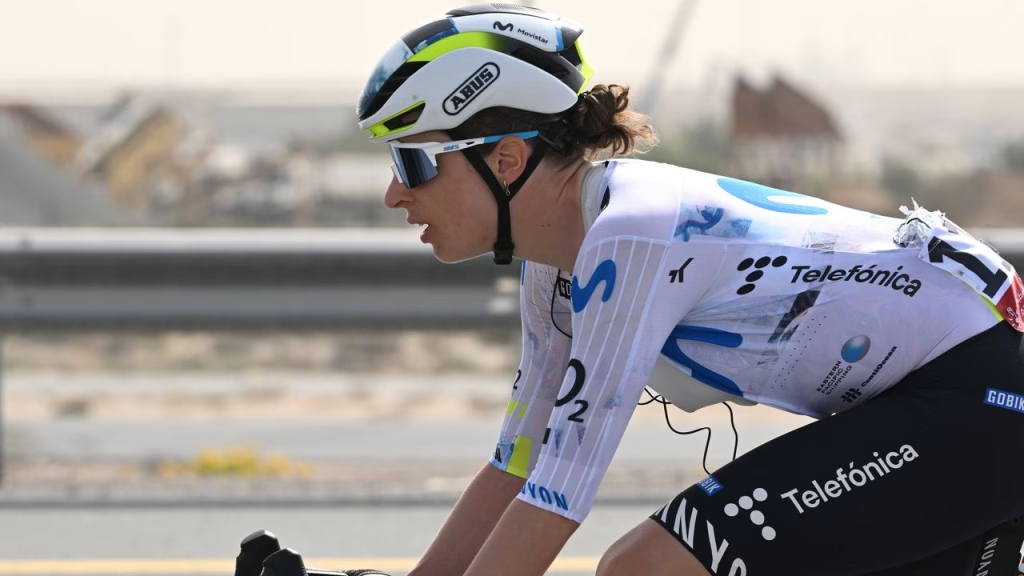
Reusser returns with genuine Tour podium ambitions
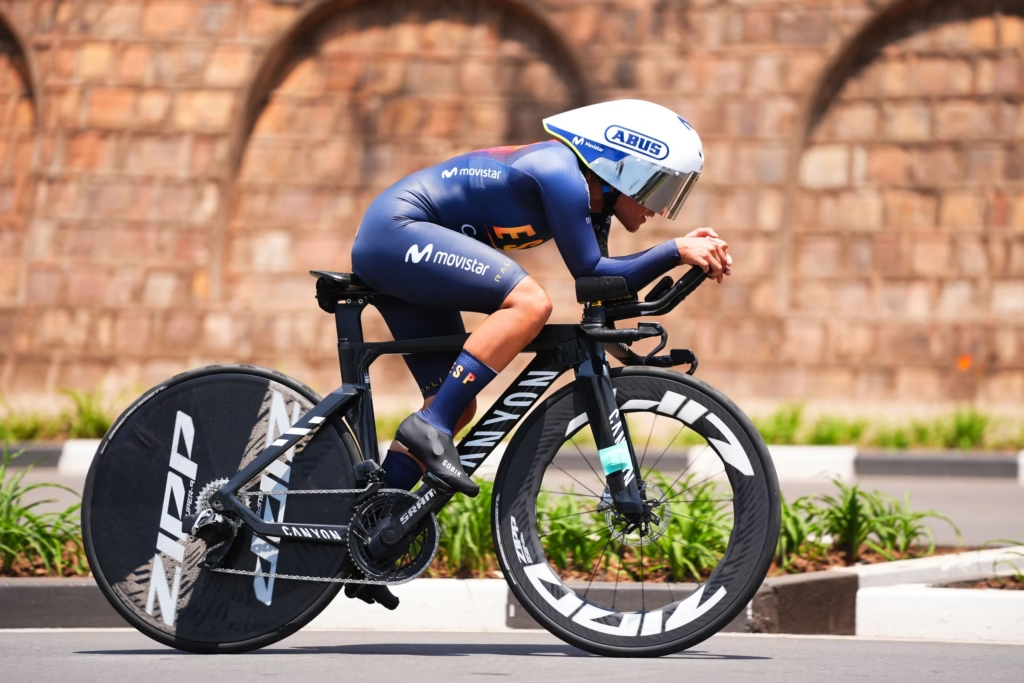
Reusser is the obvious centrepiece of the Movistar selection.
The Swiss rider has developed from one of the peloton’s outstanding time trial specialists into a genuine stage-race leader, with her climbing progress making her increasingly difficult to categorise as simply a rider who gains time against the clock. Her broader development and season can be followed through the Marlen Reusser rider page.
That makes the Tour de France Femmes 2026 route particularly interesting for her. The race begins on home roads in Switzerland before the 21km individual time trial from Gevrey-Chambertin to Dijon on Stage 4 provides one of her clearest opportunities to put time into the other GC contenders.
Reusser enters the Tour as one of the major yellow jersey challengers in our Tour de France Femmes 2026 riders to watch. The question is no longer whether she can ride a Grand Tour GC, but whether she can gain enough time before the hardest climbs to withstand the strongest pure climbers.
The Dijon time trial could put Reusser into yellow
Stage 4 is the most obvious place for Reusser to take control of the race.
The 21km individual time trial is long enough to create meaningful gaps and comes before the two decisive mountain stages. Our guide to the Tour de France Femmes 2026 Dijon time trial contenders identifies Reusser as one of the riders with the clearest opportunity to reshape the GC.
Her 2026 Tour de Suisse victory strengthened the argument that she is no longer dependent on the time trial alone. She can now combine sustained power against the clock with high-level climbing, but Ventoux remains a different type of test from the medium mountain terrain where she has increasingly excelled.
The ideal Tour for Movistar is therefore straightforward. Keep Reusser safe through the Swiss opening, take time in Dijon and force the lighter climbers to attack her later rather than allowing them to ride defensively.

The Swiss Grand Départ adds another layer for Reusser
The opening weekend gives Reusser another reason for the 2026 Tour to matter.
The race starts in Lausanne before moving from Aigle to Geneva on Stage 2 and leaving Switzerland during Stage 3 towards Poligny. The full opening is covered in our Tour de France Femmes 2026 Swiss Grand Départ guide.
Reusser therefore begins one of the biggest races of her season at home and does so as Movistar’s recognised leader rather than simply one of several options.
That brings extra attention, but it also gives the team a straightforward objective during the opening days. Reusser does not need to win in Switzerland. She needs to avoid crashes, splits and unnecessary time losses before reaching the stage designed most clearly around her strongest attribute.
Lippert gives Movistar a second major card
Liane Lippert gives the squad flexibility that many GC teams will not have.
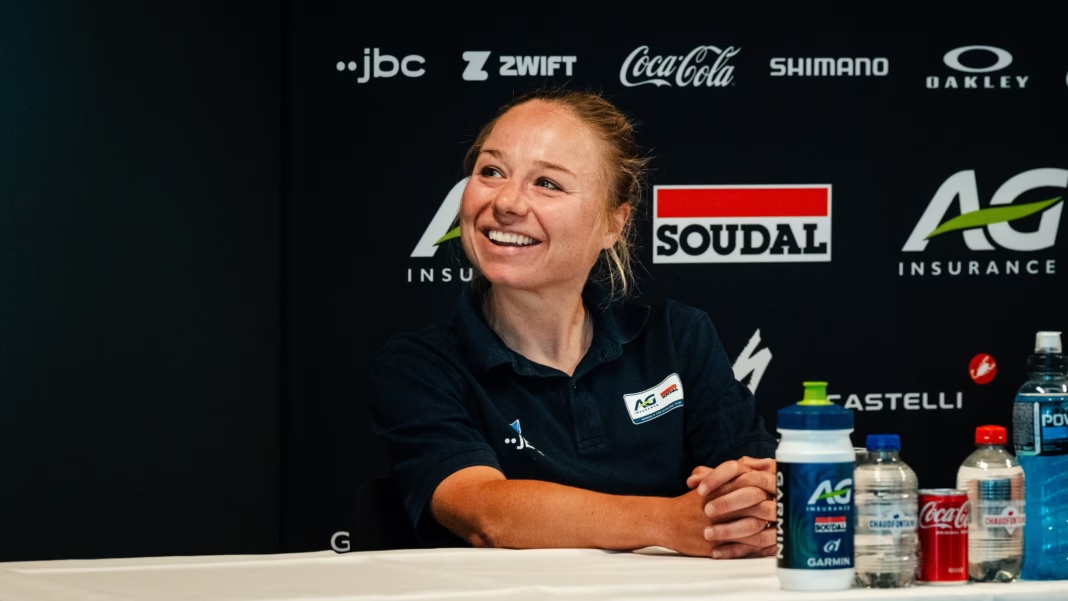
The German is already a Tour de France Femmes stage winner and has repeatedly shown she can win on difficult hilly terrain rather than needing a conventional sprint or major summit finish. Her wider results and race history can be found on the Liane Lippert rider page.
That makes Stages 3, 5 and 6 particularly interesting. If Reusser remains well positioned overall, Lippert can support her through the more selective terrain while retaining the freedom to follow moves or attack when the GC teams hesitate.
If Movistar decide a particular stage is unlikely to influence the overall classification, Lippert immediately becomes one of their strongest candidates for the win. She also gives the team another option if a finish is too difficult for Sierra but not hard enough to become a pure GC battle.
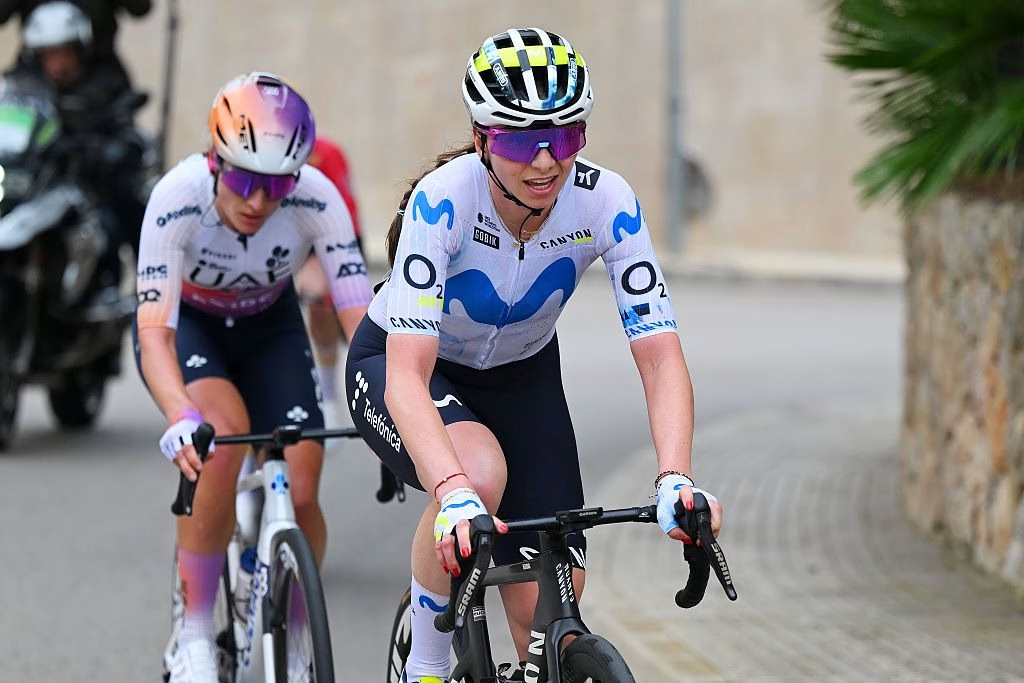 Photo Credit: Getty
Lippert can make rival GC teams work
Lippert’s value is not limited to winning stages herself.
A strong attack from Lippert on one of the hilly days forces teams with yellow jersey ambitions to decide whether they can afford to let her ride away. That can prevent rivals from concentrating every rider around Reusser and make Movistar harder to control tactically.
This is especially useful on the middle stages, where the strongest breakaway riders are expected to have more freedom. The Tour de France Femmes 2026 breakaway specialists guide outlines why Stages 5 and 6 should be among the best opportunities for attacking riders.
Movistar can therefore use Lippert offensively even while Reusser remains their clear GC leader.
Sierra provides the faster finish
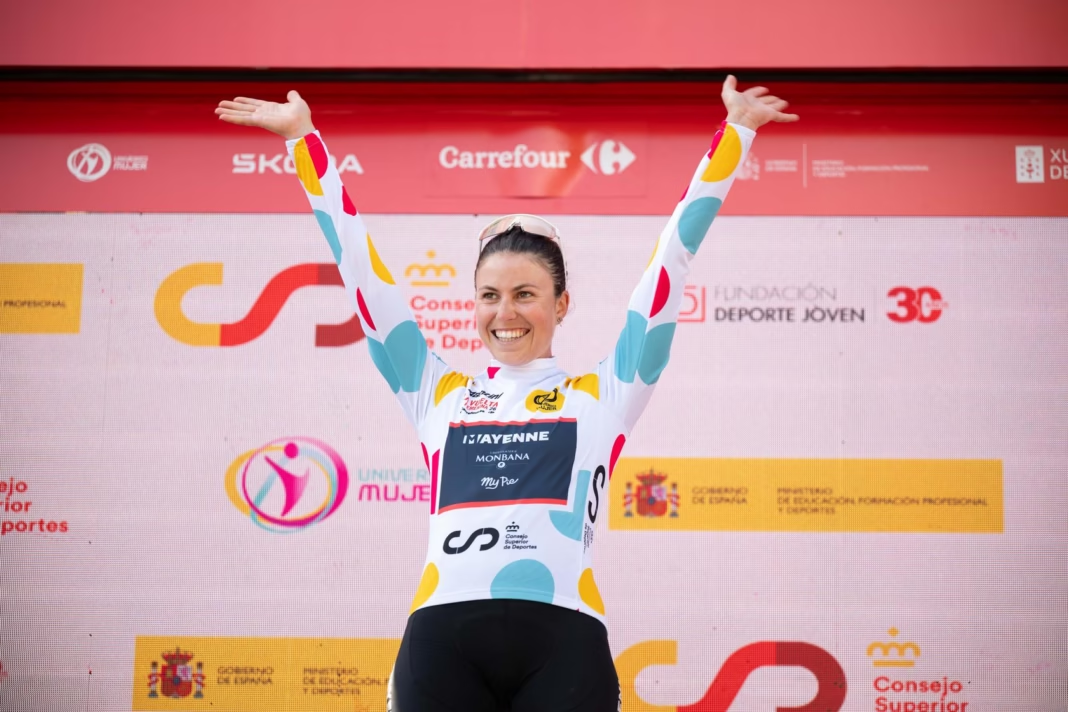
Arlenis Sierra offers Movistar a different route towards a stage result.
The Cuban has the speed to contest reduced bunch finishes while also handling enough climbing to survive days that remove some of the more conventional sprinters.
That should make her particularly useful on stages where Movistar do not need to spend resources controlling the race for Reusser. Rather than trying to match the strongest sprint trains on a completely flat finish, Sierra’s better opportunities may come after a harder day has already reduced the number of riders reaching the final kilometres.
Her presence means Movistar do not need Reusser or Lippert to deliver every meaningful result.
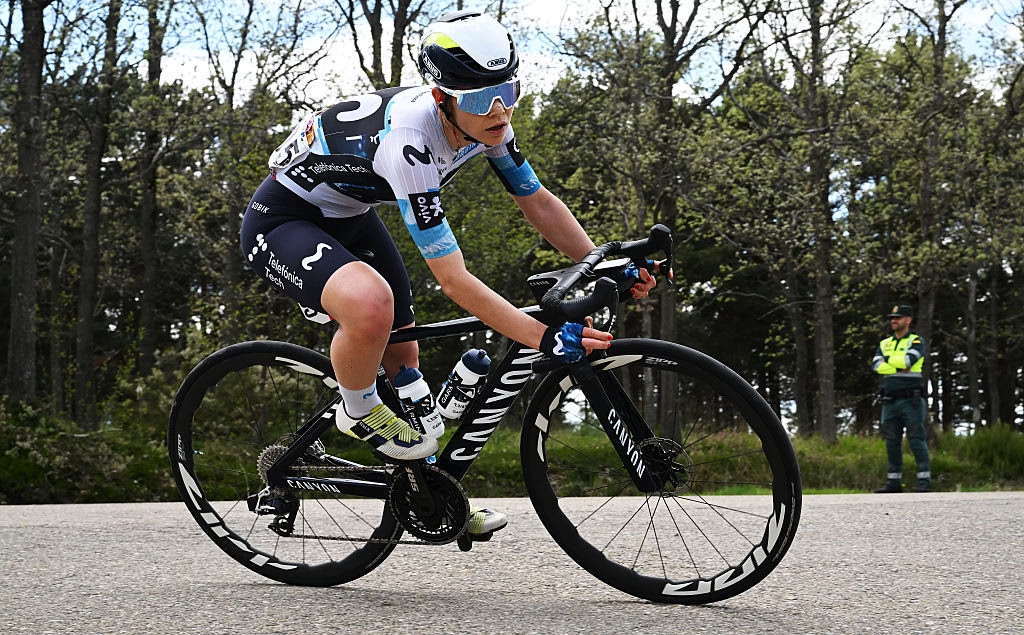
Martín, Magalhães and Barale add attacking depth
Sara Martín and Tota Magalhães give Movistar two useful options for the stages where the breakaway becomes more important than a controlled finish.
Martín can contribute across rolling terrain where tactical positioning and the composition of the escape matter as much as pure climbing ability, while Magalhães gives Movistar another rider capable of becoming useful when the race moves onto harder roads.
Francesca Barale adds another versatile option. The Italian can work around the team’s leaders, contribute on hilly stages and take her own opportunity if the race opens up.
That depth matters because Reusser’s GC challenge should not require Movistar to chase every harmless move. If Martín, Magalhães or Barale are represented ahead, the responsibility can move elsewhere while the team keeps riders around its leader.
Ostiz gets an important opportunity at the Tour
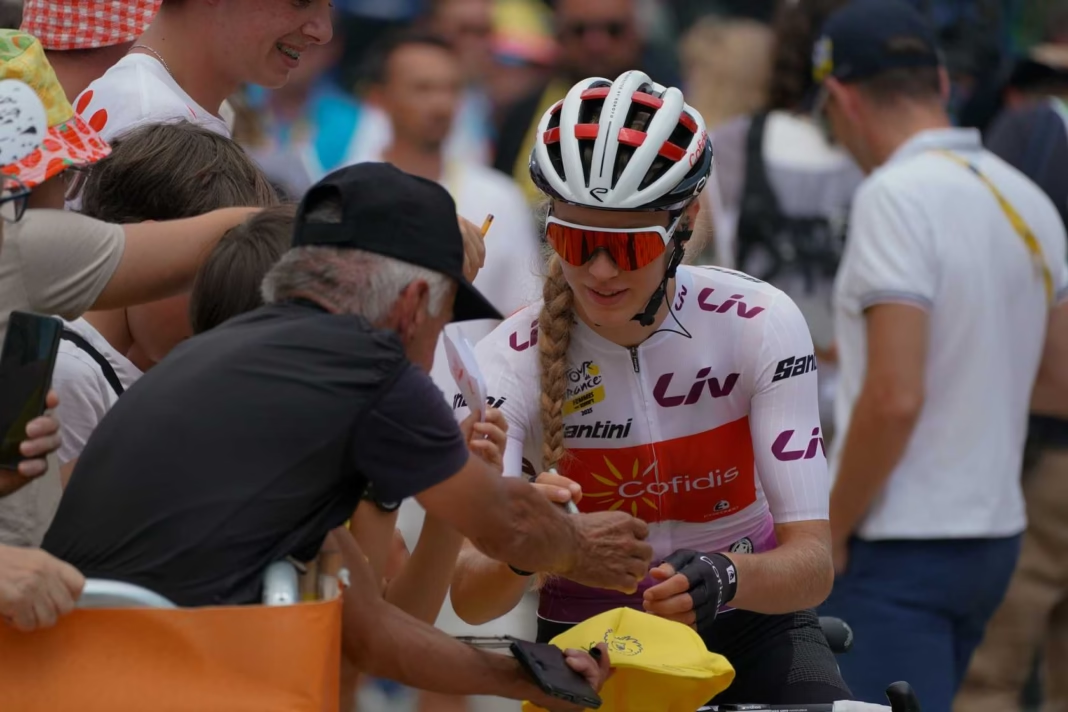
Paula Ostiz completes the seven-rider selection and gets an important opportunity at the biggest stage race in women’s cycling.
The young Spaniard arrives without the pressure carried by Reusser or Lippert. Her priority should be supporting the established leaders, learning how a nine-stage Tour develops and taking any opportunities that emerge naturally from the race.
That role still matters.
A Grand Tour tests positioning, recovery and tactical decision-making in a way that shorter stage races cannot fully replicate. For a developing rider, simply completing those nine days while contributing effectively to a team with GC ambitions is valuable experience.
-
 Photo Credit: Aritz Arambarri
Movistar have one of the more versatile selections
The strongest feature of the Movistar squad is that its different roles fit together.
Reusser is clearly the GC leader. Lippert can support that ambition while still hunting stages. Sierra offers a faster finish, while Martín, Magalhães and Barale can attack or work around the leaders. Ostiz can develop without needing to carry responsibility for the final result.
That gives Movistar options across almost every type of stage on the route.
The Tour does not need to unfold perfectly around Reusser for the team to remain relevant. If she is fighting for yellow, the squad can organise around her. If a hilly stage becomes a breakaway race, Movistar have several riders to send forward. If a reduced group reaches the finish, Sierra or Lippert give them another chance.
Movistar Tour de France Femmes 2026 squad
- Marlen Reusser
- Liane Lippert
- Arlenis Sierra
- Francesca Barale
- Sara Martín
- Tota Magalhães
- Paula Ostiz
Movistar head to Lausanne with one of the clearest leadership structures among the major GC teams. Reusser gives them a genuine yellow jersey contender on a route containing a time trial that suits her, while Lippert and Sierra provide proven alternatives for stage results.
The challenge is whether Reusser can carry whatever advantage she builds in Dijon through the hardest climbing in the Tour. If she can, Movistar have enough depth around her to turn the 2026 race into much more than another strong time trial performance.