

The Tour de France Femmes 2026 has enough depth that there is no single contender list which explains the whole race. The yellow jersey battle is led by Demi Vollering and defending champion Pauline Ferrand-Prévot, but the route also gives Marlen Reusser a genuine way to change the race through the time trial, while Elisa Longo Borghini, Paula Blasi, Antonia Niedermaier, Anna van der Breggen and Kasia Niewiadoma-Phinney all arrive with realistic podium ambitions.
Away from GC, Lorena Wiebes and Charlotte Kool lead a strong sprint field, Marianne Vos and Lotte Kopecky remain capable of winning from harder finishes, while Puck Pieterse and Noemi Rüegg fit the increasingly important space between sprinter and climber. The mountains classification should attract a different group again, headed by Justine Ghekiere, Mavi García and Usoa Ostolaza.
The strength of the 2026 field is that those battles overlap without being identical. The rider most likely to win yellow is not necessarily the rider most likely to win on a hilly day, and the strongest climber is not automatically the favourite for the polka dot jersey.
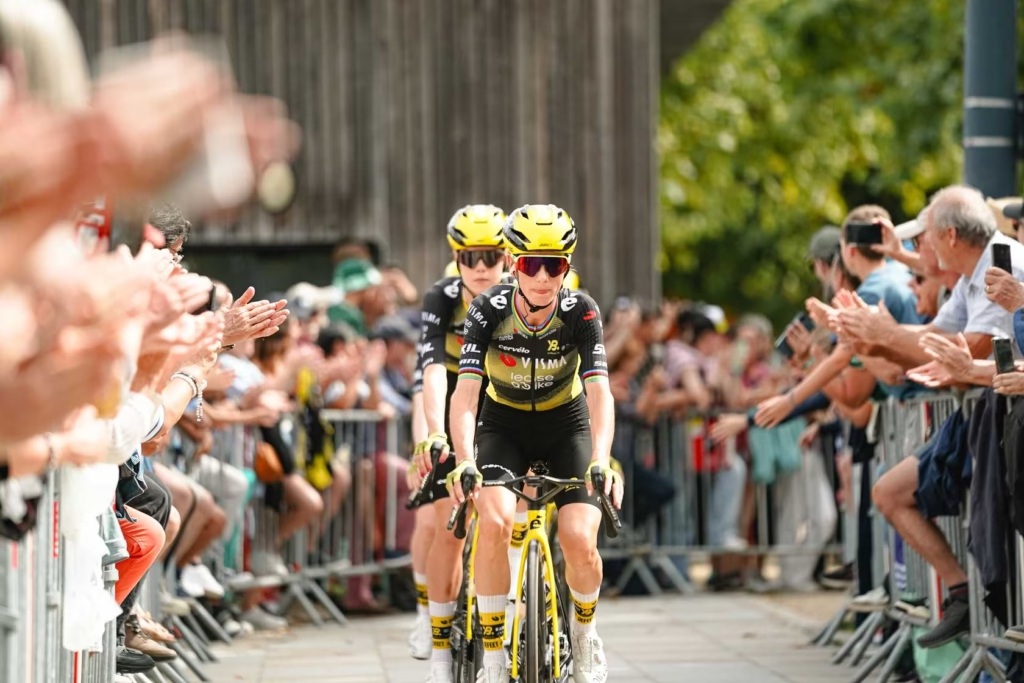
GC favourites: Vollering and Ferrand-Prévot start at the top
Demi Vollering begins as the narrow favourite because she brings the strongest combination of climbing, Grand Tour consistency and recent form. Her Giro d’Italia Women victory showed again that she can overturn a stage race when the decisive climbing arrives, and the Tour gives her enough mountain terrain to recover whatever she may concede to the specialists against the clock.
Pauline Ferrand-Prévot is the obvious rival. She returns as defending champion after winning the 2025 Tour through a dominant final mountain phase, and Team Visma | Lease a Bike have built their squad around trying to do it again. Her preparation has been deliberately Tour-focused, with particular attention paid to the time trial because that remains the area where riders such as Reusser can force her onto the offensive.
The two favourites arrive through slightly different routes. Vollering has the more established Grand Tour record and probably the broader margin for error, while Ferrand-Prévot has already shown that, at her Tour peak, she can make the biggest mountain stages look very one-sided. If both reach the final climbing days in their best form, they remain the two riders everyone else has to beat.
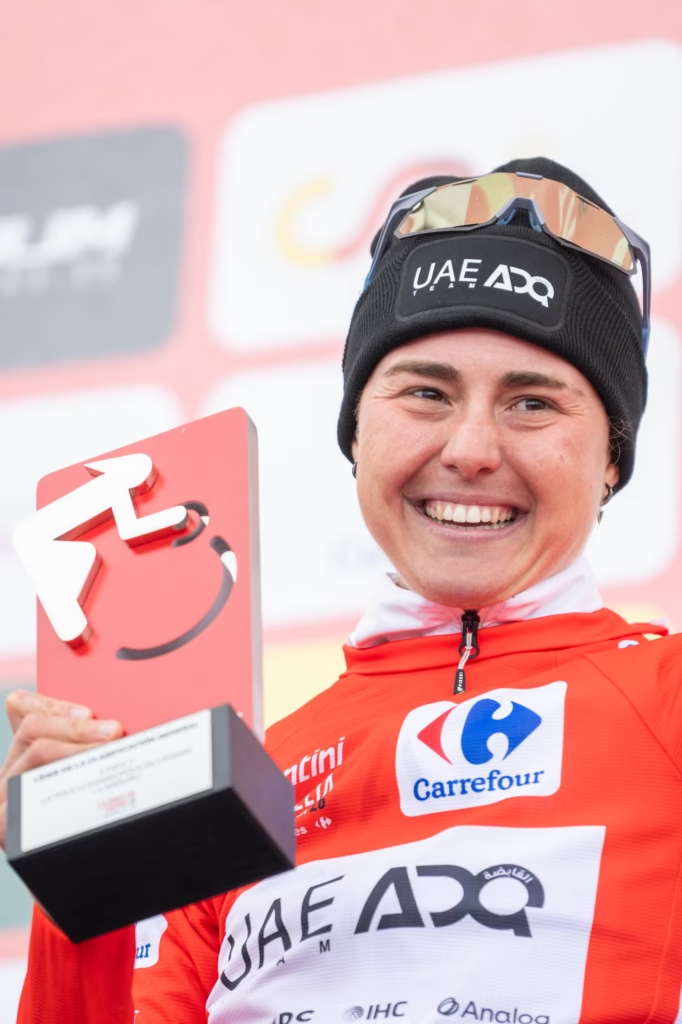 Photo Credit: Naike Erenozaga
Reusser, Longo Borghini and Blasi give the race a different shape
Marlen Reusser is the contender most capable of preventing the Tour becoming a straight climbing duel. Her time trial remains an obvious weapon, but the bigger change is that she now climbs well enough for any advantage she gains against the clock to matter all the way to Nice. She does not need to match Vollering uphill if she reaches the mountains with enough time in hand.
That possibility changes the tactics for everybody. A Reusser lead forces the climbers to attack, while Movistar can concentrate on limiting losses rather than creating them. Her Tour de Suisse victory reinforced that she can now defend a stage-race lead on difficult terrain rather than relying entirely on time trial gains.
Elisa Longo Borghini arrives with fewer obvious weaknesses than almost anyone. She can climb, time trial, race aggressively and handle the tactical complexity of a Grand Tour without needing one specific stage to go perfectly. That makes her one of the safest podium picks even if she is not the obvious favourite to dominate any individual discipline.
UAE Team L’IMAD also have Paula Blasi, whose 2026 season has shifted her from promising climber to genuine Grand Tour contender. Her victories on severe mountain terrain mean the climbing is not really the question anymore. The bigger uncertainty is how much time she can afford to lose against the clock and how UAE balance her ambitions alongside Longo Borghini.
 Photo Credit: Toni Baixauli
Niedermaier, van der Breggen and Kasia Niewiadoma-Phinney complete a deep GC field
Antonia Niedermaier deserves to be treated as a genuine contender after finishing second at the Giro. She combines strong climbing with enough ability against the clock to avoid the obvious weakness that can compromise lighter mountain specialists, and Canyon SRAM have the tactical advantage of also bringing a former Tour winner.
That rider is Kasia Niewiadoma-Phinney, whose route to victory is less straightforward but still very real. She is unlikely to gain through the time trial, so her Tour depends more heavily on making the hilly and mountain stages difficult enough to expose the riders who are stronger against the clock. Her 2024 victory already showed how effective she can be when the race becomes tactical and unpredictable rather than simply a test of controlled climbing.
Anna van der Breggen also belongs in this group after going close to winning the Giro. Her combination of experience, time trialling and climbing gives her a profile well suited to this route, even if SD Worx-Protime arrive with more competing objectives than some of the pure GC teams.
Behind them, Niamh Fisher-Black, Kim Le Court-Pienaar and Cédrine Kerbaol are the strongest top-five outsiders. All three have enough climbing ability to move into the podium fight if one of the headline contenders falters, but each still needs another step to make yellow the expected outcome rather than the outside possibility.
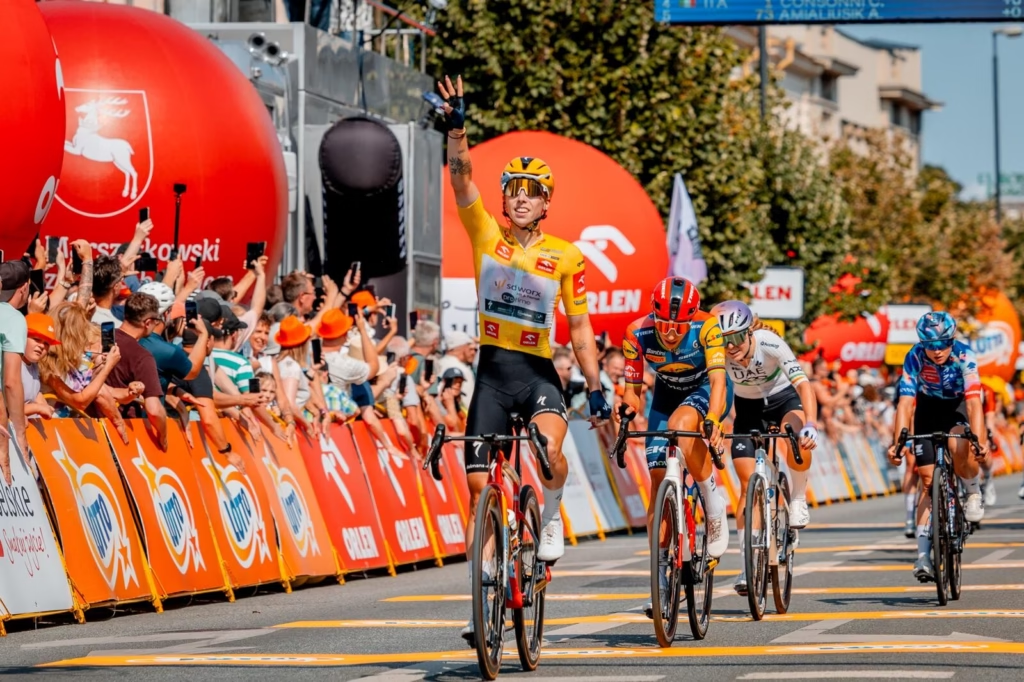
Wiebes and Kool lead the sprint hierarchy
The sprint battle starts with Lorena Wiebes.
She remains the fastest rider in the field when a conventional bunch sprint develops, but what makes her especially difficult to beat now is that she can survive more climbing than the traditional pure sprinter. That matters in a Tour where several supposedly fast stages still contain enough difficulty to thin the field before the finish.
Charlotte Kool is the clearest direct challenger because she has already shown she can beat Wiebes at Tour level. Fenix-Premier Tech do not need her to survive every selective stage because they also have Pieterse for harder finishes, allowing Kool to concentrate on the days where outright speed matters most.
Elisa Balsamo and Chiara Consonni sit immediately behind the top two. Balsamo probably has the best balance of climbing resilience and pure sprint speed, while Consonni has the acceleration to win even without Canyon SRAM committing the whole team to a traditional lead-out.
 Photo Credit: Getty
Vos and Kopecky are more dangerous when the race gets harder
Marianne Vos remains one of the most difficult riders to categorise because her best chances arrive when the race sits somewhere between sprint and Classics terrain. She may not match Wiebes in a clean drag race, but she becomes increasingly dangerous as climbing, fatigue and positioning remove the advantages of a conventional sprint train.
Her role at Visma also matters. Vos is road captain for Ferrand-Prévot, so her stage ambitions have to fit around the yellow jersey project rather than dominate it. That should still leave opportunities because the qualities required to protect a GC leader, positioning, tactical awareness and being near the front at the right moment, are the same qualities that repeatedly put Vos into winning situations.
Lotte Kopecky gives SD Worx-Protime a similar but more explosive alternative. Wiebes covers the pure sprints, leaving Kopecky free to target the finishes where the race has become too hard for the fastest riders. That makes the team difficult to neutralise because reducing the field does not necessarily improve the opposition’s chances.
Puck Pieterse and Noemi Rüegg sit just behind that pair as the two most obvious riders capable of winning when the bunch has already been shredded. Neither needs to beat Wiebes head-to-head. Their route to a stage victory is through making sure Wiebes is no longer part of the sprint.
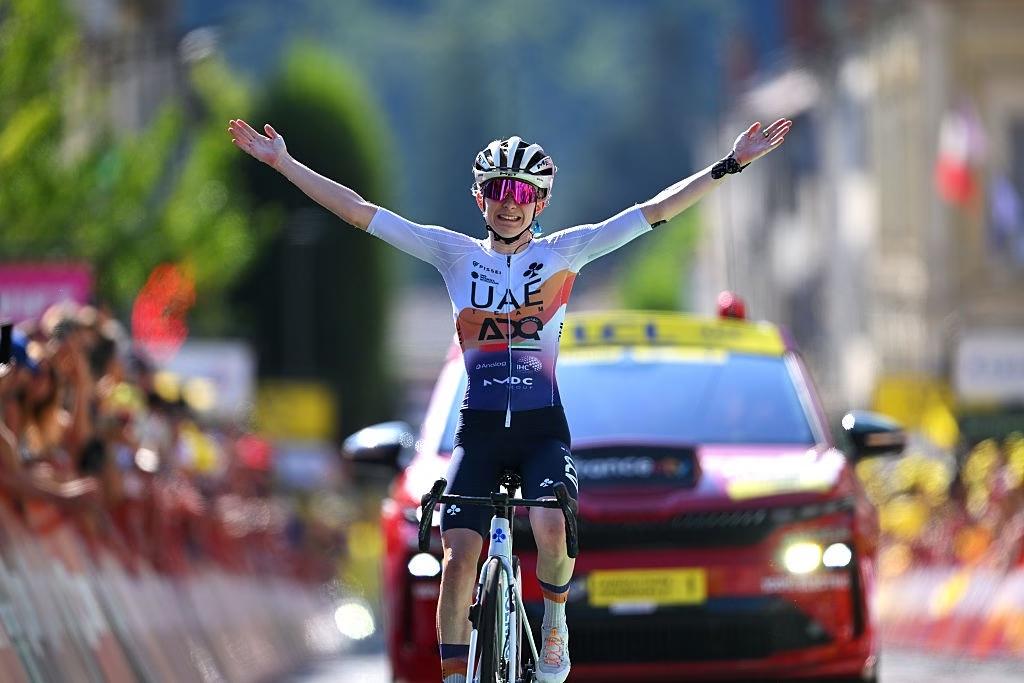
The stage hunters can turn the middle of the Tour upside down
The riders most likely to win from breakaways come from a different part of the start list again.
Maëva Squiban has the combination of climbing strength and tactical freedom that makes her one of the strongest stage-hunting options in the race. UAE can send her ahead without compromising their GC structure, and her presence in a move can also create a useful tactical bridge for Longo Borghini or Blasi later in the stage.
Usoa Ostolaza becomes more dangerous the further she falls from GC contention. If she loses enough time to become harmless to the favourites, Laboral Kutxa-Euskadi can turn her climbing ability towards breakaways rather than protecting an anonymous overall position.
Justine Ghekiere is another obvious attacker because she already has the freedom and the track record. She won both a Tour stage and the mountains classification in 2024 by repeatedly putting herself into the right moves, and the 2026 route gives her enough climbing across several days to use the same approach again.
Riders such as Mavi García, Puck Pieterse, Noemi Rüegg and Marianne Vos can also move into this category depending on how their teams use them. The strongest breakaway rider is often not the one with the most climbing ability, but the one whose GC position, team role and timing make the peloton willing to let her go.

Ghekiere starts as the clearest QOM contender
The polka dot jersey should reward tactical freedom as much as pure climbing strength.
That makes Justine Ghekiere the strongest pre-race pick. She already knows how to win the classification and has the freedom to chase points from breakaways without worrying about protecting a GC position of her own.
Mavi García is another obvious threat if UAE allow her to attack. Her role can work neatly alongside the team’s GC ambitions because sending her ahead gives Longo Borghini and Blasi a potential satellite rider while García collects mountain points.
Usoa Ostolaza could follow the same route once the overall standings begin to spread out. A rider several minutes down becomes far easier to release into a breakaway, and Ostolaza has enough climbing strength to make those opportunities count.
The biggest threat to all three comes from the yellow jersey contenders. Vollering, Ferrand-Prévot, Niedermaier and Longo Borghini may not target the mountains classification, but if they dominate the highest-value climbs they can still collect enough points to overwhelm an early lead.
That is what makes the QOM competition different from simply asking who the best climber is.
-
 Photo Credit: Getty


The main Tour de France Femmes 2026 contenders
The confirmed start list produces several clear groups.
Yellow jersey favourites: Demi Vollering and Pauline Ferrand-Prévot.
Major GC challengers: Marlen Reusser, Elisa Longo Borghini, Paula Blasi, Antonia Niedermaier, Anna van der Breggen and Kasia Niewiadoma-Phinney.
Top-five and podium outsiders: Niamh Fisher-Black, Kim Le Court-Pienaar and Cédrine Kerbaol.
Pure sprint favourites: Lorena Wiebes and Charlotte Kool.
Major fast-finish contenders: Elisa Balsamo and Chiara Consonni.
Selective-stage specialists: Marianne Vos, Lotte Kopecky, Puck Pieterse and Noemi Rüegg.
Breakaway and mountains threats: Justine Ghekiere, Mavi García, Usoa Ostolaza and Maëva Squiban.
Time trial favourites: Marlen Reusser and Zoe Bäckstedt.
That breadth is what makes the 2026 race difficult to simplify. The rider most likely to win in a bunch sprint is unlikely to matter when the Tour reaches its hardest climbs, while the strongest GC rider may never spend a kilometre deliberately chasing the mountains jersey.
Who wins the Tour de France Femmes 2026?
Demi Vollering starts as the narrow favourite because she combines proven Grand Tour performance with the climbing ability to make the hardest parts of the race decisive.
Pauline Ferrand-Prévot is almost level with her because she has already demonstrated how dominant she can become when she reaches the decisive Tour mountains in peak condition.
Marlen Reusser is the rider most capable of changing that expected duel. If she gains meaningful time against the clock and climbs at the level she has shown this season, the burden shifts onto everyone else to dislodge her.
Behind them, Elisa Longo Borghini, Paula Blasi, Antonia Niedermaier, Anna van der Breggen and Kasia Niewiadoma-Phinney give the race enough depth that any weakness from the favourites should be punished.
But yellow is only one part of the Tour. Wiebes and Kool lead the sprint battle, Vos and Kopecky can win when the terrain becomes more selective, Pieterse and Rüegg sit between several categories, while Ghekiere, García, Ostolaza and Squiban can build their race around aggression rather than GC.
The strength of the 2026 Tour de France Femmes field is that several different races will be happening at the same time, each with its own set of favourites.

