

The 2026 Tour de France Femmes is the longest edition of the modern race so far, with nine stages and a route that becomes progressively more demanding as it moves from Switzerland towards Dijon, Mont Ventoux and Nice.
The official stage labels only tell part of the story. Stage 8 is classed as flat despite being the longest day of the race, Stage 3 is hilly but includes the Col de la Faucille early, while Stage 9 is short but built around repeated climbing in Nice at the very end of the Tour. Difficulty is about more than elevation. Stage length, accumulated fatigue, technical terrain, race position and tactical importance all matter.
From hardest to easiest, this is how the nine stages of the 2026 Tour de France Femmes rank.
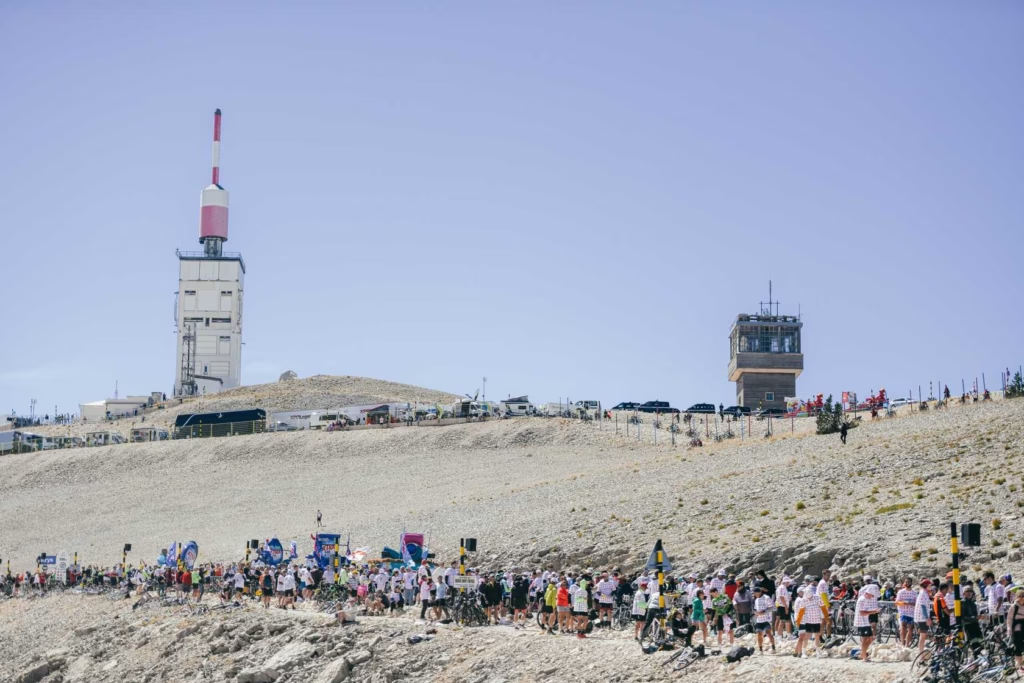
1. Stage 7: La Voulte-sur-Rhône to Mont Ventoux
146.8km | Mountain stage
There is not much debate at the top. Stage 7 is the hardest stage of the 2026 Tour de France Femmes and the most likely to create the biggest GC gaps.
The headline feature is Mont Ventoux, where the race reaches its highest point and one of the most famous climbs in professional cycling. The final ascent is long, steep and exposed enough that hiding is impossible once the strongest climbers begin to attack. It is not simply the gradient that makes it decisive. By Stage 7, riders will already have gone through the Lausanne opener, the early hilly stages, the Dijon time trial and two further selective days.
That accumulated fatigue matters because Ventoux arrives at the point where riders behind on GC may have no choice but to attack. Pauline Ferrand-Prévot, Paula Blasi and Kasia Niewiadoma-Phinney could all reach the climb needing to take time back from Demi Vollering or Marlen Reusser, particularly if Dijon has gone against them. The Mont Ventoux stage guide goes into more detail on why Stage 7 is likely to become the central GC battle of the race.
Difficulty rating: 10/10
2. Stage 9: Nice to Nice
99.2km | Mountain stage
Stage 9 is almost the opposite of Ventoux. It is short, explosive and comes on the final day when there is nothing left to save.
The route around Nice is built around repeated climbing rather than one giant summit finish, which makes it tactically dangerous. Riders can attack early because the distance is so short, while accumulated fatigue from the previous eight days could make the first serious move much harder to control than it would be earlier in the race.
That matters enormously if the GC gaps remain small. A rider 20 or 30 seconds behind does not need to wait for the last climb. She can attack earlier and force the leader’s team into a race it may not want. The Tour de France Femmes 2026 mountain stages are built around Ventoux and Nice for good reason. Stage 7 may create the biggest gaps, but Stage 9 is the day most capable of turning the race tactical and unpredictable.
Difficulty rating: 9.5/10
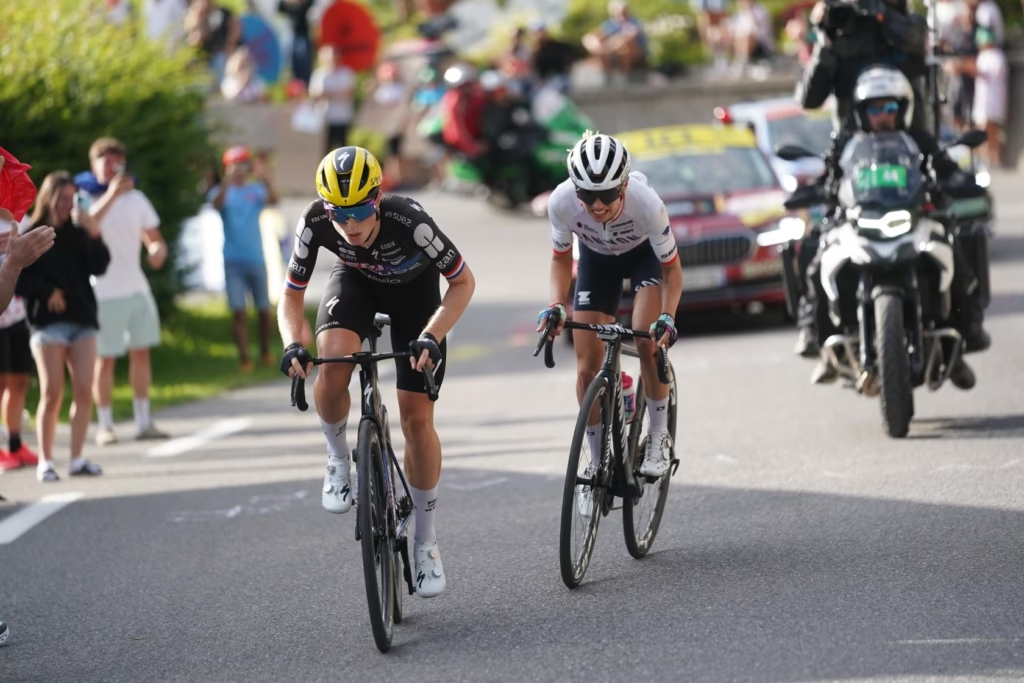
3. Stage 6: Montbrison to Tournon-sur-Rhône
153.4km | Hilly
Stage 6 is the sleeper difficulty of the Tour. It does not have one headline climb, but it contains a succession of categorised ascents spread across more than 150km.
That makes it a draining day rather than one built around a single decisive moment. The Col de Lalouvesc is the longest sustained climb, but the bigger issue is how often the peloton has to change rhythm. Repeated climbing gradually removes domestiques, weakens lead-outs and makes every later effort harder.
There is also one crucial tactical factor: Ventoux comes the next day. GC contenders may want to conserve energy, but teams with stage hunters have every reason to race aggressively. That can turn Stage 6 into exactly the type of day where leaders spend much more energy than they intended before the hardest mountain of the race.
Difficulty rating: 8.5/10
4. Stage 5: Mâcon to Belleville-en-Beaujolais
140km | Hilly
Stage 5 is another day where the cumulative profile matters more than one spectacular climb. The route contains repeated short and medium ascents, with Mont Brouilly providing the obvious late tactical point.
The steepness there is enough to create separation, but the main damage should already have been done by the succession of climbs beforehand. This is the kind of stage where the race can become difficult without ever becoming a pure GC showdown. Puncheurs can attack, breakaway riders can survive, and GC teams may have to spend riders controlling situations they would rather ignore.
That combination makes Stage 5 significantly harder than a standard transitional day. It is also the sort of stage where riders can lose more energy than time, which becomes relevant once the race turns towards Ventoux.
Difficulty rating: 8/10

5. Stage 3: Genève to Poligny
156.5km | Hilly
Stage 3 introduces the first genuinely serious climbing of the Tour. The early Col de la Faucille immediately changes the character of the day.
A long climb so close to the start can remove sprinters early, split the peloton and encourage a strong breakaway to form while the race is still unsettled. That makes the stage tactically awkward even if the main GC favourites are unlikely to attack outright.
The length matters as well. Once the Faucille has already made the race difficult, there is still a long way to Poligny. Riders who are badly positioned or simply having an off day can spend much of the stage chasing, and teams may find themselves working earlier than they expected.
Difficulty rating: 7.5/10
6. Stage 4: Gevrey-Chambertin to Dijon
21km | Individual time trial
Physically, Stage 4 is much shorter than any road stage. In GC terms, it may be one of the most important days of the race.
The 21km individual time trial is long enough to create meaningful gaps between the favourites and should shape everything that follows. For Vollering and Reusser, it is an opportunity. For Ferrand-Prévot, Blasi and Niewiadoma-Phinney, it may be damage limitation.
That makes the stage difficult in a different way. There are no teammates, no drafting and nowhere to hide. Riders have to hold a high aerodynamic position and sustain close to maximum effort from start to finish. The result could fundamentally change how Ventoux is raced three days later.
Difficulty rating: 7/10
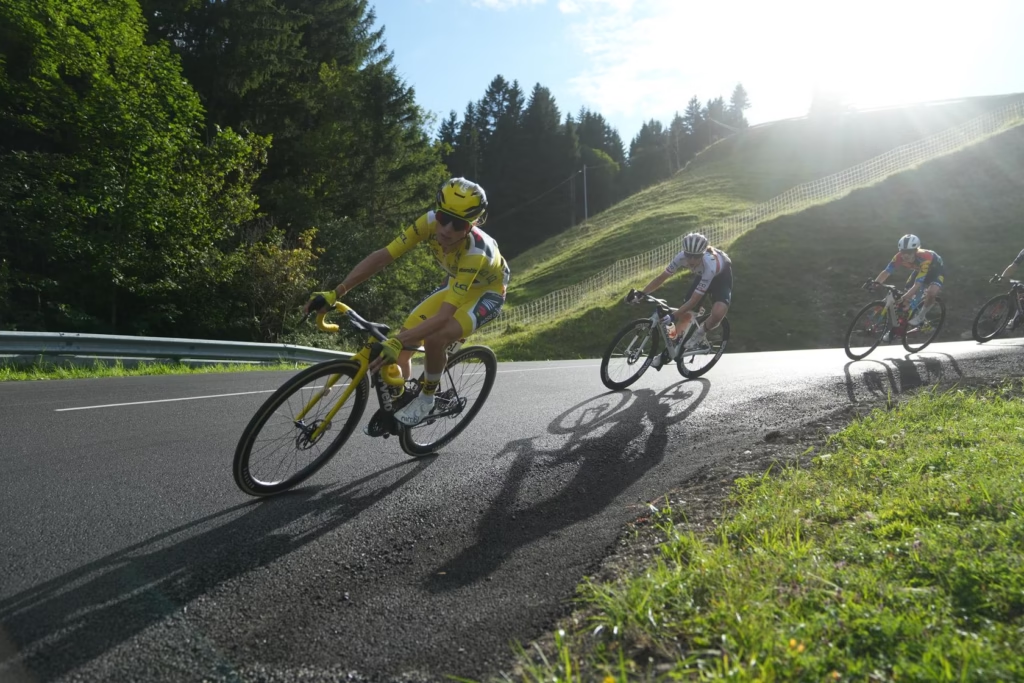 Photo Credit: A.S.O./Thomas Maheux
7. Stage 8: Sisteron to Nice
171.9km | Flat
Calling Stage 8 flat is accurate, but only just. It is the longest stage of the Tour and comes directly after Mont Ventoux.
That combination alone makes it harder than the profile suggests. The route includes several smaller categorised climbs, but none is decisive in isolation. The real difficulty is spending nearly 172km racing on tired legs with another mountain stage waiting the next day.
For the GC contenders, the priority is survival. For sprinters, it may be one of the last realistic opportunities. For breakaway riders, accumulated fatigue across the peloton could make this one of the best chances of the Tour. The Tour de France Femmes sprint stages include Stage 8, but this is not a routine flat day.
Difficulty rating: 6/10


8. Stage 1: Lausanne to Lausanne
137km | Flat
Stage 1 is not particularly hard in absolute terms. It is difficult for a sprint stage.
The Lausanne circuit includes enough late climbing to make the first yellow jersey selective, particularly on the final approach into the city. Lorena Wiebes can survive it, while Marianne Vos and Noemi Rüegg may actively benefit if the pace rises.
The GC contenders mainly need to avoid trouble, but opening-day nerves increase the difficulty. Every team is fresh, everyone wants position and the first yellow jersey is available. That makes the final kilometres more intense than the official flat classification suggests.
Difficulty rating: 5.5/10
9. Stage 2: Aigle to Genève
147.9km | Flat
Stage 2 ranks as the easiest day of the 2026 Tour, although that does not mean it will be easy.
Compared with what follows, the ride from Aigle to Geneva offers the clearest opportunity for the peloton to produce a more conventional sprint. It sits between the selective Lausanne opener and the much harder Stage 3 into Poligny, so the GC favourites should be focused on staying safe rather than creating time gaps.
For the sprinters, this is one of the most obvious opportunities in the race. For everyone else, it is the closest thing the Tour offers to a day where the objective is simply to get through without wasting energy.
Difficulty rating: 4/10
Tour de France Femmes 2026 stages ranked from hardest to easiest
- Stage 7: La Voulte-sur-Rhône to Mont Ventoux
- Stage 9: Nice to Nice
- Stage 6: Montbrison to Tournon-sur-Rhône
- Stage 5: Mâcon to Belleville-en-Beaujolais
- Stage 3: Genève to Poligny
- Stage 4: Gevrey-Chambertin to Dijon ITT
- Stage 8: Sisteron to Nice
- Stage 1: Lausanne to Lausanne
- Stage 2: Aigle to Genève
The headline difficulty sits at the end. Ventoux is the hardest single physical test, while Nice may be the hardest stage to control. The real danger of the 2026 route, though, is how much racing happens before either arrives.
Stages 3, 5 and 6 all contain enough climbing to sap energy and create splits, while Dijon forces the GC contenders into a major effort against the clock. By the time the race reaches Mont Ventoux, the Tour may already have been shaped by six days of accumulated damage. That is why the 2026 edition looks harder than simply counting its two mountain stages suggests.

