
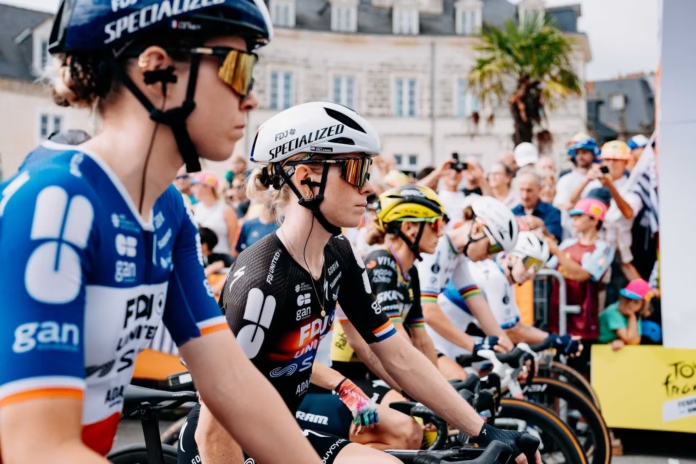
The 2026 Tour de France Femmes cannot be reduced to one decisive mountain.
Mont Ventoux is the obvious centrepiece. It is the hardest climb, the stage most likely to produce large gaps and the point where Demi Vollering, Pauline Ferrand-Prévot, Paula Blasi and the other leading climbers should finally be forced into a direct test. But the yellow jersey can be shaped much earlier, particularly in the 21km Dijon time trial, and there are enough difficult stages either side of Ventoux for a rider to lose the Tour without ever being dropped on its most famous climb.
That is what makes the 2026 Tour de France Femmes route particularly interesting. The opening weekend in Switzerland is nervous rather than decisive. Stage 3 introduces serious climbing. Dijon establishes the first proper GC hierarchy. Stages 5 and 6 then drain energy before Ventoux, while the final stage around Nice gives anyone still within striking distance one last chance to turn the race over.
For the favourites, the question is not simply where to attack. It is where they cannot afford to make a mistake.
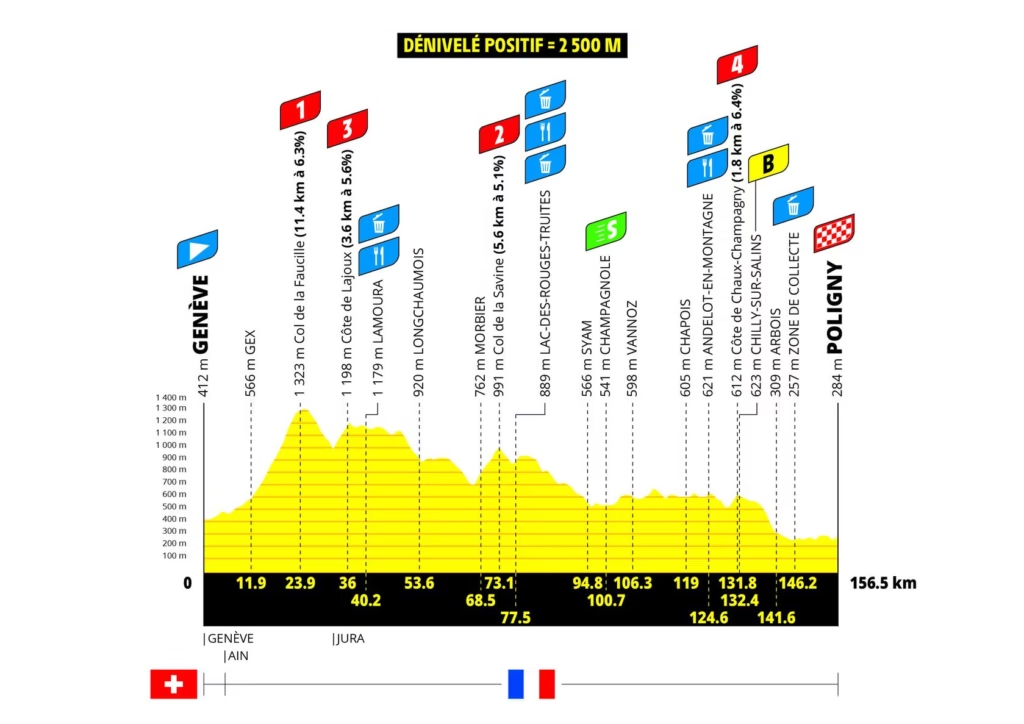
Stage 3 to Poligny is the first day GC teams cannot relax
The Tour should survive its opening two stages without major differences between the strongest GC riders, assuming everyone stays upright and avoids splits. Stage 3 from Genève to Poligny changes that.
The Col de la Faucille arrives early enough to make the entire stage unpredictable. A substantial climb close to the beginning of the day can establish a strong breakaway, remove weaker domestiques and force teams into work they did not expect to do so early in the Tour.
It is unlikely to be the stage where Vollering or Ferrand-Prévot tries to take a minute from one another. There is too much racing still ahead, and the route does not offer a straightforward summit finish where the strongest climber can simply ride away.
The danger is losing time accidentally. A rider caught behind a split on the Faucille may spend much of the stage chasing. A mechanical at the wrong moment can become far more expensive than it would on a flat stage. GC teams also have to decide how much energy they are willing to spend if dangerous riders enter a breakaway.
Stage 3 is therefore less about winning the Tour than establishing who reaches Dijon without already having a problem. It is the first of several hilly stages where positioning and tactical control matter almost as much as climbing strength.
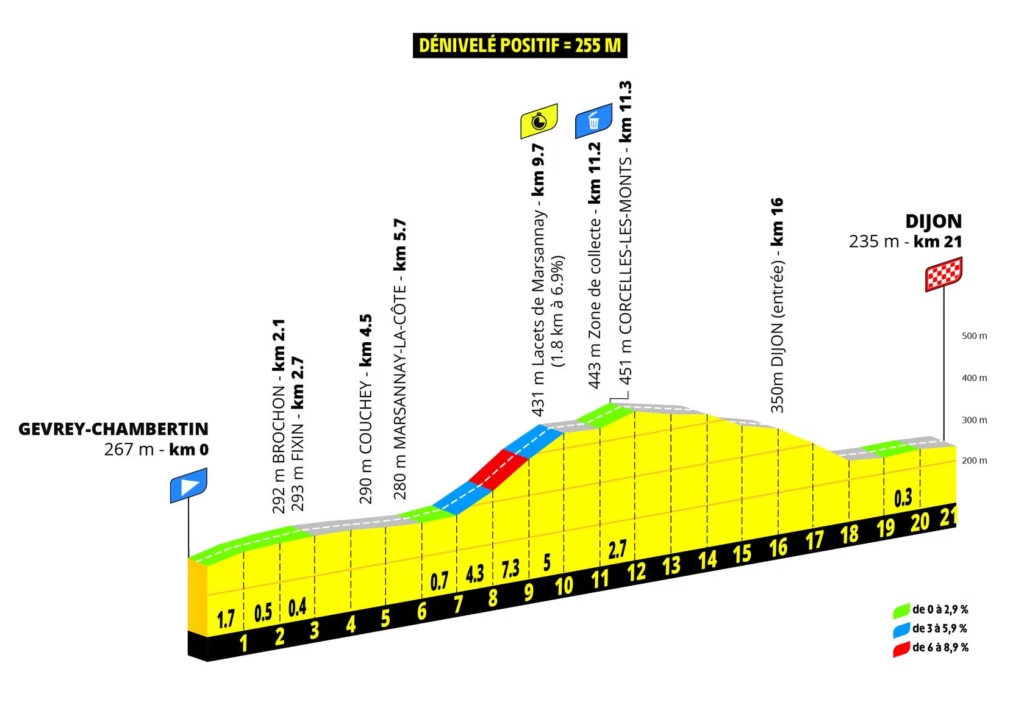
Stage 4 in Dijon can completely change the tactical balance
The 21km individual time trial from Gevrey-Chambertin to Dijon is the first stage capable of producing meaningful differences between the main favourites.
It may also be the most strategically important stage of the Tour.
Demi Vollering should see Dijon as an opportunity. So should Marlen Reusser, for whom the time trial provides the clearest route to placing herself ahead of the pure climbers before the race reaches the mountains.
For Pauline Ferrand-Prévot, Paula Blasi and Kasia Niewiadoma-Phinney, the objective is different. They need to prevent the stage creating a deficit large enough to dictate everything that follows.
That is why the numbers coming out of Dijon will matter as much as the stage result itself.
If Ferrand-Prévot loses 10 or 15 seconds to Vollering, relatively little changes. She can continue towards Ventoux knowing one strong attack may be enough. Thirty or 40 seconds is more significant. Vollering can begin using that advantage tactically, forcing Ferrand-Prévot to make the first move rather than simply following.
A minute begins to change the entire race.
The same applies to Blasi. Her strongest argument for winning the Tour comes through the mountains, but that only works if the time trial leaves those mountains within reach. She does not need to match Vollering or Reusser in Dijon. She does need to limit the damage.
Stage 4 may therefore tell us which rider is leading the Tour, but more importantly, it will tell us who is under pressure.
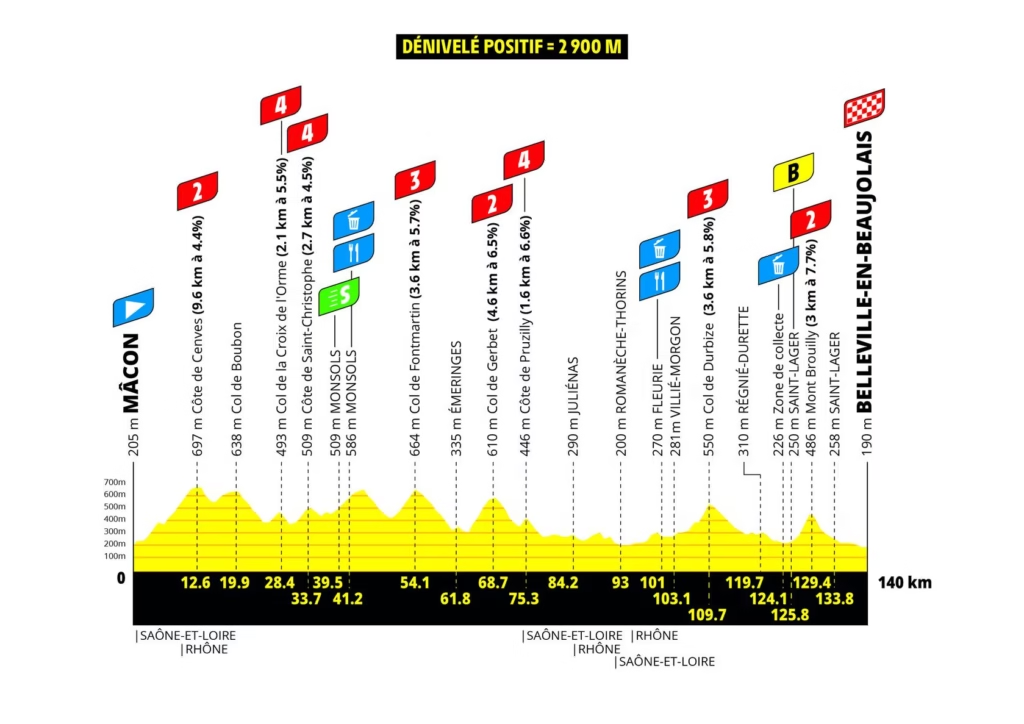
Stage 5 through Beaujolais is where the Tour starts taking energy away
The day after Dijon contains repeated climbing between Mâcon and Belleville-en-Beaujolais, including Mont Brouilly late in the stage.
This is where the Tour moves into a different phase.
After the time trial, everyone knows the GC gaps. Riders who lost time are no longer working with hypothetical scenarios. They can see exactly what needs to be recovered.
That can encourage attacks earlier than the obvious mountain stages.
Stage 5 is particularly dangerous because it contains enough climbing to create separation without being difficult enough that the favourites necessarily wait for one another. A puncheur can attack. A strong break can survive. A GC contender can use an aggressive teammate to force rivals to chase.
Mont Brouilly gives the stage an obvious late focal point, but its real effect may be cumulative. Repeated climbing means domestiques disappear gradually, while riders who have just produced a maximum effort in Dijon have to change immediately back into the rhythm of road racing. Someone who recovers badly from the time trial can suddenly look vulnerable.
It may not produce the biggest gaps of the Tour.
It can create the fatigue that makes those gaps possible later.
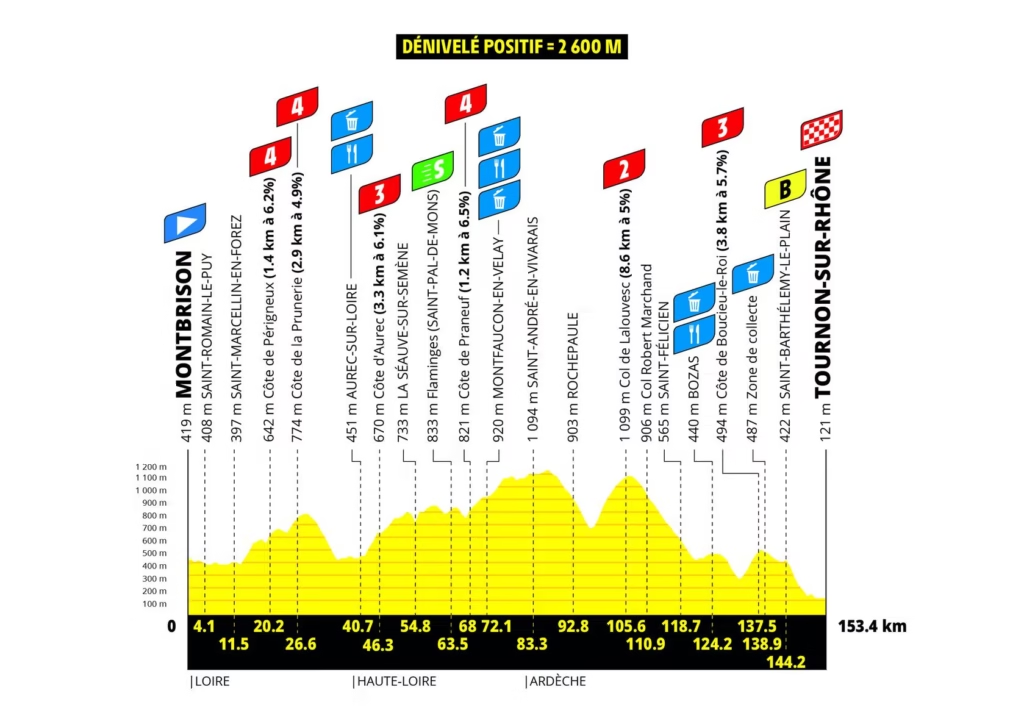
Stage 6 could expose weakness before Ventoux even arrives
The temptation is to treat Stage 6 from Montbrison to Tournon-sur-Rhône as the day before the real mountain stage.
That would be dangerous.
There are six categorised climbs across more than 150km, including the Col de Lalouvesc late enough in the stage to make GC teams uncomfortable. The tactical contradiction is obvious: everyone wants to save energy for Ventoux, which gives stage hunters every reason to attack.
A leader’s team may therefore find itself controlling a difficult stage precisely when it wants to conserve riders. Rivals can use that situation aggressively, particularly if they have several riders capable of entering moves.
This is also where team strength begins to matter more than individual form.
A Vollering who still has FDJ United-Suez teammates around her can let them absorb much of the workload. A Vollering who becomes isolated has to respond personally. The same applies to Ferrand-Prévot and Visma | Lease a Bike.
Nobody needs to launch the Tour-winning attack on Stage 6, but a rider who struggles here enters Ventoux with an obvious weakness. Once rivals see that, the race the following day becomes much more aggressive.
The route also makes Stages 5 and 6 particularly attractive to the breakaway specialists and stage hunters, which adds another layer of work for the GC teams.
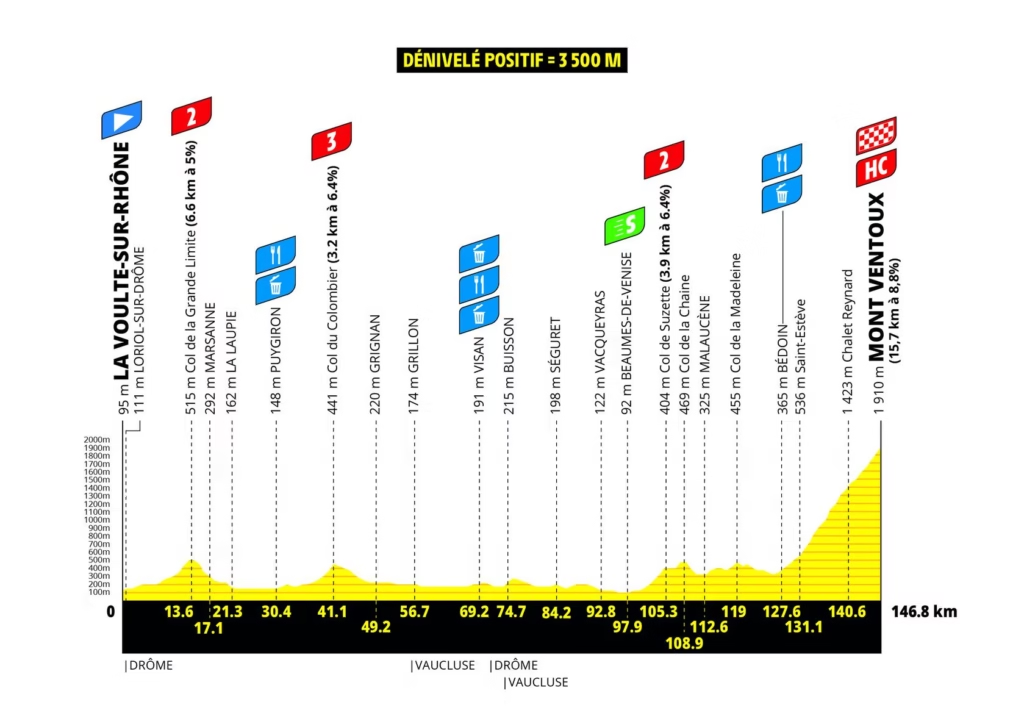
Stage 7 on Mont Ventoux is the clearest place to win the Tour
Eventually, the race reaches the stage everyone has circled.
Mont Ventoux is where excuses disappear.
The final climb is long enough and steep enough that the strongest GC riders should separate themselves. Drafting becomes less important, positioning matters less than on the earlier hilly stages and if a rider does not have the legs, the mountain will show it.
That makes Stage 7 the clearest opportunity to win the Tour outright.
It is particularly important for Ferrand-Prévot and Blasi if they arrive behind after Dijon. Neither gains anything from climbing Ventoux conservatively alongside Vollering. If the gap is significant, they need to create separation.
The size of that deficit determines how the stage is raced. A small gap allows patience. Ferrand-Prévot can wait until deep into the climb before attacking and still have enough road to recover 10 or 20 seconds. A larger gap requires a different approach. If Vollering holds half a minute or more, Ferrand-Prévot may need to make the climb difficult much earlier, particularly because Vollering is herself one of the strongest mountain riders in the race.
Blasi faces the same calculation. Her 2026 season has established her as one of the strongest climbers in women’s cycling, but the Tour asks whether she can translate that into time against riders who are also exceptional uphill.
Reusser faces the opposite challenge. If she reaches Ventoux ahead because of Dijon, she does not necessarily need to follow every acceleration. Her objective becomes limiting losses and using the advantage she already has.
That contrast is why Ventoux should produce the defining GC battle. Some riders need to attack. Others can afford to defend.
The full Mont Ventoux Stage 7 guide breaks down the Bédoin ascent, the preceding climbs and why the mountain is likely to be the decisive physical test of the race.
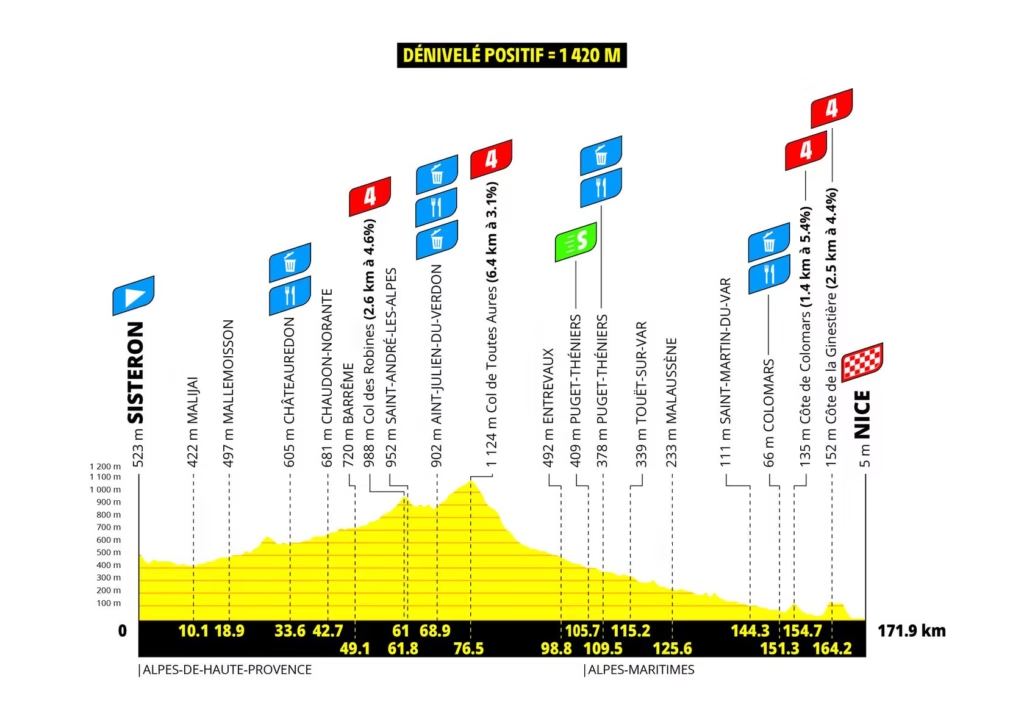
Stage 8 to Nice is dangerous precisely because it looks easier
After Ventoux comes the longest stage of the race, 171.9km from Sisteron to Nice.
It is officially flat.
That does not make it a recovery day.
The peloton reaches Stage 8 after the hardest mountain of the Tour, with another mountain stage still waiting the following morning. Riders will be fatigued, teams will be reduced and any weakness created on Ventoux has had very little time to disappear.
This is where an apparently manageable stage can become awkward. If the yellow jersey has a comfortable lead, the leader’s team will want to keep everything predictable and let the sprinters control the race. If the margins remain tight, rivals can make the stage much more difficult.
A breakaway containing a rider who has crept closer on GC suddenly becomes relevant. Crosswinds, crashes or poor positioning can matter. Even spending too much energy chasing a move can affect the final stage.
For the main favourites, Stage 8 is probably not somewhere to deliberately win the Tour.
It is absolutely somewhere they can lose it.
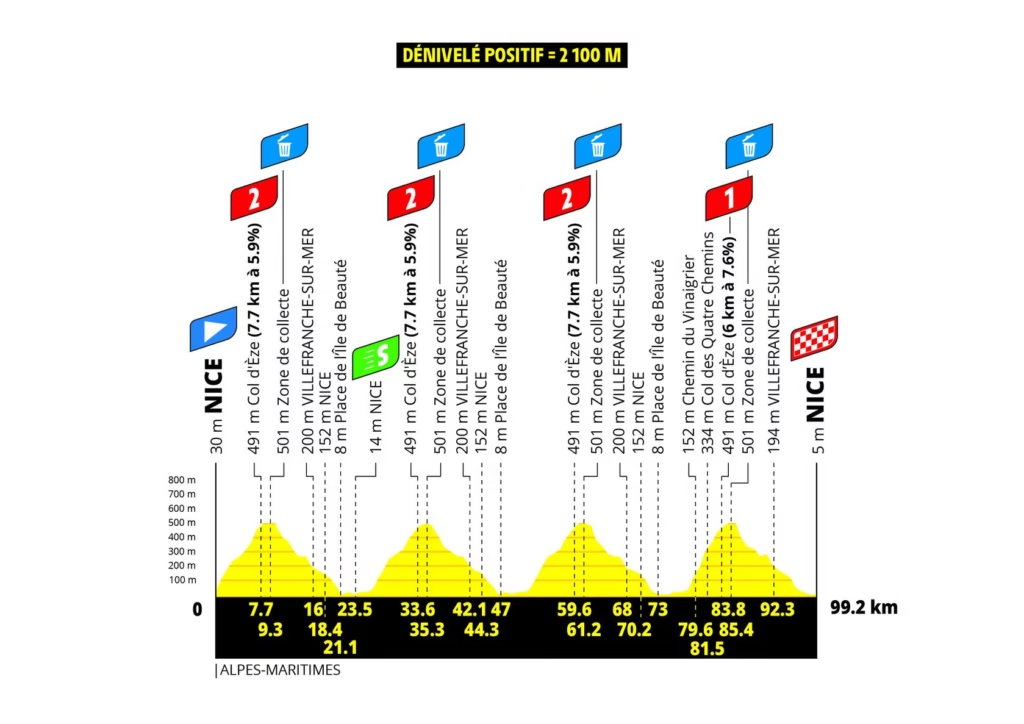 Photo Credit: Getty
Stage 9 around Nice is the final chance to overturn everything
The final stage is only 99.2km, which is precisely why it could become so destructive.
There is no tomorrow.
Any rider behind on GC can attack without thinking about recovery, while any team with more than one strong climber can use them aggressively. The repeated climbing around Nice gives the race several tactical points rather than one summit finish where everyone waits for the favourites to move.
That creates opportunities for long-range racing.
Imagine Ferrand-Prévot starts the final day 20 seconds behind Vollering. She does not necessarily need to wait for the final climb. Visma can put a rider ahead earlier, force FDJ to chase and make Vollering’s team spend energy. Ferrand-Prévot can then attack on a later ascent knowing there is no need to preserve anything.
The same possibility exists for Blasi, Niewiadoma-Phinney or anyone else who survives Ventoux within reach.
That is why the Tour is not necessarily finished after Stage 7. Ventoux may establish who is strongest. Nice gives everyone one last opportunity to challenge what the mountain decided.
Which stage is most important for Vollering?
Dijon.
Ventoux is harder physically, but Stage 4 provides Vollering with the cleanest opportunity to shape the race around her strengths.
If she gains meaningful time in the individual time trial, she can approach the mountains from a position of control. Ferrand-Prévot and Blasi have to attack her rather than the other way around.
That matters because Vollering is strong enough uphill to defend proactively. She does not need to hang desperately onto the climbers. She can follow them, pace herself and force rivals to create enough separation to overturn the advantage.
A poor Dijon would remove that tactical comfort. Instead of forcing Ferrand-Prévot to attack, Vollering could reach Ventoux needing to make the difference herself.
That balance between time trialling and climbing is a major reason Vollering sits at the top of the Tour de France Femmes 2026 favourites.
Which stage is most important for Ferrand-Prévot?
Ventoux, but only because of Dijon.
Ferrand-Prévot’s title defence is likely to be shaped by the relationship between those two stages.
If she limits the time-trial losses, Ventoux becomes an opportunity to take yellow. If she loses heavily, Ventoux becomes a rescue mission.
The defending champion showed in 2025 that she can produce a mountain performance strong enough to overturn the expected hierarchy, but repeating that is a different challenge when Vollering knows exactly what is coming.
Ferrand-Prévot needs to reach Stage 7 close enough that one exceptional climb can still decide the race.
Which stage is most important for Blasi?
Again, Dijon may quietly be the answer.
Blasi’s climbing is not the main question anymore. Winning La Vuelta Femenina and producing one of the standout Ardennes campaigns of the season has already shown that she belongs among the strongest uphill riders.
The Tour asks whether she can stay close enough against the clock to use that advantage.
If Blasi leaves Dijon within 30 or 40 seconds of yellow, the second half of the race gives her several chances to attack. If the deficit is substantially larger, UAE Team L’IMAD may need to use both Blasi and Elisa Longo Borghini aggressively to destabilise the race rather than waiting for Ventoux.
Her Tour therefore depends on making sure her strongest terrain still matters when she reaches it.
-
 Photo Credit: Cor Vos
The race can be lost on more stages than it can be won
That is the central feature of the 2026 route.
There are probably only three stages where a rider can genuinely win the Tour through performance alone: Dijon, Ventoux and the final day around Nice.
There are many more places where it can be lost.
A split on Stage 3, a bad day through Beaujolais, an unnecessary chase on Stage 6, a crash on the long road to Nice or poor positioning during the Swiss Grand Départ can all change the classification before the headline mountain stages have a chance to do it.
None is likely to create the dramatic mountain images associated with the yellow jersey battle, but Grand Tours are often decided as much by avoiding mistakes as producing one exceptional ride.
The eventual winner needs to survive all of them.
The five stages that matter most
If the 2026 Tour de France Femmes is reduced to the stages most likely to shape the yellow jersey, five stand above the rest.
Stage 3 to Poligny is the first day where the favourites can be caught out. Stage 4 to Dijon establishes the first real GC gaps and determines who enters the mountains under pressure. Stage 6 to Tournon-sur-Rhône can expose weak teams and tired leaders before the decisive climbing begins. Stage 7 on Mont Ventoux is the clearest opportunity for the strongest climber to transform the race, while Stage 9 around Nice is the final tactical gamble if Ventoux has not settled everything.
The Tour may ultimately be remembered for what happens on Ventoux, just as previous editions have become associated with the Tourmalet, Alpe d’Huez and the Col de la Madeleine.
But the rider who wins in Nice will have needed far more than one great mountain stage.
She will need to arrive at Ventoux with the right gap, the right team and enough energy left to use it, then survive another two days with the race still capable of changing beneath her.

