
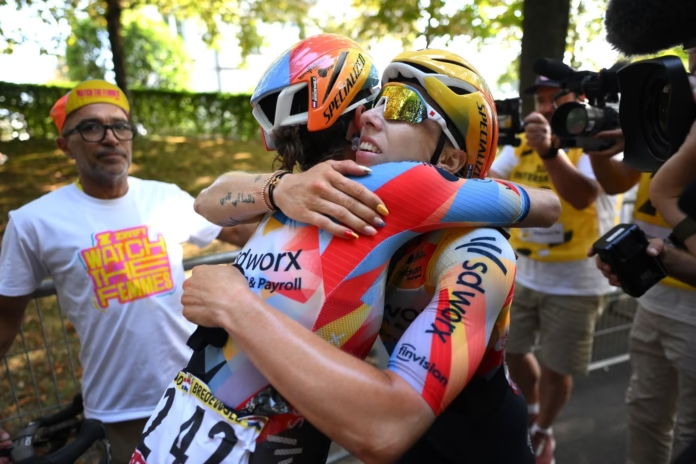
The Tour de France Femmes continues on Sunday 2 August with Stage 2 from Aigle to Geneva, where Lorena Wiebes will defend the yellow jersey after winning the opening stage in Lausanne.
For UK viewers, the race is scheduled to begin at 13:20 BST, with the finish expected at approximately 16:47 BST. Stage 2 will be shown live on TNT Sports 1, with streaming available through HBO Max. Free-to-air highlights are scheduled on 5 at 19:00 BST.
Anyone mainly interested in the decisive part of the stage should aim to be watching by around 16:00 BST. Five categorised climbs make the middle of the route harder than its flat classification suggests, but the final summit comes far enough from Geneva for the sprint teams to regroup and prepare their lead-outs.
That should produce the first more conventional bunch sprint of the 2026 Tour, with Wiebes again the rider everyone needs to beat.
What time does Tour de France Femmes Stage 2 start in the UK?
The neutralised start from Aigle is scheduled for 14:20 local time, which is 13:20 BST in the UK.
Switzerland is one hour ahead of Britain during the race. The peloton will complete a short neutralised section before reaching kilometre zero and beginning competitive racing.
The key UK timings for Stage 2 are:
Race start: 13:20 BST
Recommended time to begin watching the finale: 16:00 BST
Expected finish: approximately 16:47 BST
Free highlights on 5: 19:00 BST
The expected arrival is based on the official race schedule and should be treated as a central estimate rather than a fixed finishing time. The actual arrival in Geneva can shift depending on the race speed, weather and how aggressively the five climbs are ridden.
The complete daily schedule is available in our Tour de France Femmes 2026 UK viewing guide.
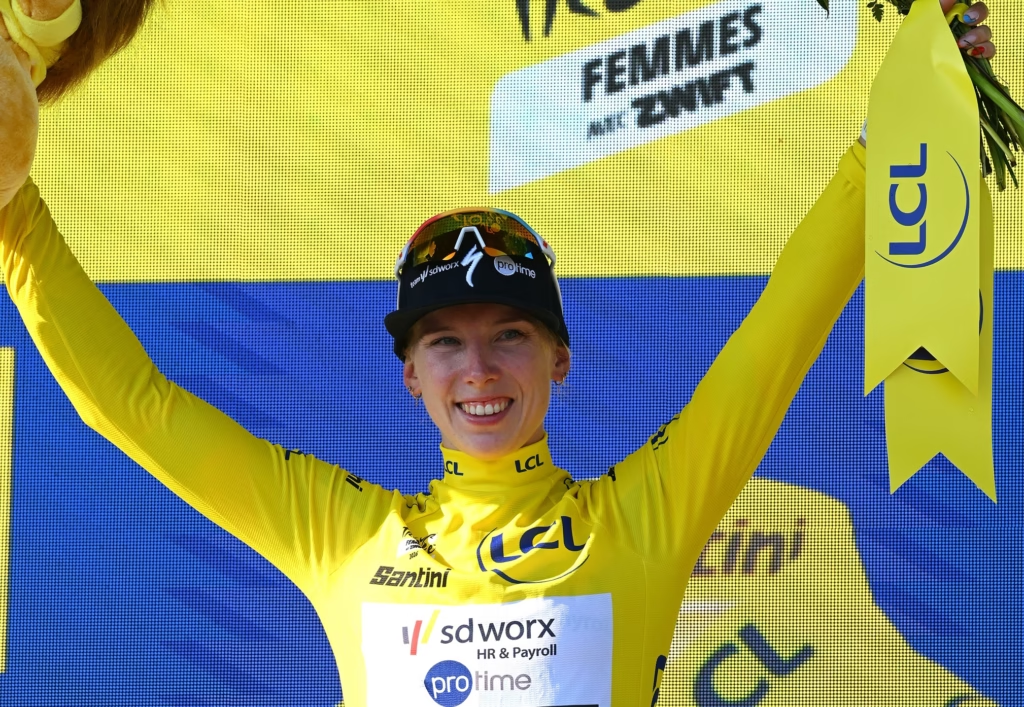 Photo Credit: Getty
What channel is Tour de France Femmes Stage 2 on?
Stage 2 will be shown live in the UK on TNT Sports 1, with the stream available through HBO Max.
TNT Sports is the main television home of the Tour de France Femmes in Britain, while HBO Max carries the live stream for viewers using a smart television, laptop, tablet or phone. All nine stages are available through the Warner Bros. Discovery broadcast package.
For viewers previously accustomed to watching cycling through Discovery+, HBO Max is now the streaming home of TNT Sports cycling coverage in the UK.
The exact programme window can begin after the official stage start, depending on the television schedule, but the broadcast should comfortably cover the decisive final part of the race and the sprint in Geneva.
Is Tour de France Femmes Stage 2 free to watch?
There is no full live free-to-air broadcast of Stage 2 in the UK.
However, 5 will show free highlights at 19:00 BST, providing an evening option for viewers without a TNT Sports or HBO Max subscription. The programme should include the decisive action, stage result, updated general classification and the yellow, green, polka-dot and white jersey standings.
ITV and ITVX are not showing the 2026 Tour de France Femmes live. The British live rights sit with TNT Sports and HBO Max, while 5 provides the free daily highlights programme.
What time should I start watching Stage 2?
Watching from the beginning gives the complete picture of the early breakaway and the mountains classification, but Stage 2 is unlikely to be decided during its opening hour.
For most viewers, 16:00 BST is the key time to switch on.
The race should then be approaching the end of its climbing section or beginning the long run towards Geneva. That is where it will become clear whether Wiebes, Elisa Balsamo, Charlotte Kool and the other sprinters have survived comfortably or have been forced into a chase.
The position of the final climb makes the pursuit especially important. Dropping a sprinter temporarily is achievable, particularly if the steepest climbs are raced hard. Keeping her behind for more than 40km of flatter road is much more difficult.
Anyone only interested in the final sprint should be watching by approximately 16:25 BST. That should leave enough time to see the breakaway caught, the lead-out trains assemble and the GC teams begin fighting for safe positions near the front.
Leaving it much later risks missing an unexpectedly fast approach or a late attack before Geneva.
When will Tour de France Femmes Stage 2 finish?
The expected finish time is approximately 16:47 BST, corresponding to 17:47 local time in Geneva.
The practical viewing window is roughly 16:35 to 17:05 BST. A fast stage could bring the peloton into Geneva earlier than the central estimate, while heat, attacks or a slower opening section could push the finish closer to 17:00.
The finish is on the Quai du Mont-Blanc, beside Lake Geneva and close to the Jet d’Eau. The final approach should be fast and considerably more favourable to the sprinters than the uphill arrival used in Lausanne.
Our Tour de France Femmes 2026 Geneva guide looks more closely at the finishing area, route into the city and the best places to watch in person.
Where does Tour de France Femmes Stage 2 start and finish?
Stage 2 begins in Aigle, home of the UCI headquarters and World Cycling Centre, before travelling west to Geneva.
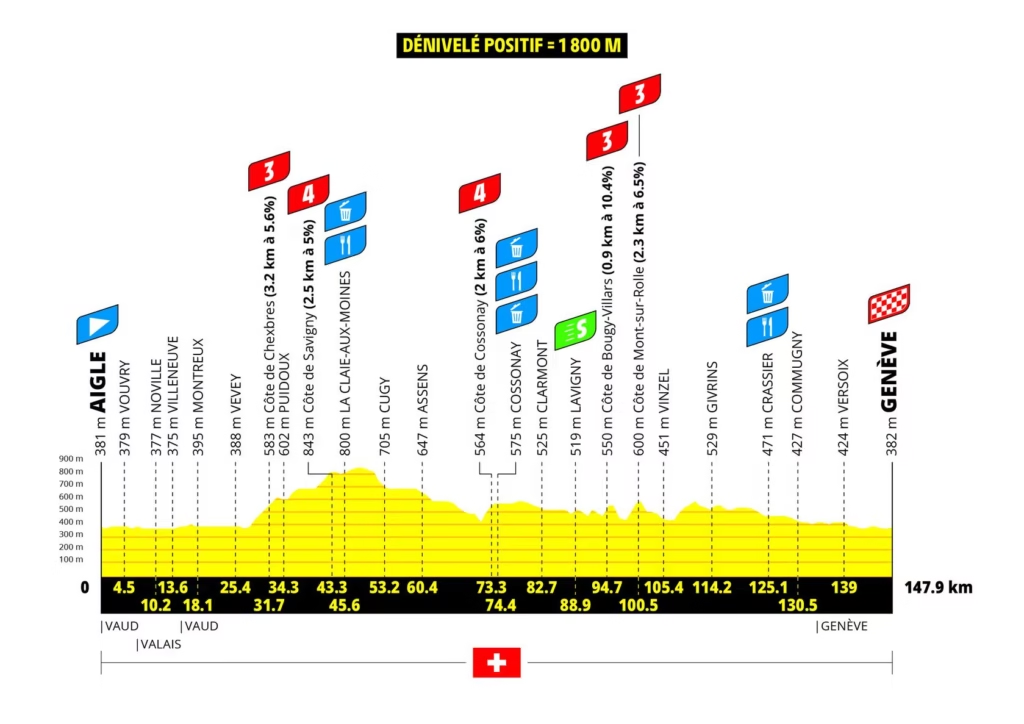
The stage covers 147.9km and is officially classified as flat. That description reflects the likely finishing scenario more accurately than the complete route, because five categorised climbs are packed into the middle of the day.
The opening section heads towards Monthey before the race turns back along Lake Geneva through Montreux and Vevey. The peloton then climbs into the vineyards and rolling roads of Vaud before beginning the flatter run towards the finish.
The wider Tour de France Femmes 2026 Grand Départ guide covers all three Swiss stages and how the race moves from Lausanne through Aigle and Geneva before entering France.
Why the middle of Stage 2 is still worth watching
Stage 2 may be labelled flat, but it is not a simple procession towards Geneva.
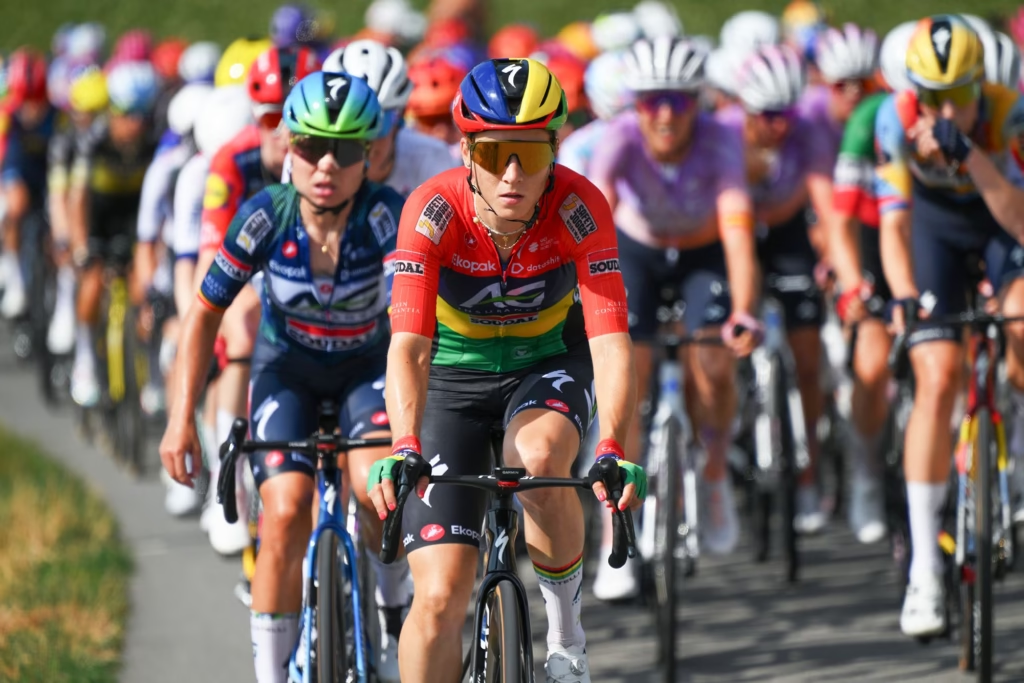
The central part contains five categorised climbs, giving teams without a leading sprinter an opportunity to make the race substantially harder. The Côte de Bougy-Villars is particularly useful for attackers because it is short and steep enough for one acceleration to split the peloton quickly.
Riders such as Puck Pieterse, Noemi Rüegg, Célia Gery and Kimberley Le Court-Pienaar all have an incentive to increase the pressure. Their chances of winning decrease if the full peloton reaches Geneva with Wiebes fresh and surrounded by her SD Worx-Protime lead-out.
The difficulty is sustaining the separation. The final climb is followed by a long run towards Geneva, giving several sprint teams time to organise behind. A small group will need both a meaningful advantage and enough riders willing to cooperate after the summit.
That creates an interesting tactical section even if the stage eventually reaches its expected bunch finish.
Lorena Wiebes starts Stage 2 in yellow
Wiebes begins Stage 2 as the first yellow jersey of the 2026 Tour after winning the uphill sprint in Lausanne.
She leads Kimberley Le Court-Pienaar by four seconds and Demi Vollering by six, with most of the other GC favourites ten seconds behind following the Stage 1 time bonuses.
Geneva provides Wiebes with an opportunity to strengthen both her overall lead and her position in the points classification. The flatter finish should suit her more naturally than the Côte Saint-François, where she still managed to overcome the climbing and produce the fastest sprint.
SD Worx-Protime should accept much of the responsibility for controlling the stage, although they do not need to close the early breakaway immediately. The team can allow a manageable advantage before increasing the pace later in the race.
Wiebes also has strong support through the climbing section. Mischa Bredewold, Lotte Kopecky and Anna van der Breggen give the yellow jersey several riders capable of protecting her and helping her return if a split develops.
Who can challenge Wiebes in Geneva?
Elisa Balsamo should benefit from the flatter arrival. Lidl-Trek can prepare a more conventional lead-out than they could in Lausanne, and Balsamo has the speed to challenge if she begins the sprint from the right position.
Marianne Vos remains one of the most dangerous alternatives because she should cope comfortably with the climbing and does not need a completely dominant lead-out. Her ability to read a chaotic finale and find the right wheel can compensate for any difference in outright speed.
Charlotte Kool has the acceleration to beat almost anyone but must survive the five climbs without spending too much energy. The long run towards Geneva gives Fenix-Premier Tech time to return her to the peloton if she is briefly distanced, although a hard chase could reduce what she has left for the sprint.
Chiara Consonni gives Canyon SRAM a credible fast-finishing option while the team protects Kasia Niewiadoma-Phinney and Antonia Niedermaier. Consonni is well suited to following the larger sprint trains and finding space without requiring complete control from her own team.
Kimberley Le Court-Pienaar starts second overall and could theoretically take yellow through the finishing bonuses. The flatter arrival does not suit her as well as Lausanne, but another high placing remains realistic if the climbing reduces the sprint field.
The full Tour de France Femmes 2026 riders-to-watch guide covers the leading GC riders, sprinters and stage hunters across all nine days.
Could the breakaway win Stage 2?
A breakaway victory is possible, but the route makes it unlikely.
The five categorised climbs provide enough terrain for attackers to build an advantage, particularly while riders compete for the polka-dot jersey. Océane Mahé begins the day as mountains leader after scoring from the Stage 1 breakaway and may try to join another move.
The difficulty comes after the final summit. The road towards Geneva favours an organised peloton, and several teams have a strong reason to contribute to the chase.
SD Worx-Protime want another Wiebes win. Lidl-Trek have Balsamo, Visma | Lease a Bike have Vos and Fenix-Premier Tech can work for Kool. When several teams share the pursuit, a small breakaway needs a substantial advantage to survive.
The attackers’ best hope is forming a larger group containing enough strong riders to continue working across the final 40km. A move containing only two or three riders is likely to be controlled and caught.
What should the GC favourites do on Stage 2?
For Vollering, Pauline Ferrand-Prévot, Paula Blasi, Niewiadoma-Phinney, Marlen Reusser, Niamh Fisher-Black and Elisa Longo Borghini, Stage 2 is primarily about avoiding trouble.
The climbs are not difficult enough to provide an obvious opportunity for meaningful GC gaps, while the flat finish makes chasing bonus seconds an unnecessary risk for most of the contenders.
The danger comes from positioning during the final approach.
Sprint teams and GC squads will both try to move forward on the same roads. The fast riders need room to build their lead-outs, while the overall contenders want to stay ahead of crashes and late splits.
Dropping too far back increases the risk of being delayed by an incident. Moving too far forward places the GC favourites directly among the lead-out trains at their most aggressive.
Vollering has already gained four seconds on many of her rivals after finishing third in Lausanne. There is little reason for her to contest another sprint unless the climbs unexpectedly reduce the race. Finishing safely in the same group is enough.
Stage 2 follows a bruising opening day
Several teams begin Sunday managing injuries from crashes during Stage 1.
Laura Tomasi will not start after abandoning with a right elbow injury and possible concussion. Alison Avoine was eliminated after finishing outside the time limit, while Christina Schweinberger required an X-ray after suffering trauma to her left wrist.
Lotte Claes, Henrietta Christie and Mackenzie Coupland were also treated following Stage 1 incidents, although none was listed as abandoning in the initial medical report.
Those injuries matter beyond the riders directly involved. Fenix-Premier Tech could have less support available for Kool and Pieterse, while EF Education-Oatly begin the day monitoring how Christie has recovered from her bruising and abrasions.
The Tour is only entering its second stage, but several squads are already managing reduced or compromised resources.
-
 Photo Credit: Cor Vos
Heat could make the stage harder than its profile
High temperatures are expected around Geneva, adding another layer of difficulty to a stage that might otherwise appear relatively manageable.
The commissaires have opened feeding from kilometre 10 until 10km from the finish, giving teams an extended window to supply bottles, food and ice. That will help riders cope with the conditions, but moving back through the peloton for supplies also costs energy and can create positioning problems.
The heat may become most noticeable during the central climbing section. Short ascents ridden at high intensity become more draining when riders are already trying to control their body temperature.
It can also affect the sprint. A rider who mismanages hydration during the previous three hours may reach Geneva with less acceleration than expected, even after surviving the hills.
Tour de France Femmes Stage 2 timings at a glance
Date: Sunday 2 August 2026
Route: Aigle to Geneva
Distance: 147.9km
Stage type: Flat
Categorised climbs: Five
UK race start: 13:20 BST
Expected finish: approximately 16:47 BST
Live UK television: TNT Sports 1
Live UK streaming: HBO Max
Free UK highlights: 5 at 19:00 BST
Best time to start watching the finale: 16:00 BST
Latest sensible time for the sprint build-up: around 16:25 BST
Finish: Quai du Mont-Blanc, Geneva
Stage 2 should provide the sprinters with their clearest early opportunity, but the road to Geneva contains enough climbing to make the race worth watching before the final kilometre.
The middle of the stage gives the attackers and puncheurs a chance to isolate Wiebes or force SD Worx-Protime into a long chase. The final run towards Geneva then gives the yellow jersey and the other sprinters time to recover and rebuild their lead-outs.
If the bunch reforms, Wiebes remains the clear favourite. After winning on a finish in Lausanne that should have reduced her advantage, she now reaches a stage designed much more closely around her greatest strength.

