
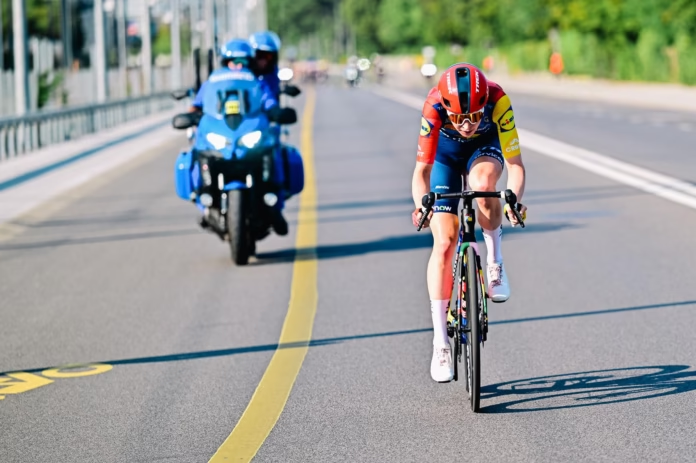
Riejanne Markus came within the final 500 metres of producing the first major upset of the 2026 Tour de France Femmes after a long solo attack almost carried her to victory in Geneva.
The Lidl-Trek rider attacked with approximately 39km remaining, soon after the earlier breakaway had been caught, and built an advantage of more than a minute. She still held around 50 seconds with 15km to race and 30 seconds at 10km, forcing SD Worx-Protime into a prolonged pursuit involving Lotte Kopecky, Anna van der Breggen and almost every rider still available around Lorena Wiebes.
Markus was finally absorbed as the peloton entered the last 500 metres. Wiebes then completed the work of her team by winning the sprint ahead of Markus’ teammate Elisa Balsamo and Marianne Vos.
The official result records a second consecutive Wiebes victory. The race itself was defined by Markus, who turned an apparently predictable sprint stage into an uncertain chase and came agonisingly close to one of the biggest wins of her career.
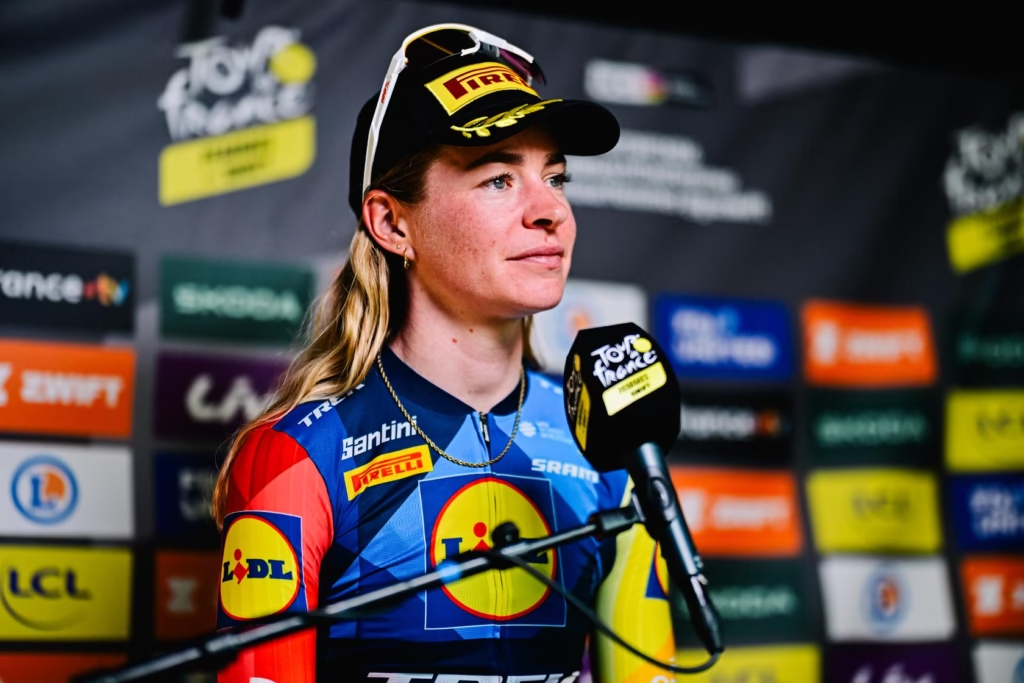
Markus attacks with almost 40km remaining
The opening breakaway had been neutralised when Markus accelerated on the flatter road towards Geneva.
It was an ambitious distance from which to attack. The final categorised climb had already been completed, and the remaining terrain generally favoured the speed and numerical strength of the peloton rather than a lone rider.
Markus committed immediately and began extending her advantage while the teams behind reorganised. The gap moved beyond a minute as SD Worx-Protime initially attempted to manage the situation without committing their entire team.
That hesitation transformed the attack from a speculative move into a genuine chance of victory.
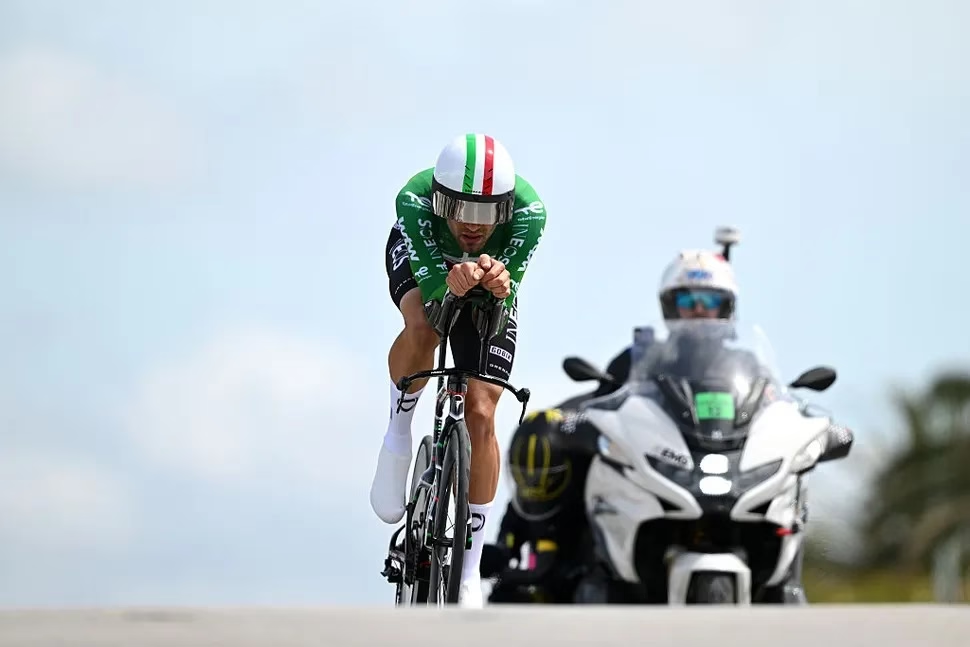
Markus possesses the qualities required for a long effort. She is a strong time triallist, an experienced stage racer and a rider capable of sustaining power without needing repeated changes of pace. Once clear, she settled into an aerodynamic position and concentrated on maintaining her rhythm rather than reacting to every update from the race convoy.
The same endurance and time-trial strength made her an important part of the Lidl-Trek Tour de France Femmes squad, even though the team arrived with Elisa Balsamo for the sprints and Niamh Fisher-Black carrying its primary GC ambitions.
SD Worx-Protime had to commit to the chase
Wiebes had survived all five categorised climbs and remained the overwhelming favourite if the peloton reached Geneva together. That placed responsibility for catching Markus firmly on SD Worx-Protime.
The yellow jersey’s team initially appeared confident that the advantage would begin falling naturally. Markus continued to hold her speed, however, and the expected rapid reduction did not arrive.
SD Worx-Protime were eventually forced to commit riders normally valuable much closer to the finish. Kopecky and Van der Breggen both contributed to the chase, while the team steadily used the depth that might otherwise have formed Wiebes’ lead-out.
That was the tactical achievement of Markus’ move.
She did not merely gain exposure at the front or force a brief response. She made the strongest sprint team in the race work for much of the final hour and threatened to remove the stage from Wiebes before the sprint had even begun.
The yellow jersey ultimately showed that she could win without a perfectly preserved lead-out, but the process was considerably less comfortable than the final result suggests. The full race picture is covered in the Tour de France Femmes 2026 Stage 2 report.
The advantage refused to disappear
Markus still held around 50 seconds with 15km remaining and approximately 30 seconds at 10km.
Those were serious margins rather than the final remnants of a doomed attack. The peloton was closing, but not quickly enough for SD Worx-Protime to feel certain that the catch would be completed before the line.
Markus remained low over the bike and continued riding at a controlled tempo. After more than 20km alone, she resisted the temptation to respond emotionally to the time checks or begin making irregular accelerations.
Behind, the chase was complicated by the interests of the other sprint teams.
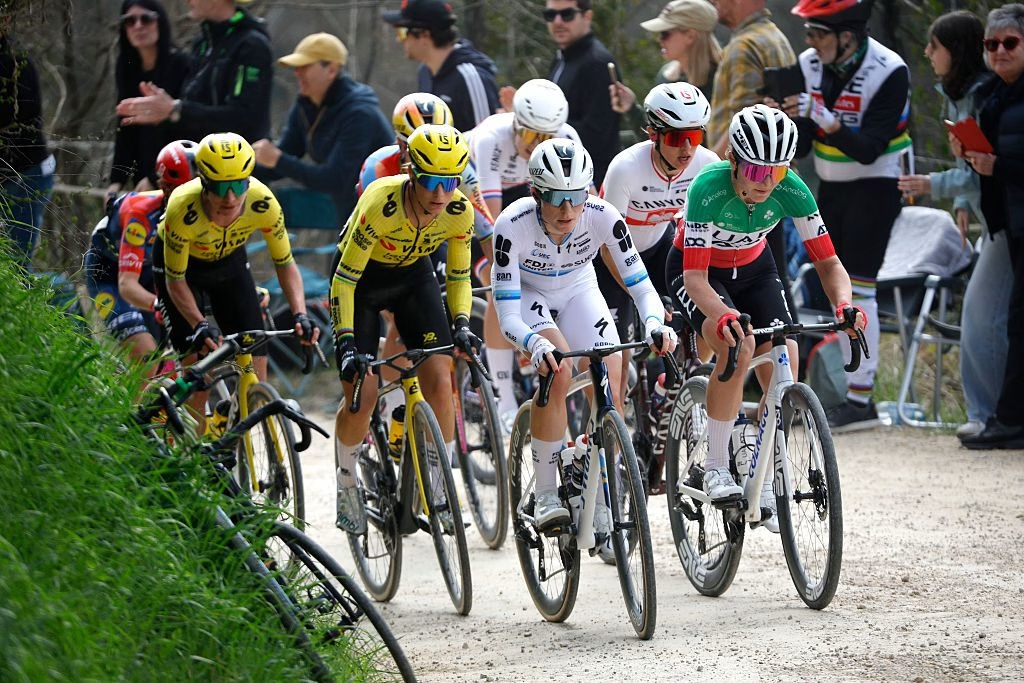
Lidl-Trek had Balsamo waiting in the bunch but no reason to help catch their own rider. Visma | Lease a Bike could hope for a Vos sprint, while Fenix-Premier Tech and Canyon SRAM also retained fast-finishing options. Each team wanted the possibility of a sprint without doing too much work to deliver Wiebes into her strongest scenario.
That left SD Worx-Protime carrying much of the responsibility as the road disappeared beneath Markus’ wheels.
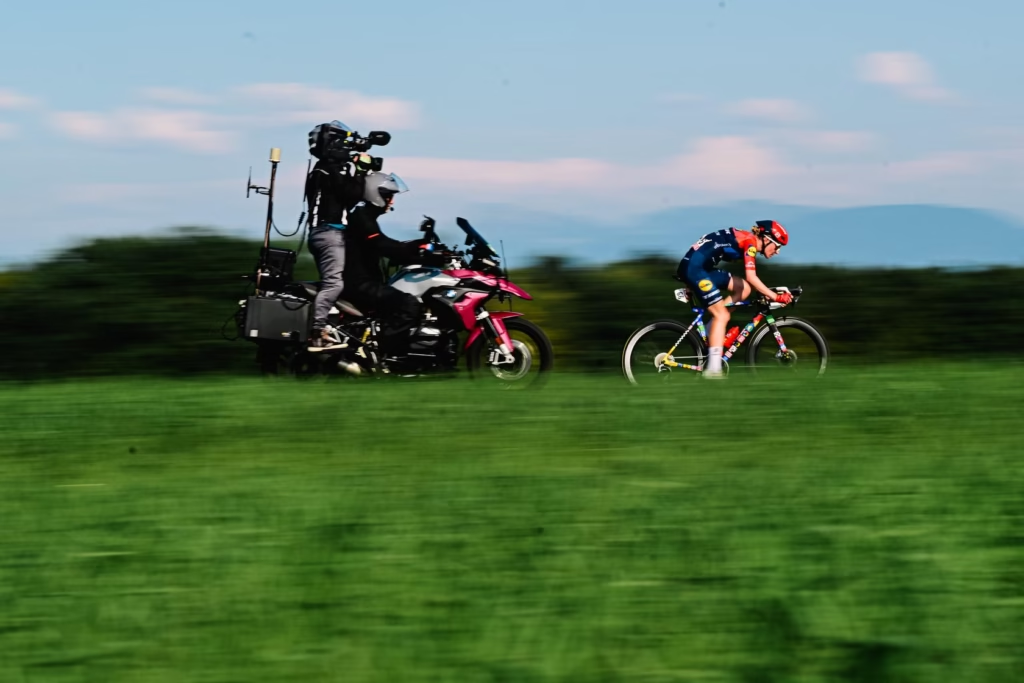
Caught inside the final 500 metres
Markus entered the final kilometre still alone.
The gap was collapsing rapidly, but victory remained visible as the peloton moved into its final formation behind. Another moment of hesitation, an interruption to the chase or a slightly larger advantage at the flamme rouge could have allowed her to reach the line.
The catch came with approximately 500 metres remaining.
After nearly 40km alone, Markus was absorbed just as the sprinters began making their final movements. There was no realistic possibility of recovering quickly enough to contest the finish after such a sustained effort.
Wiebes launched shortly afterwards and won clearly, with Balsamo taking second and Vos third. The speed of the final sprint can make the outcome appear inevitable when viewed only through the closing seconds.
Markus had spent the previous hour proving that it was anything but inevitable.
Lidl-Trek created two routes towards victory
The attack demonstrated the tactical value of Lidl-Trek’s depth.
Markus represented one route to the stage win, while Balsamo remained protected in the peloton for the sprint. The team did not need to abandon one objective to pursue the other.
If Markus stayed away, Lidl-Trek won through the solo attack. If SD Worx-Protime brought her back, Balsamo still reached the finish without having been asked to contribute to the chase.
That scenario placed almost all the pressure on the yellow jersey’s team.
Lidl-Trek eventually finished second rather than first, but the approach gave them a better chance than simply helping to create a conventional sprint and asking Balsamo to beat Wiebes through speed alone.
The Tour de France Femmes riders-to-watch guide identified Balsamo as Wiebes’ closest direct rival from a full peloton. Markus showed how Lidl-Trek can improve those odds by disrupting the race before the final 200 metres.
Why the other sprint teams hesitated
Markus’ advantage exposed the awkward tactical relationship between Wiebes and every team trying to beat her.
The rival sprint squads needed the attack caught to preserve their own chances. Helping with the pursuit also meant assisting the fastest rider in the race and allowing SD Worx-Protime to preserve more of their lead-out.
The more those teams contributed, the more likely another Wiebes victory became.
By refusing to work immediately, they forced SD Worx-Protime to spend Kopecky, Van der Breggen and other important riders earlier than planned. The danger was that Markus might survive before the yellow jersey’s team completed the chase.
It nearly happened.
The episode provided a useful lesson for the rest of the Tour. Teams cannot repeatedly help create Wiebes’ ideal finishing scenario and then expect to beat her once the sprint begins. They must either attack, place riders ahead or force SD Worx-Protime to carry the full responsibility for control.
Markus did exactly that.
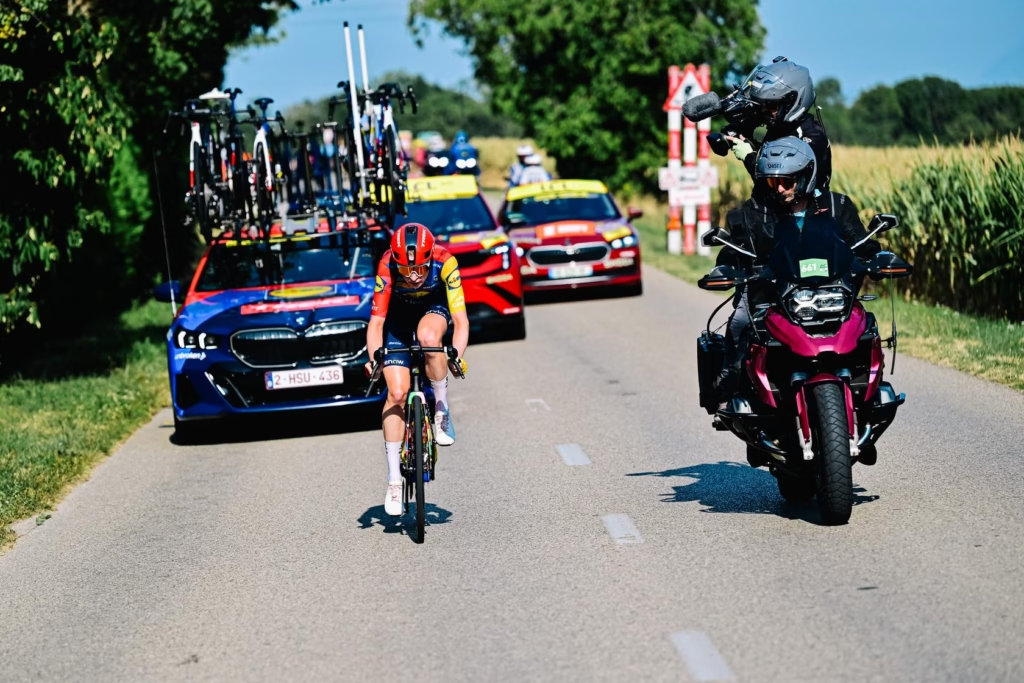 Photo Credit: A.S.O./Billy Ceusters
The attack suited Markus perfectly
Markus is often at her most dangerous when she can turn her time-trial power into tactical pressure.
She is capable of supporting GC leaders across hilly and mountain terrain, but her value is not restricted to conventional domestique work. She can recognise a lull, commit to a long move and force rival teams to make decisions before they are ready.
The timing of the Stage 2 attack was particularly effective.
The early breakaway had just been caught, creating the brief pause that often follows a prolonged chase. Many riders had already used energy across the five categorised climbs, while the sprint teams were beginning to think about preservation rather than another immediate pursuit.
Markus attacked into that uncertainty.
Moving ten kilometres later may not have allowed her to establish enough of an advantage. Attacking earlier would have given SD Worx-Protime more time to organise a controlled chase. She chose the point where responsibility was least clear and maintained enough speed to exploit the hesitation.
Her range is also why the Tour de France Femmes breakaway specialists guide included riders capable of turning transitional stages into long-distance opportunities rather than waiting for obvious breakaway days.
What it says about Lidl-Trek’s Tour ambitions
The move showed that Lidl-Trek are not approaching the Tour through one leader or one type of stage.
Balsamo gives them a route to sprint victories. Fisher-Black carries the main GC challenge, while Isabella Holmgren is part of the young rider contest. Markus and Amanda Spratt provide experience, climbing support and the freedom to create tactical pressure.
That range allows the team to race proactively.
Markus’ attack did not compromise Balsamo. A future move can similarly protect Fisher-Black by forcing other teams to chase or by placing a strong teammate ahead before the decisive climbs.
The team’s wider objectives are examined in the Tour de France Femmes 2026 teams guide, where Lidl-Trek entered the race with realistic ambitions in the GC, white jersey and individual stages.
Stage 2 showed how those aims can support rather than contradict one another.

Markus has changed how rivals must treat her
The immediate cost of coming so close is that Markus will receive less freedom during the remaining stages.
Rival teams have now seen that she can hold a sizeable advantage across flatter roads even when the peloton is committed to the chase. Allowing her a minute cannot be dismissed as harmless simply because the finish appears more favourable to another rider.
That attention may make her next attack harder to establish, but it can benefit Lidl-Trek elsewhere.
If teams follow Markus immediately, they use riders and energy that might otherwise be saved for later. If they hesitate again, she has shown she can take the move deep into the finale.
Stage 3 from Geneva to Poligny provides terrain even more obviously suited to aggressive racing. The Col de la Faucille arrives early, followed by repeated climbing through the Jura and a rolling final section.
Markus can attack again, contribute to Fisher-Black’s protection or help place Lidl-Trek in a strong breakaway. Her Stage 2 effort means every one of those movements will now be taken seriously.
The result does not capture how close it became
Wiebes deserved the victory. She survived the climbing, remained composed while her team chased and produced a sprint none of her rivals could match.
Markus still made Stage 2 much more than another demonstration of Wiebes’ speed.
She attacked at a distance where most riders would expect to be controlled, built a dangerous advantage and forced one of the strongest teams in the peloton to chase almost to the line. At 15km she still had 50 seconds. At 10km she retained 30. Inside the final kilometre, she remained in front.
The catch came with only 500 metres remaining.
The official result places Markus outside the stage podium. The shape of the race showed how close she came to changing the entire story of the Tour’s opening weekend.

