
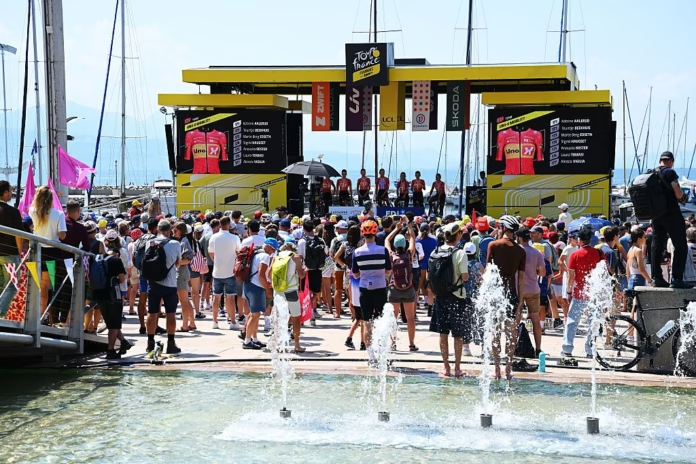
Lotto-Intermarché were reduced to only four riders during a punishing second stage of the 2026 Tour de France Femmes, with Marieke Meert, Elisabeth Ebras and Sterre Vervloet all abandoning on the road from Aigle to Geneva.
Meert left after crashing and was taken to hospital rather than the finish. Ebras had been carrying pain around her glute after forcing herself through Stage 1, while Vervloet developed serious heat-related symptoms, becoming feverish and vomiting on the bike.
Laura Molenaar of VolkerWessels also abandoned during Stage 2, although the reason for her withdrawal had not been confirmed immediately after the finish.
Their exits followed the morning non-starts of Christina Schweinberger and Brodie Chapman. With Laura Tomasi having abandoned during Stage 1 and Alison Avoine eliminated outside the time limit, eight riders have now left the Tour after only two stages.
Tour de France Femmes 2026 withdrawal list after Stage 2
| Rider | Team | Exit | Confirmed reason |
|---|---|---|---|
| Laura Tomasi | Uno-X Mobility | DNF Stage 1 | Crash, right elbow injury and possible concussion |
| Alison Avoine | Ma Petite Entreprise | OTL Stage 1 | Finished outside the time limit |
| Christina Schweinberger | Fenix-Premier Tech | DNS Stage 2 | Broken wrist sustained in Stage 1 crash |
| Brodie Chapman | UAE Team L’IMAD | DNS Stage 2 | Illness |
| Elisabeth Ebras | Lotto-Intermarché | DNF Stage 2 | Pain and developing injury around her glute |
| Marieke Meert | Lotto-Intermarché | DNF Stage 2 | Crash, transferred to hospital |
| Sterre Vervloet | Lotto-Intermarché | DNF Stage 2 | Heat illness, fever and vomiting |
| Laura Molenaar | VolkerWessels | DNF Stage 2 | Reason awaiting confirmation |
The Tour began with 147 riders in Lausanne. Only 139 remained after Stage 2.

Marieke Meert taken to hospital after crash
Meert’s debut Tour de France Femmes ended after she crashed during the stage into Geneva.
The Belgian had spoken before the race about wanting to reach the final finish in Nice, but that ambition disappeared after only two days. Lotto-Intermarché sports director Grace Verbeke confirmed that Meert’s crash sent her to hospital rather than towards the stage finish.
“A crash sent her towards the hospital instead of the finish,” Verbeke said.
No detailed diagnosis was available immediately after the stage, so the nature and severity of Meert’s injuries should remain open until the team provides a medical update.
Her departure matters beyond the loss of another rider. Meert offered Lotto-Intermarché strength on rolling roads and against the clock, making her a useful support option once the Tour moved away from the opening sprint stages.
The immediate priority is now her condition rather than when she might return to racing.
Elisabeth Ebras abandons after carrying pain from Stage 1
Ebras was among the first riders to lose contact during Stage 2 and abandoned before Meert’s crash.
Verbeke said the Estonian had already been forced to push herself deeply during the opening stage in Lausanne and had begun developing an injury around her glute.
“She already had to force herself yesterday,” Verbeke explained. “She is starting to develop an injury around her glute, so it quickly became the end of the story.”
The team did not initially believe illness was responsible. Ebras’ physical readings were described as reasonably normal, pointing instead towards the developing injury and the strain of trying to remain in the race.
Ebras had been selected as one of Lotto-Intermarché’s options for the hillier stages and as support for Linda Riedmann. Her withdrawal removes another rider who might have been useful during the Jura stages and later climbing.
Sterre Vervloet suffers heat illness
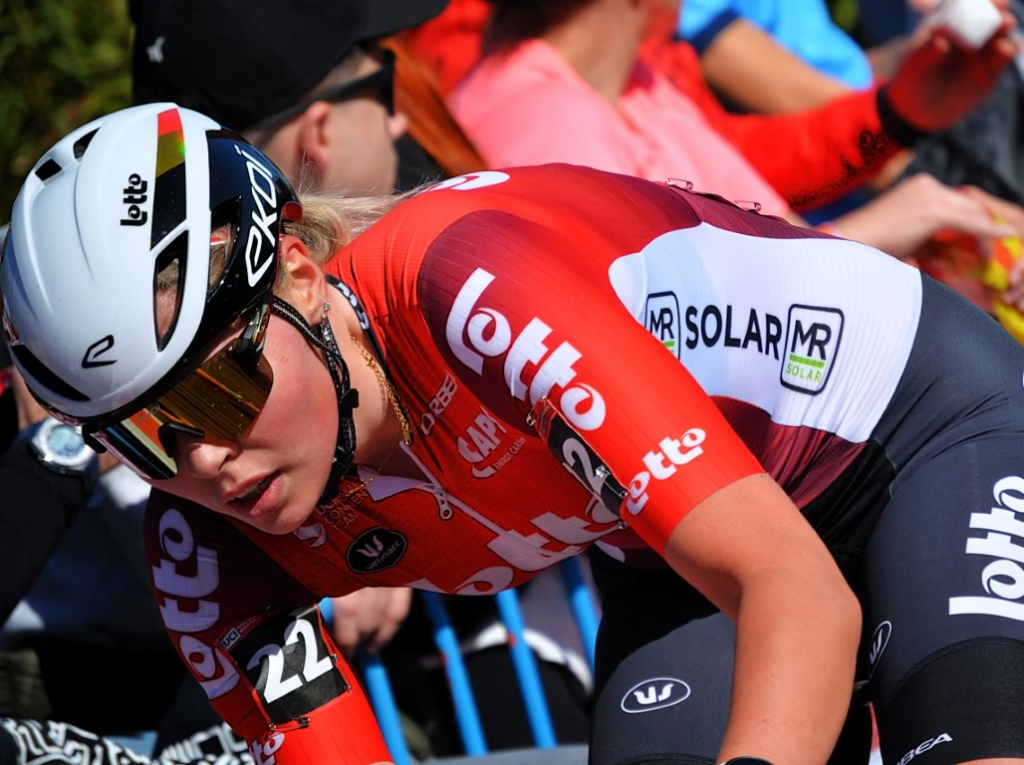
Vervloet’s withdrawal was the most clearly connected to the extreme conditions faced by the peloton.
The 22-year-old quickly ran into difficulty and developed symptoms consistent with heat illness. Verbeke said she became feverish and began vomiting while riding.
“She got into trouble very quickly because of heatstroke,” Verbeke said. “She was feverish and had to vomit on the bike.”
Continuing was no longer safe, and Vervloet abandoned what was also her first Tour de France Femmes.
Temperatures climbed above 30°C during the stage, with riders repeatedly collecting bottles, ice and cooling supplies while crossing five categorised climbs. The feeding window had been extended because of the heat, but individual tolerance varies significantly even when teams employ extensive cooling strategies.
Vervloet’s symptoms went beyond simply struggling with the temperature. Fever and vomiting during intense exercise required her to stop and receive medical attention.
Lotto-Intermarché reduced to four riders
The three withdrawals leave Lotto-Intermarché with only Linda Riedmann, Sandrine Tas, Dina Boels and Romina Hinojosa.
“I think you can call it a bad day,” Verbeke said. “You know it will be difficult here for the team, but when everything also goes completely against you, we could do without that.”
Riedmann provided the one substantial positive by finishing inside the top ten in Geneva. That result gave the team a visible sporting return from a day otherwise dominated by abandonments and concern over the remaining riders.
Boels and Hinojosa only narrowly finished inside the time limit. Verbeke also said Boels appeared to be suffering with pain around her ribs, adding another issue for a team already operating with only four riders.
The Tour de France Femmes 2026 teams guide showed Lotto-Intermarché arriving with a young squad and realistic ambitions centred on stage opportunities and development. After Stage 2, simply preserving enough riders to support Riedmann has become a major challenge.
Is there an illness inside Lotto-Intermarché?
Three riders leaving on the same afternoon inevitably raised the possibility of illness spreading through the squad.
Lotto-Intermarché did not initially believe there was evidence of a single virus or infection.
“We do not immediately think of illness, but we have to wait,” Verbeke said. “I think it is a combination of the heat and the level. The parameters are reasonably good. Let us hope it stays that way.”
The known circumstances also differ.
Meert crashed, Ebras was affected by a developing physical problem and Vervloet displayed severe heat-related symptoms. Those are not three identical cases pointing clearly towards one shared illness.
The team will nevertheless continue monitoring the four remaining riders overnight. Grand Tour illness can become more obvious after the immediate effects of a stage have faded, and the category-one Col de la Faucille at the start of Stage 3 will quickly expose anyone who has not recovered.
 Photo Credit: Bretagne Ladies Tour
Sandrine Tas also struggled with the temperature
Tas reached Geneva but described how significantly the heat affected her performance.
“It is so warm,” she said. “I struggle with it. I feel that I blow up my engine because of the heat and that I cannot reach the values I can normally ride. That is simply disappointing.”
She did not believe that she was ill and instead attributed the problem to the temperature and the speed of the race.
“I do not feel sick,” Tas said. “I am simply busy all day with water and ice. The level is also incredibly high. If you are not at your best, it is difficult to stay there.”
That distinction is important. A rider can be free from infection while still being unable to perform close to her normal level because thermoregulation has become the limiting factor.
Tas remains in the race, but the Tour de France Femmes 2026 Stage 3 route offers no gentle recovery day. The Col de la Faucille begins early and is followed by further climbing through the Jura.
Laura Molenaar also abandons Stage 2
Molenaar was the fourth rider to abandon during the stage.
The official withdrawal list confirmed that the VolkerWessels rider did not finish, but no detailed reason was available immediately afterwards. A crash, injury or illness should not be assigned unless the team provides further information.
Molenaar was one of the squad’s more experienced stage-race riders and could have contributed on the rolling and hilly terrain ahead. Her departure leaves VolkerWessels with six riders.
Until the team issues an update, her entry on the withdrawal list should remain recorded simply as a confirmed Stage 2 abandonment with the reason awaiting detail.
 Photo Credit: Getty
Schweinberger and Chapman did not start Stage 2
The field had already been reduced by two riders before leaving Aigle.
Christina Schweinberger was unable to start after scans confirmed that she had broken her wrist in a Stage 1 crash. The Fenix-Premier Tech rider had completed the opening stage despite the injury, but continuing was impossible once the fracture was identified.
Her absence removes an experienced road captain and positioning rider from a team targeting stage victories through Puck Pieterse and Charlotte Kool.
Brodie Chapman was also a DNS after becoming ill during Stage 1. UAE Team L’IMAD decided that the Australian had not recovered sufficiently to begin the second stage.
Chapman’s departure reduces the support available around Elisa Longo Borghini, Paula Blasi and UAE’s other general classification options. The team retain considerable depth, but every rider lost becomes more significant once the Tour reaches Mont Ventoux and the final mountain stages.
The circumstances behind both departures are covered in the earlier Tour de France Femmes 2026 abandons and crash update.
-
 Photo Credit: Getty


Tomasi and Avoine left after Stage 1
Laura Tomasi was the first rider to abandon the 2026 Tour.
The Uno-X Mobility rider crashed in Lausanne, injured her right elbow and displayed persistent signs that raised concern over a possible concussion. She was transferred to hospital for further assessment and did not complete the stage.
Alison Avoine reached the finish but arrived outside the permitted time limit. The Ma Petite Entreprise rider was eliminated rather than recorded as a DNF or DNS.
The distinction matters. A DNF applies to a rider who starts a stage but does not finish it. A DNS applies when a rider does not begin the following stage. OTL means the rider finished but exceeded the maximum permitted time.
Avoine’s elimination showed how unforgiving even the opening stages can be. The wider principles behind these limits are explained in our Tour de France time-cut guide.
Eight riders gone after two stages
The Tour has now lost two riders after Stage 1, two before Stage 2 and four during the road to Geneva.
The reasons range from crashes, concussion concerns and a broken wrist to illness, heat-related symptoms, a developing physical injury and one time-cut elimination.
Lotto-Intermarché have been affected most severely, losing three members of the same seven-rider team in a single afternoon. No other squad has yet lost more than one rider.
The stage itself ended with Lorena Wiebes taking a second consecutive victory after Riejanne Markus was caught in the final kilometre. The full sporting account is available in the Tour de France Femmes 2026 Stage 2 report.
The race now heads into France with only 139 riders remaining and the Col de la Faucille arriving almost immediately on Stage 3.
For Lotto-Intermarché, the consequences of Geneva extend beyond one bad day. The team must now protect Riedmann’s opportunities, monitor the health of the remaining riders and complete the next seven stages with little margin for another setback.

