
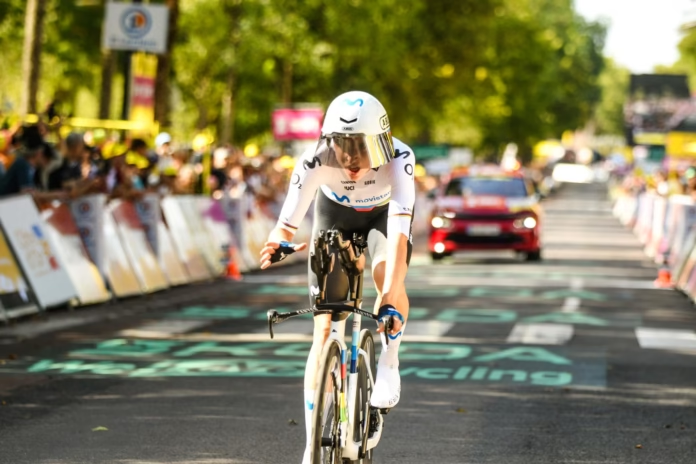
“Project Dijon” delivered exactly what Marlen Reusser and Movistar wanted. The world time trial champion won Stage 4, took the yellow jersey and established herself as the rider everyone else must now dislodge.
The next phase already has its name.
“Now it’s Project Nice,” Reusser said after completing the 21km time trial from Gevrey-Chambertin to Dijon.
Nice is still five stages and several very different tactical problems away. Reusser leads Demi Vollering by only 14 seconds, with Cédrine Kerbaol third at 54 seconds and six more riders within 1 minute 43 seconds. Pauline Ferrand-Prévot is further back at 2 minutes 14 seconds, but the defending champion has made clear that she intends to attack rather than accept the damage done in Dijon.
The full position is covered in our GC and jersey standings after Tour de France Femmes Stage 4.
Project Nice cannot be a conventional exercise in protecting yellow until one decisive summit finish. Movistar must negotiate two hilly stages, defend Reusser on Mont Ventoux, survive the longest stage of the race into Nice and retain enough strength for a final 99.2km mountain stage containing four ascents of the Col d’Èze.
Reusser has the jersey. The remaining route gives almost everyone behind her a reason to race aggressively.
What does Project Nice mean?
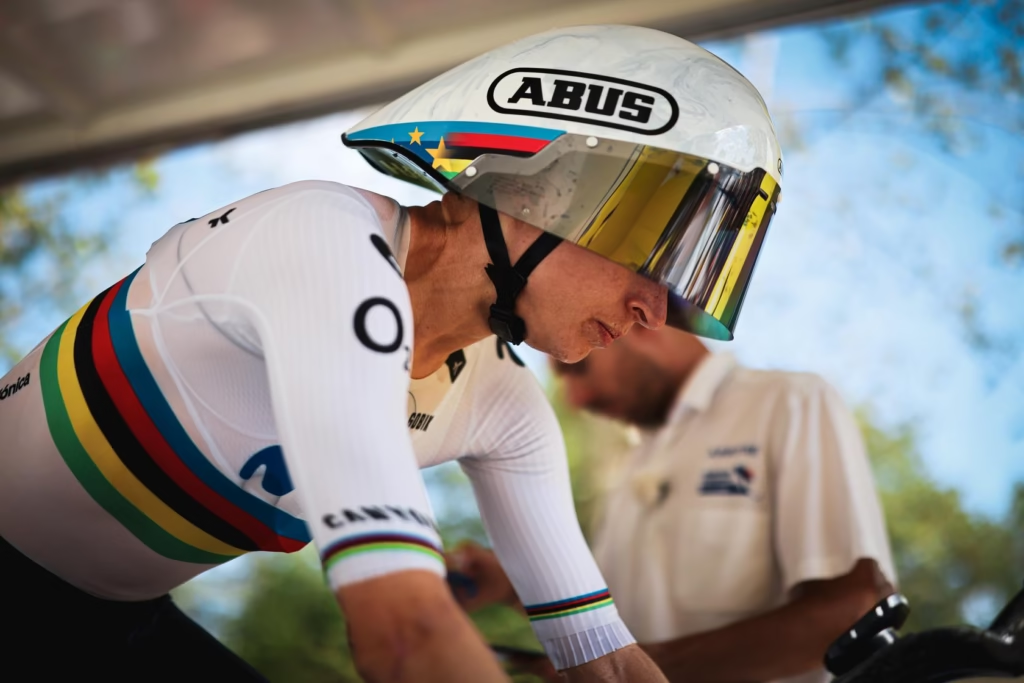
Project Dijon was comparatively simple. Movistar could prepare Reusser’s pacing, equipment, aerodynamics and course reconnaissance around one controlled 27-minute effort.
Project Nice is less predictable.
It means retaining yellow through five road stages containing breakaway battles, bonus seconds, repeated climbing and rival teams capable of attacking with several riders at once.
Reusser does not necessarily need to win another stage. Her task is to avoid one serious loss while preventing Vollering from collecting enough smaller gains to erase the 14-second advantage before or after Mont Ventoux.
Movistar’s broader objective should be to make the Tour as uneventful as possible until the moments Reusser cannot avoid.
That means allowing suitable breakaways to take stage victories, removing bonus seconds from the GC contenders and refusing to chase riders who pose no meaningful threat to yellow. It also means controlling the race firmly enough that Visma | Lease a Bike, FDJ United-Suez, UAE Team L’IMAD and Canyon SRAM cannot use riders ahead as launch points for their leaders.
Project Nice is not about dominating every stage. It is about deciding which parts of each stage matter.
Stage 5 should be outsourced to the breakaway
The eight-climb route from Mâcon to Belleville-en-Beaujolais is the first test of Movistar’s discipline.
It would be easy to over-defend yellow on a day containing almost 2,900 metres of climbing. The breakaway battle begins immediately, several teams have strong stage hunters and Mont Brouilly provides an obvious point for Vollering or Kasia Niewiadoma-Phinney to test Reusser.
Movistar should resist the temptation to control for the stage.
A breakaway containing riders already several minutes behind would be useful. It would remove the stage victory and bonus seconds from the GC contest while transferring most of the tactical responsibility to teams that missed the move.
Liane Lippert can make that approach even more effective. Sending her into the break would give Movistar an option ahead and discourage rival teams from organising a chase that ultimately helps Reusser’s closest challengers.
The danger is allowing the wrong rider into the move.
Femke de Vries begins Stage 5 tenth overall at 1 minute 47 seconds. Visma can use her to force Movistar into a difficult calculation. A break containing De Vries cannot be given five minutes, but chasing immediately would consume riders Reusser may need later.
Movistar must control the breakaway’s composition rather than every attack used to create it. Once a safe group is established, Reusser’s essential task is beginning Mont Brouilly near the front and following the first serious GC acceleration.
Losing a few seconds would not destroy Project Nice. Spending the entire team to prevent any attack might.
The full tactical case for the escape is set out in the Tour de France Femmes 2026 Stage 5 preview.
Stage 6 presents the same problem on a longer scale
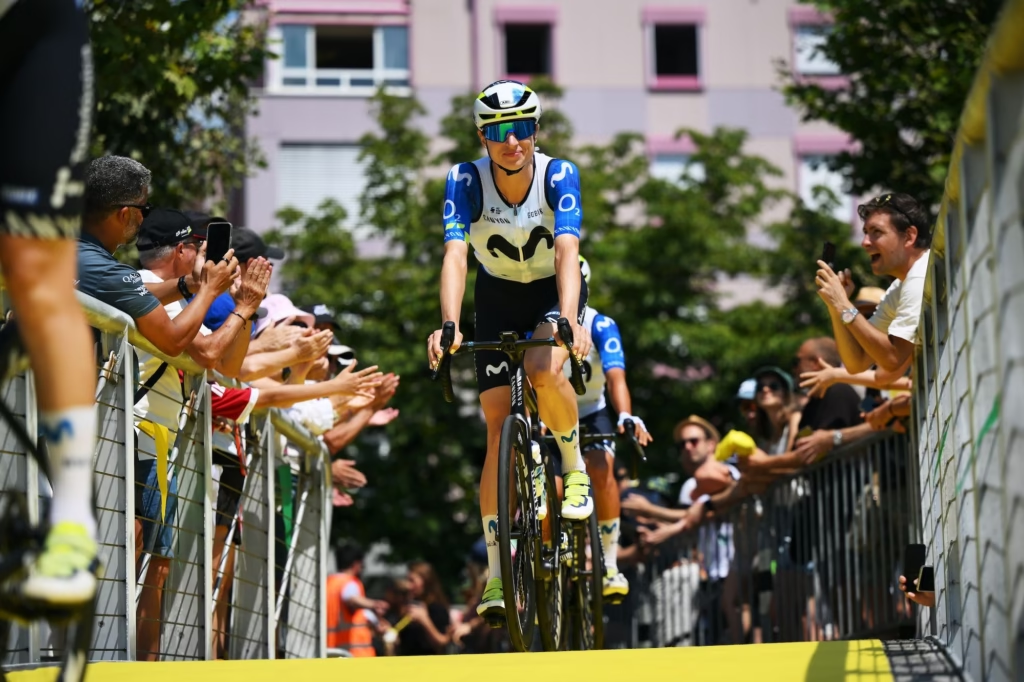
The route from Montbrison to Tournon-sur-Rhône is another hilly stage rather than a conventional day for the sprinters.
For Movistar, that means another afternoon of deciding whether an attack represents a stage-winning move or the beginning of a wider GC plan.
Ferrand-Prévot’s deficit gives Visma freedom to race differently. Marion Bunel can enter a breakaway, De Vries can threaten the classification and Marianne Vos gives the team a possible stage winner if the race comes back together.
UAE can create similar complications through Paula Blasi, Silvia Persico and Elisa Longo Borghini, while Canyon SRAM have Antonia Niedermaier positioned ninth overall in addition to Niewiadoma-Phinney.
Movistar cannot respond to every secondary leader as though she is Vollering.
The most efficient defence is keeping dangerous moves manageable while preserving numbers around Reusser. The closer the Tour moves towards Ventoux, the less valuable it becomes to exhaust the team protecting every second held by riders outside the immediate yellow jersey contest.
Project Nice depends on prioritisation. Vollering’s movements matter immediately. Ferrand-Prévot’s attacks matter because of what she can do in the mountains. A stage hunter already ten minutes behind does not.
Fourteen seconds is not a defensive cushion
Reusser’s lead over Vollering is enough to give Movistar control. It is not enough to permit passive racing.
A stage win carries ten bonus seconds, with six for second and four for third. There are also bonus points available on selected climbs before the finish.
Vollering could take yellow before Mont Ventoux without dropping Reusser by a meaningful distance. Winning a hilly stage while Reusser finishes outside the bonus positions would remove most of the current gap.
That should shape Movistar’s breakaway policy.
Allowing the stage to remain ahead is not merely a way of saving energy. It prevents Vollering from using her faster uphill acceleration to collect bonuses at the finish.
Reusser does not need to contest every stage. She needs to make sure Vollering does not.
The 14-second advantage is therefore enough only if Movistar control the incentives around it. A breakaway taking the bonuses strengthens yellow. A reduced-group finish with Vollering, Niewiadoma-Phinney and Longo Borghini all present places Reusser under unnecessary pressure.
Ventoux is the centre of Project Nice
Everything before Stage 7 should be judged by whether it helps Reusser reach Mont Ventoux with a complete team and her current advantage intact.
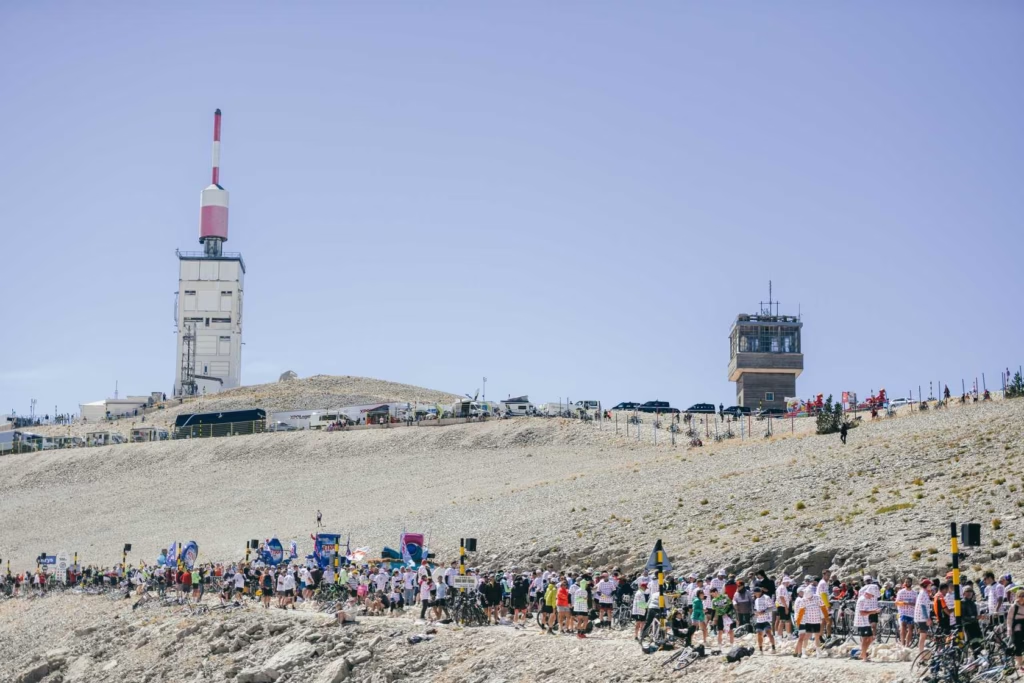
The final climb is 15.7km at 8.8% from Bédoin. It is long enough for temporary weakness to become a loss measured in minutes and steep enough to prevent Reusser from relying purely on the sustained power that won the Dijon time trial.
Her objective does not necessarily need to be following every acceleration immediately.
Reusser must climb at the highest sustainable pace she can maintain without crossing into a collapse. Vollering and Ferrand-Prévot are likely to attack more explosively, but responding above her limit could turn a 20-second gap into two minutes later on the mountain.
Movistar’s support is crucial before the decisive section. Lippert can help Reusser through the lower slopes, while the wider team must prevent Visma or FDJ United-Suez from placing several riders ahead before the climb.
Once the race reaches the forest above Saint-Estève, Reusser may largely be defending the jersey alone.
A loss of 20 or 30 seconds to Vollering would cost yellow. That makes the stage unforgiving, but the wider Tour calculation remains more nuanced.
Reusser does not have to prove she is the strongest climber on Ventoux. She needs to remain close enough that her strengths still matter over the final weekend.
The climb and its likely effect on the race are examined in the Tour de France Femmes 2026 Mont Ventoux guide.
What does Reusser need on Ventoux?
The simplest target is reaching the summit with Vollering.
Doing so would preserve yellow and turn the final weekend into a race Reusser can defend through positioning, descending and sustained power.
Losing fewer than 14 seconds on the road may also be enough if a breakaway takes the stage bonuses. A small separation near the summit would not necessarily change the jersey.
Losing between 30 seconds and one minute would place Vollering into yellow but keep Reusser firmly involved. Project Nice would then become an attacking rather than defensive plan, with two stages remaining to reverse the result.
A loss of more than two minutes would be much harder to repair.
Ferrand-Prévot demonstrated in 2025 that she can create gaps of that scale on a long mountain. Vollering has repeatedly shown the ability to turn one dominant climb into control of an entire stage race.
Reusser’s task is not proving she can match their best climbing performance kilometre for kilometre. It is avoiding the one prolonged crisis that allows either rider to convert superiority into minutes.

Vollering is the immediate threat
Ferrand-Prévot’s 2:14 deficit makes her the most likely rider to attack from distance, but Vollering poses the more direct threat to Project Nice.
She begins only 14 seconds behind and does not need to take major risks before Ventoux. FDJ United-Suez can allow Visma, UAE and Canyon SRAM to make the race difficult, then use Vollering’s climbing to capitalise once Reusser is isolated.
Movistar therefore cannot allow the defence of yellow to become a private contest with Ferrand-Prévot.
An attack from the defending champion could also benefit Vollering. If Reusser is forced to chase while Vollering follows, the yellow jersey team may effectively be working to deliver their closest rival into the lead.
Reusser must distinguish between attacks that threaten yellow immediately and those that simply change the shape of the race.
Her strongest defence may sometimes be refusing to close a move and requiring Vollering’s team to reveal whether they are prepared to take responsibility.
Reusser cannot ignore Ferrand-Prévot
Ferrand-Prévot is further behind, but her deficit gives Visma greater tactical freedom.
The defending champion has already said she likes the scenario of having to chase rather than protect. That is not simply a change in mindset. It alters the way Visma can use the whole team.
De Vries can move into breakaways because Movistar cannot give her unlimited time. Bunel can be positioned ahead as a climbing bridge. Lieke Nooijen, Daniek Hengeveld and Sarah van Dam can increase the cost of controlling the race before Ferrand-Prévot attacks.
Reusser’s safest response is not personally chasing Ferrand-Prévot whenever she moves. It is preventing Visma from creating the sequence of attacks that leaves Reusser isolated before the decisive climb.
The distinction matters.
One acceleration can be managed through pacing. A teammate ahead, a second attack behind and Vollering refusing to contribute can produce a race that no yellow jersey can control alone.
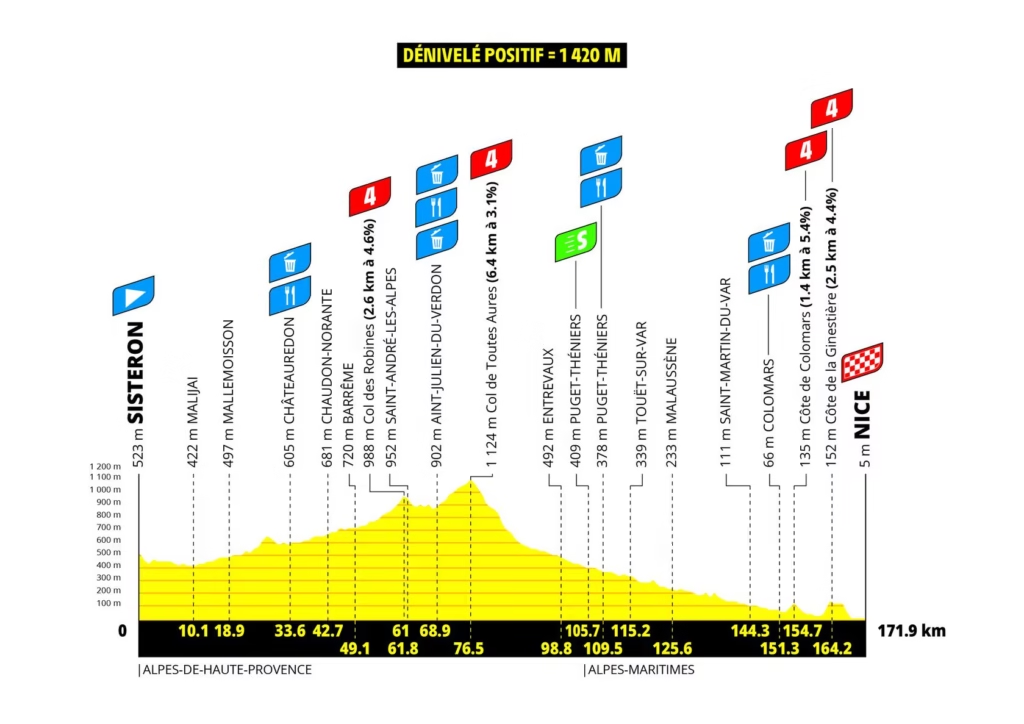
Stage 8 is a recovery day only on paper
The 171.9km route from Sisteron to Nice is officially classified as flat, but it comes immediately after Mont Ventoux and is the longest stage of the race.
That positioning makes it more dangerous than its label.
Fatigue, exposed roads and the urgency of teams entering the final weekend without a stage victory can create a difficult race even without a major summit finish. The route also becomes more selective approaching Nice, where short climbs can disrupt a tired peloton.
Reusser may begin the day carrying the physical cost of a full effort on Ventoux.
Movistar’s objective should be preventing the stage from becoming chaotic.
If Reusser remains in yellow, another non-threatening breakaway would suit the team. Sprint teams may help with the chase, but Movistar should not assume they will be strong enough after Ventoux to control almost 172km.
If Reusser has lost the jersey narrowly, Stage 8 offers limited obvious terrain on which to regain it. Movistar could instead place a rider ahead, make the new leader’s team work and prepare for the final stage.
The worst scenario is an uncontrolled split caused by crosswinds, positioning or a large break containing riders close enough overall to force a long chase.
Project Nice requires Reusser to treat Stage 8 as part of the GC race even though it is officially the final flat stage.
The final stage leaves no safe margin
Stage 9 starts and finishes in Nice but covers only 99.2km and is classified as a mountain stage.
The riders climb the Col d’Èze four times before finishing on the Promenade des Anglais. Short mountain stages are difficult to control because attacks can begin immediately and there is little incentive to conserve energy.
If Reusser reaches the stage with yellow by only a handful of seconds, Movistar cannot rely on one steady mountain train.
Vollering can attack for bonuses, Ferrand-Prévot can move from distance and riders such as Niewiadoma-Phinney or Longo Borghini may have podium positions worth risking.
Reusser’s advantage is that the final stage also suits several of her strengths. She can maintain speed on rolling terrain, descend efficiently and contribute to a small group rather than relying entirely on teammates.
The most important requirement is avoiding isolation too early. Once several rivals begin attacking in rotation, no yellow jersey can cover every move personally.
Project Nice succeeds only when Reusser crosses the final finish line with the race controlled, not when she merely reaches Nice wearing yellow on Saturday.
The final circuit and its main tactical points are covered in our Tour de France Femmes 2026 Nice finish guide.

Movistar’s plan should be conservative, not passive
The temptation after winning a time trial is to protect the advantage through defensive riding. A 14-second lead does not permit that.
Movistar must race proactively enough to shape the breakaways, preserve Reusser’s position and place Lippert or another teammate ahead when the opportunity arises.
They should not chase every stage win. They should not assume Reusser can answer every attack alone. They should also avoid using the entire team before Ventoux simply to protect secondary positions or prevent harmless riders gaining time.
The ideal sequence is clear.
Stage 5 goes to the breakaway while Reusser follows the GC moves on Mont Brouilly.
Stage 6 is controlled through selection rather than constant chasing.
Ventoux becomes one sustained defensive effort, with Reusser limiting the loss even if Vollering or Ferrand-Prévot proves stronger.
Stage 8 removes as little energy as possible.
Stage 9 is raced with every remaining resource around yellow.
That plan sounds simple. The challenge is that every rival now understands it.
The complete sequence from Dijon to Nice can be followed in the Tour de France Femmes 2026 route guide.
Is 14 seconds enough to reach Nice in yellow?
Fourteen seconds is enough to make Reusser the race leader. It is not enough to make her the clear Tour favourite.
Vollering can overturn the gap through one stage bonus or one successful acceleration. Ferrand-Prévot has already shown the ability to gain more than two minutes on a long mountain, while Longo Borghini, Niewiadoma-Phinney and the riders immediately behind remain close enough to exploit any tactical mistake.
Reusser’s advantage is not the size of the gap. It is the combination of yellow, her current form and a Movistar team able to make the remaining stages suit her.
Project Nice will succeed if the team removes unnecessary contests from the race and leaves Reusser with only the battles she cannot avoid.
Dijon proved she was the strongest rider against the clock. The next five stages will determine whether Movistar can turn that performance into something much harder: control of a race designed to resist being controlled.

