
Stage 7 of the Tour de France Femmes brings the race to Mont Ventoux for its defining summit finish, with Marlen Reusser carrying a 12-second lead over Demi Vollering into the most important stage of the race.
The 146.8-kilometre route from La Voulte-sur-Rhône contains approximately 3,565 metres of elevation and four categorised climbs. None matters more than the final 15.7 kilometres from Bédoin to the summit of Mont Ventoux, averaging 8.8% and rising to 1,910 metres.
Reusser has answered every question placed before her since taking yellow in the Dijon time trial. She followed Vollering and Kasia Niewiadoma-Phinney on the steep Beaujolais roads of Stage 5, then negotiated an aggressive Stage 6 without conceding time to either of her closest rivals.
Mont Ventoux presents a different test. There is nowhere to hide on a climb of this length, and the time gaps could stretch from seconds into minutes once the race enters the forest above Bédoin.
Stage 7 is where Vollering must convert her climbing advantage into yellow, where Reusser must prove she can sustain her Tour challenge on an hors catégorie ascent and where Niewiadoma-Phinney needs to decide whether protecting the podium is enough.
The climb, its history and its role in the race are covered in our full Tour de France Femmes Mont Ventoux guide.
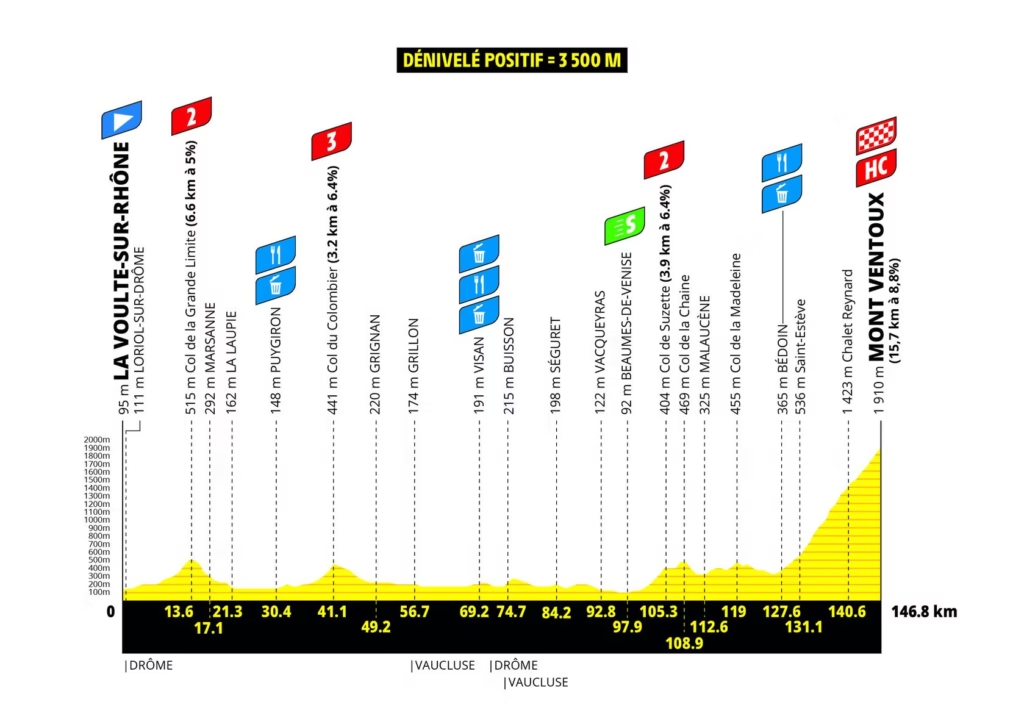
Tour de France Femmes Stage 7 route
| Stage detail | Information |
|---|---|
| Date | Friday 7 August 2026 |
| Start | La Voulte-sur-Rhône |
| Finish | Mont Ventoux |
| Distance | 146.8km |
| Stage type | Mountain |
| Elevation gain | Approximately 3,565 metres |
| Neutralised start | 12:50 CEST / 11:50 BST |
| Expected finish | From 17:17 CEST / 16:17 BST |
| Final climb | Mont Ventoux from Bédoin |
| Categorised climb distance | 15.7km |
| Average gradient | 8.8% |
| Finish altitude | 1,910 metres |
The opening half of the stage is difficult without being decisive. The riders head south through the Rhône valley before crossing the Col de la Grande Limite and Col du Colombier.
The race then moves through the flatter roads towards Vacqueyras and Beaumes-de-Venise before turning into the Dentelles de Montmirail. The Col de Suzette provides the final categorised obstacle before the descent towards Malaucène, the transition to Bédoin and the foot of Mont Ventoux.
The categorised climbs are:
- Col de la Grande Limite: 6.6km at 5%, Category 2
- Col du Colombier: 3.2km at 6.4%, Category 3
- Col de Suzette: 3.9km at 6.4%, Category 2
- Mont Ventoux: 15.7km at 8.8%, hors catégorie
The riders reach the beginning of the officially classified Ventoux ascent after approximately 131 kilometres. From that point, the stage and potentially the Tour become a climbing time trial between the leading contenders.
Stage 7 has already been identified as the hardest day of the race in our Tour de France Femmes stages ranked by difficulty.
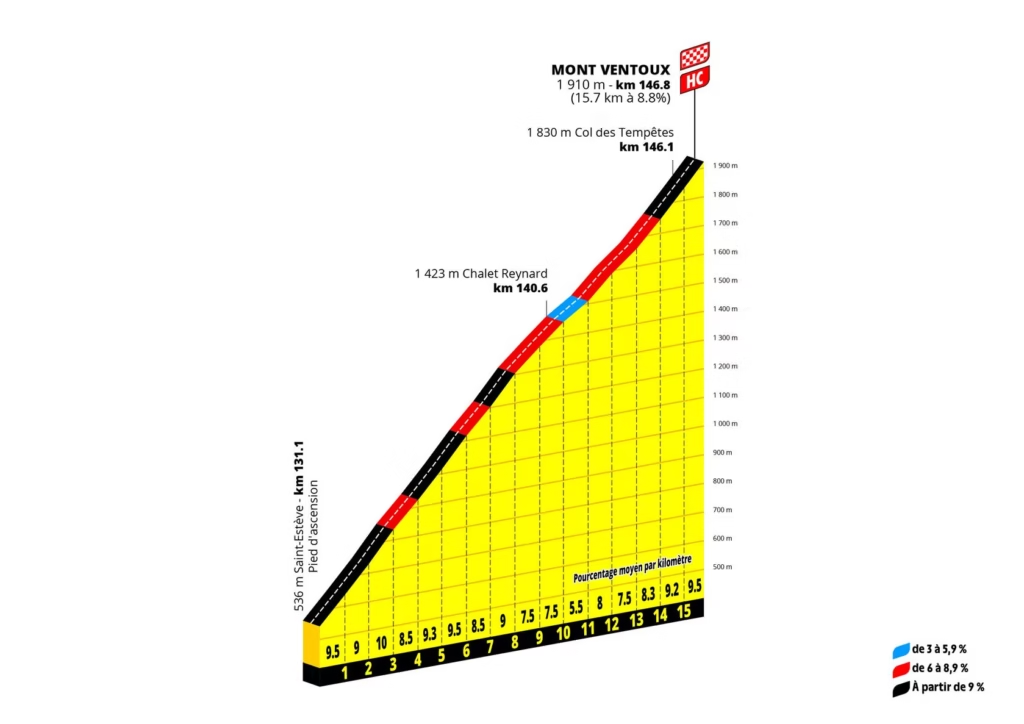
Mont Ventoux begins harder than its average suggests
The headline figure of 15.7 kilometres at 8.8% is severe enough, but the average does not fully explain the climb.
The ascent begins in Bédoin with several relatively manageable kilometres. That opening section offers teams one final opportunity to position their leaders and establish a controlled rhythm before the road enters the forest.
From the Saint-Estève bend, the character changes completely.
The next nine kilometres are relentlessly steep, with long stretches around 9% and repeated sections beyond 10%. There are few genuine opportunities to recover, little variation in gradient and almost no tactical shelter once the leading group begins to fragment.
This is where domestiques disappear and where riders who have already gone too deep begin paying for the effort. A contender struggling inside the forest may still face more than half an hour of climbing.
The road briefly becomes less severe around Chalet Reynard, but the relief is deceptive. The riders emerge from the trees onto the exposed upper mountain, where wind can become as important as gradient.
The final 1.7 kilometres rise at around 9.4%, finishing beside the communications tower and observatory at the summit. Anyone hoping to preserve energy for a late acceleration must first survive the steepest and most exposed section of the finish.
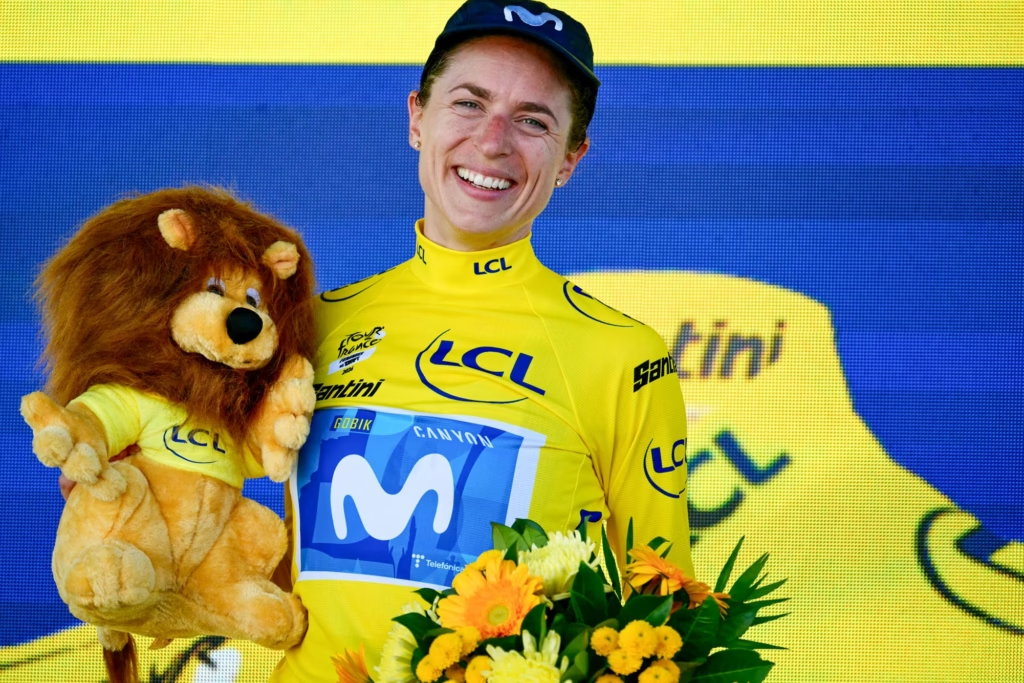
Reusser’s 12-second advantage offers almost no protection
Reusser enters Stage 7 in yellow after maintaining her lead through the Stage 6 race to Tournon-sur-Rhône.
Kim Le Court-Pienaar won from an eight-rider sprint after an aggressive late move stayed ahead of the yellow jersey group. Elisa Longo Borghini gained 28 seconds by making that selection, but Vollering and Niewiadoma-Phinney finished alongside Reusser.
The leading general classification positions before Mont Ventoux are:
| Position | Rider | Team | Gap |
|---|---|---|---|
| 1 | Marlen Reusser | Movistar | Leader |
| 2 | Demi Vollering | FDJ United-Suez | +0:12 |
| 3 | Kasia Niewiadoma-Phinney | Canyon SRAM | +1:17 |
| 4 | Elisa Longo Borghini | UAE Team L’IMAD | +2:30 |
| 5 | Antonia Niedermaier | Canyon SRAM | +2:40 |
Twelve seconds can disappear through one acceleration. The stage winner also receives a ten-second bonus, with six seconds for second and four for third.
Vollering therefore does not necessarily need to gain 13 physical seconds. A smaller road gap combined with the finish bonuses could be enough to take yellow.
Reusser cannot ride purely defensively around those bonuses. Her task is to remain attached to Vollering for as long as possible and then limit any damage if the Dutch rider proves stronger in the final kilometres.
The complete jersey picture before Ventoux will be assessed in the next Tour de France Femmes GC and classifications update.
Has Reusser shown enough to survive Ventoux?
Stage 5 offered the strongest evidence yet that Reusser is capable of winning the Tour.
She followed Vollering and Niewiadoma-Phinney across repeated steep climbs, finished with both and placed at least 45 seconds into every other GC contender. That performance established her as more than the time trial specialist who happened to take yellow in Dijon.
Her ability to survive the attack while still finding the humour to describe her tactical mistake at the finish is explored in Reusser ‘fell asleep’ but stayed in yellow.
Mont Ventoux remains a much more demanding examination.
Reusser is an excellent sustained-power rider, and the consistency of the gradient may suit her better than repeated short accelerations. If she can settle into a high but manageable rhythm, she may be able to resist Vollering by refusing to respond immediately to every change of pace.
The danger comes when the climb steepens inside the forest. Vollering can accelerate sharply before maintaining a high tempo. Reusser must decide whether to follow instantly or allow a small gap and ride through the effort.
Following too aggressively risks pushing her beyond her limit with kilometres still to climb. Hesitating gives Vollering the psychological and tactical initiative.
Movistar’s support will also become important before the final ascent. Liane Lippert is likely to be Reusser’s last teammate, but even a strong climber may survive only the first half of Ventoux once FDJ United-Suez begin increasing the pace.
The yellow jersey will probably have to defend herself long before the summit.
Vollering has to make the climb count
Vollering is the obvious Stage 7 favourite.
She won Stage 5, reduced the GC gap through finish bonuses and demonstrated that she remains the most explosive rider among the leading three. Mont Ventoux gives her a longer and harder climb on which to turn those accelerations into sustained separation.
The strategic question is when to attack.
An early move inside the forest could isolate Reusser and force the yellow jersey to chase for several kilometres. It also risks exposing Vollering to the wind above Chalet Reynard, particularly if the upper mountain produces a headwind.
Waiting until the final four or five kilometres reduces that exposure but gives Reusser a better chance of limiting the gap to seconds.
FDJ United-Suez have enough climbing strength to make the race hard before Vollering attacks. Célia Gery has already performed important pace-setting work, while the team can use its remaining riders to ensure the group reaches Saint-Estève under pressure.
Vollering does not need an extravagant long-range move. She needs enough separation to overcome 12 seconds, with the finish bonus providing another route into yellow.
The reasons she remains the central favourite are examined in our Demi Vollering Tour de France Femmes profile.
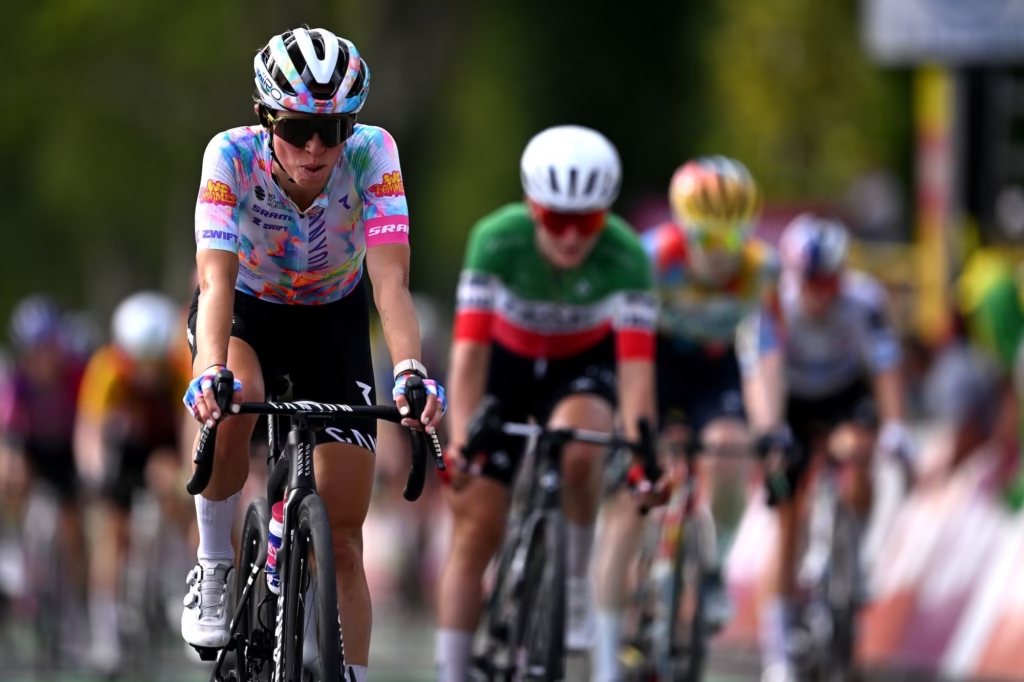
Niewiadoma-Phinney cannot simply follow the duel
Niewiadoma-Phinney enters the stage 1:17 behind Reusser and 1:05 behind Vollering.
Her Stage 5 performance confirmed that she belongs in the leading group, but matching the top two without distancing them will not be enough to move into yellow. Her podium position is also under renewed pressure after Longo Borghini gained time on Stage 6.
Niewiadoma-Phinney must therefore decide how aggressively to approach Ventoux.
She can wait for Vollering to attack and hope Reusser weakens, using the Dutch rider’s pace to move closer to yellow. That is the lower-risk route towards strengthening third place.
The more ambitious option is to attack first.
Niewiadoma-Phinney has repeatedly shown that she is willing to anticipate rather than wait for a sprint or final-kilometre acceleration. A move before Chalet Reynard could force Vollering and Reusser to choose between chasing immediately and continuing to watch one another.
Her problem is the possibility of a headwind on the exposed upper slopes. A solo attack may become much harder to sustain once she leaves the forest.
Canyon SRAM also have Niedermaier in fifth. That gives the team tactical depth, but Niewiadoma-Phinney remains the clear leader unless she begins to struggle.
Her route, recent form and likely tactics are explored in our Kasia Niewiadoma-Phinney Tour de France Femmes profile.
Longo Borghini moves back towards the podium
Longo Borghini was one of the principal beneficiaries of Stage 6.
She helped drive the successful late move before finishing seventh in Tournon-sur-Rhône, gaining 28 seconds on Reusser, Vollering, Niewiadoma-Phinney and most of the riders around her in the standings.
That lifted her above Niedermaier and to within 1:13 of the podium.
The Italian now has a clear incentive to race aggressively on Ventoux. She may not possess Vollering’s acceleration, but a long and regular climb is well suited to her ability to sustain a high tempo while others begin to fade.
UAE Team L’IMAD can also use their numerical depth before the final climb. Dominika Włodarczyk and Paula Blasi remain highly placed, giving the team options to increase the pace, follow early moves or provide support deep into the forest.
Longo Borghini does not need to defeat Vollering to transform her Tour. Gaining a little over a minute on Niewiadoma-Phinney would move her onto the podium, while Niedermaier remains only ten seconds behind her.
Her leadership role and the wider UAE approach are covered in the Tour de France Femmes teams guide.
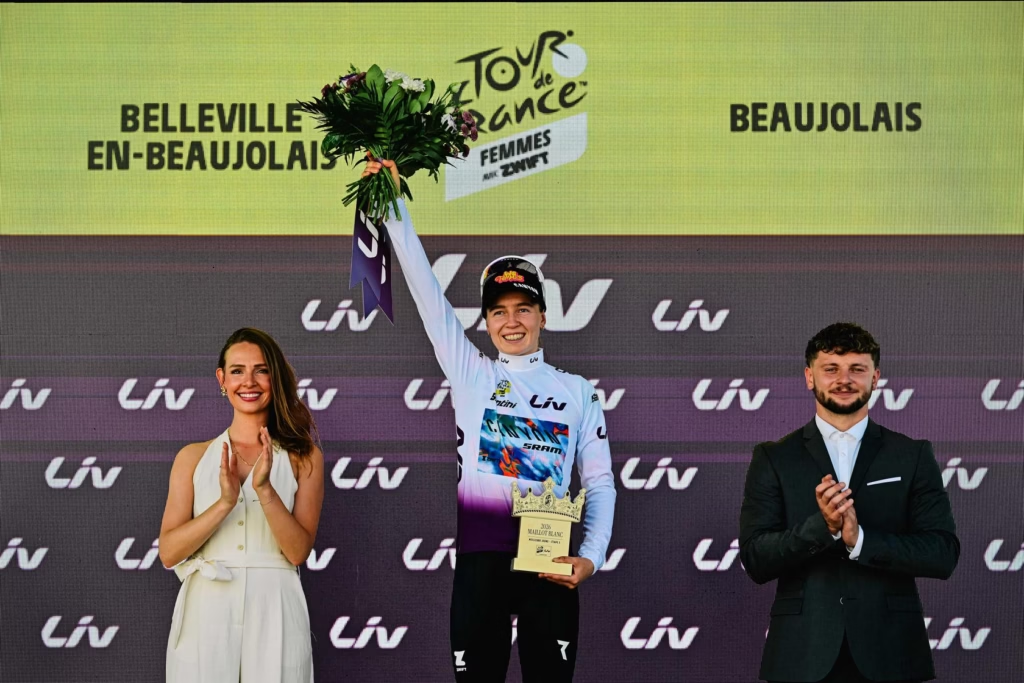 Photo Credit: A.S.O./Billy Ceusters
Niedermaier and Holmgren renew the white jersey contest
The battle for the white jersey could become one of the closest contests on the mountain.
Niedermaier leads Isabella Holmgren by 25 seconds, with Paula Blasi and Nienke Vinke still close enough to capitalise if either of the first two weakens.
Niedermaier has the most established Grand Tour climbing record of the group. Her second place at the Giro d’Italia Women demonstrated her ability to sustain a classification challenge through major mountain stages, while her Stage 5 performance moved her into the overall top five.
Holmgren was almost as impressive. The Canadian finished in the first chase group behind Vollering, Reusser and Niewiadoma-Phinney and has remained one of the strongest young riders in the race.
Ventoux favours Niedermaier’s sustained climbing ability, but 25 seconds offers little security. Holmgren does not need to attack from distance. She only needs to remain attached when Niedermaier begins to weaken.
Blasi remains capable of moving back into the contest, although the prolonged gradient may not suit her quite as naturally as the shorter climbs on which she has produced many of her best 2026 results.
The rules and the riders still competing for white are detailed in our Tour de France Femmes young rider classification guide.
Can Ferrand-Prévot salvage her Tour?
Pauline Ferrand-Prévot begins the stage five minutes behind Reusser after losing time in both the Stage 4 time trial and the Beaujolais climbs.
Her yellow jersey defence is effectively over. Mont Ventoux now offers an opportunity to redefine the remainder of her Tour.
Ferrand-Prévot won the 2025 race through dominant mountain performances, creating decisive gaps on the Col de la Madeleine and at Châtel. A return to that level on Ventoux would not immediately restore her GC challenge, but it could deliver a prestigious stage victory and move her rapidly back towards the top 10.
The question is whether the leading teams will give her freedom.
Five minutes is a large deficit, but not enough for Movistar or FDJ United-Suez to ignore completely. If Ferrand-Prévot attacks near the foot, her rivals may allow her some room while keeping the gap under control.
Team Visma | Lease a Bike also have Femke de Vries high in the standings. Any long-range move by Ferrand-Prévot must not compromise De Vries’s position unless the team has fully shifted its objectives towards the stage victory.
The causes and consequences of her Stage 5 time loss are examined in Ferrand-Prévot drops out of GC contention.
The mountain offers Ferrand-Prévot the terrain on which she built her title. It also provides an uncompromising answer about whether her Beaujolais weakness reflected her current level or one particularly difficult day.
 Photo Credit: Getty
Pieterse can take control of the mountains classification
Puck Pieterse strengthened her mountains lead again during Stage 6, collecting points over the opening climbs and moving further clear of her rivals.
Stage 7 offers points on the Col de la Grande Limite, Col du Colombier, Col de Suzette and Mont Ventoux. The final climb awards 15 points to the winner, with points available down to eighth place.
Pieterse does not necessarily need to contest the summit to remain in control. Collecting points across the earlier climbs could make the jersey extremely difficult to take before the GC riders begin racing seriously.
The danger is spending too much energy before Ventoux. If Pieterse enters the break and contests every climb, she may be unable to score at the summit. A rival taking maximum points on Mont Ventoux could still make the classification more complicated.
Her best strategy may be to target the early climbs, increase her buffer and then manage the final ascent without attempting to follow the yellow jersey contenders.
The scoring system and Ventoux’s importance are explained in our Tour de France Femmes polka-dot jersey guide.
Wildfire restrictions will change the roadside atmosphere
Sections of the approach through the Dentelles de Montmirail will be closed to spectators because of the wildfire risk in Vaucluse.
The restrictions affect the road around Suzette and the Col de la Chaîne, where the race would ordinarily pass through dense crowds before the transition towards Mont Ventoux.
The stage route remains unchanged and the final ascent is still scheduled in full. The sporting impact should therefore be limited, but television pictures may show unusually quiet roads during an important tactical section.
Spectators have been told not to enter the restricted massif or attempt to reach closed sections on foot. The measures are intended to preserve emergency access and reduce the number of people inside vulnerable woodland during a period of elevated fire danger.
The exact closures and the comparison with the wildfire changes made to the men’s Tour are explained in our report on the Mont Ventoux fan restrictions.
Wind could change the upper slopes
The exposed section between Chalet Reynard and the summit can produce completely different conditions from the sheltered forest below.
A headwind would generally favour riders waiting in a group. The forest may still create the major selection because its steep gradients provide some protection from the wind, but attacking alone becomes more expensive once the road emerges above the trees.
That could encourage Vollering to delay her decisive move, particularly if one or two rivals remain close enough to cooperate against her.
Reusser may welcome those conditions. Her sustained power and larger frame could help on the exposed road, while the tactical advantage of following becomes greater in a headwind.
Wind does not remove the difficulty of Ventoux. It changes where and how the decisive attack is most likely to happen.
Riders to watch on Stage 7
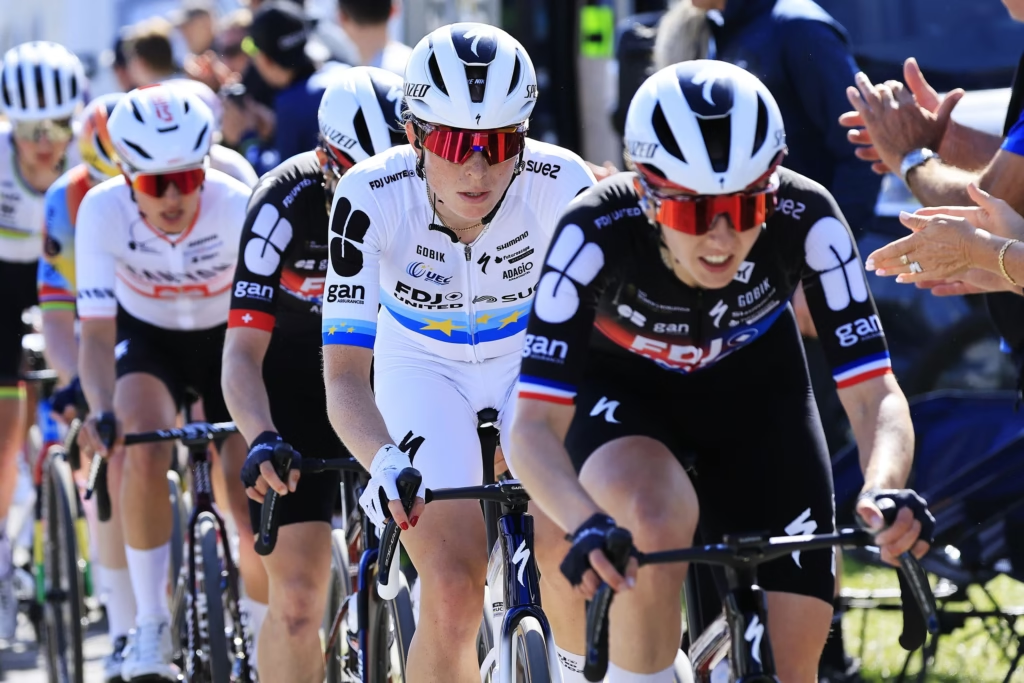
Demi Vollering
Vollering is the stage favourite and the rider most likely to leave Mont Ventoux in yellow.
She has the climbing acceleration, team support and GC position required to dictate the final ascent. Her task is not to win by minutes. She needs to create a gap large enough to overcome Reusser’s 12-second advantage.
Marlen Reusser
Reusser has already survived one major climbing test and may be better suited to the steady nature of Ventoux than many assumed before the race.
Her challenge is managing Vollering’s accelerations without exceeding her own limit. Finishing within a few seconds of the Dutch rider could be enough to retain yellow, depending on the bonuses.
Kasia Niewiadoma-Phinney
Niewiadoma-Phinney needs to attack if she wants more than third place.
She has the form to remain with Vollering and Reusser, but following them to the summit will not change her position. An anticipatory move inside the forest offers her clearest opportunity.
Elisa Longo Borghini
Longo Borghini has moved back into direct podium contention after gaining time on Stage 6.
The long ascent should suit her experience and ability to maintain a controlled effort. Reaching the podium requires gaining 1:13 on Niewiadoma-Phinney, but a strong ride could also consolidate her position ahead of Niedermaier.
Antonia Niedermaier
Niedermaier begins the stage fifth overall and in the white jersey.
Her sustained climbing ability makes her one of the strongest candidates to finish immediately behind the leading contenders. She must monitor Holmgren throughout the ascent while also protecting her overall position.
Isabella Holmgren
Holmgren has been one of the revelations of the race.
She enters Ventoux only 25 seconds from the white jersey. Another performance comparable to Stage 5 could move her into the lead of that competition and closer to the overall top five.
Pauline Ferrand-Prévot
Ferrand-Prévot is no longer constrained by a realistic yellow jersey challenge.
That makes her dangerous. She can attack earlier, take tactical risks and focus entirely on winning the stage. Her recent form creates obvious doubts, but her 2025 mountain performances mean she cannot be dismissed.
Paula Blasi
Ventoux is the largest climbing test of Blasi’s development.
She has excelled on shorter, more explosive climbs, but the 15.7-kilometre ascent asks a different question. Staying close to the leading group would strengthen her position as a future Grand Tour contender even if she loses time in the white jersey contest.
Her rapid progression is explored in our Paula Blasi profile.
-
 Photo Credit: Getty

How Stage 7 is likely to unfold
A breakaway should form across the opening two climbs, particularly among riders targeting the mountains classification or seeking a head start before Ventoux.
Movistar have little reason to control harmless attackers. Their concern will be preventing anyone close enough on GC from receiving several minutes.
The peloton may settle through the flatter middle of the stage before the pace rises again approaching Beaumes-de-Venise. The Col de Suzette offers teams an opportunity to remove domestiques and place satellite riders ahead, but a full GC offensive remains unlikely with more than 40 kilometres still to race.
The decisive positioning battle will come on the road to Bédoin.
FDJ United-Suez should take responsibility near the foot and begin increasing the tempo before Saint-Estève. The group could reduce quickly once the road enters the forest.
Vollering is likely to test Reusser between eight and five kilometres from the summit. Niewiadoma-Phinney may attack earlier to avoid becoming trapped inside their duel.
If the headwind is strong above Chalet Reynard, the leading riders could regroup briefly before the final steep section. That would place even greater emphasis on the last two kilometres and the time bonuses at the summit.
The stage winner should come from the GC group unless Ferrand-Prévot or another high-quality climber receives enough freedom before Bédoin.
