

The white jersey at the Tour de France Femmes rewards the best young rider in the general classification, making it effectively a second GC battle restricted to riders under the age limit.
For 2026, that competition looks particularly strong. Antonia Niedermaier arrives after finishing second at the Giro d’Italia Women, while Paula Blasi has already won La Vuelta Femenina this season. Both have ambitions that go well beyond the white jersey, and if either remains close to the Tour podium, the young rider classification should follow naturally.
Behind them, defending white jersey winner Nienke Vinke, rising French climber Marion Bunel and Julie Bego give the competition depth. The Tour de France Femmes 2026 route also makes it difficult to hide a weakness, with the Dijon individual time trial followed later by Mont Ventoux and the final mountain stage around Nice.
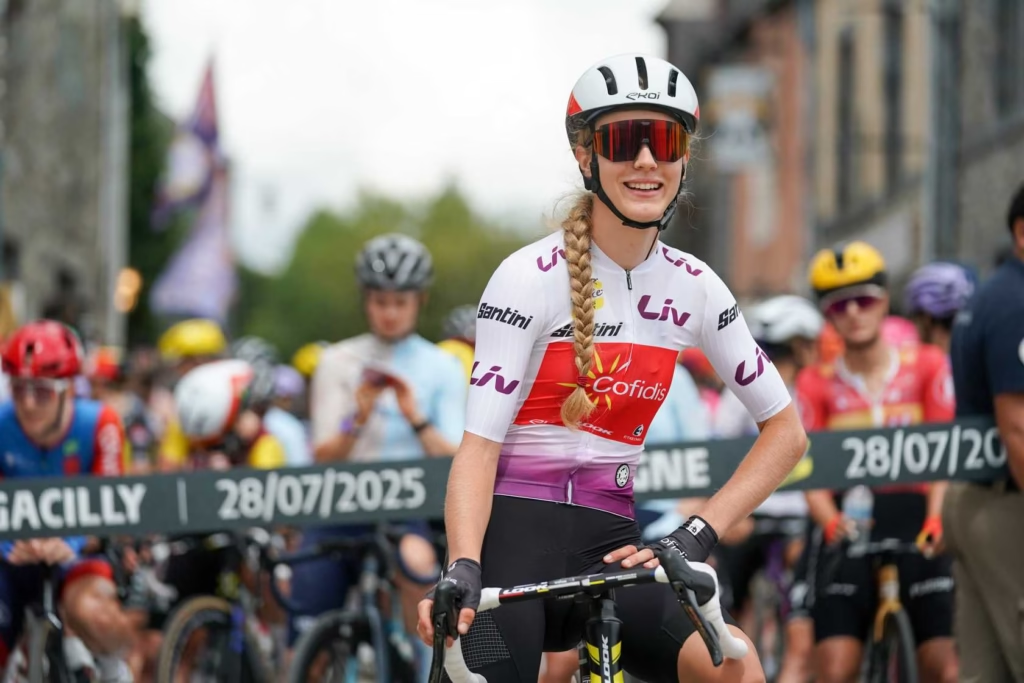
What does the white jersey mean at the Tour de France Femmes?
The white jersey is awarded to the highest-placed eligible young rider in the general classification.
There is no separate points system. Riders do not score towards white by winning stages or reaching intermediate sprints first. Their position is decided by exactly the same cumulative time used for the yellow jersey, except only eligible young riders are considered.
The official Tour rules describe the competition as being for riders under 23, making it one of the four main jersey classifications alongside yellow, green and polka dots.
That means the white jersey is fundamentally a GC prize. A rider sitting fifth overall but leading all other eligible riders will also lead the young rider classification.
The relationship between the four jerseys is covered in our Tour de France Femmes 2026 jerseys guide.
How is the white jersey calculated?
Every rider’s stage times are added together across the Tour, with time bonuses and penalties included exactly as they are for the overall classification.
If an eligible rider loses 45 seconds in the Dijon time trial, she loses those same 45 seconds in the white jersey battle. If she then gains two minutes on Mont Ventoux, those two minutes count in full as well.
That is why the young rider classification tends to favour riders with genuine stage-racing ability rather than specialists who can collect points on individual days.
Time bonuses can still matter, particularly in a nine-stage race where relatively small differences can survive deep into the week. Our Tour de France Femmes 2026 time bonuses guide explains how those seconds feed directly into GC and therefore the white jersey competition as well.
Can the same rider lead yellow and white?
Yes.
If an eligible young rider leads the Tour overall, she also leads the young rider classification.
Yellow takes priority, so she wears the yellow jersey rather than white. The next eligible rider in the young rider standings can then wear white on the road, even though she is not technically leading the classification.
That is why the rider physically wearing white is not always the official young rider leader.
The same jersey-priority principle applies when a rider simultaneously leads more than one classification.
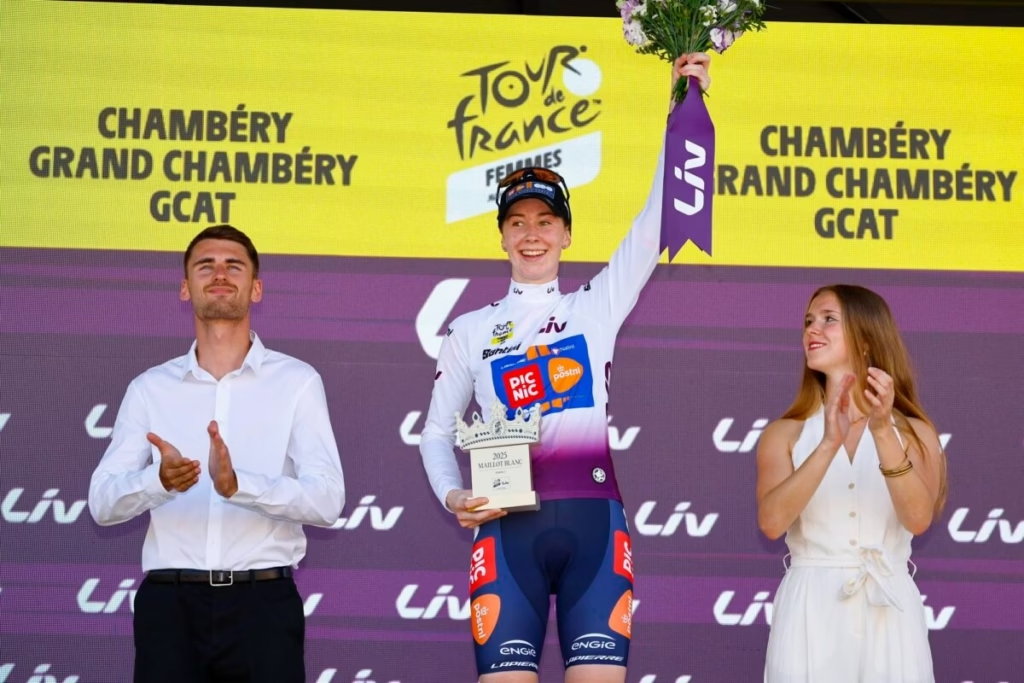 Photo Credit: Cor Vos
Nienke Vinke returns as defending white jersey winner
Nienke Vinke comes back as the defending Tour de France Femmes young rider champion.
Her 2025 victory developed into a direct battle with Julie Bego. Bego held white through much of the race before Vinke finally moved ahead on Stage 7, then strengthened her advantage across the final mountain stages.
Vinke eventually finished 19th overall and won the classification by a commanding margin. Her decisive move into the lead came on Stage 7, covered in our report on Nienke Vinke taking the 2025 Tour white jersey.
The context is different in 2026.
Vinke now rides for SD Worx-Protime, where Anna van der Breggen is a major GC option and Lorena Wiebes and Lotte Kopecky bring significant stage ambitions. She may not have a team built around defending white, but she has already shown that she can stay consistent through a difficult Tour and improve as the race moves into the mountains.
Antonia Niedermaier is the white jersey favourite
Antonia Niedermaier has the strongest recent Grand Tour result of any eligible rider.
Second at the 2026 Giro d’Italia Women, only 30 seconds behind Demi Vollering, moves her beyond the usual definition of a young rider contender. She is already capable of racing against the best GC riders in the world.
That makes the white jersey almost secondary to a much bigger objective.
Niedermaier can climb with the leading favourites and is strong enough against the clock that Dijon should work in her favour rather than simply become something to survive. That balance is especially valuable because the white jersey is decided entirely on GC time.
Canyon SRAM also have Kasia Niewiadoma-Phinney targeting the overall classification, which gives them two strong GC cards rather than placing all of the pressure on Niedermaier.
If she reproduces her Giro level, the question may not be whether she wins white. It may be how high she finishes overall.
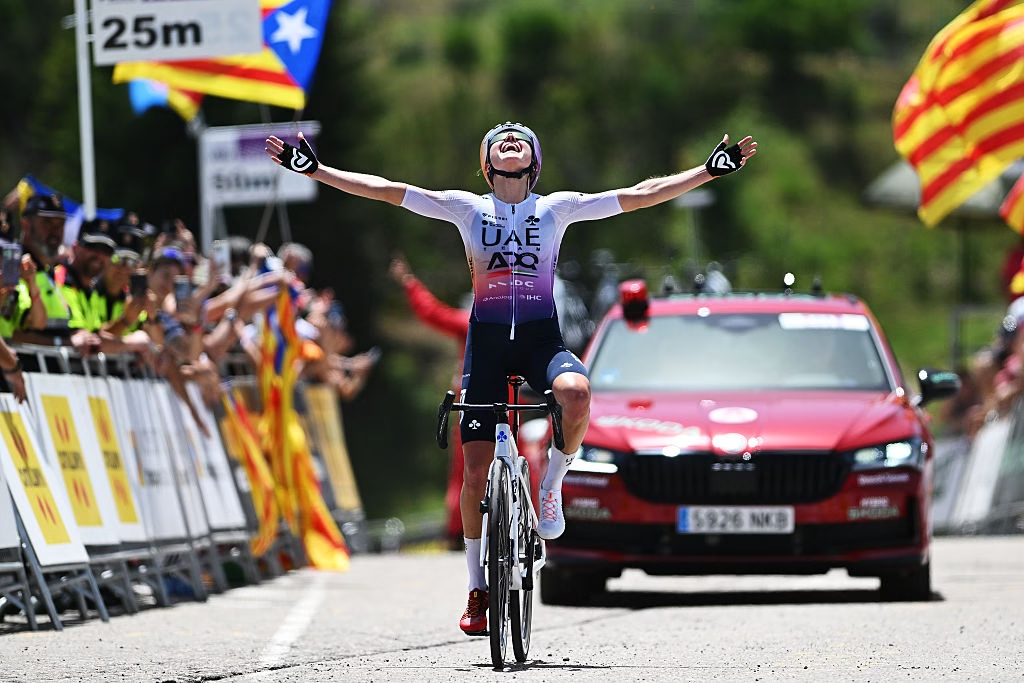
Paula Blasi could turn white into a Grand Tour battle
Paula Blasi is the clearest challenger.
Her 2026 season has already moved her into genuine Grand Tour contention after winning La Vuelta Femenina, where she proved her climbing level on the hardest terrain rather than relying on tactical fortune.
That matters because Mont Ventoux should not intimidate her.
The more important question is how much time she gives away in Dijon.
Niedermaier has the clearer time trial advantage, so Blasi’s Tour may involve limiting losses there and then trying to reverse the standings through the mountains.
UAE Team L’IMAD also have Elisa Longo Borghini targeting GC, which adds another layer to Blasi’s role. But her results this season are too strong for her to begin the Tour simply as support.
If both Niedermaier and Blasi perform at their recent level, the white jersey could become one of the strongest head-to-head classification battles in the race.
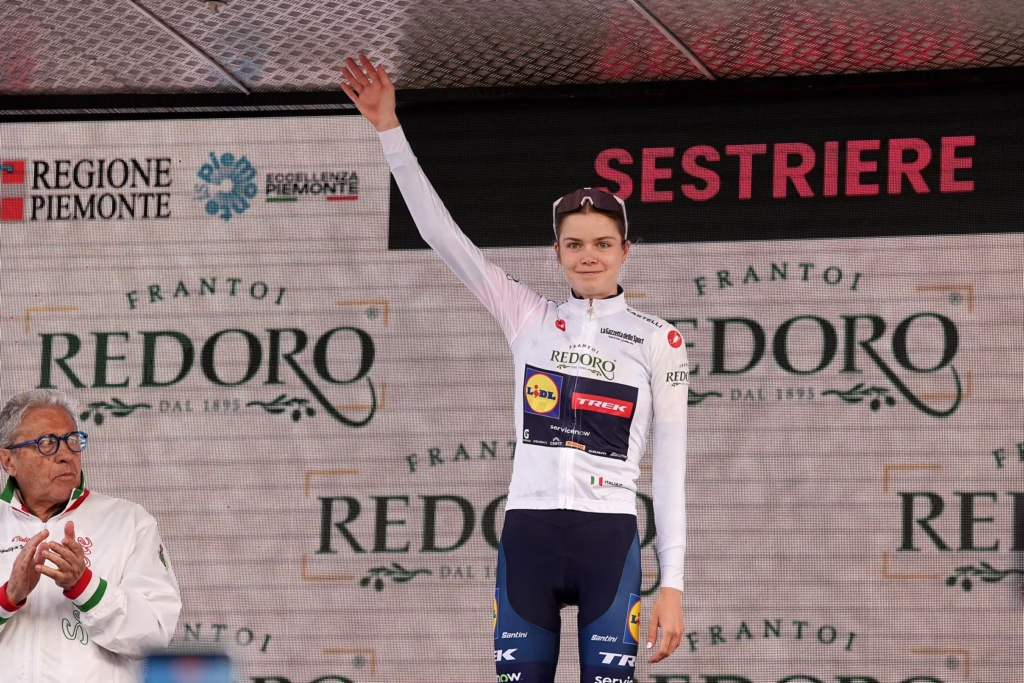 Photo Credit: RCS
Isabella Holmgren adds another genuine white jersey contender
The confirmed Lidl-Trek squad adds Isabella Holmgren to the young rider picture, and she deserves more than a passing mention.
Holmgren is still at an earlier stage of her development than Antonia Niedermaier or Paula Blasi, so she should not begin the Tour in the same favourite tier. But she is exactly the kind of rider who can climb quickly through the white jersey standings if the race develops in her favour.
Her biggest strength is the combination of youth and climbing ability. Lidl-Trek already have Niamh Fisher-Black as their main GC option, while Elisa Balsamo covers the sprints and Riejanne Markus, Amanda Spratt, Lucinda Brand and Loes Adegeest give the team substantial tactical depth. That means Holmgren does not need to carry leadership pressure from the start.
The downside is that her own classification could be sacrificed if Fisher-Black is riding strongly overall. White is decided entirely on cumulative time, so waiting for a leader or working deep into a difficult stage can cost minutes very quickly.
Even so, Holmgren belongs among the more interesting outsiders. If she comes through Dijon without a major loss and reaches the mountain stages still close to the leading young riders, Lidl-Trek may suddenly have another classification worth protecting.
Marion Bunel has the climbing ability but a restrictive role
Marion Bunel has the natural climbing ability to challenge for white, but Team Visma | Lease a Bike’s priorities make her case more complicated.
The team have built their Tour around Pauline Ferrand-Prévot’s yellow jersey defence. Bunel is expected to support her deep into the high mountains rather than protect every second of her own GC position.
That matters because the white jersey rewards individual time, not climbing points or stage placings. A domestique who waits for a leader after a problem can lose several minutes and effectively end her own classification challenge in one move.
Bunel’s climbing level still makes her impossible to dismiss.
If supporting Ferrand-Prévot naturally keeps her near the front on the decisive mountain days, she can remain high in the young rider standings without Visma ever making white a primary objective.
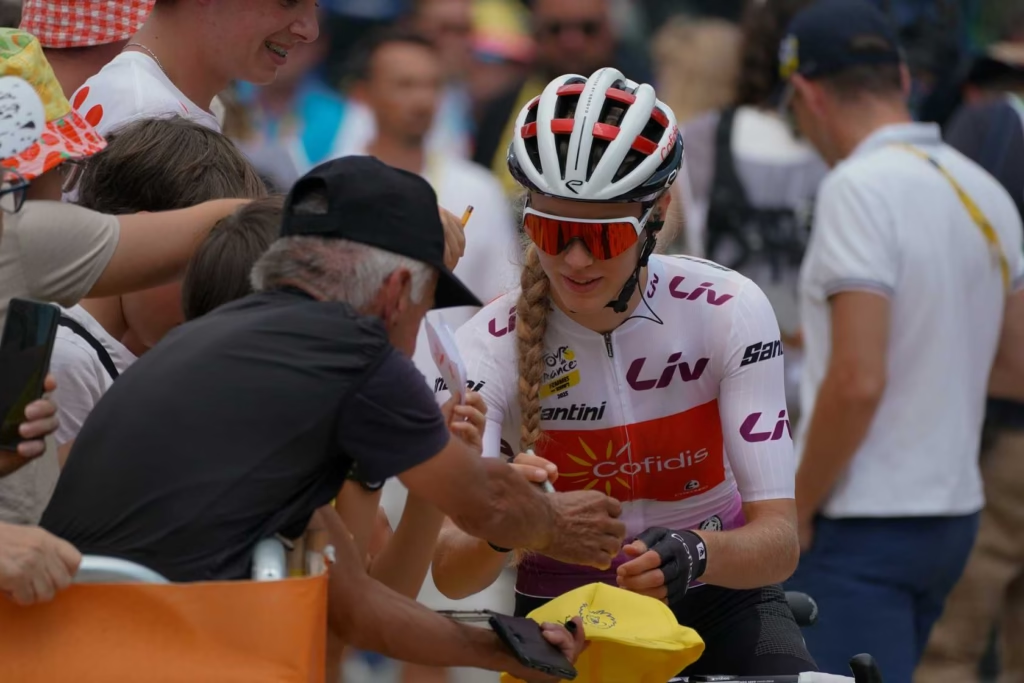
Julie Bego has unfinished business with the classification
Julie Bego knows exactly what it feels like to defend the white jersey at the Tour.
She led the classification through much of the 2025 race before Vinke finally moved ahead late in the week. The battle remained one of the most consistent subplots of the race before the mountain stages eventually separated them decisively.
That experience gives Bego an advantage over younger riders encountering the classification for the first time.
She already knows that white is not decided only in the mountains. Avoiding splits, positioning correctly and limiting damage on difficult days all matter when the standings are based on cumulative time.
Cofidis can also give her more freedom than a young rider working entirely for a senior GC leader.
The difficulty is simply the level of the 2026 competition.
Niedermaier and Blasi arrive with Grand Tour results that place them much closer to the overall favourites than the typical young rider contender.
Célia Gery is an interesting outsider
Célia Gery is one of the most interesting younger outsiders, although FDJ United-SUEZ’s wider Tour ambitions should dictate her role.
Demi Vollering is there to win yellow, and riders around her have to work within that structure.
That means Gery is unlikely to receive the kind of protection normally given to a classification leader from the opening stage.
Her opportunity comes if she stays close enough naturally.
If she reaches the second half of the race high in the white jersey standings without compromising Vollering’s support, FDJ may suddenly have another objective worth protecting.
That is often how secondary classifications develop during a Grand Tour. What begins as an incidental position can become much more important once the race has settled.
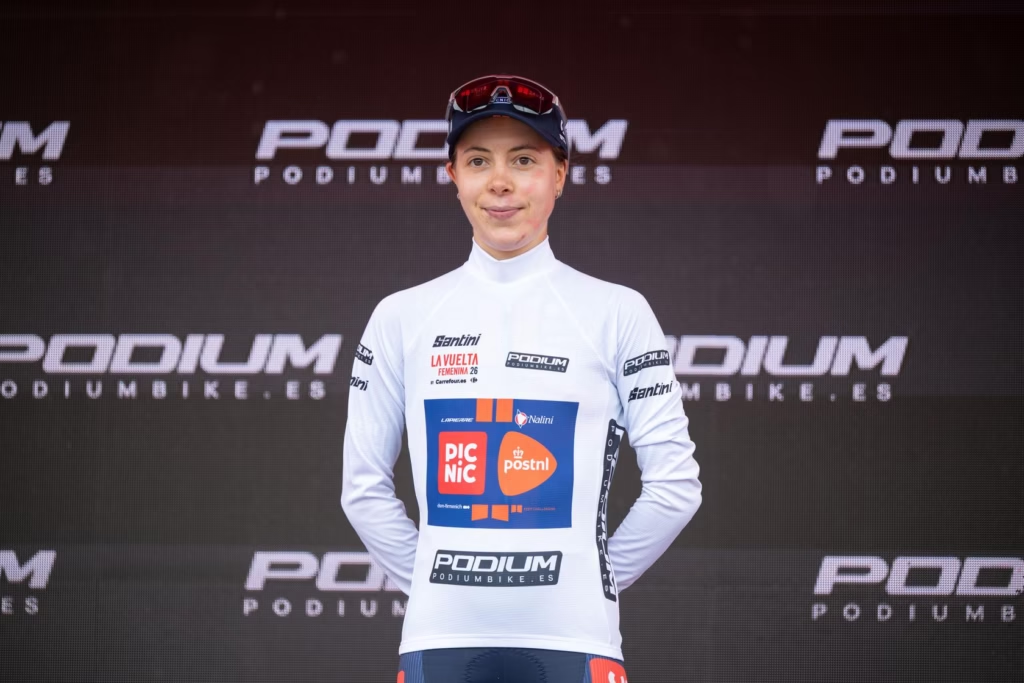 Photo Credit: Unipublic/Cxcling/Toni Baixauli
Eleonora Ciabocco can climb through the standings through consistency
Eleonora Ciabocco offers Team Picnic PostNL another plausible top young rider candidate.
She is unlikely to begin alongside Niedermaier and Blasi in the favourite group, but white rewards consistency over nine stages rather than one spectacular result.
A rider who avoids bad days can steadily climb the standings as others lose minutes at once.
Ciabocco should handle the hilly terrain well enough to remain relevant, but the biggest questions come in Dijon and the major mountain stages. Limiting losses there is essential if she wants to stay close to the leading young riders.
A high finish in the classification would represent a strong Tour.
Winning it probably requires trouble for the two strongest pre-race favourites.
Paula Ostiz represents the younger end of the classification
Paula Ostiz is another eligible rider worth following, although expectations should be very different.
She is already competing at Women’s WorldTour level while still several years younger than many of the riders around her.
Movistar’s central objective is Marlen Reusser’s GC campaign, so Ostiz is likely to spend much of the Tour working within that structure rather than defending her own position.
That makes white an unlikely target in 2026.
Her presence still illustrates one of the purposes of the classification: highlighting riders gaining experience at the Tour long before they reach the age and racing maturity of established GC leaders.
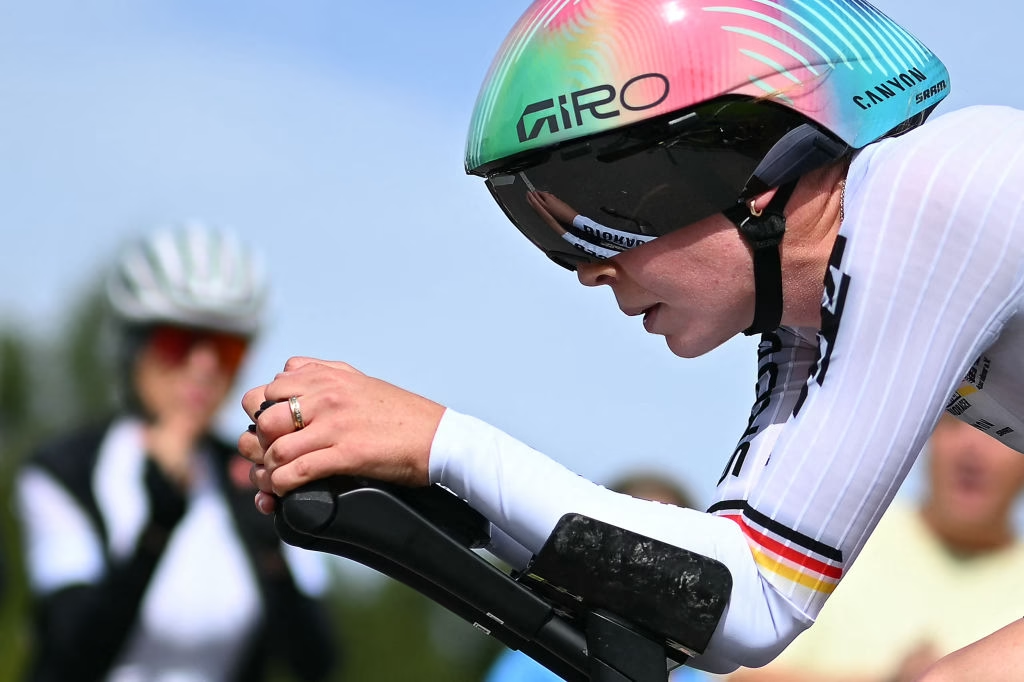
Dijon should establish the first proper hierarchy
The white jersey uses exactly the same time as GC, so the individual time trial matters just as much here as it does in the yellow jersey battle.
That should favour Niedermaier.
Her ability against the clock means she can potentially gain meaningful time on riders whose strengths are much more heavily weighted towards climbing.
Blasi needs to limit that deficit, while Vinke and Bunel must remain close enough for the mountains to give them a realistic way back.
For some outsiders, Dijon could end the white jersey challenge even if the rest of their Tour remains successful.
That is why the classification rewards complete stage racers rather than simply young climbers.
Mont Ventoux can reverse the standings
Whatever Niedermaier gains in Dijon, the climbers get their chance later.
Mont Ventoux is the clearest opportunity for the white jersey battle to change dramatically.
If Niedermaier arrives with the lead, Blasi, Bunel and Vinke need to establish whether they can put enough pressure on her uphill to reverse the classification.
Niedermaier’s Giro result suggests that will be difficult.
Blasi’s Vuelta victory suggests it is far from impossible.
The final mountain stage around Nice also means the competition does not necessarily finish on Ventoux. A narrow lead leaving Stage 7 can still disappear before the Tour reaches its conclusion.
-
 Photo Credit: A.S.O./Billy Ceusters
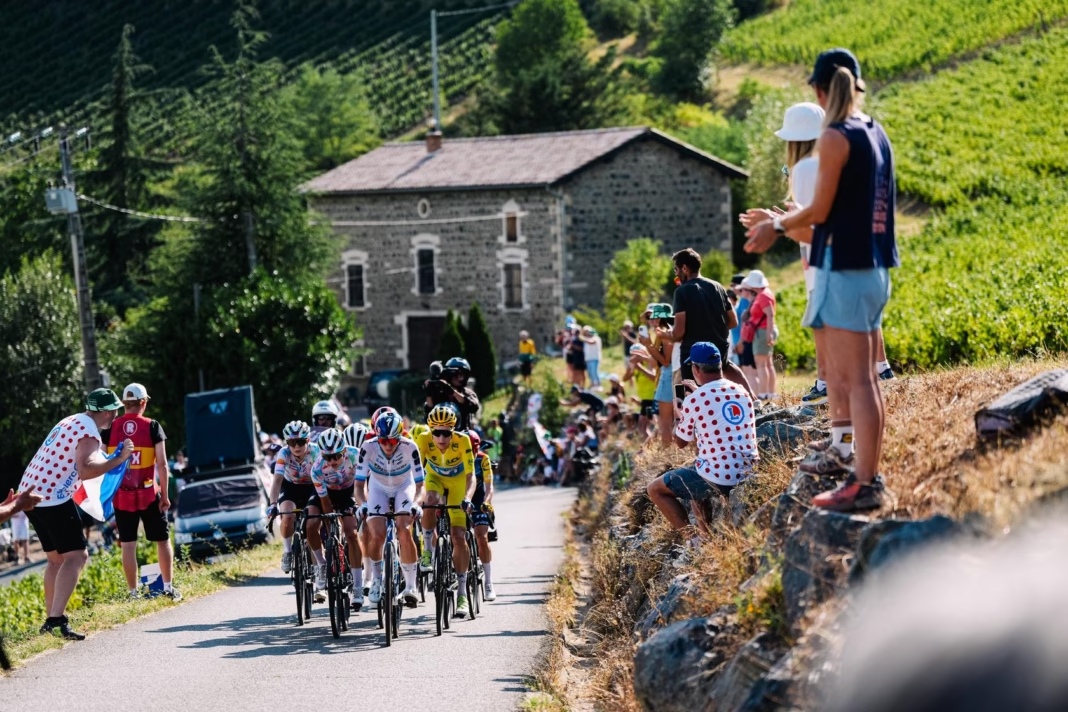
Who are the main Tour de France Femmes 2026 white jersey contenders?
The confirmed start list creates a fairly clear hierarchy.
Favourite: Antonia Niedermaier.
Major challengers: Paula Blasi and Isabella Holmgren.
Established contenders: Nienke Vinke, Marion Bunel and Julie Bego.
Outsiders to watch: Célia Gery and Eleonora Ciabocco.
Developmental rider with long-term potential: Paula Ostiz.
What separates Niedermaier and Blasi from many previous white jersey contenders is that both are also relevant much higher up the general classification. That raises the level required to win. A rider can have an excellent Tour, finish well ahead of most riders her age and still find herself several minutes behind two young women capable of challenging established Grand Tour leaders.
Who should win the white jersey in 2026?
Antonia Niedermaier starts as the strongest pick.
Second at the Giro is the clearest evidence available, and the balance of the Tour route suits her particularly well. She can use the time trial rather than merely survive it and has already demonstrated that the biggest mountain stages should not expose an obvious weakness.
Paula Blasi is the rider most capable of beating her. Her Vuelta victory gives her climbing credentials few riders of any age can match, and if she limits the losses against the clock she can take the competition deep into the final mountain stages. Isabella Holmgren will also be in the mix after her performance at the Giro d’Italia Women.
Nienke Vinke should not be overlooked simply because stronger names have entered the eligible group. She is the defending champion and has already shown that she can improve as a Tour moves towards its hardest stages.
Bunel has comparable climbing potential but a more restrictive team role, while Bego brings the experience of having spent most of last year’s Tour defending white.
The 2026 competition therefore looks less like a development prize and more like a genuine Grand Tour classification.
If Niedermaier or Blasi reaches Nice near the overall podium, the white jersey will tell only part of the story.

