
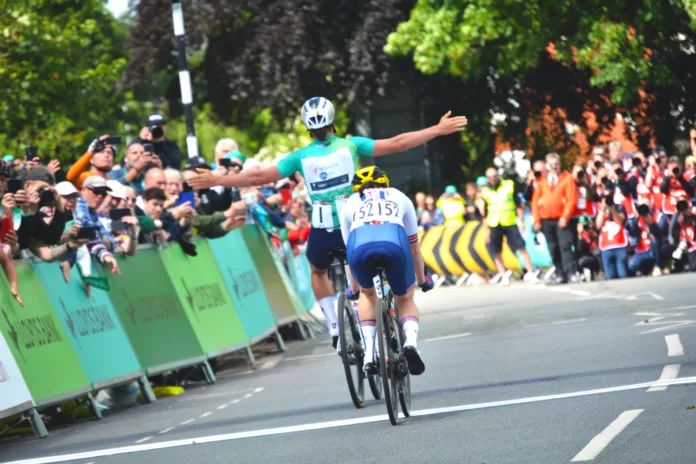
The Tour of Britain Women begins in Cockermouth on Wednesday with a field that should produce a very different general classification battle from the mountain-heavy stage races that dominated the first half of August.
There is no Kasia Niewiadoma-Phinney in the final Canyon SRAM selection, while several of the strongest Grand Tour climbers have also bypassed the race. Instead, the Tour of Britain Women 2026 route points towards powerful all-rounders, riders who can climb explosively and fast finishers capable of surviving harder terrain.
That immediately puts Lotte Kopecky near the top of the list. The 2024 winner has the power for the exposed opening stage, the punch for the Great Orme and enough finishing speed to turn bonus seconds into an important GC weapon.
Kim Le Court-Pienaar, defending champion Ally Wollaston, Pfeiffer Georgi and Karlijn Swinkels all have different routes towards challenging her, while Lauren Dickson is the major wildcard after returning from the collarbone fracture that interrupted a breakthrough 2026 season.
The sprint battle is also significant. Lorena Wiebes starts as the obvious benchmark, with Chiara Consonni among the few riders capable of challenging her directly. Zoe Bäckstedt becomes particularly interesting when the terrain becomes too demanding for the conventional sprinters.
The current Tour of Britain Women start list remains subject to late changes until Stage 1, but these are the riders who stand out most strongly for the overall classification and individual stages.
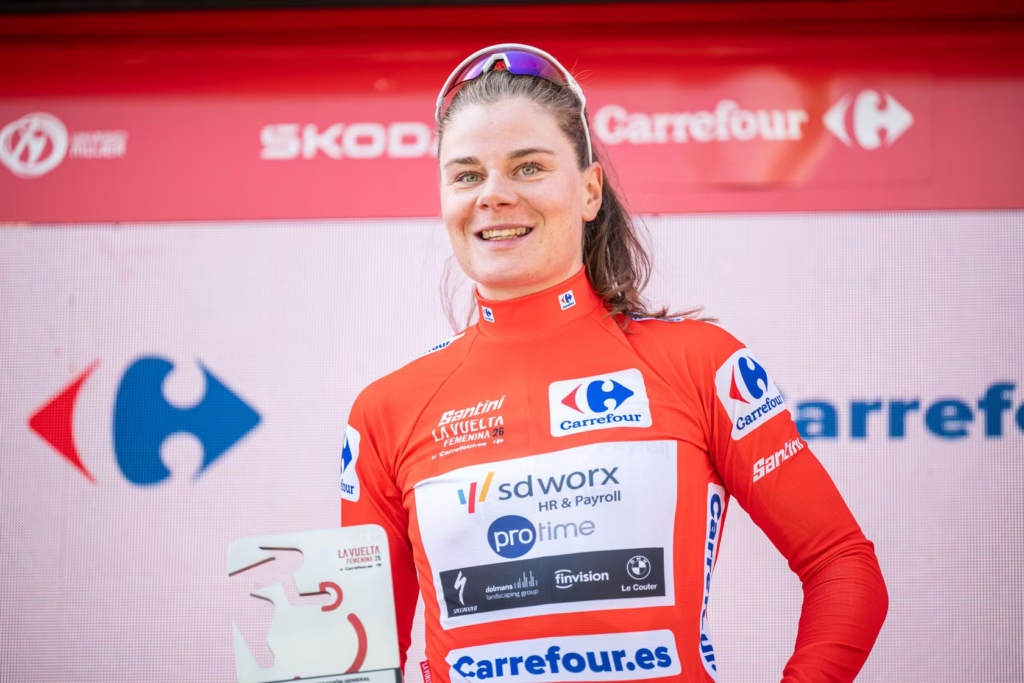
Lotte Kopecky
Lotte Kopecky is the clearest overall favourite.
The Belgian already knows exactly what is required to win this race. She took the 2024 Tour of Britain Women after winning the opening two stages and successfully defending her advantage through the remainder of the event.
Her victory forms part of a list of winners that includes Marianne Vos, Lizzie Deignan, Demi Vollering and Elisa Longo Borghini, covered in our history of the Tour of Britain Women.
The 2026 route arguably suits Kopecky even better than a conventional climbing stage race would.
There are almost 8,900 metres of climbing across the five stages, but there is no prolonged Alpine summit where a specialist climber can simply settle into a rhythm and take minutes. Instead, the race mixes exposed roads, repeated short climbs, an uphill finish and opportunities for reduced sprints.
Stage 3 on the Great Orme is particularly important. The final climb is only 2.5 kilometres long, but its steeper ramps should create meaningful gaps. It is precisely the sort of effort where Kopecky’s power-to-weight ratio and ability to accelerate on steep gradients become difficult to counter.
Stage 4 between Llanidloes and Hay-on-Wye may actually pose the greater threat. Repeated climbing and an accumulated 2,484 metres of ascent provide more opportunities for her rivals to make the race attritional.
Even then, Kopecky does not necessarily need to be the strongest climber.
If she stays within a handful of seconds, her sprint becomes another GC weapon. Finishing bonuses can decide the Tour of Britain Women, and very few realistic overall contenders want to arrive at the line alongside Kopecky.
Verdict: The rider everyone else has to beat.
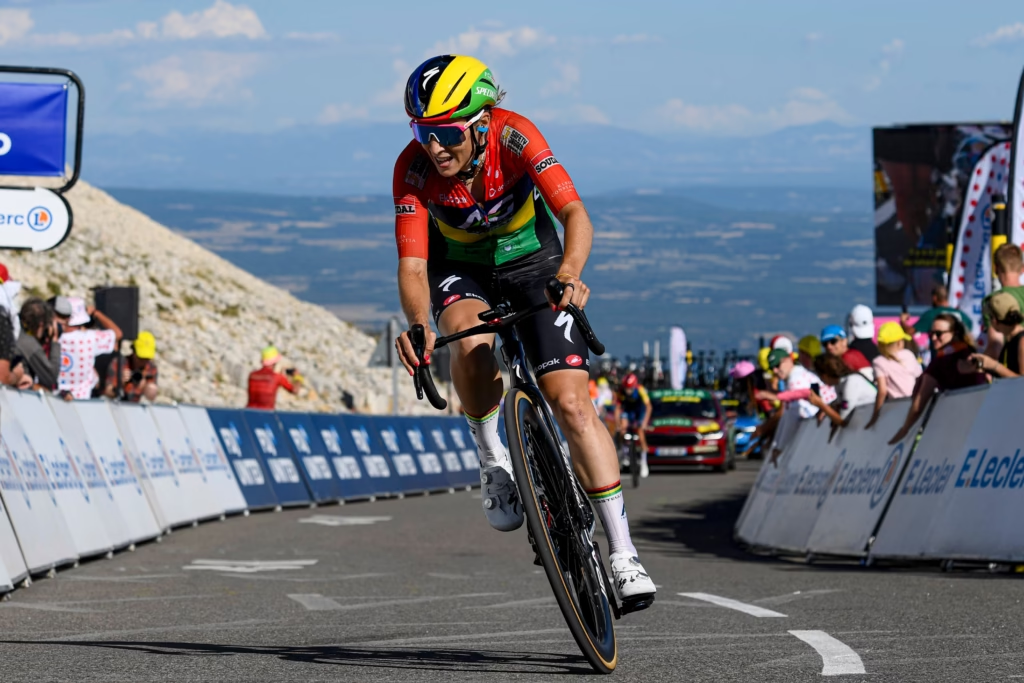
Kim Le Court-Pienaar
Kim Le Court-Pienaar looks like the most convincing direct alternative to Kopecky.
The Mauritian’s development over the last two seasons has transformed her from a dangerous one-day racer into a rider capable of competing deep into difficult WorldTour stage races.
She went into the Tour de France Femmes with AG Insurance-Soudal openly targeting a top-five GC finish, reflecting how substantially her stage-racing status has changed.
Britain offers a less mountainous test, and arguably one better suited to her complete skill set.
Le Court-Pienaar can climb, sprint from small groups and cope exceptionally well when a race becomes chaotic. Stage 1 around Cockermouth could therefore be an immediate opportunity.
At 158.9 kilometres, with almost 2,000 metres of climbing, exposed coastal roads and a short cobbled sector, the opener is unlikely to behave like a conventional first stage. Positioning and durability will matter alongside outright climbing strength.
She also has unfinished business with this race. Le Court-Pienaar won the opening stage in 2025 and took the leader’s jersey before a crash ended her challenge.
The Great Orme should tell us whether she can go one step further this time.
If she stays close to Kopecky there, Le Court-Pienaar has enough finishing speed to make every remaining bonus second significant.
Verdict: The strongest challenger to Kopecky on pure all-round ability.
 Photo Credit: Getty
Ally Wollaston
Ally Wollaston returns as defending champion, and the way she won in 2025 explains why she remains a serious threat despite a harder course.
Her victory was decided by seconds rather than minutes.
Cat Ferguson entered the final stage with a three-second advantage, but Wollaston overturned it through the bonus-second battle in Glasgow and eventually won the race by four seconds.
That was an important demonstration of what the Tour of Britain Women rewards.
The strongest climber does not automatically win. Positioning, stage finishes, intermediate bonuses and tactical awareness can become equally important when the GC remains compact.
The beginner’s guide to the Tour of Britain Women 2026 explains how those bonuses feed into the overall classification, and Wollaston may need to exploit them again.
The Great Orme is the obvious danger.
Wollaston can probably recover from losing a few seconds. If Kopecky, Le Court-Pienaar or one of the stronger climbers takes half a minute from her, the equation becomes considerably more difficult.
Her objective should therefore be containment rather than domination on Stage 3.
Reach the final two stages within touching distance and the defending champion becomes increasingly dangerous.
Verdict: The route is harder than last year, but her speed makes any small GC deficit recoverable.
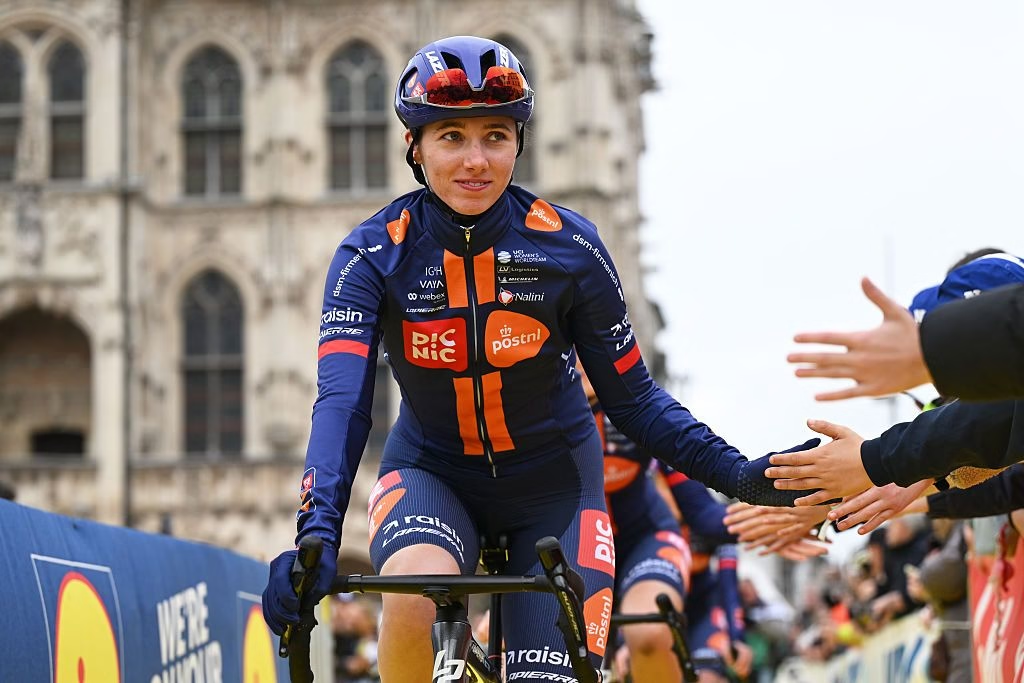 Photo Credit: Getty
Pfeiffer Georgi
Pfeiffer Georgi is one of the most interesting contenders because so much of the route falls into the space between a Classics race and a conventional stage-race mountain test.
That is where Georgi is most effective.
The British rider is strong over repeated short climbs, excellent when positioning becomes difficult and capable of maintaining power deep into long, attritional races. She does not need a perfectly organised finale to produce a result.
Cockermouth should suit her particularly well.
So could Stage 4, provided the climbing is ridden aggressively rather than becoming a measured contest between lightweight climbers.
Georgi featured among ProCyclingUK’s British riders to watch in women’s cycling in 2026, and this is one of the clearest home opportunities available to her all season.
The Great Orme remains the question.
She probably does not want to wait for Kopecky to make the first move there. Picnic PostNL’s better strategy may be to use Georgi’s strengths elsewhere, making the race difficult before the obvious GC moments rather than allowing the favourites to reduce everything to one uphill effort.
Verdict: A legitimate podium contender and one of the riders most likely to benefit from aggressive racing.
 Photo Credit: Getty
Lauren Dickson
Lauren Dickson is the major wildcard.
Had the Tour of Britain Women taken place immediately after her early-summer form, she would have been one of the clearest climbing-based GC contenders in the race.
Her first WorldTour season has already produced 11th overall at the Giro d’Italia Women, third at Itzulia Women and a series of results that established her as one of Britain’s biggest breakthroughs of 2026.
Then came the Tour de Suisse.
Dickson was sitting second overall when she suffered a collarbone fracture in a Stage 3 crash, interrupting that momentum at precisely the point when she was producing some of her strongest racing.
The Tour of Britain marks her return.
That makes her difficult to rank because the route itself is excellent for her.
The Great Orme gives Dickson an opportunity to put faster riders under pressure, while the repeated climbing on Stage 4 should suit her even more. Unlike Wollaston, she does not need the race to stay together for bonus seconds.
She needs separation.
If Dickson has returned anywhere close to her pre-injury level, she has the climbing strength to become a genuine podium threat. If this race is primarily about rebuilding race sharpness, expectations need to be lower.
We should know much more by the top of the Great Orme.
Verdict: Potentially one of the strongest climbers in the field, but fitness after her collarbone fracture is the unknown.
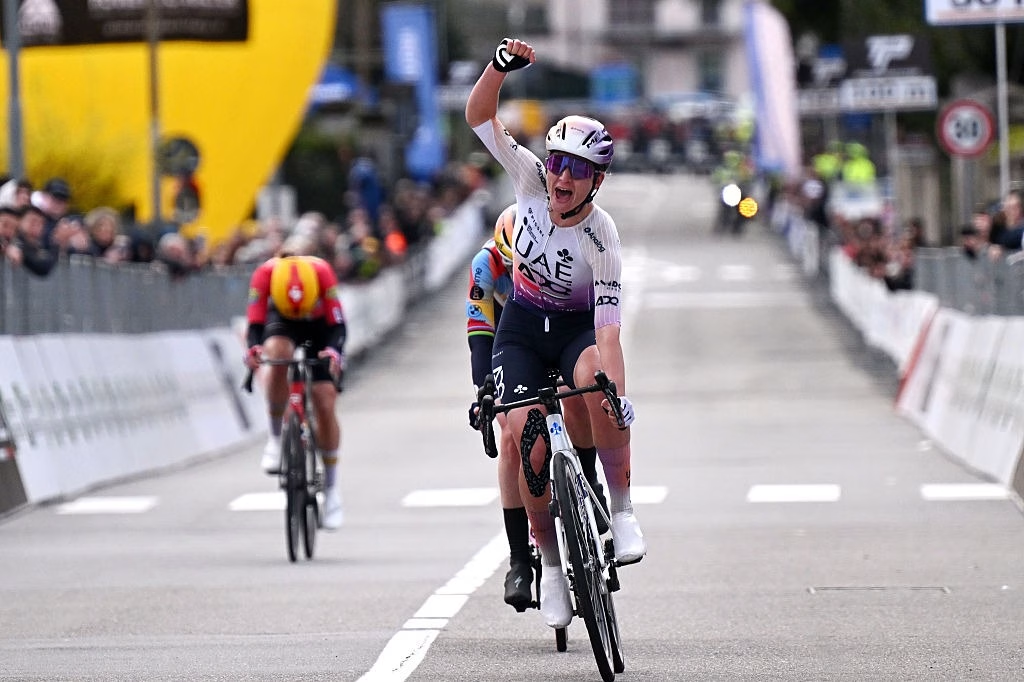 Photo Credit: Getty
Karlijn Swinkels
Karlijn Swinkels deserves attention because she has already demonstrated how effectively consistency can work at this race.
The Dutch rider finished third overall in 2025 behind Wollaston and Ferguson and returns with UAE Team L’IMAD as one of the team’s strongest options for the general classification.
Swinkels is not the rider most likely to destroy the race on the Great Orme.
Her strength is broader.
She handles rolling terrain well, can stay competitive when a race becomes selective and has enough finishing speed to avoid giving away time every time the favourites arrive together.
That should make Stage 1 particularly interesting.
The exposed roads and constant changes in rhythm suit Swinkels far more than they would a conventional mountain specialist. Stage 4 also gives her an opportunity if the race becomes tactical rather than simply being ridden at climbing threshold.
Her challenge is finding a way to take time from Kopecky.
A podium is easier to imagine than outright victory because Swinkels may struggle to create a stage where she possesses a decisive advantage over the Belgian.
Her third place last year, however, means she has already proved she can put together the complete race required here.
Verdict: A strong podium candidate whose consistency should keep her in contention throughout the five stages.
 Photo Credit: Getty
Lorena Wiebes
Lorena Wiebes belongs in a contenders preview even if the yellow jersey is unlikely to be her principal objective.
She is the overwhelming benchmark for the sprint stages.
Stage 2 from Clitheroe to Blackpool stands out as the clearest opportunity, while the Royal Leamington Spa finale could give her another chance if the climbing does not reduce the field too severely.
There is also a wider tactical dimension.
Wiebes and Kopecky together give SD Worx-Protime an enormous amount of control over how the race is contested.
If a stage finishes in a larger group, Wiebes can win it. If the terrain becomes selective, Kopecky takes over. If a rival GC rider needs bonus seconds, Wiebes can potentially take those seconds away simply by finishing ahead of them.
The question is how far Wiebes herself can carry an overall challenge.
Her climbing range has improved considerably, but the Great Orme should finally create terrain where maintaining GC position becomes secondary to helping Kopecky.
Until then, there is every chance Wiebes will sit high in the classification simply through stage results and bonuses.
Her rivalry with Consonni is also worth watching. The two were among the leading fast finishers at the Tour de France Femmes earlier this month and should again be prominent whenever the Tour of Britain comes back together.
Verdict: Clear sprint favourite and potentially one of the most important tactical riders in the GC battle.
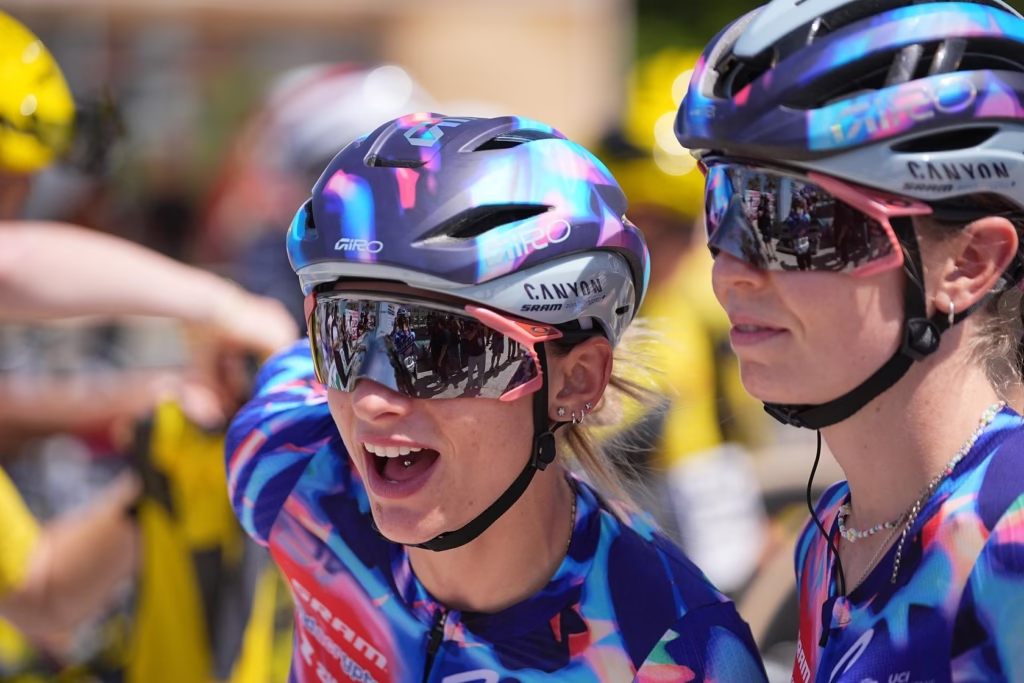 Photo Credit: RCS
Chiara Consonni
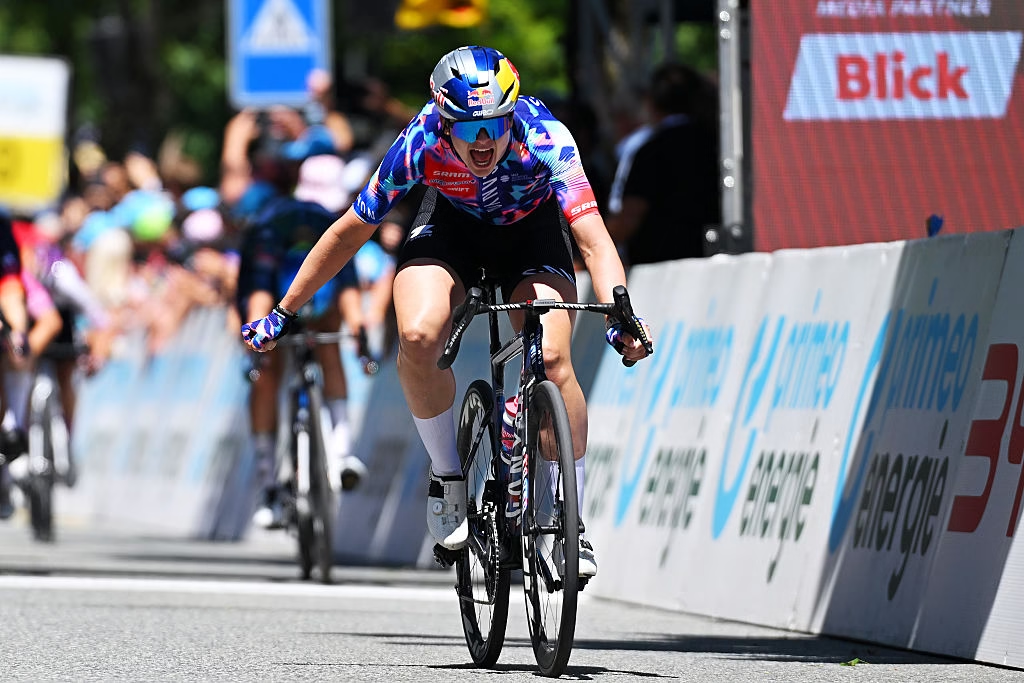
Chiara Consonni is the rider most likely to challenge Wiebes directly when the Tour of Britain Women produces a conventional sprint.
The final Canyon SRAM line-up has clarified her role considerably.
Without a genuine leading GC contender in the squad, Canyon SRAM can approach this race around opportunities rather than protecting an overall leader. For Consonni, that means Stage 2 into Blackpool should be a major target.
She has the outright speed required.
Consonni has repeatedly finished alongside the elite sprinters at WorldTour level and has enough acceleration to beat Wiebes when positioning or timing gives her an opening.
Her advantage over some pure sprinters is that she can also remain competitive after a moderately difficult day.
That makes the final stage intriguing. If enough climbing is included to remove several fast finishers but not Consonni, the balance can shift substantially in her favour.
The Great Orme and Stage 4 are unlikely to contribute much to her own ambitions, but she does not need them to.
Two realistic sprint opportunities are enough to make Consonni one of the major stage contenders of the week.
Verdict: The clearest challenger to Wiebes in the fast finishes.
Zoe Bäckstedt
Zoe Bäckstedt should not be forced into the GC conversation simply because Canyon SRAM do not have Niewiadoma-Phinney.
Her opportunities are much more interesting than that.
Bäckstedt becomes the team’s alternative when a stage is too difficult for Consonni but does not necessarily favour the pure climbers.
Stage 1 is the obvious example.
Almost 160 kilometres, exposed Cumbrian roads, climbing and approximately 700 metres of cobbles at Silloth give the opening day a distinctly Classics-like character.
Power matters there. So does positioning.
Bäckstedt possesses both.
She has also demonstrated throughout 2026 that her development is no longer limited to time trialling. She entered the Tour de France Femmes as one of Britain’s most important stage hunters, with ProCyclingUK’s guide to the British riders at the Tour highlighting the increasing range of roles she can perform.
The Tour of Britain gives her freedom to use that strength aggressively.
If Consonni survives, Canyon SRAM can work towards the sprint. If Consonni is dropped, Bäckstedt becomes a much more logical rider to send up the road or use from a reduced group.
That is a stronger tactical position than pretending Bäckstedt needs to preserve herself for the overall classification.
Verdict: One of the best stage-hunting options whenever the race becomes too difficult for the sprinters.

Who is the favourite for the Tour of Britain Women 2026?
The answer is Lotte Kopecky.
The composition of the field strengthens her position because there is no obvious specialist climber who starts clearly superior to her across the terrain that will decide this race.
Le Court-Pienaar can challenge her versatility. Dickson may be capable of climbing faster. Wollaston has greater incentive to chase bonus seconds. Georgi can try to make the race unpredictable. Swinkels has already proved she can assemble a consistent GC campaign here.
Kopecky combines elements of all of those strengths.
The Great Orme should establish the initial hierarchy, but Stage 4 may be where the Tour is actually won.
If Kopecky survives the road to Hay-on-Wye without losing meaningful time, her ability to sprint for bonuses makes the final day extremely difficult for anyone trying to overhaul her.
If Dickson or another climber can create genuine separation through Mid Wales, the race changes completely.
Away from GC, the sprint hierarchy is clearer. Wiebes starts ahead of Consonni, while Bäckstedt becomes increasingly dangerous as the amount of climbing rises.
Five stages, almost 8,900 metres of ascent and several very different types of racing make the 2026 Tour of Britain Women difficult to reduce to one formula.
Kopecky simply begins with more ways of winning it than anyone else.

