
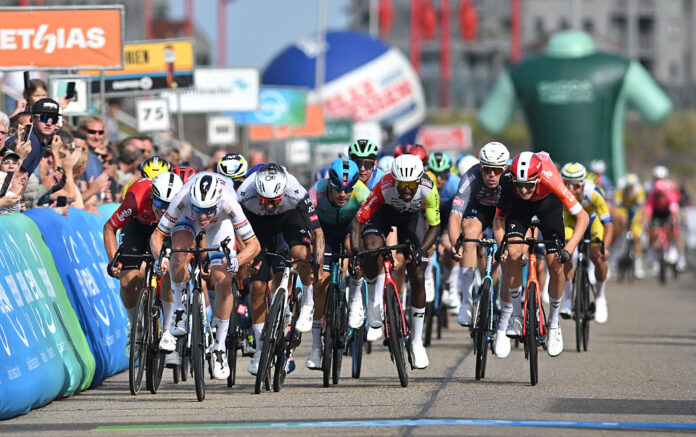
The Renewi Tour 2026 begins on Wednesday 19 August with a new Grand Départ in Diest, and the opening stage should immediately test both the strongest sprinters and the riders hoping to win the overall classification.
Stage 1 starts and finishes in Diest before heading through the rolling Hageland, a region of repeated short climbs and narrow roads that should make the opener considerably more complicated than a conventional flat sprint stage.
The full Renewi Tour 2026 route guide identifies the opening day as perhaps the most unpredictable stage of the race. There is enough difficulty to encourage attacks and create splits, but the profile remains manageable for powerful sprinters who can handle repeated short climbs.
That creates an exceptional stage-winning field. Tim Merlier, Jasper Philipsen, Jonathan Milan, Olav Kooij, Arnaud De Lie, Biniam Girmay, Dylan Groenewegen and Søren Wærenskjold are all among the riders expected to contest the finish.
The full Renewi Tour 2026 start list shows just how unusually deep the sprint field is, while the Renewi Tour 2026 contenders preview explains why Stage 1 could also matter immediately for the GC.
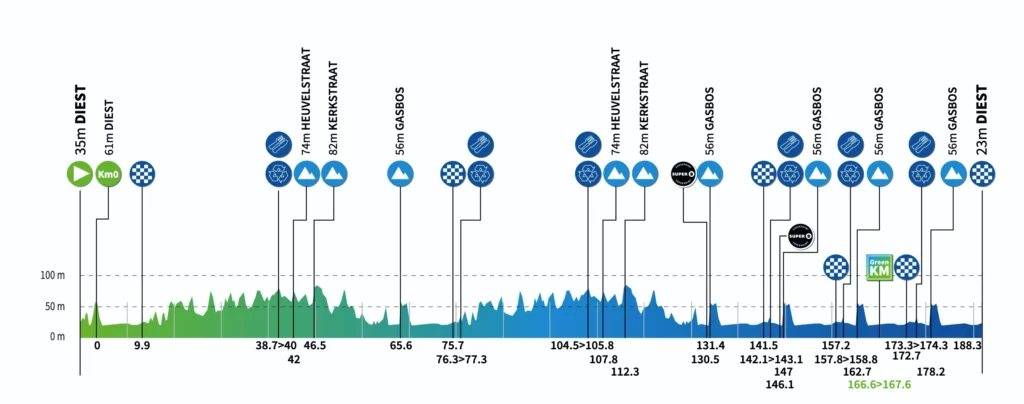
Renewi Tour 2026 stage 1 route
Date: Wednesday 19 August 2026
Start: Diest
Finish: Diest
Stage character: Hilly and sprinter-friendly
GC importance: Medium
Best suited to: Powerful sprinters and Classics riders
Official start: 13:00 CEST / 12:00 BST
Expected finish: Around 17:15 CEST / 16:15 BST
Diest hosts the Renewi Tour Grand Départ for the first time, with the riders starting from the Grote Markt before heading into the Hageland.
The terrain is more demanding than the elevation numbers alone suggest.
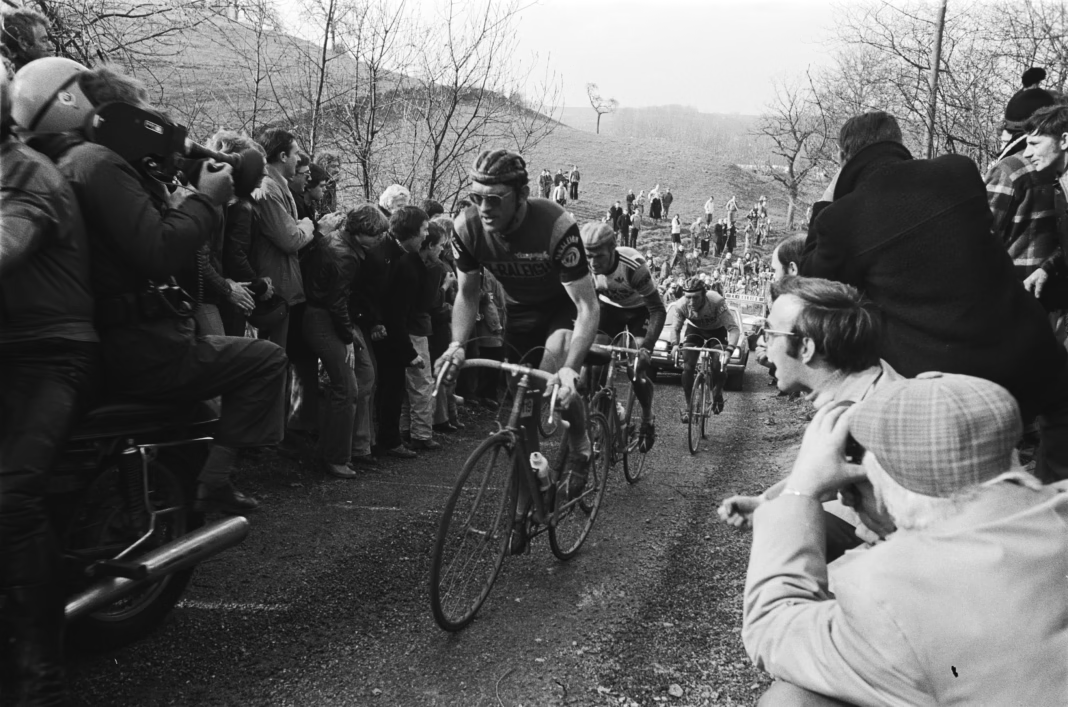
There is no long climb capable of removing the sprinters through sustained climbing. Instead, the difficulty comes through repetition: short rises, changes of direction and constant battles for position.
The riders then return towards Diest for a circuit-based finale, with multiple passages through the finish on Nieuwe Dijkstraat before the final arrival.
That repeated exposure to the finishing roads should allow teams to learn the approach, but it should also make the positioning battle increasingly aggressive as the stage progresses.
 Photo Credit: Getty
Why Stage 1 is harder than a normal sprint opener
The easiest mistake is to look at the absence of a major climb and assume this will be a routine sprint stage.
The Hageland rarely works like that.
Short climbs create repeated accelerations rather than one prolonged effort, and that can gradually reduce the number of riders still comfortable near the front.
A sprinter who loses ten positions before every rise may spend substantially more energy getting back into position than someone whose team keeps them near the front throughout.
That could favour riders such as Philipsen, De Lie, Girmay and Kooij, who are generally comfortable when the approach to a sprint includes repeated short climbs.
The beginner’s guide to the Renewi Tour 2026 explains why this type of terrain is so central to the race. The Renewi Tour is rarely decided through conventional mountain climbing. Instead, small gaps emerge from positioning, cobbles, short climbs, crosswinds and bonus seconds.
Stage 1 offers the first opportunity for all of those factors to matter.
The GC contenders cannot afford to switch off
The overall classification should not be decided in Diest, but a rider can certainly damage their chances.
With no individual time trial in the 2026 Renewi Tour, small road gaps and finishing bonuses become unusually valuable.
That means Tim Wellens, Florian Vermeersch, Alec Segaert, Tiesj Benoot and the other overall contenders need to remain near the front during the final circuits rather than treating Stage 1 as something to survive anonymously.
A five-second split caused by poor positioning can be difficult to recover in a race where the final winning margin may itself be measured in seconds.
For defending champion Arnaud De Lie, the situation is different.
Stage 1 is an opportunity.
De Lie can potentially collect bonus seconds immediately without needing to attack on the climbs. That gives Lotto Intermarché a reason to commit to the sprint even against riders with greater outright top speed.

Tim Merlier
Tim Merlier starts as the obvious reference point after being the dominant pure sprinter at the 2026 Tour de France.
The Belgian won three stages in July, including back-to-back victories in Bordeaux and Bergerac before completing his hat-trick on Stage 12 in Chalon-sur-Saône.
That Tour form matters.
Merlier repeatedly showed that he did not need a perfect lead-out to win. When he found enough space to accelerate, his top-end speed was consistently difficult to answer.
The Hageland terrain makes Stage 1 more demanding than the cleanest Tour sprint stages, but there is nothing obviously severe enough to remove him.
If Soudal Quick-Step deliver Merlier into the final kilometre near the front, he remains the rider everyone else has to beat.
Verdict: Narrow stage favourite after three Tour de France victories.
Jasper Philipsen
Jasper Philipsen may benefit if the race is made slightly harder before the finish.
He remains one of the most complete sprinters in the peloton because his winning range extends beyond completely flat roads.
Repeated short climbs, awkward positioning and a chaotic Belgian finale should not trouble him.
In fact, every extra acceleration potentially moves the race slightly towards Philipsen and away from the heaviest pure sprinters.
The depth of Alpecin-Premier Tech’s sprint experience is another advantage. Belgian finales often become less about producing one textbook lead-out and more about repeatedly fighting for the right wheels.
Philipsen is exceptionally comfortable in that environment.
Verdict: One of the strongest favourites, particularly if the final hour becomes harder than expected.

Jonathan Milan
Jonathan Milan offers the opposite threat.
If the race remains controlled enough for Lidl-Trek to organise properly, few riders can match the combination of Milan’s power and the team’s lead-out strength.
He should be capable of surviving the Hageland terrain.
The more important question is how much energy the repeated climbs and positioning battles remove before the sprint.
Milan is at his best when Lidl-Trek can take control early enough to keep him out of unnecessary accelerations.
If they manage that, the flat finish in Diest provides exactly the platform his sustained power needs.
The Renewi Tour team-by-team guide looks more closely at the support available to Milan and the other leading sprinters across the five stages.
Verdict: A major favourite if Lidl-Trek control the final five kilometres.
Olav Kooij
Olav Kooij brings perhaps the most convincing combination of outright speed and resistance to climbing.
His Tour de France included victory in the reduced sprint on Stage 5 in Pau and several further high finishes.
He was second behind Merlier in Chalon-sur-Saône on Stage 12, having repeatedly placed around the front of the Tour’s sprint hierarchy.
That makes the Diest profile particularly attractive.
Kooij should have no difficulty with the short climbs, and if the stage becomes hard enough to reduce some of the pure sprinters, his chances improve rather than disappear.
Verdict: One of the safest top-five picks and fully capable of taking the first leader’s jersey.
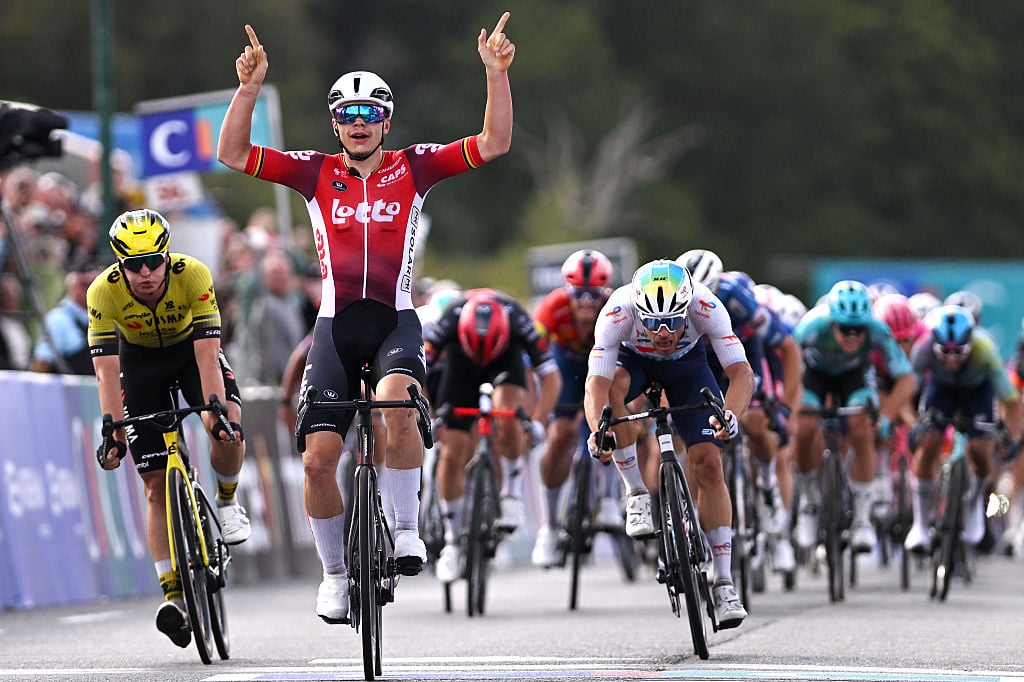
Arnaud De Lie
Arnaud De Lie has more at stake than anyone else in the sprint.
The defending Renewi Tour champion is trying to win both the stage and the first GC bonuses.
That was central to his overall victory last year.
De Lie repeatedly stayed close enough to the strongest Classics riders to keep the general classification within reach before using his finishing speed to overturn Mathieu van der Poel in Leuven.
The 2026 route again rewards that same skill set.
A completely flat sprint slightly favours riders such as Merlier and Milan. A more selective final hour brings De Lie much further into the conversation.
The bigger the pressure through the Hageland, the better his chances become.
There is also an unusual backdrop after Lotto Intermarché confirmed that De Lie will leave the team at the end of the 2026 season.
For now, however, the sporting objective is simple: defend the Renewi Tour title.
Stage 1 gives him an immediate opportunity to begin doing that.
Verdict: Perhaps not the fastest rider in a completely clean sprint, but one of the biggest winners if the stage becomes selective.
Biniam Girmay
Biniam Girmay should also welcome a difficult opening day.
His Tour de France included second behind Merlier in Bergerac, confirming that he remains capable of challenging the quickest riders when his positioning is right.
The difference is that Girmay does not need an easy stage.
Repeated climbing and a reduced bunch generally work in his favour.
If 70 riders contest the finish rather than 140, several of the riders eliminated are likely to be ones who would otherwise represent a greater outright sprint threat.
That makes Girmay one of the more interesting alternatives to the obvious favourites.
Verdict: Particularly dangerous if the Hageland reduces the field before Diest.

Dylan Groenewegen
Dylan Groenewegen’s ideal stage is easier to describe.
He wants the race controlled.
The flatter and larger the final group, the better.
Groenewegen retains enough outright speed to win against this field, but the repeated short climbs favour several rivals slightly more.
The route should not be too difficult for him. The issue is how much energy he has to spend getting through it.
If Unibet Rose Rockets keep Groenewegen protected and he reaches Nieuwe Dijkstraat fresh, his sprint remains dangerous.
Verdict: A strong outsider if the opening stage proves less selective than expected.
Søren Wærenskjold
Søren Wærenskjold should not be overlooked.
His Tour de France Stage 11 victory in Nevers showed that he can beat elite sprinters when a race does not unfold perfectly for the established lead-out trains.
The Diest stage arguably suits him even better.
Wærenskjold has the power to handle repeated rolling terrain and should not be concerned if the final group becomes smaller.
The problem is simply the depth of opposition.
Merlier, Philipsen, Milan, Kooij and De Lie all bring stronger conventional claims, but Wærenskjold has already shown this season that he can beat that level of competition.
Verdict: A genuine podium outsider, particularly in a disorganised reduced sprint.
The final kilometres in Diest
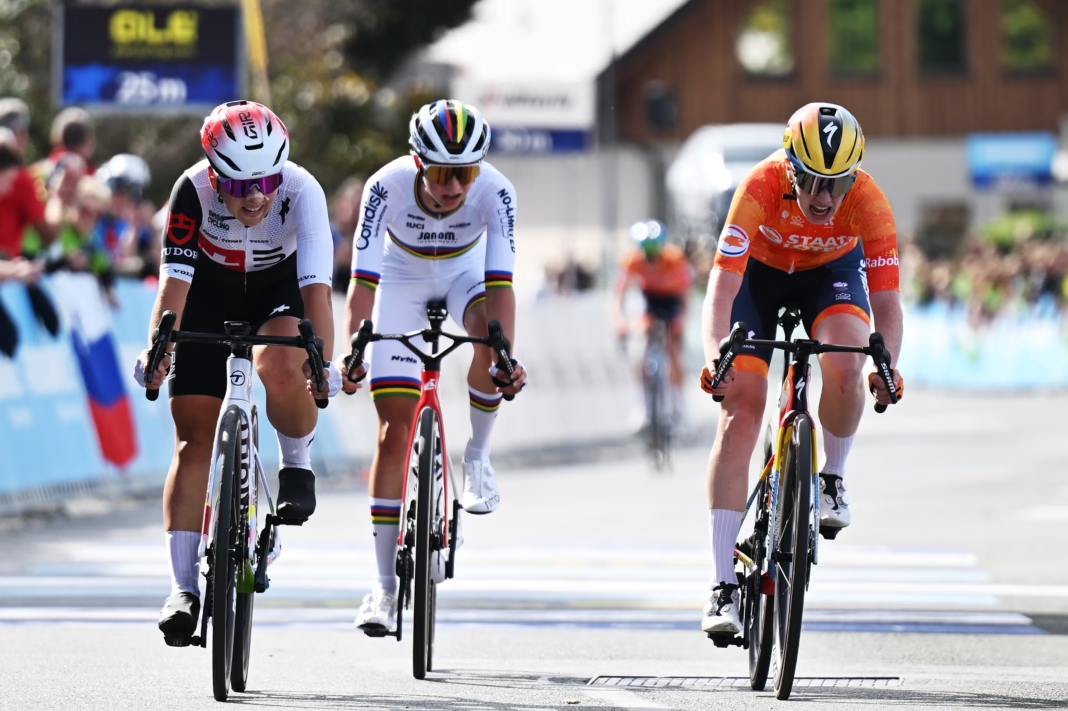
The finish itself should bring the pure sprint qualities back into play.
After the repeated climbs and circuits, the final approach towards Nieuwe Dijkstraat is substantially easier than the terrain used to reach it.
That means surviving the Hageland is only half the job.
Teams then need to reorganise rapidly for a conventional high-speed lead-out.
The repeated passages through the finish area should help. Riders and sports directors will have multiple opportunities to inspect the approach during the stage and identify where positioning becomes critical.
The disadvantage is that every team receives the same information.
By the final passage, there should be little uncertainty about where the decisive fight for position begins.
With so many elite sprint trains competing for a limited amount of road, the battle several kilometres from the finish could ultimately matter more than any of the climbs.
Renewi Tour 2026 stage 1 start and finish times
The official stage start is scheduled for 13:00 CEST, or 12:00 BST in the UK.
The organisers expect several passages through the finish area during the afternoon before the final arrival at approximately 17:15 CEST, which is 16:15 BST.
The expected timing is:
- First finish-line passage: around 13:20 CEST
- Second passage: around 14:45 CEST
- Third passage: around 16:15 CEST
- Fourth passage: around 16:35 CEST
- Fifth passage: around 16:55 CEST
- Expected stage finish: around 17:15 CEST
Those times can move slightly depending on the speed of the race.
How to watch Renewi Tour 2026 stage 1 in the UK
UK viewers can follow the Renewi Tour throughout all five stages.
The latest television and streaming information is available in ProCyclingUK’s guide to watching the Renewi Tour 2026 in the UK.
The race is also being shown live in Belgium through Sporza and RTBF.
Who wins Renewi Tour 2026 stage 1?
The route is difficult enough to complicate the sprint without being difficult enough to make one unlikely.
That should produce an excellent first test of the unusually deep sprint field.
Tim Merlier starts with the strongest recent results. Three Tour de France victories make him the obvious benchmark if the final group remains relatively large.
Jasper Philipsen becomes increasingly attractive as the race gets harder.
Jonathan Milan has the power and lead-out to dominate a controlled finish.
Olav Kooij combines enough climbing ability with elite sprint speed to handle almost every plausible version of the stage.
Then there is Arnaud De Lie, for whom every finishing position also has GC consequences.
The most likely result is a reduced or slightly thinned bunch sprint in Diest rather than a breakaway victory.
What makes the stage interesting is that almost every version of that sprint changes the hierarchy.
A calmer race favours Merlier and Milan.
A harder final hour brings Philipsen, Kooij, De Lie and Girmay further into play.
Either way, the 2026 Renewi Tour should begin with one of the deepest sprint contests of the late-summer calendar.

