

The Vuelta a España 2026 begins in Monaco on Saturday 22 August, and the battle for the green points jersey could look very different from the equivalent competition at the Tour de France.
Only four stages are officially classified as flat, while much of the rest of the race is filled with rolling terrain, medium mountains, summit finishes and two individual time trials. That immediately reduces the advantage enjoyed by pure sprinters and makes consistency across different types of stages much more important.
It is why Mads Pedersen and Wout van Aert stand out so strongly. Both can win bunch sprints, survive difficult terrain, collect intermediate sprint points and score on days where more conventional fast finishers may take nothing. Kaden Groves and Jordi Meeus provide the strongest traditional sprint challenges, while Tadej Pogačar cannot be ignored at all. The Vuelta has a long history of GC riders scoring heavily in the points classification, most famously when Chris Froome won both red and green in 2017.
With Pogačar expected to win stages and place highly across mountains, uphill finishes and time trials, he could accumulate a huge points total almost without actively targeting the classification.
The Vuelta a España 2026 route guide explains why the race is so different from a conventional sprinters’ Grand Tour, while the full Vuelta a España 2026 start list contains the latest confirmed riders.

How does the Vuelta points classification work?
The green jersey goes to the rider who accumulates the most points across stage finishes and intermediate sprints.
That sounds straightforward, but the Vuelta’s points classification has historically produced a different type of winner from the Tour. The route traditionally contains fewer pure sprint stages and many more finishes where GC riders can score heavily.
That has allowed climbers and overall contenders to remain surprisingly prominent in the classification.
The most striking modern example came in 2017, when Chris Froome won the Vuelta overall and also took the green points jersey. He beat Matteo Trentin in the classification despite Trentin winning four stages.
That is important context for 2026.
The green jersey should not automatically be treated as a private competition between Pedersen, Van Aert, Groves and the other sprinters. If Pogačar produces the sort of stage-winning campaign expected of him, he may spend much of the race close to the top of the points standings as well.
For anyone new to the race, ProCyclingUK’s beginner’s guide to the Vuelta a España 2026 explains how the green jersey fits alongside the red, polka-dot and white classifications.
Why the 2026 route favours versatility
The defining feature of this points competition is the shortage of completely straightforward sprint days.
Across 21 stages, the Vuelta has only four officially classified flat stages. There are also four hilly stages, four medium-mountain days, six mountain stages, one hilly stage with an uphill finish and two individual time trials.
That distribution rewards riders who can keep scoring when the road rises.
A pure sprinter might have only a handful of realistic opportunities to fight for victory. Pedersen or Van Aert can potentially score on twice as many days. Pogačar can score on almost every stage that matters to the GC.
The full 21-stage Vuelta route therefore matters just as much to the green jersey forecast as the sprint field itself.
There are certainly opportunities for Groves, Meeus and Matthew Brennan, but this is not a classification likely to be decided purely by who has the highest peak speed.
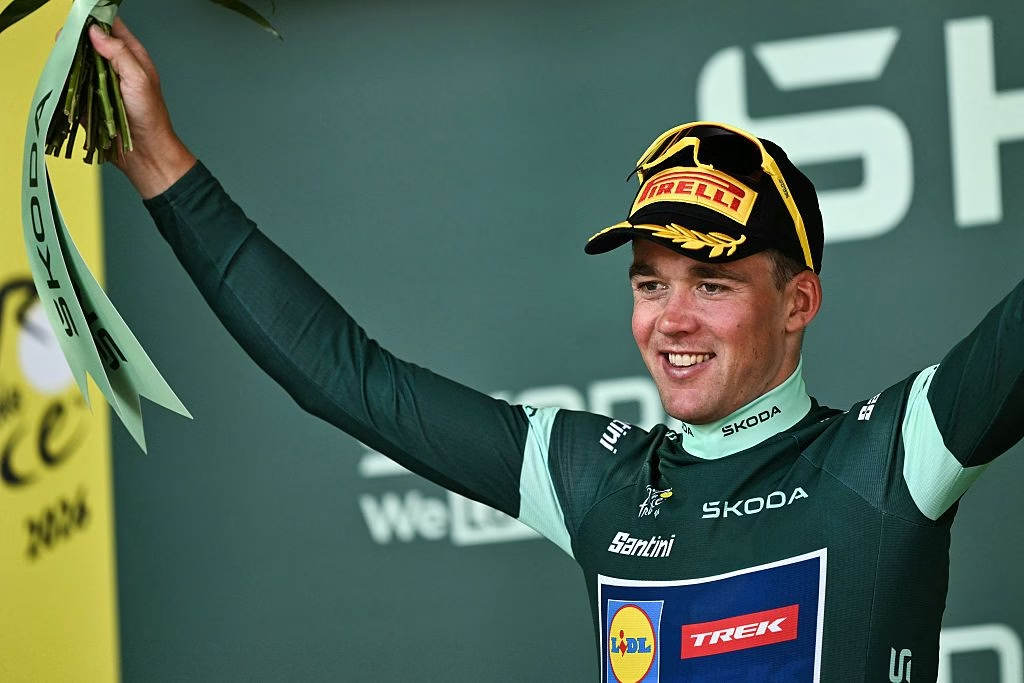
Mads Pedersen starts as the green jersey favourite
Mads Pedersen is the strongest overall candidate for the points classification.
He has almost the ideal skill set for this particular Vuelta. Pedersen can win a conventional sprint, but he does not depend on one. Rolling stages, reduced bunch finishes, difficult transition days and even breakaways can all provide opportunities.
That was also the defining characteristic of his successful 2026 Tour de France points campaign. Pedersen did not win green simply by being the fastest rider in conventional sprints. He scored across a much wider range of terrain, something ProCyclingUK looked at in its analysis of what the 2026 Tour de France meant for the season.
The Vuelta may suit that approach even better.
There are fewer pure sprint stages, meaning the ability to remain competitive when the road becomes harder should be particularly valuable. Pedersen can also target intermediate sprints without compromising his chances later in many stages.
Lidl-Trek have other ambitions through Mattias Skjelmose and Thibau Nys, but Pedersen’s green jersey campaign can largely coexist with them. Skjelmose needs support on the major mountain days, while Nys becomes useful on punchier finishes where Pedersen may not be the team’s strongest stage-winning option.
Pedersen does not need to dominate the bunch sprints. He needs to keep scoring almost everywhere.
Green jersey verdict: The favourite. No other rider combines sprint speed, endurance and daily scoring opportunities quite as neatly.
 Photo Credit: Getty
Wout van Aert is the biggest threat
If Pedersen has the cleanest route to green, Wout van Aert may have the broadest possible route.
Van Aert can contest conventional sprints, reduced sprints, rolling stages, time trials and breakaways. There are very few days in the first two weeks where he can automatically be ruled out of scoring.
His previous Vuelta experience makes that particularly relevant. In 2024, Van Aert was leading the points classification when his race ended through injury, and his return to the Spanish Grand Tour has been part of his long-term 2026 plans. ProCyclingUK covered that unfinished business in its look at Van Aert’s 2026 ambitions.
The issue is not whether he is capable of winning green. It is whether Team Visma | Lease a Bike want him to race for it every day.
Van Aert is most dangerous when he has tactical freedom. Chasing every intermediate sprint can restrict that freedom and make some breakaway strategies less attractive.
Visma also have Matthew Brennan, giving them another serious option on faster finishes. That means Van Aert does not necessarily have to contest every conventional bunch sprint.
If he begins the race well and finds himself leading or close to the green jersey, however, it would be difficult to ignore the opportunity.
Green jersey verdict: Pedersen’s clearest rival and possibly the rider with the largest number of stages on which he can score.
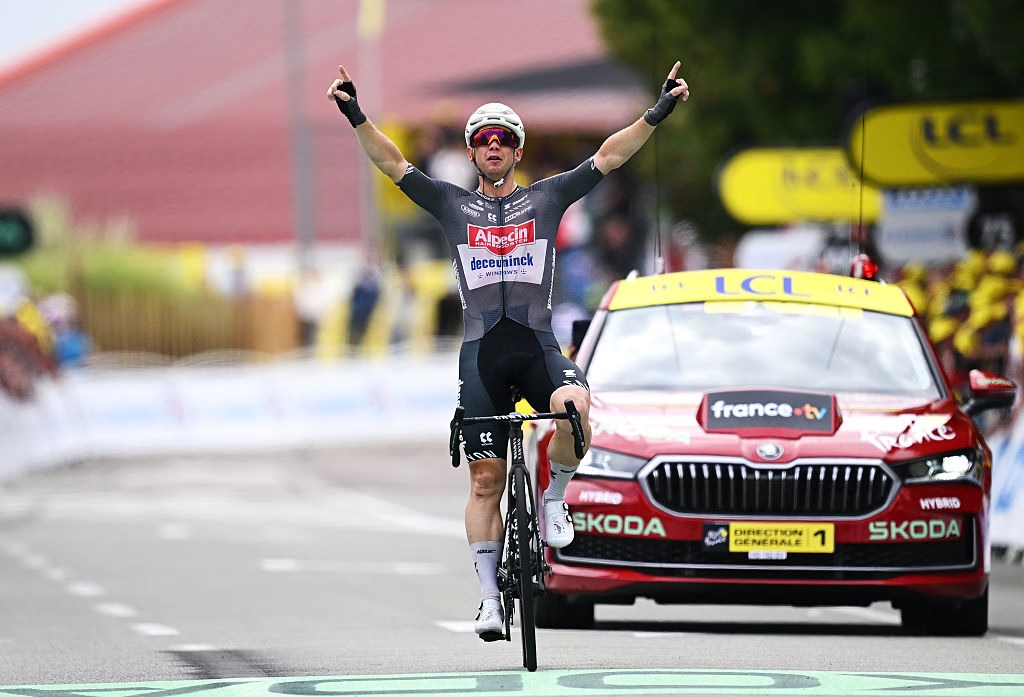 Photo Credit: Getty
Kaden Groves remains the strongest conventional sprint candidate
Kaden Groves is probably the strongest green jersey option among riders whose campaign will still be built primarily around bunch finishes.
His previous Vuelta performances matter because this is exactly the kind of Grand Tour that tends to maximise his strengths.
Groves climbs better than many conventional sprinters and can survive stages that remove heavier fast men. That gives him more opportunities than a rider who needs completely flat terrain while still preserving the outright speed needed to win when the peloton arrives together.
The problem is the number of points available away from those finishes.
Pedersen and Van Aert can score on much harder stages. Pogačar is likely to collect points repeatedly in the mountains. Groves is more dependent on the sprint stages actually ending in sprints rather than being taken by breakaways.
Alpecin-Premier Tech do at least have one major advantage: there is no GC campaign demanding their attention. They can organise almost every suitable stage around Groves.
Green jersey verdict: The best traditional sprinter for the classification, but he needs several of the obvious sprint stages to finish together.

Tadej Pogačar could end up winning green without targeting it
This is the rider who makes the Vuelta points competition fundamentally different from the Tour.
Tadej Pogačar should be considered a genuine green jersey contender.
That does not mean UAE Team Emirates-XRG will arrive announcing a points-classification campaign. The red jersey is clearly the objective, and Pogačar has no reason to waste energy contesting intermediate sprints against Pedersen.
He may not need to.
Pogačar is expected to win stages. The Vuelta a España 2026 contenders preview makes him the clear GC favourite, while his 2026 Tour de France again demonstrated his ability to accumulate victories across a Grand Tour rather than simply protecting an overall lead.
That means points should arrive naturally.
Summit finishes provide opportunities. Punchy uphill stages provide opportunities. Both individual time trials can provide points. Even on mountain days he does not win, Pogačar is likely to finish close to the front.
Over three weeks, that adds up quickly.
There is strong historical precedent for exactly this phenomenon. Vuelta points classifications have frequently included GC riders near the top because the race rewards consistent high finishing positions across varied terrain. Froome went all the way in 2017, winning the green jersey alongside the overall classification.
Pogačar is arguably even more naturally suited to accumulating stage victories than Froome was.
The most plausible reason he does not win green is that Pedersen or Van Aert repeatedly scores on intermediate sprints and faster stages, building an advantage that Pogačar has no interest in actively chasing.
But if those riders split the sprint points between themselves, miss opportunities or abandon, Pogačar could very easily find himself leading the classification late in the race.
His attempt to complete the set of Grand Tour victories is explored further in ProCyclingUK’s feature on what winning the 2026 Vuelta would mean for Pogačar.
Green jersey verdict: A genuine threat through sheer stage-winning consistency. He could win green almost accidentally while concentrating on red.

Jordi Meeus gives Red Bull-BORA-hansgrohe a major sprint option
Jordi Meeus deserves a place among the five strongest points-classification candidates.
The Belgian has the outright speed to win the Vuelta’s flatter finishes and is not dependent on a perfectly uncomplicated stage to remain competitive. He can handle rolling terrain well enough to broaden his opportunities beyond the most obvious sprint days.
Meeus also gives Red Bull-BORA-hansgrohe a useful second focus away from Primož Roglič’s uncertain GC campaign.
If Roglič is competitive overall, the team will naturally need to commit substantial resources to protecting him. That could limit the strength of Meeus’ lead-out on some days, but the two objectives are not fundamentally incompatible.
Meeus’ biggest problem in the green jersey fight is similar to Groves’. Pedersen and Van Aert can score on terrain where he is unlikely to contest the finish, while Pogačar can accumulate points through GC stages.
He therefore needs to capitalise heavily when his opportunities arrive.
A couple of stage victories combined with repeated podiums would change the classification quickly.
Meeus has already shown the level of sprint required to win at the very highest level, including his memorable Tour de France victory in Paris, while his more recent sprint credentials have remained strong. ProCyclingUK also highlighted him among the principal contenders when he returned as defending champion at the 2026 Copenhagen Sprint.
Green jersey verdict: A serious top-five contender, particularly if Red Bull give him consistent support on the flatter stages.
 Photo Credit: Getty
Matthew Brennan may be more dangerous for stages than green
Matthew Brennan begins his first Grand Tour as one of the most exciting riders in the Vuelta sprint field.
He has the acceleration required to win conventional sprints but enough climbing ability to remain competitive on harder finishes. That makes him particularly well suited to this race.
What he does not yet have is experience of managing three weeks.
A points classification requires much more than winning a stage early in the race. Riders have to survive repeated mountain days, recover from difficult stages and still sprint at almost full capacity during the third week.
Visma also have Van Aert, meaning Brennan is unlikely to be asked to chase every intermediate point available.
That could actually help his stage-winning prospects. Rather than thinking about green from Monaco onwards, Visma can protect Brennan for the specific stages that suit him best.
If he wins early and keeps scoring, the classification can become a target naturally.
Green jersey verdict: One of the most likely breakthrough stage winners, but the points classification may be a secondary consequence rather than the original plan.
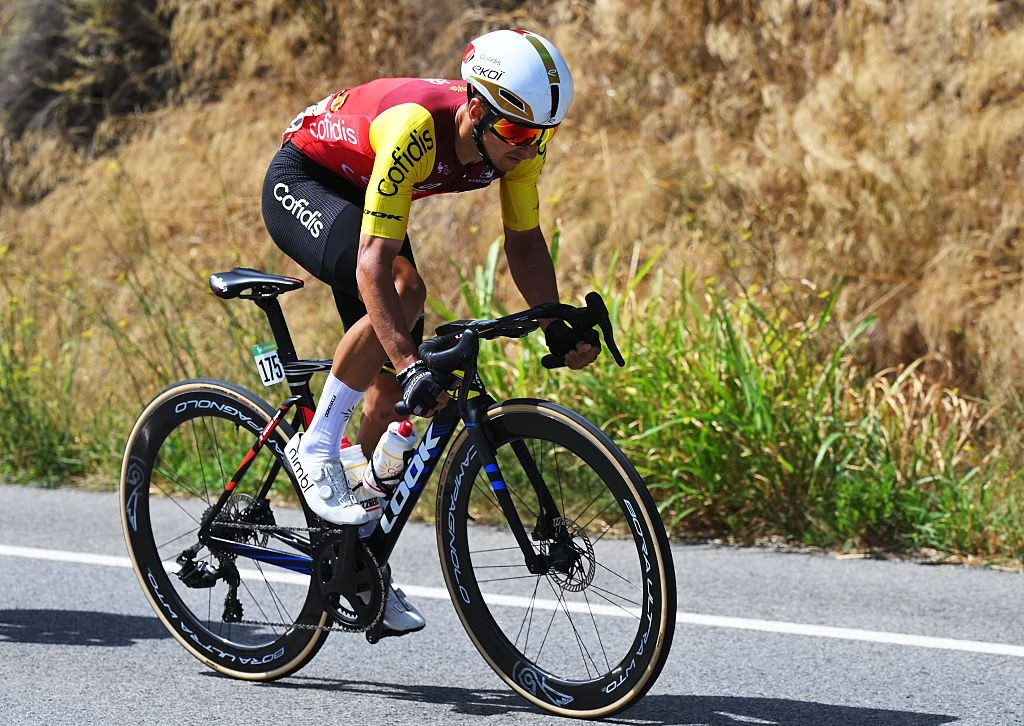
Bryan Coquard remains a consistency outsider
Bryan Coquard still deserves attention, even if he sits outside the leading five.
The Frenchman has exactly the sort of ability that can quietly build a large Vuelta points total. He is fast enough to score in bunch finishes and strong enough uphill to remain involved on days where several conventional sprinters disappear.
What he lacks relative to Pedersen, Van Aert, Groves and Meeus is the likelihood of taking repeated maximum scores through stage victories.
That makes his path more dependent on consistency.
A series of fourth, fifth and sixth places can keep Coquard surprisingly high in the standings, particularly if different riders share the stage victories.
He is therefore much more credible as a rider who could finish high in the green jersey classification than as the outright favourite to win it.
 Photo Credit: Getty
Orluis Aular can collect points on harder sprint days
Orluis Aular gives Movistar another useful option on stages that do not quite qualify as straightforward sprints.
His ability to survive rolling terrain means several of the intermediate stages should suit him. He can also place highly without requiring the sort of full sprint train available to riders such as Groves.
The obvious limitation is Movistar’s wider race strategy.
Enric Mas and Cian Uijtdebroeks give the team important GC objectives, so Aular will not always have six or seven riders committed to setting up his finish.
That reduces his chances of fighting for green even if individual stage results could be strong.
Green jersey verdict: Good stage and top-10 option, but team priorities make a full points campaign difficult.
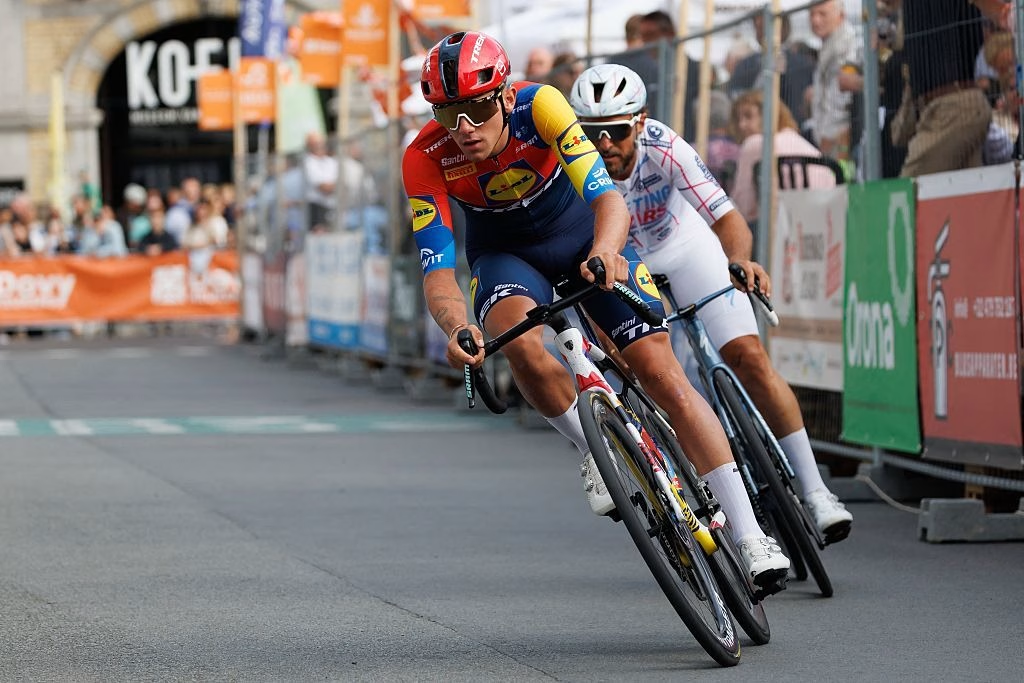 Photo Credit: Getty
Thibau Nys can take points away from the favourites
Thibau Nys should be viewed slightly differently.
He has a realistic chance of winning stages, particularly on punchier uphill finishes where Pedersen and the conventional sprinters begin reaching their limit.
That does not make him a likely green jersey winner.
Lidl-Trek already have Pedersen as their obvious points rider, and Nys does not need to contest every conventional sprint to make his Vuelta successful.
His role could nevertheless influence the classification. Every punchy stage Nys wins is a stage where Pogačar, Van Aert or Pedersen does not collect the maximum available points.
In that sense, he may shape the green jersey without actually challenging for it.
Which stages are most important for the points jersey?
The Vuelta a España 2026 route guide makes clear that there is no long sequence of completely straightforward sprint stages.
That means every suitable day carries extra weight.
Stage 2 to Manosque is already interesting because more than 200 kilometres of rolling terrain could favour Pedersen and Van Aert over the more conventional sprinters.
Stage 8 to Xeraco looks much closer to a traditional sprint opportunity and should be particularly important for Groves, Meeus and Brennan.
Stage 11 to Lorca introduces enough climbing before the finish to make the hierarchy less certain. This is precisely the kind of stage where Pedersen and Van Aert can gain points on riders who struggle to survive the late ascent.
The southern stages later in the race become even more important because attrition begins reducing the sprint field. Riders who survive two weeks of Vuelta mountains can suddenly find themselves contesting points against far fewer rivals.
That means the classification is unlikely to be decided during the opening week.
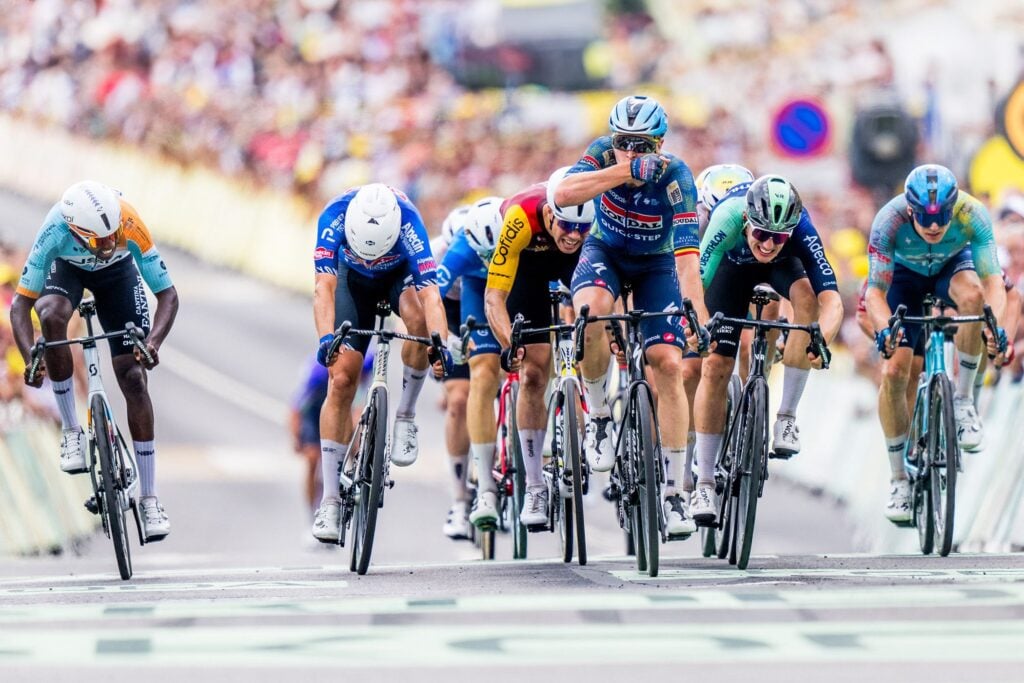
The mountains matter even when the sprinters cannot score
The obvious danger for every sprinter is not simply losing points in the mountains.
It is not reaching the next sprint stage at all.
The Vuelta contains six officially classified mountain stages and several other days capable of producing severe time-limit pressure.
Pedersen and Van Aert have a substantial advantage here. Both are exceptionally capable climbers relative to conventional sprinters and are unlikely to spend the hardest days fighting desperately against elimination.
Groves has considerable Grand Tour experience and has repeatedly demonstrated his ability to survive the Vuelta.
Meeus should also be able to manage the mountains, but every difficult day requires energy that cannot be used later.
Brennan is the biggest unknown simply because he has never previously raced for three weeks.
Meanwhile Pogačar has the opposite problem: the mountains are where he is most likely to gain points.
That helps explain why he cannot be left out of the green jersey discussion.
Intermediate sprints could decide Pedersen versus Van Aert
If the battle develops primarily between Pedersen and Van Aert, intermediate sprints could become crucial.
Both riders are strong enough to contest points without compromising their chances later in many stages.
Pedersen may have the clearer incentive because green is likely to form a central part of Lidl-Trek’s race strategy. Van Aert’s approach could be more opportunistic, particularly if Visma want to preserve his freedom for breakaways and stage victories.
That difference matters.
A handful of intermediate sprints across three weeks can become equivalent to another major stage placing. If the final margin is close, the rider willing to chase those points consistently has an obvious advantage.
Pogačar is unlikely to engage with that contest unless circumstances make green a realistic late-race objective.
Could Pogačar wear green while leading the Vuelta?
Absolutely.
If Pogačar leads both the general classification and points classification, he would wear the red jersey, with the green jersey passing to the next eligible rider for the stage.
That could create the slightly misleading sight of Pedersen, Van Aert or another rider physically wearing green while Pogačar actually leads the classification.
The same type of jersey hierarchy has occurred repeatedly at Grand Tours when one rider simultaneously leads several competitions.
Given Pogačar’s expected stage-winning rate, it would not be surprising to see that situation during the 2026 Vuelta.
-
 Photo Credit: A.S.O./Billy Ceusters
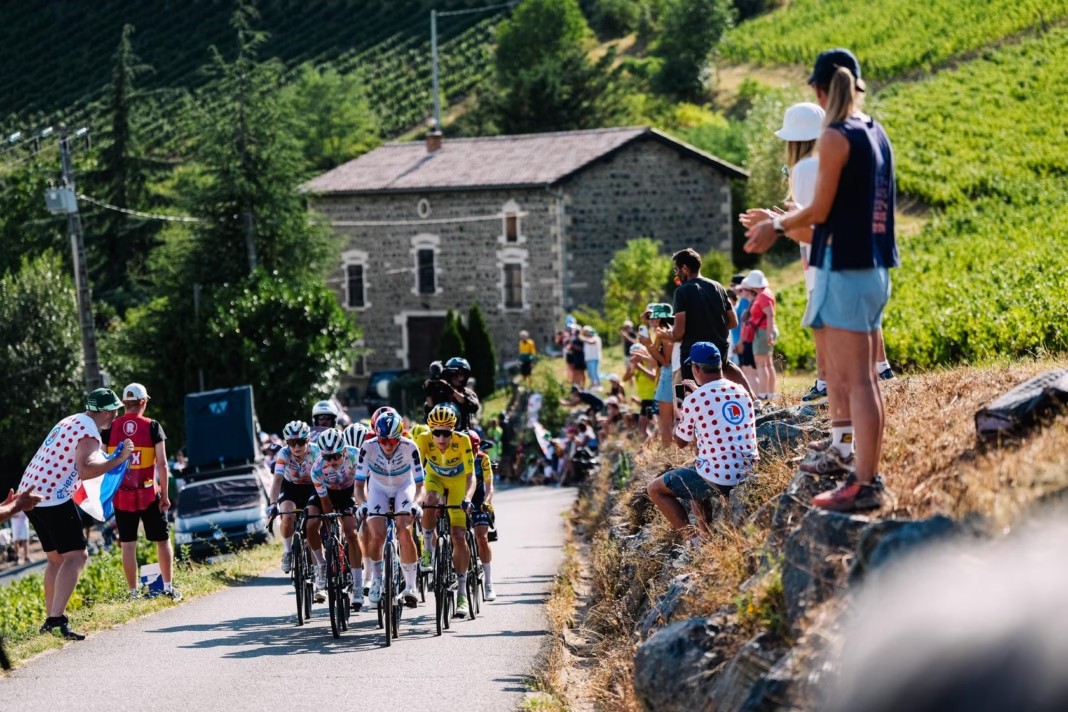
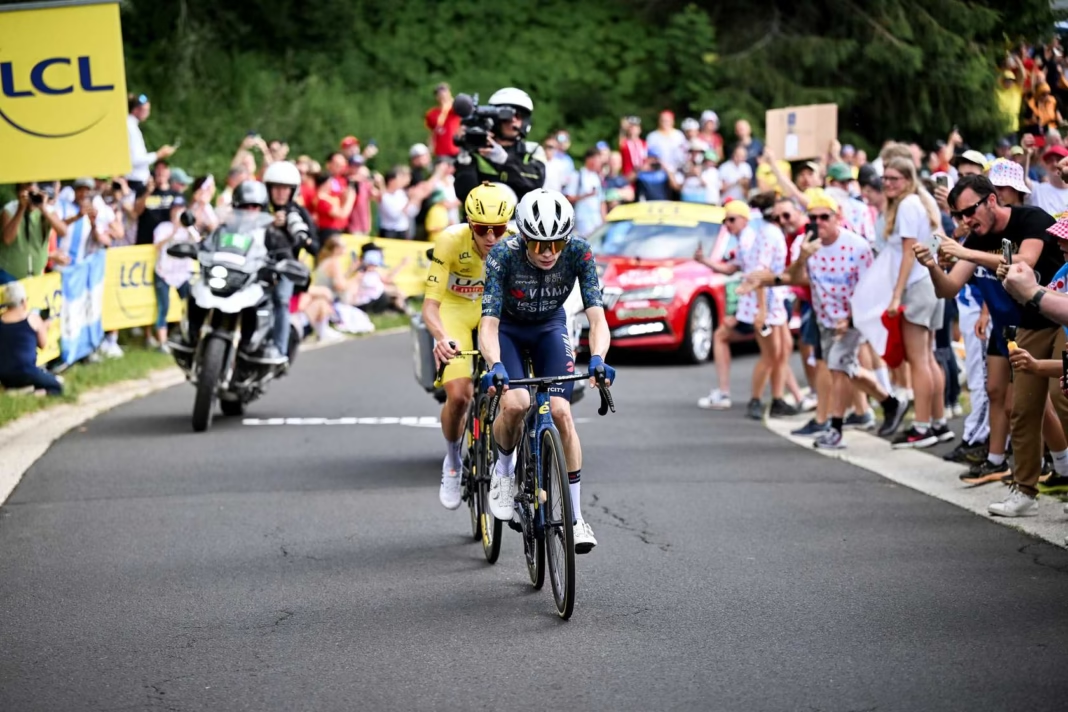
The five strongest Vuelta green jersey contenders
1. Mads Pedersen
The best combination of sprint speed, climbing resilience and willingness to collect points throughout difficult stages.
2. Wout van Aert
Capable of scoring on almost any terrain. His only real question is whether he wants to commit fully to the classification for three weeks.
3. Kaden Groves
The strongest traditional sprint candidate. His chances increase substantially if the obvious sprint stages consistently finish together.
4. Tadej Pogačar
The unconventional choice, but impossible to ignore. Expected stage victories, high mountain placings and time-trial results could generate an enormous total without him actively chasing green.
5. Jordi Meeus
A major threat on the flatter stages with enough durability to survive a difficult Vuelta. He needs to maximise the sprint days because the riders above him can score across a broader range of terrain.
Matthew Brennan sits just outside that five as the biggest wildcard. If he adapts immediately to Grand Tour racing, he has enough speed and versatility to move into the classification battle very quickly.
Who wins the Vuelta a España 2026 green jersey?
Mads Pedersen starts as the favourite, largely because the route rewards almost everything he does well.
He does not need the Vuelta to provide six or seven clean bunch sprints. In fact, the shortage of those stages arguably strengthens his position because several rivals have fewer opportunities to score.
Wout van Aert is the biggest direct threat, provided he decides to pursue the classification consistently rather than treating the Vuelta primarily as a stage-hunting exercise.
Kaden Groves needs victories on the genuine sprint days, while Jordi Meeus has a similar incentive to maximise every flatter opportunity.
And then there is Tadej Pogačar.
It would be a mistake to treat green as completely separate from the GC race. Vuelta history does not work that way. Chris Froome won the points jersey while winning the overall classification in 2017, and other GC riders have regularly occupied prominent positions because mountain and uphill-stage results generate points throughout the race.
Pogačar is expected to win stages again. He should score highly in both time trials, regularly finish near the front on the hardest stages and be one of the leading riders on punchier finishes. Even if he never contests an intermediate sprint, that could leave him remarkably close to green.
The likely outcome is still that Pedersen or Van Aert accumulates enough points away from the GC stages to beat him.
But if the sprint victories are shared between Groves, Meeus, Brennan and others, while Pogačar repeatedly wins in the mountains, the red jersey favourite could very easily end up winning green as well.
That possibility is one of the reasons the Vuelta’s points classification should be much more interesting than simply asking who is the fastest sprinter.

