
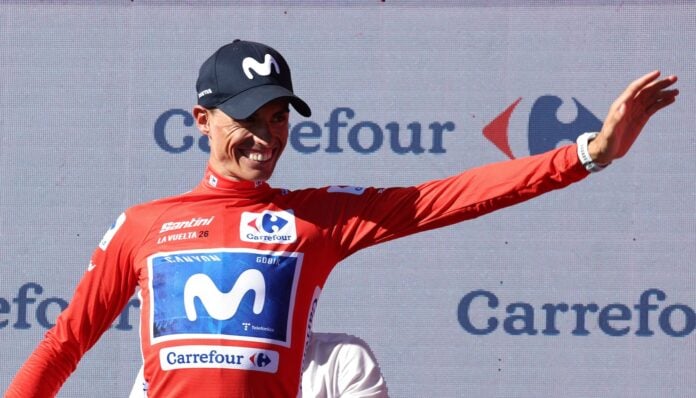
The 2026 Vuelta a España resumes after its first rest day on Tuesday 1 September, with Stage 10 taking the peloton 184.7km from Alcaraz to Elche de la Sierra.
For UK viewers, the neutralised start is at 11:45 BST, with the flag expected to drop and racing officially begin at approximately 11:59 BST. TNT Sports’ live coverage begins at 13:30 BST, while the stage is expected to finish at around 16:30 BST.
Stage 10 is a very different proposition from Sunday’s major mountain showdown on Alto de Aitana. There are almost 3,000 metres of climbing and virtually no genuinely flat roads, but none of the three categorised ascents is difficult enough to make another major general classification battle particularly likely.
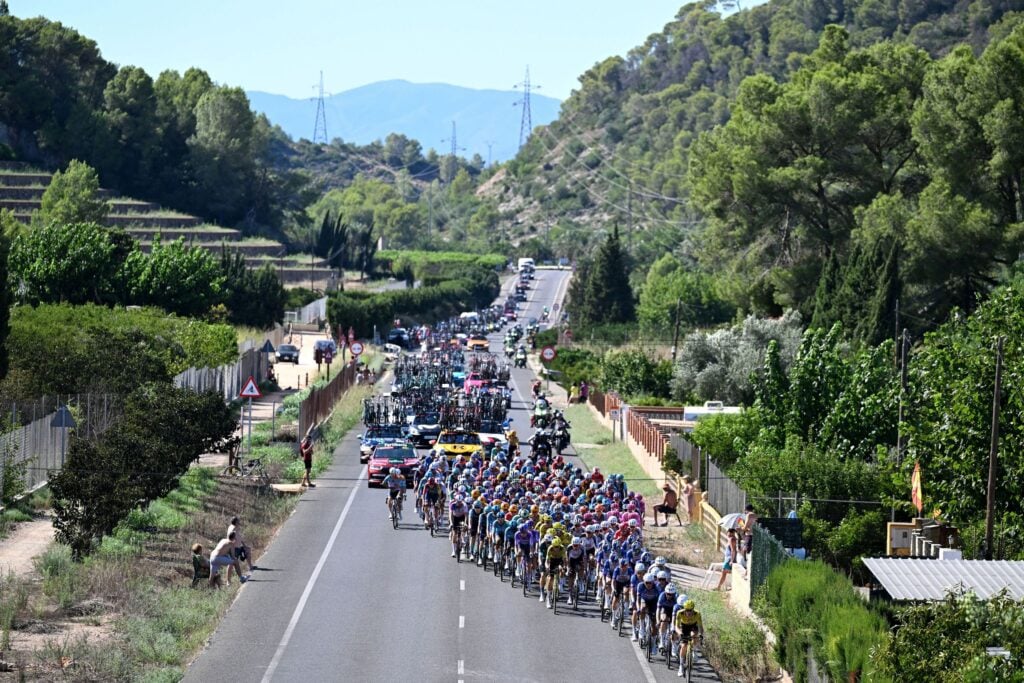
Instead, the Stage 10 route from Alcaraz to Elche de la Sierra creates an awkward contest between breakaway specialists, Classics riders and the more durable sprinters.
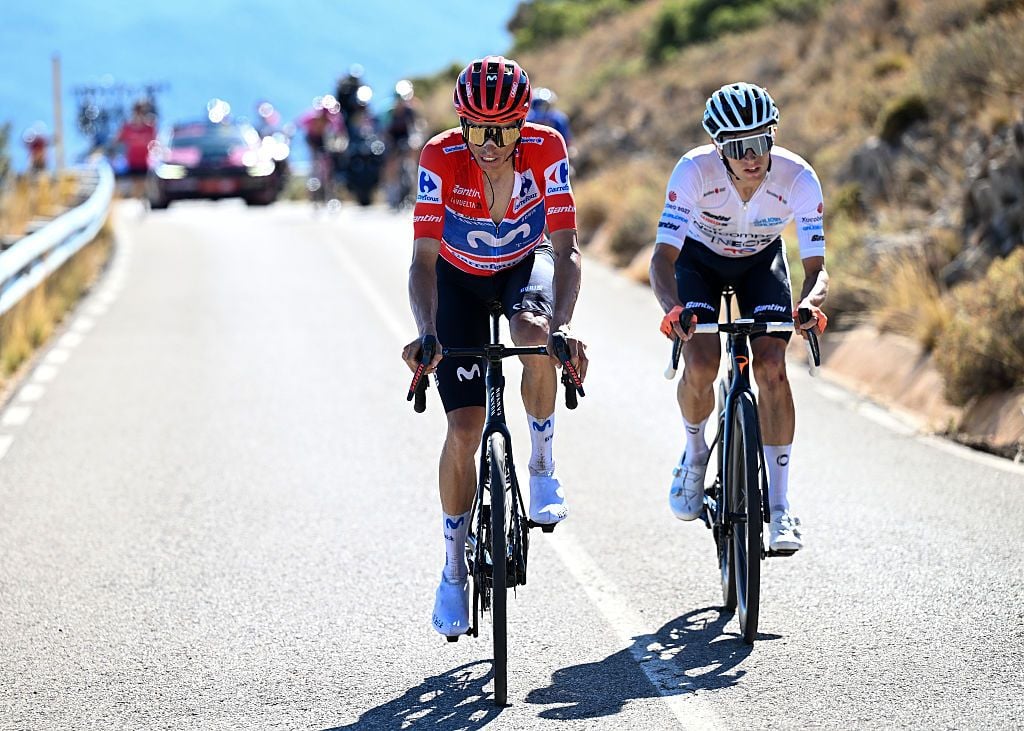 Photo Credit: Getty
What time does Vuelta a España Stage 10 start?
Stage 10 begins in Alcaraz at 12:45 CEST, which is 11:45 BST in the UK.
That is the neutralised departure.
The official race start is scheduled for approximately 12:59 CEST / 11:59 BST, when the flag drops and the 184.7km stage begins properly.
There is very little opportunity for the peloton to ease into the afternoon. The road begins climbing almost immediately after Alcaraz, with the opening section towards the Puerto de las Crucetas providing exactly the type of terrain where a substantial fight for the breakaway can develop.
Vuelta Stage 10 key UK times
| Stage 10 timing | UK time |
|---|---|
| Neutralised start | 11:45 BST |
| Official racing start | Around 11:59 BST |
| TNT Sports coverage begins | 13:30 BST |
| Final Puerto de Socovos climb | Around final 30km |
| Puerto de Socovos summit | 21.4km remaining |
| Expected finish | Around 16:30 BST |
The finishing time remains approximate because it depends on the speed of the stage. An aggressive opening fight for the breakaway could push the race ahead of schedule, while a more controlled afternoon would move the arrival later.
What time is Vuelta Stage 10 on TV in the UK?
TNT Sports’ live Stage 10 coverage begins at 13:30 BST on Tuesday 1 September, with streaming also available through HBO Max.
Current television listings have the Vuelta available through TNT Sports, while HBO Max carries the live stream for subscribers.
That means UK viewers will miss approximately the opening 90 minutes of racing, including the initial fight to establish the breakaway and potentially the first categorised ascent.
There should still be well over 100km remaining when television coverage begins.
For the full three-week broadcast picture, including subscription options and free highlights, see ProCyclingUK’s guide to watching the 2026 Vuelta a España in the UK.
Where can you watch Stage 10 of the Vuelta?
In the UK, the main live options are:
- TNT Sports for television coverage
- HBO Max for live streaming
- DMAX for free-to-air highlights
Full live coverage remains behind the TNT Sports/HBO Max subscription rather than being available free-to-air.
In the United States, the Vuelta is available through NBC Sports and Peacock, with Peacock providing the simplest option for viewers wanting to follow every stage. ProCyclingUK’s Vuelta a España 2026 USA viewing guide covers the Peacock plans, viewing times and replay options in more detail.
Canadian viewers can follow the race through FloBikes, while free legal coverage is available in several European territories through national broadcasters including RTVE in Spain and RTBF/VRT in Belgium.
When should you start watching Stage 10?
For viewers who cannot follow the entire television broadcast, around 15:30 BST should be a good point to join.
That should bring you into the final hour with the race approaching the Puerto de Socovos and teams beginning to make their final decisions about whether the breakaway can be caught.
For anyone interested almost exclusively in the finish, 15:45 BST onwards should capture the most important phase.
The Puerto de Socovos tops out with 21.4km remaining, but that does not immediately lead into an easy downhill run to the finish.
The riders still face an uncategorised rise of approximately 1.7km at 5.5%, while the final 4.5km gradually drag uphill towards Elche de la Sierra.
If a strong group still has 20 or 30 seconds after Socovos, bringing it back could be extremely difficult.
Stage 10 restarts a Vuelta transformed during week one
The peloton leaves the rest day with a general classification that bears little resemblance to the one expected when the Vuelta began in Monaco.
Tadej Pogačar had established himself as the dominant rider during the opening week, winning three stages and building an advantage approaching four minutes before his race changed completely on Stage 8.
His heavy crash on the road to Xeraco resulted in a concussion, fractured left clavicle and stable C7 fracture, forcing the race leader to abandon. The full circumstances of Pogačar’s Vuelta-ending crash turned what had been developing into a dominant Grand Tour performance into a wide-open fight for red.
Enric Mas inherited the race lead but then did something much more important on Sunday.
He won in it.
The Movistar rider attacked to win Stage 9 on Alto de Aitana, beating Oscar Onley after the pair separated themselves from the other contenders during the final three kilometres.
Primož Roglič finished third at 12 seconds, while Felix Gall conceded 18 seconds.
Mas therefore begins the second week with a 1:18 advantage over Roglič, with Gall third at 1:39 and Onley fourth at 2:20.
The Vuelta GC contenders after Stage 9 now face an entirely different race from the one they began nine stages ago.
Why the breakaway fight could begin immediately
The opening kilometres of Stage 10 are particularly well suited to riders trying to escape.
There is no long flat road where sprint teams can simply line up behind an early group of three riders and allow them a carefully controlled advantage.
Instead, the course begins climbing away from Alcaraz.
The initial uncategorised rise towards the Puerto de las Crucetas is followed by a descent towards Riópar and then the day’s first recognised climb.
Puerto del Peralejo
- Summit: 47.6km
- Length: approximately 5.2km
- Average gradient: around 4.3%
- Category: 3
None of those numbers is intimidating.
The importance comes from what happens before it.
The constantly rising opening terrain allows climbers, rouleurs and Classics specialists to attack repeatedly, making it much harder for one sprint team to dictate who enters the break.
If 10 or 15 strong riders eventually get clear, bringing them back across almost 3,000 metres of climbing becomes a major commitment.
That gives teams hunting a breakaway victory every reason to be aggressive from the flag.
Puerto de Aýna adds more attrition
The second categorised climb comes after 86.3km.
Puerto de Aýna
- Length: 7.7km
- Average gradient: 4%
- Category: 3
Again, it is nowhere near difficult enough to provoke a GC confrontation.
For the sprinters, however, that is not really the issue.
Stage 10 contains a succession of relatively manageable climbs rather than one major ascent. A rider can comfortably survive each hill individually and still gradually accumulate enough fatigue for the finish to become difficult.
That makes the distinction between different types of sprinter important.
A pure fast finisher dependent on staying protected within a large peloton may struggle.
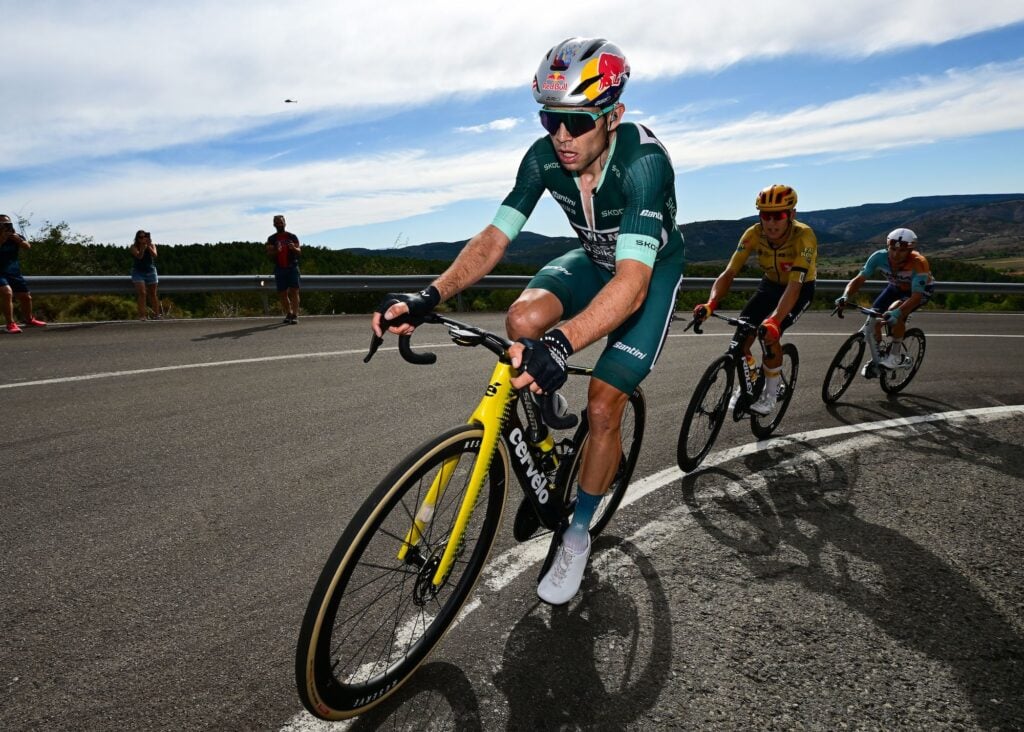
Someone such as Matthew Brennan, Mads Pedersen or Wout van Aert has a much better chance of surviving the repeated climbing and still producing a strong finish.
The problem for their teams is deciding how much work the opportunity is worth.
Hellín could add another green jersey battle
The intermediate sprint comes in Hellín after 125km, with just under 60km remaining.
That gives the points classification another opportunity to influence how the stage is raced.
Wout van Aert begins the second week wearing green, while Brennan’s two stage victories have already established him as one of the major sprinting stories of the race.
The Vuelta’s extraordinary opening week has included two Brennan victories, Van Aert moving into green and repeated days where the sprint competition has been shaped by much harder terrain than a conventional flat stage.
Stage 10 continues that pattern.
If the breakaway remains clear at Hellín, most of the intermediate points will disappear up the road.
If the gap has already been substantially reduced, the green jersey contenders could become involved before attention turns towards the final climb.

Puerto de Socovos should decide the shape of the finish
The most important recognised climb is the last one.
Puerto de Socovos
- Length: 9.7km
- Average gradient: 3.5%
- Category: 3
- Summit: 21.4km from the finish
A 3.5% average does not suggest a climb capable of producing substantial differences between Mas, Roglič, Gall and Onley.
It can still decide who wins the stage.
Almost ten kilometres of climbing after more than 150km of relentlessly rolling roads creates an excellent point for attackers to increase the pressure.
For a breakaway, this is where the strongest climbers can attempt to remove quicker companions.
For the peloton, it is the final opportunity to distance sprinters who have already spent most of the afternoon surviving.
For the sprint teams, the task is the opposite: keep the pace controlled enough that their leader remains in contact without allowing the breakaway to maintain an unbeatable advantage.
That balance could make Socovos much more tactical than its modest gradient suggests.
The finish in Elche de la Sierra is harder than a conventional sprint
Cresting Socovos does not mean the day’s climbing has finished.
The road initially trends downwards, but another 1.7km rise averaging approximately 5.5% waits before the final approach.
The last 4.5km then gradually rise towards Elche de la Sierra.
That matters enormously for the likely sprint.
A conventional lead-out can use a fast flat final five kilometres to organise itself and steadily reel in late attackers.
An uphill drag makes that much harder.
Every rider already has almost 3,000 metres of climbing in their legs, and keeping a peloton organised on a rising road requires more energy from every domestique.
If a small group enters the final five kilometres with a workable advantage, there is no guarantee the peloton can simply overpower it.
Who does Stage 10 suit?
The full Stage 10 preview identifies the central tactical question clearly: can the sprint teams control enough of the race to create a reduced finish?
Wout van Aert is almost purpose-built for the terrain.
There is no climb he should fear, he can enter a breakaway if Visma | Lease a Bike decide that is the better option, and a selective finale only increases his chances against the purer sprinters.
Matthew Brennan gives Visma another route entirely.
The young Briton has already won twice during this Vuelta and has repeatedly demonstrated that moderate climbing does not automatically remove him from contention. If he survives Socovos with enough teammates, a third victory is entirely realistic.
Mads Pedersen sits in much the same category. Nearly 3,000 metres of climbing is substantial, but none of it comes on gradients that should automatically eliminate him.
Behind them is a large group of riders who would prefer the race never comes back together.
This is exactly the type of stage where a strong break containing Classics riders and rouleurs can establish itself early, build four or five minutes and force the sprint teams into a difficult calculation.

What will Mas and the GC contenders do?
Probably as little as possible.
Mas has emerged from the most dramatic first week of the race in the strongest position of his Vuelta career.
There is little strategic benefit in asking Movistar to make Stage 10 unnecessarily difficult.
The priority should be controlling the composition of the breakaway, ensuring no dangerous GC rider disappears up the road and then keeping Mas safely positioned through the final 30km.
Roglič and Gall face a similar calculation.
There are much better opportunities ahead.
The full 2026 Vuelta route sends the riders to Calar Alto on Stage 12 before Sierra de La Pandera on Stage 14. The final week contains the 32.1km Jerez individual time trial and another major mountain block.
Those are the places where red is likely to change hands.
Elche de la Sierra is much more likely to be about getting there safely.
Vuelta Stage 10 live viewing: when to tune in
For UK viewers deciding when to watch on Tuesday:
11:45 BST – neutralised start in Alcaraz
Around 11:59 BST – racing begins
13:30 BST – TNT Sports and HBO Max coverage begins
Around 15:30 BST – recommended point to join for the decisive final hour
Final 21.4km – Puerto de Socovos has been crested
Around 16:30 BST – expected finish in Elche de la Sierra
The strongest recommendation is 15:30 BST onwards.
By then, the stage should have clarified whether the breakaway has enough time to survive or whether Brennan, Van Aert, Pedersen and the remaining sprint teams are going to get another opportunity.
After the outright GC confrontation on Alto de Aitana, Stage 10 should produce something very different: a constantly changing battle between riders trying to stay away and teams attempting to preserve just enough control to sprint.

