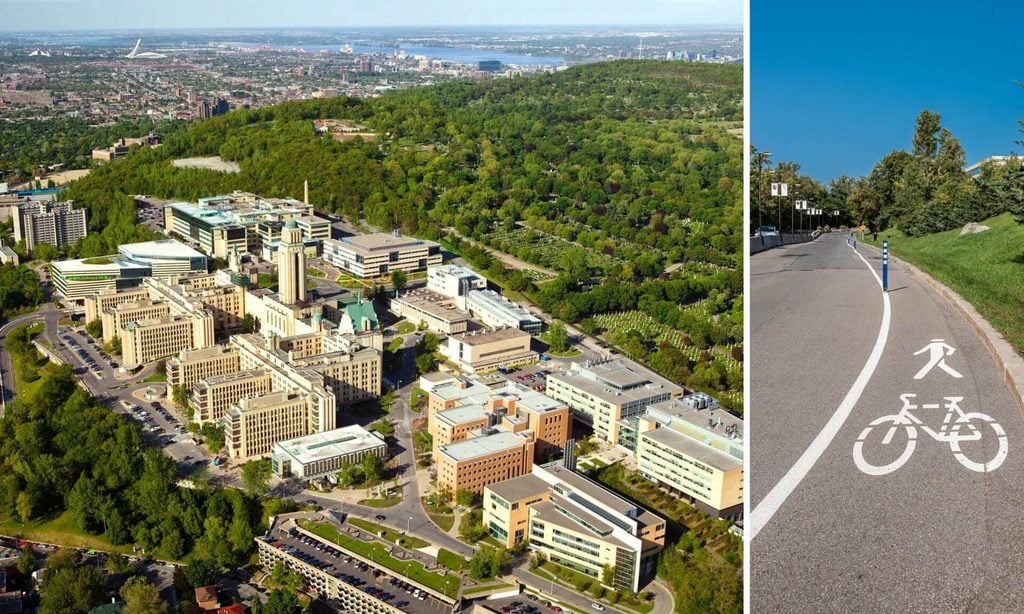
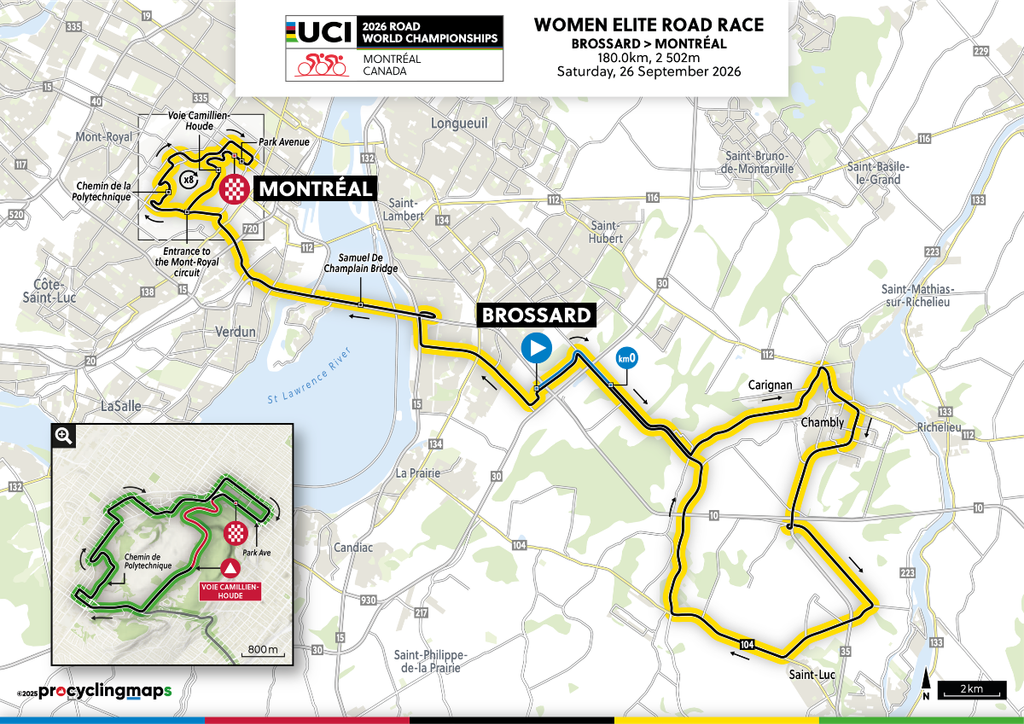
The elite women’s road race at the 2026 UCI Road World Championships combines two very different races into its 180.4km route from Brossard to Montréal.
The opening 72.7km takes the peloton through the flatter roads of Montérégie, passing through Brossard, Carignan, Chambly and Richelieu before crossing the Samuel-De Champlain Bridge into Montréal. The complexion then changes completely. Once the riders reach Mount Royal, they face eight laps of a demanding 13.4km circuit, with Camillien-Houde, the Côte de la Polytechnique and the rising Avenue du Parc finish appearing again and again.
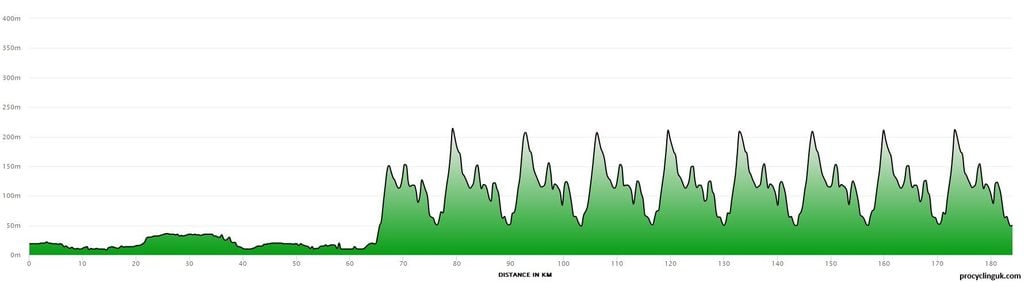
The official figures are significant: 180.4km and 2,570 metres of climbing. More than 2,150 metres of that elevation comes from the eight Mount Royal laps alone, meaning the decisive final two-thirds of the race is considerably harder than the relatively gentle opening profile suggests.
The elite women race on Saturday 26 September 2026, with the start scheduled for 09:00 local time in Brossard and an expected finish at around 14:10 in Montréal. That translates to 14:00 BST to approximately 19:10 BST for UK viewers.
The course sits naturally among the major late-season races covered in ProCyclingUK’s women’s cycling route guide hub, but its championship format creates a tactical problem very different from a normal Women’s WorldTour race.
Women’s World Championships 2026 road race route at a glance
| Detail | Women Elite road race |
|---|---|
| Date | Saturday 26 September 2026 |
| Start | Quartier DIX30, Brossard |
| Finish | Avenue du Parc / Parc Jeanne-Mance, Montréal |
| Distance | 180.4km |
| Total climbing | 2,570 metres |
| Opening Montérégie section | 72.7km |
| Mount Royal circuit | 13.4km |
| Circuit laps | 8 |
| Elevation per circuit | 269 metres |
| Main climb | Voie Camillien-Houde |
| Steepest key section | Côte de la Polytechnique, ramps above 11% |
| Scheduled start | 09:00 local / 14:00 BST |
| Expected finish | Around 14:10 local / 19:10 BST |
The route is difficult without becoming an outright mountain course. That distinction should produce a particularly broad tactical race, with climbers, puncheurs, Classics specialists and the most resilient fast finishers all able to make a plausible case before the repeated Mount Royal climbs begin deciding who is actually left.
The race begins away from Montréal in Brossard
The rainbow jersey will not be decided entirely on a city circuit.
The elite women start at Quartier DIX30 in Brossard, south of Montréal on the opposite side of the St Lawrence River. The organisers have created a 72.7km opening section through Montérégie before the riders reach the Mount Royal finishing circuit.
That gives the race a more traditional championship structure than simply completing lap after lap around Montréal from the start.
The opening roads should provide time for a breakaway to establish itself and for the larger national teams to settle into their preferred positions before the really difficult racing begins.
Unlike a trade-team Classic, however, the dynamics of a World Championships road race make even this supposedly quieter opening phase potentially complicated.
Countries have limited numbers and very different levels of strength. A break containing riders from several major nations can therefore become awkward remarkably quickly.
The terrain itself should not be selective enough to decide the title, but what happens during those first 70 kilometres can still determine how much work the strongest nations have to do before reaching Montréal.
Montérégie should favour an early break
The women’s route travels through Brossard, Carignan, Chambly and Richelieu before turning towards Montréal.
There are some rises in the profile, but nothing comparable with the repeated climbing waiting on Mount Royal.
That makes this the natural section for an early move.
Smaller nations have an obvious incentive to put riders up the road, particularly if they lack someone capable of surviving eight difficult circuits against the strongest climbers.
The favourites’ nations face a more difficult decision.
Putting a rider into the break reduces the obligation to chase. Missing the move completely could mean using valuable teammates before the main race has properly begun.
That matters more at Worlds than it would during a normal Women’s WorldTour event.
The Netherlands, Italy, France, Switzerland, Australia and other major nations may arrive with several potential winners, but every rider spent controlling the opening 70km is one fewer available when the decisive Mount Royal laps begin.
The Samuel-De Champlain Bridge marks the tactical transition
The most visually striking part of the opening route should also mark the point where the race changes.
The riders cross the Samuel-De Champlain Bridge over the St Lawrence River to reach Montréal, with the 2026 Worlds set to become the first sporting event to use the bridge as part of its competition route.
The bridge itself is unlikely to decide the world title under normal conditions, but it signals that the easier part of the afternoon is almost over.
By this point, nations need to be thinking several kilometres ahead.
The breakaway advantage needs to be assessed.
Leaders need to move towards the front.
Riders expected to support them on the circuits cannot afford to waste energy correcting poor positions once the road begins climbing repeatedly around Mount Royal.
Eight laps means more than 100 kilometres of difficult circuit racing still remain.
Eight Mount Royal circuits dominate the race
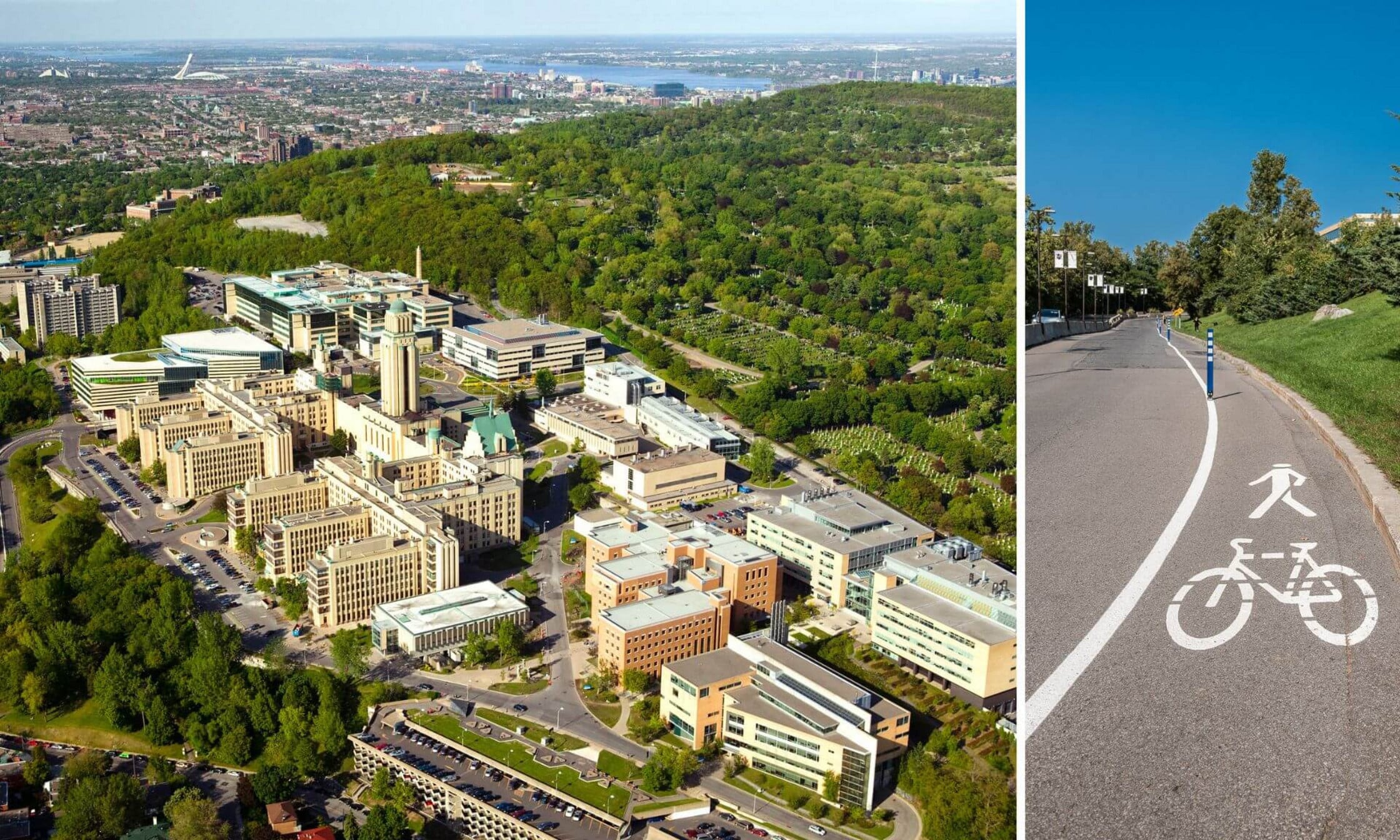
The decisive feature of the 2026 Women’s World Championships is the 13.4km Mount Royal circuit, tackled eight times.
Each lap contains approximately 269 metres of climbing, giving the circuits alone around 2,152 metres of accumulated ascent.
That leaves only a little over 400 metres of elevation across the entire 72.7km opening section and the roads connecting it to the circuit.
In other words, most of the climbing is concentrated into the final 107.2km.
That is crucial when judging the difficulty.
A profile showing 2,570 metres across 180.4km might initially suggest a moderately hilly championship. The distribution tells a different story.
Once the women reach Montréal, the race effectively becomes a long Ardennes-style circuit event.
Every 13.4km they climb Mount Royal again.
Every lap creates another opportunity for a nation to increase the pace, isolate a rival or launch an attack.
The circuit is closely related to the one used by the men’s Canadian WorldTour race, and ProCyclingUK’s GP Montréal 2026 route guide provides an even more detailed look at the individual roads and climbing sequence.
Camillien-Houde is the main sustained climb
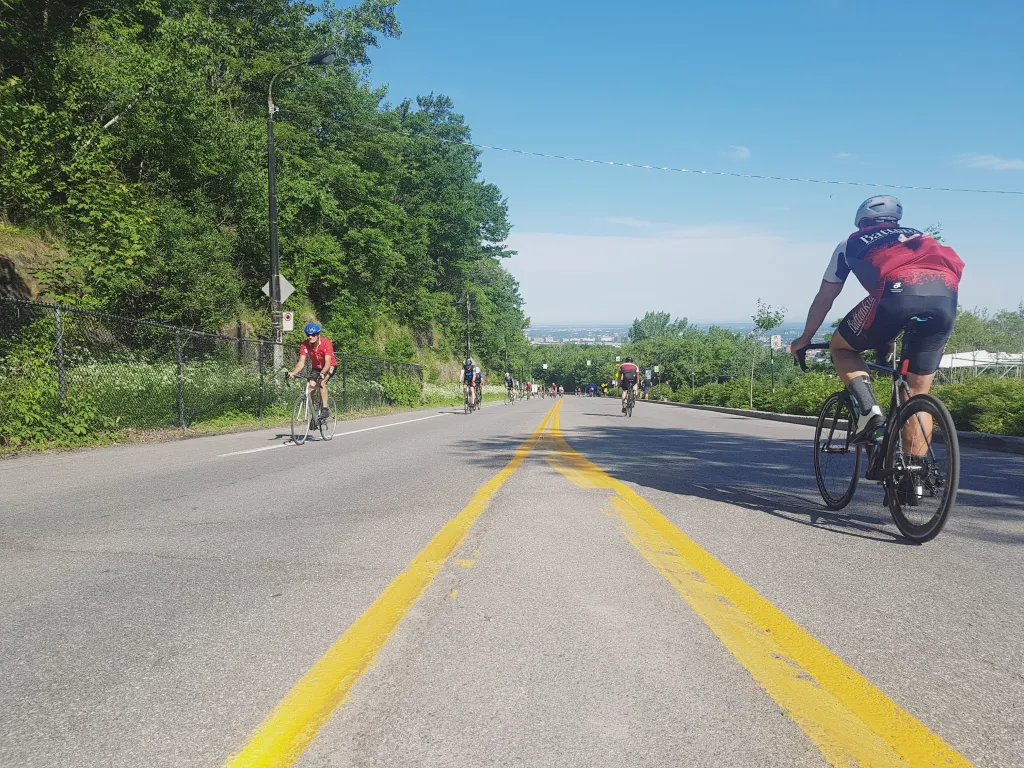
The central feature of each circuit is Voie Camillien-Houde.
The Worlds organisers measure the full ascent at approximately 2.3km averaging 6.2%, while the steeper central section familiar from GP Montréal is commonly measured at around 1.8km at 8%.
Either description explains the same tactical point.
This is not simply a short ramp that can be crossed with one 30-second effort.
Camillien-Houde is long enough for sustained climbing power to matter.
A powerful Classics rider can survive it once.
Surviving it eight times while the strongest nations gradually increase the pace is another challenge entirely.
During the first circuit, there may be little reason for the favourites to attack.
By laps four and five, the climb can begin removing support riders.
By the final two laps, Camillien-Houde becomes one of the clearest places to attempt a championship-winning selection.
A rider who is already close to her limit at the bottom will have nowhere to hide.
Repetition makes Camillien-Houde much harder than its numbers
A 2.3km climb at 6.2% would not ordinarily look particularly intimidating on an elite women’s profile.
The World Championships are not asking riders to climb it once.
They are effectively asking the same question eight times.
The early ascents will be completed with relatively fresh legs and larger groups.
The final ascent comes after approximately 170km of racing and close to 2,500 metres of accumulated climbing.
The physical demands are completely different.
That is where riders with exceptional repeatability should begin separating themselves from competitors who possess one strong climbing effort but struggle when forced to reproduce it repeatedly.
It also means tempo can be every bit as damaging as an outright attack.
A nation does not necessarily need its leader to launch on Camillien-Houde with four laps remaining.
Putting two strong teammates on the front and making the ascent consistently hard can gradually remove another 10 or 15 riders each time.
Eventually, the group available for the decisive attack becomes much smaller.
Côte de la Polytechnique provides the explosive alternative
Camillien-Houde is the sustained climbing test.
The Côte de la Polytechnique offers something more explosive.
The key climbing section measures approximately 780 metres at 6%, but that average hides its most important feature. Around 200 metres rises at more than 11%.
That variation makes Polytechnique particularly dangerous.
A rider who survives Camillien-Houde through sustained pacing can then be exposed when someone accelerates sharply on the steepest section a few minutes later.
It is also ideal terrain for counter-attacks.
Imagine one nation driving hard on Camillien-Houde and reducing the group.
Another rider attacks over the top.
The first group chases.
Then somebody else launches on Polytechnique.
The race can become extremely difficult to control because the circuit continually provides another climbing opportunity before countries have fully reorganised.
That is exactly the type of racing where having two or three contenders still present becomes enormously valuable.
Pagnuelo adds another late climbing opportunity
It would be a mistake to reduce Mount Royal to Camillien-Houde and Polytechnique alone.
The circuit continually changes elevation, direction and rhythm.
One of its other important sections is Avenue Pagnuelo, a short climb of approximately 534 metres at 7.5%.
Pagnuelo is not as long as Camillien-Houde and does not contain the same sustained steep section as Polytechnique, but its location makes it tactically valuable.
It arrives later in the lap.
By the final circuit, any attack here has considerably less road remaining before the finish.
The 2026 configuration also passes roads including Avenue du Mont-Royal Ouest, Rue Saint-Urbain and Avenue des Pins Ouest before returning towards Avenue du Parc.
None of those sections needs to be the labelled decisive climb to influence the race.
Collectively, they reduce recovery.
Once the front group becomes small, every acceleration carries greater consequences because there are fewer riders available to close gaps.
A five-second separation can become 15 remarkably quickly if the chasing group begins looking at one another.
Avenue du Parc makes waiting for a sprint risky
Every lap finishes on the rising Avenue du Parc, beside Parc Jeanne-Mance.
The final section is not brutally steep, rising at approximately 4%.
After eight Mount Royal circuits, that becomes considerably more important.
A small group reaching Avenue du Parc together will not have a conventional flat sprint.
The gradient rewards riders capable of producing a sustained uphill acceleration after a very hard race.
It also helps late attackers.
A rider carrying five or ten seconds into the final kilometre does not immediately lose momentum on a downhill or broad flat boulevard. The chasers still need to generate substantial power on a rising road.
That creates several possible winning strategies.
A pure climber may need to attack earlier and arrive alone.
A puncheur can try to reduce the group on the final climbs and rely on the uphill finish.
A strong sprinter who survives everything else can wait.
The problem is that every rival understands those calculations as well.
The final three laps should be where the race changes
With three circuits remaining, the women still have approximately 40.2km and more than 800 metres of climbing left to race.
That sounds like a long way from the finish.
On this course, it is a perfectly realistic point for the decisive phase to begin.
A nation with several strong riders may deliberately attack from around 40km out rather than wait for the final lap.
Doing so forces rivals to make decisions.
Who chases?
Who saves herself?
Can a dangerous rider be allowed 20 seconds?
Does a country use one of its remaining support riders now or risk saving her for later?
By the penultimate lap, almost every serious move has to be respected.
There are then only 26.8km remaining, including two passages of every major climbing section.
A rider escaping with one circuit to go has even less road to defend.
The entire course therefore encourages escalation rather than one single last-lap confrontation.
The final Camillien-Houde could make the decisive selection
If the race remains relatively together until the bell, Camillien-Houde on the final circuit becomes the most obvious place to force the championship selection.
At that point the leaders will already have completed seven previous ascents.
A hard pace from the bottom can eliminate most remaining helpers before the favourites themselves attack.
A solo move is possible.
More likely is a small group of the strongest climbers and puncheurs separating and then attempting to prevent others from returning before Polytechnique.
That is where tactical strength becomes as important as raw climbing.
A rider may be capable of following the first acceleration but have no answer to the next move.
Someone who reaches the summit with a teammate has a substantial advantage.
One can attack while the other waits behind.
In championship racing, that situation can be exceptionally difficult for rivals to resolve.
Polytechnique may be the better place to attack
There is also a strong argument for waiting beyond Camillien-Houde.
An explosive rider may prefer Polytechnique.
Its steep ramps offer enough gradient to create separation while leaving significantly less distance to the finish.
That allows a rider to use Camillien-Houde defensively.
Stay with the leaders on the sustained climb.
Allow other nations to spend their riders.
Then attack on the shorter and steeper effort.
For riders with an outstanding one-minute acceleration rather than dominant sustained climbing power, this could be the most attractive strategy.
The risk is obvious.
If one of the strongest climbers attacks earlier on Camillien-Houde and creates 20 seconds, waiting for Polytechnique may already be too late.
What kind of rider does the Montréal Worlds route favour?
The ideal winner is likely to be a strong climber with Classics explosiveness and enough speed to finish from a small group.
The route is probably too difficult for most pure sprinters.
Eight Mount Royal circuits and 2,570 metres of climbing provide too many opportunities for stronger climbers to increase the pace.
At the same time, this is not Kigali 2025.
The 2025 elite women’s road race contained around 3,350 metres of climbing across 164.6km, creating a more vertically concentrated championship than Montréal.
Magdeleine Vallières Mill ultimately won the 2025 world title after attacking on the final cobbled Côte de Kimihurura and distancing Niamh Fisher-Black and Mavi García.
Montréal contains almost 800 metres less climbing and offers more rolling and faster terrain.
That potentially broadens the winner profile.
A rider does not necessarily need to be among the three strongest pure climbers in the field.
She does need to climb exceptionally well after four hours and possess either the acceleration to escape or the finishing speed to beat whoever remains.
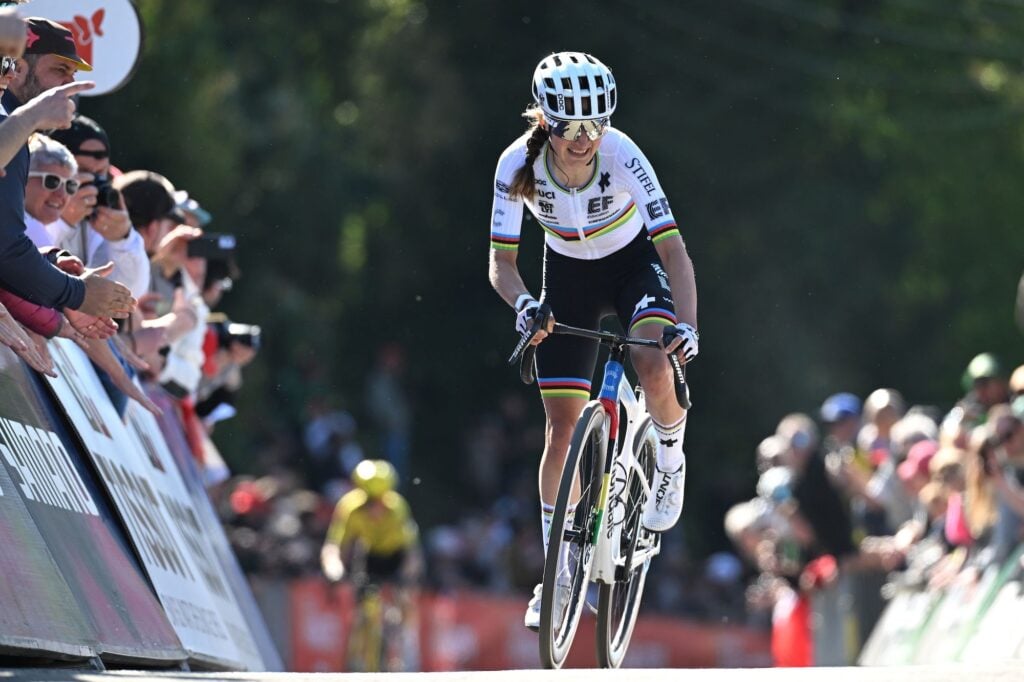
Vallières Mill returns home in the rainbow jersey
The defending champion gives the 2026 race an unusually strong home storyline.
Vallières Mill won the 2025 Worlds in Kigali ahead of Fisher-Black and García, becoming Canada’s first elite road race world champion, male or female.
Her victory immediately created the prospect of something special one year later: defending the rainbow jersey on Canadian roads.
The 2026 route should suit many of the qualities behind her Kigali victory.
She can climb repeatedly, is comfortable racing aggressively and proved in Rwanda that she is prepared to commit to an attack rather than wait for a faster rival.
Her status has changed completely, however.
Canada will not be able to race unnoticed with the defending champion.
Every move involving the rainbow jersey will receive attention.
Vallières Mill has also committed her long-term future to EF Education-Oatly, extending her contract through the end of 2028 after her breakthrough world title.
In Montréal, trade-team considerations disappear. The central question becomes how Canada uses its world champion while every major nation knows exactly who she is.
Montréal reconnects the Women’s Worlds with 1974
The course also carries substantial historical weight.
Montréal hosted the Road World Championships in 1974, the first edition of the championships staged outside Europe.
Eddy Merckx won the men’s race.
France’s Geneviève Gambillon won the women’s world title, giving Mount Royal an important place in the history of both championships.
The modern World Championships course deliberately reconnects with roads that have remained central to elite cycling in Montréal.
That history continued with the creation of the Grand Prix Cycliste de Montréal in 2010. ProCyclingUK’s history of GP Montréal traces how Mount Royal developed from the site of Merckx and Gambillon’s 1974 victories into an annual WorldTour venue before the rainbow jerseys finally returned in 2026.
Fifty-two years later, the women’s road title will again be decided around Mount Royal.
The race distance has changed.
The circuit has changed.
Women’s professional cycling itself has transformed almost beyond recognition.
The underlying challenge remains familiar: repeated climbing around Mount Royal until only the strongest riders can still contest the title.
-
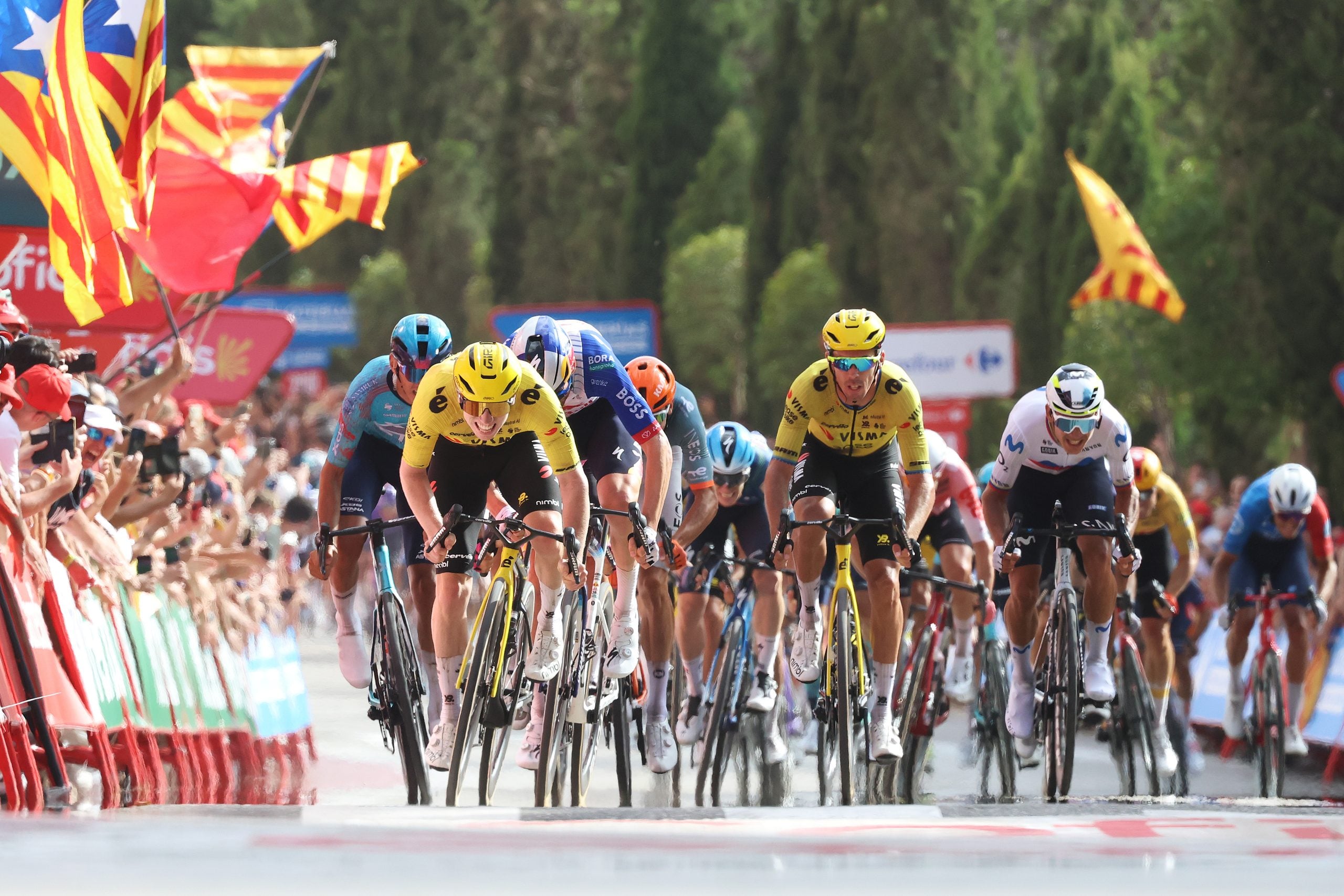 Photo Credit: Getty
Why the race may become tactical rather than simply hard
A route containing 2,570 metres of climbing does not guarantee that the strongest climber wins.
World Championships racing introduces too many other variables.
National teams operate differently from trade teams. Some countries have several genuine potential winners. Others may have one protected leader and little depth behind her.
Nobody wants to sacrifice their own chance merely to improve the prospects of a rival nation.
Those conditions can make a 15-rider group much harder to control than a 50-rider peloton during a Women’s WorldTour race.
The Mount Royal circuit amplifies that problem because there are so many plausible attacking points.
If a dangerous rider goes on Camillien-Houde, another nation may expect somebody else to chase.
If she is caught, the counter-attack can come on Polytechnique.
By the time the group reorganises, Pagnuelo and Avenue du Parc are approaching.
Then the entire sequence begins again.
That should make waiting until the final kilometre increasingly dangerous.
Where will the 2026 women’s world road race be won?
The opening 72.7km through Montérégie should determine the breakaway and how much work each nation has to do.
The first few Mount Royal laps should begin reducing support numbers.
The middle circuits are where the strongest countries can start applying sustained pressure.
The final three laps should become the genuine championship race.
Camillien-Houde provides the best sustained attacking platform.
Polytechnique offers the sharpest gradients.
Pagnuelo supplies another late launch point.
Avenue du Parc rewards anyone who still possesses an acceleration.
That combination makes the 2026 Women’s World Championships difficult to reduce to one decisive location.
The race should instead become steadily less controllable as every lap removes another rider and every attack leaves fewer people willing or able to chase.
After 180.4km, eight Mount Royal circuits and 2,570 metres of climbing, the rainbow jersey is unlikely to go to the rider who is simply quickest or simply climbs best.
Montréal should reward the rider who can keep doing both after everyone else has started losing options.
For the wider build-up to the championship and the rest of the late-season calendar, ProCyclingUK’s Women’s Cycling Race Hub brings together the latest route guides, previews, viewing information and race coverage.