
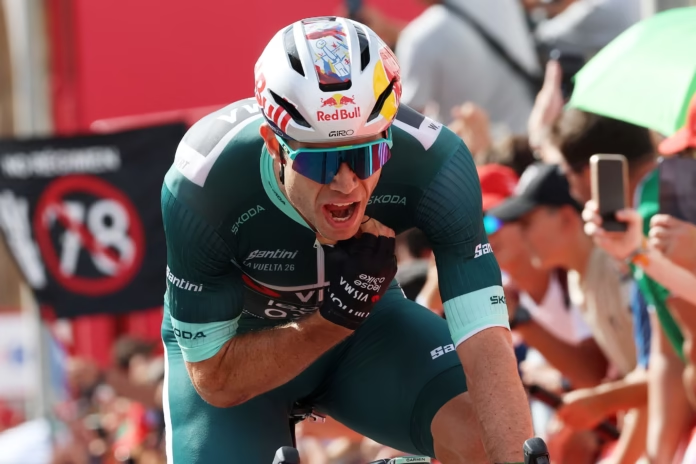
The second week of the Vuelta a España began with the race still adjusting to Tadej Pogačar’s shock exit. It ended with Enric Mas more firmly established in red, Felix Gall replacing Primož Roglič in second place and Wout van Aert suddenly winning almost everything he touches.
It also ended with the weather changing the race for a second time.
Sunday’s Stage 15 into Córdoba was reduced from 189.7km to 110.2km because of forecast extreme heat, only 13 days after the Stage 3 hailstorm forced the Font-Romeu stage to be cancelled completely.
Those two interventions came at opposite ends of the weather spectrum, but they have become part of the story of an unusually unpredictable Vuelta.
On the road, the second week provided something more concrete. Mas increased his advantage, Gall finally dropped Roglič on Sierra de La Pandera and Van Aert won twice in three stages while strengthening his grip on the points classification.
The race that emerged from Sunday’s finish in Córdoba looks very different from the one that began again after the first rest day.
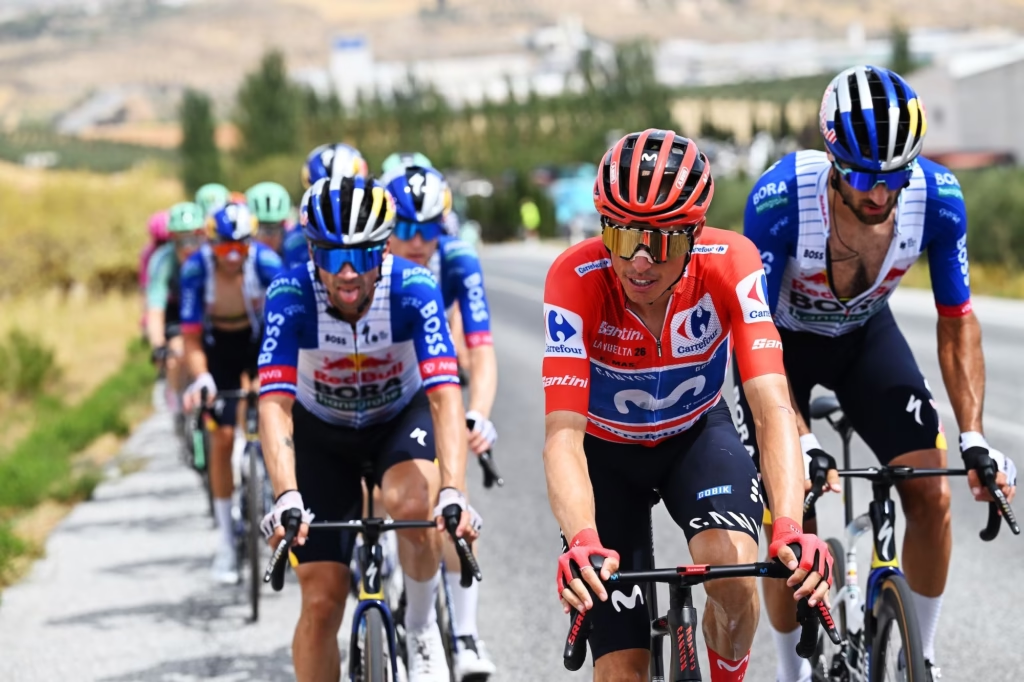 Photo Credit: Getty
Mas started the week with something to prove
Pogačar’s Stage 8 crash changed the entire Vuelta.
Before it, the Slovenian had taken control of the race and built a 3:50 advantage over Mas. His abandonment handed the red jersey to the Movistar leader and transformed Roglič and Gall from riders fighting behind Pogačar into genuine candidates for overall victory.
Mas immediately went some way towards answering the obvious question over whether he was simply benefiting from Pogačar’s misfortune.
He won on Alto de Aitana on Stage 9, taking further time from Roglič and Gall before the first rest day. The advantage entering week two stood at 1:18 over Roglič and 1:39 over Gall.
What followed mattered because Mas did not spend the week merely protecting those gaps.
He increased them.
Tronchon opened week two with another reminder that the Vuelta resists control
Stage 10 into Elche de la Sierra looked like an opportunity for Wout van Aert and the faster riders capable of surviving a rolling finale.
Instead, it became one of the closest escape-versus-peloton finishes of the race.
Late attackers Yevgeniy Fedorov and Xabier Mikel Azparren held a tiny advantage into the final metres before being swallowed almost on the line. Bastien Tronchon judged the moment perfectly behind them and came through to beat Magnus Cort and Thibau Nys.
Our Stage 10 race report covered a finale where Visma | Lease a Bike had spent much of the day trying to create a race for Van Aert but never quite gained complete control.
It set the tone for much of the week.
Teams could arrive with a plan. The race frequently demanded another one.
Brennan delivered when Visma finally got their sprint
Twenty-four hours later, Visma had a much cleaner opportunity.
Stage 11 from Cartagena to Lorca had only one significant late climb, the Alto de Aledo, followed by more than 30 kilometres in which the faster riders could regroup.
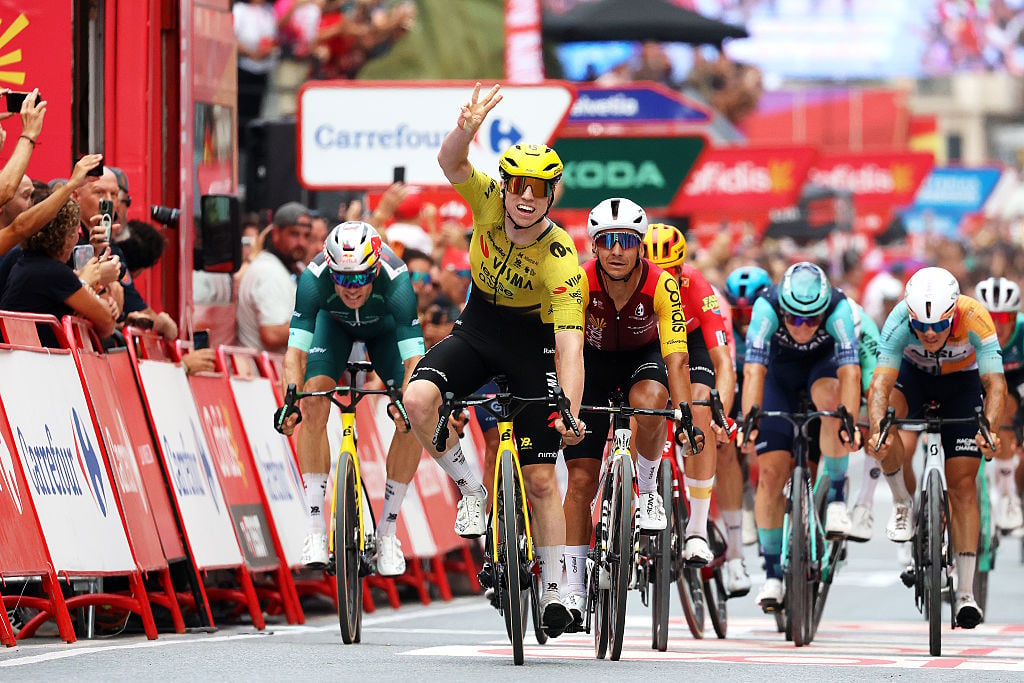
This time Matthew Brennan made the work count.
Visma controlled the race, kept Brennan positioned through the final kilometres and delivered him into a sprint he won ahead of Bryan Coquard and Jordi Meeus.
It was Brennan’s third stage victory of his debut Vuelta, following earlier wins in Manosque and Roquetes.
The Stage 11 race report also showed how important Van Aert had become to Brennan’s success. He could collect his own points during the stage and then switch roles later, working for the younger rider when the finish suited him better.
That balance between the pair has been one of Visma’s biggest strengths throughout the race.
By the end of the week, Van Aert would begin cashing in his own opportunities.
Calar Alto was where Mas put real distance into his rivals
Stage 12 produced the most important general classification differences before La Pandera.
Jakob Omrzel won from the breakaway on Calar Alto, announcing himself with the biggest victory of his young career and moving further into the top 10.
Behind him, Felix Gall attacked.
Mas responded.
Then Mas countered.
The red jersey eventually gained 27 seconds on Gall, Roglič and Richard Carapaz, increasing his advantage over Roglič to 1:45 while Gall remained third at 2:06.
The full Calar Alto race report was the clearest evidence yet that Mas was not content simply to defend his position.
That matters with the final-week individual time trial still to come.
Every second Mas took in the mountains was time Roglič would eventually have to recover on roads much better suited to him. The 27 seconds gained on Calar Alto therefore carried more significance than a routine extension of the red jersey lead.
Mas was building his margin before Jerez.
 Photo Credit: Getty
Van Aert’s Stage 13 win changed the feel of his Vuelta
Van Aert had been everywhere during the opening half of the race without actually winning.
He had chased intermediate sprints, worked for Brennan, entered breakaways and accumulated enough points to make the green jersey increasingly his own.
Stage 13 into Loja finally gave him the stage victory to go with it.
A huge breakaway dominated the day, with Visma getting both Van Aert and Brennan into the move. That gave the team a tactical advantage few of their rivals could match.
If the race came back together, Brennan had the sprint.
If attacks started, Van Aert could follow them.
Van Aert eventually attacked late, with Valentin Paret-Peintre the only rider capable of following. The Belgian then comfortably won their sprint, while Brennan took third from the chasing group.
The Stage 13 race report showed why Visma’s two-rider approach had become so difficult to race against. Chasing Van Aert risked delivering Brennan. Waiting for Brennan gave Van Aert freedom to attack.
After three stage victories for Brennan, Van Aert finally had his first of the race.
Two stages later, he had another.
La Pandera finally separated Gall and Roglič
Stage 14 was the day that genuinely reshaped the podium battle.
A 44-rider breakaway went clear before Marco Brenner eventually beat Santiago Buitrago on Sierra de La Pandera, but the more important race developed several minutes behind them.
Mas attacked first on the final climb.
Carapaz tried to respond.
Gall then made his move.
For much of the climb, Roglič kept finding a way back. Inside the final two kilometres, that stopped happening.
Gall and Mas pulled clear, helped by Raúl García Pierna, who had spent much of the stage in the breakaway and was still available to work for his leader when the GC battle reached him.
Roglič lost 25 seconds.
That was enough for Gall to move into second overall by four seconds.
The Stage 14 race report from Sierra de La Pandera captured the most important GC development of the week: Gall had finally turned his repeated mountain attacks into a position ahead of Roglič.
Mas remained 2:06 ahead of Gall.
Roglič slipped to 2:10.
Carapaz moved further away at 4:24.
Oscar Onley remained fifth at 5:44.
The four seconds separating second and third are now almost as important as Mas’ advantage over both.
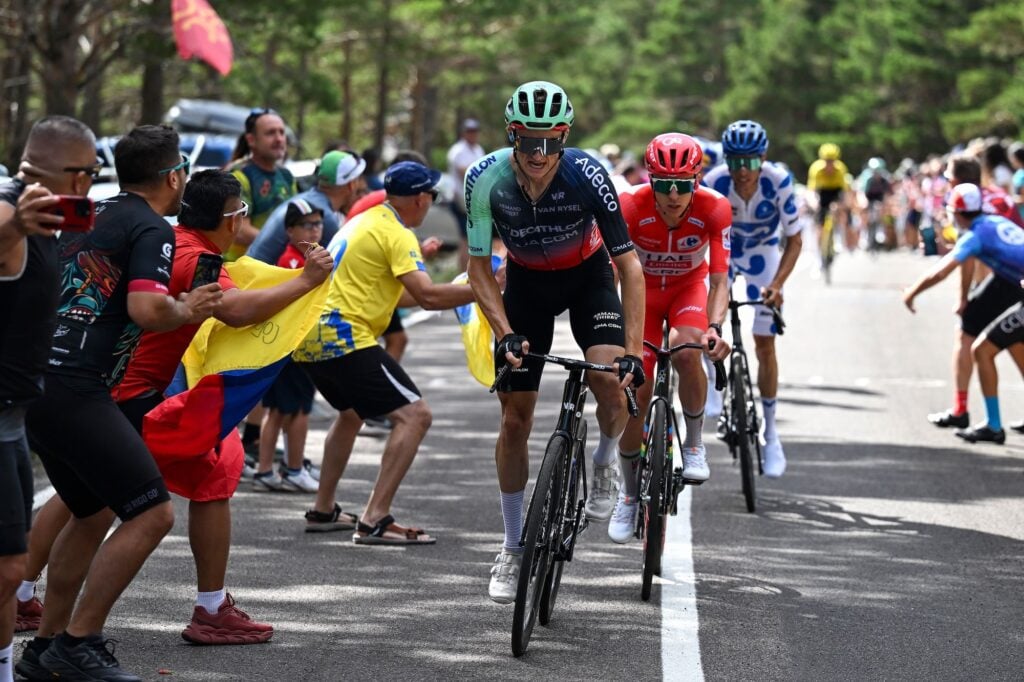 Photo Credit: Getty
Gall has become Mas’ strongest climbing rival
Gall did not actually take time from Mas during the second week.
That is an important distinction.
He began the week 1:39 behind and reaches the rest day at 2:06, so Mas has increased his advantage over him.
What Gall has done is change his position relative to Roglič.
He attacked on Aitana.
He attacked on Calar Alto.
He attacked again on La Pandera.
Mas answered each time, but Roglič eventually could not.
That gives the final week a much clearer shape. Gall is currently climbing better than Roglič, while Roglič should have a substantial advantage over Gall in the 32.1km individual time trial into Jerez.
The second week has therefore created two different threats to Mas rather than one obvious challenger.
Gall has the mountains.
Roglič has the time trial.
Mas has the time.
Extreme heat changed Stage 15 overnight
La Pandera should have been followed by a 189.7km medium-mountain stage from Palma del Río to Córdoba.
Instead, the Vuelta activated its extreme weather protocol on Saturday evening because of the temperatures forecast for Andalucía.
The distance was reduced to 110.2km, removing 79.5km from the original route. The start was pushed later into the afternoon and the large northern loop through Villaviciosa de Córdoba was removed.
It was the second major weather intervention in 15 stages.
The first could hardly have been more different.
On Stage 3, the peloton encountered heavy rain and then severe hail on the Col de Mont-Louis. Riders sought shelter from the storm, the race was neutralised and organisers eventually cancelled the stage entirely.
Stage 15 involved the opposite problem. Instead of riders being soaked and freezing in the Pyrenees, the concern was prolonged exposure to extreme heat in Andalucía.
Both stages reached the same basic conclusion: the route that had been planned was no longer safe to race as intended.
Córdoba became a real-world example of the Vuelta’s heat problem
Extreme heat is hardly unusual at the Vuelta.
The race occupies a late-August and September position on the calendar while regularly visiting some of Spain’s hottest inland and southern regions. That combination was always likely to become particularly relevant once the 2026 route moved into Andalucía.
Our earlier explainer on why the Vuelta a España is so often raced in extreme heat looked at exactly that combination of calendar position and geography.
Stage 15 turned the issue from background context into a direct sporting consequence.
The heat was not simply something riders had to manage through bottles, ice and pacing. It changed the length of a Grand Tour stage, the start time and the roads the peloton raced on.
That is a much more significant intervention.
It also came after the race had travelled progressively south, making the climatic contrast with the cancelled Pyrenean stage even more striking.
The same Vuelta has now lost a stage to hail and shortened another because of heat.
 Photo Credit: Getty
Shortening Stage 15 made the race more aggressive
Reducing the Córdoba stage by almost 80 kilometres did not produce a quieter afternoon.
It compressed everything.
The opening breakaway never gained much freedom because Visma had missed it and wanted to keep the race manageable for Brennan. The gap remained small through the opening climbs, giving other riders repeated opportunities to attack and reshape the front of the race.
Andreas Leknessund eventually went clear around Puerto Artafi.
Then Van Aert saw his moment.
He accelerated through the intermediate sprint at Santa María de Trassierra and bridged across, with Alessandro Romele, Thibau Nys and Ramses Debruyne helping create the five-rider group that would decide the stage.
Once Van Aert was there, the tactical balance changed.
Brennan remained behind as Visma’s alternative if everything came back together, so Van Aert could race aggressively without putting the team’s entire stage at risk.
The group stayed away.
Van Aert controlled the late attacks and then beat Romele and Nys in Córdoba.
The Stage 15 race report was another example of how quickly Visma have been willing to change their plan during this race.
They started by controlling for Brennan.
They finished with Van Aert winning.
-
 Photo Credit: A.S.O./Billy Ceusters
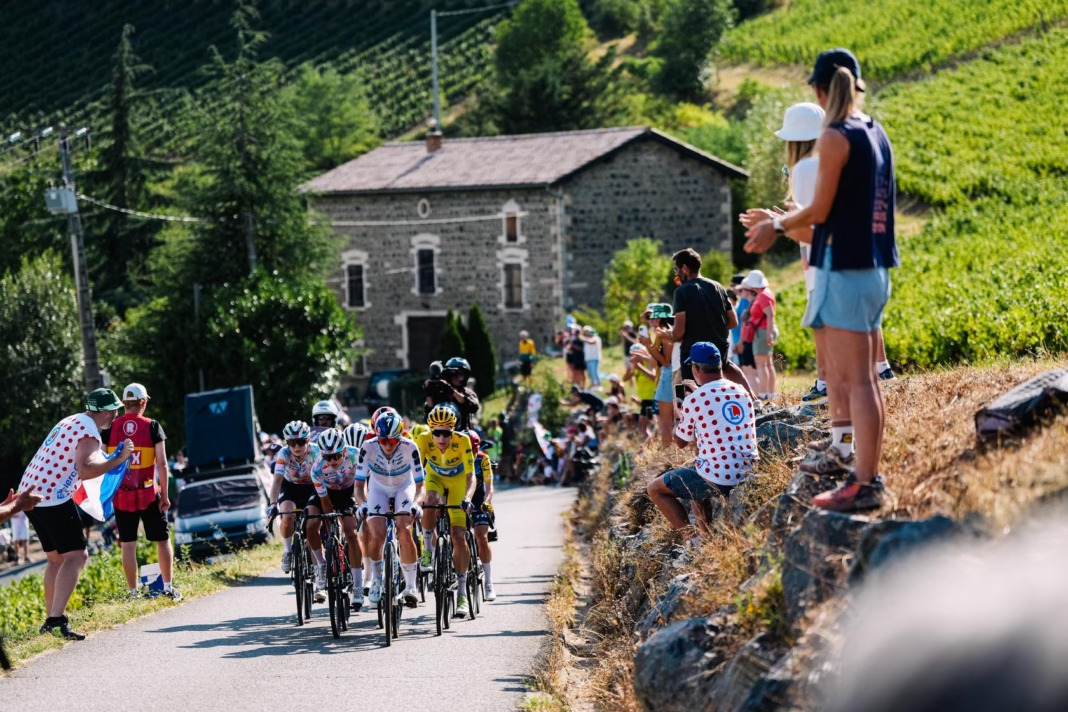
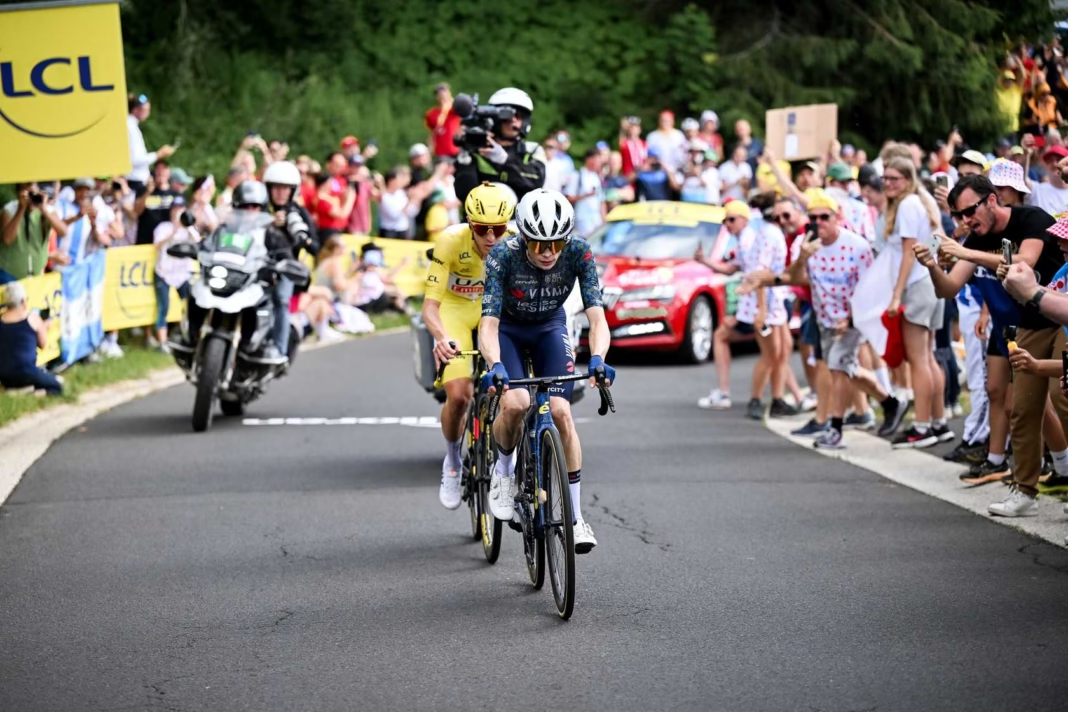
Van Aert ends week two as one of the race’s dominant riders
Van Aert has now won two of the last three stages.
The first came from a large breakaway into Loja.
The second came after attacking out of a race Visma had initially tried to control for somebody else.
Those victories sit alongside the work he has already done for Brennan and his increasingly secure position in the green jersey.
That makes his second week particularly impressive.
He has not needed stages to be designed specifically for him.
On Stage 11 he helped Brennan win.
On Stage 12 he used the breakaway to pursue points.
On Stage 13 he attacked late and won.
On Stage 15 he recognised that the shortened race had produced an opportunity and changed roles again.
That range has allowed Visma to dominate the faster stages without becoming predictable.
Brennan has three wins.
Van Aert has two.
Even when one is the nominal leader for the day, the other remains a problem rival teams have to account for.
Week two made the final week much more interesting
Mas is in a better position than he was seven days ago.
He started the second week 1:18 ahead of Roglič and 1:39 ahead of Gall.
He ends it 2:06 ahead of Gall and 2:10 ahead of Roglič.
That is substantial progress.
It still does not settle the race.
La Pandera showed that Gall can drop Roglič in the mountains. Jerez should allow Roglič to take time back against the clock. Peñas Blancas and the Sierra Nevada then give Gall another two chances to turn climbing strength into actual time on Mas.
The wider race has changed too.
Van Aert has gone from collecting points and working for Brennan to winning twice in three stages.
Omrzel has moved from promising young rider to Grand Tour stage winner.
Onley is now protecting a strong fifth place rather than sitting within immediate reach of the podium.
And the weather has become more than a forecast graphic. In the space of two weeks, it has cancelled one stage and substantially rewritten another.
The first week blew the Vuelta apart when Pogačar crashed out.
The second showed what the race looks like without him.
Mas is stronger. Gall has climbed above Roglič. Van Aert has found winning form. Yet with the time trial and the hardest Sierra Nevada stage still ahead, none of those stories is finished.

