
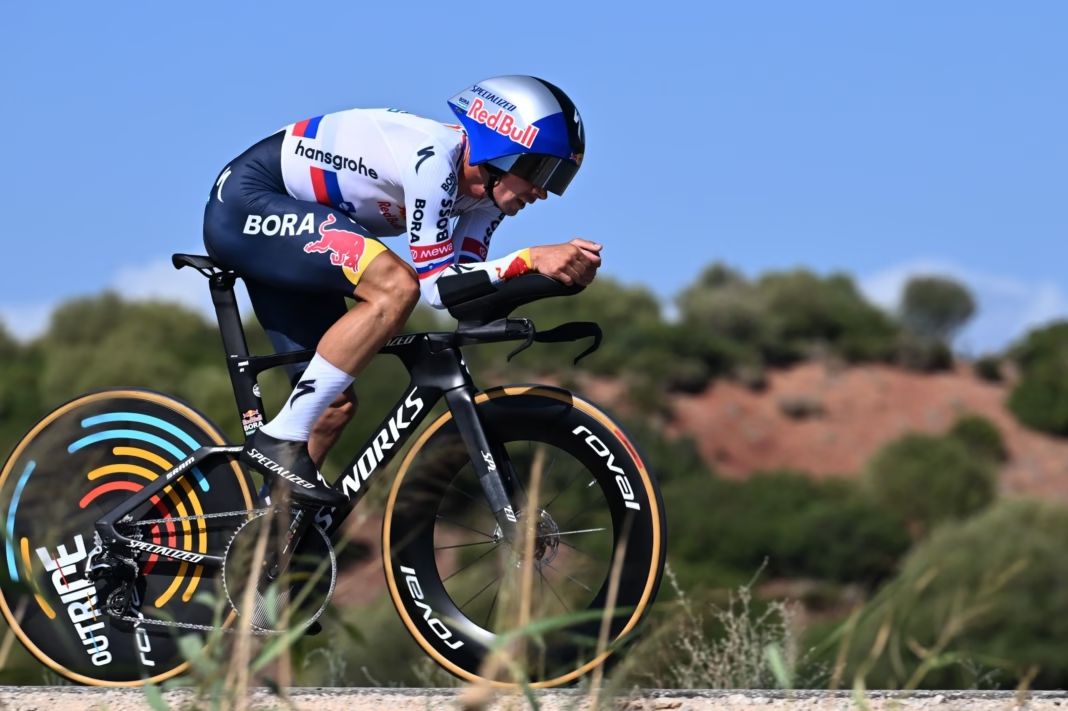
Primož Roglič spent much of the 2026 Vuelta a España with one powerful argument still in reserve. Enric Mas could keep taking seconds in the mountains, but the 32.1km individual time trial to Jerez de la Frontera was waiting in the final week.
The problem was that Mas kept making the job in Jerez bigger.
Roglič entered the final week 2:10 behind. He recovered only 33 seconds in the time trial, leaving Mas with 1:37. Peñas Blancas produced no change between them. Then, on Collado del Alguacil, with no further GC opportunity left to save himself for, Roglič lost another 38 seconds.
He will enter the final stage in Granada 2:15 behind Mas.
It would be easy to describe Jerez as the day Roglič failed to deliver. Red Bull-Bora-Hansgrohe’s own analysis makes that interpretation much less convincing. Dan Bigham, the team’s Head of Engineering, said Roglič actually rode around seven seconds faster than their pre-stage model predicted.
The model did not badly underestimate Roglič.
It underestimated Mas.
That is the point around which Roglič’s Vuelta makes most sense. He spent much of the race needing his traditional advantage against the clock to compensate for what Mas was doing in the mountains. By the time he finally reached Jerez, that advantage had become smaller at exactly the moment the deficit it needed to erase had become much larger.
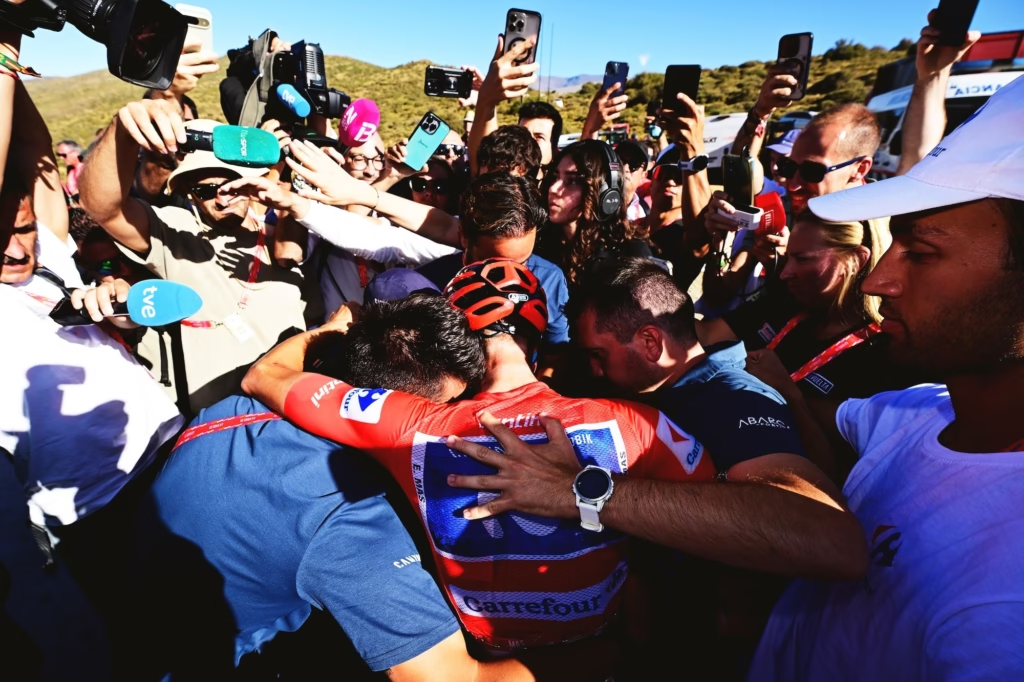 Photo Credit: Getty
Mas kept increasing the amount Jerez needed to solve
The relationship between the two riders was clear well before the final week.
Mas was climbing better. Roglič was expected to be considerably faster against the clock.
That gave the race a simple balance. Every second Mas could take in the mountains was insurance for Jerez. Every second Roglič prevented him taking reduced what would eventually be required from the time trial.
Our state of the race analysis before the final week framed it in those terms: Roglič had the time trial, Felix Gall had the mountains and Mas needed to build enough of an advantage to cover both.
Mas did exactly that.
Alto de Aitana increased his advantage. Calar Alto increased it again. On Sierra de La Pandera, Roglič was dropped once more as Mas and Gall rode away together.
By the end of Stage 14, the warning had become difficult to ignore. Our La Pandera preview had argued that Roglič could not keep allowing Mas to add 20 or 30 seconds while assuming the time trial would eventually repair everything.
The gap going into Jerez was 2:10.
That changed the nature of Stage 18. Roglič no longer needed merely to produce a strong time trial. He needed a performance capable of undoing almost two weeks of climbing losses.
The 2:10 deficit made a good time trial insufficient
Before Stage 18, the most useful question was not whether Roglič would take time from Mas. It was how much he needed.
Our pre-stage analysis of the Jerez equation identified approximately 90 seconds as the gain that would properly change the final weekend.
That would have reduced 2:10 to 40 seconds.
At that point, Roglič would not have needed Mas to collapse. One successful attack at Peñas Blancas or Collado del Alguacil could have changed the race lead.
A gain of around a minute would have left Mas 1:10 ahead, still a significant advantage but one that put much greater pressure on every acceleration in the mountains.
Thirty seconds was different.
It left Roglič requiring the same thing after the time trial that he had required before it: the ability to take a large amount of time from Mas uphill.
That was precisely what he had been unable to do.
The actual gain was 33 seconds.
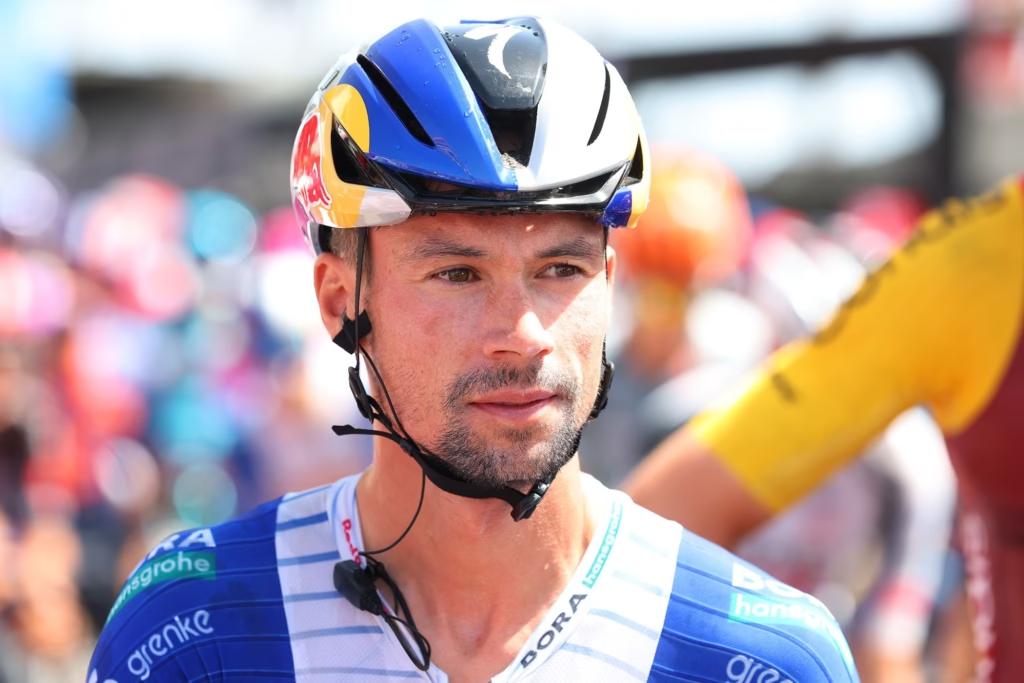 Photo Credit: Getty
Jerez was not a bad Roglič ride
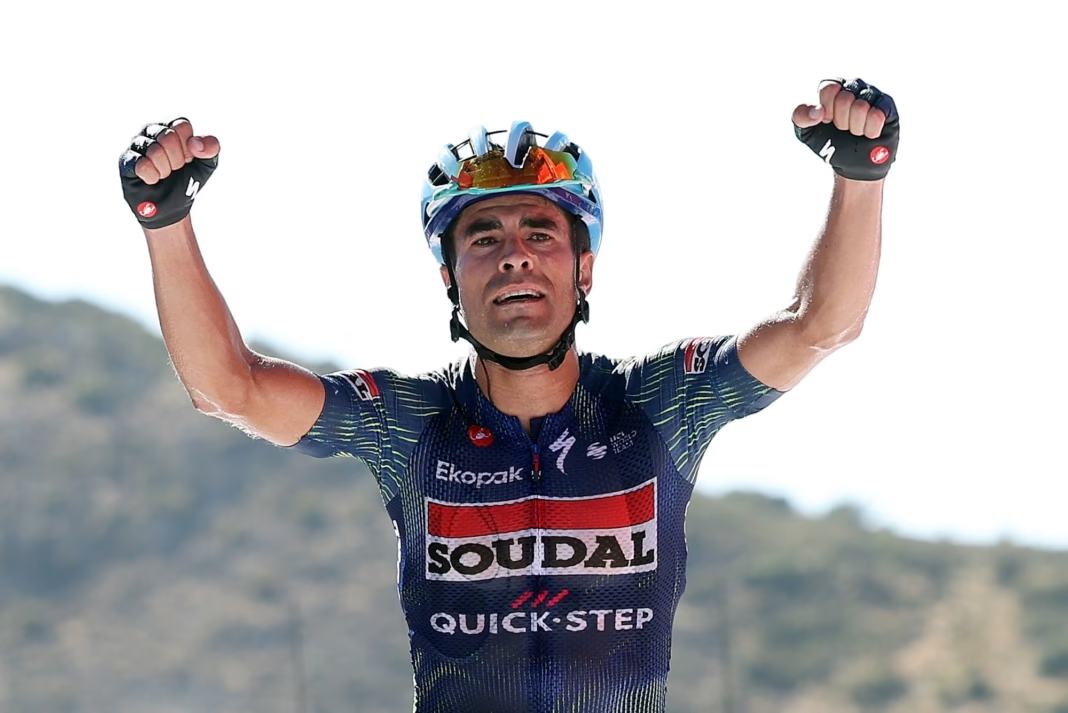
Roglič finished fourth in Jerez, 19 seconds behind Stefan Küng.
Seen only through the general classification, it looked disappointing. One of the finest Grand Tour time triallists of his generation had been given 32.1 largely flat kilometres against Mas and recovered barely half a minute.
Red Bull’s modelling tells a more interesting story.
Bigham said Roglič rode approximately seven seconds faster than the team’s predicted time. Other Red Bull riders also finished close to their models, suggesting the team’s calculations were not fundamentally wrong about the course or expected speeds.
Mas was the outlier.
Bigham described the Spaniard as being “a whole lot faster” than the performance Red Bull would have assigned him before the Vuelta and said he had significantly outperformed their model.
That reframes the Stage 18 result.
Roglič did not reach the stage his entire final week depended upon and suddenly produce a poor ride.
He produced roughly the ride Red Bull expected.
Mas produced something better.
The old Roglič-versus-Mas assumption stopped working
That matters because much of the confidence around Roglič’s route back into the race came from their history.
For years, a long individual time trial was exactly the sort of stage where Roglič could expect to put substantial time into Mas. Their previous Grand Tour comparisons offered plenty of evidence that the difference could stretch beyond a minute over distances similar to Jerez.
That history shaped expectations in 2026.
It also turned out to be increasingly irrelevant.
Mas did not need to become Roglič’s equal against the clock. He only needed to become good enough that the old margins between them disappeared.
That is what happened.
Roglič was still faster. Thirty-three seconds over 32.1km is a meaningful advantage in most contexts.
It was nowhere near enough in this one.
Mas had spent the mountains building a 2:10 buffer specifically because he knew Jerez favoured Roglič. Losing only 33 seconds meant more than three quarters of that buffer survived intact.
The discipline that was supposed to reopen the Vuelta instead confirmed how much work Roglič still had left.
Roglič’s time trial is no longer the weapon it once was
There is also a wider point in Bigham’s comments about where Roglič now sits within Red Bull’s time-trial programme.
Bigham revealed that he and Roglič had not conducted a single aerodynamic test together in roughly the previous year.
That does not mean Red Bull had neglected his equipment or that Roglič arrived in Jerez unprepared. His position is mature and highly developed, and there are diminishing returns available from repeatedly testing a rider who has spent years refining his setup.
There had also been disruption before the Vuelta. Roglič was hit by a driver while training near Livigno, affecting his ability to train normally on the time-trial bike.
More revealing was Bigham’s explanation of how Red Bull now allocates development resources. The potential gains are greater with younger riders who have more room for improvement than with a 36-year-old former Olympic champion whose position has already been heavily optimised.
Jerez reflected that changing balance.
Callum Thornley finished second, only three seconds behind Küng. Finn Fisher-Black was sixth. Roglič remained excellent, but the team no longer needs its entire time-trial development programme to revolve around him.
That becomes relevant when the GC strategy still relies on Roglič possessing a huge advantage in precisely that discipline.
The advantage remains.
The size of it has changed.
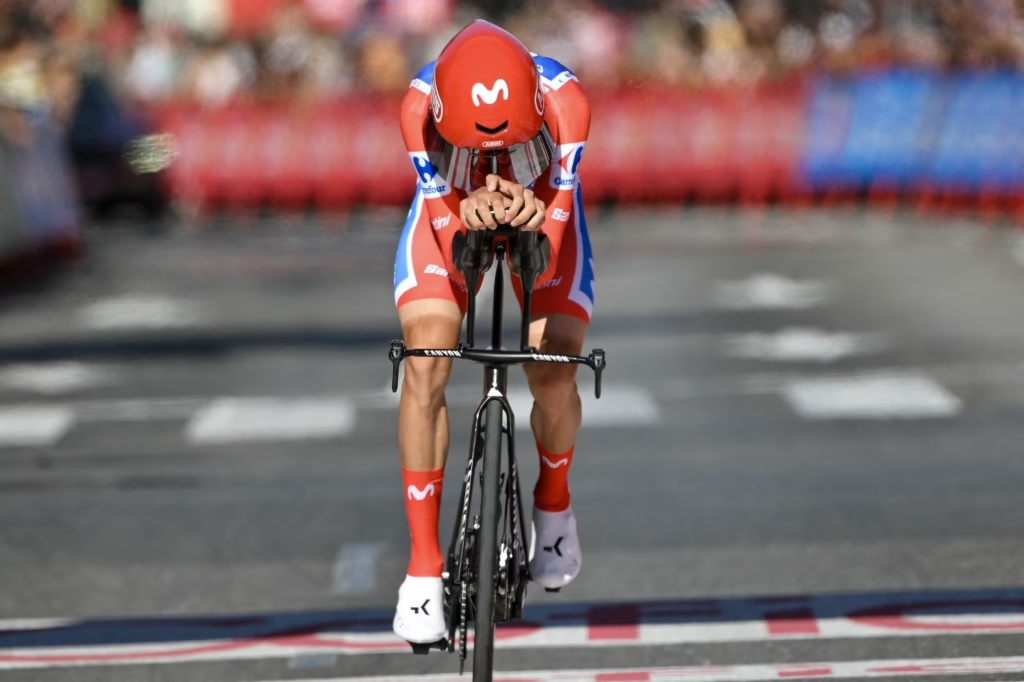 Photo Credit: Getty
Waiting for Jerez was only partly a tactical choice
There is a danger in describing Roglič as simply waiting too long.
He did spend much of the race knowing Jerez was coming, and that knowledge inevitably affected the tactical calculation. Taking major risks in the mountains made less sense while a favourable 32.1km time trial remained ahead.
But Roglič did not voluntarily donate every second Mas gained.
On Aitana, Calar Alto and La Pandera, Mas was stronger.
Roglič could not simply have decided to stay with him and chosen not to.
That distinction is important. Otherwise the 2026 Vuelta becomes a story about tactical passivity when much of it was actually about the relative physical level of two riders.
The strategic error, if there was one, was less dramatic.
Roglič’s route to victory increasingly depended on an assumption that had been established by previous seasons: whatever Mas gained uphill, Roglič would have an opportunity to recover a large portion of it in the time trial.
Mas kept testing that assumption by increasing the deficit.
Jerez finally broke it.
Peñas Blancas confirmed the problem had moved back to the mountains
After Stage 18, Roglič was 1:37 behind.
There were two mountain finishes remaining, but the Vuelta had now placed him in an awkward position. He had to recover time on the terrain where Mas had repeatedly been stronger.
The Stage 19 preview to Peñas Blancas set out the problem clearly.
Roglič could attack on Friday, but spending heavily risked weakening him before the steeper Collado del Alguacil stage. Waiting until Saturday preserved energy, but allowed another opportunity to disappear.
Mas could afford either outcome.
On Peñas Blancas, Roglič tried late.
Mas answered.
Gall and Richard Carapaz also produced movement, but the main GC riders ultimately finished together. The 1:37 gap survived untouched.
One of Roglič’s two remaining opportunities had gone.
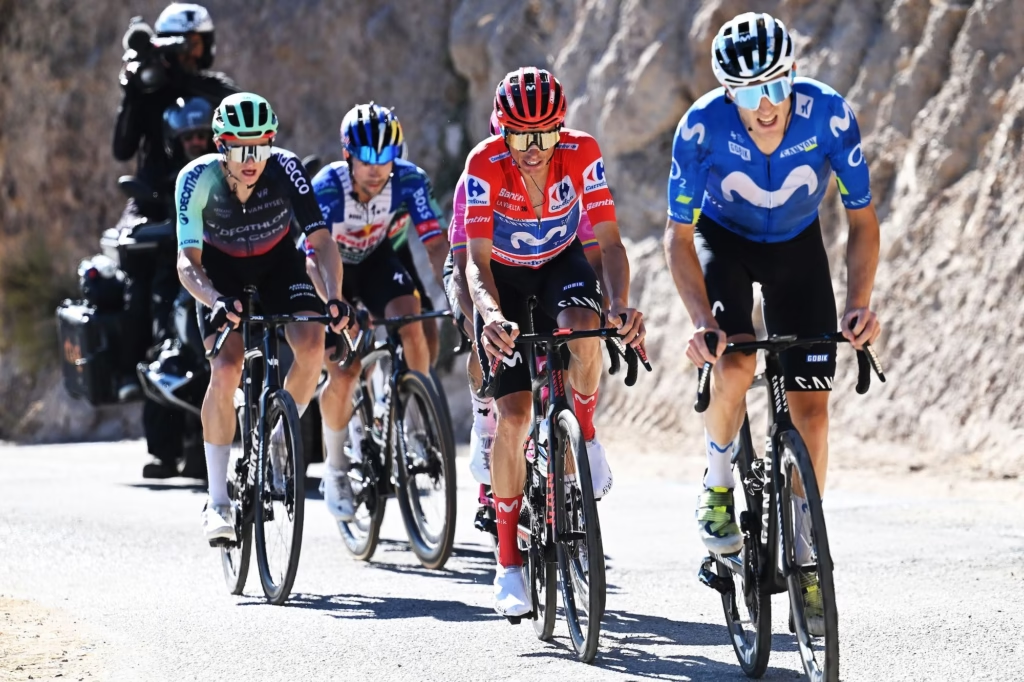 Photo Credit: Getty
Collado del Alguacil showed there was no hidden turnaround left
Stage 20 removed the final tactical ambiguity.
There was no longer another time trial.
There was no harder summit finish being saved for the following day.
The 2026 Vuelta route had placed Collado del Alguacil as the last serious opportunity to change the general classification. Two ascents of El Purche, Puerto de El Duque and an 8.3km finishing climb at 9.8% gave Roglič almost 5,000 metres of climbing in which to find 1:37.
Red Bull tried to make the stage difficult.
The race split. Sepp Kuss went on the offensive. Gall attacked. Roglič made his own attempts on the final climb.
Mas still did not break.
Instead, Mas eventually dropped Roglič.
Another 38 seconds separated them at the finish. Roglič’s deficit increased from 1:37 to 2:15 on the very stage where he had no reason left to conserve anything.
That matters because it removes the hypothetical argument that Roglič might have won if he had simply been more aggressive earlier.
When the race finally reached the point where caution no longer offered any benefit, Mas was still stronger.
Gall complicated Roglič’s race as well
Roglič was not only racing Mas during the final week.
Felix Gall repeatedly created another problem.
The Austrian’s climbing form was strong enough to move ahead of Roglič into second overall before the Jerez time trial. Roglič comfortably reversed that order against the clock, but Gall remained close enough that Red Bull could never treat the final mountains solely as a one-on-one attempt to isolate Mas.
On Collado del Alguacil, Gall took time back again.
He now begins the final stage only 29 seconds behind Roglič in the fight for second.
That reduced Roglič’s tactical freedom. Following every Gall attack cost energy. Allowing him to ride could threaten second place. Chasing him could help Mas.
Mas repeatedly occupied the best position in that triangle because both of his principal rivals needed something from the race while he mostly needed to avoid losing contact.

Red Bull did not miscalculate Roglič, they miscalculated what Mas had become
That may be the most useful way of understanding Jerez and, by extension, the entire Vuelta.
Red Bull’s model appears to have been reasonably accurate about Roglič.
He beat it.
What the model could not fully capture was the version of Mas who arrived in September 2026.
Mas was not merely climbing at the highest level of his career. He was time trialling well enough to protect the advantage those climbs produced.
That combination changed the normal relationship between the two riders.
In previous races, Roglič could often regard the time trial as a place to recover from a weaker climbing day.
At this Vuelta, Mas made the climbing days cumulative. A few seconds became 30. Thirty became a minute. By Jerez, the debt had reached 2:10.
Roglič then produced a good ride and discovered that good was no longer enough.
The 33 seconds explain the Vuelta better than the final 2:15
Assuming the general classification remains unchanged in Granada, Roglič will finish 2:15 behind Mas.
That is the final margin, but 33 seconds is the more revealing number.
That is what Jerez gave him.
Roglič had spent much of the race with the time trial sitting ahead as the stage most likely to change the direction of the GC battle. Mas spent the same period increasing the amount that stage would need to change.
By the time they reached it, Roglič needed something close to 90 seconds for the final mountain weekend to become genuinely favourable.
He took 33.
Peñas Blancas then showed he could not find the missing time through a conventional mountain attack.
Collado del Alguacil went further and showed that, with every tactical restraint removed, Mas could still distance him.
Roglič did not lose the 2026 Vuelta because his time trial failed.
He lost it because Mas made the time trial responsible for solving too much, then rode well enough in Jerez to make sure it solved almost nothing.

