
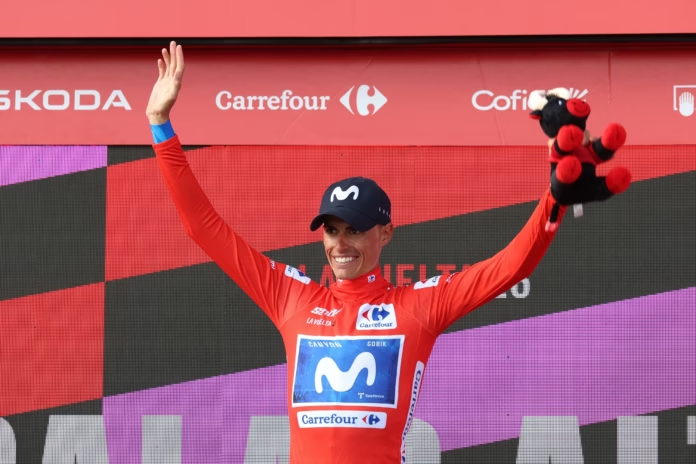
The 2026 Vuelta a España will be remembered first as the race Enric Mas finally won. After finishing second in 2018, 2021 and 2022 and third in 2024, the Mallorcan converted years of near misses into his first Grand Tour victory at 31. He finished 2:15 ahead of four-time Vuelta winner Primož Roglič, with Felix Gall third at 2:44, ending a 12-year wait for a Spanish winner of the national Grand Tour.
That result alone gives the 81st Vuelta a distinctive place in the race’s history, but the way Mas won matters just as much. Tadej Pogačar had led Mas by 3:50 before crashing out on stage 8. Mas inherited red, then spent the rest of the race proving that inheriting a jersey and winning a Grand Tour are different things. As our analysis of how Enric Mas won the 2026 Vuelta detailed, stage 8 gave him the lead; stages 9 to 20 made it his.
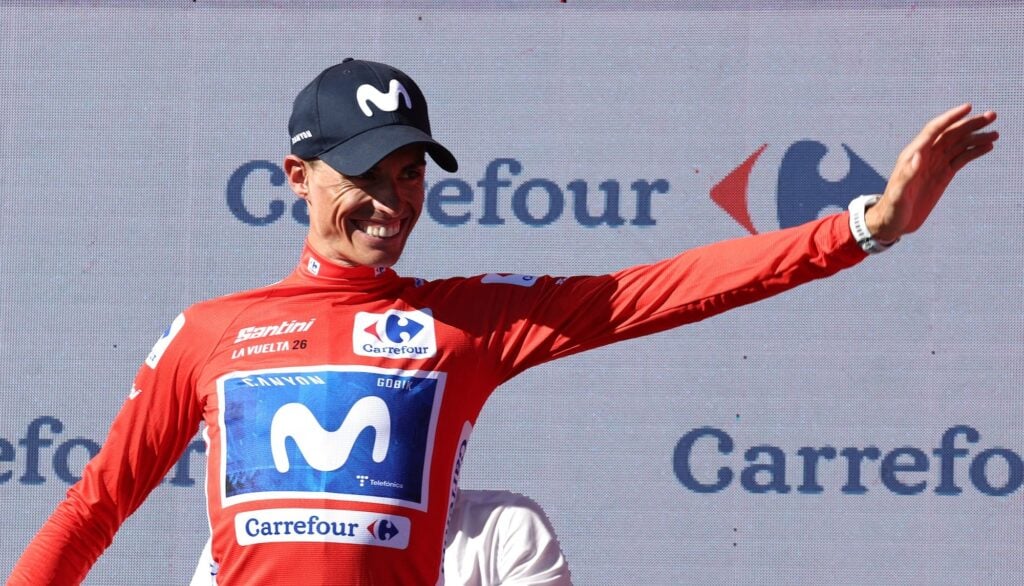 Photo Credit: Getty
Spain finally has another Vuelta winner
Mas became the first Spanish rider to win the Vuelta since Alberto Contador in 2014. That gap is historically striking for a race once dominated by home riders. Spanish champions are woven through the Vuelta’s identity, from Roberto Heras and Contador to Pedro Delgado, Abraham Olano and Alejandro Valverde. A 12-year wait therefore represented a genuine change in the balance of the race.
The drought looked even longer when viewed across all three Grand Tours. Contador’s 2015 Giro d’Italia had been the most recent Spanish victory in any men’s Grand Tour before Mas. Spain continued to produce podium riders and stage winners, but the overall victories disappeared during an era increasingly dominated by British, Slovenian, Colombian and other international GC stars.
Mas was an appropriate rider to end that run because he had spent so much of his career close to the Vuelta title. His three second places created a very different historical profile from a sudden breakthrough winner. The 2026 victory was the resolution of a long relationship with the race rather than the beginning of one.
From serial runner-up to Grand Tour champion
Mas first finished second at the Vuelta in 2018, when he was still with Quick-Step and looked like the next major Spanish stage-race prospect. He returned to the runner-up position in 2021 and 2022 after moving to Movistar, then added third in 2024. Few riders reach four Vuelta podiums without winning the race, and that history had begun to define him.
The 2026 edition changes the interpretation of those results. They now look less like evidence of a rider unable to finish the job and more like the long preparation for a victory. Mas did not suddenly become a different type of cyclist. He won by using the same qualities that had repeatedly put him on the podium: consistency, climbing efficiency and the ability to avoid a disastrous day across three weeks.
His age is relevant too. At 31, Mas was older than many modern first-time Grand Tour winners, although nowhere near the extraordinary age of Chris Horner when the American won the 2013 Vuelta at 41. Mas’s success is another reminder that Grand Tour careers do not always follow a straight line from young breakthrough to immediate dominance.

Pogačar’s crash changed the race, but did not decide it
Any historical account of the 2026 Vuelta has to deal with Pogačar’s abandonment. The five-time Tour de France winner started as the overwhelming favourite and was 3:50 ahead of Mas when his stage 8 crash ended his race and season. It was one of the biggest what-if moments in recent Grand Tour history.
That does not make the remaining two weeks irrelevant. Grand Tours have always been shaped by crashes, illness and mechanical problems. The leader’s departure creates an opportunity, but the rider who inherits first place still has to defend it through every subsequent mountain stage, time trial and tactical test. Mas did that for 12 days.
The distinction is especially important because Roglič remained in the race. A four-time Vuelta champion with a superior time trial, Roglič represented a credible route back into contention. Mas had to build and protect enough of a margin in the mountains to survive the individual time trial, then respond again on the final mountain weekend.
Roglič chasing a record fifth victory
Roglič entered the 2026 Vuelta with four overall victories, level with Roberto Heras at the top of the race’s all-time winners list. A fifth would have made him the outright record holder. Instead, he finished second, 2:15 behind Mas, adding another podium to an already exceptional Vuelta record.
His presence changed the historical weight of Mas’s defence. This was not a field left without an experienced Grand Tour winner after Pogačar’s withdrawal. Roglič had repeatedly shown that he could win the Vuelta through climbing, time trialling and tactical control. Mas therefore spent the second half of the race defending against the rider most closely associated with the modern Vuelta.
The stage 18 time trial in Jerez was the obvious danger. Stefan Küng won the stage, while Roglič took time from Mas, but not enough to overturn the race. ProCyclingUK’s stage 18 report captured the central point: Mas limited the damage. That was historically significant because previous versions of Mas might have been expected to lose the race against the clock.
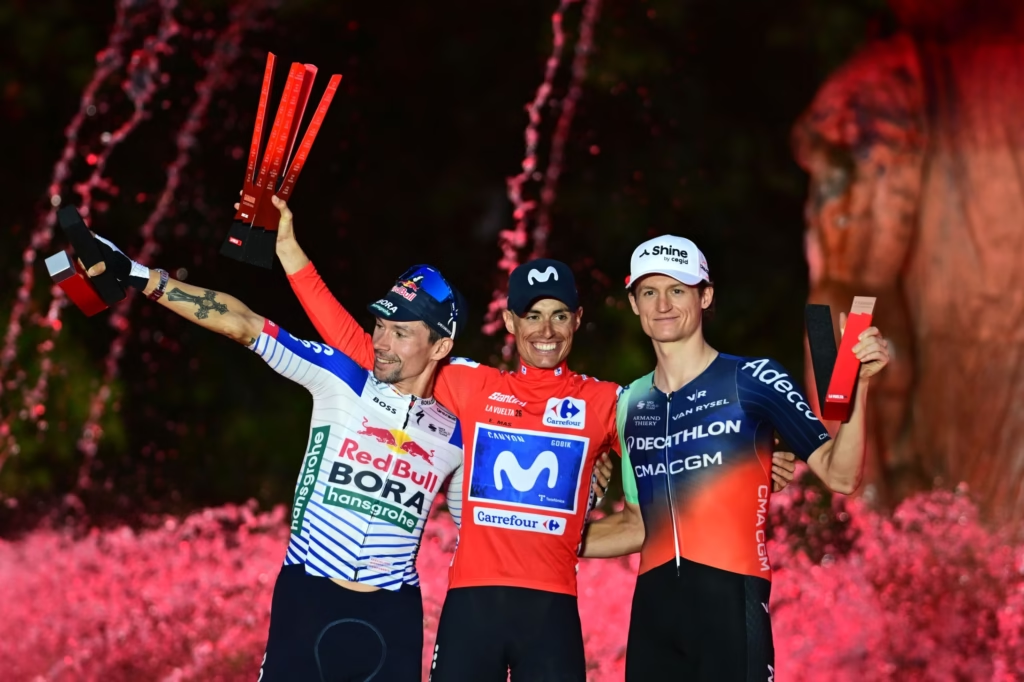 Photo Credit: Getty
Stage 20 turned defence into victory
The final mountain stage to Collado del Alguacil completed Mas’s transformation from race leader to race winner. Mikel Landa took the stage, but Mas expanded his advantage over Roglič and effectively settled the general classification before Granada. Our stage 20 report marked the moment the remaining uncertainty largely disappeared.
That sequence is important when comparing 2026 with other Vueltas. Mas did not win through one overwhelming mountain raid. He accumulated security. He survived the time trial, answered attacks and then widened the gap when the road finally tilted back towards his strengths. The final margin of 2:15 was comfortable without suggesting domination.
Felix Gall’s third place at 2:44 added another element. The Austrian confirmed his development as a Grand Tour GC rider, but never found the sustained opening required to dislodge the two riders ahead. The podium therefore mixed a first-time champion, a four-time champion and a rider still trying to establish his own place among the three-week specialists.

Movistar’s return to the top
Mas’s victory was also significant for Movistar. The Spanish structure had not won the Vuelta since Nairo Quintana in 2016 and had not won a men’s Grand Tour since Richard Carapaz took the Giro d’Italia in 2019. For a team whose history is built around stage-race leadership, that was a substantial drought.
The Vuelta has always mattered particularly to the team through its Reynolds, Banesto, Caisse d’Epargne and Movistar eras. Pedro Delgado won in 1989, Abraham Olano in 1998, Alejandro Valverde in 2009 and Quintana in 2016. Mas added another Spanish leader to that lineage and did so after years in which his own role as Movistar’s Grand Tour focal point had repeatedly been questioned.
The final stage in Granada gave the team the ceremonial image it had waited for, Mas crossing with his six remaining teammates as the overall victory was confirmed. The final classification also recorded Wout van Aert as points winner, Santiago Buitrago as mountains winner and Oscar Onley as best young rider.
Where the 2026 Vuelta sits historically
There is also a useful comparison with the race’s recent era of repeat champions. From 2019 onwards Roglič had made the Vuelta unusually familiar territory, winning four editions and turning red into one of the defining jerseys of his career. Mas breaking that pattern mattered because he had so often been the rider finishing behind the dominant names of his generation. His victory did not begin a new dynasty, but it interrupted one and restored a Spanish champion to the centre of the race. The 2026 Vuelta is unlikely to be remembered as a race of uninterrupted dominance. Its defining event was the removal of the pre-race favourite, followed by a long contest over whether the new leader could withstand Roglič. That gives it a different character from editions decided by one extraordinary mountain performance or a crushing time trial.
The final margin also places the victory in a useful middle ground. Mas was not hanging on by a handful of seconds in Granada, but neither had he crushed the field by the sort of margin associated with the most dominant Grand Tour wins. A 2:15 advantage over Roglič showed that the race had been decisively won while preserving the memory of a contest that remained tactically live deep into the final week. Its historical importance instead comes from several long-running stories reaching a turning point at once. Spain ended its 12-year wait for a home winner. Mas ended a sequence of Vuelta podiums without victory. Movistar ended a decade without winning its home Grand Tour. Roglič was denied the fifth title that would have put him alone at the top of the winners list.
Pogačar’s crash will always sit beside those facts, and any comparison that ignores it would be incomplete. Yet the race after stage 8 still demanded nearly two weeks of Grand Tour management. Mas met every remaining test and reached Granada with a margin he had built rather than merely inherited. That is the part of the 2026 Vuelta that gives the result its lasting historical weight.

