
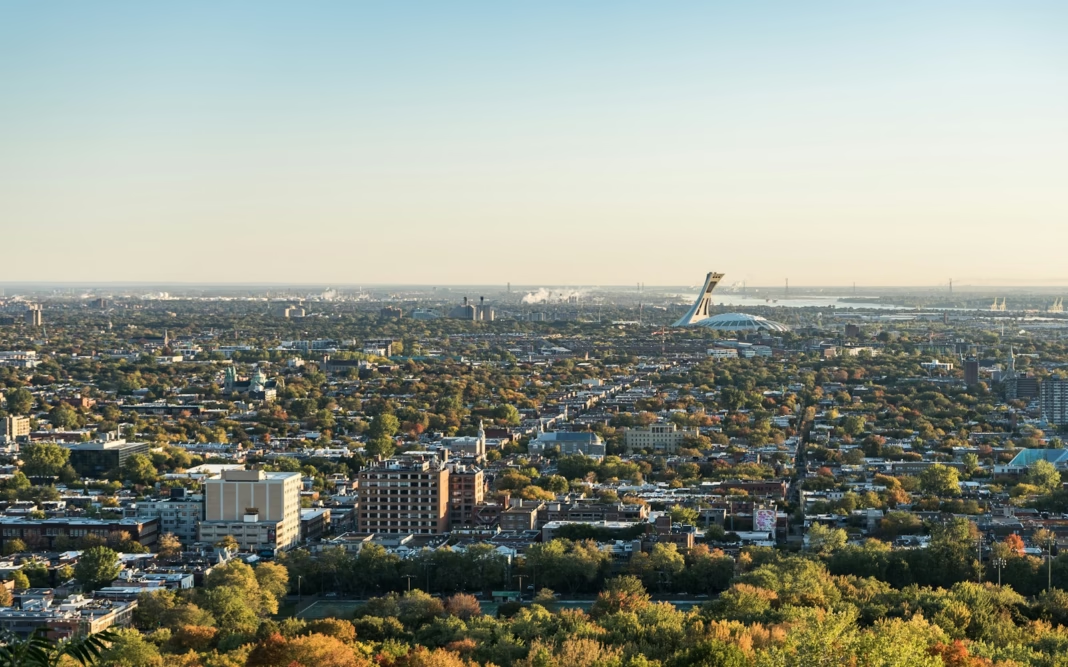
The 2026 UCI Road World Championships take place in Montréal from 20-27 September, returning the rainbow jerseys to a city whose cycling history stretches from Eddy Merckx’s 1974 world title to the Olympic road race two years later.
Fifty years on from the 1976 Montréal Olympics, Mount Royal will again decide some of the biggest races in cycling.
The championships begin on Sunday 20 September with the elite women’s individual time trial, followed by the elite men’s race against the clock later the same day. Under-23 and junior time trials and the mixed relay fill the opening part of the week before attention switches completely to the road races.
The elite women race on Saturday 26 September over 180.4km and 2,570 metres of climbing. The elite men close the championships a day later with 273.7km and 3,803 metres of elevation.
Those headline numbers only explain part of the difficulty. Both elite road races begin outside Montréal in Brossard before finishing with repeated laps of a 13.4km Mount Royal circuit. The women complete eight laps and the men 12, with Camillien-Houde, the Côte de la Polytechnique and the rising finish on Avenue du Parc returning every 13 kilometres.
It is the same circuit that riders tested at the 2026 GP Montréal only a week before the championships began.
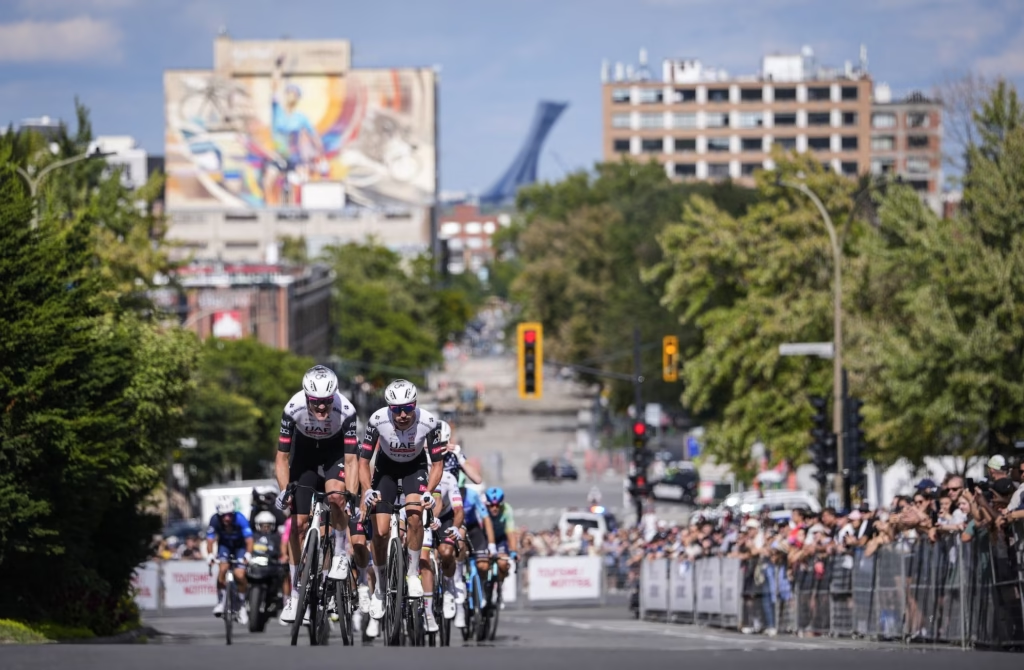
2026 World Championships schedule
The elite time trials bookend the opening day before the younger categories and mixed relay take over. Wednesday is reserved for road race training on the Mount Royal circuit, with racing resuming on Thursday.
| Date | Event | Distance | Climbing | Start |
|---|---|---|---|---|
| 20 September | Elite women’s individual time trial | 39.2km | 220m | 09:00 local / 14:00 BST |
| 20 September | Elite men’s individual time trial | 39.2km | 220m | 12:45 local / 17:45 BST |
| 21 September | Women’s U23 individual time trial | 20.3km | 145m | 09:00 / 14:00 BST |
| 21 September | Men’s U23 individual time trial | 31.3km | 197m | 12:00 / 17:00 BST |
| 22 September | Mixed relay team time trial | 40.6km | 290m | 08:30 / 13:30 BST |
| 22 September | Junior men’s individual time trial | 20.3km | 145m | 12:45 / 17:45 BST |
| 22 September | Junior women’s individual time trial | 10.7km | 91m | 15:30 / 20:30 BST |
| 24 September | Women’s U23 road race | 134km | 2,690m | 09:00 / 14:00 BST |
| 24 September | Junior men’s road race | 134km | 2,690m | 13:30 / 18:30 BST |
| 25 September | Men’s U23 road race | 174.2km | 3,497m | 09:00 / 14:00 BST |
| 25 September | Junior women’s road race | 80.4km | 1,614m | 14:15 / 19:15 BST |
| 26 September | Elite women’s road race | 180.4km | 2,570m | 09:00 / 14:00 BST |
| 27 September | Elite men’s road race | 273.7km | 3,803m | 09:00 / 14:00 BST |
Montréal is four hours behind the UK while British Summer Time remains in effect, making the elite road races particularly accessible for European viewers. Both are scheduled to begin at 14:00 BST, with the women’s finish expected shortly after 19:00 and the men’s race likely to run until around 20:40.
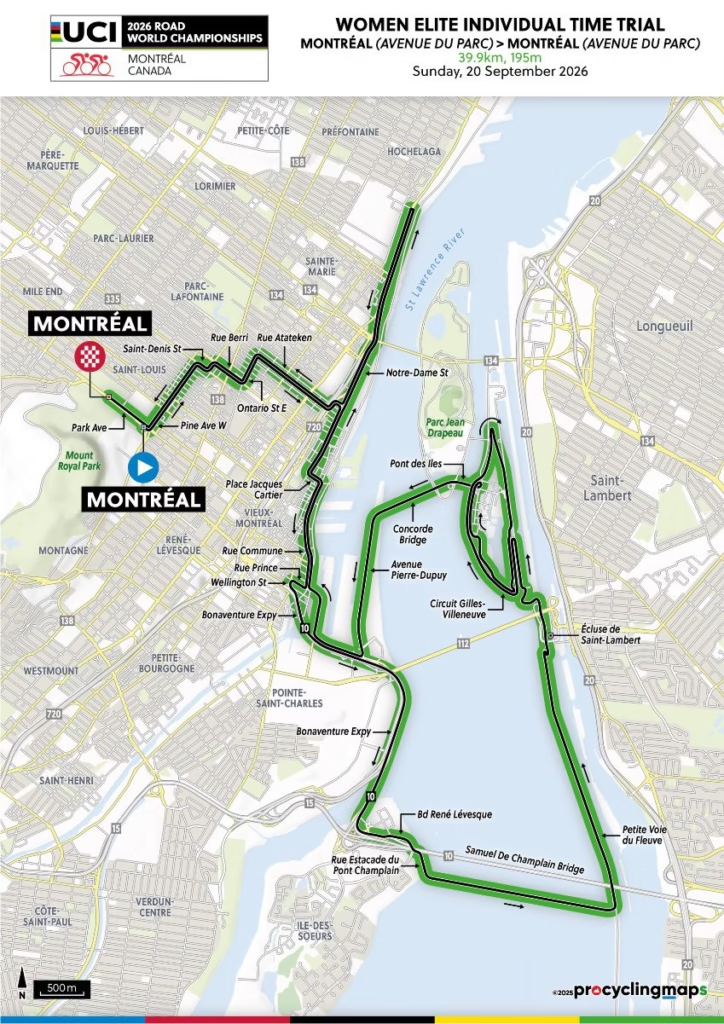
The elite women’s time trial opens Montréal 2026
The first rainbow jersey of the championships will be decided in the elite women’s individual time trial on Sunday morning.
For once there is no difference between the elite men’s and women’s routes. Both fields tackle exactly the same 39.2km course with 220 metres of elevation.
That produces a very different championship from the road races waiting later in the week.
The time trial largely avoids Mount Royal and heads instead through central Montréal, Old Montréal and towards the St Lawrence River before reaching Île Notre-Dame and the Circuit Gilles-Villeneuve.
The Formula 1 circuit should produce some of the fastest kilometres of the championship. Wide roads, sweeping corners and long sections where riders can remain in the extensions favour the specialists capable of holding high aerodynamic power for close to an hour.
There are technical interruptions, bridges and changes of direction, but this is fundamentally a course for genuine time trial riders rather than climbers hoping that elevation can cancel out a power deficit.
The final approach provides one last complication. After nearly 40km of predominantly flat riding, the route rises back towards the finish beside Parc Jeanne-Mance.
Anyone who goes too deep during the fast middle section still has to produce power when the gradient arrives.

Circuit Gilles-Villeneuve gives the time trial a distinctive character
The World Championships will make unusual use of one of Canada’s most recognisable sporting venues.
After leaving central Montréal, riders head towards Île Notre-Dame and enter Circuit Gilles-Villeneuve, the home of the Canadian Formula 1 Grand Prix.
It is an obvious visual feature of the course but also an important sporting one.
The circuit should allow riders to settle into a prolonged aerodynamic effort without many of the interruptions associated with an urban time trial. Speeds will be extremely high and small differences in position, equipment and pacing can translate into substantial time gains over several kilometres.
The difficulty comes from the transition back towards the city.
Riders leave the circuit, cross towards Parc Jean-Drapeau and eventually return towards the start area. The final section becomes more broken and demands another change of rhythm before the uphill run towards the line.
It is not a technically overwhelming time trial, but neither is it a simple straight-line power test.
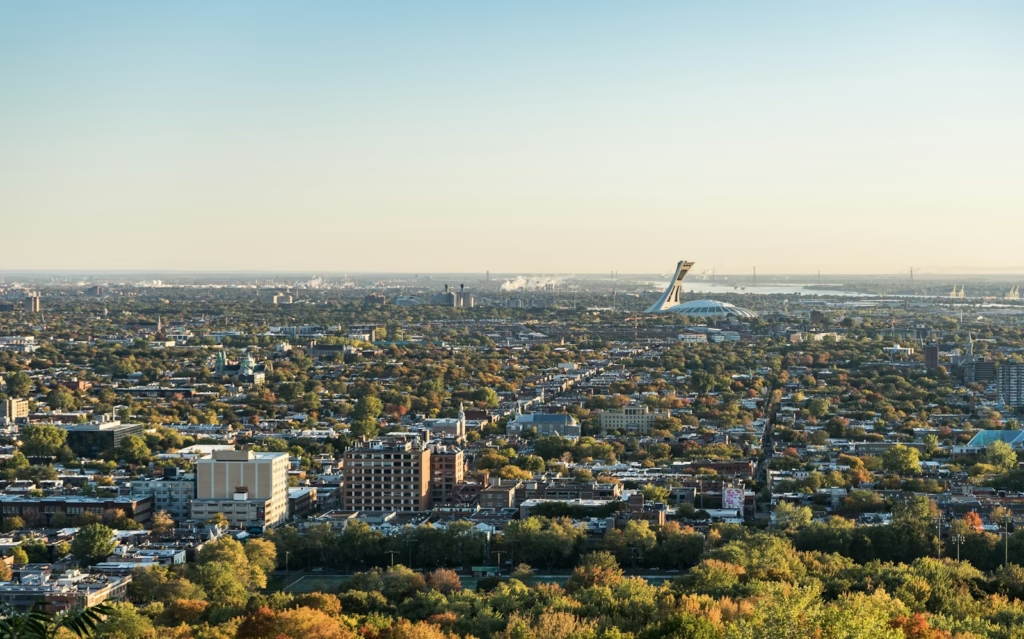
The road races begin in Brossard
The elite road races start at Quartier DIX30 in Brossard, on the opposite side of the St Lawrence River from central Montréal.
The women’s opening section measures 72.7km. The men spend considerably longer outside the city, racing 112.4km before reaching Mount Royal.
Those kilometres should allow an early breakaway to establish itself, but the terrain is not severe enough to decide either championship.
That is almost the point.
The opening roads through Montérégie allow the World Championships to develop like a conventional one-day race before everything changes once the riders enter Montréal. Smaller nations have an opportunity to get riders ahead, while the strongest countries must decide how much energy they are willing to spend controlling the move.
Those calculations become particularly important at a World Championships, where teams are smaller than in trade-team racing and riders normally accustomed to working together suddenly race for different countries.
The Samuel-De Champlain Bridge provides the transition into Montréal.
From there, the repeated climbing begins.
The Mount Royal circuit is only 13.4km but contains 269 metres of climbing
The championship circuit measures 13.4km with approximately 269 metres of elevation on every lap.
Multiply that by eight for the women and 12 for the men and the character of the course becomes obvious.
The women accumulate around 2,150 metres of their 2,570-metre total after entering the circuit. The men collect more than 3,200 metres of their 3,803 metres during the closing laps.
The vast majority of the climbing therefore arrives late.
That makes Montréal very different from a championship featuring one major mountain earlier in the route. Riders cannot survive the principal obstacle and then reorganise. The same climbs keep returning until somebody can no longer follow.
The women’s World Championships road race route guide looks at the eight-lap finale in greater detail, but three sections should shape both elite races.
Camillien-Houde is the main sustained climb
Voie Camillien-Houde is the longest repeated ascent of the circuit.
The full climb measures approximately 2.3km at 6.2%, although the hardest racing section familiar from GP Montréal is shorter and noticeably steeper.
Those figures are manageable in isolation.
Repeated eight or 12 times after several hours of racing, they become something else entirely.
Camillien-Houde is long enough for the strongest climbers to impose a sustained pace rather than relying on a short acceleration. Early in the road races it should gradually remove domestiques. Later, it becomes one of the clearest places to create the selection that decides the rainbow jersey.
The key may not be one devastating attack.
Instead, the accumulation of high-tempo passages can leave riders arriving at the final two laps already close to their limit.
An acceleration which would have been easily covered three hours earlier can suddenly create a decisive gap.
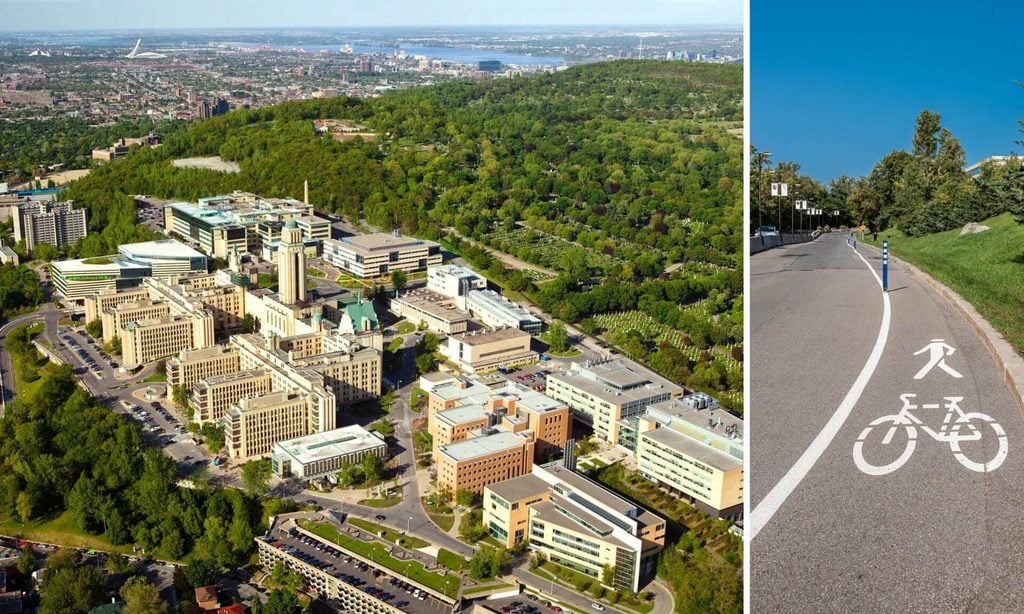
Côte de la Polytechnique is shorter but steeper
If Camillien-Houde rewards sustained climbing, the Côte de la Polytechnique provides the sharper test.
Sections exceed 11%, making positioning crucial before the road begins to rise.
A rider who starts the climb too far back can lose several bike lengths without actually being weaker than the riders at the front. Correcting that position requires an acceleration at exactly the moment when the strongest nations are trying to increase the pressure.
That problem grows with every lap.
Once only 30 or 40 riders remain, the climb also becomes an obvious attacking point. There is enough gradient to create immediate separation without requiring the prolonged commitment of a move on Camillien-Houde.
The roads afterwards provide little certainty that a gap will close automatically.
That should encourage attacking rather than waiting exclusively for the last climb.
Pagnuelo gives attackers another late opportunity
Avenue Pagnuelo adds another shorter rise later in the circuit.
It is roughly half a kilometre at around 7.5%, insignificant compared with a Grand Tour mountain but potentially very important once the race has been reduced to a small group.
Its position matters.
An attack there on the final lap leaves less road for the chase to reorganise. It also comes after the main climbing has already placed repeated strain on the legs.
That sequence helps explain why Montréal does not need one spectacular mountain to be selective.
The circuit constantly asks riders to accelerate, climb, descend, reposition and then do it again.
Recovery is limited.
By the final hour, even short climbs can produce large differences.
Avenue du Parc is not a conventional sprint finish
Any group still together after the final circuit returns towards Parc Jeanne-Mance and the finish on Avenue du Parc.
The approach rises rather than flattening completely.
That changes the type of sprint required.
A pure fast finisher who has somehow survived the climbing does not receive a straightforward final 200 metres. The gradient rewards riders able to sustain their acceleration after an exhausting race, while anybody arriving alone or with a small advantage has a reasonable chance of holding it.
The finish was already tested at the 2026 Grand Prix Cycliste de Montréal.
Paul Seixas attacked during the final Mount Royal lap, Isaac del Toro bridged across and the pair worked together to remove the rest of the contenders from the fight for victory. Del Toro then proved significantly stronger on the uphill finish.
The result provided a useful lesson before the World Championships.
Waiting for a reduced sprint is possible.
It is not necessarily the safest way to win.
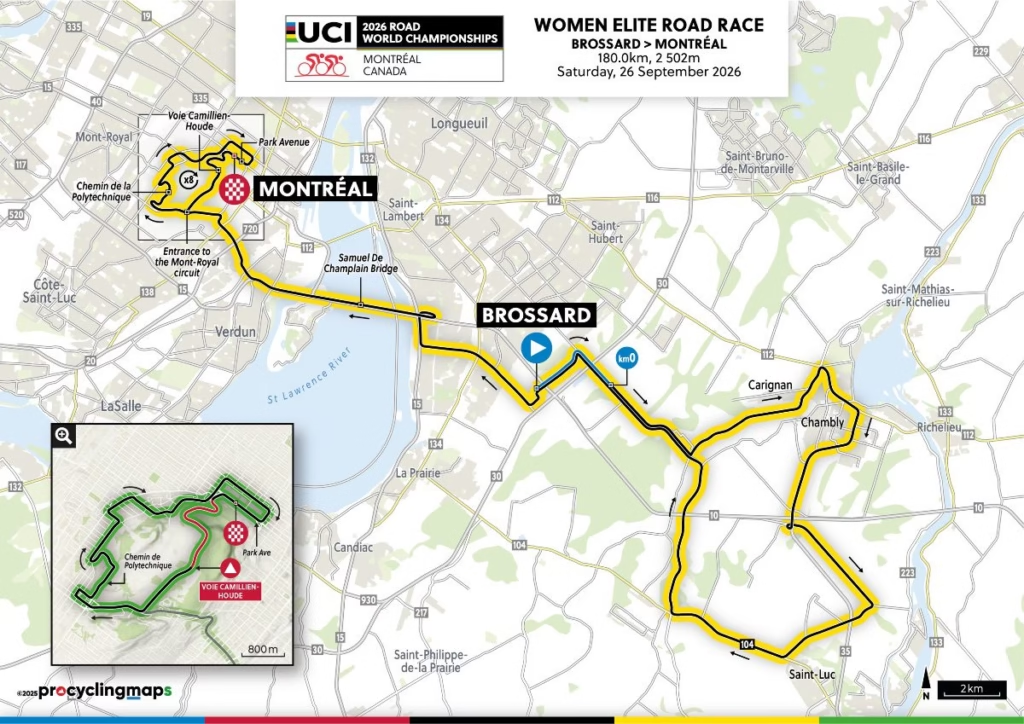
The women’s race contains 180.4km and eight Mount Royal laps
The elite women’s road race takes place on Saturday 26 September.
After the 72.7km opening section from Brossard, the riders complete eight Mount Royal circuits for a total race distance of 180.4km.
The 2,570 metres of climbing puts Montréal below the exceptionally difficult Kigali course used for the 2025 World Championships, but direct comparisons based solely on elevation are misleading.
The climbing here is compressed into the final part of the race.
That should create a long period in which the strongest nations gradually increase the pressure rather than waiting for one defining climb.
The winner therefore needs more than pure climbing ability.
She must survive repeated accelerations, position well before Polytechnique, handle the descents, judge when to attack and still have enough left for Avenue du Parc if the race remains together.
It should suit the strongest Ardennes-style riders particularly well, but it leaves enough uncertainty for powerful Classics specialists to remain relevant if they can survive the final circuits.
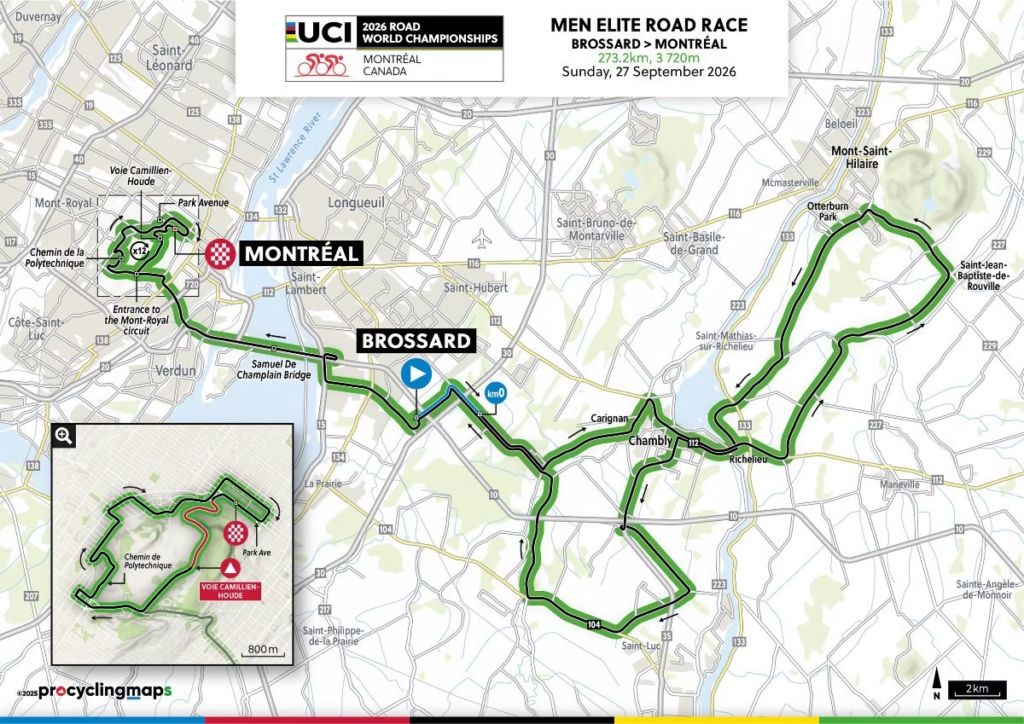
The men’s race pushes the circuit into endurance territory
The elite men face the same basic problem on Sunday, only for considerably longer.
Their race covers 273.7km with 3,803 metres of climbing.
The opening section from Brossard lasts 112.4km before the riders begin 12 laps around Mount Royal.
At almost 274km, Montréal is firmly within the traditional World Championships endurance range. The difference between lap eight and lap 12 may therefore be larger than the profile suggests.
That was one of the most useful lessons from GP Montréal.
The WorldTour race completed 16 circuits and accumulated 4,304 metres of climbing. For much of the afternoon, the repeated ascents did not appear individually decisive. By the final laps, the field had been shredded and even riders who had looked comfortable earlier were suddenly unable to respond.
The World Championships add a long approach before the circuit and the tactical unpredictability of national teams.
That should produce a very different race even though the final roads are familiar.
The strongest countries have several ways to use those laps. They can increase the pace early, send secondary leaders ahead or wait until the final hour and try to decide the race through raw strength.
Anyone who waits too long risks discovering that another nation has already changed the race.
GP Montréal provided the perfect reconnaissance race
World Championships contenders rarely receive such an accurate competitive test immediately before the event.
The GP Montréal route was redesigned this year specifically around the 13.4km championship circuit. Sixteen laps produced 214.4km and 4,304 metres of climbing.
Del Toro won ahead of Seixas after the pair escaped on the final lap. Brandon McNulty finished third, Quinn Simmons fourth and GP Québec winner Remco Evenepoel fifth.
Tom Pidcock, Giulio Ciccone and Ben Healy were also among the riders still involved late.
The result does not provide a ready-made World Championships hierarchy. The men’s Worlds is almost 60km longer, uses fewer circuit laps and introduces national-team tactics.
It does show where the race can be broken.
Seixas created separation on the final Camillien-Houde passage. Healy had already shown that attacking earlier could put the favourites under pressure. Del Toro demonstrated how valuable it is to have enough climbing strength to make the selection without sacrificing the finish.
Five days before the championships begin, riders no longer need to guess what Mount Royal feels like at race speed.
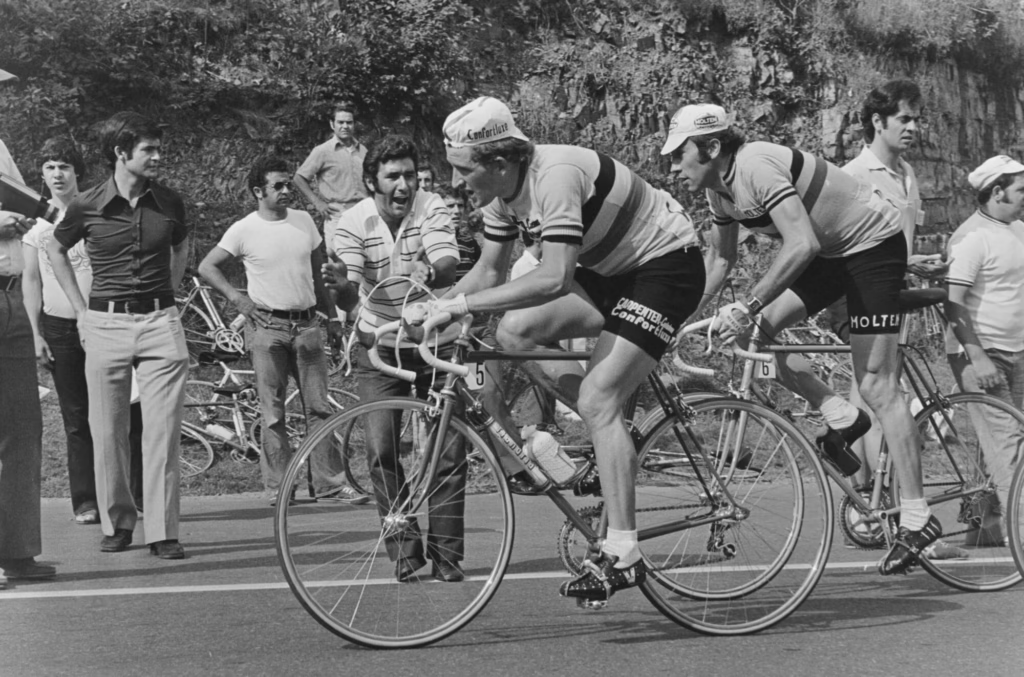 Photo Credit: Maurice Terryn
Montréal hosted the first World Championships outside Europe in 1974
The World Championships last came to Montréal in 1974.
It was a landmark edition before any racing had taken place, becoming the first Road World Championships held outside Europe.
The elite men’s race was based around repeated laps of Mount Royal. Eddy Merckx arrived having already won the Giro d’Italia and Tour de France and completed one of the greatest seasons in cycling history by taking the rainbow jersey as well.
Raymond Poulidor finished second.
The women’s race produced a French victory through Geneviève Gambillon, who claimed the second world road title of her career.
The modern circuit is not an exact reconstruction of the 1974 route, but the connection is unmistakable. Mount Royal remains the centre of the race and repeated climbing is again the mechanism used to separate the strongest riders.
That history later became part of the identity of the Grand Prix Cycliste de Montréal, with the history of GP Montréal tracing the city’s route from the 1974 Worlds through the Grand Prix des Amériques and into the modern WorldTour era.
In 2026, the rainbow jerseys finally return.
The 1976 Olympic circuit reaches its 50th anniversary
The World Championships also fall exactly 50 years after Montréal hosted the Olympic Games.
Cycling returned to Mount Royal in July 1976 for the men’s Olympic road race, using another circuit based around the mountain.
The sport was very different. Olympic road racing remained restricted to amateurs, meaning the leading professional riders of the era were absent.
Sweden’s Bernt Johansson won gold after attacking clear, with Giuseppe Martinelli of Italy taking silver and Poland’s Mieczysław Nowicki bronze.
Half a century later, the central challenge is recognisable.
Mount Royal is not one decisive mountain. Its difficulty comes from repetition.
The 2026 road races revive that principle while adapting it for modern championship racing. The elite women face more than 100km on the finishing circuit alone. The elite men tackle more than 160km of repeated Mount Royal laps after already racing for well over two hours.
Montréal does not need Alpine gradients to produce a hard World Championships.
The mountain simply keeps coming back.
What type of rider does Montréal favour?
The time trial is relatively straightforward to classify.
Sustained aerodynamic power should dominate the 39.2km route, with bike handling, pacing and the final rise providing secondary tests.
The road races are harder to reduce to one rider type.
Pure climbers have enough elevation to attack, but no ascent is long enough to make climbing the only requirement. Classics riders have repeated opportunities to use their explosiveness, but they must survive thousands of metres of cumulative elevation. Faster riders retain a chance if they reach Avenue du Parc, although every rival knows the danger of bringing them there.
The ideal Montréal rider can climb hard repeatedly without losing the ability to accelerate late.
That is why the course potentially suits such a broad range of contenders.
It is also why the national-team battle should matter so much.
The strongest individual rider may not win if another country reaches the final three laps with several credible attacking options.
Where can the road races be won?
The opening roads through Montérégie should establish the breakaway and determine which nations have to chase.
The first Mount Royal circuits begin stripping support riders away.
The middle laps are where nations with numbers can make the race expensive rather than immediately trying to win it.
Then the final three circuits become progressively harder to control.
Camillien-Houde offers the best sustained attacking ground. Polytechnique provides the sharpest gradients. Pagnuelo arrives late enough for a smaller move to become difficult to retrieve. Avenue du Parc keeps the race open to anyone still capable of sprinting after hours of climbing.
Montréal therefore offers very few kilometres where the favourites can simply wait.
That feels appropriate for a championship built around roads that have already produced a Merckx world title, an Olympic champion and some of the hardest one-day racing on the modern WorldTour.
Fifty years after the Olympics and 52 years after the city’s first World Championships, Mount Royal gets to decide the rainbow jerseys again.

