
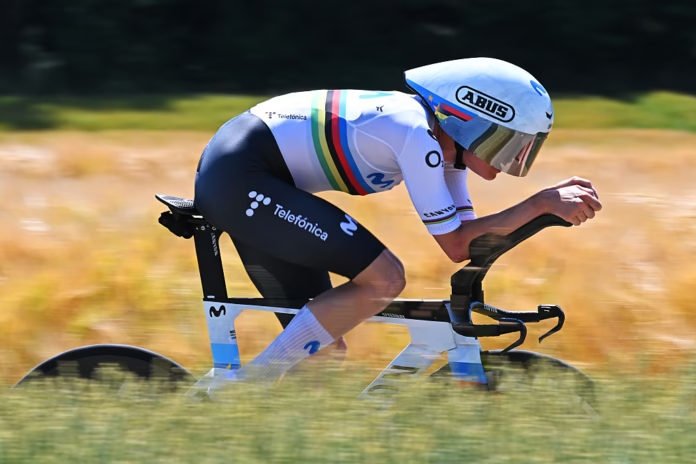
The 2026 UCI Road World Championships begin in Montréal on Sunday 20 September with the elite women’s individual time trial, and this is a very different test from the climbing-heavy race that decided the rainbow jersey in Kigali last year.
At 39.2 kilometres with only 220 metres of climbing, Montréal is built around sustained speed rather than repeated uphill accelerations. The distance is substantial, the fastest sections run through the Circuit Gilles-Villeneuve and there are long periods where the strongest specialists should be able to settle into an aerodynamic position and simply keep pushing.
That immediately places defending champion Marlen Reusser at the centre of the race. Zoe Bäckstedt and Demi Vollering are among the strongest challengers, while Lieke Nooijen, Antonia Niedermaier and Taylor Knibb form the next group capable of pushing towards the podium.
The wider 2026 UCI Road World Championships course guide covers every Montréal route and event, while the World Championships TV and streaming guide has the full UK schedule for the championship week.
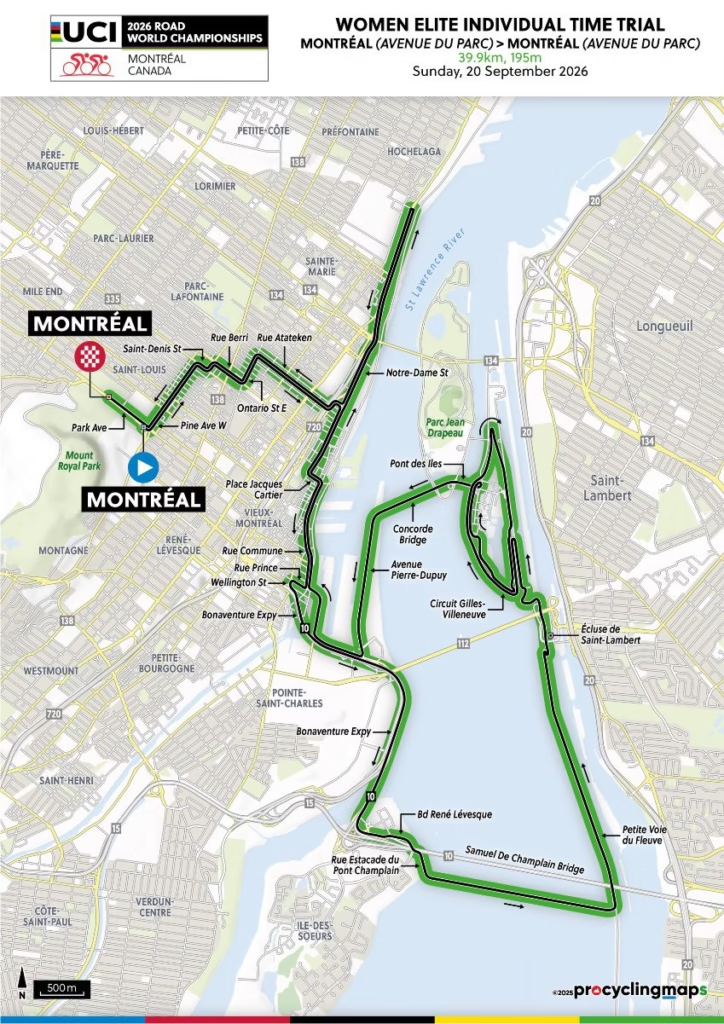
Women’s World Championships time trial 2026 race details
Date: Sunday 20 September 2026
Start: Avenue du Parc, Montréal
Finish: Parc Jeanne-Mance, Montréal
Distance: 39.2km
Elevation gain: 220 metres
Start time: 09:00 local time / 14:00 BST
The women’s elite time trial is the first race of the entire Montréal championship programme. Riders begin at 09:00 local time, with the elite men using the same 39.2km course later in the day.
For anyone unfamiliar with how the week fits together, the beginner’s guide to the 2026 UCI Road World Championships explains the programme, disciplines and rainbow jersey competitions.
Previous winners
2025 – Marlen Reusser
2024 – Grace Brown
2023 – Chloé Dygert
Reusser arrives in Montréal as defending champion after finally converting years of elite time trial performances into the individual rainbow jersey in Kigali.
Grace Brown won in Zürich in 2024 before retiring at the end of that season, while Chloé Dygert took her second elite title in Glasgow in 2023.
A long World Championships time trial with very little climbing
The most important feature of the Montréal course is not a climb or technical sector. It is the combination of 39.2km of racing and only 220 metres of elevation gain.
That creates a very different contest from Kigali, where the course repeatedly rewarded riders capable of carrying power over substantial climbing.
Montréal largely avoids Mount Royal. Instead, the race moves through central Montréal and Old Montréal towards the St Lawrence River before crossing onto the islands and reaching the Circuit Gilles-Villeneuve.
The Formula 1 circuit should contain some of the fastest kilometres of the entire World Championships. Its wide roads and sweeping corners offer long periods where riders can stay in the extensions, maintain momentum and produce uninterrupted power.
There are still technical sections, bridges and changes of direction capable of disrupting rhythm, but this is fundamentally a time trial for riders comfortable spending close to an hour at high speed.
The length matters as much as the profile. Most women’s time trials during the season are considerably shorter, so riders who can produce exceptional numbers for 20 or 25 kilometres still need to demonstrate that they can sustain them deep into a 39km championship effort.
Pacing will therefore be crucial. Losing a handful of seconds through caution early in the race may be recoverable. Going too hard through the opening 15 kilometres and paying for it across the final third probably will not be.
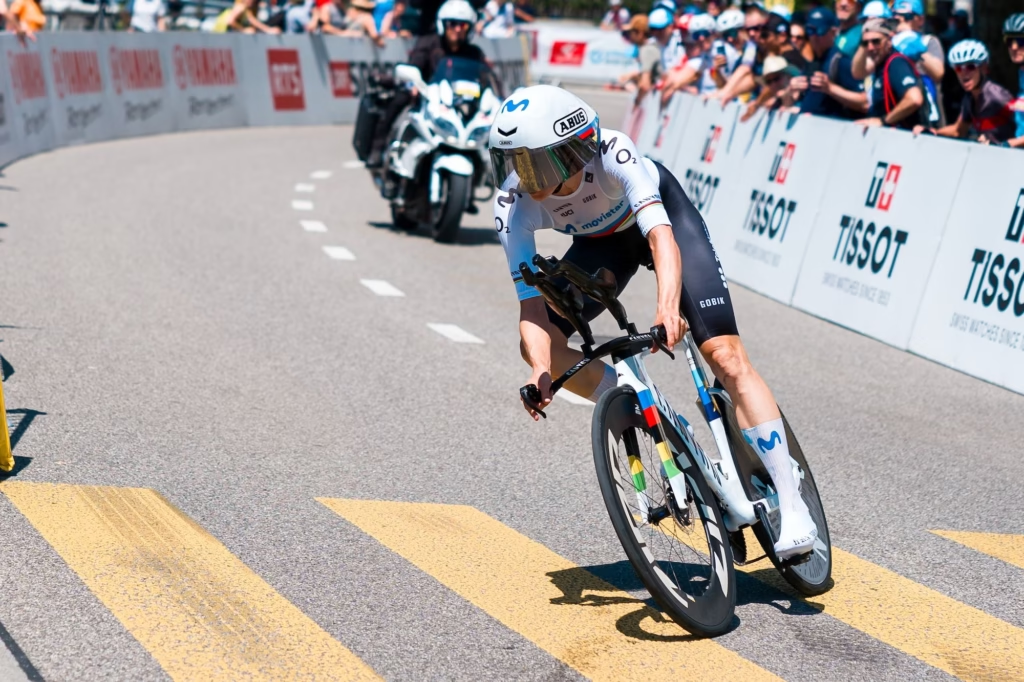
Marlen Reusser is the benchmark
Everything about the course points towards Marlen Reusser.
The defending world champion has spent much of her career establishing herself as one of the strongest pure time trial specialists in women’s cycling, and Montréal removes many of the features that can occasionally narrow her advantage.
There is no major climb where a lighter rider can take back large chunks of time. Instead, there are kilometres of fast road where Reusser can use her aerodynamic position, size and sustained power.
Her 2026 season has reinforced that position. She won the Tour de Suisse Women time trial in June, with the Aarburg test helping shape the overall race, and continued to show her strength against the clock later in the season.
The Tour de Suisse Women contenders preview highlighted the same underlying advantage: when a race gives Reusser enough uninterrupted time trial kilometres, everybody else often begins from a defensive position.
Her final preparation in Canada has also been encouraging. Reusser won the Chrono Féminin de Gatineau earlier this week, producing a substantial winning margin only days before the rainbow jersey race.
That makes Montréal less a question of whether Reusser has the form and more about whether anybody can remain close enough to challenge her.
Zoe Bäckstedt has become a genuine elite contender
Zoe Bäckstedt is no longer simply a young rider who may eventually challenge the established time trial specialists.
She is already doing it.
The British rider has continued the progression that made her such a dominant junior and under-23 rider, carrying her track pursuit power and aerodynamic efficiency into increasingly important elite road time trials.
Bäckstedt retained the British time trial title earlier this season and has repeatedly appeared near Reusser in major races against the clock.
Her Tour de Suisse performance was particularly significant. She finished second behind Reusser before continuing that form into the summer, demonstrating that her strongest results are no longer limited to national or age-group competition.
The main unknown in Montréal is distance.
Bäckstedt has the power required for the course, but 39.2km makes this a much longer effort than most of the time trials where she has already excelled.
If she reaches the final 10 kilometres still producing the same numbers as the opening half, she has the potential to finish very high.
Great Britain will also have Anna Morris competing against the clock, while Bäckstedt is central to the wider British Worlds squad covered in our Great Britain at the 2026 World Championships preview.
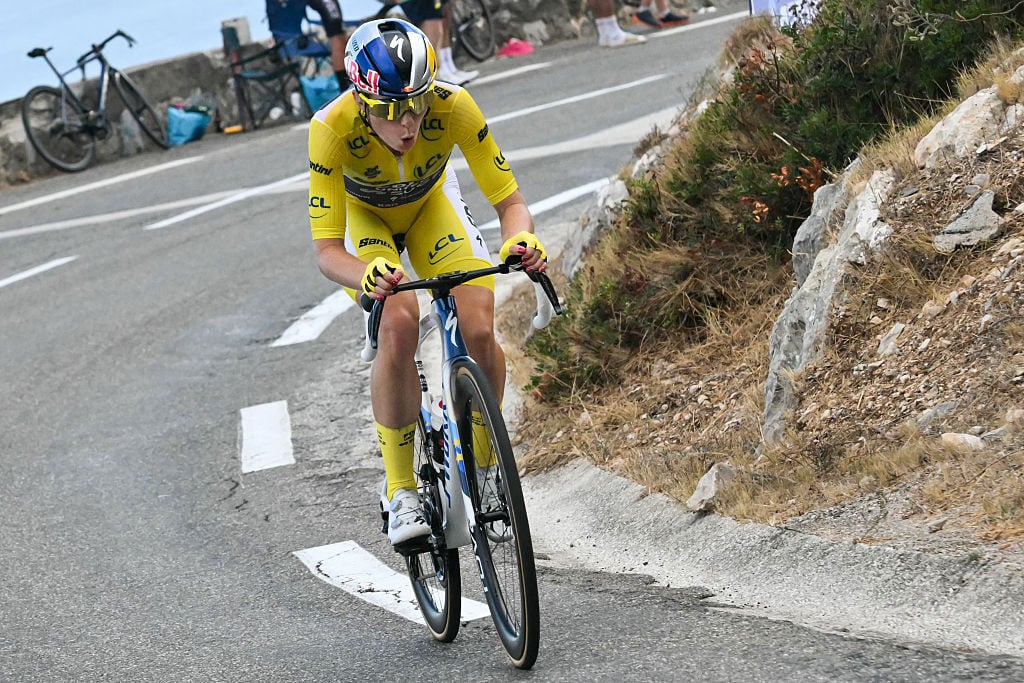 Photo Credit: Getty
Demi Vollering remains dangerous even on a flatter course
Demi Vollering is not the archetypal rider for this course, but her World Championship time trial record makes her impossible to discount.
She has become consistently competitive against the clock and enters Montréal after another season in which her time trialling played an important role in major stage races.
Vollering was second at the World Championships in Zürich in 2024 before finishing third in Kigali last season.
The Montréal course perhaps suits her slightly less than either of those routes. There is less climbing available for Vollering to exploit her power-to-weight advantage, while riders such as Reusser can spend longer operating in the environment that suits them best.
Yet Vollering has repeatedly closed the gap to the pure specialists.
Her 2026 season has also been one of the strongest of her career, including victories at both the Giro d’Italia Women and Tour de France Femmes.
The way she eventually secured the latter is covered in more detail in How Demi Vollering won the 2026 Tour de France Femmes.
A third consecutive World Championships time trial medal is firmly within reach.
Lieke Nooijen has shown she can challenge the very best
Lieke Nooijen may be the rider most capable of upsetting the established order.
Her breakthrough against the clock came through performances where she stopped simply being competitive and started getting extremely close to the riders normally expected to dominate.
The clearest example came during the Tour de France Femmes, where Nooijen finished only four seconds behind Reusser in the Dijon time trial.
That was an important result because of the quality behind them. Vollering, Bäckstedt and Kristen Faulkner were all beaten.
The difficulty is transferring a performance over roughly 20 kilometres into one lasting almost twice as long.
Nooijen has enough longer-distance evidence to suggest she can manage it, including her ride at the Dutch national championships. Montréal nevertheless places much more emphasis on pacing and late-race durability.
If she is still within touching distance at the halfway point, she could be one of the most interesting riders to follow through the second half.
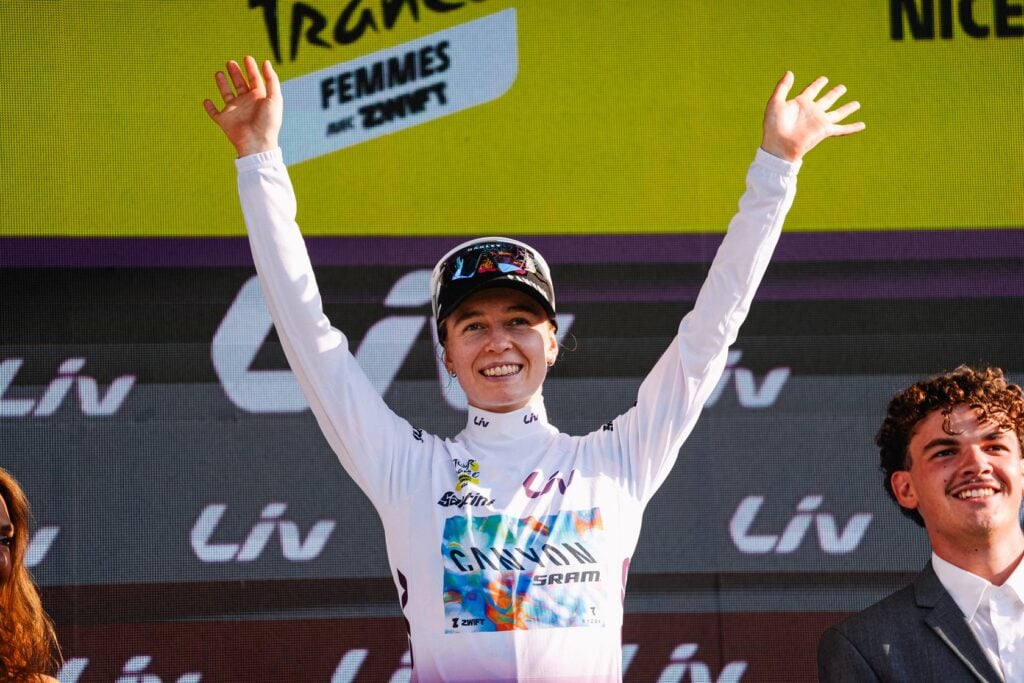
Antonia Niedermaier can push towards another major result
Antonia Niedermaier has quietly built one of the stronger championship time trial records among the younger generation.
The German finished fourth at the 2024 World Championships and sixth in Kigali last season, showing that she can repeatedly produce her best efforts at major championships.
She has also become an increasingly complete stage racer.
Niedermaier was one of the important riders in the 2026 Tour de France Femmes and finished the race as the best young rider, helping Canyon SRAM emerge as one of the strongest teams of the Tour.
Montréal’s flatter profile is not necessarily perfect for her, but the distance could compensate. Niedermaier is accustomed to sustained efforts and has already shown she can pace championship time trials extremely effectively.
Another top-six finish would fit the pattern of her recent Worlds performances, while a medal would represent the next step.
Taylor Knibb could thrive over nearly 40 kilometres
Taylor Knibb is one of the hardest riders in the field to measure against the traditional road specialists.
Her background comes from triathlon rather than the usual road development pathway, but that is also what makes a course like Montréal interesting for her.
Knibb is exceptionally accustomed to long, controlled aerodynamic efforts where pacing is central. A 39km time trial suits that profile more naturally than a short, explosive championship course would.
The technical sections and repeated changes of rhythm may favour the experienced road specialists, but once the course opens onto its faster stretches, Knibb has the physical characteristics to produce an extremely competitive ride.
She remains less predictable than Reusser, Bäckstedt or Vollering, but the podium would not require a completely implausible jump in performance.
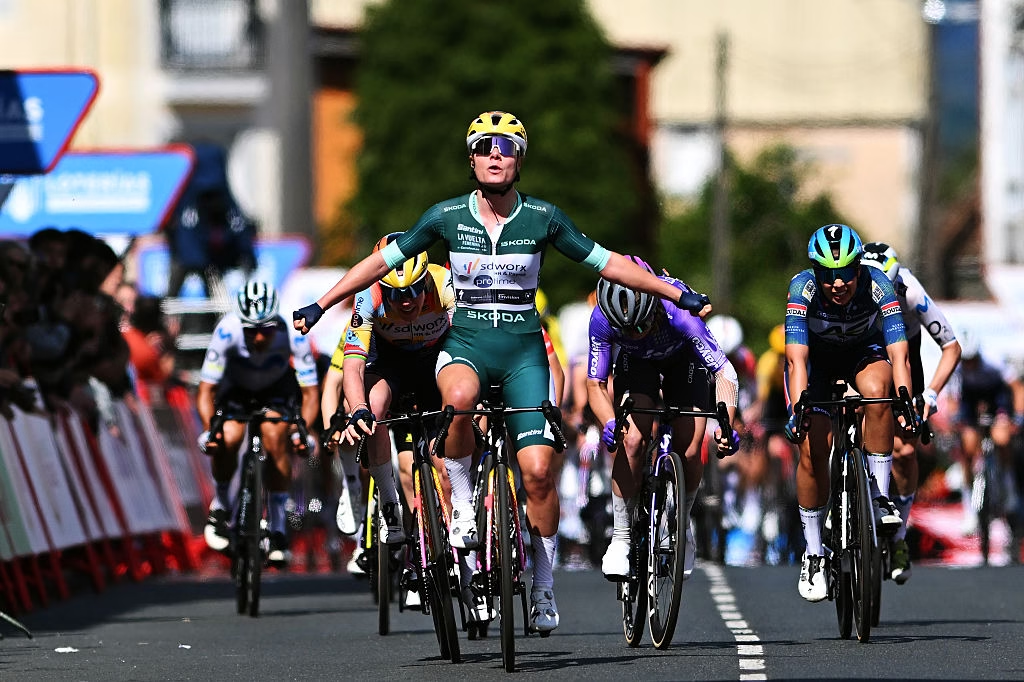 Photo Credit: Getty
Lotte Kopecky has the power but faces a specialist course
Lotte Kopecky has more than enough raw power to produce a strong time trial.
Her track background, Classics record and ability to sustain high outputs mean there are few courses where she can be dismissed completely.
The issue is that Montréal rewards very specific time trial qualities for almost 40 kilometres.
Kopecky can be devastating over shorter and more varied efforts, but she faces riders who have spent much more of the season specialising in exactly this type of race.
That probably makes a medal more difficult than on a shorter championship course, although Kopecky remains more than capable of producing a top result if she gets the pacing right.
Kristen Faulkner suits the prolonged effort
Kristen Faulkner is another rider whose characteristics fit the basic demands of Montréal.
The American excels when races reward sustained power rather than repeated steep accelerations, and her time trial position has already produced major results at the highest level.
The long sections around the river and Circuit Gilles-Villeneuve should suit her especially well.
Faulkner probably needs another step compared with Reusser based on their 2026 performances, but this is a course where she should have fewer compromises than on a hilly championship route.
A place among the leading riders is realistic if she can maintain her speed through the final quarter.
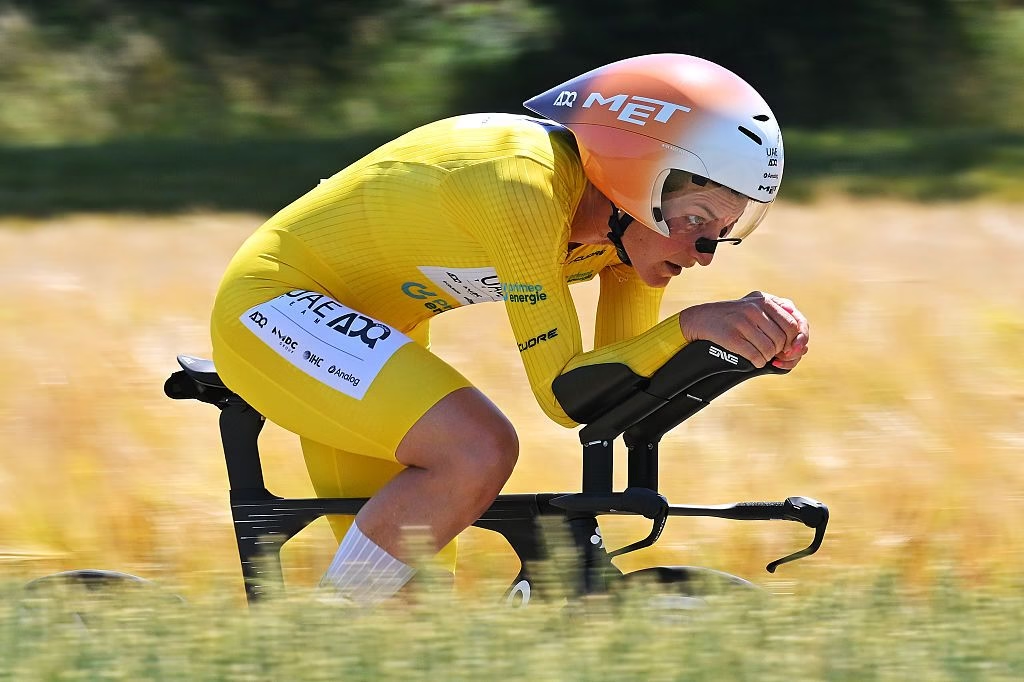
Elisa Longo Borghini adds another route to the podium
Elisa Longo Borghini comes into the World Championships as one of the most experienced riders in the field.
She is not normally the first name associated with a flat 40km time trial, but her ability to pace long individual efforts and maintain power after the point where others begin fading makes her difficult to ignore.
Longo Borghini’s Tour de France Femmes time trial was also stronger than the final result suggested after a late mechanical disrupted her ride.
Montréal will require a near-perfect performance for her to challenge Reusser, but few riders are better equipped to manage an effort of this length from start to finish.
The riders most likely to decide the medals
The depth behind Reusser makes the battle for the podium more open than the battle for outright favouritism.
Bäckstedt has perhaps the clearest combination of youth, raw power and recent time trial progression. Vollering brings the strongest recent championship record outside Reusser. Nooijen has already demonstrated that she can finish within seconds of the defending champion over a shorter course.
Niedermaier has repeatedly performed at Worlds, while Knibb, Kopecky, Faulkner and Longo Borghini each bring a different set of strengths to a course that heavily rewards sustained power.
The central question remains whether any of them can force Reusser away from her preferred race.
Montréal gives the Swiss rider almost everything she would ask for: a long distance, limited climbing and extended sections where maintaining speed matters more than acceleration.
That does not guarantee another rainbow jersey, but it establishes the benchmark everybody else has to reach.
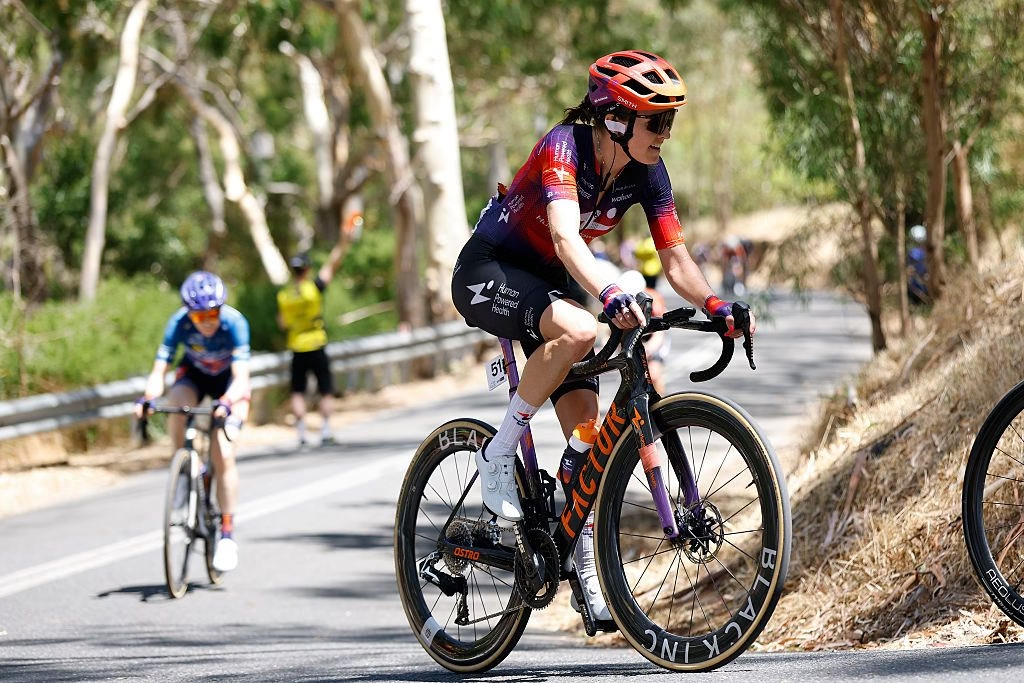
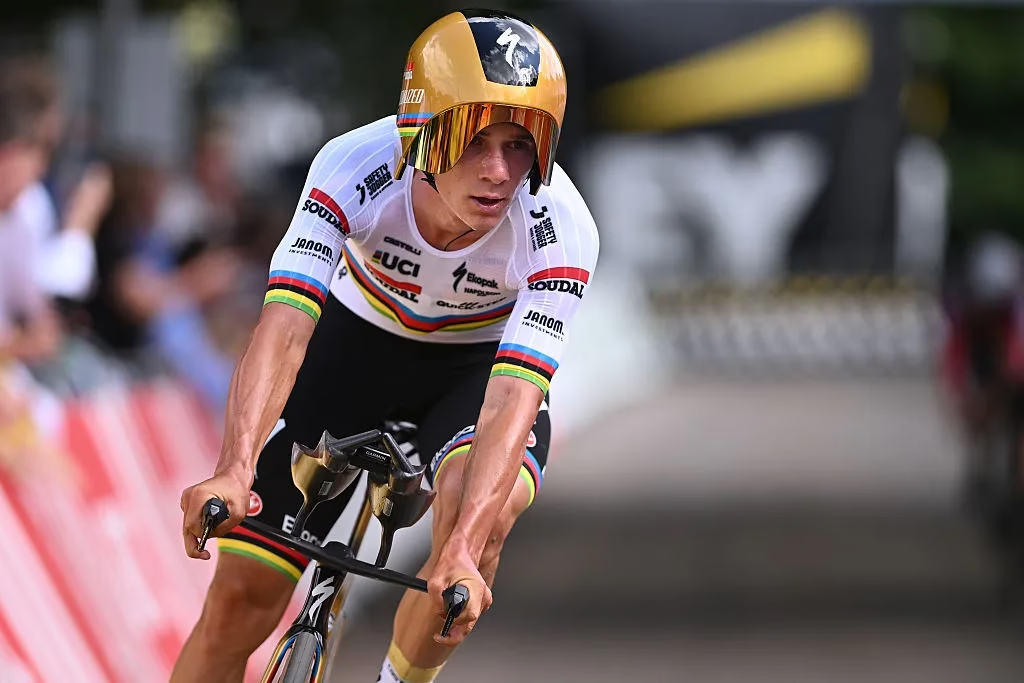
Top 3 prediction
1. Marlen Reusser
Reusser has the strongest combination of championship pedigree, current form and course suitability. The limited climbing removes one of the obvious ways rivals can reduce her advantage, while the 39.2km distance rewards exactly the sort of sustained effort she has repeatedly shown she can control.
2. Zoe Bäckstedt
Bäckstedt looks increasingly capable of turning elite podiums into victories. The distance is the major question, but her raw power and performances against Reusser this season make her one of the clearest challengers.
3. Demi Vollering
The course is flatter than Vollering would ideally choose, but her championship record and continued improvement against the clock make another medal entirely plausible. She has finished on the Worlds time trial podium in each of the last two editions and arrives after an exceptional stage-racing season.

