
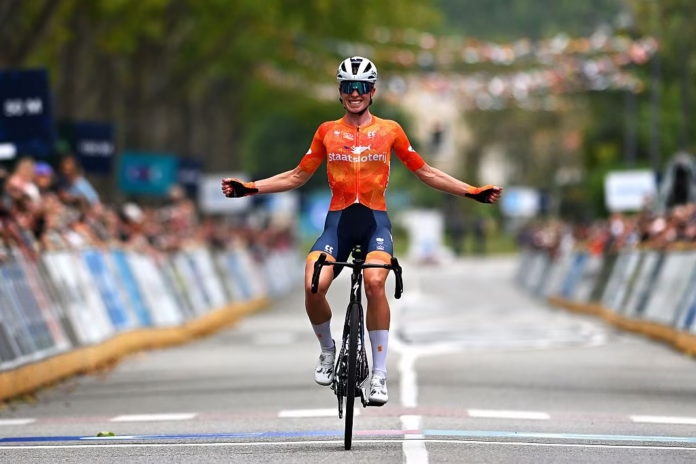
Demi Vollering arrives at the 2026 European Championships with almost every possible form line in her favour. The defending European champion became world champion in Montréal less than a week before Saturday’s road race, adding the rainbow jersey to a season that already includes overall victory at the Giro d’Italia Women and Tour de France Femmes.
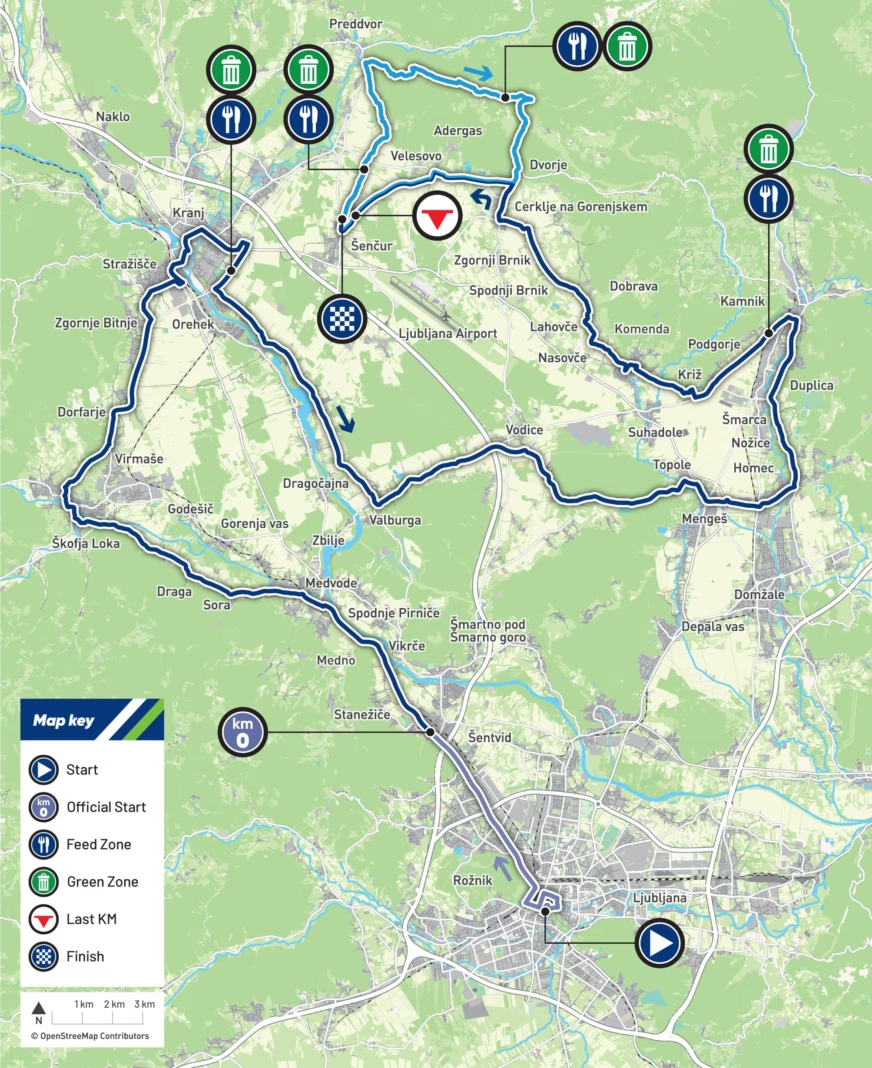
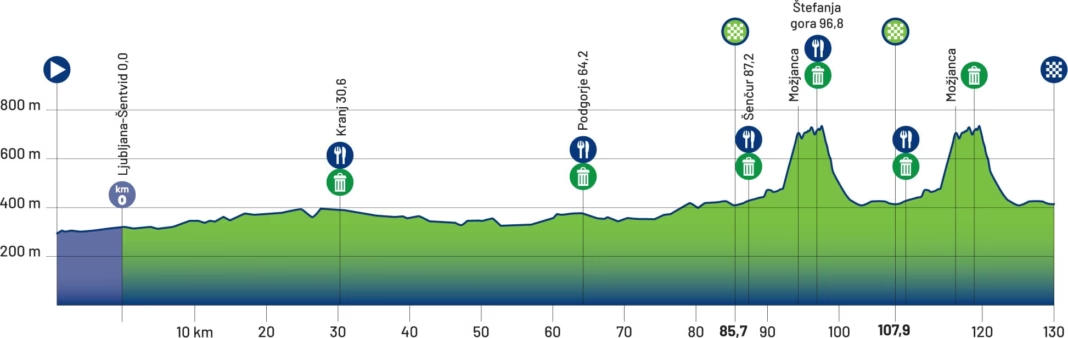
The Slovenian course gives her another obvious opportunity. The elite women’s race covers 130km from Ljubljana to Šenčur, with the decisive section built around two laps of a 22.1km circuit containing the climb to Možjanca, 2.1km at 10.2% with a maximum gradient of 15.8%.
Katarzyna Niewiadoma-Phinney, Elisa Longo Borghini and Marlen Reusser all finished within eight seconds of Vollering at the World Championships and return immediately for another major one-day race. Puck Pieterse gives the Netherlands a second attacking option, while Lorena Wiebes provides a completely different route to victory if the race comes back together.
The published UEC entry list is not the final start list and includes reserve riders. Pauline Ferrand-Prévot is still named despite Visma | Lease a Bike confirming that her 2026 season is over, while other late changes remain possible before the final list is issued on Friday. The current entries can be followed in our 2026 European Championships start-list guide.
Previous winners
2025 – Demi Vollering
2024 – Lorena Wiebes
2023 – Mischa Bredewold
2026 European Championships women’s road race route
The race starts at Kongresni trg in central Ljubljana with a 9km neutralised section through the city before kilometre zero in Šentvid. From there, the opening 85.8km are mostly flat or rolling as the race heads through Škofja Loka, Kranj, Volčji Potok, Kamnik, Komenda and Cerklje na Gorenjskem before reaching Šenčur.
There is enough road before the finishing circuit for a break to establish itself, but the European title is likely to be decided once the race turns towards Možjanca. Each of the two 22.1km laps contains 367 metres of climbing, with the gradient steepening sharply after a right-hand turn at Tupaliče.
Možjanca is short enough for explosive riders to attack but severe enough to punish anyone trying simply to survive. The climb averages 10.2%, reaches 15.8% and does not lead straight into recovery. The road continues over narrow, rolling terrain after the steepest section before a technical descent towards the lower station of the Krvavec cable car.
The final run back towards Šenčur is much faster. Once the race passes Strmol Castle there are a little over seven kilometres remaining, so the decisive question is not simply who climbs Možjanca fastest. Riders also need enough left to hold a gap over the crest and through the descent, or enough teammates behind to organise a chase.
With only two laps, the women’s race is less attritional than Sunday’s elite men’s event. That makes the first passage particularly important. A strong team cannot afford to treat it as reconnaissance because there may only be one further chance to put Wiebes and the other faster finishers under pressure.
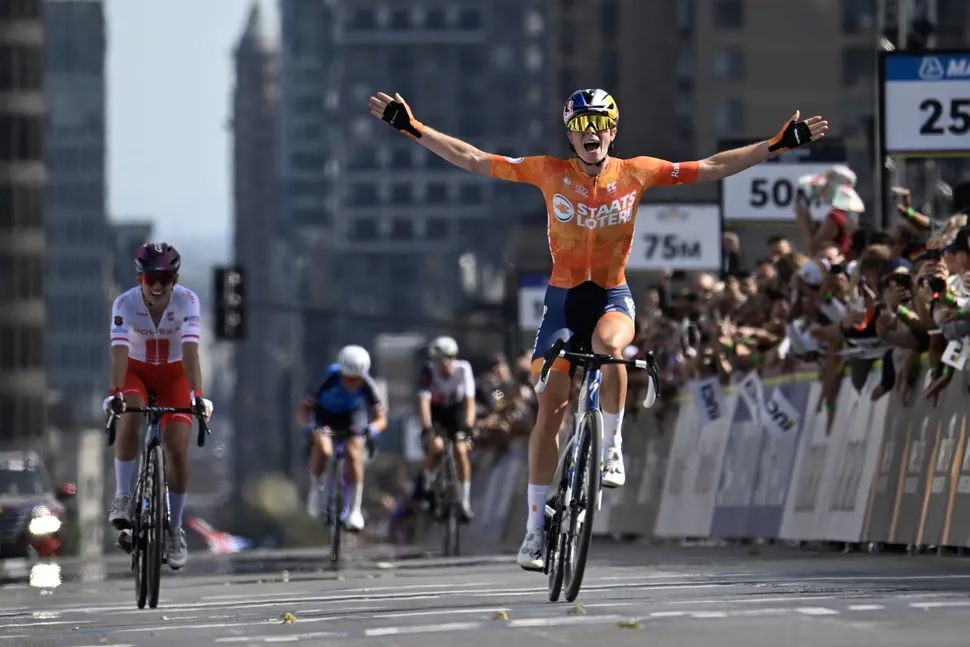 Photo Credit: Getty
Demi Vollering starts with the strongest case
Vollering won this title in France last year with a 37km solo attack. This time she starts in the rainbow jersey after winning the World Championships road race in Montréal, where she attacked from 38km out, was brought back, then still had enough left to beat Niewiadoma-Phinney in the final sprint.
That victory was not an isolated peak. Vollering has already won the Giro and Tour in 2026, and the short, steep Možjanca climb sits squarely in the range where she can turn sustained climbing strength into a one-day attack. Our World Championships race report covers the Montréal victory, while the tactical detail behind it is explored in how the Dutch plan worked around Vollering.
The main complication may be the size of the Dutch squad and the number of possible race scenarios. Vollering is the obvious leader, but the Netherlands also have Pieterse for aggressive racing and Wiebes if a larger group survives. That depth gives them options, but it also gives rival nations a reason to make the race hard before the final kilometre.
Katarzyna Niewiadoma-Phinney has another chance to turn the tables
Niewiadoma-Phinney came closer than anyone to denying Vollering in Montréal. She helped close the Dutchwoman’s long attack, matched the final selection and reached the finish on the same time before losing the sprint.
The Polish rider has also spent much of 2026 racing at the same level in stage races. She won on Mont Ventoux during the Tour de France Femmes and finished second overall to Vollering, showing that steep gradients are not a problem even when the race has already been hard for several hours.
Her challenge in Slovenia is tactical. Poland do not have the same depth as the Netherlands, and a final-lap move may need to be made before Vollering decides to attack. Dominika Włodarczyk, eighth at the World Championships, gives the team valuable support and another rider capable of surviving deep into the race.
Elisa Longo Borghini remains the rider most likely to disrupt the Dutch plan
Longo Borghini took bronze in Montréal after spending much of the final lap trying to break the Vollering-Niewiadoma pairing. She was only four seconds from the rainbow jersey and comes to Slovenia with another Italian squad built for aggressive one-day racing.
The course suits her willingness to attack away from the obvious moment. Waiting until the final steep section of Možjanca risks giving Vollering control, while moving earlier on the circuit could force the Netherlands to use riders before their leader wants to commit.
Italy also have Silvia Persico, Soraya Paladin, Eleonora Gasparrini, Sara Casasola, Erica Magnaldi and Monica Trinca Colonel among the entries. That creates room for Longo Borghini to race less predictably than she could if she were the country’s only realistic winner.
 Photo Credit: Getty
Marlen Reusser is carrying elite form into Slovenia
Reusser leaves Montréal as the elite women’s time trial world champion and fourth-place finisher in the road race. The latter result is particularly relevant here because she stayed with the strongest climbers through the decisive phase on Mount Royal and finished only eight seconds behind Vollering.
Možjanca is steeper than anything decisive in Montréal, which makes the final ascent a more awkward test for Reusser than a rolling power climb. Her advantage comes after the summit. If she can crest within touching distance of the front, the rolling road and fast run towards Šenčur give her a chance to close gaps or turn a small advantage into a much harder chase.
Her latest world title also removes any doubts about her late-season condition. Reusser’s victory against the clock in Montréal is covered in our 2026 World Championships time trial report.
Puck Pieterse gives the Netherlands another attacking route
Pieterse finished sixth at the World Championships after playing a central role in the Dutch tactics that launched Vollering’s first major attack. The Slovenian course may give her more freedom because the Netherlands do not need every rider to perform the same job twice.
She is particularly dangerous if the first Možjanca ascent produces a selective group without creating a decisive solo gap. Pieterse can attack steep gradients, descend well and sprint from a reduced group, making her difficult for rival teams to ignore even while Vollering remains behind.
That is where the Dutch numerical advantage becomes most useful. If Pieterse goes clear, Italy, Poland and Switzerland cannot simply wait for Vollering. If they chase immediately, they may arrive at the final climb having already spent riders that could otherwise have helped contain the defending champion.
 Photo Credit: Getty
Could Lorena Wiebes survive the final climb?
Wiebes won the European title in 2024 on a much flatter course in Belgium, and her presence changes the calculations even if Možjanca looks too steep for a conventional sprint race.
The Netherlands do not need to chase every move if Wiebes has already been dropped, because Vollering and Pieterse can race for the win ahead. Rival nations have the opposite problem: if they fail to make the final lap hard enough, they risk towing the fastest finisher in the race back towards Šenčur.
A group of 15 or 20 reaching the final seven kilometres would bring Wiebes firmly back into the picture. A group of five or six containing Vollering almost certainly would not.
France arrive with depth after an excellent Worlds
France were one of the strongest collective teams in Montréal, placing Juliette Berthet fifth, Célia Gery seventh and Maeva Squiban ninth. Gery is not on the European Championships elite entry list, but Berthet and Squiban are joined by Cédrine Kerbaol, Évita Muzic, Marion Bunel and several other options.
Berthet showed at the Worlds that she can stay close to the very best when a hard race breaks apart, while Squiban has no reason to wait for a final sprint. Kerbaol and Muzic add further climbing strength, giving France enough depth to attack before the final Možjanca ascent instead of trying to follow the Dutch move once it comes.
Ferrand-Prévot remains on the UEC entry list because it includes reserves, but she should not be treated as a contender. Visma | Lease a Bike confirmed earlier in September that she had ended her season and would not race again in 2026.
Germany, Spain and Switzerland have multiple ways into the race
Germany can build around Liane Lippert, Antonia Niedermaier and Franziska Koch. Koch finished tenth in Montréal, while Lippert has the acceleration for a short, steep climb and Niedermaier offers a more sustained climbing option if the race becomes selective early.
Spain’s most interesting card is Paula Blasi. She finished fifth overall at the Tour de France Femmes and has repeatedly shown that she can handle steep late climbs without needing a summit finish. Mavi García, Usoa Ostolaza and Sara Martín give Spain several riders capable of attacking before the favourites begin watching one another.
Switzerland are led by Reusser but also have Noemi Rüegg, who offers a faster finish if the group is larger than expected. The combination allows Switzerland to avoid committing everything to keeping Reusser in contact on the steepest part of Možjanca.
 Photo Credit: Getty
Other riders to watch
Blanka Vas is well suited to a race built around short, sharp climbing followed by technical roads, while Cecilie Uttrup Ludwig has enough experience in the Ardennes to stay dangerous if Denmark can keep her protected into the final circuit.
Anna Henderson is one of only two British entries alongside Lauren Dickson. Henderson is unlikely to want a pure climbing contest against Vollering and Niewiadoma-Phinney, but a tactical race with hesitation after Možjanca could give her a route back towards the front.
Karlijn Swinkels, Riejanne Markus, Femke de Vries, Kathrin Schweinberger, Silvia Persico, Marta Lach and Noemi Rüegg all have profiles that become more interesting if the favourites neutralise one another. The course is hard enough to make selection unavoidable, but short enough that the front group may still contain more riders than the obvious climbers would prefer.
How the women’s European Championships could be won
The opening 85km should be about managing the breakaway and arriving at the finishing circuit with numbers intact. The first passage over Možjanca is where the real argument begins.
The Netherlands have little incentive to make the race chaotic too early. Vollering is the strongest climber on recent evidence, Pieterse can cover aggressive moves and Wiebes rewards them if the pace is not high enough. Italy, France, Poland and Spain have more reason to attack before the final climb and force the Dutch team to respond.
If Vollering reaches the base of Možjanca on the final lap with several teammates and the race still together, everyone else is likely racing on her terms. Niewiadoma-Phinney and Longo Borghini may need to anticipate rather than wait for the steepest gradients, while Reusser’s best chance could be to stay close enough over the climb to use the faster roads afterwards.
The final descent and run-in prevent this from being a simple uphill race. A rider who opens 10 or 15 seconds over the crest can make that gap very difficult to close, especially if national teammates are sitting behind. Conversely, a small front group that hesitates could quickly become a much larger one, and nobody outside the Netherlands wants to bring Wiebes back into contention.
How to watch the 2026 women’s European Championships road race
The elite women’s road race starts in Ljubljana at 13:30 CEST on Saturday 3 October, which is 12:30 BST in the UK.
-
 Photo Credit: Getty
UK coverage is scheduled on TNT Sports and HBO Max. The international broadcast window begins at 13:20 CEST, or 12:20 BST, with the finish expected at around 17:40 CEST, 16:40 BST. Channel allocation on TNT Sports can vary around other live sport, while HBO Max carries the streaming coverage.
Top 3 prediction
1. Demi Vollering
2. Katarzyna Niewiadoma-Phinney
3. Elisa Longo Borghini

