The 2026 Tour of Guangxi brings the men’s WorldTour season to a close from 13-18 October, with 21 teams currently listed for six stages across southern China. The race starts in Chongzuo and finishes at the Nongla Scenic Area, where the final summit finish should settle the general classification.
The provisional start list has considerably more depth than a typical late-season race. Defending champion Paul Double returns with Team Jayco-AlUla, while Tom Pidcock, Juan Ayuso, Kévin Vauquelin, Maxim Van Gils, Jhonatan Narváez, Ilan Van Wilder and Max Poole all give their teams a realistic route into the overall battle.
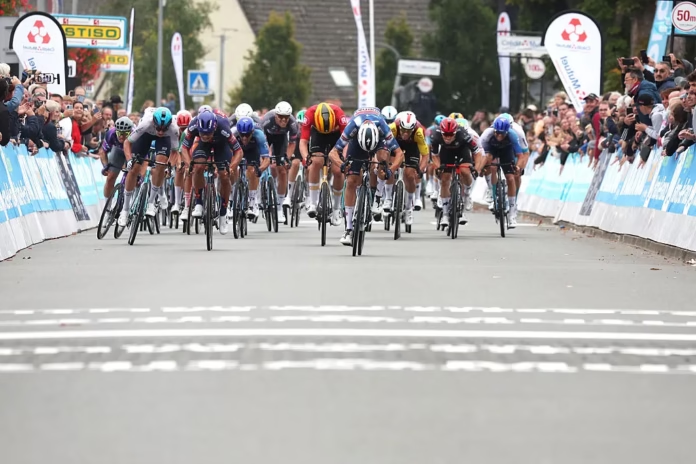
The sprint field is just as strong. Paul Magnier returns after winning five of the six stages in 2025, but this time he faces Olav Kooij, Kaden Groves, Jordi Meeus, Juan Sebastián Molano, Phil Bauhaus, Max Kanter, Milan Fretin, Arvid de Kleijn and Fabio Jakobsen. That should make the supposedly straightforward days much harder to control than they were last year.
Our Tour of Guangxi 2026 route guide breaks down all six stages, while the beginner’s guide explains the wider shape of the race. The current team selections remain provisional and can still change before the start.
Team Jayco-AlUla: Double defends, Plapp gives them a second route
Main objective: Defend the overall title with Paul Double
Other key riders: Luke Plapp, Alan Hatherly
Provisional squad: Paul Double, Dries De Bondt, Dries De Pooter, Patrick Gamper, Alan Hatherly, Luke Plapp, Jasha Sütterlin
Jayco-AlUla return with the rider everyone else has to measure themselves against. Double won the 2025 Tour of Guangxi by making the difference on Nongla, and the decision to move the summit finish to Stage 6 makes his task tactically simple: stay safe through five days, then climb.
Plapp gives the team an important second option on the hillier middle stages and could also become a GC alternative if anything happens to Double. Hatherly adds another rider who should cope with repeated climbing, while De Bondt and Sütterlin give the team experience for the flatter days. Jayco do not need to invent a new formula. They already know the one that worked.
Alpecin-Premier Tech: Groves gets a strong sprint train
Main objective: Stage wins with Kaden Groves
Secondary option: Gal Glivar on harder stages
Provisional squad: Tobias Bayer, Gal Glivar, Kaden Groves, Edward Planckaert, Jensen Plowright, Jonas Rickaert, Oscar Riesebeek
Alpecin-Premier Tech have built one of the clearest sprint teams in the race. Groves is the focal point, with Planckaert, Plowright and Rickaert giving him a sizeable lead-out structure. That matters in Guangxi because the wide roads and high speeds often reward teams that arrive at the final kilometre with numbers rather than improvising from wheel to wheel.
Glivar is the more interesting card when the terrain becomes selective. He does not need to protect a GC position and can ride aggressively on the rolling stages where Groves is unlikely to survive with the front group.
Bahrain Victorious: Bauhaus for the sprints, Eulálio and Miquel for the climbs
Main objectives: Sprint stages and a strong GC showing
Key riders: Phil Bauhaus, Afonso Eulálio, Pau Miquel
Provisional squad: Phil Bauhaus, Alessandro Borgo, Afonso Eulálio, Pau Miquel, Max van der Meulen
Bahrain currently have only five riders named on the provisional list, but the roles are already easy to read. Bauhaus gives them a pure sprint option, while Eulálio and Miquel are much better suited to the stages where the race starts climbing away from the fast men.
Eulálio is the most obvious Nongla option if Bahrain want a protected GC rider, although Miquel’s finishing speed makes him useful on days where a reduced group reaches the line together. The final selection may add more support, but the team already has a workable split between sprints and the overall.
Decathlon CMA CGM: Kooij chases stages while Bisiaux targets Nongla
Main objectives: Sprint wins with Olav Kooij and GC with Léo Bisiaux
Provisional squad: Léo Bisiaux, Cees Bol, Sander De Pestel, Robbe Ghys, Tord Gudmestad, Daan Hoole, Olav Kooij
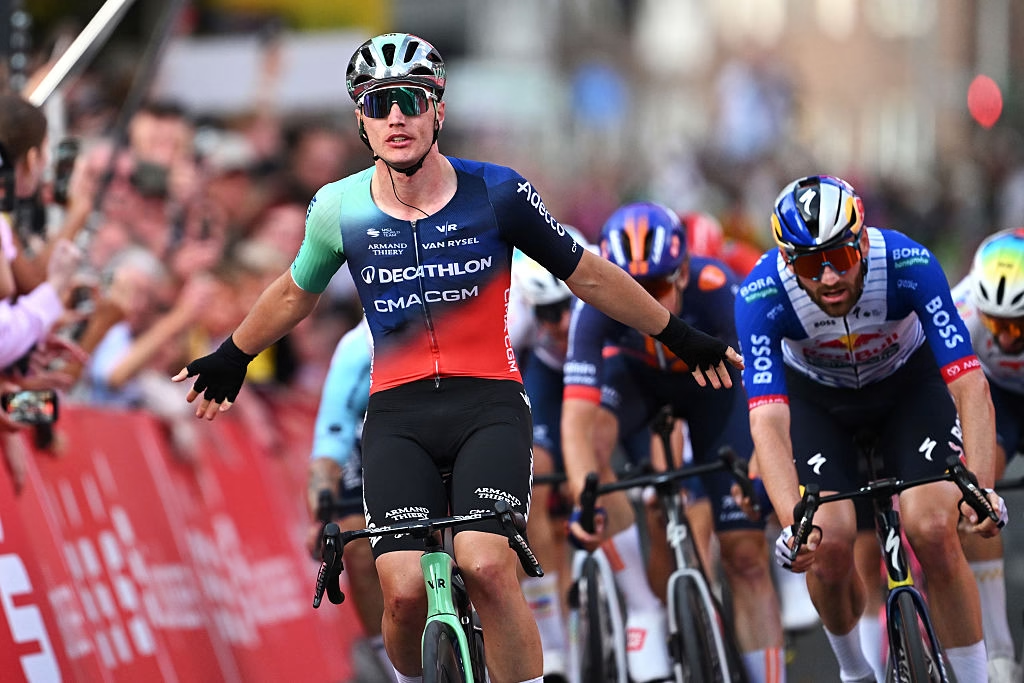
Decathlon CMA CGM have one of the most complete line-ups in the race. Kooij has already won stages in Guangxi and gets a strong support group for the bunch finishes, with Bol, Ghys, Gudmestad and Hoole all able to contribute before the final sprint.
Bisiaux means those sprint ambitions do not come at the expense of the overall. The final climb is the obvious test, but the more important question may be whether he can reach Stage 6 without losing seconds through positioning or splits on the two hillier days beforehand. If he does, Decathlon have a genuine two-front race.
EF Education-EasyPost: depth for attacks rather than one fixed leader
Main objectives: Hilly stages and a GC challenge
Key riders: Mikkel Frølich Honoré, Neilson Powless, Vincenzo Albanese
Provisional squad: Mattia Agostinacchio, Vincenzo Albanese, Samuele Battistella, Noah Hobbs, Mikkel Frølich Honoré, Neilson Powless, Harry Sweeny
EF arrive without a single rider who has to dominate the team plan. That can be useful here. Honoré and Powless both have the range to survive the rolling stages and attack before the final climb, while Battistella and Sweeny provide further options when the race becomes difficult to control.
Albanese and Hobbs give EF faster finishes if the climbs do not remove the sprinters. The team’s best chance may be to avoid turning the week into a simple procession towards Nongla and instead use its depth on Stages 3, 4 and 5.
Groupama-FDJ United: Rochas and Braz Afonso carry the GC hopes
Main objective: Strong overall result
Key riders: Rémy Rochas, Clément Braz Afonso, Matteo Milan
Provisional squad: Cyril Barthe, Clément Braz Afonso, Johan Jacobs, Joshua Kench, Matteo Milan, Enzo Paleni, Rémy Rochas
Rochas is the obvious reference for Nongla, but Braz Afonso gives Groupama-FDJ United another rider capable of surviving the harder stages and reaching the final day with an overall position worth protecting.
Matteo Milan supplies the speed for flatter finishes, while Barthe and Jacobs make the team useful in breakaway situations. This is not a squad built around one overwhelming favourite, but it has enough different routes to leave China with a result.
Lidl-Trek: Ayuso has a team built to win the race
Main objective: Win the general classification with Juan Ayuso
Support and stage options: Lennard Kämna, Andrea Bagioli
Provisional squad: Juan Ayuso, Andrea Bagioli, Amanuel Ghebreigzabhier, Lennard Kämna, Søren Kragh Andersen, Jacopo Mosca, Mathias Norsgaard
Ayuso is one of the clearest overall favourites on the provisional start list. The final Nongla climb is long enough to reward a genuine GC rider, and Lidl-Trek have surrounded him with riders who can keep him protected through almost every type of stage.
Kämna is the most important climbing support and also a credible alternative if the race develops unexpectedly. Bagioli and Kragh Andersen give Lidl-Trek attacking options before Stage 6, while Mosca and Norsgaard bring the control needed on flatter terrain. Unlike several rivals, Lidl-Trek do not have to divide the team around a pure sprinter.
 Photo Credit: Getty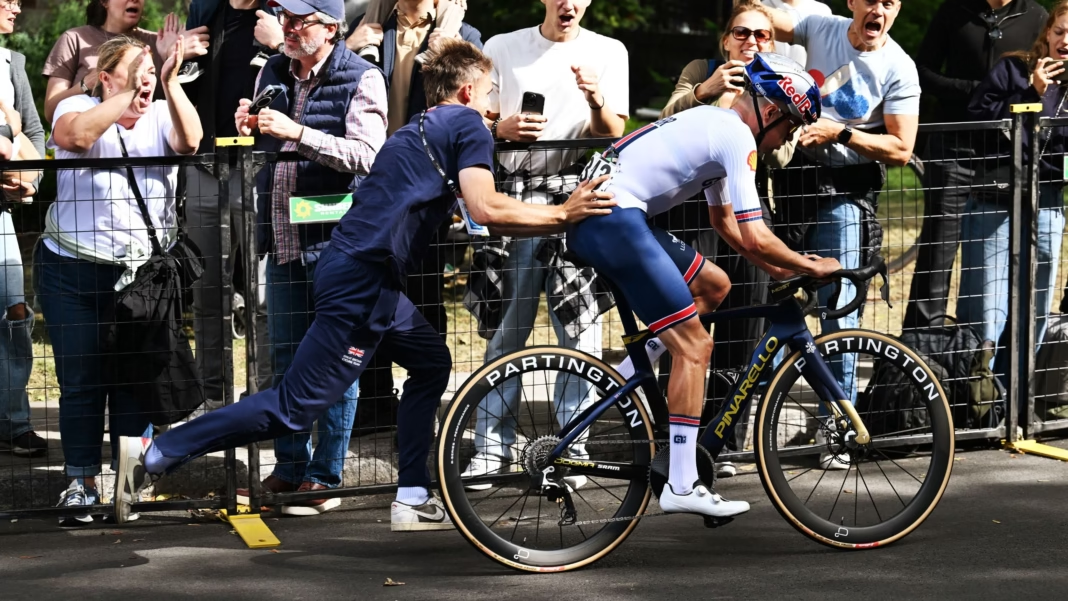
Lotto-Intermarché: sprints first, Thompson for the harder days
Main objectives: Sprint stages and hilly-stage opportunities
Key riders: Milan Menten, Lionel Taminiaux, Reuben Thompson
Provisional squad: Matthew Fox, Joshua Giddings, Simone Gualdi, Milan Menten, Lionel Taminiaux, Reuben Thompson, Baptiste Veistroffer
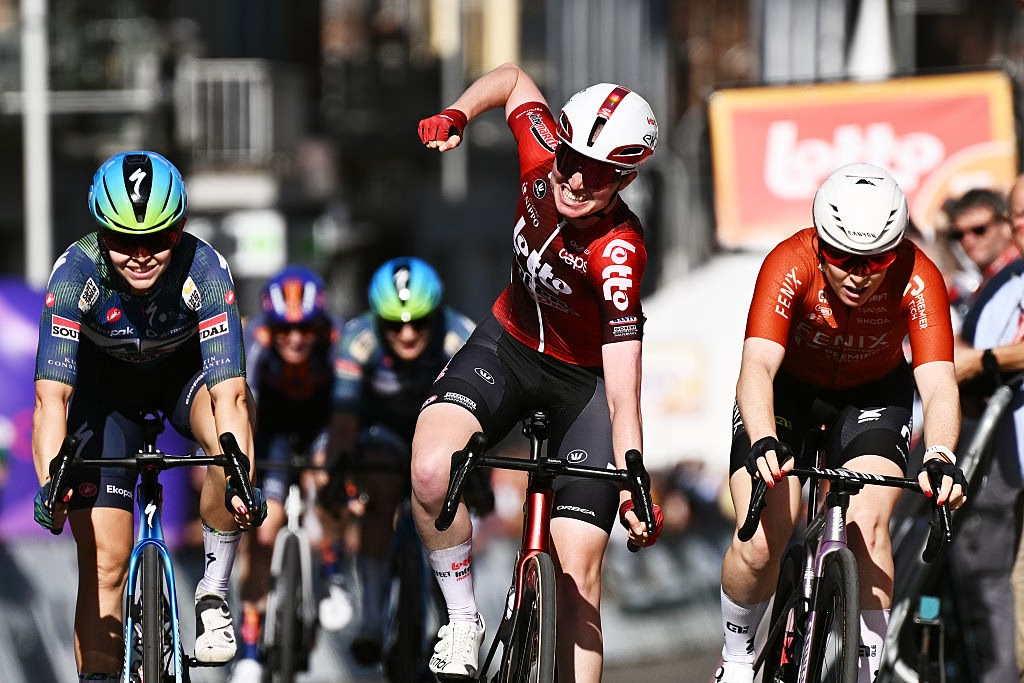
Menten and Taminiaux give Lotto-Intermarché two fast options without forcing the team to commit everything to a single sprinter. That flexibility should be useful against deeper trains from Soudal, Decathlon and Alpecin.
Thompson is the rider to watch once the road turns uphill. A high GC finish would be useful, but the more realistic strength of this squad is its freedom. Gualdi, Fox and Veistroffer can all be used aggressively rather than spending the week protecting one leader.
Movistar Team: Romo leads a squad made for the hilly stages
Main objective: GC with Javier Romo
Other key riders: Davide Formolo, Pelayo Sánchez, Diego Pescador
Provisional squad: Davide Formolo, Michel Heßmann, Manlio Moro, Pavel Novák, Diego Pescador, Javier Romo, Pelayo Sánchez
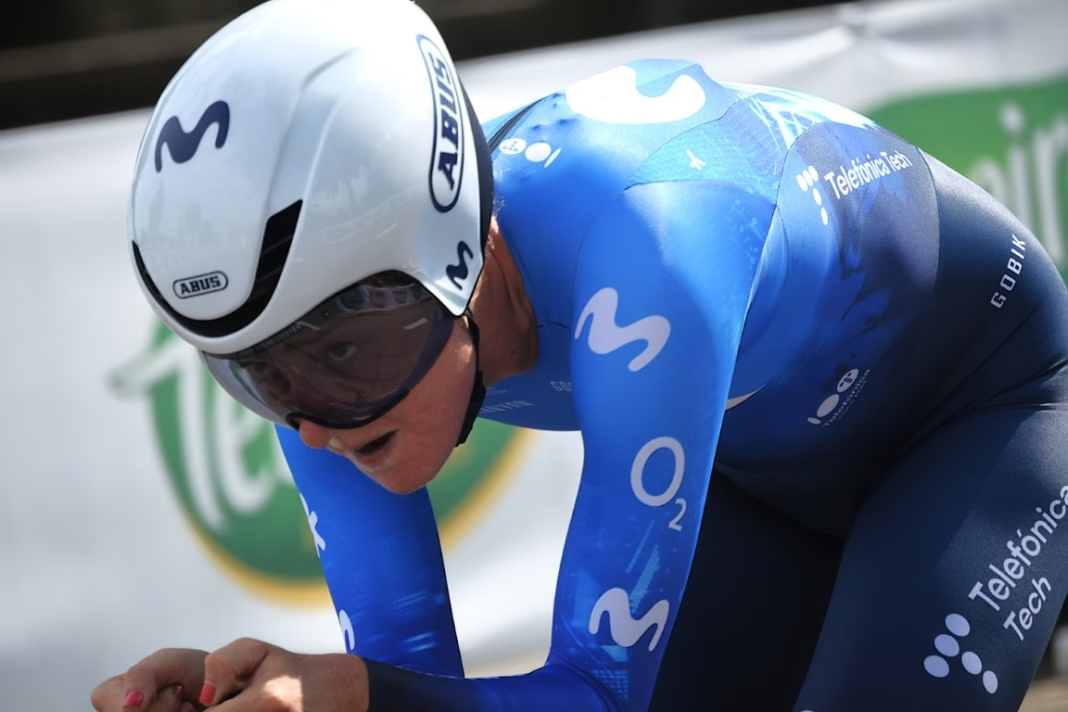
Movistar have no recognised pure sprinter here, which tells you where their attention lies. Romo is the clearest GC option and should appreciate a race where the decisive climb comes late rather than after several days of major mountains.
Formolo, Sánchez and Pescador give the team plenty of scope to attack on the hillier stages instead of simply saving everyone for Nongla. That could become important if Ayuso, Pidcock and Vauquelin force the principal GC teams into a waiting game.
Netcompany INEOS: Vauquelin heads one of the strongest GC groups
Main objective: Win the overall with Kévin Vauquelin
Other key riders: Magnus Sheffield, Andrew August
Provisional squad: Andrew August, Peter Øxenberg, Brandon Rivera, Óscar Rodríguez, Magnus Sheffield, Artem Shmidt, Kévin Vauquelin
Vauquelin gives Netcompany INEOS a straightforward leader for the final climb, but the real strength is behind him. Sheffield can be protected deep into the race or used aggressively, while August and Øxenberg add young climbing depth.
That should allow INEOS to race rather than merely defend. If Vauquelin is among the best on Nongla, they have the support to keep him out of trouble beforehand. If the race starts breaking up earlier, Sheffield gives them another rider who can move without immediately compromising the main plan.
NSN Cycling Team: several GC cards and no reason to wait
Main objectives: GC and hilly-stage wins
Key riders: Joseph Blackmore, Alessandro Pinarello, Alexey Lutsenko
Provisional squad: Joseph Blackmore, Jan Hirt, Moritz Kretschy, Alexey Lutsenko, Pau Marti, Alessandro Pinarello, Riley Sheehan
NSN have one of the most interesting climbing groups because they do not need to nominate a single leader before Stage 1. Blackmore and Pinarello are natural candidates for the overall, Lutsenko brings experience on rolling terrain and Hirt can support once the gradient becomes more serious.
The absence of a pure sprinter should encourage them to make the race difficult. Stages 3 to 5 are particularly important because they give NSN opportunities to create time gaps before the more obvious GC favourites take over on Nongla.
Red Bull-BORA-hansgrohe: Van Gils and Martínez for GC, Meeus for sprints
Main objectives: GC and sprint stages
Key riders: Maxim Van Gils, Daniel Felipe Martínez, Jordi Meeus
Provisional squad: Adrien Boichis, Jarrad Drizners, Emil Herzog, Arne Marit, Daniel Felipe Martínez, Jordi Meeus, Maxim Van Gils
Few teams cover both halves of the race as neatly as Red Bull-BORA-hansgrohe. Meeus gives them a top-level sprint option, while Van Gils has the explosiveness to collect bonuses and survive the hilly stages before Nongla.
Martínez is the more traditional climbing card and could become especially important on Stage 6. Boichis and Herzog add further climbing support, leaving Red Bull with enough depth to change leaders if the road demands it. The only difficulty is deciding how much manpower to spend on Meeus before the GC battle is settled.
Soudal Quick-Step: Magnier returns after his five-win 2025
Main objectives: Sprint wins with Paul Magnier and GC with Ilan Van Wilder
Provisional squad: Steff Cras, Paul Magnier, Laurenz Rex, Martin Svrček, Dries Van Gestel, Ilan Van Wilder, Warre Vangheluwe
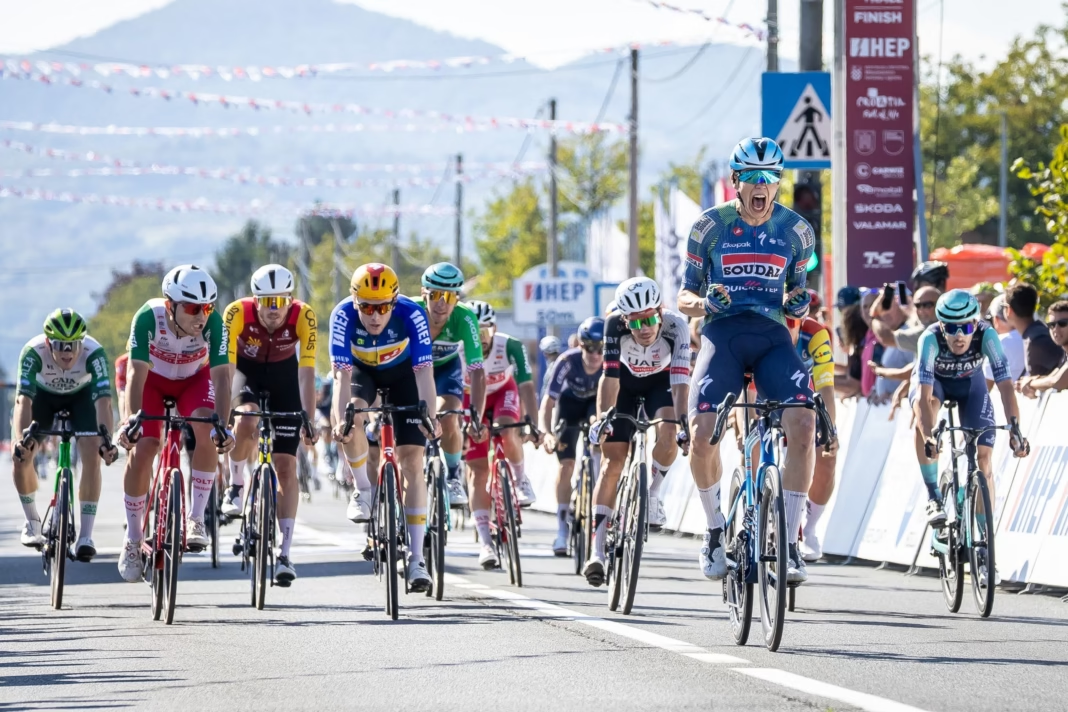
Magnier completely changed the character of last year’s race by winning five stages, and Soudal return with enough support to make him one of the central figures again. Rex, Van Gestel and Vangheluwe can all contribute to positioning and control, while Svrček gives the team another rider who can survive a more difficult approach to the finish.
The important difference from a pure sprint squad is Van Wilder. He gives Soudal a genuine general classification interest and should be among the riders still in contention when Nongla decides the race. Cras strengthens that climbing side further.
Team Picnic PostNL: everything points towards Max Poole
Main objective: GC with Max Poole
Secondary objective: Breakaways and reduced sprints
Provisional squad: Frits Biesterbos, Dillon Corkery, Timo de Jong, Robbe Dhondt, Bjoern Koerdt, Niklas Märkl, Max Poole
Poole is the clear reference point. The final climb is well suited to a rider who can produce a hard sustained effort without needing a full mountain stage beforehand, and Picnic PostNL do not have another objective important enough to compromise his support.
Märkl is the quickest rider for flatter finishes, but the team is more likely to gain from breakaways and aggressive racing than from trying to beat the specialist sprint trains head-on. Poole’s position after the first five stages should dictate how much freedom everyone else receives.
Team Visma | Lease a Bike: Jakobsen’s sprint comeback meets Barré and Graat’s GC chances
Main objectives: Sprint stages with Fabio Jakobsen and GC through Louis Barré or Tijmen Graat
Provisional squad: Louis Barré, Niklas Behrens, Owain Doull, Tijmen Graat, Fabio Jakobsen, Anton Schiffer, Loe van Belle
Guangxi is an important race for Jakobsen after his mid-season move to Team Visma | Lease a Bike. The Dutch sprinter returned to UCI racing with the Münsterland Giro and now gets a six-stage race in which several days should offer another chance to rebuild his place among the fastest riders.
Visma also have a serious climbing side. Barré is well suited to the shorter GC format and Graat gives them another option for Nongla. That makes the team more balanced than the Jakobsen storyline alone suggests, although they may need to divide support carefully on the sprint stages.
UAE Team Emirates-XRG: Narváez, Soler and Molano cover almost every stage
Main objectives: GC, stage wins and sprints
Key riders: Jhonatan Narváez, Marc Soler, Juan Sebastián Molano
Provisional squad: Rui Oliveira, Rune Herregodts, Julius Johansen, Juan Sebastián Molano, Jhonatan Narváez, Marc Soler, Florian Vermeersch
UAE do not bring the outright favourite, but they may have the most versatile seven-rider group. Narváez can survive hard stages and finish quickly, Soler gives them a genuine climbing option, and Molano provides a clear route in the bunch sprints.
Vermeersch, Herregodts and Oliveira make the squad particularly strong on the transitional stages, where positioning and repeated attacks may matter more than pure climbing. UAE should be visible throughout the race even if no single rider dominates the overall.
Uno-X Mobility: Træen and Johannessen target the overall
Main objective: GC through Torstein Træen and Anders Halland Johannessen
Sprint option: Erlend Blikra
Provisional squad: Carl-Frederik Bévort, Erlend Blikra, Fredrik Dversnes, Anders Halland Johannessen, Tobias Svarre, Martin Tjøtta, Torstein Træen
Uno-X have built a squad around endurance and climbing rather than a single headline name. Træen and Johannessen are both capable of reaching Nongla with a useful GC position, while Tjøtta adds another rider suited to sustained uphill work.
Dversnes is valuable on the hillier stages where the pure sprinters struggle, and Blikra gives the team a fast-finishing option on the easier days. The challenge is turning that breadth into one major result rather than a collection of solid placings.
XDS Astana Team: Kanter for the sprints, López and Conci for the climbs
Main objectives: Sprint stages and GC
Key riders: Max Kanter, Harold Martín López, Nicola Conci
Provisional squad: Nicola Conci, Yevgeniy Fedorov, Max Kanter, Anton Kuzmin, Arjen Livyns, Harold Martín López, Haoyu Su
Kanter gives XDS Astana a straightforward target on the faster days, although the depth of the sprint field means even reaching the podium will require an excellent lead-out and clean positioning.
López and Conci should become more important as the race moves into the hills. Neither needs to carry the full burden of leadership from Stage 1, which allows Astana to see who handles the middle stages best before committing to a Nongla plan.
Cofidis: Buchmann and Carr lead, Fretin gets the sprint chances
Main objectives: GC and stage wins
Key riders: Emanuel Buchmann, Simon Carr, Milan Fretin
Provisional squad: Piet Allegaert, Emanuel Buchmann, Simon Carr, Camille Charret, Milan Fretin, Jan Maas, Jamie Meehan
Cofidis have a useful balance for the race. Buchmann is the most conventional GC option and should be protected for Nongla, while Carr is better suited to attacking on the hilly stages and forcing other teams to respond.
Fretin gives them a genuine sprint route, with Allegaert able to support or take his own opportunities. This is exactly the kind of six-day race where a ProTeam can collect several meaningful results without needing to control the peloton.
Pinarello-Q36.5: Pidcock arrives with a genuine winning squad
Main objective: Win the Tour of Guangxi with Tom Pidcock
Climbing support: Thomas Gloag, Milan Vader, Damien Howson
Provisional squad: David de la Cruz, Thomas Gloag, Emmanuel Houcou, Damien Howson, Tom Pidcock, Milan Vader, Nickolas Zukowsky
Pidcock is one of the strongest candidates for the overall because the race asks for exactly the qualities he can bring to a short stage race: positioning, explosive climbing and enough speed to contest bonuses if the hilly stages finish from a reduced group.
Just as importantly, Pinarello-Q36.5 have not sent him to China alone. Gloag, Vader and Howson make this a proper GC support unit, while De la Cruz adds more experience for the harder stages. If Pidcock reaches the foot of Nongla level on time with Ayuso and Vauquelin, he should have the team around him to race for the win.
Tudor Pro Cycling Team: Brenner for GC, De Kleijn for the sprints
Main objectives: GC and sprint stages
Key riders: Marco Brenner, Arvid de Kleijn
Provisional squad: William Barta, Marco Brenner, Arvid de Kleijn, Jacob Eriksson, Robin Froidevaux, Sebastian Kolze Changizi, Luc Wirtgen
Brenner gives Tudor a credible overall option and should be competitive on a summit finish that rewards a strong one-day climbing effort more than deep Grand Tour endurance. Barta and Wirtgen provide useful support around him.
De Kleijn gives the team a completely different objective on the flat. He will face one of the strongest sprint fields of the autumn, but Tudor can commit to him without damaging Brenner’s GC plans because the team roles are clearly separated.
Who has the strongest Tour of Guangxi 2026 squad?
For the general classification, Pinarello-Q36.5, Lidl-Trek and Netcompany INEOS stand out. Pidcock has excellent support around him, Ayuso has a team that can keep the race controlled until Nongla, and Vauquelin is backed by enough depth to use Sheffield and the younger climbers tactically.
Jayco-AlUla cannot be separated from that group because Double is the defending champion and already knows exactly how to win this race. Red Bull-BORA-hansgrohe and UAE Team Emirates-XRG are perhaps the most flexible squads, with serious GC riders and genuine stage-winning speed in the same seven-rider selection.
In the sprints, Soudal Quick-Step start with the strongest recent Guangxi record because Magnier won five stages last year. This time, though, Kooij, Groves, Meeus, Molano and Jakobsen should prevent any one rider from controlling the week so completely.
The history of the Tour of Guangxi shows how often the race has split between one rider dominating the sprints and another taking the general classification. The 2026 start list gives that pattern every chance of continuing, but with far more competition in both contests.