Rear-facing radar lights are no longer a choice between one expensive Garmin and a handful of untested alternatives. By autumn 2026, the UK market covers everything from the £99 Magene L508 to Garmin’s £259.99 Varia RearVue 820, with Lezyne, Wahoo, Trek and Magicshine occupying the middle ground. The differences are not simply about how far each device can detect a car.
The useful questions are whether a radar keeps tracking a vehicle as it approaches, how often it creates a false alarm, whether it works with your existing computer or phone, and how visible the rear light is on a wet November afternoon. A radar is an extra warning, not a substitute for looking over your shoulder, judging traffic or using appropriate front and rear lighting.
This guide compares six exact radar-and-light models sold to UK riders. Specifications and prices were checked against manufacturers and retailers in October 2026, while the assessment of detection quality draws on published independent road tests. ProCyclingUK has not undertaken a controlled head-to-head test of these six units. Prices and availability can change, so the figures below are reference prices rather than guaranteed offers.
The six cycling radars compared
| Model | UK reference price | Claimed detection | Beam | Claimed battery | Best reason to consider |
|---|---|---|---|---|---|
| Garmin Varia RearVue 820 | £259.99 | 175m | 60° | 24h day flash | Premium detection and vehicle detail |
| Lezyne Radar Drive Rear | £170 | 150m | 35° | Up to 20h | Strong all-rounder, flexible alerts |
| Wahoo TRACKR RADAR | £179.99 | 150m | 35° | Up to 20h | Bright light, head-unit users |
| Magicshine SEEMEE R300 | £119.99 RRP | 140m | 35° | 16h 12m day flash with radar | Bright value option, radar caveats |
| Trek CarBack | £169.99 | 240m claimed | Not stated | 7h+ claimed | Long claimed range, mixed testing |
| Magene L508 | £99 | 140m | 40° | Varies by mode | Budget option with detection trade-offs |
A quoted detection distance is a laboratory-style maximum, not a promise that every car will appear at that range. Larger vehicles, road bends, relative speed, reflective surroundings and the position of the unit all matter. The battery figures also refer to particular lighting modes; the longest advertised runtime is often achieved with a very dim flash or with the radar disabled.
Garmin Varia RearVue 820: the strongest detection, at a premium price
At £259.99 from Garmin UK, the RearVue 820 is the most expensive choice here, but it is not merely a brighter RTL515. Its wider 60-degree radar beam, 175-metre claimed detection and improved tracking of vehicles travelling at a similar speed address some of the weaknesses that have persisted in conventional bike radars. Independent testing has found its vehicle tracking more consistent than the alternatives, particularly where several cars are approaching.
The catch is compatibility. Vehicle-size classification, lateral movement and the richer threat information need a recent compatible Garmin Edge or the Varia app; an ordinary ANT+ radar screen will not magically acquire all those features. Garmin claims 24 hours in day flash mode, 10 hours with the light steady and 30 hours in radar-only mode. USB-C, an IPX7 rating and a brake-light function complete a strong package, but it makes little sense to pay the full premium if your computer cannot display the extra detail.
Our existing RearVue 820 review goes further into the trade-off. Owners of an older RTL515 need not automatically upgrade: if their current unit reliably reports traffic on the roads they ride, the 820 is an improvement in awareness rather than an essential replacement.
Lezyne Radar Drive Rear: the most versatile alternative
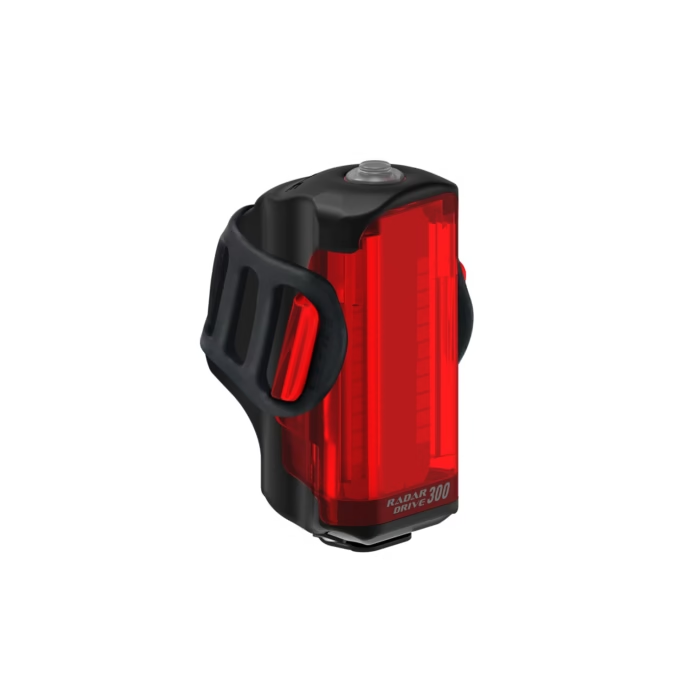
The Lezyne Radar Drive Rear costs around £170 in the UK, with retailer availability varying. Its 150-metre claimed radar range, 300-lumen maximum daytime flash and broad 270-degree light visibility make it a particularly convincing choice for riders who want a substantial rear light as well as vehicle alerts. The IPX7 body charges over USB-C, and the claimed maximum runtime is 20 hours in an economical mode.
What separates Lezyne from most rivals is the choice of alert display. It works with compatible GPS computers and the Radar Ally phone app, but it can also pair with the separate React Drive front light. That front light provides rider-facing visual and audible alerts, allowing a useful setup without a computer on the handlebars after initial configuration. Independent reviewers have praised the detection and light output, although one reported a rattle in an early sample and another found the mounting strap awkward. The £260 front-and-rear system is worth considering if you also need a powerful front light.
There is more on the mounting and performance trade-offs in our Lezyne Radar Drive Rear review. Do not confuse this 300-lumen model with the separate StVZO rear radar, which has different light output and operating modes.
Wahoo TRACKR RADAR: a good light with some radar blind spots
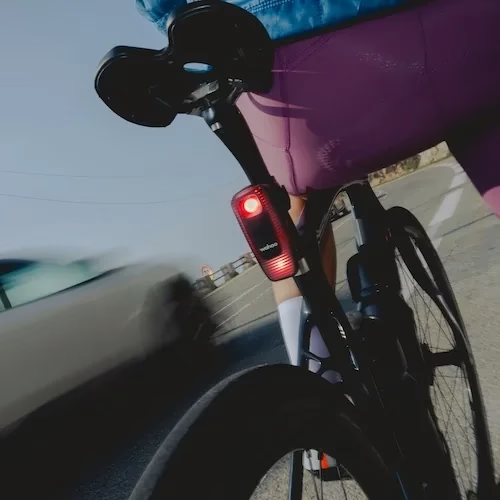 Photo Credit: Wahoo
The Wahoo TRACKR RADAR is listed at £179.99 in the UK. It detects approaching vehicles from a claimed 150 metres and combines that warning with adaptive rear lighting. A 53-lumen maximum output looks modest next to Lezyne’s headline 300 lumens, but raw lumen comparisons ignore flash pattern and lens design. Independent testers have rated the Wahoo light highly for its visibility and useful modes.
The less reassuring part is vehicle persistence. Published testing identified occasional blind spots and vehicles disappearing from the display when travelling closely behind at similar speed. Its substantial mounting bracket can also be awkward on compact frames or with a large saddle bag. For riders already using a Wahoo ELEMNT computer, the controls and integration are attractive, but do not buy it on the assumption that a phone alone provides the same live radar display as a compatible head unit.
Wahoo claims up to 20 hours in its low flash setting and rates the unit IPX7. Our TRACKR RADAR review covers the value question in more detail. At nearly the same price as Lezyne, this is a choice between ecosystem convenience and broader alert options.
Magicshine SEEMEE R300: bright and affordable, but not the most consistent radar
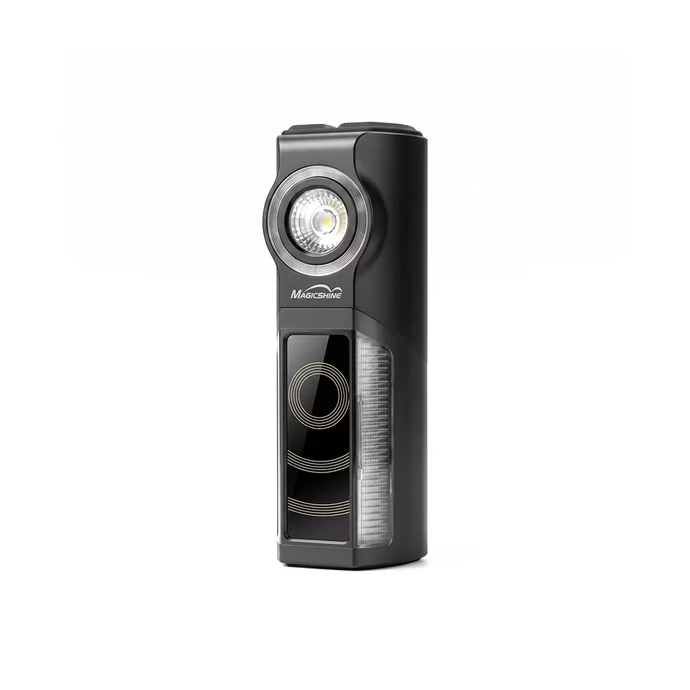 Photo Credit: Magicshine
The Magicshine SEEMEE R300 has a £119.99 UK reference price, with the distributor sometimes advertising a lower offer. It combines a 140-metre claimed detection range with a very conspicuous 300-lumen approach flash, 270-degree visibility and a USB-C rechargeable battery. There are separate controls for the light and radar, plus an IPX6 weather rating.
Its long advertised 100-hour runtime needs context: that figure is for an economical light mode with radar off. With radar running, Magicshine quotes 16 hours 12 minutes in day flash, eight hours in high steady and just over 26 hours in radar-only mode. Those are more relevant numbers when planning a long winter ride. Independent road testing has also found occasional false alarms and, more seriously, a missed approaching vehicle, so it would be a mistake to equate the R300’s bright light with top-tier detection reliability.
There is a clear audience for it: riders who prioritise a powerful rear light and want radar warnings at a lower price. Our SEEMEE R300 versus Garmin RTL515 comparison explains the compromise. The non-radar SEEMEE 300 is a different product, so check the model name carefully before buying.
Trek CarBack: impressive claimed range, mixed real-world results
The Trek CarBack costs £169.99 in the UK. Its headline 240-metre claimed detection range is the largest in this group, and its rear light is designed to remain conspicuous in daylight. Trek includes a four-bar battery indicator, a USB-C port and an IPX7 rating, while the Trek Accessory app provides a phone-based way of following approaching traffic.
However, detection range alone does not make the CarBack the winner. Independent UK testing has reported inconsistent tracking, a less convincing mount and relatively short battery life. Trek quotes more than seven hours, which is adequate for many training rides but less attractive for long-distance riders who want radar and light throughout the day. The battery gauge is genuinely practical, yet it cannot compensate for missed alerts if those are encountered on the roads you use.
The CarBack is easiest to justify if you value Trek’s compact form, app functions and rear-light design, and can buy from a retailer with a straightforward returns policy. On the available independent evidence, Garmin and Lezyne are more convincing choices when detection consistency is the first priority.
Magene L508: the cheapest entry point with worthwhile compromises
The Magene L508 is listed at £99 from Magene UK. It offers a 140-metre claimed detection range, 40-degree radar beam, ANT+ and Bluetooth connections, a USB-C port and an IPX7 rating. Its rear light is rated up to 40 lumens, with configurable modes and a brake-warning function. At 65g for the unit, it is also lighter than several more expensive competitors.
The price saving has a cost. Independent tests have found that the L508 can struggle to separate cars travelling in a group, with at least one brief missed alert reported. Other reviewers have found it useful and generally dependable, illustrating why radar performance should not be reduced to a single score. The Magene Utility app can also involve an extra step to unlock its phone radar display, so check the current app terms rather than assuming every feature is available without registration.
For an occasional rider already using a compatible computer, it is an accessible way to find out whether radar alerts are useful. For someone who spends hours on fast, narrow roads, the stronger evidence behind Lezyne or Garmin is a reason to spend more. See our Magene L508 review for more on its practical limitations.
What to check before buying a cycling radar
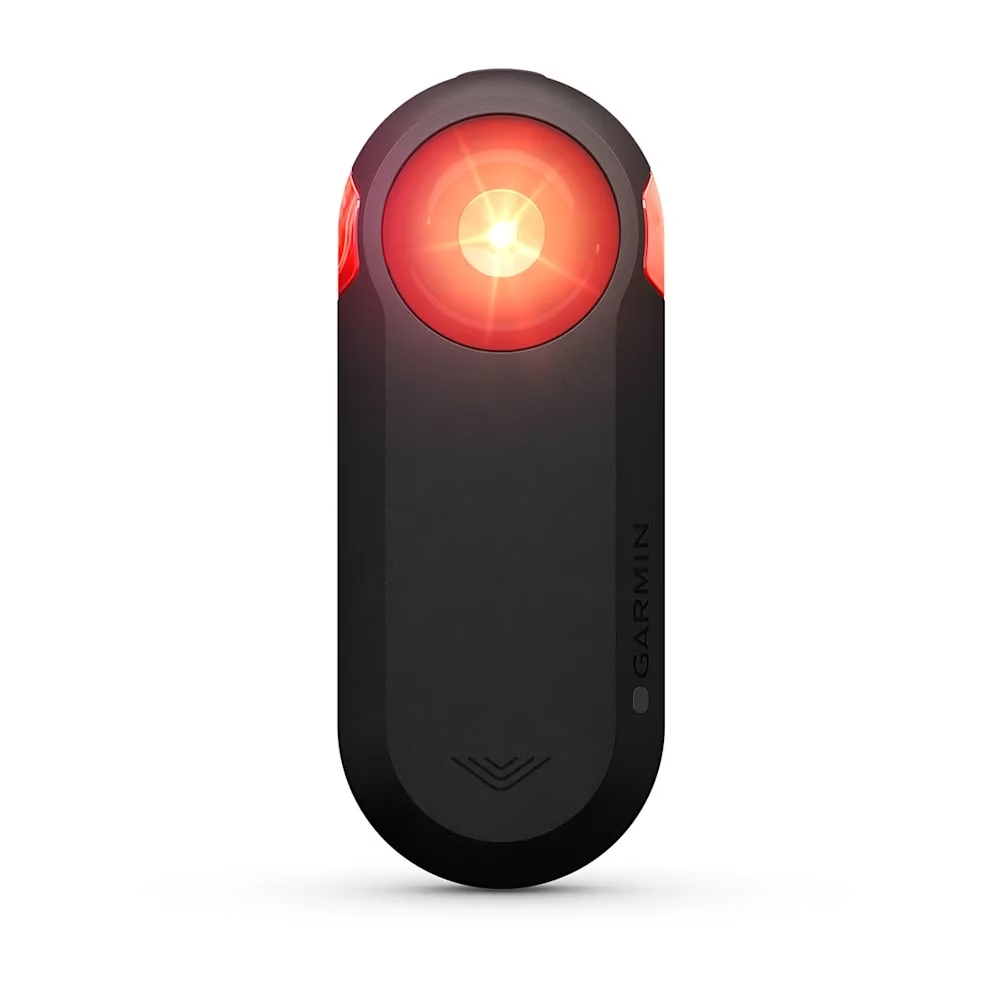 Photo Credit: Garmin
Start with the device that will show you the warnings. Most radar lights broadcast standard ANT+ traffic information to compatible cycling computers, but advanced features and smartphone support vary. A product being Bluetooth-enabled does not guarantee a usable live radar screen on every phone or app. If you ride without a computer, Lezyne’s front-light alert system, Trek’s app or Garmin’s Varia app deserve particular attention.
Next, look at the seatpost. A radar must face backwards and remain upright. A saddle bag, deep aero post, mudguard or bikepacking luggage can obstruct the beam or leave no room for a secure bracket. Before spending £100 to £260, check the supplied shims, strap length, clearance from the rear wheel and whether a saddle-rail mount is available for your exact unit.
Battery life should be compared at the setting you will actually use. Radar on with a steady rear light is a very different demand from radar off with a low-power flash. Winter temperatures can shorten runtime further, and some lights go into standby without fully powering down. Charging after a long ride and checking the indicator before leaving are more useful habits than trusting a maximum figure printed on a box.
Finally, a radar cannot tell you that the road is safe to move into. It reports traffic within its detection envelope, and any unit can be affected by bends, stationary vehicles, unusual relative speeds or mounting angle. Use it alongside a shoulder check, appropriate lighting and normal road positioning. Our separate guide to radar versus an ordinary rear light covers whether the extra spending is justified at all.
Which radar rear light should you buy?
For riders who want the most informative and consistently performing radar, the Garmin RearVue 820 is the benchmark, particularly with a compatible recent Edge. The Lezyne Radar Drive Rear is the better-value all-round recommendation for many UK cyclists, with strong detection, an excellent rear light and several ways to receive alerts. If you already have a Wahoo ELEMNT and value a tightly integrated setup, the TRACKR RADAR remains a credible option despite the blind spots identified in testing.
Below that, the Magicshine SEEMEE R300 is more persuasive as a very bright rear light with added radar than as a rival to Garmin’s detection. Magene’s L508 offers the cheapest entry point, provided you accept its limitations. Trek’s CarBack has attractive practical features, but the mixed detection evidence makes it harder to recommend over Lezyne at similar money. These are comparisons of published specifications and independent tests, not claims of ProCyclingUK hands-on testing.
-
 Photo Credit: David Pintens / BELGA MAG/AFP via Getty Images
-
Photo Credit: BELGA MAG/AFP via Getty Images