Garmin’s Varia RTL515 has been a reference point for rear-facing cycling radar for years. Wahoo’s TRACKR RADAR is the more recent challenger, adding USB-C charging, an adaptive rear light and a brake-light function. Both warn a rider about vehicles approaching from behind, but there are important differences in how they deliver those warnings, how they behave on winding roads and what happens when you ride without a GPS computer.
The comparison is closer on price than it first appears. On 2 November 2026, Tredz listed the Garmin Varia RTL515 at £169.99 and the Wahoo TRACKR RADAR at £161.99, with both exact products in stock. That makes Wahoo £8 cheaper at the checked retailer, although promotions and stock change. At that price, the decision is about functionality rather than saving a large sum.
This assessment draws on manufacturer documentation and several independent road tests. ProCyclingUK has not tested the two units side by side, and results from different reviewers are not presented as if they came from one controlled experiment. A radar can improve awareness of approaching traffic, but neither model replaces looking behind, listening, signalling or making a safe decision before changing position.
Garmin Varia RTL515 vs Wahoo TRACKR RADAR specifications
| Feature | Garmin Varia RTL515 | Wahoo TRACKR RADAR |
|---|---|---|
| UK price checked, 2 Nov 2026 | £169.99 at Tredz | £161.99 at Tredz |
| Claimed radar range | Up to 140m | Up to 150m |
| Radar field of view | Around 40 degrees | 35 degrees |
| Claimed longest light mode | Up to 16h day flash | Up to 20h low flash |
| Maximum quoted flash output | 65 lumens, day flash | 53 lumens, high flash |
| Charging | Micro-USB | USB-C |
| Weight, unit | About 71g | About 99g |
| Smartphone live radar display | Yes, Garmin Varia app | No, requires compatible head unit for normal radar alerts |
| Brake-light function | No dedicated deceleration brake light | Yes, configurable |
| Water rating | IPX7 | IPX7 |
The quoted maximum runtimes refer to different light settings, so 20 versus 16 hours is not a direct comparison at the same brightness. Similarly, an extra ten metres of advertised radar range does not automatically mean earlier warning in a real bend. Independent testing suggests the width and behaviour of the detection area can matter more than the headline distance.
Vehicle detection: Garmin still has a strong argument
Both devices use rear-facing radar to identify approaching traffic and pass warnings to compatible bike computers. The head unit typically displays approaching vehicles as moving markers, with audible or visual alerts depending on the setup. In normal road riding, independent testers have found both products capable of detecting multiple vehicles well before they reach the rider. Neither is designed to identify the exact type or intentions of every approaching vehicle.
The Garmin’s long-established strength is dependable detection. BikeRadar’s direct test found the RTL515 more consistent on twisting country roads, sometimes spotting vehicles slightly earlier than Wahoo. Road.cc also found the Garmin tended to warn a second or two sooner in some situations. Those small differences may not matter on a long straight, but a narrow rural lane with hedges and bends is precisely where advance notice is useful.
Wahoo’s nominal 150-metre detection range is ten metres longer than Garmin’s 140 metres, but the TRACKR’s narrower radar beam can introduce edge cases. BikeRadar reported rare occasions when a vehicle moving out towards the centre of the road was no longer shown after being tracked. Cyclingnews, by contrast, found the two systems very closely matched and considered Wahoo’s light and battery features a worthwhile improvement. Different roads and test conditions explain why a single absolute verdict would be misleading.
It is important not to exaggerate the consequences of a delayed alert. Even a very good radar can miss an object, confuse a rider in a group with a vehicle or behave differently near a junction. A rider should never move into the road solely because the display shows no approaching traffic. Treat radar as one more source of information, not permission to stop checking over a shoulder.
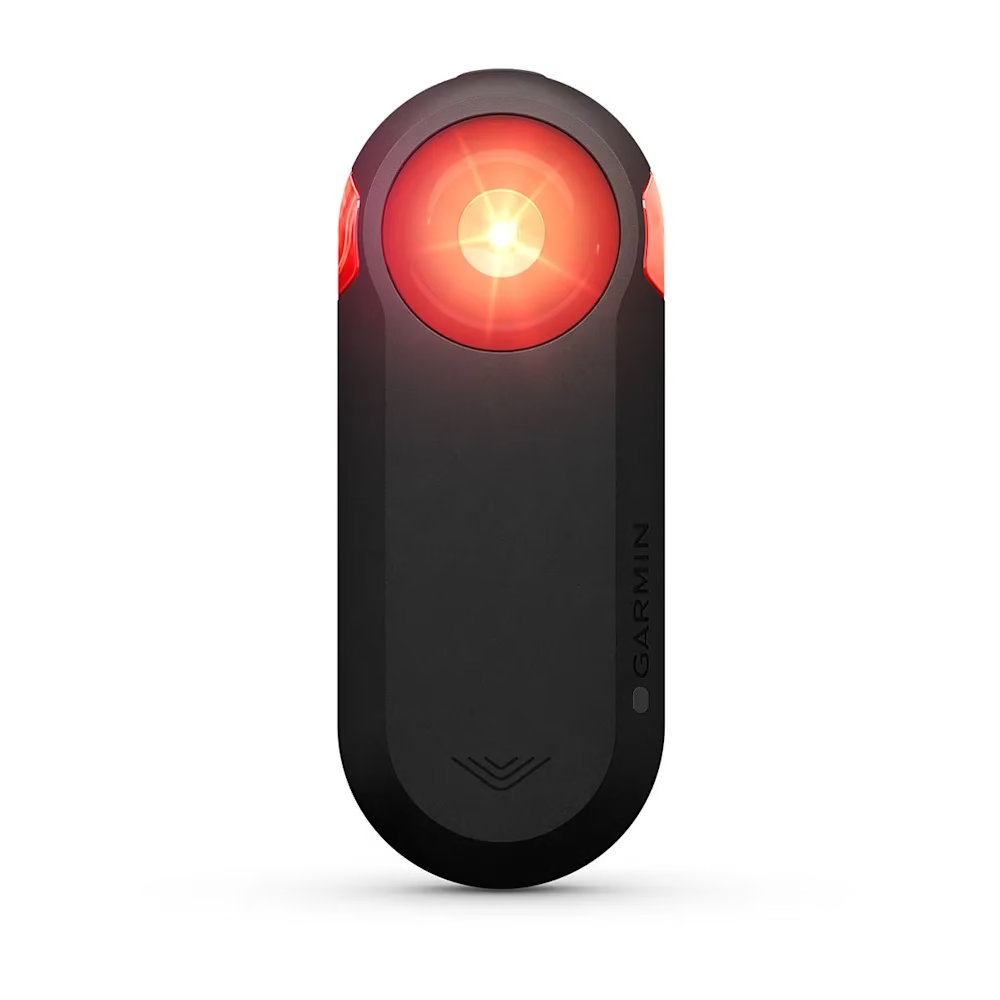 Photo Credit: Garmin
Rear-light modes and brake-light behaviour
The RTL515 combines its radar with a compact rear light offering steady, day flash, night flash and a lower-intensity peloton setting. Garmin quotes up to 65 lumens in day flash and visibility from a substantial distance in suitable conditions. Its light pattern can react to approaching vehicles, which is useful for drawing attention to a cyclist, although visibility to a driver is not the same as evidence of collision prevention.
Wahoo adds two LEDs, different steady and flashing modes, automatic light behaviour and a brake-light function that increases illumination when the unit detects deceleration. These features need to be understood and, where relevant, enabled in the Wahoo app. The brightest quoted flash setting is 53 lumens, but lumen totals alone do not describe how a light looks from the side or how conspicuous its flash pattern is in daylight.
Cyclingnews praised Wahoo’s side visibility and practical range of light modes. Road.cc also liked the brake-light feature and quick charging, although it was less convinced by battery life in its own riding. The Wahoo’s adaptive lighting may be attractive for mixed commuting and club use, while Garmin’s simpler, familiar behaviour is easy to understand. Riders who frequently ride in a close group should think about flash intensity and whether a gentler mode is appropriate.
Battery life: the published test results disagree
Garmin quotes up to 16 hours in day flash mode and about six hours in steady mode. Wahoo lists up to 20 hours in low flash, 15 hours in high flash and ten hours in high steady. On the specification sheet, Wahoo appears to have the endurance advantage, and its USB-C connection is more convenient if the rest of your cycling electronics use the same cable.
The independent evidence is less tidy. Cyclingnews found Wahoo’s battery performance excellent and rated it as one of the product’s strongest qualities. Road.cc reported less than ten hours on high flash during its testing, with an older Garmin Varia lasting longer on the same rides. Cyclists Hub measured approximately eight and a half hours in its flash-mode test, well below the headline maximum. These are genuine differences in published observations, not figures that should be averaged into a made-up universal runtime.
The sensible reading is that the Wahoo has potentially useful power-saving features and fast, modern charging, but buyers should not assume it will deliver 20 hours in a bright flash mode on a cold winter day. The Garmin’s figures are also mode-specific. If you ride long events, decide which brightness setting you actually need, charge before departure and test the unit on familiar roads before trusting it for an overnight ride.
The smartphone distinction is easy to overlook
The RTL515 can work with Garmin’s Varia smartphone app, showing approaching vehicles and giving sound or vibration alerts on a compatible phone. It can also pair with supported Garmin and third-party bike computers using radar-compatible connections. That makes it appealing to someone who uses a phone for navigation or does not want to buy a dedicated head unit immediately.
The Wahoo app handles firmware updates, light-mode settings and special features, but it does not provide the equivalent live radar traffic display. Wahoo states that normal radar use requires a compatible ANT+ radar head unit or watch. That is a decisive limitation for a phone-only rider, and it is easy to miss when reading a product description that mentions app support.
Neither brand locks you into one make of GPS computer for basic radar alerts. A compatible Wahoo computer can display Garmin Varia traffic information, and other radar-capable head units can work with TRACKR. What varies is how much control you get over lighting modes and additional functions. Check your particular computer’s radar compatibility and firmware rather than assuming every device with ANT+ offers the same experience.
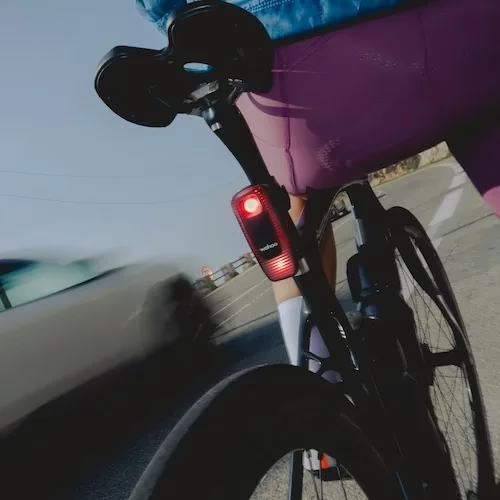
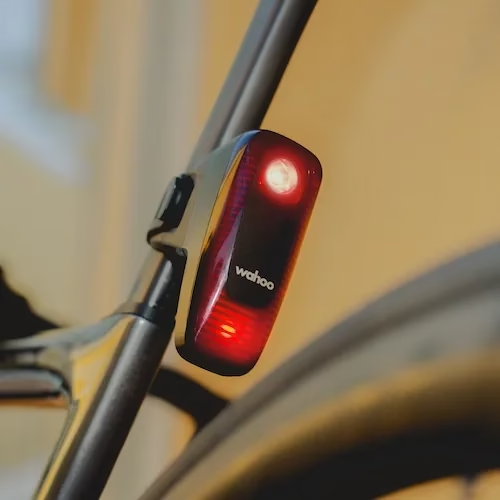 Photo Credit: Wahoo
Mounting, charging and winter practicality
Garmin’s RTL515 is slim, relatively light and familiar to riders who already own Garmin quarter-turn accessories. The unit weighs about 71g without its mount. It charges through Micro-USB, an increasingly inconvenient connector if the rest of your equipment has moved to USB-C. Its included mount suits many common seatposts, although unusual aero profiles and saddle bags can complicate positioning.
Wahoo supplies several wedges and straps for different seatpost shapes. The TRACKR unit weighs around 99g, and its mounting arrangement is secure but bulkier. Cyclingnews noted that the quarter-turn interface is slightly different from a standard Garmin fitting, so existing Garmin brackets should not be assumed compatible. That matters if you have several bikes or a custom saddle-rail mount.
Both units carry IPX7 water-resistance ratings, which is reassuring for a British winter, but the rating is not a promise that a charging port can be left wet or dirty. Check the seal after charging and keep the lens clear. The best place for either radar is unobstructed behind the bicycle, not hidden by a saddle pack, mudguard or jacket. A theoretically superior radar is of little use if the mounting position blocks its view.
Price and buying options in the UK
Tredz listed the Garmin Varia RTL515 at £169.99 and the Wahoo TRACKR RADAR at £161.99 as in stock on 2 November 2026. These are exact-product, direct retailer pages rather than tracked affiliate redirects. Prices and availability can change, so a current basket check matters before ordering.
At these prices Wahoo costs £8 less, so it is not sensible to choose Garmin purely on a supposed large discount. A future sale could reverse the difference. More important is the cost of any extra mount and whether you already own a compatible head unit. A rider using only a smartphone would need additional hardware to receive Wahoo’s live radar alerts, which changes the effective cost of the purchase.
For context, our six-model radar rear-light guide covers alternatives beyond these two. We have also compared the premium Garmin RearVue 820 against TRACKR RADAR and the Magicshine SEEMEE R300 against the RTL515. Those answer different price and feature questions, rather than changing the basic trade-off here.
Which radar rear light makes more sense?
Buy the Garmin Varia RTL515 if your highest priority is early, consistent vehicle detection, especially on winding lanes, or if you want live alerts through a smartphone without purchasing a GPS head unit. Its narrower, lighter body and familiar mounting system are useful bonuses. The compromises are Micro-USB charging, fewer adaptive lighting features and battery endurance that depends heavily on mode.
Choose the Wahoo TRACKR RADAR if you already use a compatible bike computer and value USB-C, adaptive lighting and the configurable brake light. It is a particularly appealing all-round rear light for riders who want more control over illumination. The caveats are its bulkier proprietary mount, lack of phone-only live radar display and independent battery results that vary sharply with settings and test conditions.
-
 Photo Credit: Unipublic/Sprint Cycling Agency