

Women’s cycling has never had the documentary ecosystem it deserves. The sport has decades of stories, rivalries, exclusions, breakthroughs and brilliant riders, but only a small number of films have properly centred women’s racing. That makes the best documentaries especially valuable. They do more than fill an evening. They help explain why modern women’s cycling looks the way it does, why races like the Tour de France Femmes carry so much historical weight, and why visibility still matters.
The strongest films for fans of women’s racing tend to fall into two groups. Some are directly about the women’s peloton, from the forgotten Tour de France Féminin to the inequalities that shaped professional racing for years. Others are broader cycling documentaries that help explain the culture, mythology and tactical language of the sport around it. Both can be useful, but the most important starting point is clear: watch the films that put women’s cycling at the centre.
This guide focuses on documentaries and documentary-style films that help fans understand women’s racing better. Some are easy to find through mainstream platforms, while others appear through film festivals, specialist screenings, YouTube, Vimeo, Apple TV or rental services. Availability changes regularly, so it is worth searching by title if a film is not currently on a major UK platform.
For readers building a wider viewing list around the current sport, our women’s cycling TV guide hub tracks race viewing options, while the most important women’s cycling races explained guide is a useful starting point for understanding the calendar behind many of these stories.
Breakaway Femmes: The Forgotten Tour de France
Breakaway Femmes is one of the most important modern documentaries for anyone interested in women’s road racing. Directed by Eleanor Sharpe, it revisits the Tour de France Féminin of the 1980s, when women raced alongside the men’s Tour and took on many of the same roads, climbs and public stages.
Its value is historical and emotional. The film does not just say that women raced the Tour. It shows the scale of that moment: the ambition, the media indifference, the logistical imbalance and the riders who were asked to perform at a high level without being given the same respect or infrastructure. Riders such as Jeannie Longo, Maria Canins, Marianne Martin and Mandy Jones belong in the wider Tour story, yet for years their race was treated as a footnote rather than a central chapter.
For fans of the modern Tour de France Femmes, this is essential viewing. It helps explain why the current race is not a new idea, but the revival of an ambition that had already been proved possible decades ago. It pairs naturally with our complete history of the Tour de France Femmes, which traces the long and uneven path from early women’s Tour-style racing to the modern yellow jersey.
The best thing about Breakaway Femmes is that it restores continuity. Women’s cycling was not waiting to be invented in 2022. It had already produced riders, rivalries and racing worthy of the biggest stage. The documentary makes that impossible to ignore.
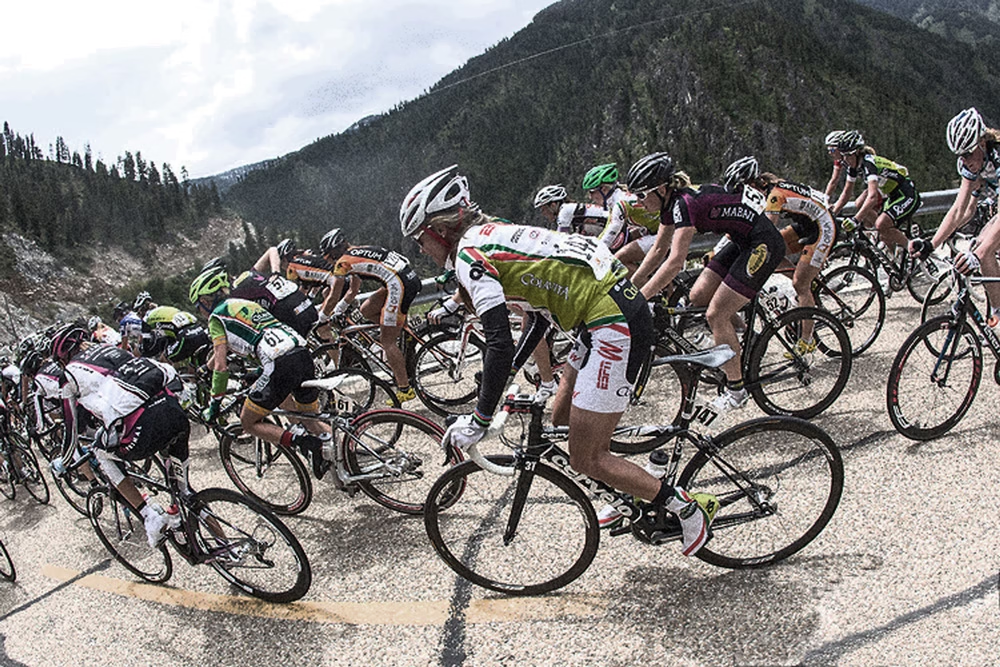
Half the Road
Half the Road remains one of the defining documentaries about inequality in women’s professional cycling. Directed by Kathryn Bertine, the film explores the passion, talent and frustration inside the women’s peloton at a time when the gap between men’s and women’s racing was still treated by too many decision-makers as normal rather than unacceptable.
The film’s central strength is its clarity. It is not simply about women having fewer races, less money or weaker media coverage. It sets out how those inequalities shaped careers. Prize money, race length, sponsorship, broadcast exposure, federation priorities and public recognition all feed into the same wider problem. The riders were professional in their commitment, but the sport around them often refused to meet that professionalism with equal opportunity.
Half the Road is especially useful for newer fans who have arrived during the Tour de France Femmes, Paris-Roubaix Femmes and Women’s WorldTour era. Modern women’s cycling is in a much stronger position, but many of its current structures were built through pressure, argument and persistence. The film captures that phase of the sport before growth became more visible.
It also gives useful context for why events such as Paris-Roubaix Femmes and the expanded Women’s WorldTour feel so significant. They are not just new races on a calendar. They are part of a broader correction to a sport that left too much talent under-supported for too long.
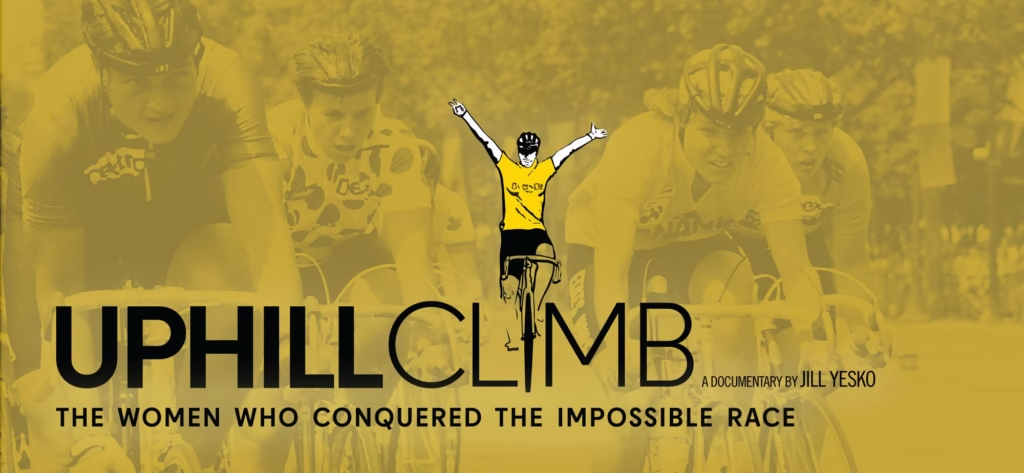
Uphill Climb: The Women Who Conquered the Impossible Race
Uphill Climb tells the story of the women who raced the early Tour de France Féminin in the 1980s. It overlaps thematically with Breakaway Femmes, but the focus is slightly different. This is a film about endurance, memory and the physical reality of what those riders were asked to do.
The first women to take on the Tour de France Féminin were not riding a symbolic parade. They were racing serious routes, tackling major climbs and doing so under conditions that were often far less developed than the men’s race around them. Uphill Climb is valuable because it cuts through the lazy assumption that women’s racing simply needed time to become hard. It was already hard. The recognition lagged behind the reality.
The film works particularly well for viewers interested in stage racing. It places the modern women’s Grand Tour conversation in a longer frame, showing how the idea of women racing across France has always carried both sporting and political meaning. The riders were proving something that should not have needed proving, that women could race hard, climb high and sustain a demanding stage race.
For readers following the current generation through the Giro d’Italia Women, La Vuelta Femenina and the Tour de France Femmes, Uphill Climb is a reminder that today’s battles sit on top of a much older struggle for space.
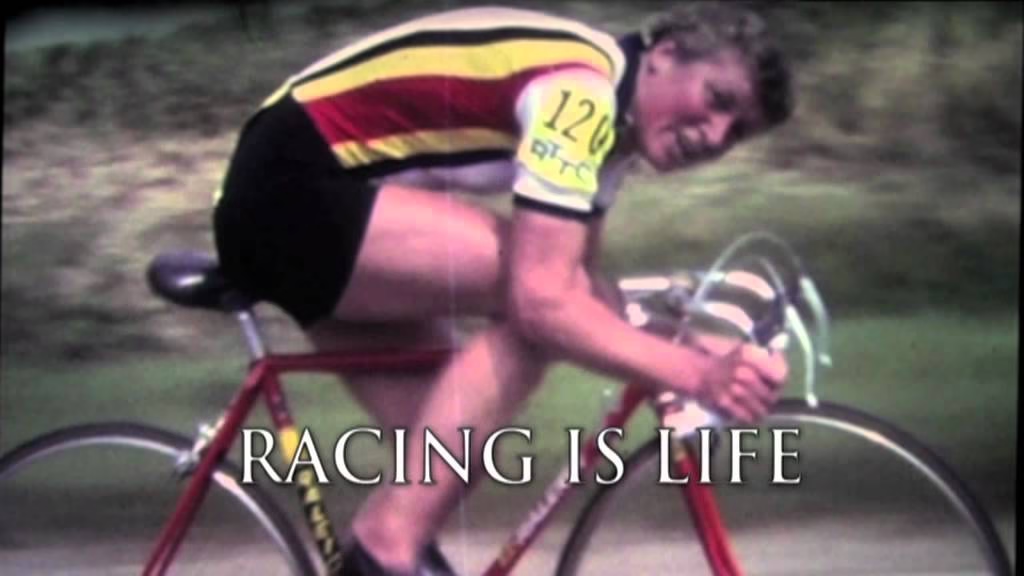
Racing is Life: The Beryl Burton Story
Beryl Burton is one of the greatest British cyclists of all time, and any documentary about her career is essential for fans of women’s racing. Racing is Life: The Beryl Burton Story is a valuable archive-led portrait of a rider whose achievements still feel almost unreal.
Burton dominated British cycling across time trials, road racing and track racing, winning world titles and setting records with a consistency that few riders in any era have matched. Yet her story also shows the familiar pattern of women’s cycling history: extraordinary performance paired with limited mainstream recognition.
For UK readers, this is one of the most important films on the list because Burton’s career sits at the heart of British cycling heritage. She was not a niche figure in sporting terms. She was a generational athlete. The fact that many casual cycling fans still know less about her than about far less accomplished male riders says plenty about how cycling history has been told.
Racing is Life is not a glossy modern streaming series, but that is part of its value. It feels close to the era it records. It is a reminder that women’s racing history is not only about recent progress, but about riders whose greatness was already there, waiting for the sport’s memory to catch up.
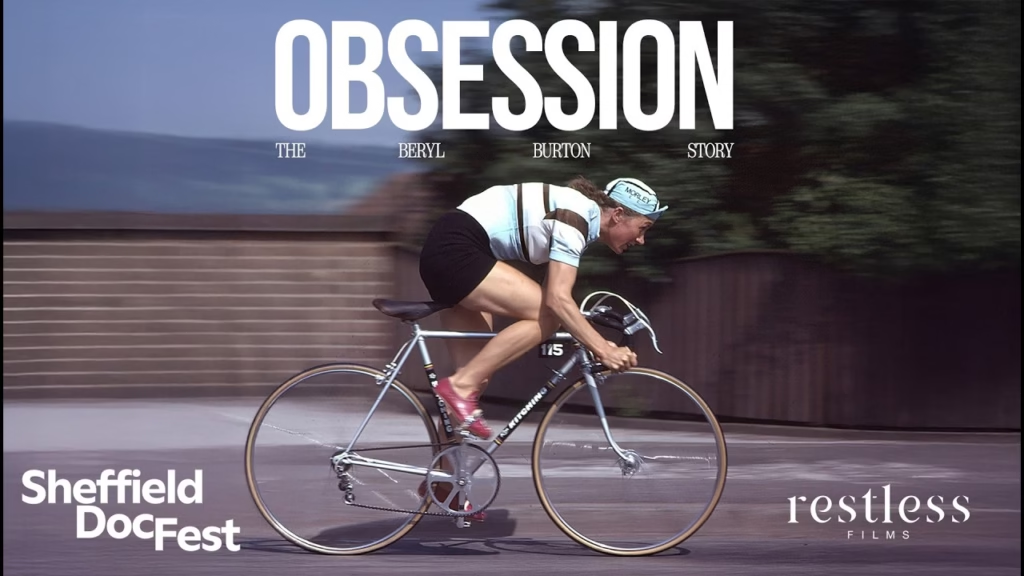
Obsession: The Beryl Burton Story
Obsession: The Beryl Burton Story is a newer and more intimate treatment of Burton’s life, framed around sporting greatness, family cost and the intensity required to dominate for so long. Where older archive films often present Burton as a heroic champion, Obsession appears more interested in the human tension behind the medals.
That makes it especially interesting for modern viewers. Women’s cycling coverage often falls into two traps: either ignoring women altogether, or presenting pioneers only as inspirational figures without complexity. Burton’s story is more demanding than that. Her career was brilliant, but brilliance has consequences. Obsession looks at the sacrifice behind the success, which makes it feel more honest than a simple celebration.
For fans of women’s racing, this kind of documentary is important because it treats a female athlete as a full sporting subject. Not just a symbol. Not just an exception. Not just a role model. A competitor with ambition, pressure, family dynamics and contradiction.
It also helps connect older British cycling history to the present. When watching modern riders fight for contracts, leadership, calendar status and media attention, Burton’s story shows how much has changed, but also how long women have been producing performances that deserved a bigger audience.
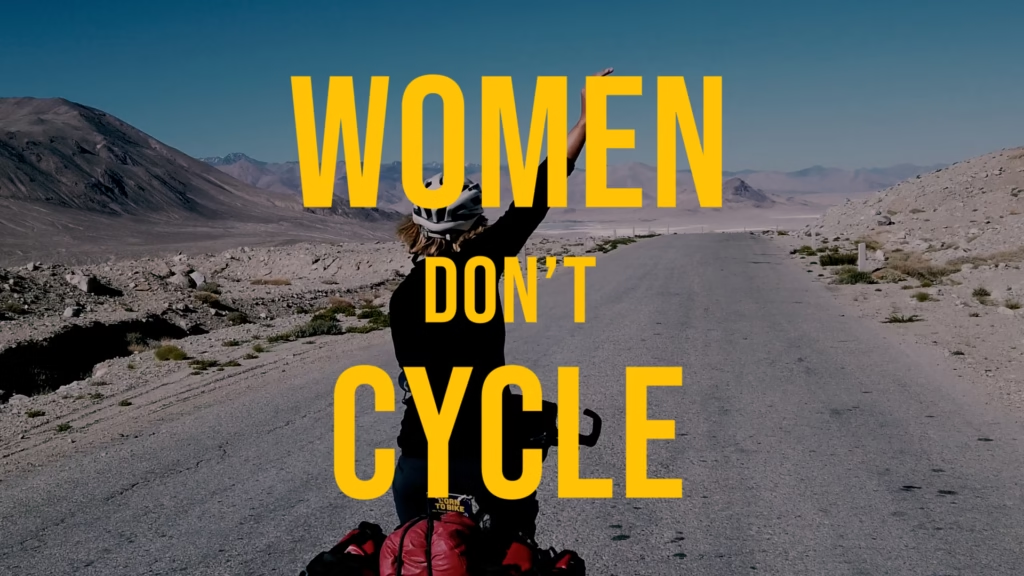
Women Don’t Cycle
Women Don’t Cycle is not a professional road-racing documentary in the narrow sense, but it belongs high on this list because it explores the wider cultural barriers around women and bikes. Manon Brulard’s film follows a ride from Brussels to Tokyo and gathers stories from women cyclists across different countries and contexts.
That makes it broader than a peloton film. It is about mobility, freedom, safety, confidence and the way cycling can look very different depending on where a woman is riding. For fans of women’s racing, that wider lens is useful. Elite sport does not exist separately from cycling culture. Participation, access and representation all shape who feels cycling is for them in the first place.
The title is deliberately provocative, and the film answers it by showing the opposite. Women do cycle, but not always with the same safety, visibility or social permission. That makes it a good companion piece to more race-focused documentaries because it connects professional cycling to the everyday realities that sit underneath the sport.
It is particularly useful for anyone interested in why representation at the top level has a broader effect. When riders are visible in the biggest races, it becomes easier for more women and girls to imagine cycling as a space they can occupy, whether that means racing, commuting, touring, gravel riding or simply starting out.
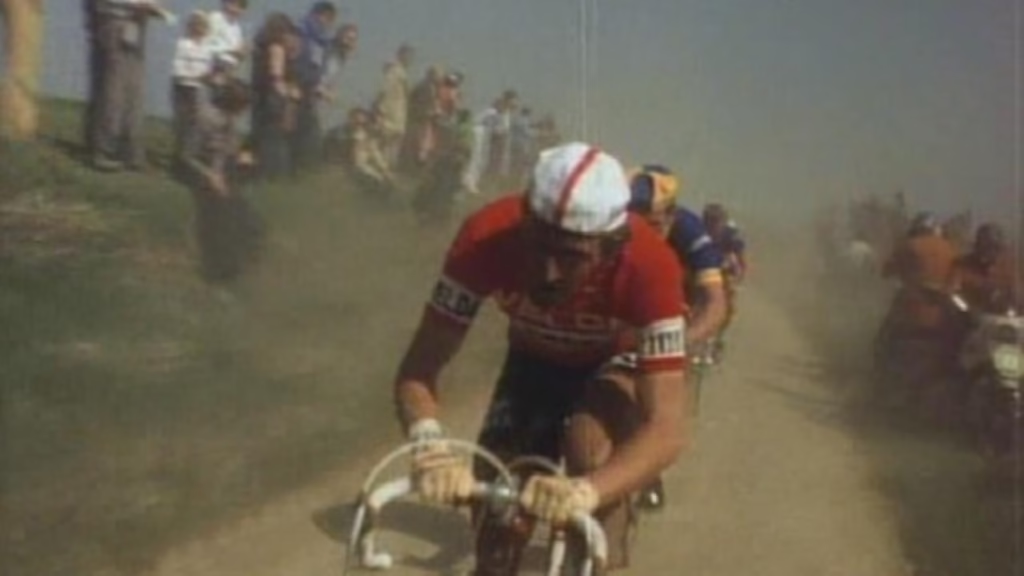
A Sunday in Hell
A Sunday in Hell is a classic cycling documentary rather than a women’s racing film, but it belongs in a wider viewing guide because of what Paris-Roubaix now means to women’s cycling. The film captures the 1976 men’s Paris-Roubaix with a level of atmosphere that still defines how many fans imagine the race: cobbles, dust, mud, mechanicals, exhaustion and the slow psychological wearing-down of the peloton.
For fans of Paris-Roubaix Femmes, it is useful because it explains the mythology that the women’s race has now entered and changed. The cobbles were never only about distance. They were about survival, positioning, fear, strength and the strange theatre of suffering that makes Roubaix different from every other one-day race.
The women’s edition has quickly built its own identity since its debut in 2021. It does not need the men’s race to validate it. But watching A Sunday in Hell helps explain the symbolic weight of the velodrome, the sectors and the old argument about who is allowed to race on cycling’s most brutal stages.
Seen through a modern lens, the film also raises a useful question: if cycling could turn men suffering on cobbles into mythology, why did it take so long to give women the same platform?
Wonderful Losers: A Different World
Wonderful Losers is focused on the Giro d’Italia and the world of domestiques, soigneurs and support staff. It is not centred on women’s racing, but it is one of the better documentaries for understanding the hidden labour of professional cycling.
That makes it useful for fans of women’s stage racing. The structure of a race is not just leader versus leader. It is bottle carrying, positioning, pacing, sacrifice, medical care, emotional management and the quiet work that keeps a team functioning. Those dynamics are just as important in the women’s peloton, especially as teams become deeper, more professional and more tactically layered.
The film is particularly good at showing how much of cycling is built around invisible work. That applies to riders as well as staff. A domestique can make a race-winning move possible without appearing in the final headline. A soigneur or mechanic can be central to the rhythm of a team without appearing in the results sheet.
For anyone following the Women’s WorldTour, this is useful background. It helps viewers watch races with a better eye for the work before the final attack, the riders who close gaps, the teammates who fetch bottles, and the support systems that increasingly separate the strongest women’s teams from the rest.
Tour de France: Unchained
Tour de France: Unchained is not a women’s cycling documentary, and that limitation should be stated clearly. The Netflix series focuses on the men’s Tour de France and has often been criticised for giving a narrow, heavily dramatised version of the sport. Even so, it can still be useful for fans of women’s racing because it explains how modern cycling is packaged for a wider audience.
The series shows the power of access. Team buses, directors’ meetings, rider tension, crashes, selection dilemmas and tactical conflict all become easier for casual viewers to understand when they are framed through behind-the-scenes storytelling. Women’s cycling has not yet had an equivalent global documentary platform, and that absence is revealing.
For fans of the Tour de France Femmes, Unchained is useful almost as a comparison point. It shows what happens when a major broadcaster and global streaming platform decide that cycling drama can be sold to a mainstream audience. The women’s peloton has just as much personality, rivalry and sporting jeopardy. What it has lacked is the same scale of production and distribution.
It is not the best documentary about racing itself, and it should not be treated as a tactical manual. But as a lesson in visibility, narrative and why documentary access can change public perception, it is worth watching alongside women-focused films.
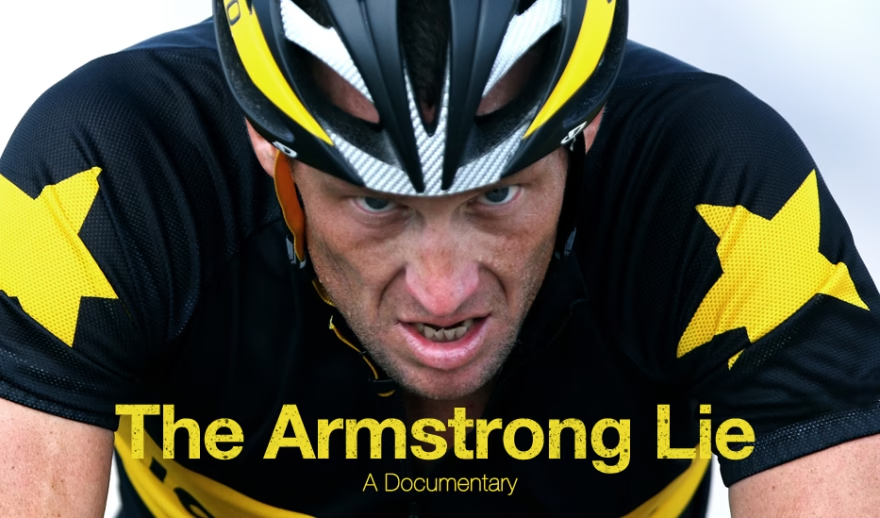
The Armstrong Lie and Lance
The Armstrong Lie and Lance are not comfortable recommendations, and they are not women’s racing documentaries. They are included here for one specific reason: Emma O’Reilly’s role as a whistleblower is an essential part of the wider story of power, truth and credibility in professional cycling.
O’Reilly’s treatment after speaking out remains one of the most disturbing examples of how the sport protected powerful men while targeting people who told uncomfortable truths. For fans of women’s cycling, that context is worth understanding because the struggle for fairness in cycling has never only been about race days or prize money. It has also been about whose voice is believed, whose reputation is protected, and who pays the price when systems fail.
These films are not the place to go for inspiration. They are more useful as cautionary viewing. They show the culture of professional cycling at its most defensive and self-protective. They also show why independent scrutiny, journalism and athlete voice matter.
Watched alongside women-focused documentaries, they add a darker layer to the picture. Women’s cycling has had to fight not only for space in the calendar, but for credibility in a sport that has often been slow to listen to people outside its traditional power structures.
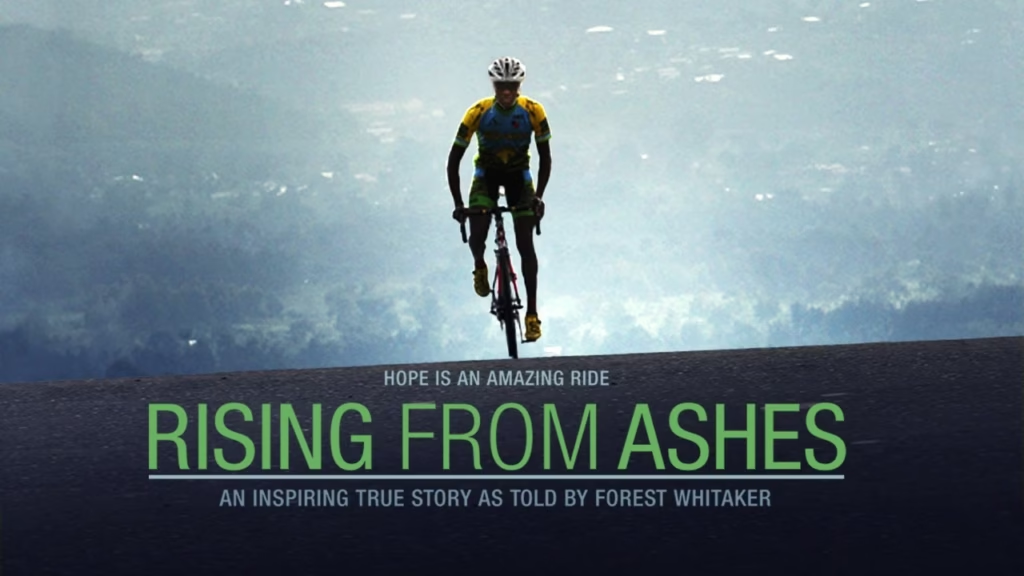
Rising from Ashes
Rising from Ashes follows the development of the Rwandan national cycling team and is not a women’s racing documentary. It earns a place on this wider list because it shows how cycling can become a vehicle for identity, recovery and national sporting ambition.
For women’s racing fans, its relevance is indirect but real. The film helps show how cycling development is shaped by infrastructure, belief, coaching, equipment, funding and opportunity. Those are the same ingredients that determine whether women’s cycling grows in different countries and whether talented riders get the chance to reach the professional level.
It is not a perfect comparison, and it should not be forced into one. But the film is valuable because it makes clear that talent alone is never enough. Racing cultures have to be built. Riders need pathways. Teams need support. Stories need telling.
That is a useful framework for thinking about the global future of women’s cycling, especially beyond the strongest European nations. The next wave of women’s racing will not come only from better race routes. It will come from more countries building structures that allow riders to reach those races in the first place.
-
 Photo Credit: Flavia Ossola
What should fans of women’s racing watch first?
The best starting point is Breakaway Femmes. It is directly connected to the history of the women’s Tour de France, and it helps explain the emotional and sporting importance of the modern Tour de France Femmes.
After that, Half the Road gives the clearest picture of the inequality that shaped women’s professional cycling in the years before the current boom. Uphill Climb then deepens the Tour de France Féminin story, while Racing is Life and Obsession bring Beryl Burton’s British cycling legacy into the conversation.
Women Don’t Cycle is the best choice for viewers who want something broader than professional racing. It connects the elite sport to everyday cycling, access and representation. A Sunday in Hell is the best classic cycling documentary to watch alongside Paris-Roubaix Femmes, because it explains the mythology that the women’s race has now claimed for itself.
For newer fans who want to understand the modern broadcast and storytelling landscape, Tour de France: Unchained is useful, but with a caveat. It is not women’s cycling representation. It is evidence of what women’s cycling still deserves: sustained behind-the-scenes coverage, proper platforming, and the confidence from broadcasters to treat the women’s peloton as compelling in its own right.
Why women’s cycling needs more documentaries
The strongest lesson from this list is not that there are enough women’s cycling documentaries. It is that there should be many more. The sport has the stories. It has the riders. It has the rivalries, histories, setbacks and breakthroughs. What it has lacked is consistent documentary attention.
The Tour de France Femmes, Giro d’Italia Women, La Vuelta Femenina, Paris-Roubaix Femmes, Tour of Flanders Women and the wider Women’s WorldTour all have enough drama to support serious long-form storytelling. The women’s cycling history hub shows just how many races, riders and teams already have rich backstories waiting to be explored.
A great documentary can change how a sport is remembered. It can bring forgotten riders back into view, help new fans understand why a race matters, and give modern athletes the kind of narrative space that men’s cycling has enjoyed for decades.
For fans of women’s racing, the best documentaries are not just entertainment. They are part of the sport’s memory. They help connect Beryl Burton to the Tour de France Féminin, the Tour de France Féminin to the Tour de France Femmes, and the old fight for visibility to the modern one still being won race by race.

