

Wales has some of the toughest cycling sportives in Britain, combining long mountain passes with steep valley roads, exposed moorland and very little genuinely flat riding.
The Dragon Ride remains the best-known Welsh sportive and offers the largest total climbing challenge. The Wild Wales Challenge provides greater climbing density on remote North Wales roads, while the Brecon Beacons Devil brings together Gospel Pass, The Tumble and almost 4,000 metres of ascent on its longest route.
Riders looking for a more manageable day can still find serious climbing at the Black Cat Cycling Challenge, Five Valleys Sportive and Wales Sportive. These events reduce the overall distance without removing the rolling roads and sharp gradients that make riding in Wales distinctive.
For a wider comparison with events elsewhere in Britain, our UK sportive guide covers the main climbing, endurance and beginner-friendly rides across the country.
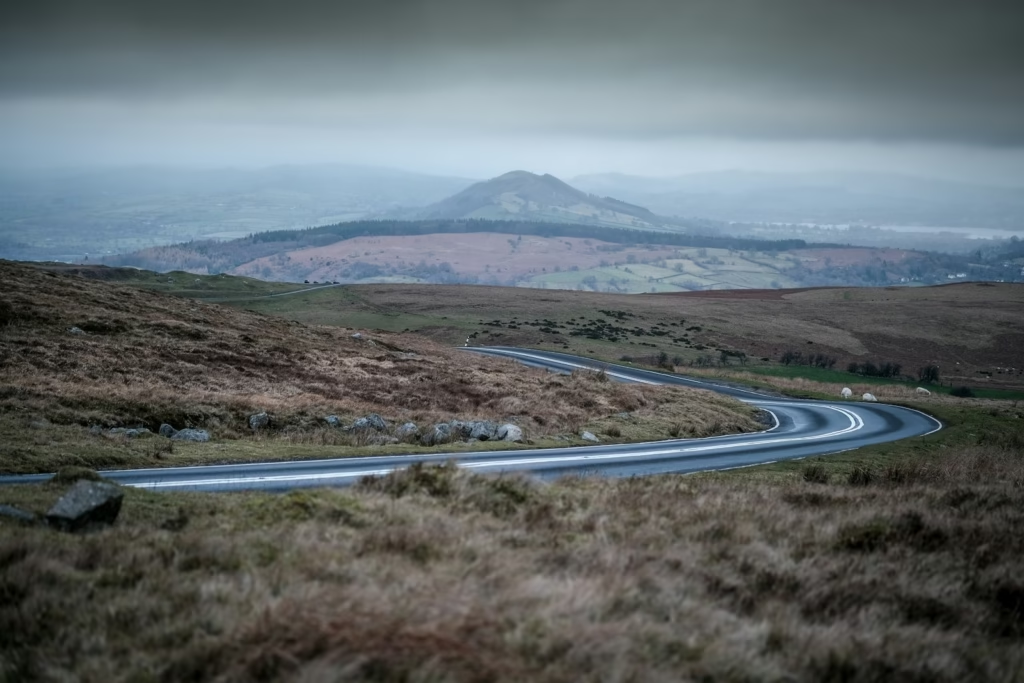
Best climbing sportives in Wales at a glance
| Sportive | Main area | Longest route | Approximate climbing | Best for |
|---|---|---|---|---|
| Dragon Ride | Bannau Brycheiniog and South Wales | 298km | 4,504m | The biggest single-day challenge |
| Wild Wales Challenge | Bala and North Wales | Around 145km | Around 2,900m | Maximum climbing per kilometre |
| Brecon Beacons Devil | Hay-on-Wye and Bannau Brycheiniog | 215km | Nearly 4,000m | Famous passes and quiet mountain roads |
| Cambrian Devil | Elan Valley and Cambrian Mountains | 212km | Route dependent | Remote Mid Wales riding |
| Black Cat Cycling Challenge | Conwy and Eryri | Around 145km | Around 2,130m | North Wales scenery with route options |
| Five Valleys Sportive | South Wales valleys | 116km | Around 1,500m | A challenging but accessible sportive |
| Wales Sportive | Pembrokeshire | 180km | Route dependent | Coastal climbing and event atmosphere |
Distances and elevation figures can change between editions, particularly where organisers redesign or reverse routes. Riders should always check the latest event information and GPX file before entering or planning their training.
1. Dragon Ride
The Dragon Ride is the benchmark against which most Welsh sportives are judged.
Starting and finishing at Margam Park near Port Talbot, the event sends riders into Bannau Brycheiniog and the South Wales valleys. Four route choices allow riders to take on anything from a demanding 99km sportive to the near-300km Dragon Devil.
The 2026 edition reversed the direction of several familiar roads, changing the order and character of climbs including Rhigos, The Bwlch and Devil’s Elbow.
The next Dragon Ride takes place on Sunday 13 June 2027, although the organiser has not yet confirmed whether the 2026 routes will be repeated. The previous distances provide a useful guide to the scale of each option.
| Dragon Ride route | Distance | Elevation |
|---|---|---|
| Cymru Classic | 99km | 1,324m |
| Medio Fondo | 153km | 2,332m |
| Gran Fondo | 222km | 3,583m |
| Dragon Devil | 298km | 4,504m |
The Cymru Classic is difficult enough for riders moving up from local club sportives. The combination of The Bwlch, Rhigos and Cimla Hill means the climbing is concentrated rather than spread evenly across the route.
The Medio Fondo is arguably the best-balanced option. At 153km with more than 2,300 metres of ascent, it is long enough to demand structured training without turning into the all-day endurance exercise of the two longest routes.
The Gran Fondo is the traditional choice for experienced sportive riders. More than 3,500 metres of climbing across 222km places it among the toughest sportives in the UK, even before weather and road conditions are considered.
The Dragon Devil is for riders seeking completion rather than a quick sportive time. Its 2026 route covered 298km with 4,504 metres of ascent, including Devil’s Staircase, Rhigos and The Bwlch. Even strong club riders should expect to spend most of the day on the road.
Devil’s Elbow provides the clearest test of short climbing power. The timed ascent used in 2026 measured 1.8km at an average gradient of 10.3%, steep enough to punish anyone who has started too aggressively.
Our full Dragon Ride guide covers the route choices, major climbs, gearing, training and event-day preparation in greater detail.
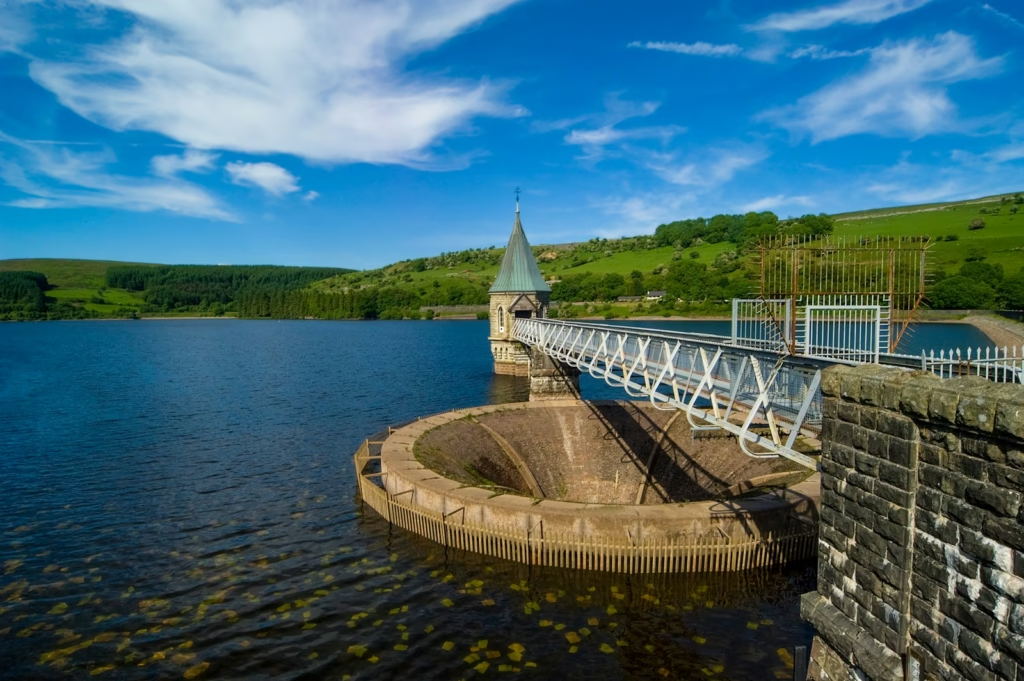
Who should ride the Dragon Ride?
Choose the Dragon Ride when you want a large, established event with several route options, extensive support and a finish village atmosphere.
The Medio Fondo suits riders completing their first major mountain sportive. The Gran Fondo is better for experienced century riders, while the Dragon Devil should be treated as an ultra-distance climbing challenge rather than simply the next route up.
Entries and route updates are published through the official Dragon Ride website.
2. Wild Wales Challenge
The Wild Wales Challenge lacks the scale and branding of the Dragon Ride, but it may be the stronger option for riders whose main priority is climbing.
The event starts in Bala and traditionally uses remote North Wales roads rather than wide, predictable main-road passes. Its route changes between editions, preserving an old-fashioned challenge-ride character rather than repeating an identical commercial sportive course.
For 2026, riders can choose between approximately 90 miles with 9,500ft of ascent or 65 miles with 7,000ft. That is roughly 2,900 metres of climbing across 145km on the long route and more than 2,100 metres across around 105km on the shorter option.
Those figures make both routes unusually climb-heavy. The long course contains close to 2,000 metres of ascent for every 100km ridden, while even the shorter option delivers more climbing than many events’ full-distance routes.
The challenge is not only the elevation total. The roads around Bala can be narrow, exposed and irregular, with repeated gradients rather than one or two headline climbs followed by long recovery sections.
Wild Wales is not a race and takes place on open roads. It is organised as a traditional tourist challenge with checkpoints and food rather than a heavily commercial event village.
The 2026 edition takes place on Sunday 30 August, with riders starting from Bala Rugby Club between 07:00 and 09:00. Current entry and route information is available from the Wild Wales Challenge organiser.
Who should ride the Wild Wales Challenge?
Wild Wales is best for experienced riders who value route difficulty, scenery and atmosphere more than timing chips or closed-road infrastructure.
It is also a strong choice for climbers who prefer repeated steep roads to very long, steady ascents. The event rewards sensible gearing and the ability to recover quickly between climbs.
Riders unfamiliar with the area can use our guide to the best cycling climbs in North Wales and Eryri to understand the terrain beyond the event route.
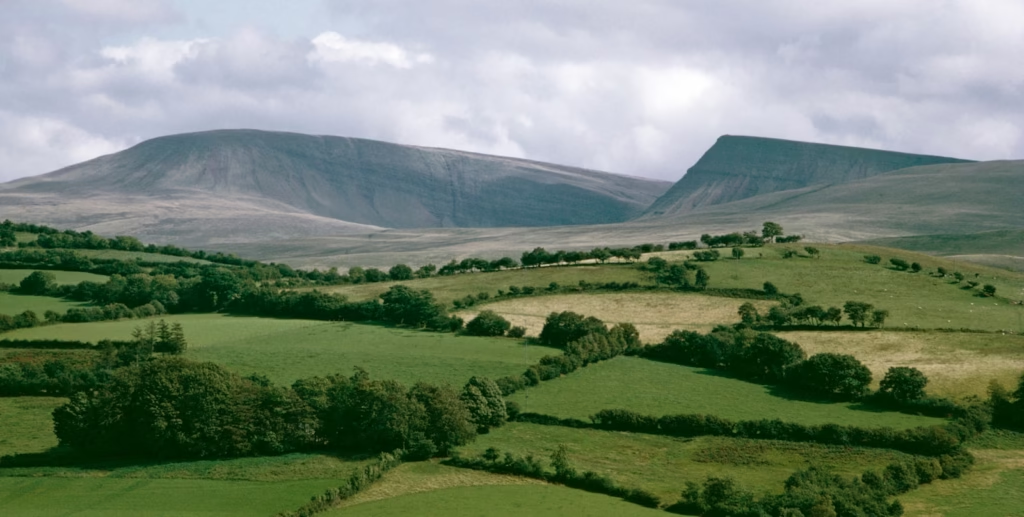
3. Brecon Beacons Devil
The Brecon Beacons Devil combines one of the best sportive starts in Wales with a demanding sequence of recognised climbs.
The event begins in Hay-on-Wye and almost immediately sends riders towards Gospel Pass, the highest paved road pass lying entirely within Wales. From there, the longer routes continue through the Black Mountains and Bannau Brycheiniog.
There are three main distances.
| Route | Distance | Character |
|---|---|---|
| Short | 82km | Gospel Pass and Black Mountains lanes |
| Medium | 115km | Gospel Pass, rolling roads and repeated shorter climbs |
| Long | 215km | Gospel Pass, The Tumble, Black Mountain and nearly 4,000m |
The long route is the main attraction for serious climbers. It adds The Tumble before travelling farther west through the Usk Valley and towards the Black Mountain.
At 215km and close to 4,000 metres of ascent, it approaches Dragon Ride Gran Fondo difficulty but has a smaller and more local feel. There is also less opportunity to sit inside a large group for extended periods.
The short route should not be dismissed. Starting with the climb towards Gospel Pass means riders reach a significant ascent before they have fully settled into the event.
Who should ride the Brecon Beacons Devil?
The Brecon Beacons Devil is the best choice for riders who want recognised Welsh climbs without entering the much larger Dragon Ride.
The 115km route suits riders who enjoy climbing but are not ready for an all-day 200km mountain event. The long route is a genuine endurance test and requires the same careful pacing, feeding and equipment preparation as a major European gran fondo.
Riders considering the longest course should be comfortable with both extended climbing and steep ramps. The event is not defined by one climb, but by how frequently the next one arrives.
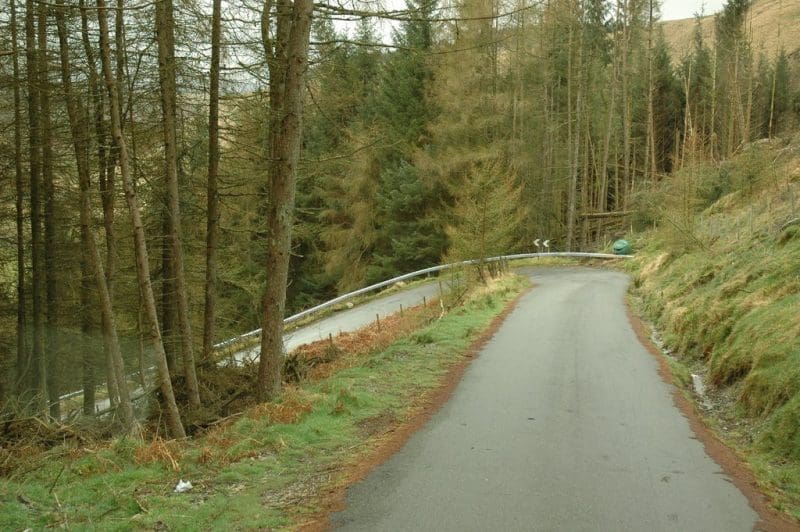
4. Cambrian Devil
The Cambrian Devil explores the quieter centre of Wales, using the Elan Valley, Cambrian Mountains and Abergwesyn roads.
Its longest route covers approximately 212km, with medium and shorter options around 137km and 72km. The event starts near Crossgates and Llandrindod Wells before heading into remote Mid Wales terrain.
Its defining climb is Devil’s Staircase.
The ascent is short but severe, with steep ramps arriving within a much longer crossing of the Abergwesyn Pass. Our guide to cycling Devil’s Staircase explains why it feels considerably harder than its relatively short headline distance suggests.
The route’s wider appeal comes from its remoteness. Traffic is generally lighter than on many South Wales sportives, but mechanical problems or sudden weather changes feel more serious when riders are deep inside the Cambrian Mountains.
The planned 2026 event was postponed, with the next edition currently scheduled for Sunday 16 May 2027.
Who should ride the Cambrian Devil?
Choose the Cambrian Devil when scenery and isolation matter as much as headline elevation.
It is particularly well suited to self-sufficient riders who are comfortable on narrow roads and capable of managing their own pacing. The long route can feel less crowded than the Dragon Ride, but that also means fewer wheels to follow during exposed or tiring sections.
5. Black Cat Cycling Challenge
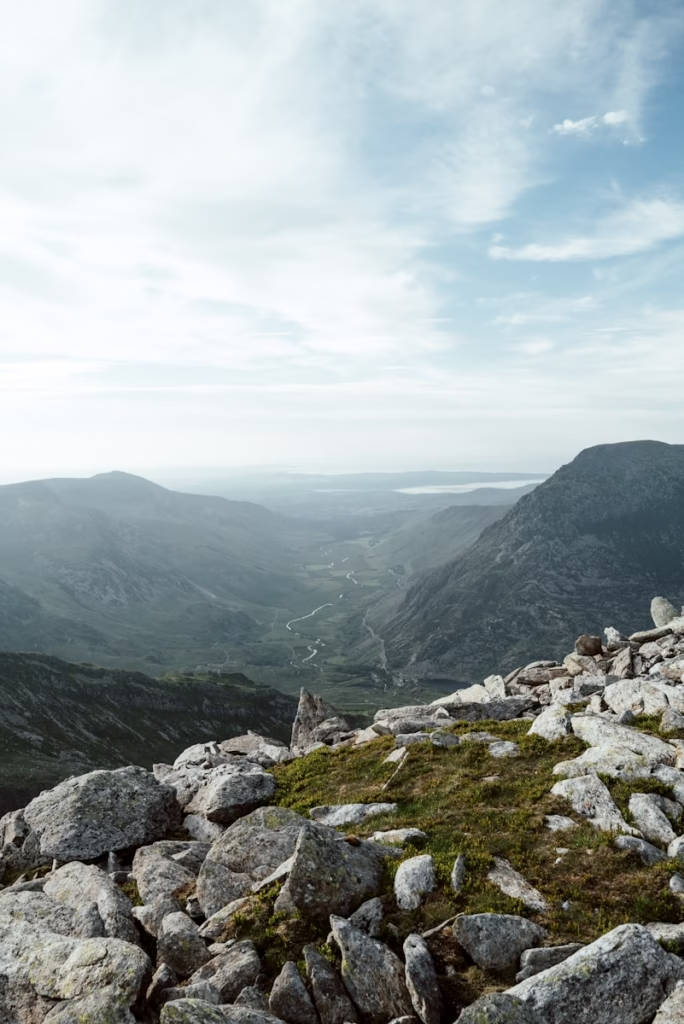
The Black Cat Cycling Challenge provides one of the best introductions to mountainous riding in North Wales.
The full route covers 90 miles with 7,000ft of ascent, equivalent to around 145km and 2,130 metres. Riders can shorten it to 65 miles and 5,000ft by removing the southern section over the Migneint moorland.
The course combines the Great Orme, Conwy Valley, Ogwen Valley and roads around Eryri. It offers a broader mix than a sportive built around one national park loop, moving between coast, valley and mountain terrain.
The climbing total is lower than Wild Wales, but 7,000ft is still enough to expose weak pacing. The full route also includes long stretches where wind can add difficulty without appearing on the elevation profile.
As a charity event, the Black Cat has a more community-led feel than the biggest UK sportives. Its scale makes it less intimidating for riders attempting their first 90-mile climbing challenge.
Who should ride the Black Cat?
The Black Cat is best for riders who want a serious North Wales route without immediately committing to the extreme climbing density of Wild Wales.
It also works well as preparation for a longer summer sportive. Riders who complete the 90-mile course comfortably should have the endurance base needed to begin training specifically for a Dragon Ride Medio Fondo or Gran Fondo.
The Great Orme is one of several roads featured in our guide to the top cycling climbs in North Wales, alongside Pen-y-Pass, Nant Gwynant and Stwlan Dam.
6. Five Valleys Sportive
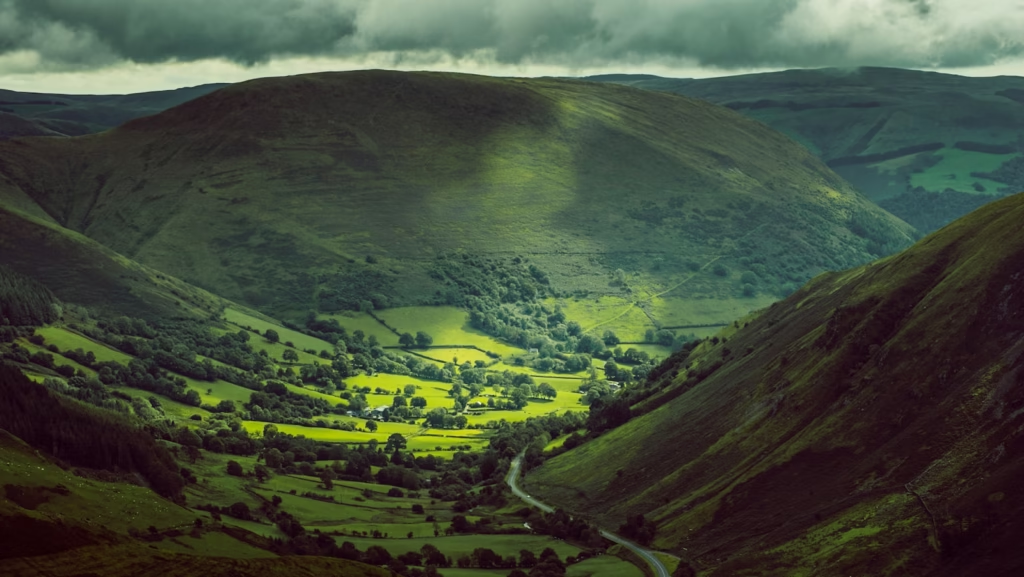
The Five Valleys Sportive starts and finishes at Margam Park, using the same practical South Wales base as the Dragon Ride but offering a shorter and more accessible challenge.
Riders can choose between 54 and 72 miles. The longer route covers approximately 116km, with available route data suggesting around 1,500 metres of climbing.
The climbing is different from the Dragon Ride. Rather than sending riders deep into Bannau Brycheiniog for several major passes, the Five Valleys uses a succession of valley roads, shorter hills and rolling terrain.
That can make the event harder than its elevation total suggests. Repeated medium-length efforts leave fewer opportunities to establish a steady climbing rhythm, while short descents may not provide enough time to eat or recover.
The event includes feed stations, timing, mechanical support and medical cover. It also has a later start than many mountain sportives, reducing the need for a very early arrival.
Who should ride the Five Valleys Sportive?
This is one of the best Welsh sportives for riders stepping up from regular club runs.
The 54-mile route provides a realistic first sportive target, while the 72-mile option is substantial without requiring the training volume needed for a 200km mountain event.
The 2026 edition takes place on Sunday 23 August. Riders still building their event experience may also find our first sportive checklist useful before travelling to Margam Park.
7. Wales Sportive
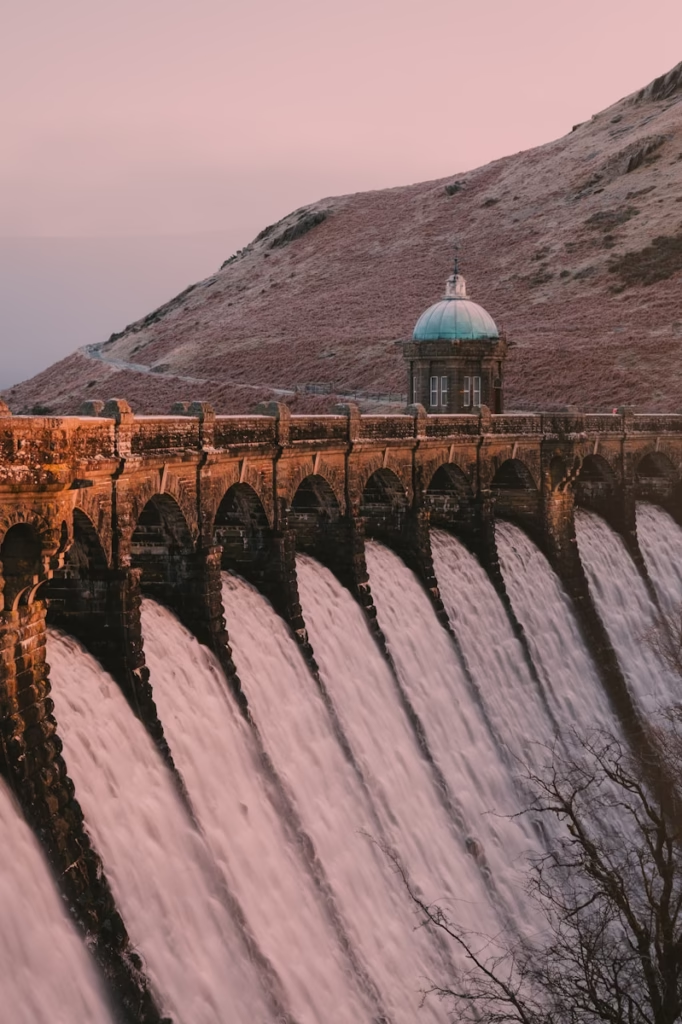
The Wales Sportive is the cycling event within Long Course Weekend Wales, based in Tenby.
The event offers open-road routes of 20, 40, 80 and 112 miles. The longest option provides a full-distance endurance challenge, while the shorter courses allow riders to experience the event without taking on an Ironman-length bike leg.
Pembrokeshire does not offer the same high mountain passes as Bannau Brycheiniog or Eryri, but it rarely allows riders to settle.
The difficulty comes from constant rolling roads, coastal exposure and short climbs that accumulate across the day. Wind direction can also transform apparently straightforward sections into prolonged efforts.
The event has a much larger festival atmosphere than most sportives. The cycling sits alongside swimming and running events across Long Course Weekend, bringing spectators and participants into Tenby throughout the weekend.
Who should ride the Wales Sportive?
The Wales Sportive is best for riders who want a climbing challenge combined with a major event weekend.
It suits groups containing riders of different abilities because four route distances begin from the same base. The 112-mile course remains a major endurance ride, while the 20, 40 and 80-mile versions allow less experienced riders to take part.
It is less suitable for anyone specifically seeking long mountain passes. The climbing is cumulative and repetitive rather than concentrated into famous summit roads.
Bonus option: RideCymru
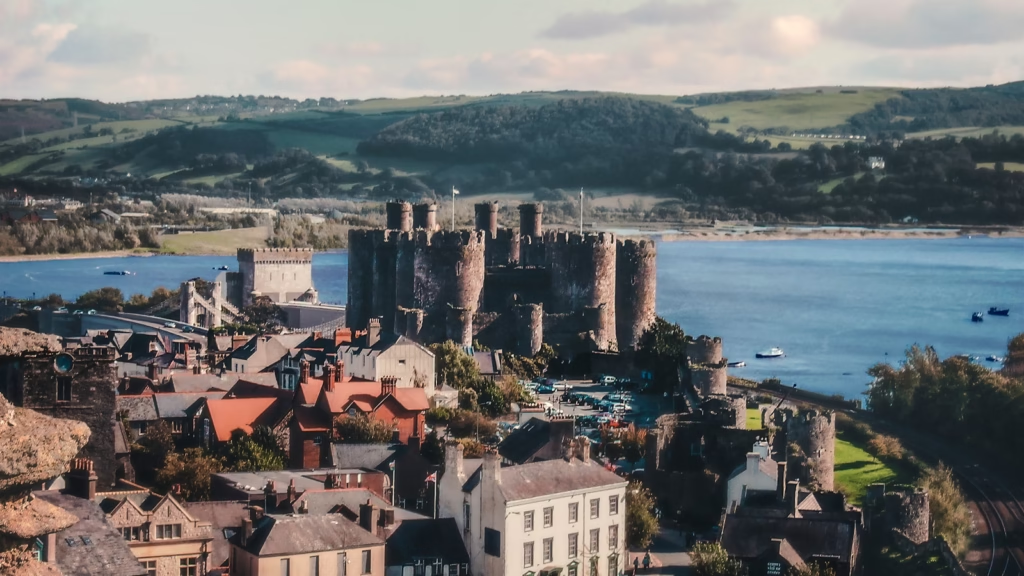
RideCymru is not a conventional one-day sportive, but it deserves consideration from anyone looking for the biggest supported climbing experience in Wales.
The event travels around 250 miles from Llandudno to Cardiff over three days. The 2026 edition runs from 11 to 13 September and includes accommodation options, food, medical support and mechanical assistance.
The multi-day format changes the challenge. Riders need to recover overnight, manage clothing and food across changing conditions and begin each morning with fatigue already in their legs.
It is therefore closer to an amateur stage ride than a traditional sportive. Riders who find a single 200km event too concentrated may prefer distributing the distance across three demanding days.
The event sits naturally alongside the other major targets in our guide to the best UK sportives to ride, although the accommodation and fundraising structure make it a different commitment from entering a standard Sunday sportive.
Which Welsh sportive has the most climbing?
The Dragon Devil has the highest total ascent, based on its 2026 route of 4,504 metres across 298km.
The Brecon Beacons Devil comes close while covering less distance, with nearly 4,000 metres across its 215km long course. The Dragon Ride Gran Fondo sits between them in distance, offering 3,583 metres across 222km.
Wild Wales has the greatest climbing density among the major events listed here. Its approximate 9,500ft across 90 miles works out at close to 2,000 metres of ascent for every 100km ridden.
That distinction matters. A longer route can have a higher total ascent while still providing more flat or descending recovery between climbs. Wild Wales keeps asking riders to climb throughout a comparatively shorter day.
Which sportive is best for a first climbing event?
The Dragon Ride Cymru Classic, Five Valleys short route and shortened Black Cat course are the strongest starting points.
The Cymru Classic combines a polished large-event experience with around 100km and more than 1,300 metres of climbing. It remains difficult, but riders receive extensive event support and have a clearly defined step towards the longer Dragon Ride routes.
The Five Valleys 54-mile option is shorter and keeps riders closer to the South Wales population centres. It is a better choice for anyone whose longest rides are currently around 50 to 60 miles.
The shortened Black Cat route introduces North Wales terrain across 65 miles and 5,000ft of ascent. It has more climbing than the Five Valleys short course but avoids the full 90-mile loop.
Wild Wales should not usually be a rider’s first mountain sportive. Even its shorter route contains around 7,000ft of climbing, placing it above many events’ full-distance options.
Our guide to the best beginner-friendly sportives in the UK includes gentler alternatives for riders who are not yet ready for Welsh mountain roads.
What gearing do you need for a Welsh sportive?
A compact or semi-compact chainset with a wide-range cassette is the safest option.
For most riders, a lowest gear of 34×32 provides a sensible minimum. A 34×34 or similarly low ratio is better for events containing Devil’s Elbow, Devil’s Staircase or repeated steep lanes.
Strong riders may be comfortable with a 30-tooth sprocket, but gearing should be selected for the final climb rather than the first. A ratio that feels manageable after 30km can become too large after six hours of climbing.
Avoid choosing hard gearing simply to preserve smaller jumps between sprockets. The ability to maintain cadence on double-digit gradients is more valuable than closely spaced ratios on flatter roads.
How should you train for a climbing sportive in Wales?
Training should reflect the type of event rather than simply its total distance.
For the Dragon Ride and Brecon Beacons Devil, build towards long rides containing sustained climbing. The main challenge is maintaining a controlled output across several hours and still having enough strength for the final major ascent.
Wild Wales and the Cambrian Devil require greater experience on repeated steep gradients. Include rides with several short climbs completed at a sustainable effort rather than treating every hill as a maximal interval.
Five Valleys and the Wales Sportive reward the ability to accelerate repeatedly. Rolling roads create frequent changes in effort, especially when riding inside groups.
At least one training ride should reach around 70 to 80% of the event’s expected duration. It does not need to match the full distance, but it should test clothing, feeding, gearing and comfort.
Fuelling matters as much as climbing fitness
Many riders fail difficult sportives because of pacing and fuelling rather than a lack of fitness.
Begin eating during the opening hour and continue at regular intervals. Waiting until the first major climb or feed station can leave you chasing an energy deficit for the rest of the day.
The longest Welsh routes require a tested mixture of carbohydrates, fluid and sodium. Bars, gels, bananas, sandwiches and drink mix can all work, but only when your stomach is already used to them.
Our guide to fuelling longer cycling rides provides a starting point for building an event-day routine.
Electrolytes can also help during warmer events or for riders with high sweat losses, but they do not replace carbohydrate. Our comparison of electrolyte tablets for cycling explains the difference between basic hydration products and higher-sodium options.
Welsh weather can make the same route much harder
Elevation profiles only show part of the difficulty.
Exposed climbs such as Rhigos, Black Mountain and roads around Eryri can be affected by strong wind, sudden rain and lower temperatures than those found at the start.
Carry a packable waterproof even when the valley forecast appears settled. A lightweight gilet and full-finger gloves may also be useful for long descents.
Our guide to what to wear for cycling in British weather covers the layering choices needed when conditions can change several times during the same ride.
Heat can create a different problem. Several routes contain remote sections where riders cannot rely on shops or public water points between official feed stations.
Eat and drink before reaching the climbs. Waiting until the gradient rises makes it harder to open food, drink regularly and recover from the previous effort.
-
 Photo Credit: Canyon SRAM (supplied media release)
 -
 Photo Credit: Park Tool



Are Welsh sportives held on closed roads?
Most Welsh sportives take place mainly or entirely on open roads.
Event signs, marshals and timing do not remove the need to follow normal traffic law. Riders should expect approaching vehicles on narrow lanes and avoid crossing the centre line on blind corners.
This is particularly important on descents. Welsh mountain roads can contain broken surfaces, gravel, livestock and sudden bends that are difficult to see from above.
A sportive is not a road race. Saving a few seconds on a descent is never worth taking risks around traffic or other participants.
Riders specifically seeking traffic-free events should use our guide to the best closed-road sportives in the UK, although the strongest Welsh climbing events generally take place on open roads.
Which Welsh climbing sportive should you choose?
Choose the Dragon Ride for the biggest event, the widest route choice and the greatest total climbing.
Choose the Wild Wales Challenge for the highest climbing density and a traditional North Wales challenge.
Choose the Brecon Beacons Devil for Gospel Pass, The Tumble and a smaller mountain-sportive atmosphere.
Choose the Cambrian Devil for remote Mid Wales roads and Devil’s Staircase.
Choose the Black Cat Cycling Challenge for an achievable introduction to mountainous North Wales riding.
Choose the Five Valleys Sportive for a demanding but accessible South Wales event.
Choose the Wales Sportive for coastal climbing, multiple distances and the atmosphere of Long Course Weekend.
For the strongest climbers, the final choice is likely to come down to Wild Wales and the longest Dragon Ride routes.
The Dragon Devil asks riders to endure the greatest distance and overall ascent.
Wild Wales makes almost every kilometre count.

