

Judith Arndt was difficult to reduce to one speciality. She could climb well enough to win major stage races, time trial well enough to become world champion, survive the cobbles well enough to win the Tour of Flanders twice and read a one-day race well enough to take the rainbow jersey on the road. That breadth was what made her such an effective general classification rider. She rarely needed an entire race to be designed around one outstanding physical characteristic.
Her career also coincided with an exceptional period for German women’s cycling. Petra Rossner was one of the outstanding sprinters of her generation, Hanka Kupfernagel could move between cyclo-cross, the track, road racing and time trials, Ina-Yoko Teutenberg became one of the peloton’s dominant fast finishers, while Trixi Worrack developed into another remarkably durable all-rounder. Arndt fitted into that group without resembling any of them exactly.
Her natural territory was the stage race. She won the Tour de l’Aude twice, the Thüringen Rundfahrt three times and Emakumeen Bira twice, as well as the Women’s Challenge, Gracia-Orlová and a collection of shorter stage races across Europe and North America. She never won the Giro d’Italia Femminile, but finished second overall in 2010 and third in 2011 during a period when the Giro was the central stage-racing reference point in women’s cycling.
That record says more about Arndt than one defining victory could. Across more than a decade at the top level, she repeatedly proved that there were very few ways to design a bike race that made her irrelevant.
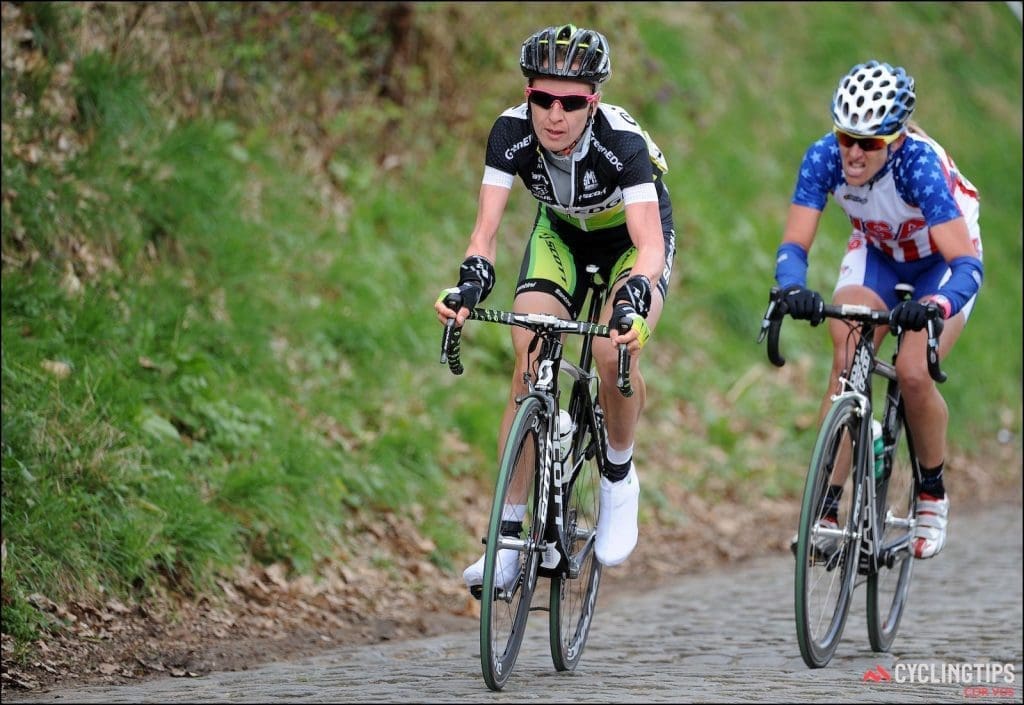
The track built the foundations
Arndt’s career did not begin with the road.
Born in Königs Wusterhausen in 1976, she developed through the German system as a track rider and reached the Olympic podium before becoming one of the world’s best road cyclists. At Atlanta 1996, aged 20, she won bronze in the individual pursuit. A year later in Perth she became world champion in the same discipline, beating Natalia Karimova in the final.
The pursuit suited qualities that would remain visible throughout her road career. It rewarded pacing, aerodynamic efficiency and the ability to sustain an effort without wasting energy. Arndt was never a rider whose style depended on obvious violence on the bike. Her strength often appeared in how little she gave away.
She competed on both track and road at Sydney 2000, finishing fourth in the points race, sixth in the individual pursuit and seventh in the road time trial. After those Games, her career increasingly moved towards the road. Saturn Cycling Team gave her a full international programme from 2001, and the transition was rapid rather than gradual.
By 2001, she was already second overall at both the Women’s Challenge and Tour de l’Aude and third at the Grande Boucle Féminine Internationale. The track rider had become a GC contender almost immediately.
Tour de l’Aude showed what kind of rider she had become
The Tour de l’Aude was one of the hardest and most important women’s stage races of its period. Winning it required more than surviving one mountain finish. The race regularly mixed long stages, time trials, exposed roads and difficult terrain over more than a week.
Arndt won it in 2002 and 2003.
The first of those seasons was particularly revealing. She also won the overall Women’s Challenge in the United States, taking a 40km individual time trial along the way, and became German road champion. The results were spread across completely different styles of racing, but they were connected by the same basic strength: Arndt could accumulate an advantage and then defend it across changing terrain.
She successfully defended the Tour de l’Aude in 2003 and finished third overall at the Grande Boucle, winning three stages during the French race. That placed her among the most accomplished stage racers in the world before the Giro had emerged as the main surviving multi-day centrepiece of the women’s calendar.
There was no need for Arndt to dominate every mountain. Her time trial meant rivals often had to take time from her before the race against the clock, while her climbing meant they could not simply expect her to disappear when the road went uphill.
That combination made racing against her awkward. There was rarely an obvious weakness around which to build a GC strategy.
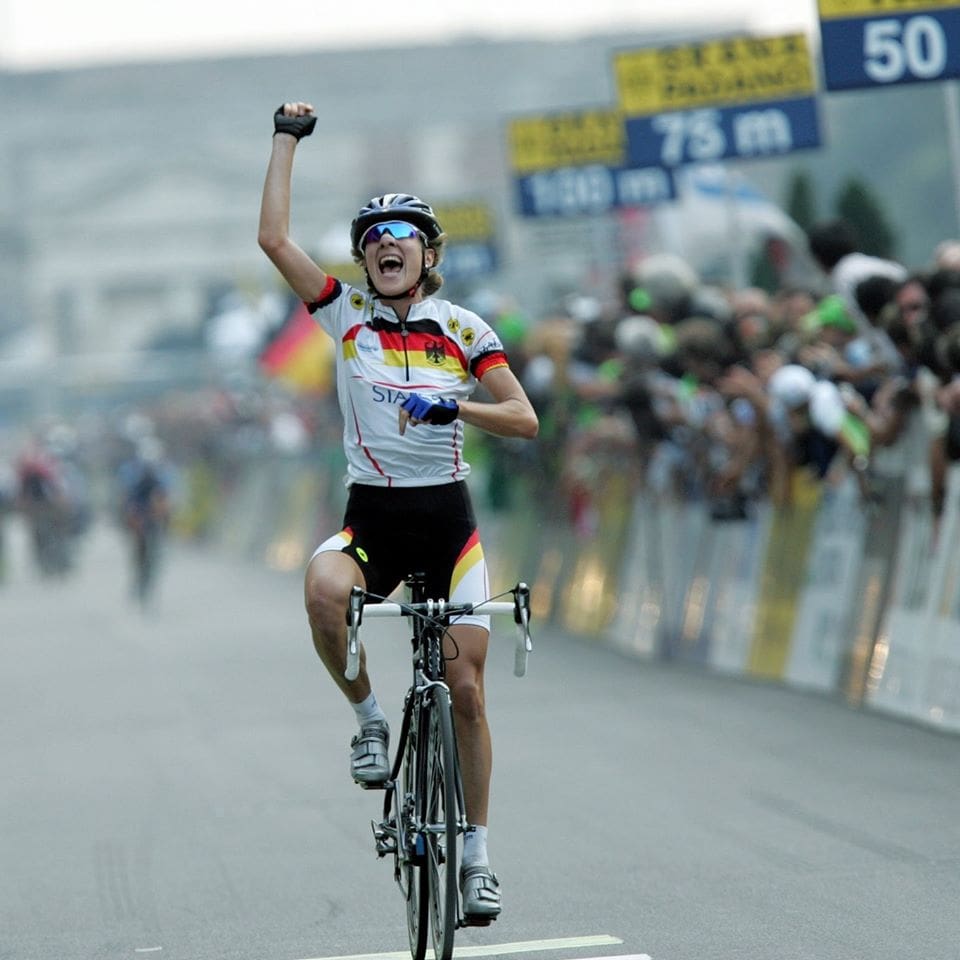
Athens and Verona made 2004 her defining championship season
Arndt’s stage-racing strength did not confine her to week-long events.
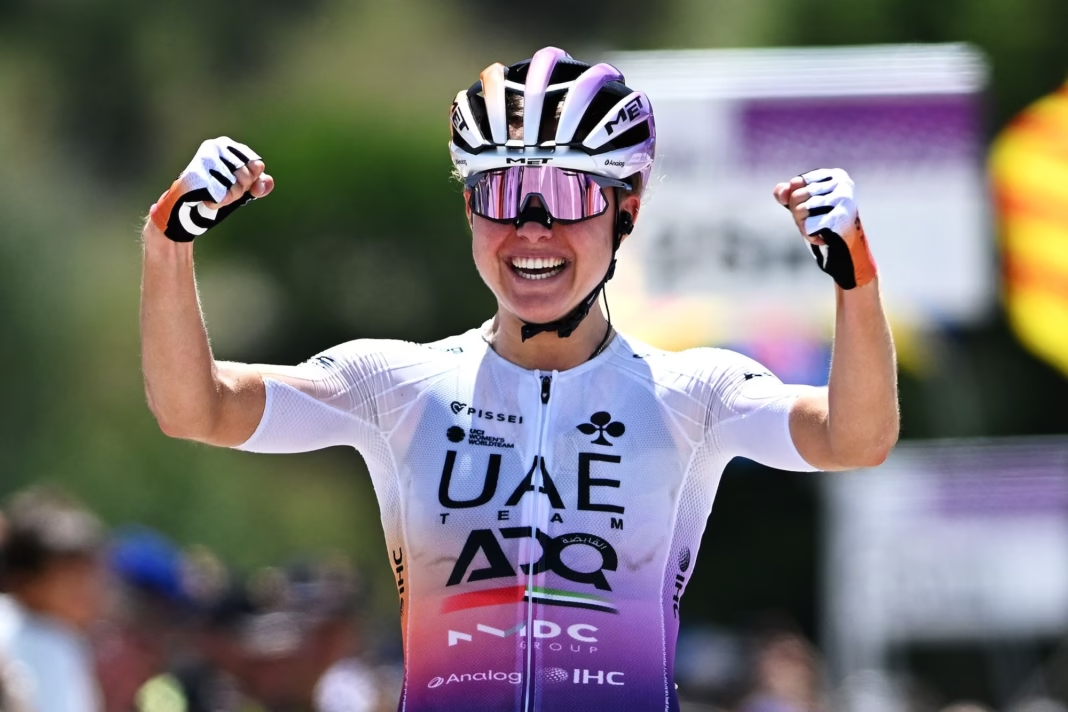
At the Athens Olympics in 2004, she took silver in the road race behind Sara Carrigan. Less than two months later she arrived at the World Championships in Verona and produced the biggest one-day victory of her career.
The 132.75km road race used the Torricelle circuit and repeatedly climbed above Verona. Arndt made the decisive move from a six-rider group in the final five kilometres, attacking on the descent after the Torricelle climb and holding her advantage to the finish. Tatiana Guderzo took silver 10 seconds later.
It was a victory that suited her.
Arndt did not wait for a conventional sprint and she did not need to overpower everyone on the climb itself. She recognised the moment when the composition of the race had changed, attacked as the others reorganised and then used the engine that had made her such a formidable pursuit rider and time triallist to stay away.
She had already finished second in the World Championship time trial earlier that week, repeating the silver medal she had won in Hamilton in 2003. The combination of those results made the scale of her range difficult to miss.
Germany had strength everywhere
Arndt’s career becomes more interesting when placed alongside the German riders around her.
Petra Rossner had already become an Olympic track champion before building one of the strongest sprinting records in women’s road cycling. Kupfernagel became a multiple cyclo-cross world champion and, in 2007, world time trial champion on home roads in Stuttgart. Teutenberg supplied Germany with another elite sprinter, eventually collecting huge numbers of victories in the United States and Europe.
Then there was Trixi Worrack, five years younger than Arndt and another rider capable of lasting across Classics, time trials and stage races.
Germany consequently had riders suited to almost every type of international race. The contrast between them is important. This was not one national system producing repeated copies of the same athlete.
Arndt’s place was as the complete GC rider and all-round road racer.
The connection is particularly visible in the history of Equipe Nürnberger Versicherung, where Arndt raced from 2003 to 2005. The German squad became one of the defining women’s teams of that period, creating an environment in which several of the country’s strongest riders could develop or lead internationally. ProCyclingUK’s history of Nürnberger Versicherung shows how much talent passed through the team during that era.
She was a stage racer without needing a Grand Tour victory
It is tempting to judge stage racers through the biggest overall title they won, particularly now that the Tour de France Femmes, Giro d’Italia Women and Vuelta Femenina dominate the modern GC hierarchy.
Arndt’s career does not fit neatly into that model.
She never won the Giro. Her best result was second overall in 2010, followed by third in 2011. Yet around those results sits one of the deepest stage-racing records of her generation.
There were the two Tours de l’Aude. She won the Thüringen Rundfahrt in 2007, 2008 and 2012, one of the most important home stage races in German women’s cycling. She won Emakumeen Bira in 2009 and again in 2012. Earlier came the Women’s Challenge, Gracia-Orlová and the Vuelta a Castilla y León, with Giro del Trentino and Giro della Toscana success following later.
That breadth is important because those races asked different questions.
The Tour de l’Aude rewarded riders who could survive a long stage race. Thüringen could be decided by positioning, rolling terrain and the time trial. The Basque races introduced sharper climbing. The Women’s Challenge was notorious for its distance and physicality.
Arndt kept finding ways to win.
Rather than one race proving her stage-racing ability, the pattern repeated across different countries, teams and phases of her career.
The time trial was her most reliable weapon
If there was one discipline connecting almost every version of Arndt, it was the individual time trial.
The road world title in 2004 gave her the more recognisable rainbow jersey, but her record against the clock was even deeper. She had been third at the World Championship time trial as early as 1997, then collected silver medals in 2003 and 2004 and another in 2010.
Finally, in Copenhagen in 2011, she won the world time trial title.
She defended it in Limburg the following year.
That second victory matters when describing Arndt’s longevity. She was 36 and in the final weeks of her career, yet still the best elite women’s time triallist in the world. The ProCyclingUK list of cycling world champions shows Arndt holding the title in both 2011 and 2012, immediately before Ellen van Dijk began the next era of the discipline.
For a stage racer, that ability changed the tactical balance around her. Rivals could not simply arrive at a time trial alongside Arndt and expect to remain alongside her afterwards. Every climb and every attack earlier in the race was influenced by the knowledge that she could still take substantial time later.
Her time trial was not a separate speciality attached to her stage racing. It was one of the reasons her stage racing worked.

Winning Flanders twice showed the other side of Arndt
A rider with Arndt’s GC and time-trial record could easily have been remembered as a stage-race specialist who happened to win a world road title.
Her two victories at the Tour of Flanders prevent that interpretation.
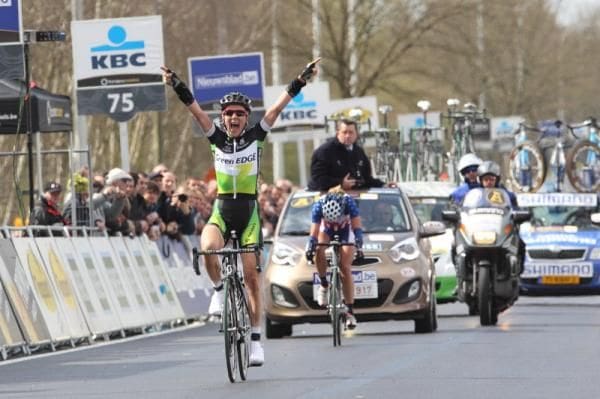
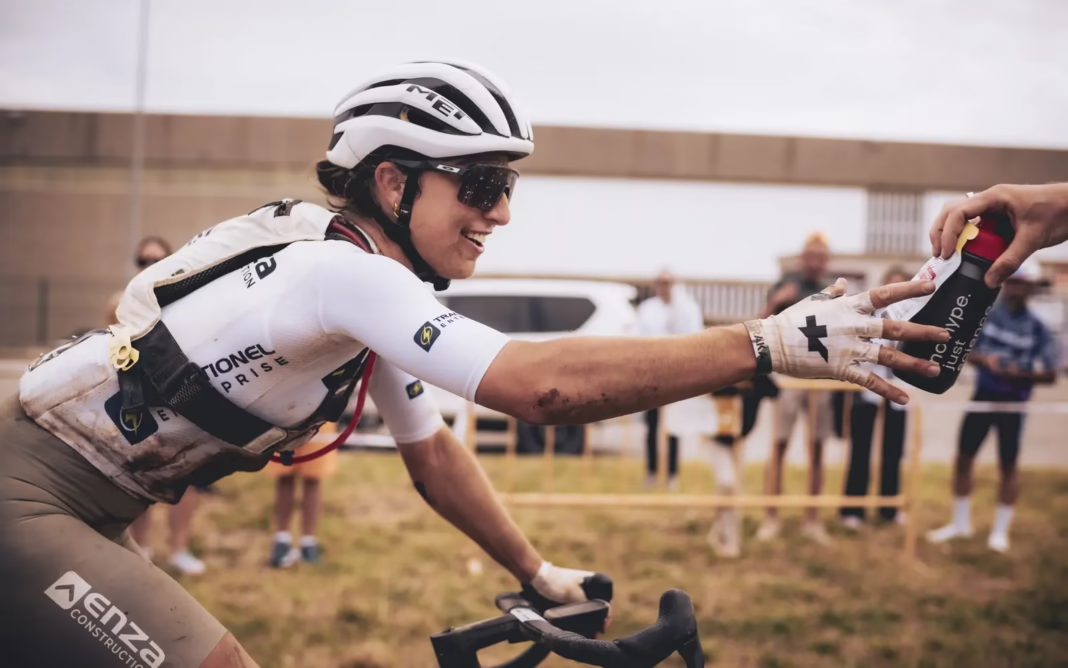
Arndt first won the race in 2008 on the older Flanders route, then returned four years later to win again in 2012 after the finish had moved to Oudenaarde and the race had been redesigned around the new closing sequence.
That distinction makes the pair particularly valuable.
Winning Flanders once can be the product of one exceptional day. Winning on two substantially different versions of the race, four years apart, says more about adaptability.
The history of the Tour of Flanders Women places Arndt among the race’s earliest multiple champions. Her 2012 victory was also the first edition after the major route change, allowing her to bridge the Muur-Bosberg period and the beginning of the Oudenaarde era.
Flanders requires positioning, repeated acceleration, confidence on narrow roads and the ability to make decisions while already fatigued. Those qualities overlap strongly with stage racing even if the format looks completely different.
Arndt had them all.
-
 Photo Credit: quentinphotographiebe
 -
 Photo Credit: Getty
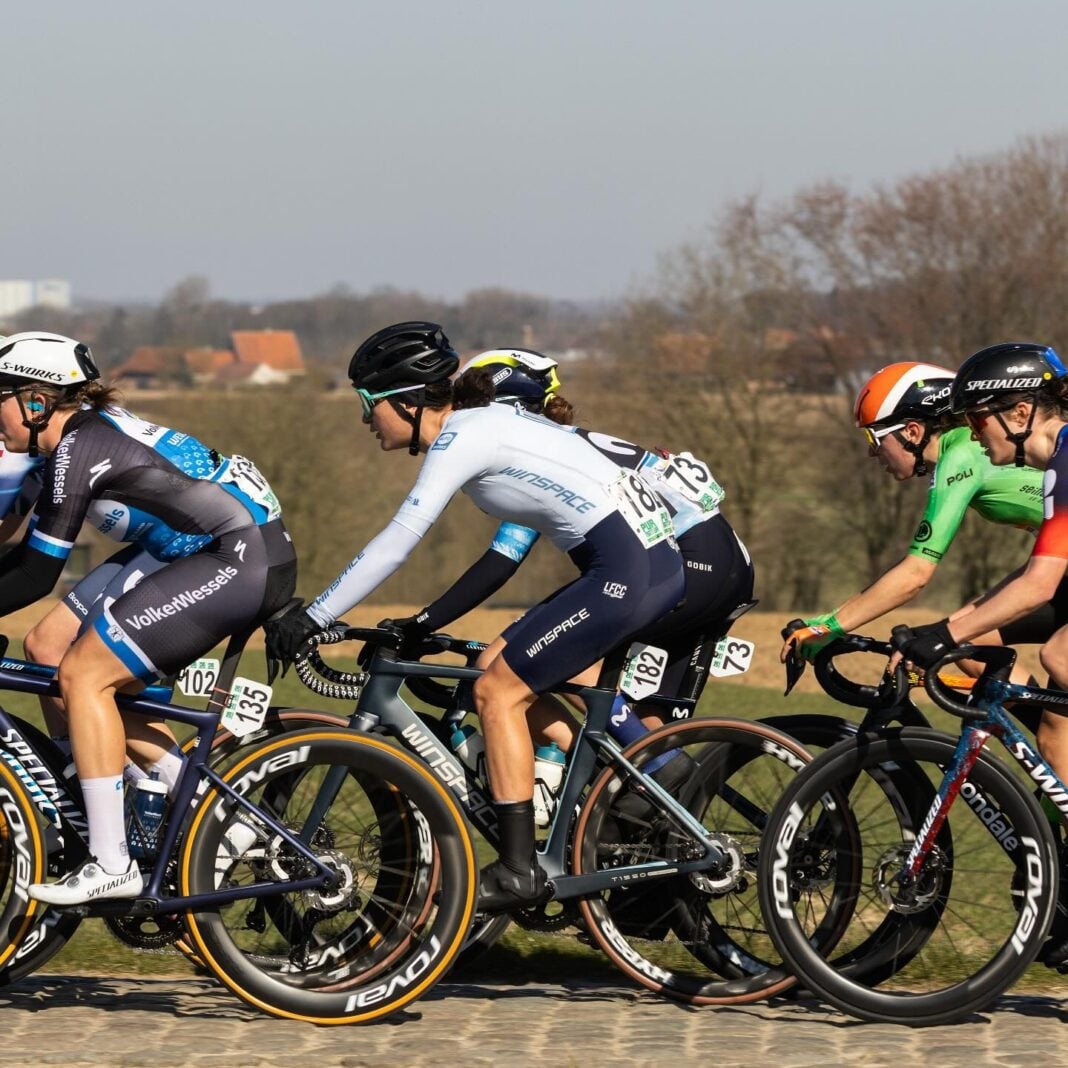
Her final season may have been the best demonstration of her range
There was no long decline at the end of Arndt’s career.
She joined GreenEdge-AIS for 2012 knowing retirement was approaching and then assembled a final season that would have represented a career year for many riders.
In April she won the Tour of Flanders for the second time.
In June she won Emakumeen Bira and both German road and time trial titles. In July she won the Thüringen Rundfahrt for the third time, finishing 11 seconds ahead of Worrack. Then came London, where Arndt took Olympic silver in the individual time trial behind Kristin Armstrong.
She still had one major result left.
At the World Championships in Limburg, Arndt successfully defended her time trial rainbow jersey. Her final professional season therefore included Flanders, two major stage-race GC victories, two national titles, an Olympic silver medal and a world title.
Few retirement seasons give a clearer picture of what a rider had been throughout her career.
More than a time triallist, more than a Classics rider
The easiest way to underestimate Arndt is to divide her achievements into separate categories.
The Olympic pursuit bronze and 1997 track world title belong to one part of the story. The Tours de l’Aude, Thüringen victories and Basque stage-race wins sit somewhere else. Flanders belongs with the Classics. Verona belongs with the championship riders, while Copenhagen and Limburg belong with the great time triallists.
Arndt’s significance comes from putting those pieces back together.
She belonged to a period when German women’s cycling could field Rossner for the sprint, Kupfernagel across disciplines, Teutenberg for speed, Worrack as an all-rounder and Arndt for almost anything that required surviving several different kinds of difficulty. The wider ProCyclingUK women’s cycling history hub increasingly shows how deep that generation was.
Arndt’s particular skill was making different forms of racing connect. The track pursuit developed an engine that became decisive in road time trials. The time trial made her more difficult to beat in stage races. Stage racing developed the patience and judgement that carried into the Classics. The Classics sharpened the ability to recognise the moment that helped win a world road title.
Her career did not need one defining Grand Tour victory to make the point.
The evidence was spread across nearly two decades.

