
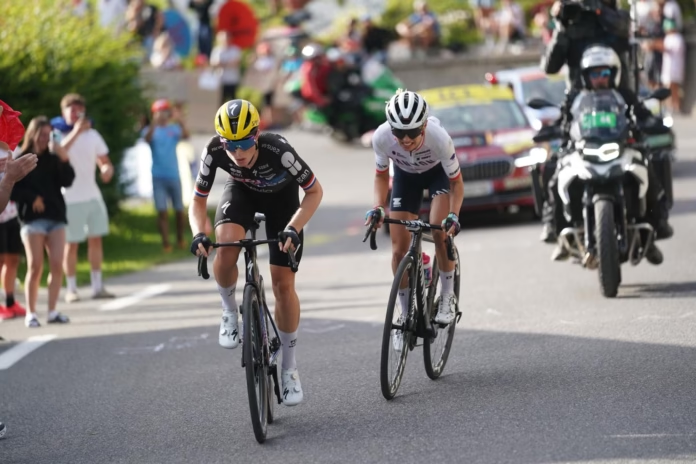
The Tour de France Femmes is simple at its core. Across nine stages, the rider with the lowest cumulative time wins the yellow jersey in Nice. Around that central contest, however, sit several other competitions and rules that can change how every stage is raced.
Riders have to remain inside daily time limits, bonus seconds can change the general classification without anyone creating a gap on the road, green and polka-dot points reward completely different performances, and each leader depends on a team that has to balance individual ambitions with collective work.
The 2026 Tour de France Femmes runs from Lausanne on 1 August to Nice on 9 August, with 154 riders across 22 teams of seven. Its nine-stage route contains three flat stages, three hilly stages, two mountain stages and a 21km individual time trial, so the rules matter differently from one day to the next.
 Photo Credit: A.S.O./Pauline Ballet
How does the Tour de France Femmes general classification work?
The yellow jersey goes to the rider with the lowest cumulative time across the race.
Every rider’s recorded time from each stage is added together, with bonus seconds deducted and any time penalties added. After the final stage in Nice, the rider with the lowest overall total wins the 2026 Tour de France Femmes.
That means stage victories are not essential. A rider can win the Tour without winning a single day if she consistently finishes close to the front and avoids losing significant time.
Conversely, a rider could win several stages without ever threatening yellow. Lorena Wiebes might dominate the sprint finishes, for example, while losing enough time on Mont Ventoux to sit well down the overall standings.
The key distinction is that general classification is about time accumulated across all nine stages, not the number of stages a rider wins.
What are time cuts at the Tour de France Femmes?
Finishing a stage is not always enough. Riders must also reach the finish within the permitted time limit.
The time cut is calculated from the winner’s finishing time, with the permitted delay varying according to the stage profile and how quickly the stage has been raced. There is therefore no single percentage that applies throughout the Tour.
Flat stages generally allow less margin because the average speed is higher and most of the peloton finishes together. Mountain stages offer greater latitude because the race can naturally spread across a much larger period of time.
This becomes particularly important on Stage 7 to Mont Ventoux and the final mountain stage around Nice. A sprinter can lose a substantial amount of time to Demi Vollering or Pauline Ferrand-Prévot without being eliminated, but she still has to finish before the calculated cut.
Why do sprinters form a gruppetto in the mountains?
Once the elite climbers start racing on a major mountain, riders with no reason to follow them usually settle into a different contest.
Sprinters, lead-out riders and heavier domestiques often form a large group known as the gruppetto. Rather than trying to limit every second, they ride at a sustainable tempo designed to reach the finish safely inside the time limit.
The size of the group can help. Having dozens of riders together means more teammates, better pacing and less temptation to panic when the GC favourites disappear up the road.
For a rider targeting green or later sprint stages, the goal on Ventoux is not to climb quickly. It is to climb quickly enough to remain in the Tour.
That distinction becomes one of the key tactical stories on the hardest days of any stage race.
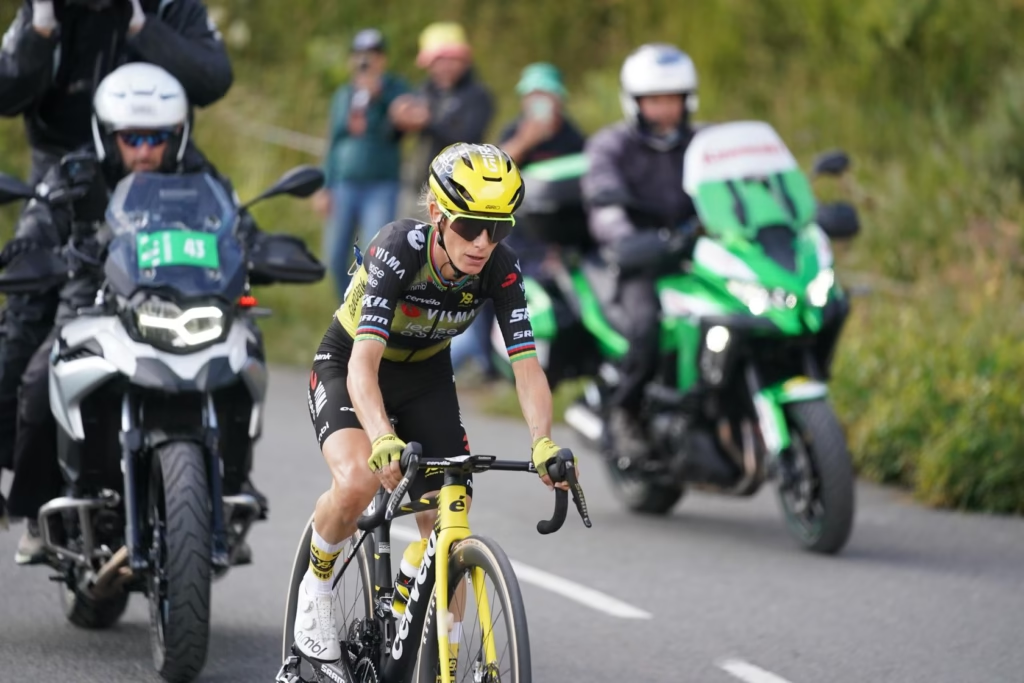 Photo Credit: A.S.O./Thomas Maheux
Can riders be reinstated if they miss the time cut?
Race commissaires can make exceptions in extraordinary circumstances, particularly if an unusually large group is affected by events outside normal racing conditions.
That discretion should not be treated as a safety net.
A rider who finishes well outside the limit cannot simply assume she will be reinstated because she is important to the race. Teams therefore calculate the projected cut throughout mountain stages and communicate it to riders from the team car.
For riders at the back, the clock can become every bit as important as the race at the front.
What does the yellow jersey mean?
The yellow jersey is worn by the leader of the individual general classification.
If Rider A has completed the race in 10 hours and Rider B has completed it in 10 hours and 20 seconds, Rider A leads by 20 seconds.
Every physical gap, time-trial difference, bonus and penalty contributes to that calculation.
The rider leading after each stage wears yellow the following day. Whoever leads once Stage 9 in Nice has been completed wins the Tour.
The 2026 yellow, green, polka-dot and white jersey guide goes into each classification in more detail.
How does the green jersey work?
The green jersey is the points classification and operates independently from the race for yellow.
Points are awarded at stage finishes and intermediate sprints, with the scoring structure designed to reward consistent high placings across the Tour.
That normally makes green the main target for riders such as Wiebes and Elisa Balsamo, although versatility can become important because a rider who survives harder stages has more opportunities to score.
A crucial point for newer viewers is that green jersey points do not affect general classification time.
A rider can lead the points competition while sitting more than an hour behind yellow.
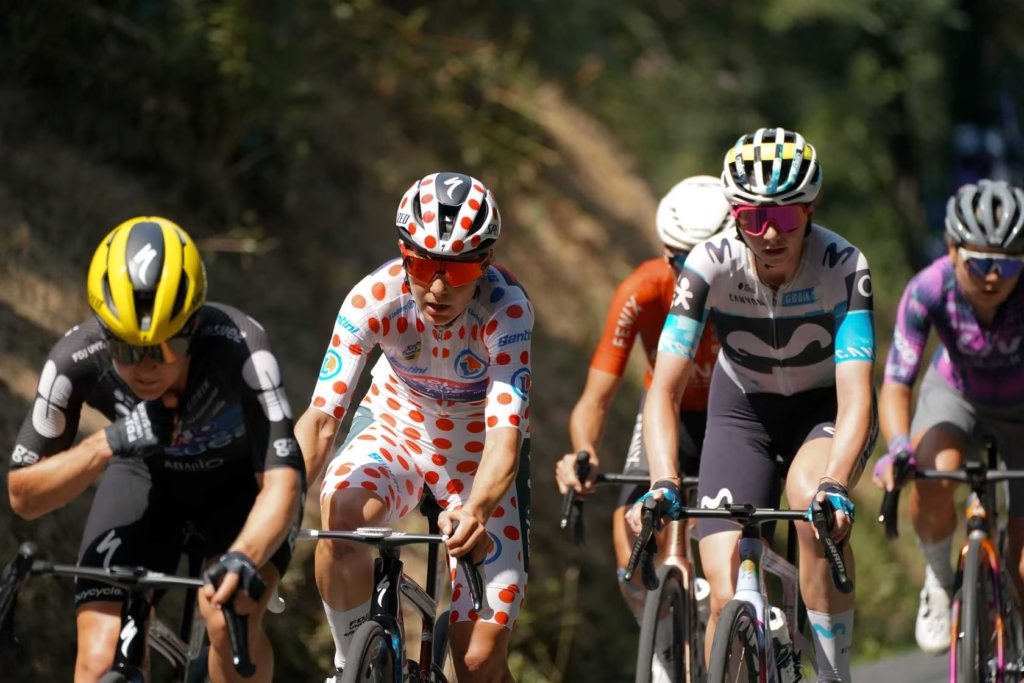 Photo Credit: A.S.O/Thomas Maheux
How does the polka dot jersey work?
The white jersey with red polka dots goes to the leader of the mountains classification.
Points are available at designated categorised climbs, with the harder mountains generally offering larger rewards.
That creates a completely separate tactical race.
A strong climber who has already lost too much time to challenge for yellow may start targeting breakaways specifically because they allow her to reach categorised summits before the GC group.
The Mont Ventoux stage is naturally important, but the mountains competition is built across the whole Tour rather than decided by one climb.
Who can win the white jersey in 2026?
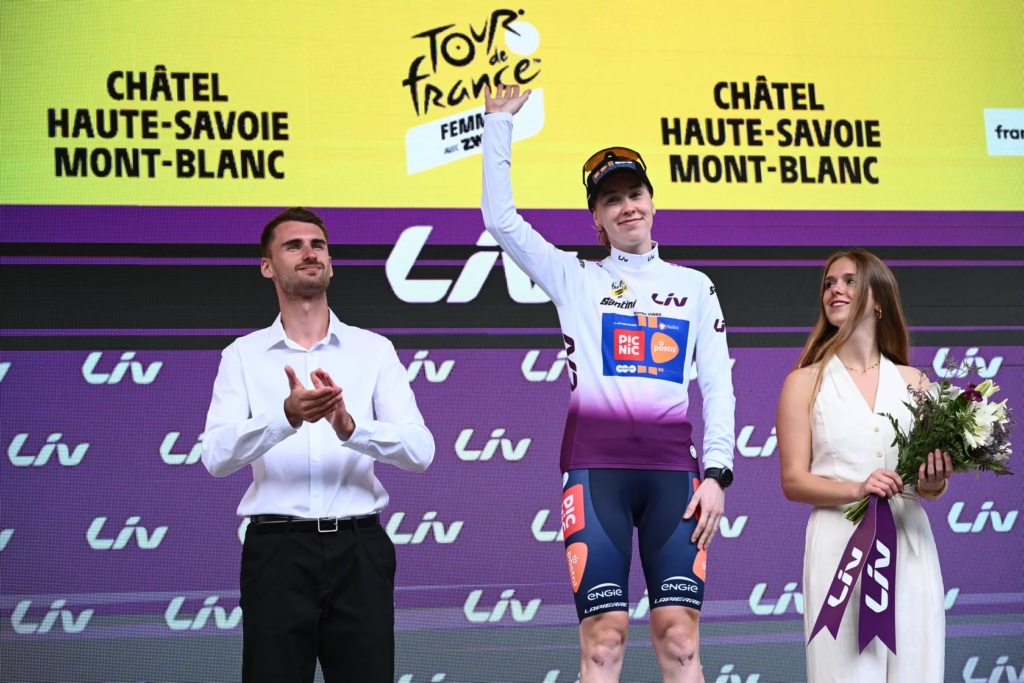
The white jersey rewards the best young rider and in 2026 is open to riders aged under 23.
Unlike green and polka dots, it does not use a separate points system.
Eligible riders are simply compared using the same cumulative time that decides the yellow jersey. If the highest-placed under-23 rider sits seventh overall, she leads the white jersey classification.
That means bonuses, physical gaps, time-trial performances and penalties all affect yellow and white simultaneously.
What happens if one rider leads two classifications?
A rider can lead several competitions at once but can wear only one leader’s jersey.
The jerseys operate according to a priority system, with yellow taking precedence.
If the yellow jersey wearer also leads the points classification, she wears yellow and the green jersey is worn by another rider who is next in the relevant standings.
The same principle applies to the mountains and young rider classifications.
The substitute wearer has not inherited the lead. The classification still belongs to the rider wearing the higher-priority jersey.
How do bonus seconds work?
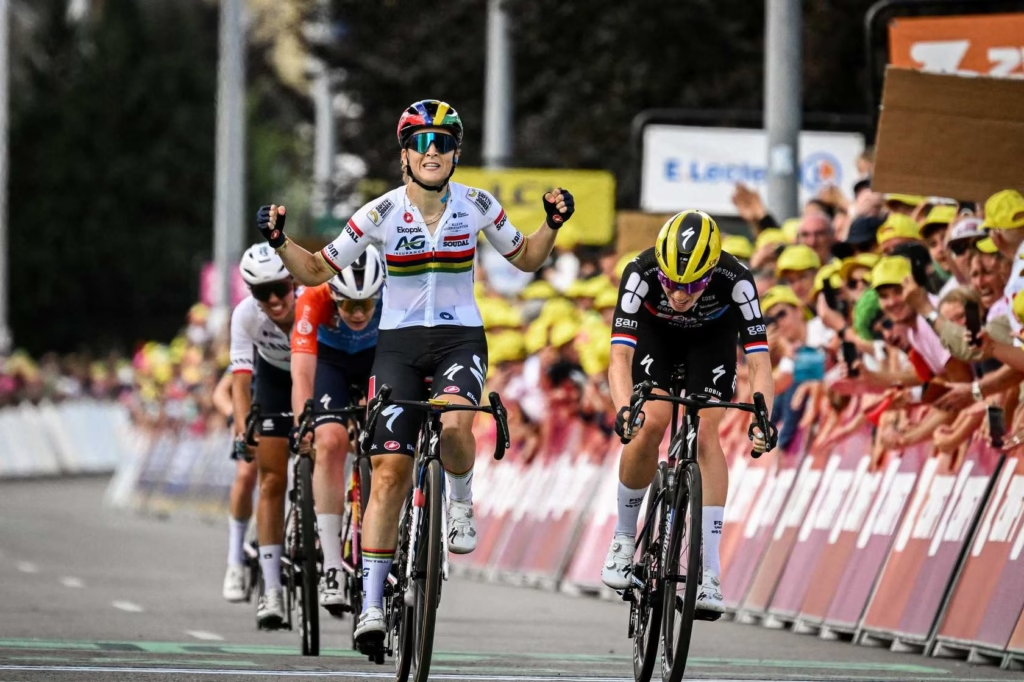
Bonus seconds are deductions from a rider’s general classification time, allowing riders to gain time without necessarily creating a physical gap.
Across the eight road stages, the first three riders at the finish receive:
| Position | GC bonus |
|---|---|
| 1st | 10 seconds |
| 2nd | 6 seconds |
| 3rd | 4 seconds |
There are no finish bonuses in the Stage 4 individual time trial. On that day, the recorded time on the road is all that counts.
The full system is covered in our Tour de France Femmes 2026 time bonuses explainer.
What are the intermediate Bonus Points?
Stages 3, 5 and 6 contain additional Bonus Points, where the first three riders receive six, four and two seconds.
These should not be confused with normal intermediate sprints.
An intermediate sprint primarily awards points towards the green jersey. A Bonus Point awards time towards the general classification.
That distinction can completely change how a stage develops. A GC rider sitting five seconds behind yellow might have little interest in an intermediate sprint but every reason to attack for a six-second Bonus Point later in the stage.
It gives teams a reason to race before the finish, particularly during the hilly middle section of the Tour.
Why can ten seconds matter so much?
The Tour de France Femmes lasts nine stages rather than three weeks, so there are fewer opportunities to recover lost time.
A ten-second bonus on Stage 1 may still be influencing the GC when the race reaches Dijon. Another six seconds gained from a Bonus Point can alter which team has responsibility for controlling the race.
The recent history of the Tour also makes the value obvious. The 2024 edition was decided by only four seconds.
Bonus seconds therefore do more than adjust the numbers. They can determine who wears yellow, force another team to chase and change how aggressively a rider needs to race once the mountains arrive.
Do bonus seconds count towards the white jersey?
Yes.
The white jersey uses the general classification time of eligible riders, so any time bonus earned by an under-23 rider also improves her young rider classification.
The same is true of penalties.
There is no separate white jersey clock.
 Photo Credit: A.S.O./Pauline Ballet
Why is the Stage 4 time trial different?
Stage 4 from Gevrey-Chambertin to Dijon is a 21km individual time trial.
Rather than starting together, riders leave individually and race against the clock. They cannot draft behind teammates and there is no peloton to provide shelter.
Every second is real.
If one rider completes the course 30 seconds faster than another, she gains 30 seconds on GC. There is no extra ten-second bonus for winning.
That gives specialists such as Marlen Reusser a very different opportunity to gain time from the stages where positioning, teammates and tactics matter more.
Our Tour de France Femmes 2026 time-trial contenders guide looks at the riders who should benefit most from the Dijon course.
How many teams are in the Tour de France Femmes 2026?
The 2026 Tour starts with 22 teams of seven riders, giving a maximum peloton of 154 riders in Lausanne.
Seven riders gives teams enough depth to protect a leader, chase breaks and pursue stages, but not enough to cover every possibility indefinitely.
A squad targeting the GC may need several climbing domestiques, strong riders for positioning on the flat, someone capable of controlling breakaways and experienced riders who can make tactical decisions on the road.
Other teams may divide their resources between a GC rider and a sprinter.
That becomes increasingly difficult if crashes or illness reduce the squad during the race.
 Photo Credit: A.S.O./Pauline Ballet
What does a Tour de France Femmes team actually do?
A GC leader’s work begins long before the final climb.
On flat stages, teammates keep her near the front and away from crashes or crosswind splits. Before climbs, they fight for position so she begins the ascent near the front rather than wasting energy moving through the peloton.
In the mountains, climbing domestiques can set the pace, chase attacks or stay alongside the leader in case she needs support. Riders also collect bottles, provide equipment after mechanical problems and sometimes sacrifice their own result completely.
That is why one rider may finish 70th while having played a central role in winning the Tour.
The strongest riders remain dependent on what happens around them.
How does the team classification work?
The Tour also has an official team classification.
Rather than using one rider’s total time, it rewards collective strength by calculating team performances from the relevant best finishing times across the race.
A squad with three riders consistently near the front can therefore lead the team competition without having the individual yellow jersey.
Equally, a team can win the Tour through one exceptional GC leader without being the strongest squad across the full classification.
It is a separate competition rather than an extension of yellow.
What is the combativity prize?
The combativity prize rewards aggressive racing.
It is usually associated with riders who spend significant periods in breakaways, attack repeatedly or otherwise animate the stage.
The winner does not need to win the stage.
A rider can spend most of the day at the front, be caught before the finish and still be recognised for making the race.
That creates another incentive for riders without realistic GC or sprint ambitions to attack.
What is the best teammate prize?
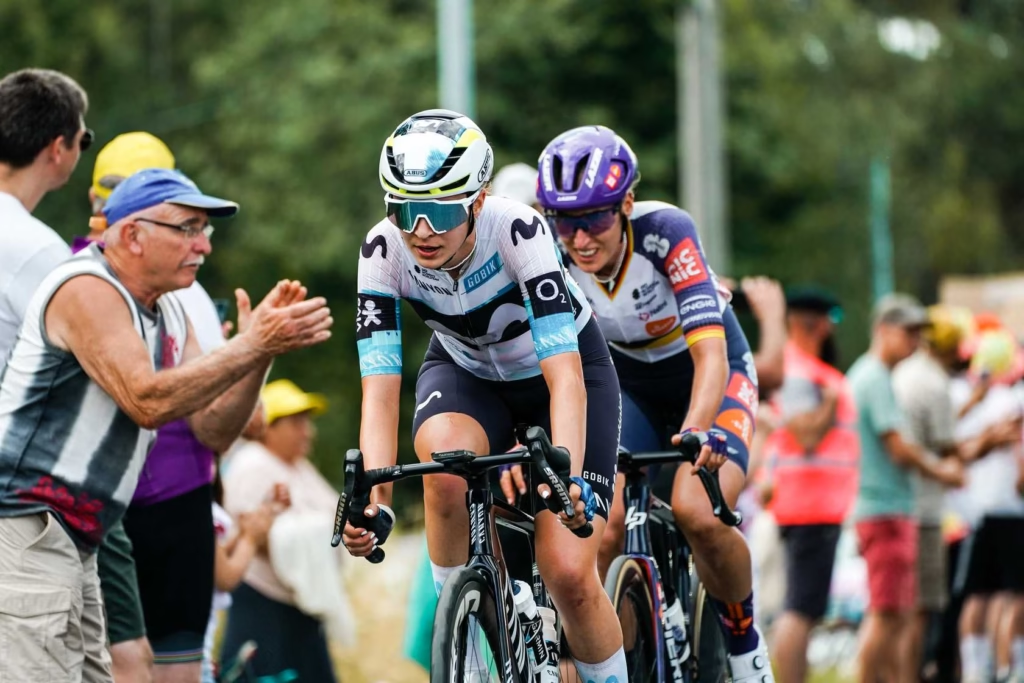
The Tour de France Femmes also recognises the work of domestiques through a best teammate prize.
It reflects the reality that many of the most important performances in a stage race do not appear prominently in the results.
A rider may spend the day protecting a leader from the wind, chasing a dangerous breakaway and pacing on a climb before dropping away once her work is complete.
She may finish several minutes down.
Her leader may win the stage.
The result sheet alone does not explain the relationship between the two.
What happens if a rider abandons?
Once a rider leaves the Tour, she cannot return the following day.
A rider who starts a stage but fails to finish is recorded as a DNF, or did not finish. Someone who completes one stage but does not start the next is a DNS, or did not start.
A rider who reaches the finish but misses the time limit can be recorded as OTL, outside the time limit.
Those distinctions explain why the size of the peloton gradually falls during a stage race. Teams that lose riders also lose tactical options, making every withdrawal potentially important beyond the individual rider involved.
Can riders receive time penalties?
Yes.
The commissaires can impose sanctions for breaches of the sporting regulations.
Depending on the offence, penalties can include fines, points deductions, relegation in the stage result, added GC time or disqualification.
A ten-second time penalty is effectively the reverse of a ten-second bonus. It is added to the rider’s accumulated time and can therefore affect both yellow and white.
The classification shown after the stage reflects the final combination of recorded time, bonuses and penalties.
What happens if two riders have the same GC time?
The regulations include tie-break procedures for riders who remain level on cumulative time.
The Stage 4 individual time trial can help separate riders because fractions of a second recorded against the clock are retained for classification purposes.
If riders remain tied, their stage placings across the race are used, with the lower cumulative placing total ranked higher.
This is more likely to matter early in the Tour when large groups can finish on the same time, but close racing means it can remain relevant much later.
Can Stage 9 still change the yellow jersey?
Absolutely.
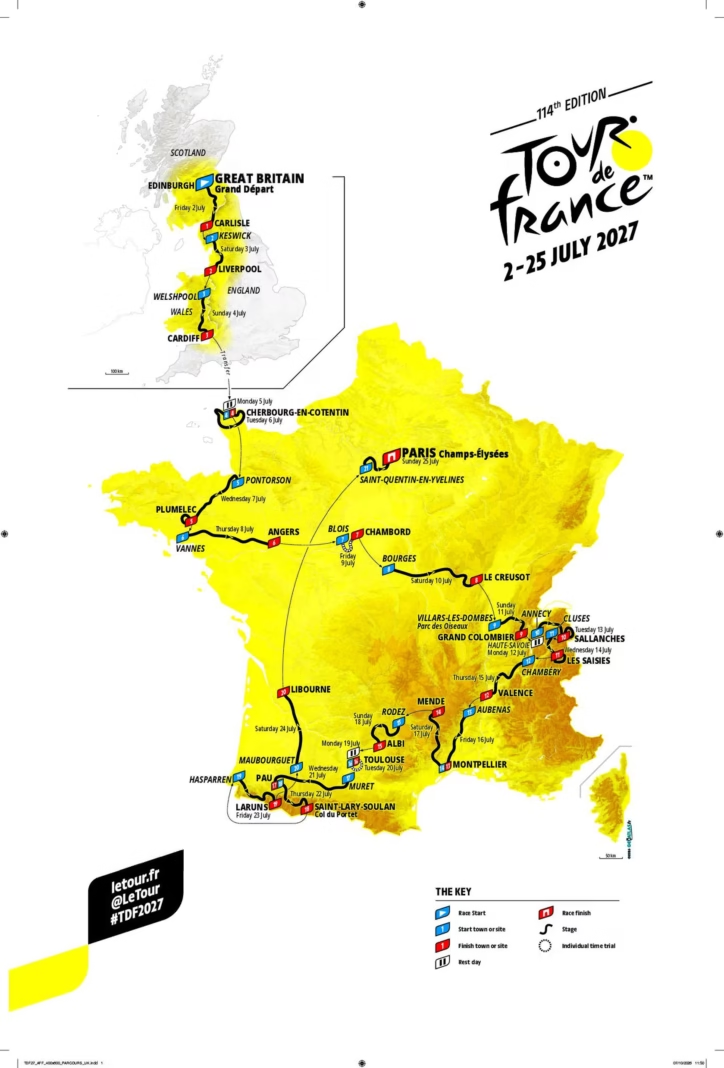
The final stage around Nice is a genuine mountain stage, not a ceremonial procession.
The route repeatedly uses the climbs around Nice before the final major ascent of the Col des Quatre Chemins, whose summit comes with only 15.4km remaining.
Our Tour de France Femmes 2026 Nice finish guide explains why a rider can still lose the Tour on the final afternoon.
Normal finish bonuses also remain available. The stage winner gets ten seconds, second receives six and third four.
That means none of the classifications are formally secured until their leaders reach the finish and the final standings are confirmed.
Tour de France Femmes 2026 rules at a glance
| Rule | How it works |
|---|---|
| Yellow jersey | Lowest cumulative race time |
| Green jersey | Points from stage finishes and intermediate sprints |
| Polka dot jersey | Points collected on categorised climbs |
| White jersey | Best under-23 rider on GC |
| Finish bonuses | 10, 6 and 4 seconds on the eight road stages |
| Bonus Points | 6, 4 and 2 seconds on Stages 3, 5 and 6 |
| Stage 4 time trial | No finish bonuses |
| Teams | 22 teams of seven riders |
| Starting peloton | 154 riders |
| Time cuts | Maximum finishing delay varies by stage and race speed |
| Team classification | Rewards collective team performance |
| Combativity | Rewards aggressive racing |
| Best teammate | Recognises domestique and support work |
The easiest way to understand the Tour de France Femmes is to recognise that several races are happening at once.
Demi Vollering might be trying to gain 20 seconds on yellow while Wiebes is counting green jersey points. A climber can attack for polka dots without caring about GC, while a young rider might defend white by following someone who is irrelevant to the overall Tour winner.
Behind all of them are teammates whose own finishing positions may matter far less than the work they do for somebody else.
That is what turns nine stages into a complete stage race. Every second, point and rider can have a different value depending on which competition a team is trying to win.

