
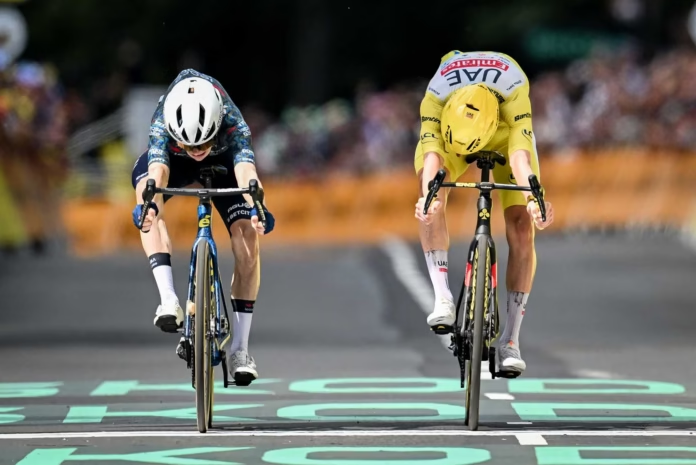
Le Lioran is not one of the Tour de France’s most famous finishes. It does not carry the history of Alpe d’Huez, the altitude of the Col du Galibier or the immediate menace of Mont Ventoux. For Tadej Pogačar and Jonas Vingegaard, however, it means something.
The Tour returns to the Cantal ski station on stage 10 of the 2026 race, two years after Vingegaard produced one of the most emotionally significant victories of his career there. He had been dropped by Pogačar, fought his way back and then beat the Slovenian in a head-to-head sprint.
That result did not ultimately decide the 2024 Tour. Pogačar went on to win the race comfortably, but Le Lioran became proof that Vingegaard could still absorb one of his rival’s strongest accelerations and respond.
The situation is very different in 2026. Pogačar reaches the stage in yellow with a lead of 2:42 over Vingegaard, having already delivered a crushing performance on the Tourmalet. He does not need to settle an old score. Vingegaard, by contrast, needs evidence that this Tour remains a contest.
That is why commentators keep returning to what happened here in 2024.
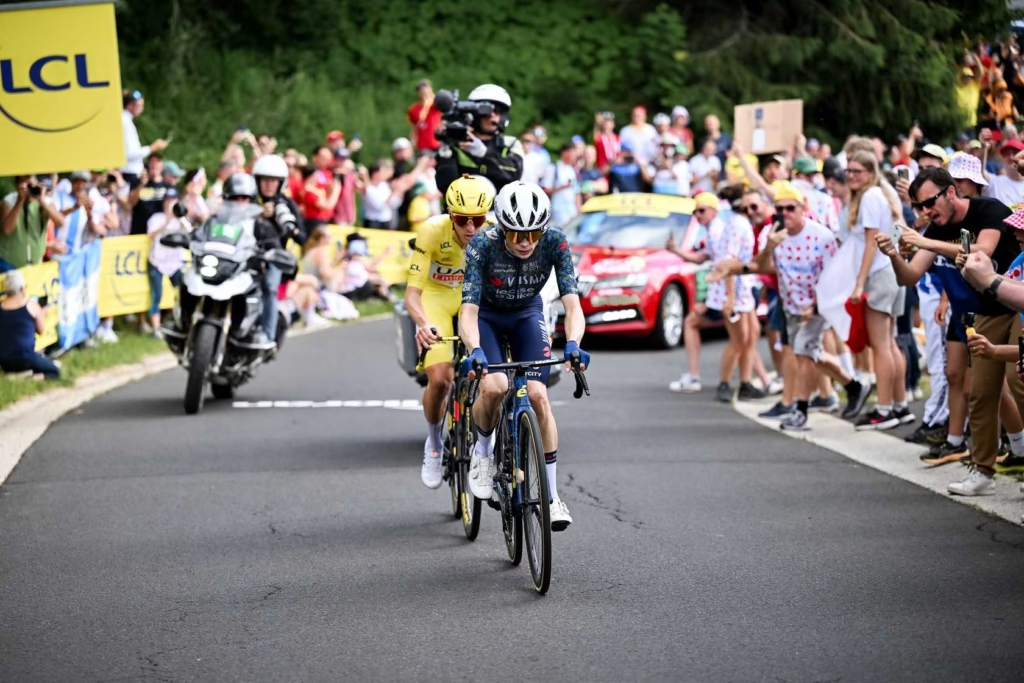 Photo Credit: A.S.O./Billy Ceusters
What happened at Le Lioran in 2024?
Stage 11 of the 2024 Tour de France travelled for 211km from Évaux-les-Bains to Le Lioran, crossing a succession of demanding climbs through the Massif Central.
Pogačar began the day in the yellow jersey and attacked close to the summit of the Puy Mary-Pas de Peyrol with around 31km remaining. The move initially appeared decisive.
Vingegaard could not follow the acceleration directly. Pogačar opened a small advantage by the summit and then extended it towards 30 seconds on the descent. The stage appeared to be following a familiar pattern, with Pogačar creating separation through one explosive attack and then using his descending speed to turn a narrow gap into something more substantial.
Vingegaard did not panic. He settled into his own effort and gradually reduced the deficit on the Col de Pertus. Pogačar, having committed heavily to both the attack and the descent, could not maintain the same intensity.
Vingegaard caught him close to the summit. The significance was already clear before they reached the finish. Pogačar had landed the first major blow, but Vingegaard had absorbed it and returned without assistance.
They continued together over the Col de Font de Cère and descended towards Le Lioran, where the stage was decided in a two-rider sprint. Pogačar led into the final metres, but Vingegaard came past him on the line.
It was not simply a stage victory. Pogačar had looked stronger when he attacked, yet Vingegaard had shown greater endurance across the full sequence of climbs and still had enough speed to beat him at the finish.
Why the 2024 victory mattered so much
The result carried greater significance because of what Vingegaard had endured earlier that season.
He suffered severe injuries in the mass crash at the Itzulia Basque Country in April, including broken ribs, a fractured collarbone and lung damage. His participation in the Tour remained uncertain for weeks, and he arrived without the normal racing preparation expected of a defending champion.
Le Lioran became confirmation that he had returned at the highest level. When Vingegaard crossed the line, he was visibly emotional. He had beaten Pogačar despite being dropped and despite spending much of the previous three months recovering rather than racing.
The victory also changed the psychological tone of the Tour. Pogačar remained the stronger rider over the full three weeks, but Vingegaard had shown that an attack from the Slovenian did not automatically end the contest.
That memory has remained part of the rivalry because it demonstrated the qualities that have made Vingegaard such a difficult opponent: restraint, sustained climbing power and the ability to recover when the race appears to be moving away from him.
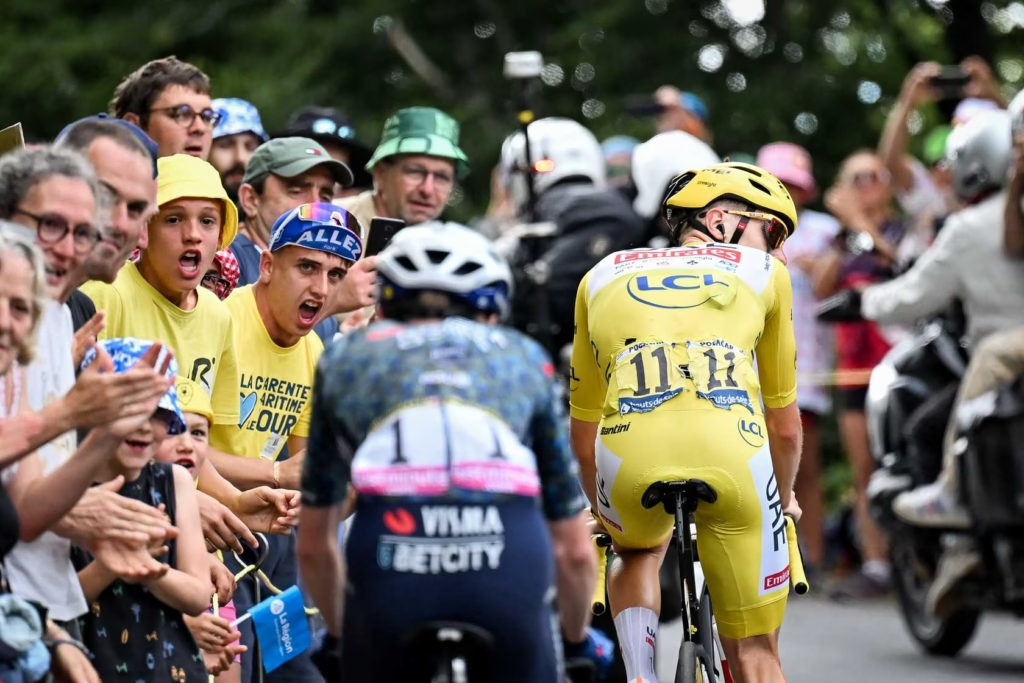
Pogačar still won the larger battle
Le Lioran should not be rewritten as the moment Vingegaard took control of the 2024 Tour. He won the stage, but Pogačar remained in yellow and later dominated the decisive mountain stages on his way to completing the Giro d’Italia-Tour de France double.
The finish instead represented a rare interruption in Pogačar’s control. It showed that he could attack too early, invest too much energy and allow Vingegaard back into the race. It also demonstrated the value of Vingegaard maintaining his own effort rather than immediately responding to every acceleration.
Pogačar’s defeat was tactical and physical rather than catastrophic. He had committed to a long-range move, spent energy extending his advantage on the descent and then been unable to resist when Vingegaard rode back across.
That does not make Le Lioran a weakness Pogačar has carried ever since. It makes the 2024 stage one of the clearest examples of how Vingegaard can beat him when the race develops in a particular way.
Why the 2026 context is different
Pogačar returns to Le Lioran in a much stronger position than he occupied two years ago.
He leads Vingegaard by 2:42 after the opening nine stages. The latest Tour de France general classification after stage 9 shows the scale of the advantage heading out of the first rest day.
Most of that gap was created on stage 6, when Pogačar attacked on the Tourmalet and rode away towards Gavarnie-Gèdre. His solo victory over the Tourmalet changed the shape of the race and left Vingegaard needing to recover substantial time.
In 2024, Vingegaard’s Le Lioran victory arrived while the overall contest remained relatively open. In 2026, he reaches the same finish with the burden of changing a race already controlled by Pogačar.
The yellow jersey has no requirement to attack from distance. He can follow Vingegaard, allow UAE Team Emirates-XRG to control the key climbs and make Visma-Lease a Bike take responsibility for creating an aggressive stage.
Vingegaard cannot rely indefinitely on the same patience that served him so well in 2024. At some point, he must create the pressure rather than simply absorb it.
Two years ago, Le Lioran demonstrated his resilience. This time it may reveal whether he still has the strength to turn that resilience into an offensive strategy.
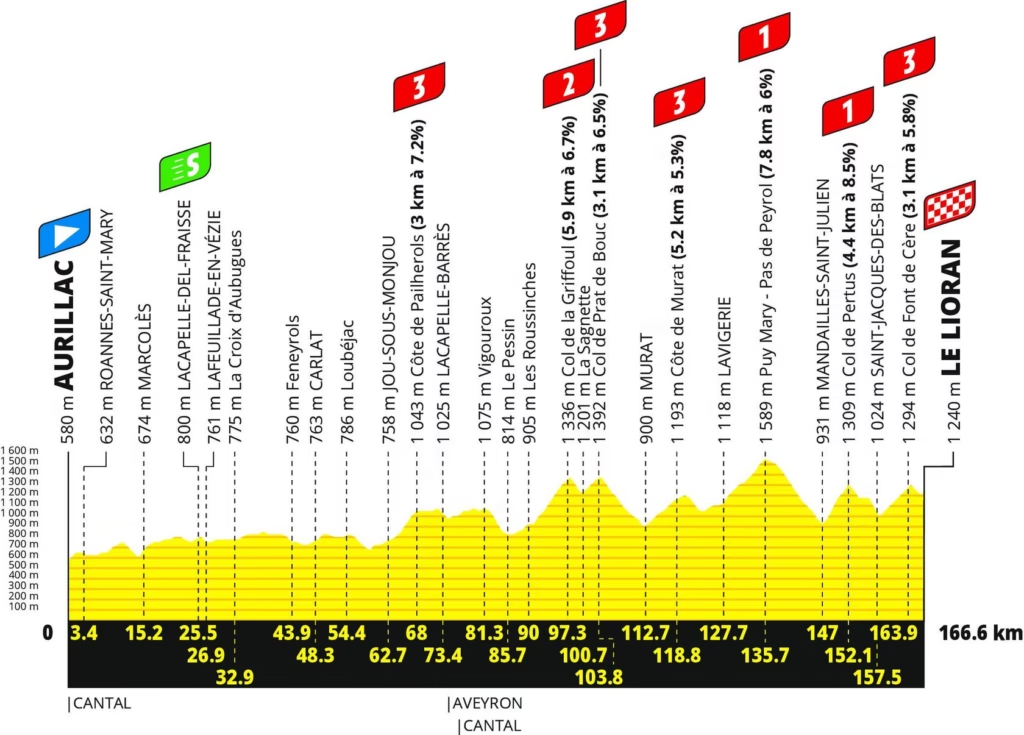
The route creates clear echoes of 2024
The 2026 stage is shorter than the 2024 journey, but it remains packed with climbing.
The full Tour de France 2026 stage 10 preview covers a 166.6km route from Aurillac to Le Lioran with around 3,800 metres of elevation gain and seven categorised climbs.
The route crosses the Côte de Pailherols, Col de la Griffoul, Col de Prat de Bouc and Côte de Murat before reaching the decisive final sequence. That sequence includes the Puy Mary-Pas de Peyrol, Col de Pertus and Col de Font de Cère before the descent towards Le Lioran.
Those are the roads that defined the 2024 duel. Pogačar attacked on Puy Mary, Vingegaard caught him on Pertus, and the pair stayed together across Font de Cère before sprinting for the stage.
The repeated climbs matter more than the finish itself. Le Lioran is not a conventional summit finish where the contenders can wait for one final ascent. Gaps can be created, closed and recreated across a difficult chain of climbs and descents.
A rider can look dominant on Puy Mary and vulnerable ten minutes later. A small advantage created uphill can grow on the descent or disappear on the following climb. The route rewards judgement, recovery and tactical timing as much as raw power.
Pogačar may not need revenge
The idea that Pogačar might want revenge for his 2024 defeat is an attractive narrative. It is also slightly misleading.
A rider leading the Tour by 2:42 does not benefit from turning every historic defeat into an obligation to attack. The strongest tactical choice may be to let Vingegaard expend energy trying to change the race.
Pogačar has already established a clear advantage and delivered the most important mountain performance of the opening week. He does not need to prove he can beat Vingegaard at Le Lioran because he has already demonstrated something more significant by distancing him on the Tourmalet.
The danger would be allowing the emotional pull of the finish to override the wider race situation. An attack similar to the one he attempted in 2024 could expose him if he commits too early, particularly on the first day after the rest day and in difficult heat.
The road may be familiar, but the tactical incentives have changed. Pogačar does not need revenge. He needs control.
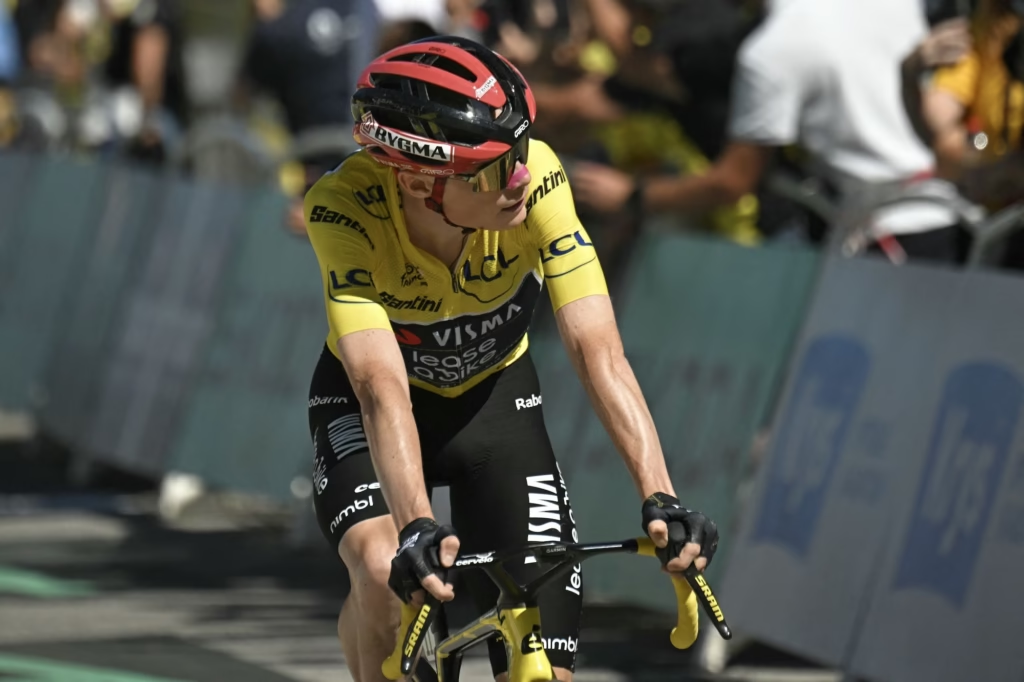 Photo Credit: Getty
Vingegaard needs more than another sprint win
A second Le Lioran stage victory would carry obvious symbolic weight for Vingegaard, but its value would depend on how it happened.
Beating Pogačar in a sprint without taking meaningful time would not fundamentally alter the Tour. Vingegaard trails by 2:42 and must begin reducing that deficit or, at minimum, show that the yellow jersey can be placed under sustained pressure.
The strongest signal would be to distance Pogačar on one of the final climbs. Even a gain of 15 or 20 seconds would challenge the impression created on the Tourmalet that the Slovenian is operating at a different level.
A stage victory from the same finishing time would still provide confidence, but it would not solve the central problem. Vingegaard needs a route back into the general classification contest.
That challenge is examined in more detail in what Jonas Vingegaard needs to do to beat Tadej Pogačar.
Le Lioran gives him emotionally favourable terrain and roads on which he has succeeded before. It does not give him extra time simply because of that history.
Visma must make Pogačar respond
Visma-Lease a Bike cannot rely solely on one late acceleration. Pogačar has looked too strong and too comfortable for that approach to offer a high chance of success.
Vingegaard’s team needs to make the final section difficult before he launches his decisive move. That could mean placing riders in the breakaway, increasing the pace from Puy Mary or forcing UAE to use domestiques earlier than planned.
The aim must be to reduce Pogačar’s support and create a sequence of efforts rather than one isolated test. A single direct attack may simply give the yellow jersey one wheel to follow.
The lesson from 2024 is relevant here. Pogačar created the first gap but paid for the amount of work he had done. Vingegaard benefited by maintaining a steadier effort and becoming stronger relative to his rival as the stage continued.
In 2026, Vingegaard may need to reverse those roles. He needs Pogačar to spend energy responding, closing gaps and controlling attacks. The stage becomes more dangerous for the race leader if Visma can create uncertainty rather than simply increase the pace.
The first-week analysis of the 2026 Tour identified Le Lioran as the first real opportunity for Visma to test whether UAE’s control is as secure as Pogačar’s form suggests.
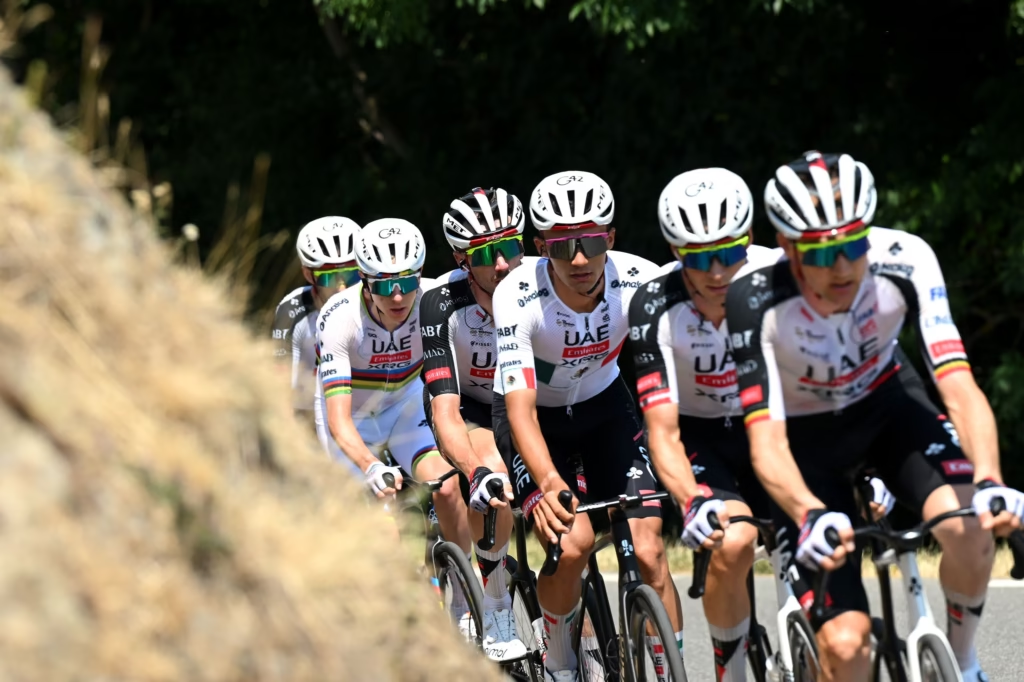 Photo Credit: Getty
UAE can afford to be patient
UAE Team Emirates-XRG enters stage 10 with control of the Tour and considerable strength around its leader.
The team does not need to chase every breakaway if the riders ahead are not a threat to the general classification. It can allow the stage victory to disappear up the road and concentrate entirely on protecting Pogačar’s lead.
That possibility matters because it removes the bonus seconds and emotional prize from the GC battle. If the breakaway wins, Pogačar only needs to finish alongside Vingegaard.
UAE may also use Isaac del Toro as a tactical complication. The Mexican remains high overall and gives the team a second rider capable of following moves or applying pressure.
Visma cannot therefore focus exclusively on Pogačar without considering what UAE’s other riders might do. The race situation rewards patience from the yellow jersey team, while Vingegaard must find a way to disturb that control.
The stage after a rest day brings uncertainty
Stage 10 comes immediately after the first rest day, introducing another important variable.
Riders do not always respond to rest days in the same way. Some return fresher after a lighter day, while others feel flat when the race resumes because their normal routine, digestion and workload have been interrupted.
The effect is often exaggerated when the first stage back is mountainous. There is little time for the body to settle into the race before the intensity rises, and any rider who begins the day poorly can be exposed before finding a normal rhythm.
The stage also arrives after several days of extreme heat. Stage 9 was shortened because of a red heat alert, and the accumulation of dehydration, poor sleep and general fatigue may not disappear after one quiet day.
A rest day can reveal tiredness as easily as it removes it. That makes Puy Mary particularly dangerous because the climb comes late enough for the race to have accumulated fatigue but still leaves several difficult sections before the finish.
A rider who feels slightly below his best cannot simply survive one final ascent and reach the line.
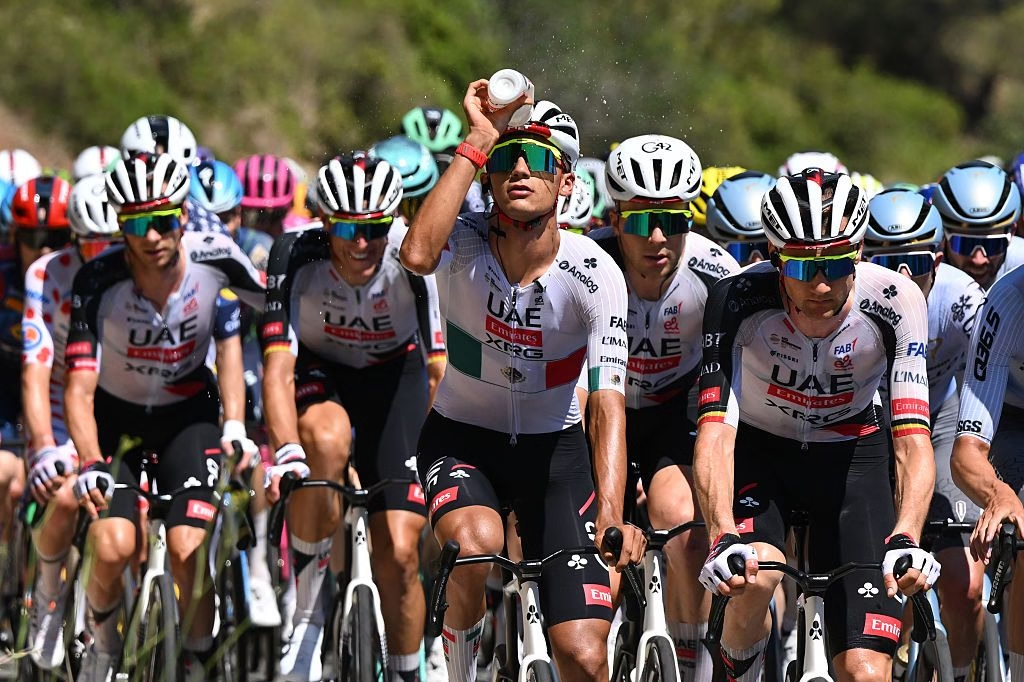
Heat could change the balance again
The wider problem of extreme temperatures is explored in whether the Tour de France can survive racing in July heat.
Heat increases the importance of hydration, cooling and team support. It can make repeated accelerations more expensive and raise the risk that a rider who appears comfortable early in the stage deteriorates quickly later.
There is no simple assumption that one of the two favourites will benefit. Vingegaard has traditionally been associated with strong performances in long mountain efforts, while Pogačar has repeatedly improved his ability to handle hot conditions.
The more important point is that extreme weather increases uncertainty. It places greater pressure on feeding, bottle delivery and recovery, while increasing the cost of every tactical mistake.
The Tour de France heat protocol allows additional cooling and feeding measures, but one missed bottle or poorly timed effort can still become decisive.
What would count as a win for Pogačar?
Pogačar does not need to win the stage for the day to be successful.
His minimum objective is to retain the 2:42 advantage without showing weakness. If he follows every Vingegaard move and finishes alongside him, another major mountain stage will have passed without the Danish rider recovering any time.
Finishing ahead of Vingegaard would be an even stronger outcome, particularly if the gap is created on one of the climbs rather than through the final sprint. A stage victory would provide the most visually satisfying answer to 2024, but it is not tactically essential.
For Pogačar, a successful day could look almost uneventful. He can allow the breakaway to win, follow Vingegaard and reach Le Lioran with the same advantage.
That would leave his rival with fewer opportunities and exactly the same problem.
 Photo Credit: Getty
What would count as a win for Vingegaard?
Vingegaard’s definition of success must be more demanding.
A stage win from a two-rider sprint would be emotionally significant and would repeat the result of 2024. It would not, however, reopen the general classification battle on its own.
The clearest victory would involve gaining time. Even 10 or 15 seconds would provide evidence that Pogačar is not untouchable, while a larger gain would immediately change the tone of the Tour.
Vingegaard could also claim a smaller psychological success by putting Pogačar under visible pressure, forcing him to chase or isolating him from his team. That would not change the standings, but it could give Visma a tactical direction for the later mountain stages.
The worst outcome would be another clear defeat. If Pogačar distances Vingegaard again on terrain where the Dane has such positive memories, the 2:42 gap may begin to look less like an early-race advantage and more like a settled hierarchy.
That possibility sits at the centre of the question raised after the Tourmalet: is the Tour de France already over?
A stalemate still favours the yellow jersey
The temptation is to treat every Pogačar-Vingegaard mountain stage as a duel that must produce a clear winner. The general classification does not work that way.
A stalemate at Le Lioran would be a positive result for Pogačar because he already owns the advantage. Every stage completed without losing time moves him closer to the overall victory.
The same outcome would leave Vingegaard running out of opportunities. That imbalance shapes the entire stage.
Pogačar can choose when to respond. Vingegaard must decide when to risk attacking. The memory of 2024 gives the Dane confidence, but the 2026 standings give Pogačar control.
-
 Photo Credit: Getty
 -
 Photo Credit: Cs-wolves / Wikimedia Commons, CC BY-SA 4.0

Why Le Lioran matters beyond one stage
Le Lioran matters because it offers a direct comparison between two versions of the rivalry.
In 2024, Vingegaard arrived underprepared after a major crash, was dropped by Pogačar and still found a way to win. In 2026, he arrives after a full preparation and a Giro d’Italia victory, yet already trails Pogačar by nearly three minutes.
That contrast is uncomfortable. The Vingegaard of 2024 used Le Lioran to show that he remained capable of matching Pogačar despite everything that had happened before the Tour.
The Vingegaard of 2026 needs the same roads to show that the gap created on the Tourmalet was not definitive.
For Pogačar, the stage offers something different. He can demonstrate how much the balance has changed by riding as the established leader and making Vingegaard carry the burden of changing the race.
That may be a clearer measure of superiority than another spectacular attack.
Le Lioran is a memory, not a prediction
The 2024 result explains why the finish matters. It does not tell us what will happen in 2026.
Vingegaard won two years ago because he managed his effort, caught Pogačar after being dropped and still had enough left to beat him at the finish. Pogačar returns with a much larger advantage, a stronger recent mountain performance and no tactical need to repeat his old attack.
The roads may trigger memories, but they do not recreate circumstances.
That is the real interest of stage 10. Le Lioran is the place where Vingegaard once proved that Pogačar could be caught. Now he must prove that the lesson still applies.
Pogačar does not need revenge. He only needs to ensure that 2024 remains a memory rather than the beginning of another comeback.

