
Giorgia Bronzini was a sprinter who appeared to understand the final kilometre before most of the field had worked out the road in front of them.
Not only the sprint itself, but the corners leading into it, the changing wind, the point where the bunch narrowed and the moment a lead-out began to lose its shape. Bronzini was small in stature but never peripheral once the speed increased. She used position, patience and instinct as if they were physical strengths.
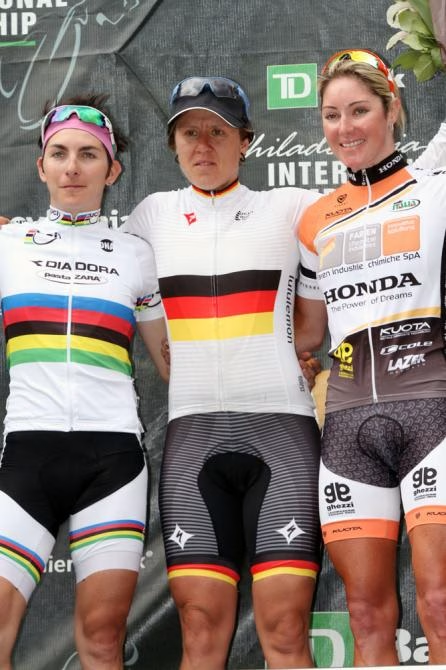
That intelligence carried the Italian to consecutive road race world titles in 2010 and 2011, eight stage victories at the Giro d’Italia Women and a long career at the front of elite women’s racing. She also became a world champion on the track, winning the points race in 2009, an achievement that helps explain the spatial awareness and composure that defined her road sprinting.
Bronzini was fast enough to win almost anywhere, but speed alone does not account for her success. She belongs among the most tactically accomplished finishers in women’s cycling history because she repeatedly solved finales rather than simply overpowering them.
Giorgia Bronzini rider profile
Full name: Giorgia Bronzini
Born: 3 August 1983
Place of birth: Piacenza, Italy
Nationality: Italian
Professional career: 2003 to 2018
Rider type: Sprinter
Road world titles: 2010 and 2011
Track world title: 2009 points race
Giro d’Italia Women stage wins: Eight
Current role: Team director with Human Powered Health
A sprinter who understood the whole finish
Bronzini’s sprinting was never based on raw force alone. Her greatest skill was recognising how the race would develop before the decisive gap had appeared.
In a flat finale, she rarely panicked when the bunch stretched into the wind or the front began to reorganise around a sequence of corners. She remained compact, protected her position and conserved the energy needed to react when the rhythm changed.
Some sprinters become visible too early, moving into the wind and committing before the road has properly opened. Bronzini preferred to remain present without advertising herself. She followed the right wheel, allowed other riders to absorb the pressure of the lead-out and appeared only when the route to the line had become clear.
That ability made narrow openings usable. A gap that looked too small for another rider could become a clean sprint once Bronzini committed to it. She did not always need a long acceleration because so much of the work had already been completed through positioning.
The line might decide the result officially, but Bronzini often won through choices made several hundred metres earlier.
Timing mattered more than intimidation
Bronzini did not race like a sprinter who needed to dominate the entire run-in. She trusted her timing enough to let other teams take control.
That was especially effective in headwinds or technical finales, where launching too early could leave even the most powerful rider exposed. Bronzini understood when the hesitation ahead represented danger and when it created an opportunity to wait a fraction longer.
Her track background was central to that judgement.
Winning the points race at the 2009 UCI Track World Championships required repeated sprinting, constant positional awareness and the ability to read movements within a compressed field. Those qualities transferred naturally to the road, where a sprinter must monitor several wheels while travelling at more than 60km/h.
Track racing also rewards calmness under pressure. The available space changes quickly, and a rider who reacts emotionally can lose the best position before the sprint begins. Bronzini brought that discipline into bunch finishes throughout her road career.
Her comment after retirement that instinct is the central requirement for winning a high-level sprint fits the rider she had been. Training can develop speed and lead-outs can deliver position, but the moment of commitment still depends on judgement.
Consecutive world titles confirmed her repeatability
Bronzini’s defining road victories came at the 2010 and 2011 UCI Road World Championships.
The first arrived in Geelong, where she defeated Marianne Vos and Emma Johansson in a fast finish after a demanding race in Australia. Bronzini judged the closing metres precisely, passing Vos late enough to prevent a response and taking Italy’s second successive women’s road title after Tatiana Guderzo’s victory in 2009.
One world championship can emerge from the perfect combination of form, route and circumstance. Defending the rainbow jersey the following year in Copenhagen proved that the first victory had not been an isolated performance.
The 2011 race ended in another bunch sprint, with Bronzini again negotiating the pressure of a finale where almost every rival understood that Italy wanted to deliver her to the line. She still found the correct wheel and the correct moment.
Winning consecutive world titles placed her within a select group of women to defend the road race crown. The achievement reflected more than speed. It required two separate seasons built around arriving at the world championships in form, followed by the composure to execute under the most obvious pressure in the sport.
Every major sprint rival knew what Bronzini intended to do. Preventing it was another matter.
Eight Giro stage wins made her an Italian reference point
Bronzini won eight stages of the Giro d’Italia Women across a period stretching from 2005 to 2016.
Those victories connected her career to the most important stage race in Italian women’s cycling. The Giro changed names and organisational structures during her time in the peloton, but remained one of the central measures of success for an Italian rider.
Bronzini also won the points classification in 2005, showing the consistency needed to score across several days rather than relying on one isolated sprint.
The significance of those results becomes clearer within the history of the Giro d’Italia Women. The race has always demanded more than surviving until the nominal sprint stages. Riders must negotiate climbing, heat, fatigue and nervous transitional days before receiving a clean opportunity.
Bronzini repeatedly remained competitive deep into the race. She could endure enough difficulty to ensure that her speed still mattered when the route finally presented a finish suited to her.
Her final Giro stage victory came in 2016, more than a decade after her first. That longevity reflects how effectively she adapted as women’s racing became faster, teams became more structured and sprint preparation grew increasingly specialised.
Six consecutive stage wins at La Route de France
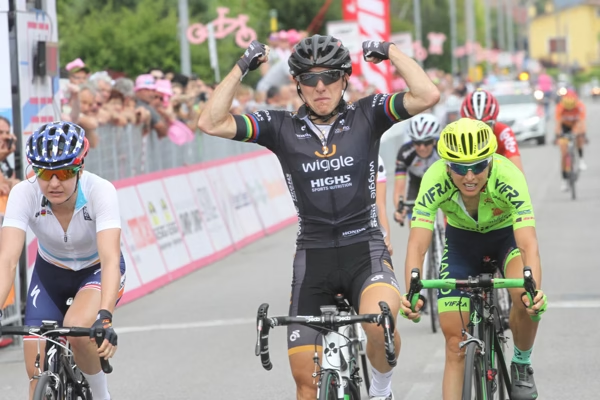
One of Bronzini’s most remarkable runs came at the 2013 La Route de France.
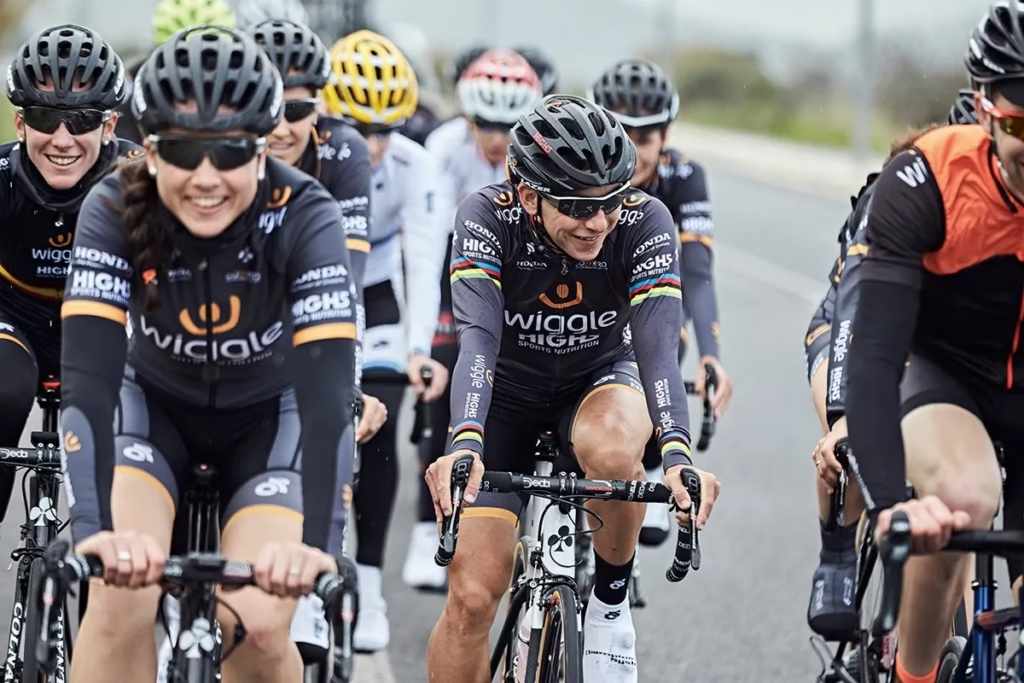
Riding for Wiggle-Honda, she won six consecutive stages on the way to taking the overall classification. It was an extraordinary sequence, particularly because the finishes did not all unfold in exactly the same way.
Repeated sprint victories within one race create their own tactical problem. After the first success, every rival knows which wheel matters. By the third or fourth, opposing teams are actively trying to disrupt the lead-out or create a breakaway simply to avoid another direct contest.
Bronzini continued winning anyway.
The performance also demonstrated that her sprinting could support an overall result. Bonus seconds, consistency and the ability to remain close enough on less favourable terrain allowed her to turn stage victories into the final classification.
Wiggle-Honda became closely associated with Bronzini’s finishing speed during its early seasons. The team’s development and her role within it are explored in the history of Wiggle High5.
More than one type of sprint
Bronzini was at her most dangerous in a bunch finish, but she was not limited to perfectly flat, uncomplicated roads.
She won the Tour of Chongming Island World Cup in 2015, a race often shaped by high speed, exposed roads and the need to survive repeated positional battles before the sprint. She also collected victories at the Tour of Qatar, the Tour of California and races throughout Europe and Asia.
Technical finales suited her because they rewarded anticipation. A tight corner, roundabout or narrowing road could be treated as a problem or as a chance to secure position before the sprint train reached full speed.
Bronzini tended to see the opportunity.
She understood when a road would funnel the peloton, when a headwind would discourage an early launch and when a final bend made the first position through it more valuable than the fastest possible acceleration afterwards.
Those details sound small when separated from the race. Together they form the logic of a bunch sprint.
Bronzini was not merely fast. She understood how the road distributed that speed and where it would matter most.
Wiggle-Honda gave her a platform at the centre of the sport
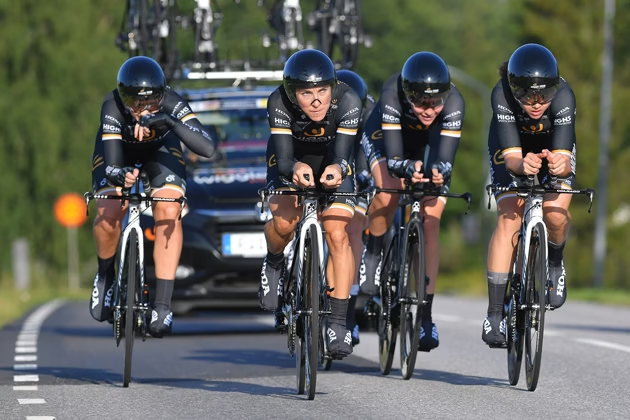
Bronzini spent five seasons with Wiggle-Honda and its later identities from 2013 to 2017.
The British-registered team brought together riders including Bronzini, Laura Trott, Dani King, Chloe Hosking and Elisa Longo Borghini during an important period in the professionalisation and visibility of women’s cycling.
Bronzini became one of its most dependable winners.
A sprinter requires collective discipline even when the final result is presented as an individual victory. Teammates must protect the leader from crosswinds, position her before technical sections, control attacks and deliver her into the final kilometre without forcing an unnecessary effort.
Wiggle’s growing depth allowed Bronzini to remain hidden for longer. It also gave the team multiple tactical options, preventing rivals from treating every race as a simple lead-out operation.
Her presence helped establish the squad as more than a promotional project. It became a team expected to win major races and compete across the international calendar.
A career spanning two versions of women’s professional cycling
Bronzini began racing professionally in 2003 and completed her final season with Cylance Pro Cycling in 2018.
The sport changed significantly during those 16 years.
When she entered the professional peloton, many women’s teams operated with limited budgets, unstable sponsorship and little regular television coverage. By the time she retired, the Women’s WorldTour had been established, race coverage was improving and larger professional structures were becoming more common.
Bronzini remained relevant through that entire transition.
Her longevity was not simply the product of maintaining speed. Sprinting evolved around her. Lead-out trains became more organised, teams used data more extensively and the depth of international competition increased. A rider relying only on the methods that worked at the start of her career would have been left behind.
Bronzini continued winning because her primary advantage was adaptable. Road layouts changed, team names disappeared and new sprint rivals emerged, but the need to read position and timing remained.
Her career sits naturally within the wider women’s cycling history hub, where the riders, races and teams of different eras can be understood as part of the same development rather than isolated stories.
The rivals who defined her era
Bronzini competed during a period containing some of the strongest and most versatile sprinters women’s cycling has produced.
Marianne Vos combined elite sprint speed with the ability to win almost every other type of race. Ina-Yoko Teutenberg brought sustained power and exceptional lead-outs. Kirsten Wild became one of the most prolific road and track sprinters of her generation.
Beating those riders required more than being fast on one ideal afternoon.
Bronzini’s results came from repeatedly finding solutions against rivals with different strengths. Against a more powerful rider, she could wait and use the slipstream. Against someone equally patient, she could secure the better position before the launch. When Vos survived a difficult race, Bronzini still had to judge whether the Dutchwoman’s versatility had left enough sprint speed for the finish.
That competitive environment strengthens her place in history. Bronzini did not accumulate victories in the absence of elite opposition. She won during an era when the likely sprint field often included several riders capable of defining a generation.
A racing temperament built around calculated risk
Bronzini carried the quiet authority of someone who understood exactly what she needed from a finish.
She did not race like a showman. Her risks were normally calculated rather than dramatic. A bunch sprint always requires courage, but Bronzini rarely confused bravery with recklessness.
The willingness to wait is itself a form of confidence. A sprinter must accept that the gap may disappear and that another rider may launch first. Going early can feel safer because it replaces uncertainty with action, even when it reduces the chance of winning.
Bronzini trusted her reading of the race enough to resist that impulse.
That temperament contributed to her consistency across different teams, countries and race formats. She was not dependent on one exact lead-out or one predictable road shape. The more chaotic the finish became, the more valuable her judgement could be.
-
 Photo Credit: Getty
 -
 Photo Credit: A.S.O./Billy Ceusters

From sprinter to team director
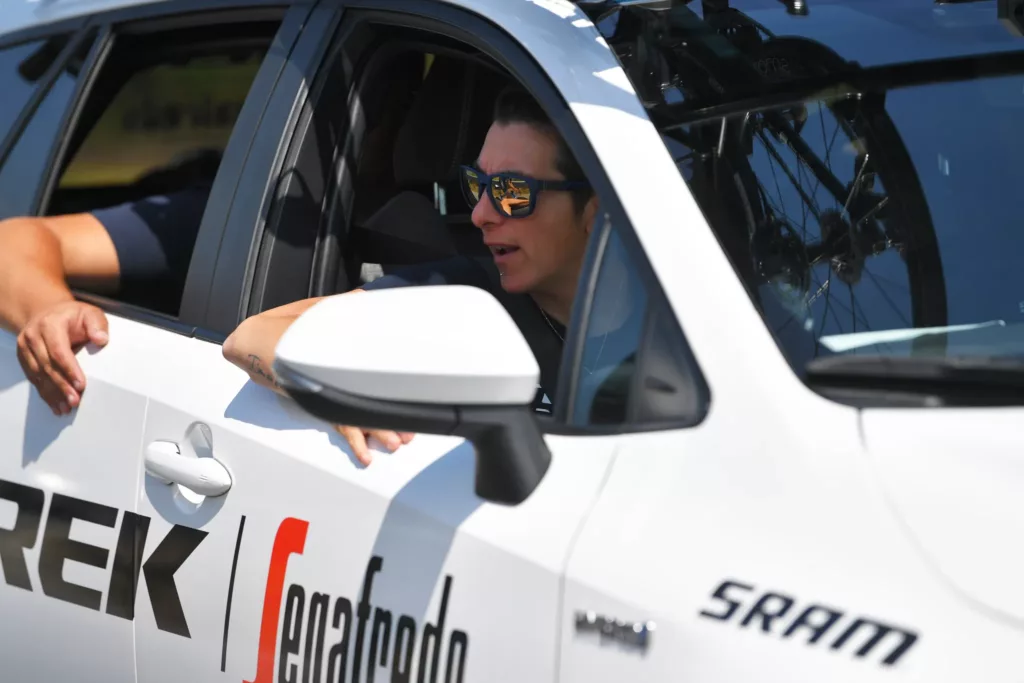
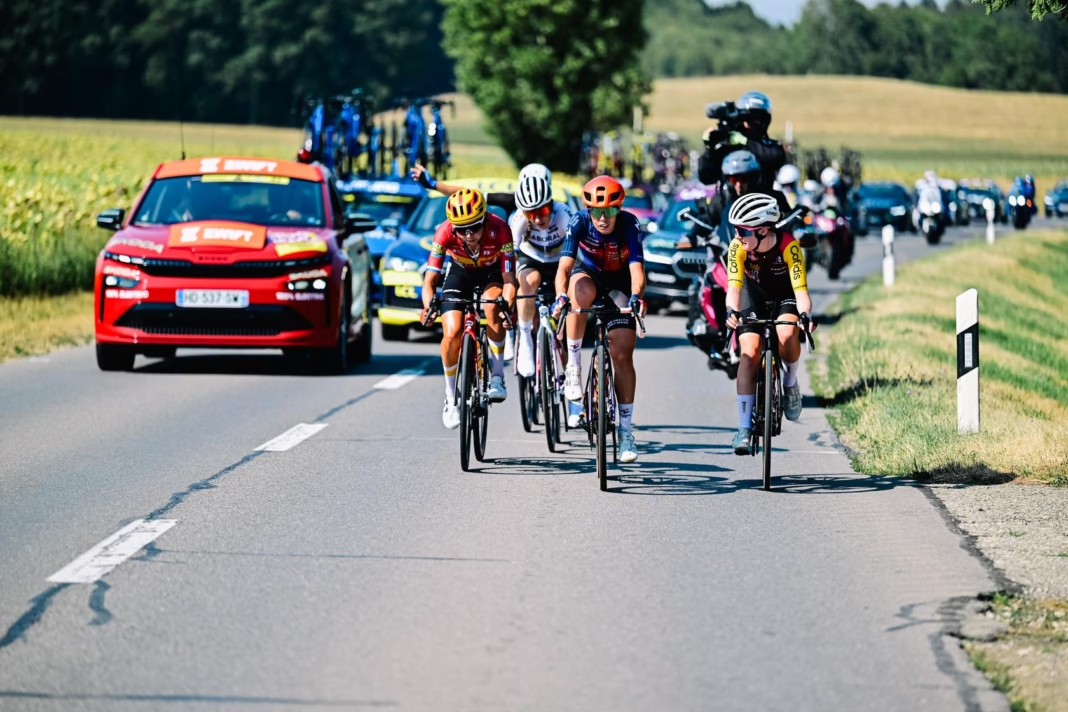
Bronzini retired at the end of the 2018 season and moved directly into team management with Trek-Segafredo’s new women’s programme.
She spent three seasons within the Trek structure before joining Liv Racing in 2022. In 2024, she moved to Human Powered Health, where she remains part of the team’s sporting leadership in 2026.
The progression was a natural extension of her racing career.
A director must understand more than tactics in the final kilometre. The role involves planning, communication, staff coordination and making decisions while the race changes faster than the information arriving through the radio.
Bronzini’s greatest riding quality was recognising patterns before they became obvious. That same skill has value from the team car.
She can also offer specific knowledge to sprinters. Positioning cannot be reduced to one instruction such as following the right wheel. It involves anticipating how several teams will behave, understanding which lead-out is likely to collapse and recognising when apparent patience has become hesitation.
Human Powered Health recruited Bronzini because that experience could support a developing WorldTour project. Her arrival as a director and the career path that led there are covered in our report on Giorgia Bronzini joining Human Powered Health.
Why Giorgia Bronzini still matters
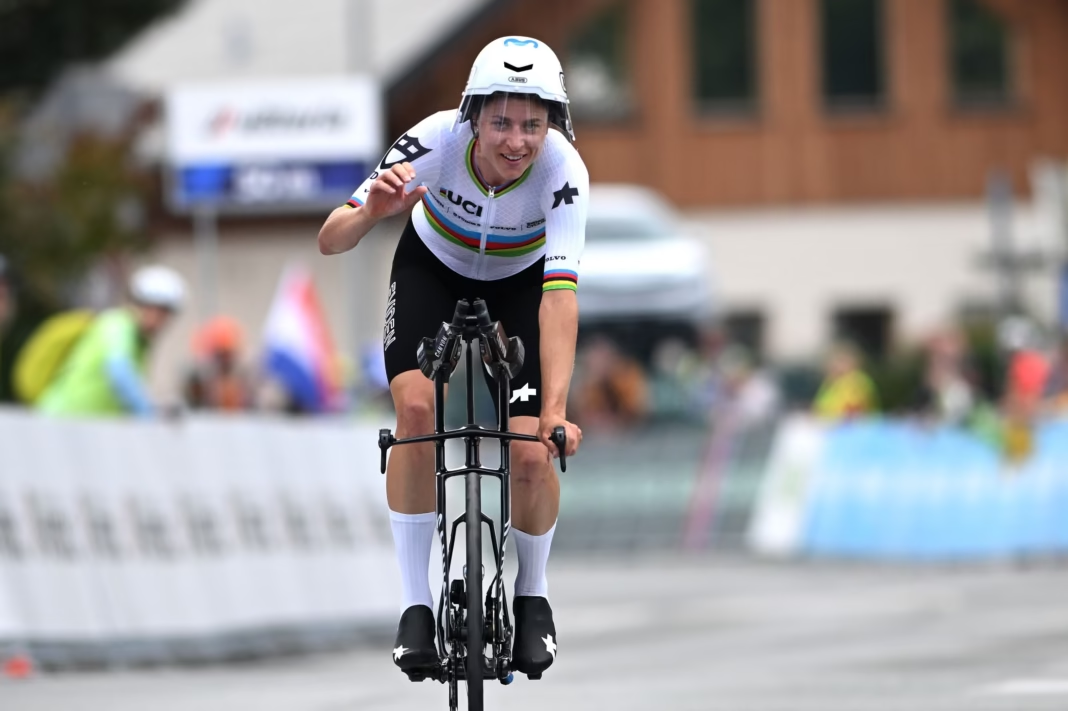
Bronzini’s legacy is visible in three rainbow jerseys: two won on the road and one in the track points race.
It is also found in eight Giro stage victories, the remarkable sequence at La Route de France and the longevity required to remain one of the peloton’s most reliable sprinters across 16 professional seasons.
The results explain her status. Her method explains why she remains interesting.
Bronzini made sprinting look like analysis carried out at full speed. She had the nerve to wait, the awareness to remain hidden and the judgement to recognise a winning route before it fully opened.
Modern lead-outs are faster and more structured, while the depth of elite sprinting continues to grow. The fundamental questions remain unchanged. Which wheel should a rider follow? When does patience become delay? Where will the road create space, and how many metres are really required to win?
Bronzini answered those questions more consistently than almost anyone of her generation.
She was a sprinter, but also a reader of roads, an interpreter of pressure and one of the clearest examples of racing intelligence becoming a decisive physical advantage.

