
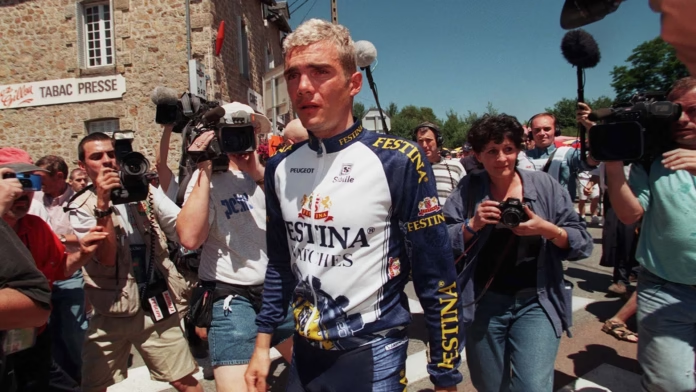
Festina should have been remembered as one of the defining teams of 1990s cycling. It had Richard Virenque, Laurent Dufaux, Laurent Brochard, Christophe Moreau, Alex Zülle, Wladimir Belli, Marcel Wüst, Joseba Beloki and Ángel Casero across different points of its history. It won Grand Tour stages, Tour de France mountains jerseys, a world road title and, at the very end, the Vuelta a España.
Instead, the name became shorthand for something much larger. The Festina Affair at the 1998 Tour de France did not just bring down a team. It exposed the scale of organised doping in the sport, dragged cycling into police stations and courtrooms, and forced the Tour de France to confront a culture that had become too normalised to remain hidden.
That is what makes Festina such a difficult team to assess. It was not a small outfit that briefly became famous because of scandal. It was a serious team with serious riders, a major presence in the Tour, and a sponsor that had become highly visible in professional cycling. Its rise and collapse tell the story of an era where performance, sponsorship, medical control and denial became dangerously entangled.
For wider context on the period, see our men’s cycling history hub, brief history of the Men’s Tour de France, Tour de France winners list and feature on what happened to Richard Virenque.
The origins of the Festina team
The team that became Festina began in 1989 as Lotus-Zahor, before becoming Lotus-Festina and later Festina-Lotus. Its identity shifted across Spain, Andorra and France, but by the mid-1990s it had become closely associated with French cycling, the Tour de France and Richard Virenque’s rise as one of the country’s most popular riders.
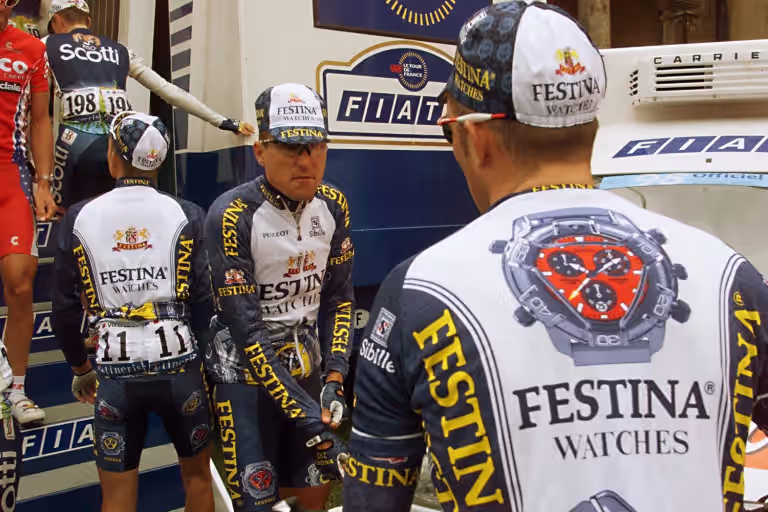
The sponsor, Festina, was a watch brand, which made the team’s presence in cycling commercially neat. Timing, precision and performance all fitted the image. The team kit became familiar, the name became easy to recognise, and by the second half of the decade Festina was not merely present in the peloton. It was central to the sport’s biggest race.
Early Festina squads included notable names such as Sean Kelly, Acácio da Silva, Steven Rooks, Jean-Paul van Poppel and Thierry Marie. That gave the project credibility before the Virenque years made it one of the most visible teams in France.
By the mid-1990s, Festina had evolved into a Tour-focused squad with climbing depth, French identity and serious stage-race ambition. Bruno Roussel, who managed the team during its most famous period, became one of the key figures in that rise. The team was organised, visible and increasingly powerful.
Festina’s emergence also sits inside a wider period of team change. The old manufacturer-led model that defined squads such as Peugeot was giving way to modern sponsor-led structures, while teams such as Banesto and ONCE showed how the 1990s were becoming an era of powerful, identity-driven Grand Tour squads.
Richard Virenque and the rise of Festina in the Tour de France
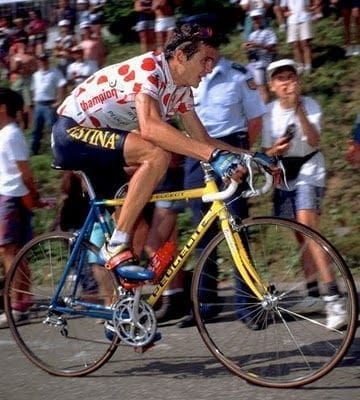
Richard Virenque became the face of Festina. He was not only a climber, he was a public figure. His attacking style, polka-dot jersey battles and emotional connection with French supporters made him one of the most recognisable riders of the 1990s.
For Festina, Virenque was perfect. He gave the team an identity in the race that mattered most. He was not a calculating time-trial machine in the mould of Miguel Indurain, nor the emerging prototype of the modern all-round Grand Tour rider. He was expressive, visible and dramatic. In the mountains, he gave French fans something to hold onto.
His Tour de France record during the Festina years was central to the team’s status. He finished 5th overall in 1994, 9th in 1995, 3rd in 1996 and 2nd in 1997. He also won multiple mountains classifications, turning the polka-dot jersey into part of his personal brand.
The 1996 Tour was a major step. Virenque finished on the podium behind Bjarne Riis and Jan Ullrich, confirming that Festina could be more than a stage-hunting or classification-side-story team. It could place a rider at the centre of the Tour’s overall battle.
The 1997 Tour pushed that further. Virenque finished 2nd overall behind Ullrich, with Laurent Dufaux also inside the top 10. Festina looked like one of the few teams capable of combining mountain firepower, tactical aggression and public profile. The team’s confidence was obvious. So was its vulnerability.
Virenque’s later career remains one of the most complicated individual stories from this period, and our feature on what happened to Richard Virenque looks more closely at how his popularity, denial, confession and comeback became bound together.
Laurent Dufaux and Festina’s depth
Laurent Dufaux was a crucial part of Festina’s strongest period. The Swiss climber gave the team a second serious Grand Tour option and helped strengthen its mountain identity. He was not simply a helper for Virenque, even if Virenque’s celebrity often dominated the story.
Dufaux had already shown his quality at the Vuelta a España, finishing on the podium in 1996. At Festina, he became part of a mountain core that could put several riders deep into the final week of major stage races. In the 1997 Tour, Dufaux finished 9th overall, giving Festina two riders in the top 10.
That changed how the team could race. With Virenque and Dufaux, Festina had more than one rider capable of surviving deep mountain stages. It could attack, support, bridge and disrupt. In an era where the Tour was often controlled by dominant team structures, Festina had enough climbing strength to make the race uncomfortable.
Dufaux’s place in the team also showed why Festina was taken seriously before 1998. This was not just a one-rider outfit built around a charismatic Frenchman. It had genuine stage-race depth.
Laurent Brochard and the world champion’s jersey
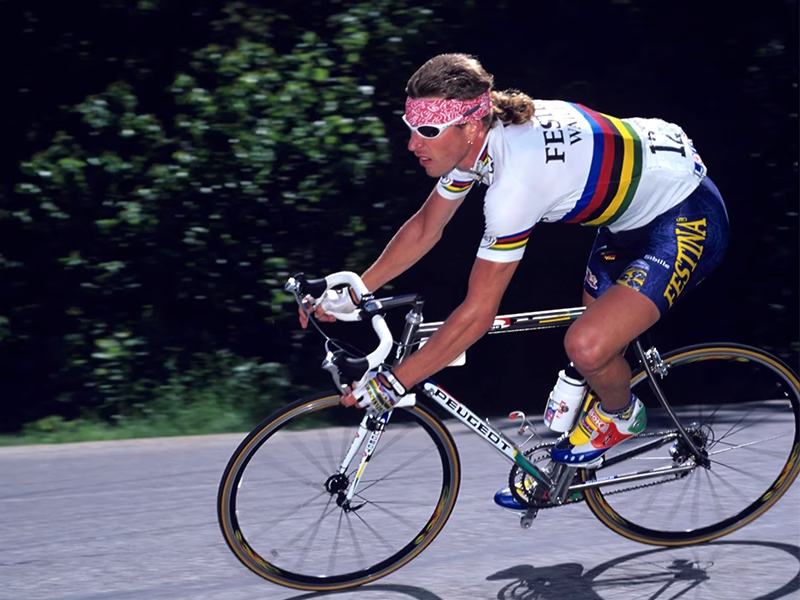
Laurent Brochard gave Festina one of its most prestigious victories when he won the 1997 elite men’s road race world title in San Sebastián. That rainbow jersey made Festina’s rise feel even more complete. The team already had Virenque as a Tour podium rider and mountains jersey icon. Now it also had the world champion.
Brochard’s victory came in a strong era for one-day racing. To win a world road race in the 1990s required endurance, tactical timing and the ability to survive a long, selective day. For Festina, it was a huge result because it broadened the team’s image beyond the Tour de France.
Brochard had also won a stage of the 1997 Tour de France, making that season one of the high points of the team’s sporting story. The 1997 campaign gave Festina a near-perfect set of headlines: Virenque 2nd in the Tour, Dufaux inside the top 10, Brochard a Tour stage winner and then world champion.
Seen only through results, Festina looked like a team reaching maturity. Seen with hindsight, 1997 looks more like the final bright surface before everything underneath was exposed.
Alex Zülle arrives and Festina becomes a superteam
The arrival of Alex Zülle made Festina even more formidable on paper. Zülle was one of the strongest stage racers of the decade, a two-time Vuelta a España winner and a rider capable of challenging in both time trials and mountains. His presence in the 1998 squad made Festina look like one of the strongest teams in the Tour.
With Virenque, Zülle, Dufaux, Brochard, Moreau and other experienced riders, Festina’s 1998 Tour line-up looked built for the overall classification, mountain stages and team dominance. It had climbing depth, a world champion, a popular French leader and a Swiss Grand Tour winner.
This is part of why the scandal was so explosive. Festina were not peripheral. They were one of the central teams of the race. When their system was exposed, it could not be dismissed as the behaviour of a struggling or desperate outfit. It implicated a team operating close to the top of the sport.
The 1998 Tour was supposed to be the next stage of Festina’s rise. Instead, it became the moment that turned the team’s name into a warning.
 Photo Credit: Pascal Pavani/AFP/Getty
The 1998 Tour de France and the start of the Festina Affair
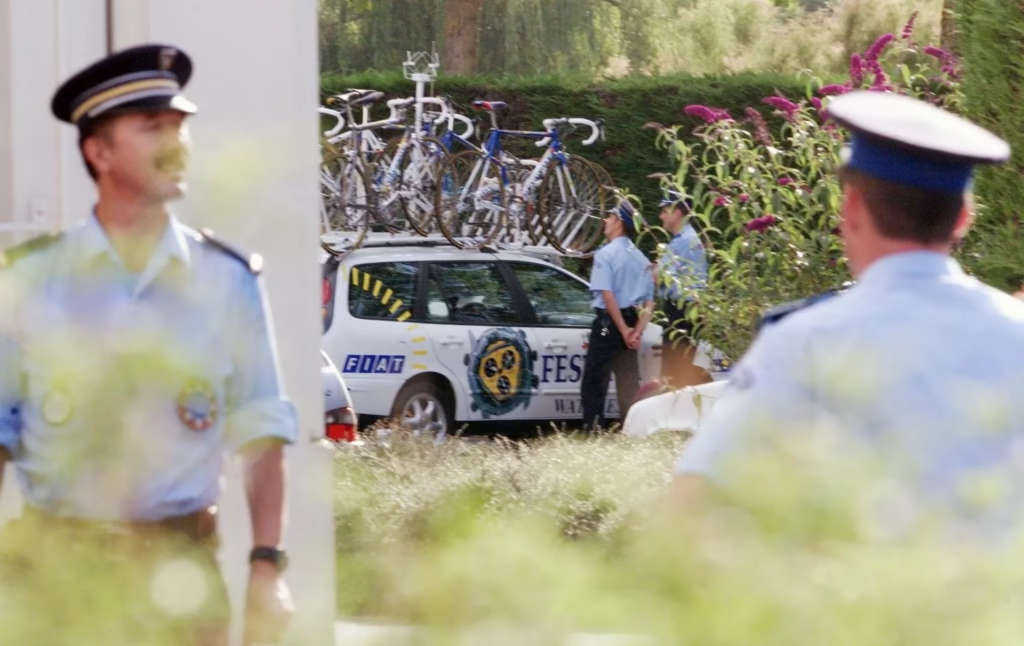
The Festina Affair began before the 1998 Tour de France had even properly settled into racing. On the 8th July, Festina soigneur Willy Voet was stopped by customs officers near the French-Belgian border. In the team car, officers found a large quantity of doping products, including EPO, anabolic steroids, growth hormones and syringes.
The timing made the case impossible to contain. The Tour was starting in Dublin, and Festina were one of the most watched teams in the race. At first, the team tried to distance itself from the discovery. But the investigation moved quickly. Police searched team premises, questioned staff, and began to uncover evidence that pointed towards organised doping rather than individual improvisation.
The scandal widened when Bruno Roussel, the team’s directeur sportif, admitted the existence of a structured doping programme within the team. That admission changed the story. This was no longer about one soigneur carrying products. It was about a system inside one of cycling’s most prominent teams.
Festina were expelled from the Tour. Riders were questioned, some were detained, and the race itself descended into crisis. The Tour continued, but it did so under a cloud that had changed the public understanding of the sport.
The scale of the 1998 rupture is why the following year was sold as a reset. Our flashback to the 1999 Tour de France looks at how the race tried to move on from Festina, even as the next decade of doping controversy was already taking shape.
Why the Festina Affair was different
Cycling had faced doping scandals before 1998. The sport had never been clean, and the mythology of the Tour had always existed alongside stories of stimulants, medical shortcuts and blurred ethical lines. What made Festina different was the combination of police action, documentary evidence, confessions and timing.
This was not a failed test hidden in small print. It was a criminal investigation. It involved customs officers, team cars, hotel searches, arrests, court cases and daily media escalation. It played out in front of the Tour de France, not in the shadows months later.
It also exposed the industrial character of 1990s doping. EPO had changed endurance sport. It was not merely a painkiller, a stimulant or a late-race boost. It altered the oxygen-carrying capacity of the blood and transformed what riders could sustain over long climbs, repeated stages and three-week races. The phrase “two-speed cycling” became attached to the era because the difference between those using EPO and those not using it appeared fundamental.
Festina made that system visible. It showed that the problem was not simply a few rogue riders. It involved staff, doctors, logistics, supply, secrecy and team-level organisation.
The riders and the confessions
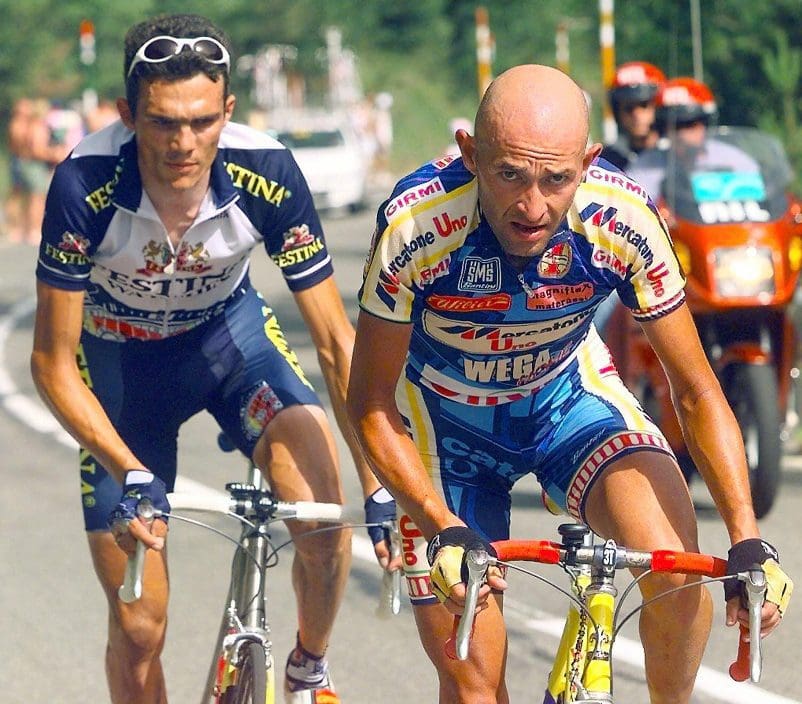
The Festina riders were pulled into the investigation one by one. Several admitted to using EPO and other banned substances. Richard Virenque, the team’s public face, initially denied doping and maintained that position long after others had confessed.
That denial became part of the wider drama. Virenque was hugely popular in France, and his image as a romantic mountain attacker sat uneasily beside the evidence emerging around the team. He was eventually forced into a more difficult reckoning. In October 2000, during the Festina trial in Lille, he admitted to doping. He later received a nine-month ban from the Swiss federation.
Other riders, including Christophe Moreau, Laurent Brochard, Laurent Dufaux, Armin Meier, Pascal Hervé and Alex Zülle, also had their careers marked by the scandal. Some returned to racing and achieved further results. Others never fully escaped the shadow of 1998.
The most important point is not simply that riders confessed. It is that the confessions confirmed what the investigation had already suggested: Festina’s doping was organised, known within the team and embedded in performance culture.
Bruno Roussel, Willy Voet and the machinery behind the team
Bruno Roussel and Willy Voet became two of the defining non-rider figures in the scandal. Roussel, as directeur sportif, admitted organised doping within the team. Voet, whose arrest began the chain of events, later wrote about the system in detail.
Voet’s role was particularly revealing because soigneurs occupy a strange space in cycling. They are not team leaders in the public sense, but they are deeply embedded in riders’ daily routines. They handle massage, recovery, transport, hotel logistics and sometimes, in that era, far more than official job descriptions admitted.
The discovery in Voet’s car showed how doping depended on infrastructure. Products had to be obtained, stored, transported, timed and administered. That meant the system needed more than riders willing to use drugs. It needed organisation.
Festina’s downfall was therefore not just a moral story about individual athletes making bad choices. It was a structural story about how a team and a sport allowed pharmacological preparation to become normalised.
The Tour de France in crisis
The 1998 Tour did not collapse completely, but it came close enough to expose how fragile the race had become. Police raids, rider protests, team withdrawals and public anger created an atmosphere unlike any previous edition.
Festina’s expulsion was the central act, but the investigation widened beyond one team. Other teams came under scrutiny. The TVM squad was searched, and the relationship between the peloton, police and race organisers deteriorated sharply. Riders protested against what they saw as heavy-handed treatment. To the outside world, those protests often looked like a sport defending itself from accountability rather than demanding fairness.
Marco Pantani eventually won the 1998 Tour, completing the Giro-Tour double, but the race is remembered at least as much for scandal as for racing. That is the legacy of Festina: it changed the meaning of the 1998 Tour. The result remained, but the race became a symbol of a wider crisis.
The Tour had survived wars, politics, commercial battles and previous doping controversies. Festina forced it into a different kind of confrontation, one where the problem could no longer be explained away as isolated behaviour. Our brief history of the Men’s Tour de France places that 1998 crisis within the wider arc of the race.
Festina after the scandal
One of the stranger parts of the Festina story is that the team did not disappear immediately. It reorganised after 1998, changed leadership and continued racing until the end of 2001.
The team still achieved major results after the scandal. In the 2000 Tour de France, Joseba Beloki finished 3rd overall and Christophe Moreau finished 4th. That was an extraordinary sporting recovery on paper, although the team’s name could never again be separated from what had happened two years earlier.
Then came Festina’s final Grand Tour triumph. Ángel Casero won the 2001 Vuelta a España, taking overall victory on the final day after a decisive time trial. It was one of the most dramatic Vuelta finishes of the era and gave Festina a Grand Tour victory in the team’s final season.
Soon afterwards, the team ended. Festina as a sponsor remained connected to cycling through timing partnerships, but the team itself was gone. Its final sporting act had been significant, but it could not change the historical weight of 1998.
Major Festina results
Festina’s history should not be reduced only to scandal, even though the scandal dominates its legacy. The team achieved results that would define most professional squads.
Its major results included:
- Richard Virenque finishing 3rd overall at the 1996 Tour de France
- Richard Virenque finishing 2nd overall at the 1997 Tour de France
- Multiple Tour de France mountains classification victories through Virenque
- Laurent Brochard winning a stage of the 1997 Tour de France
- Laurent Brochard winning the 1997 elite men’s world road race in San Sebastián
- Laurent Dufaux finishing 9th overall at the 1997 Tour de France
- Joseba Beloki finishing 3rd overall at the 2000 Tour de France
- Christophe Moreau finishing 4th overall at the 2000 Tour de France
- Ángel Casero winning the 2001 Vuelta a España
That palmarès shows why Festina mattered before the scandal. This was a team capable of winning stages, placing riders on Grand Tour podiums and producing one of the most popular riders in France.
It also shows why the scandal cut so deeply. The team had not been irrelevant. It had been successful, ambitious and central to the Tour’s 1990s storyline.
For comparison with other Grand Tour team structures of the same broad period, Festina sits naturally alongside Team Banesto’s Indurain-era control and ONCE’s Spanish Grand Tour ambition.
Richard Virenque’s complicated legacy
No rider is more closely linked to Festina than Richard Virenque. His name carries the romance of the polka-dot jersey, the attacks in the mountains, the crowd support and the emotional theatre of French cycling. It also carries the damage of denial, confession and suspension.
Virenque returned after the scandal and rebuilt parts of his career. He won more Tour stages and more mountains classifications, eventually becoming the record holder for most polka-dot jerseys. For many French fans, he remained popular. For others, he became a symbol of the era’s contradictions.
That split is important. Virenque was not simply a villain in the public imagination, nor was he simply forgiven. He represented the uncomfortable reality of 1990s cycling: riders who inspired genuine emotion were also part of systems that damaged the sport’s credibility.
His Festina years remain central to that tension. Without Festina, Virenque might be remembered mainly as one of the Tour’s great climbers and showmen. Because of Festina, his story is inseparable from the scandal that reshaped modern anti-doping.
The same tension appears whenever the era is assessed through Tour results alone. Lists such as our Tour de France winners list record the official outcomes, but the late 1990s also demand context around how those performances were understood then and how they are viewed now.
Christophe Moreau, Joseba Beloki and the post-scandal years
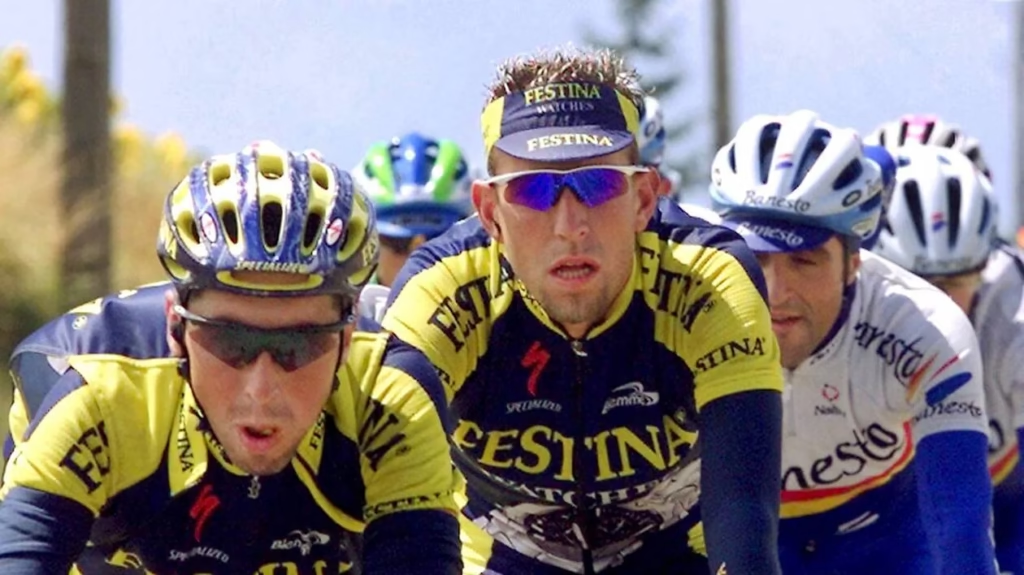
Christophe Moreau’s career is also tied to Festina’s unusual post-1998 afterlife. He was part of the scandal-hit squad, served a suspension, returned, and later became one of France’s leading GC riders. His 4th place in the 2000 Tour came while Festina was trying to rebuild its sporting credibility.
Joseba Beloki’s 3rd place in the same Tour was one of the team’s strongest results after the affair. Beloki would later become more closely associated with ONCE, but his Festina podium helped show that the team still had elite-level stage-race strength even after the damage of 1998.
Ángel Casero’s 2001 Vuelta win gave the team a final major victory. In sporting terms, it was the crowning result of Festina’s last chapter. In historical terms, it sits awkwardly alongside the scandal, because almost everything the team did after 1998 is viewed through that earlier rupture.
Festina’s post-scandal results are therefore part of the story, but they never fully changed the narrative. The team could still win. It could no longer define itself only by winning.
How Festina changed cycling
The Festina Affair did not end doping in cycling. The years that followed proved that clearly enough. But it did change the sport’s public and institutional landscape.
It accelerated the move towards more serious anti-doping structures. It made police investigations part of cycling’s reality. It weakened the old culture of denial, where doping could be treated as an open secret inside the peloton and a distant rumour outside it. It also changed how journalists, fans and sponsors looked at performances.
Festina did not solve the problem. What it did was make the problem impossible to ignore.
The scandal also forced a sharper distinction between individual testing and system-level investigation. Before Festina, cycling often treated doping as a matter of riders being caught or not caught. Festina showed that the bigger issue could be organisation: teams, doctors, transport, supply chains, cover stories and internal discipline.
That lesson would echo through later scandals, from Operación Puerto to the Armstrong investigation. Festina was not the final reckoning. It was the first modern rupture.
Festina and the wider team-history landscape
Festina’s story sits in contrast with some of cycling’s other great team histories. La Vie Claire is remembered for innovation, design, ego and the Hinault-LeMond years. 7-Eleven is remembered for pushing an American team into Europe’s biggest races. Euskaltel-Euskadi is remembered for identity, place and supporter culture.
Festina belongs in that same historical conversation, but for darker reasons. Its colours, riders and results made it a major 1990s team. Its scandal made it a turning point. Unlike Banesto or ONCE, which are often discussed through sporting systems and Grand Tour tactics, Festina became inseparable from the mechanisms behind performance.
That does not erase what the team achieved, but it changes how those achievements can be written about. Festina is a reminder that team history is never only a list of victories. It is also a study of structure, culture, pressure and consequence.
Why Festina still matters
Festina matters because it sits at the turning point between old cycling and modern cycling. Before 1998, doping scandals happened, but the sport often absorbed them. After 1998, the public language changed. The idea of systematic doping could no longer be dismissed as speculation. The Tour de France itself had been shaken in full view.
The team’s history also explains why the scandal carried such force. Festina had results, stars, national importance and commercial visibility. Virenque was not a marginal figure. Brochard was the world champion. Zülle was a Grand Tour winner. Dufaux was a major stage racer. Moreau was part of the next French GC generation. This was a team with status.
That is why the name still resonates. Festina is not remembered only because it was caught. It is remembered because it revealed how much of the sport had been hiding in plain sight.
The scandal also shaped how the next Tour was framed. The 1999 edition was presented as a clean break from the crisis, but as our 1999 Tour de France flashback explains, cycling’s next era of doping controversy was already forming.
Festina’s place in cycling history
Festina’s story is not cleanly divided into glory and disgrace. The two are intertwined. The same years that produced Virenque’s Tour podiums, Brochard’s rainbow jersey and Festina’s strongest public identity also led directly into the scandal that defined the team forever.
That makes the team one of the most important case studies in cycling history. It shows how a sponsor-backed squad could rise through talent, ambition, organisation and public appeal, while also being shaped by the medical culture of its era. It shows how success can be both real and compromised. It shows how a team can continue after scandal and still never escape its meaning.
The results deserve to be recorded. Virenque’s podiums, Brochard’s world title, Beloki’s Tour podium and Casero’s Vuelta victory are part of the sport’s record. But Festina’s legacy is larger than its palmarès.
The team’s name became the moment when cycling’s hidden system became visible. It did not end the problem, but it changed the conversation. For that reason, Festina remains one of the most significant teams of the 1990s, not only for what it won, but for what its collapse forced the sport to confront.

