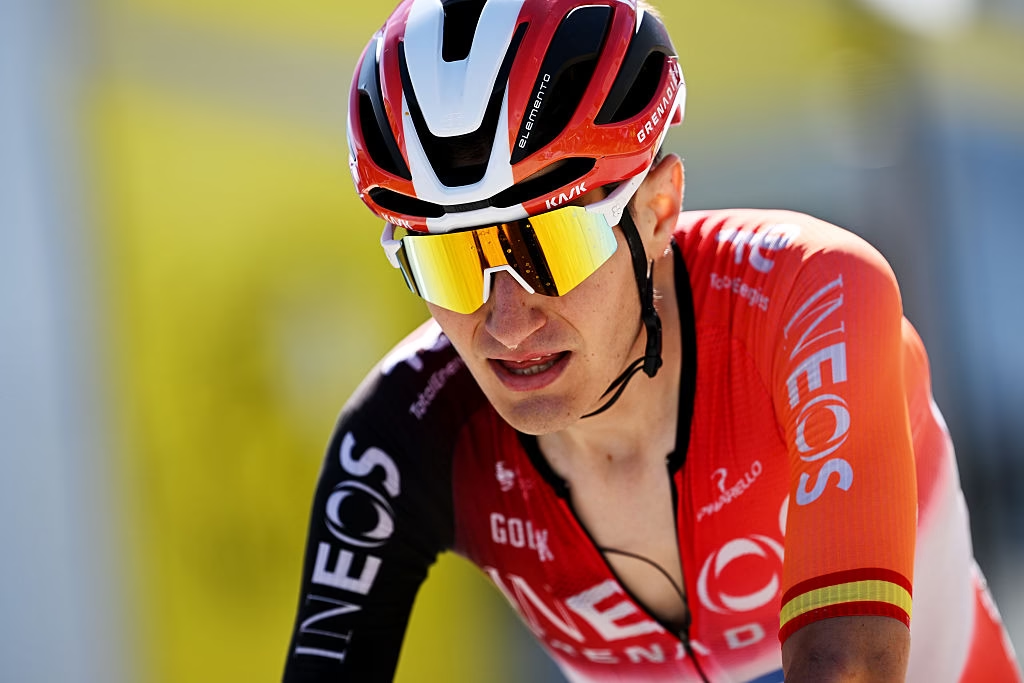
Carlos Rodríguez arrives at the 2026 Tour de France in a slightly awkward place. He is still young, still proven, still capable of riding deep into the top 10, and still one of Netcompany INEOS’ best general classification cards. But the question has changed. After finishing 5th in 2023, 7th in 2024 and then crashing out in 2025, Rodríguez is no longer simply the exciting next step. He is now a rider trying to prove that his first Tour peak was not his ceiling.
That makes his 2026 race important for both rider and team. Netcompany INEOS are not the Tour-dominating force they once were, but they still carry GC expectation. Rodríguez is one of the riders who can give that project credibility. He knows how to ride three weeks. He can climb with the second tier of yellow jersey contenders. He is experienced enough not to panic when the race becomes messy. The question is whether that is enough to return to the top five in a much deeper Tour field.
The route gives him enough opportunity, but not a clean path. The Barcelona team time-trial could help if INEOS are strong, especially with riders such as Filippo Ganna and Thymen Arensman in the likely support structure. The early Pyrenees will show quickly whether Rodríguez has the climbing level to stay in the top-five conversation. The Massif Central, Vosges and Jura should suit his consistency. The stage 16 individual time-trial is more complicated. Then the final Alpine block, with Orcières-Merlette and back-to-back Alpe d’Huez finishes, gives him the terrain he needs if he is still close enough.
For the full race picture, see our Tour de France 2026 full route guide, Tour de France 2026 GC favourites ranked and Tour de France 2026 dark horses for the general classification.
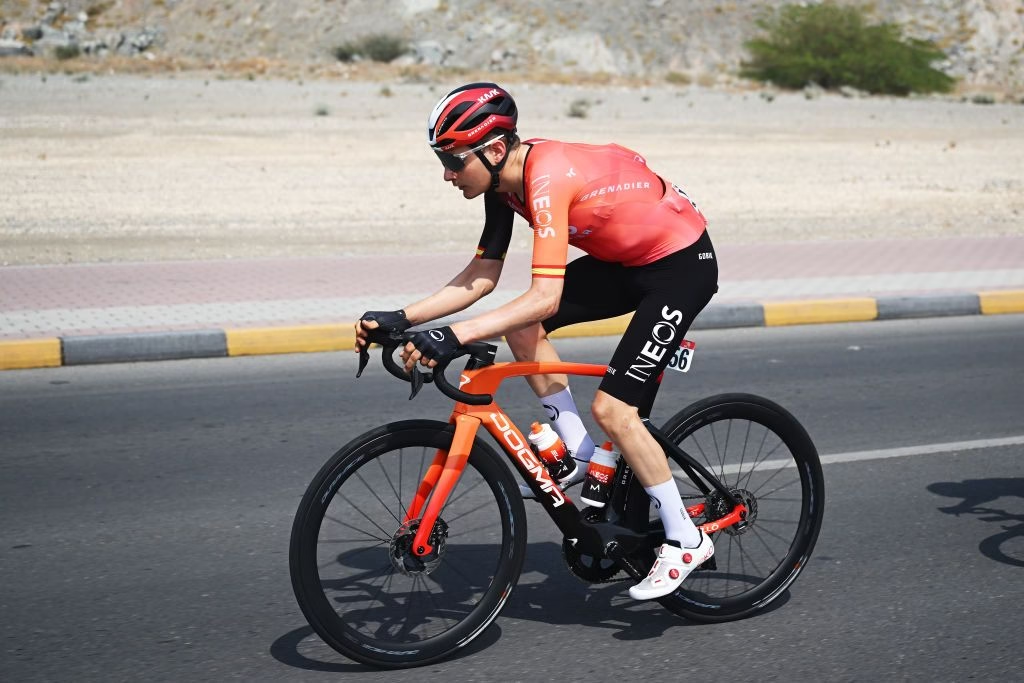 Photo Credit: Getty
Carlos Rodríguez’s Tour de France record
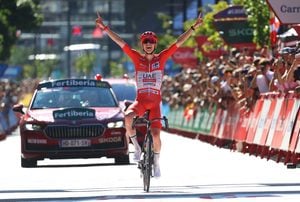
Rodríguez’s Tour record is already strong enough to command respect. He finished 5th overall in 2023, won a mountain stage into Morzine and looked like one of the most promising GC riders of his generation. That result mattered because it was not just a defensive top five. He attacked, descended well, took a major stage win and showed he could handle the pressure of the Tour at a young age.
His 2024 Tour was less explosive but still solid. Seventh overall confirmed that 2023 had not been a one-off. He did not make the same leap towards the podium, but he remained consistent enough to stay inside the top 10 across a hard race. For a rider still developing, that was a useful result even if it did not have the same impact as the previous year.
Then came 2025. Rodríguez was sitting 10th overall when he crashed late on stage 17 and abandoned with a fractured pelvis. That is a very different kind of result. It did not prove he had gone backwards, but it interrupted his momentum. It also left a gap in the story. We still do not know whether he would have climbed back towards the top five in the final mountain block or simply held a lower top-10 place.
That is why 2026 feels like a reset. Rodríguez has already shown he can finish 5th. He has already shown he can back it up with another top 10. What he now needs is a Tour where the old strengths return at the right time and the race does not get away from him before the final week.
For more on the 2025 injury that interrupted his Tour, see our report on Carlos Rodríguez abandoning the Tour de France with a fractured pelvis.
Why 2023 still matters
The 2023 Tour is still the reference point for Rodríguez because it showed his full package. He was not just following wheels. He was climbing strongly, reading the race and descending with enough confidence to turn a small opportunity into a major result.
His stage 14 win into Morzine remains one of the defining moments of his career. It showed his ability to stay close to the strongest riders, attack when the timing was right and make the most of technical terrain. That sort of instinct matters at the Tour because the race rarely gives perfect opportunities. Riders need to recognise half-chances and commit.
The 5th place overall also matters because it came against a high-level GC field. Rodríguez was not sneaking into the top five through attrition alone. He earned that position by staying close across the decisive terrain.
For 2026, the challenge is whether that level is still available. The race has moved on. Pogačar and Vingegaard remain the main reference points. Remco Evenepoel, Isaac del Toro, Juan Ayuso, João Almeida, Paul Seixas, Florian Lipowitz and others make the top-five battle dense. Rodríguez does not need to beat every one of them every day, but he needs enough consistency that he is still there when the race reaches the Alps.
Our Tour de France 2026 GC favourites ranked guide places Rodríguez in that wider top-10 fight, close enough to matter but not yet in the absolute first line of yellow jersey favourites.
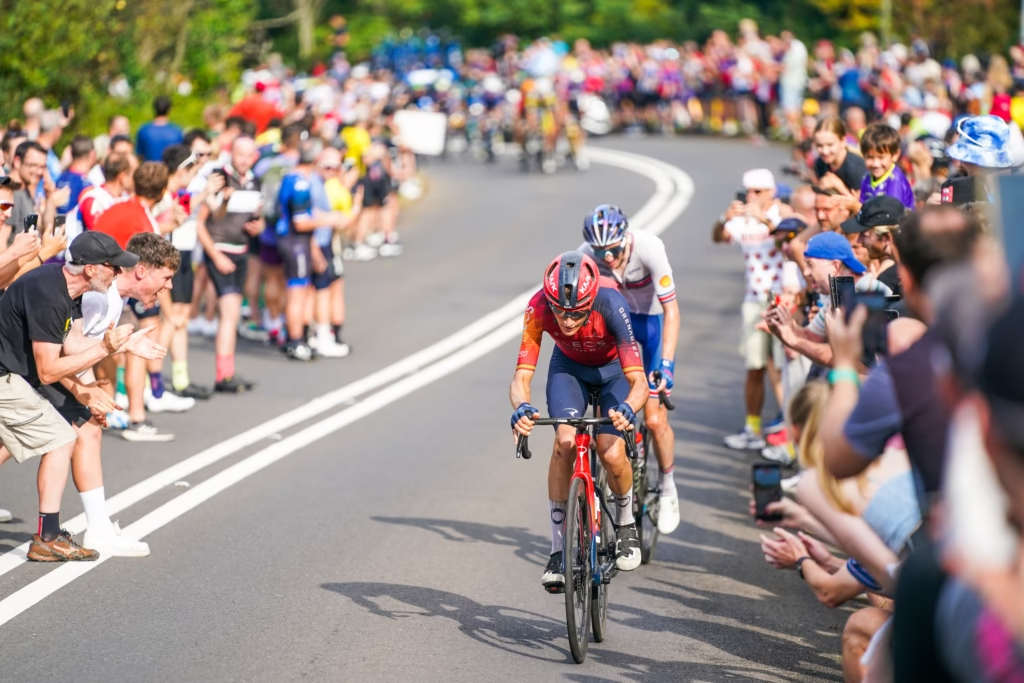 Photo Credit: Zac Williams/SWpix.com
The 2025 crash changed the storyline
Rodríguez’s 2025 Tour cannot be judged like a normal GC result because it ended with injury. Crashing out while sitting 10th overall left the race unresolved. The final Alpine stages were still to come, and those were exactly the kind of days where a rider like Rodríguez might have hoped to move up.
But the crash still matters. A fractured pelvis is not a minor interruption. It affects preparation, confidence and rhythm. Even when a rider returns to racing, the question is whether the old top-end climbing and repeated-day durability are fully back.
That is the uncertainty around Rodríguez in 2026. He has looked competitive again, but not yet like a guaranteed top-five Tour rider. His early-season and pre-Tour form has suggested enough to keep him in the conversation, but not enough to make him one of the obvious podium names.
That may actually suit him. Rodríguez is better when he can ride slightly below the biggest spotlight. If the whole race is built around Pogačar, Vingegaard, Evenepoel and the new wave of GC contenders, he can return to a more familiar role: protected, dangerous, but not carrying the full weight of the race narrative.
What does Netcompany INEOS need from him?
Netcompany INEOS need Rodríguez to be more than a steady top-10 rider. They need him to be a credible GC leader or co-leader, especially after Oscar Onley’s withdrawal changed the team’s Tour plan.
Onley’s absence matters because it removes one of the team’s most interesting climbing cards. Kévin Vauquelin gives INEOS another GC route, but Rodríguez is the rider with the strongest Tour pedigree. He has already finished 5th and 7th. He has already won a Tour mountain stage. He has already shown he can handle the race.
That experience gives him value. The Tour is not only about watts on the hardest climb. It is also about avoiding splits, staying positioned, handling crosswinds, managing crashes, surviving bad days and not losing focus across three weeks. Rodríguez has that base.
The team around him could be useful. Ganna gives INEOS power for the Barcelona team time-trial and flat control. Arensman gives climbing depth and a possible second GC card. Michał Kwiatkowski brings experience and tactical sense. Dorian Godon can cover harder rolling days. If Vauquelin starts strongly, INEOS may have multiple options rather than a single fragile plan.
The challenge is clarity. Rodríguez needs protection, but INEOS may also want flexibility. If the team tries to keep too many GC stories alive for too long, Rodríguez could lose the full support he needs to return to the top five.
For wider team context, see our full start list for Tour de France 2026, Tour de France 2026 team-by-team guide and Netcompany title sponsorship explainer.
Why the 2026 route suits him
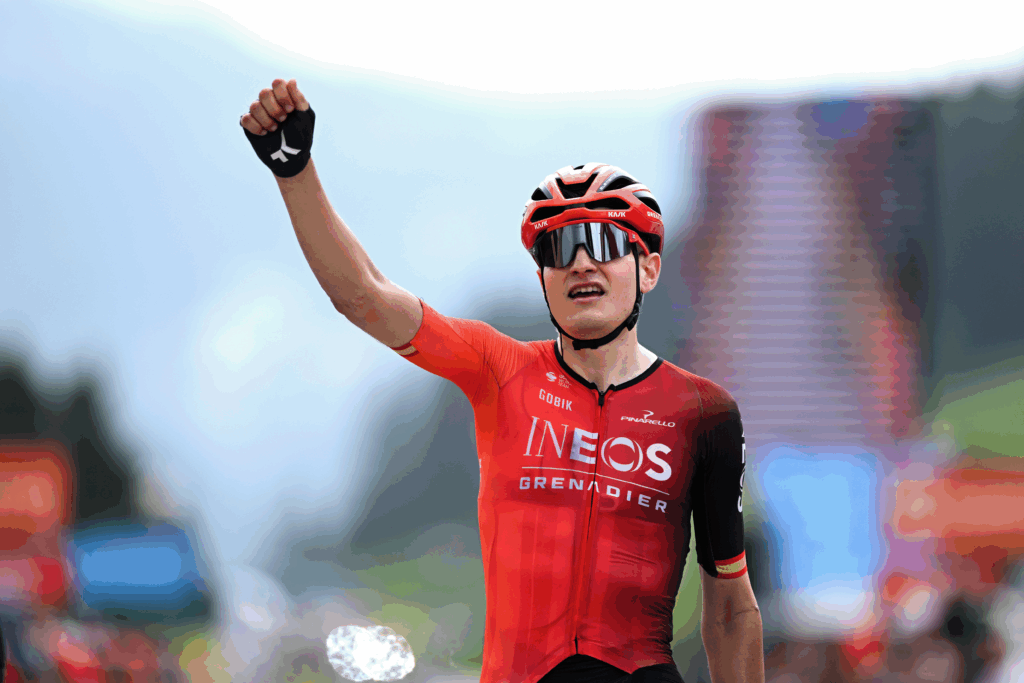
The 2026 Tour route has enough climbing to keep Rodríguez relevant. That is the first positive. A flatter Tour, or one dominated by long time-trials, would be a harder sell. This route gives him multiple chances to use endurance, recovery and mountain consistency.
The early Pyrenees are important. Stage 3 to Les Angles and stage 6 to Gavarnie-Gèdre will quickly show whether he is riding at top-five level or simply top-10 level. Rodríguez cannot afford to spend the first week chasing damage. If he loses serious time before the race leaves the Pyrenees, the top five becomes much harder.
The Massif Central, Vosges and Jura should also suit him. These are not always the days that decide the winner, but they decide who stays in the GC conversation. Rodríguez is the kind of rider who can ride through repeated climbing, avoid dramatic collapses and keep himself placed before the final week. If he is not explosive enough to drop the biggest names, he still needs to be solid enough not to be dropped by the next tier.
The final Alpine block is where his opportunity really sits. Orcières-Merlette, La Plagne and two Alpe d’Huez finishes give him the terrain to move up if others fade. Rodríguez does not need to take minutes in one attack. A top-five push could come through repeated small gains, better recovery and avoiding the bad day that hits others.
For deeper route context, see our Tour de France 2026 mountain stages ranked by difficulty, Tour de France 2026 summit finishes guide and Tour de France 2026 Alps guide.
The team time-trial could help him
The opening team time-trial in Barcelona is one of the most important details for Rodríguez. On paper, it should be a strength for INEOS. A team with Ganna, Rodríguez, Arensman and other powerful riders should not be weak against the clock.
That matters because Rodríguez is unlikely to win the Tour by overwhelming the best climbers. His top-five route is more likely to come through being consistently close, gaining where the team can help and avoiding preventable losses. A strong team time-trial can put him ahead of some rivals before the first mountains. A poor one would immediately make the race harder.
The format also tests organisation. INEOS used to be the reference point for this kind of controlled execution. The modern team is different, but the expectation remains. If they want Rodríguez back near the top five, they need the Barcelona opener to be a platform rather than a problem.
A clean ride would give him breathing space. It would also allow INEOS to race the early Pyrenees with confidence, rather than already needing to chase.
For more on why that opening stage matters, see our Tour de France 2026 team time-trial explained and how the stage 1 team time-trial could change the Tour de France 2026.

The stage 16 time-trial is more complicated
The stage 16 individual time-trial from Évian-les-Bains to Thonon-les-Bains is less obviously helpful. Rodríguez is not a poor time-triallist, but he is not in the same category as Evenepoel or the strongest pure TT riders. If the top-five fight is close, this stage could either keep him in position or expose the gap to more complete GC rivals.
That does not mean the time-trial ruins his chances. The distance is manageable, and the route is not a simple flat power test. Rodríguez needs to limit losses rather than dominate. If he gives away 20 or 30 seconds to some rivals, he can still recover that in the Alps. If he loses over a minute to the wrong riders, the top five becomes much harder.
The timing is also important. The time-trial comes after the second rest day and before the final Alpine block. Recovery and pacing will matter. A rider who exits the rest day flat can lose more than expected. A rider who controls the effort well can use it to reset before the mountains.
For Rodríguez, stage 16 is probably a defensive day. His job is to avoid turning a possible top-five challenge into a top-10 salvage mission.
For more on the riders who should gain most against the clock, see our best time-triallists at the Tour de France 2026 and Remco Evenepoel at the Tour de France 2026.
Where Rodríguez can move up
Rodríguez’s best chances to move up are unlikely to come from long-range attacks against the entire GC group. He is not the rider most likely to blow the race apart from 60km out. His path is more controlled.
He can move up when others crack. That may sound passive, but in a Tour this hard, survival is an active skill. The final week will expose riders who have been hanging on through the Pyrenees, Massif Central and Vosges. Rodríguez has the experience to ride his own rhythm, avoid panic and keep pressing when the race becomes uneven.
The best days for him are likely to be the harder mountain stages where repeated climbing matters more than one short acceleration. Gavarnie-Gèdre is an early test. Le Markstein could be important if the race becomes attritional. La Plagne and Alpe d’Huez are obvious late opportunities. Stage 20, with the Galibier, Sarenne and Alpe d’Huez, is the sort of day where fifth overall can be won by simply having more left than the riders around you.
He also needs to be alert in the middle of the race. The Massif Central and Jura will not be rest days for GC riders. If Rodríguez can avoid losing time there, he may start the Alps in a better position than riders who spend the second week under pressure.
For more on the stages where the GC can shift before the final weekend, see our Tour de France 2026 route: best days for GC attacks, Tour de France 2026 Massif Central guide and Tour de France 2026 queen stage guide.
The top-five competition is the problem
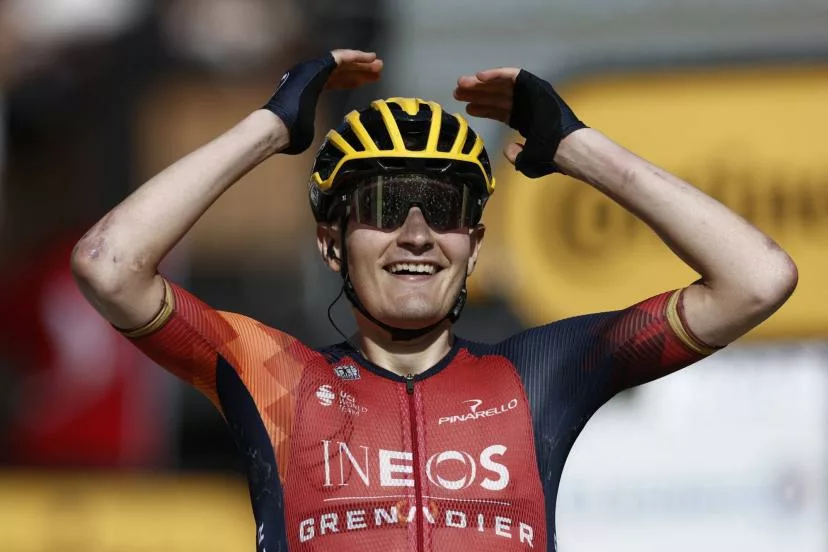
The biggest obstacle for Rodríguez is not the route. It is the depth of the field.
Pogačar and Vingegaard are still the top reference points. Evenepoel brings a time-trial weapon that can reshape the race. Isaac del Toro, Juan Ayuso and João Almeida give UAE several ways into the top five. Paul Seixas has French momentum. Florian Lipowitz has become increasingly credible. Primož Roglič, depending on role and condition, cannot be ignored. Kévin Vauquelin, Matteo Jorgenson, Cian Uijtdebroeks, Felix Gall and others all sit in the same wider top-10 fight.
That is a lot of riders for five places. Rodríguez does not need all of them to fail, but he does need some to underperform. A clean top five probably requires him to beat several riders who may have either better time-trialling, stronger team support, sharper acceleration or stronger 2026 momentum.
This is why the realistic target may be top seven rather than top five. The difference between 5th and 8th at this Tour could be small, but the names in front of him may be very strong.
Still, Rodríguez’s advantage is reliability. Some rivals are more exciting, but less proven across multiple Tours. He has already done it. That matters when the race gets ugly.
For more on the second line of contenders around Rodríguez, see our Juan Ayuso at the Tour de France 2026 and Tour de France 2026 dark horses for the general classification.
Rodríguez vs Vauquelin inside INEOS
One of the most interesting questions is whether Rodríguez is clearly above Kévin Vauquelin in the INEOS hierarchy.
Vauquelin gives the team a different option. He is punchier, French, dangerous on hilly terrain and capable of riding strongly in stage races. On some days, he may be more visible than Rodríguez. He also gives INEOS a rider who can attack from further out or play a different tactical card.
Rodríguez is the safer three-week GC option. His Tour record is better. He has already finished 5th and 7th. He knows how to manage the race. If INEOS want one rider to protect for the highest possible overall result, Rodríguez has the strongest argument.
The best version for INEOS may be to keep both alive early. If Rodríguez is strong, Vauquelin can become a tactical pressure point or stage-hunting option. If Rodríguez slips, Vauquelin gives the team another route into the race. But if both are close on GC, leadership could become complicated.
For Rodríguez to return to the top five, he probably needs clarity by the second week. He needs support, not just shared protection.
Vauquelin’s move was already framed as a major 2026 shift when INEOS confirmed his signing, and our earlier piece on Kévin Vauquelin’s three-year deal with INEOS Grenadiers explains why he gives the team another route into GC.
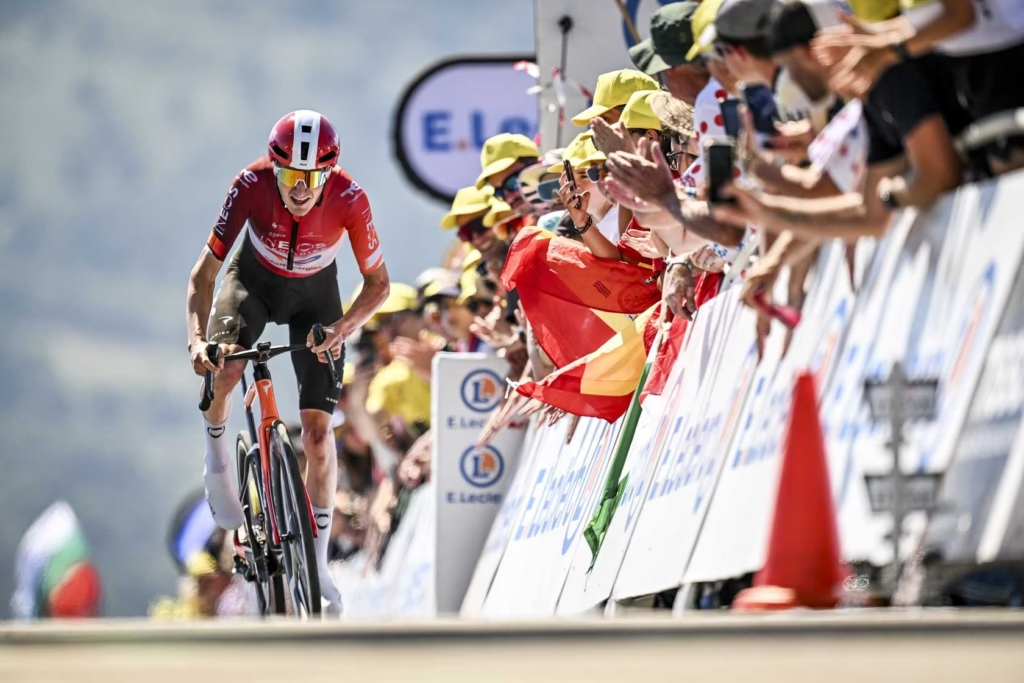 Photo Credit: A.S.O./Billy Ceusters
Can he win a stage?
A stage win is possible, but it should not be his main target if he is still close on GC. Rodríguez’s 2023 Tour stage win showed he can take the opportunity when the elite group hesitates. The 2026 route gives him similar terrain, especially in the final week.
The problem is that a protected GC rider is often not allowed freedom. If Rodríguez is sitting 6th or 7th overall, other teams will not let him go easily. His stage-win chances would probably come from attacking within the GC group rather than getting in a large breakaway.
That means his best stage-win scenarios are specific. A reduced GC group on a mountain finish. A tactical stalemate between Pogačar and Vingegaard. A late attack on a descent or valley section. A day when INEOS have numbers and can use Vauquelin or Arensman to create pressure.
If Rodríguez falls out of the top-10 battle, the picture changes. Then he could become a much more dangerous stage hunter. But that would also mean the top-five question had already gone.
For stage-hunting context around the middle and final parts of the race, see our Tour de France 2026 breakaway stages ranked and Tour de France 2026 stage hunters to watch.
What would count as success?
A top five would be a clear success. It would confirm that Rodríguez can still live in the same space he occupied in 2023 and that the 2025 crash was an interruption rather than a step backwards.
A top 10 would be solid but not transformative. It would keep him in the GC conversation, but it would not fully answer whether he can still progress towards the podium.
A stage win would change the tone, especially if it came from a strong mountain performance. Rodríguez already has a Tour stage win, but another would reinforce his value to INEOS even if the GC result lands lower than hoped.
A quiet 10th or 11th would feel disappointing. Not disastrous, but not enough. He is past the point where simply being present near the top 10 is the whole story. INEOS need proof that he can still be part of the sharper end of the race.
Carlos Rodríguez’s route to the top five
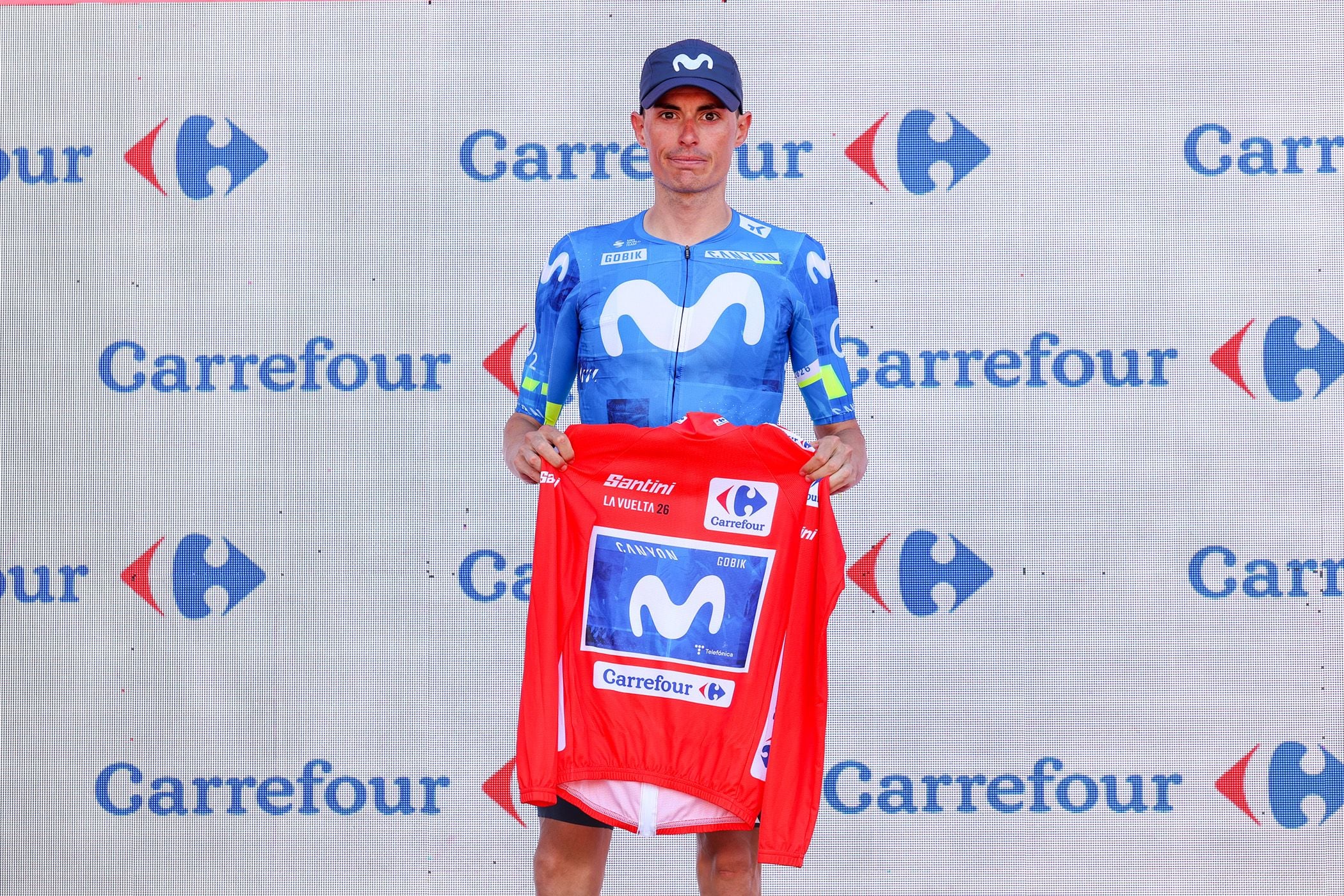
Rodríguez can return to the top five, but the path is narrow.
He needs INEOS to ride a strong team time-trial in Barcelona. He needs to survive the early Pyrenees without losing meaningful time. He needs to limit damage in the stage 16 individual time-trial. He needs the final Alpine block to become attritional rather than explosive. He needs at least a couple of higher-ranked rivals to fade, crash, lose time or suffer one bad day.
That is a lot, but not unrealistic. The Tour almost always reshuffles the second tier of GC contenders. Riders who look stronger on paper can lose minutes through one bad descent, a crash, illness, poor recovery or a bad day in the third week. Rodríguez’s consistency is exactly what can move him up when others lose control.
The issue is the ceiling. If the race becomes a pure watts contest between the very best climbers and time-triallists, Rodríguez may struggle to reach 5th. If it becomes a messy, attritional Tour with leadership uncertainty, difficult weather, fatigue and tactical movement, his chances improve.
For more on how the route will test that kind of rider, see our Tour de France 2026 Pyrenees guide and Tour de France 2026 Alps guide.
Prediction: can Carlos Rodríguez return to the Tour de France top five?
Yes, but it is more possible than probable.
Rodríguez has the record, experience and climbing base to finish in the top five again. The route gives him enough mountains, INEOS should be useful in the team time-trial, and his 2023 result proves the ceiling exists. He is not a speculative GC hope. He has already delivered at this level.
The problem is that the 2026 field looks deeper than the space available. Pogačar, Vingegaard and Evenepoel are obvious obstacles, while the UAE depth, Seixas, Lipowitz, Roglič, Vauquelin, Jorgenson and others make the next tier crowded. Rodríguez may ride well and still finish 7th or 8th.
The most realistic outcome is a strong top 10, with top five possible if the race becomes attritional and INEOS commit fully to him. A podium would require a major step and several rivals to falter. A top five is the right ambition, but not the baseline expectation.
Prediction: 6th to 8th overall, with a top-five finish possible if he reaches the Alps close enough and avoids time-trial damage.
For continuing coverage, visit our Tour de France hub, Tour de France 2026 full route guide and how to watch Tour de France 2026 in the UK.