
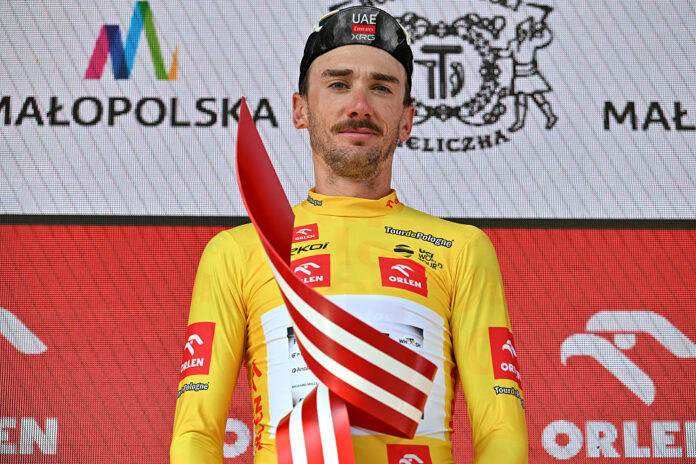
The Men’s Tour de Pologne 2026 is one of the biggest one-week stage races on the WorldTour calendar and the most important men’s professional cycling race in Poland. It may not have the same global name recognition as the Tour de France, Giro d’Italia or Vuelta a España, but it has become a regular August test for stage racers, sprinters, puncheurs, climbers, time triallists and riders building towards the late-summer block.
The 2026 edition is the 83rd Tour de Pologne. It runs from Monday 3 August to Sunday 9 August and follows a clear “North-South” theme, starting on the Baltic coast in Gdynia and finishing with an individual time trial at the Wieliczka Salt Mine near Kraków.
For new fans, it is a good race to follow because it packs most of stage racing’s key ingredients into a single week. There are sprint chances, long rolling days, hilly finales, mountain stages, bonus seconds, daily jersey battles and a final time trial that could decide the overall winner. For wider men’s racing context, see our Men’s Cycling Race Hub and Men’s Cycling Route Guide Hub.
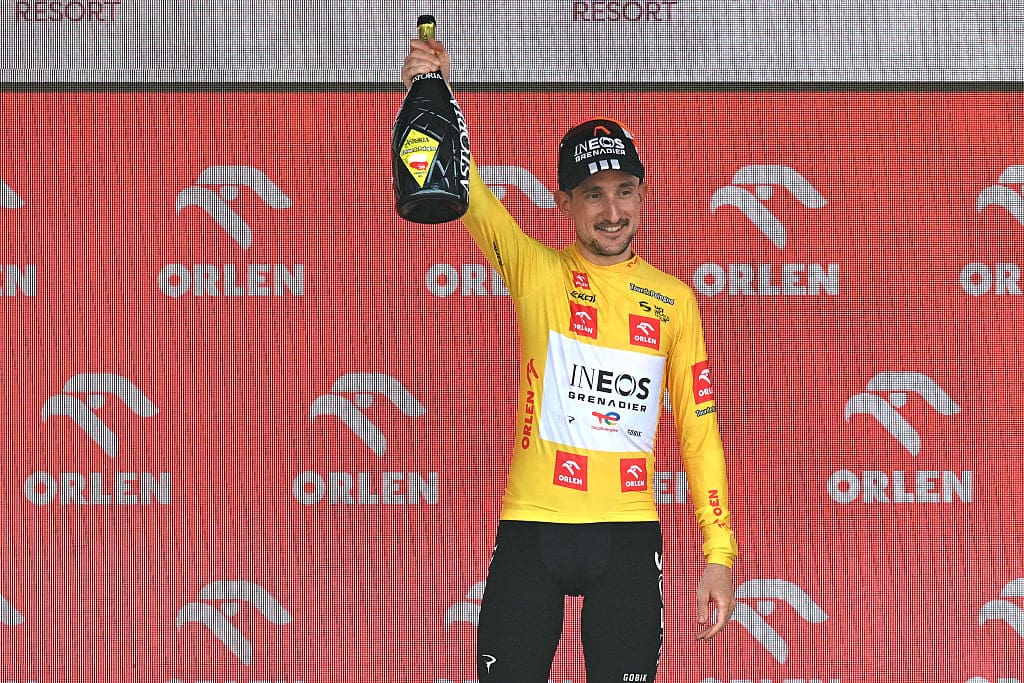
Quick answer: what is the Tour de Pologne?
The Tour de Pologne is Poland’s leading men’s professional stage race and part of the UCI WorldTour. The 2026 edition takes place from 3-9 August over seven stages, starting in Gdynia and ending with a 12.4km individual time trial at the Wieliczka Salt Mine. The race usually suits versatile riders who can climb, sprint uphill, handle technical finales and limit losses in a short time trial.
| Detail | Tour de Pologne 2026 |
|---|---|
| Race | 83rd Tour de Pologne |
| Dates | 3-9 August 2026 |
| Level | UCI WorldTour |
| Country | Poland |
| Stages | 7 |
| Opening stage | Gdynia to Koszalin |
| Final stage | Wieliczka Salt Mine individual time trial |
| Main GC days | Karpacz, Kocierz Resort, Bukowina Tatrzańska, Wieliczka ITT |
| Broadcast | TVP, Eurosport and HBO Max |
Why does the Tour de Pologne matter?
The Tour de Pologne matters because it is a WorldTour stage race with real consequences. WorldTour teams come to Poland not just for preparation, but for wins, ranking points and leadership opportunities for riders who may not always get top billing at the Grand Tours.
It often sits in an interesting part of the calendar. By early August, the Tour de France is over, some riders are rebuilding towards the Vuelta a España, and others are targeting late-season stage races, one-day races or world championships. That makes the Tour de Pologne a race where squads can test form, give younger riders responsibility and chase stage wins with mixed teams.
It is also a race that can be hard to control. The roads are varied, the finales can be technical, the weather can play a part, and the time gaps are often tight. A rider can lose the race through one bad positioning error, one missed split, one weak climb or one poor time trial.
For comparison with other one-week stage races, our beginner’s guide to Men’s Tour de Suisse 2026 and beginner’s guide to Tour Auvergne – Rhône-Alpes 2026 show how different race designs can favour different riders.
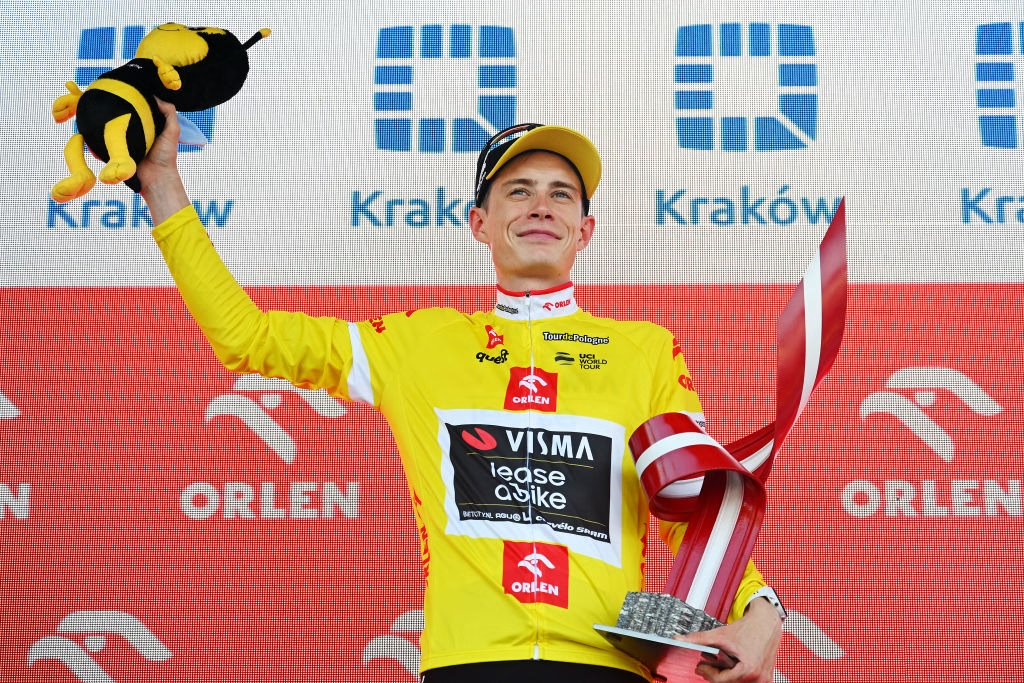
When is the Men’s Tour de Pologne 2026?
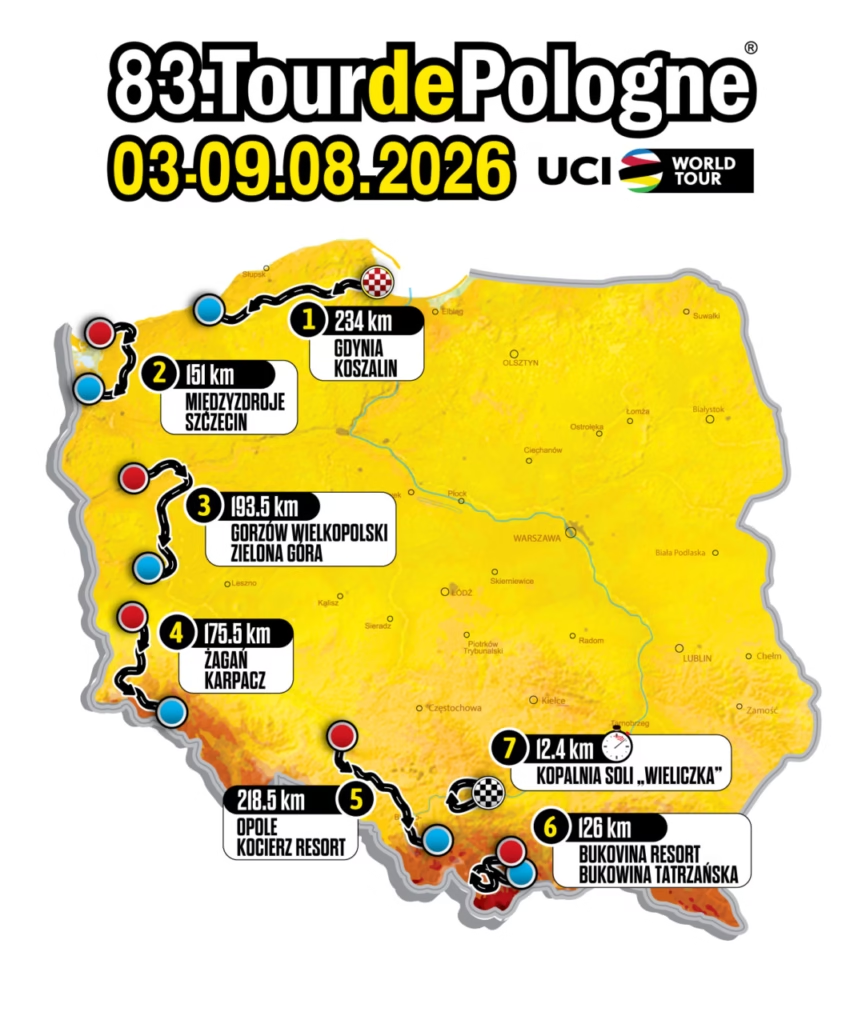
The Men’s Tour de Pologne 2026 takes place from Monday 3 August to Sunday 9 August.
| Date | Stage | Route | Distance |
|---|---|---|---|
| Monday 3 August | Stage 1 | Gdynia to Koszalin | 234km |
| Tuesday 4 August | Stage 2 | Międzyzdroje to Szczecin | 151km |
| Wednesday 5 August | Stage 3 | Gorzów Wielkopolski to Zielona Góra | 193.5km |
| Thursday 6 August | Stage 4 | Żagań to Karpacz | 175.5km |
| Friday 7 August | Stage 5 | Opole to Kocierz Resort | 218.5km |
| Saturday 8 August | Stage 6 | Bukovina Resort to Bukowina Tatrzańska | 126km |
| Sunday 9 August | Stage 7 | Wieliczka Salt Mine individual time trial | 12.4km |
The route starts in the north, moves along the coast, crosses towards western and south-western Poland, then reaches the harder climbing terrain before the final time trial.
Poland also hosts a growing women’s race under the same broader Tour de Pologne banner. For that side of the calendar, see our beginner’s guide to Tour de Pologne Women 2026 and the Tour de Pologne Women 2026 full route guide.
What kind of race is the Tour de Pologne?
The Tour de Pologne is usually a race for all-rounders rather than pure climbers. The mountains are important, but this is not a Grand Tour where riders face repeated high-altitude summit finishes over three weeks.
Instead, Poland tends to reward riders who can do several things well. They need to survive long stages, handle hilly finales, climb short and sharp gradients, position well in technical run-ins and time trial strongly enough to protect or gain time.
That is why the race can suit different types of rider depending on the route. A punchy climber can win if the race is decided on steep uphill finishes. A strong time triallist can win if he limits damage in the hills and then takes time on the final day. A classics-style rider can be dangerous if the gaps stay small and bonus seconds matter.
The 2026 route leans towards a complete rider. Karpacz, Kocierz Resort and Bukowina Tatrzańska should test the climbers, while the Wieliczka time trial gives specialists against the clock a final chance.
Stage-by-stage guide to Tour de Pologne 2026
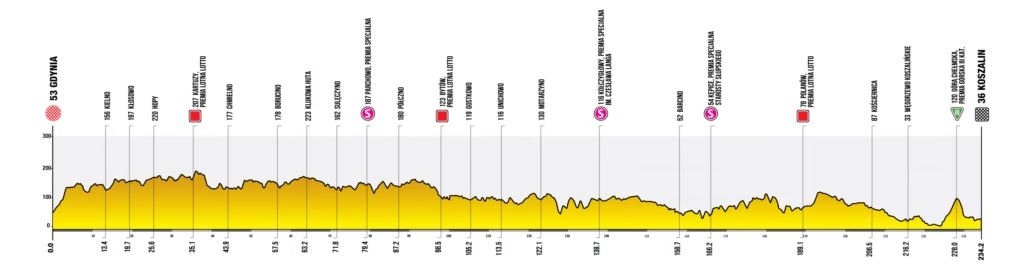
Stage 1: Gdynia to Koszalin, 234km
The race starts with a very long opening stage from Gdynia to Koszalin. At 234km, this is not a gentle first day. The route uses hilly roads in Pomerania and Kashubia, with more than 2,000 metres of elevation gain.
The first stage also includes sprint primes, special primes and a third-category mountain prime on Góra Chełmska, only around 6km from the finish. That late climb could make the finale harder than a standard bunch sprint.
For beginners, the key point is this: stage 1 may look like an opening road stage, but the length and late climb mean it could already remove some pure sprinters from contention. A reduced sprint, late attack or strong all-rounder win would not be a surprise.
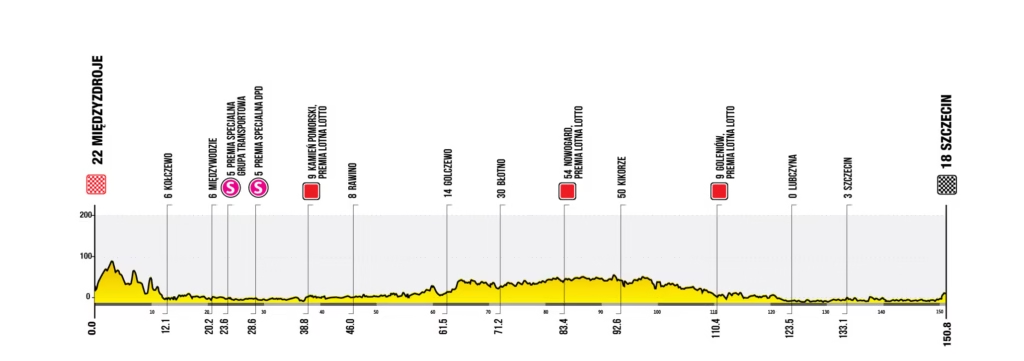
Stage 2: Międzyzdroje to Szczecin, 151km
Stage 2 is the clearest early opportunity for sprinters. The route runs from the seaside town of Międzyzdroje to Szczecin and is just over 150km, with no categorised mountain primes.
That makes this the most straightforward fast-finish day of the opening block. There are sprint primes along the route, and the finish in Szczecin should interest the fastest riders in the peloton.
For new fans, this is the day to watch the lead-out trains. Sprint teams will try to keep the breakaway close, bring everything back in the final kilometres and deliver their fast finishers into position. Our guide to the best lead-out riders at the Tour de France 2026 explains the same basic sprint mechanics that apply in shorter stage races like the Tour de Pologne.
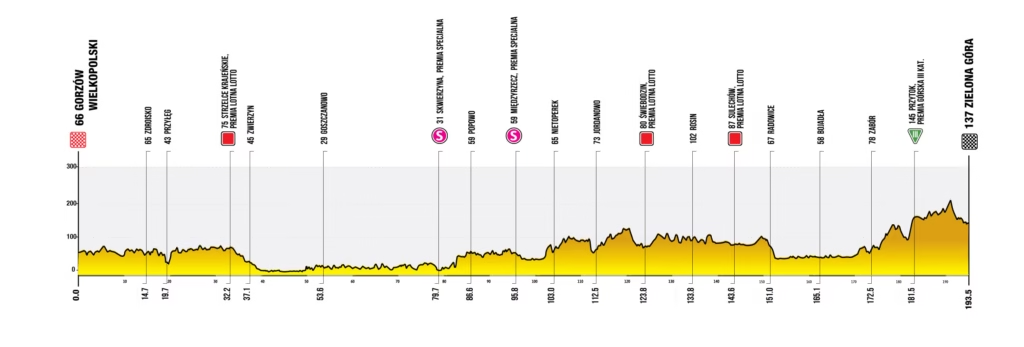
Stage 3: Gorzów Wielkopolski to Zielona Góra, 193.5km
Stage 3 takes the race through Lubuskie Voivodeship, linking Gorzów Wielkopolski with Zielona Góra. It is a hilly day with sprint primes, special primes and a third-category mountain prime in Przytok around 12km before the finish.
This is the sort of stage that can be awkward for everyone. It may be too hard for some pure sprinters, but not hard enough for the GC climbers to fully commit. That creates room for late attacks, strong puncheurs and teams willing to take risks.
The finish in Zielona Góra could be one of the first days where the race starts to show who is sharp and who is just riding into form.
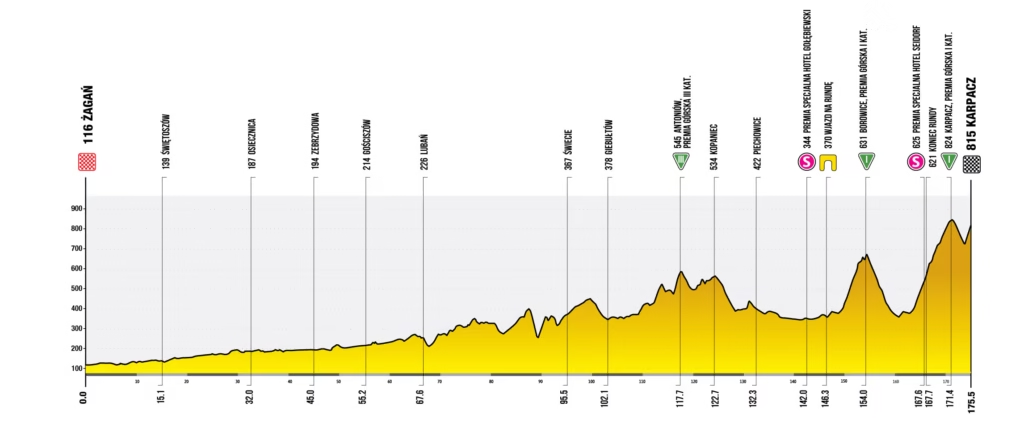
Stage 4: Żagań to Karpacz, 175.5km
Stage 4 is the first clearly mountainous challenge of the 2026 Tour de Pologne. The riders start in Żagań and finish in Karpacz, with the route gradually rising through Lower Silesia.
There are three mountain primes on the route, including Karpacz itself just 4km before the finish. The final climb to Orlinek is one of the Tour de Pologne’s best-known uphill finishes and has produced important winners before.
For the general classification, this is a key day. Riders who want to win the race cannot afford to be badly positioned before the final climb. The gaps may be small, but on a one-week race, small gaps matter.
Expect climbers, punchy GC riders and strong teams to come forward here.
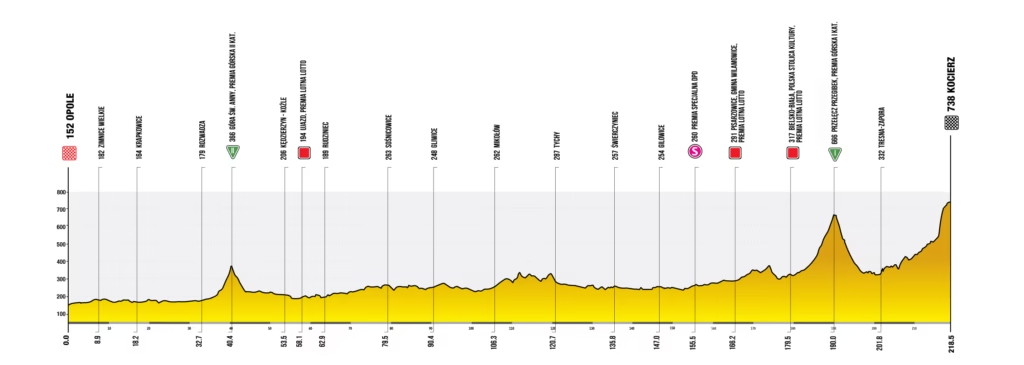
Stage 5: Opole to Kocierz Resort, 218.5km
Stage 5 is another long day, this time from Opole to Kocierz Resort. At 218.5km, it adds endurance to the climbing test.
The route heads towards the Beskids and includes mountain primes on Mount St Anne and the Przegibek Pass before a climbing finish at Kocierz Resort. The organisers note that the race has passed through this climb before, but 2026 will be the first time it hosts a stage finish.
This is a difficult stage to read. The distance will drain the legs, the climbs will weaken teams and the uphill finish should favour riders who can still produce a sharp effort after more than 200km.
GC riders will need to be alert. A bad day here could be more damaging than a bad day on a shorter mountain stage.
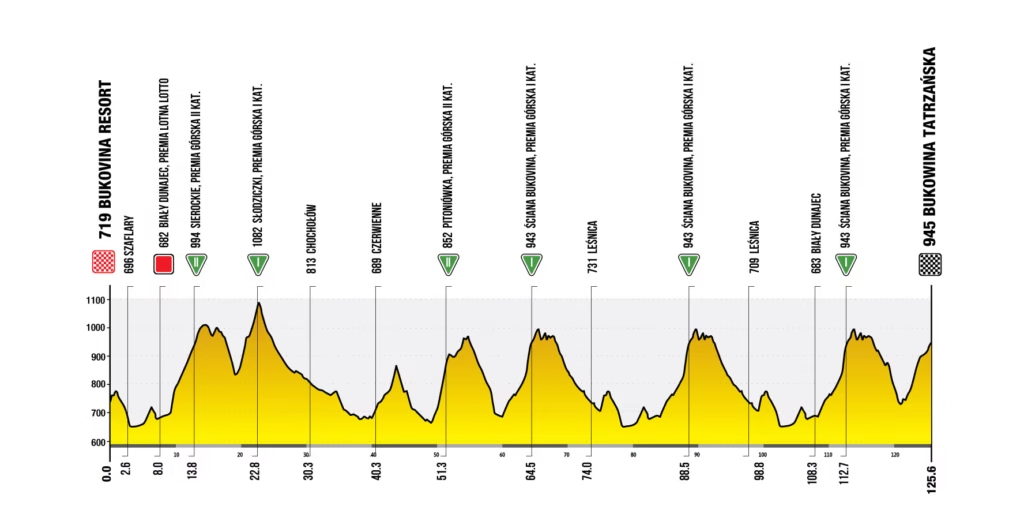
Stage 6: Bukovina Resort to Bukowina Tatrzańska, 126km
Stage 6 is the queen stage of the 2026 Tour de Pologne. It is only 126km, but the distance is misleading. This is a concentrated climbing stage around Bukovina Resort and Bukowina Tatrzańska.
The stage includes mountain primes in Sierockie, Słodyczki and Pitoniówka, then repeated ascents of the BUKOVINA Wall in Gliczarów. The organisers describe this climb as a first-category mountain prime, and the riders will tackle it three times before the uphill finish in Bukowina Tatrzańska.
This is likely to be the most important road stage for the overall classification. Short mountain stages can be explosive because there is less time to wait. Teams may attack early, the pace can be high from the start, and riders who are struggling may be exposed quickly.
If the GC is close before stage 6, this is where someone can turn the race upside down.
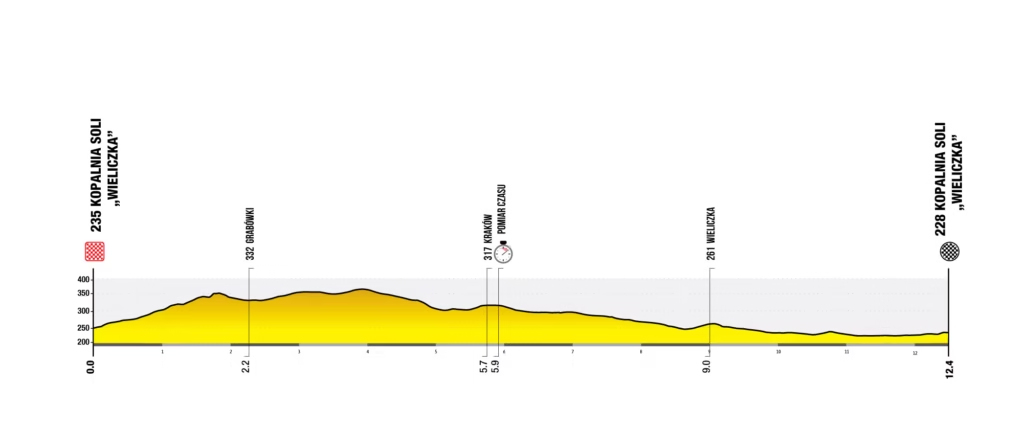
Stage 7: Wieliczka Salt Mine individual time trial, 12.4km
The final stage is a 12.4km individual time trial at the Wieliczka Salt Mine. It starts with a climb of slightly over 1.5km, then moves onto flatter and slightly descending terrain before returning to the finish.
That makes it short, technical and potentially decisive. A 12.4km time trial will not create the same gaps as a long Grand Tour test, but in the Tour de Pologne, the overall standings can still be close enough for seconds to decide everything.
The same final stage format decided the 2025 race, when Brandon McNulty won the time trial and the overall title. In 2026, it could again be the day where the yellow jersey changes hands.
For new riders and newer fans, our guide to what to expect at a club 10-mile time trial gives a simple explanation of how racing against the clock works. For elite context, see our guide to the best time triallists at the Tour de France 2026.
Which stages will decide the general classification?
The GC should be shaped by four stages.
| Stage | Why it matters |
|---|---|
| Stage 4 to Karpacz | First major uphill finish and first real GC test |
| Stage 5 to Kocierz Resort | Long, wearing stage with a climbing finish |
| Stage 6 to Bukowina Tatrzańska | Queen stage and likely biggest mountain showdown |
| Stage 7 Wieliczka ITT | Final chance for time triallists and close GC riders |
Stages 1 and 3 could also matter if the race splits late or bonus seconds become important. However, the main overall battle should come from the combination of uphill finishes and the final time trial.
A rider who wants to win the Tour de Pologne needs to avoid bad days early, climb well from stage 4 onwards, survive the queen stage and then finish the job against the clock.
For beginners, the general classification is simply the race for the lowest total time across all stages. Our explainer on how the Tour de France general classification works uses the Tour as its example, but the basic principle is the same in every stage race.
Who does the route suit?
The route suits a rider who can climb short, steep roads and time trial well over a short distance.
A pure sprinter will have chances, especially on stage 2, but is unlikely to win the overall. A pure climber can gain time in Karpacz, Kocierz and Bukowina Tatrzańska, but may be vulnerable in the final time trial. A pure time triallist may enjoy stage 7, but needs to survive the repeated climbing before then.
The ideal winner is a punchy stage racer: someone light enough for the climbs, strong enough for a short time trial and calm enough to stay out of trouble during the first half of the race.
Young GC riders can also thrive here. The Tour de Pologne often gives developing leaders a chance to race for themselves rather than working as domestiques in a Grand Tour.
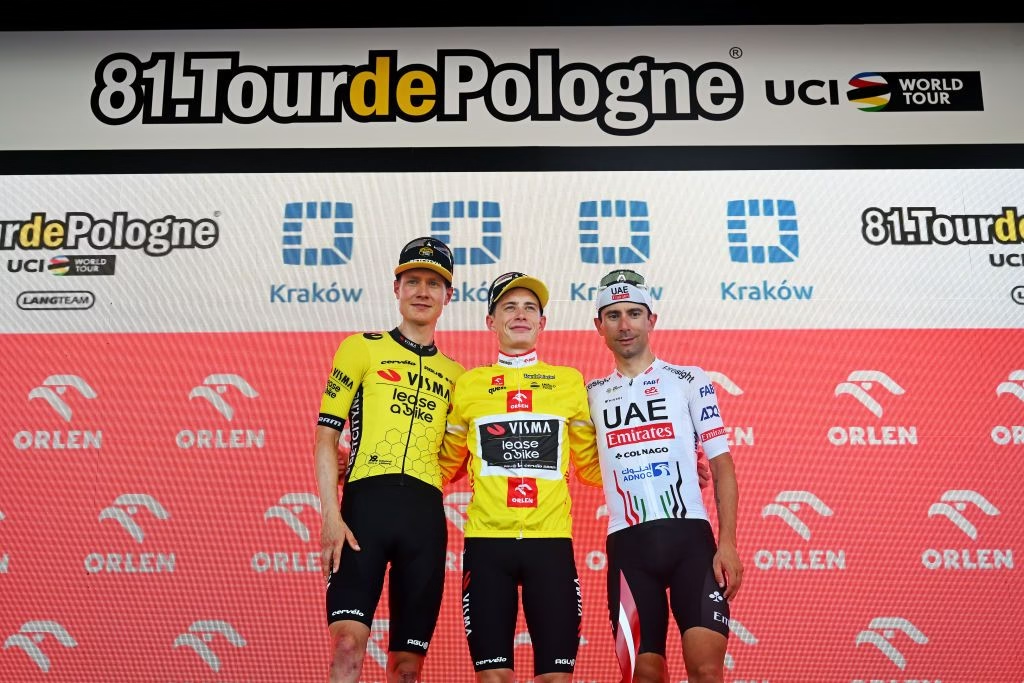
What jerseys are there?
The Tour de Pologne has several classifications, and new viewers should not only follow the overall leader.
| Classification | What it means |
|---|---|
| General classification | The overall race lead, based on cumulative time |
| Points classification | Rewards consistent finishing and sprint points |
| Mountains classification | Rewards points over categorised climbs |
| Most active rider | Rewards aggressive racing and intermediate activity |
| Best Polish rider | Tracks the highest-placed Polish rider |
| Team classification | Based on team performances across the race |
The general classification is the main race, but the other jerseys help shape the daily tactics. A breakaway rider might not threaten the overall lead, but he may still target mountains points, sprint primes or the most active rider classification.
The structure is similar to other stage races, where the main GC battle sits alongside points, mountains and team classifications. Our beginner’s guide to Men’s Tour de France 2026 explains those wider stage-race basics in more detail.
How do bonus seconds work?
Stage races often use bonus seconds at finishes and intermediate points, although the exact 2026 bonus structure should be checked against the race regulations once published.
The basic idea is simple. If bonus seconds are available, riders can gain small time advantages without dropping their rivals on the road. A rider who wins a stage might gain time through the bonus, while another who finishes second or third may also collect a few seconds.
In a race like the Tour de Pologne, this can be very important. The final overall gaps are often small, and the race includes several stages where reduced groups could sprint for the win. Bonus seconds can turn a stage victory into a GC move.
For beginners, the rule is straightforward: do not only watch who crosses the line first. Watch which GC riders finish in the top three, because those small bonuses can matter later. For a fuller explanation, see our guide to how bonus seconds work at the Tour de France.
 Photo Credit: Getty
How to watch the Tour de Pologne 2026
The official race information lists coverage on TVP, Eurosport and HBO Max. That should make the race accessible across Poland and to a wider international audience.
For UK viewers, Eurosport and HBO Max are likely to be the main routes, depending on final broadcast scheduling. Daily timings can vary by stage, so the best approach is to check the broadcast listings close to the race.
Because the Tour de Pologne is a one-week race, highlights can also be useful. If you cannot watch every day, the stages to prioritise are stage 4 to Karpacz, stage 5 to Kocierz Resort, stage 6 to Bukowina Tatrzańska and the stage 7 time trial.
Why stage 6 is the queen stage
The queen stage is usually the hardest or most important mountain stage of a race. In 2026, that should be stage 6 from Bukovina Resort to Bukowina Tatrzańska.
It is short, steep and repetitive. The BUKOVINA Wall in Gliczarów appears three times, and the finish is also uphill. This means there is very little room for hiding.
On long mountain stages, teams sometimes wait until the final climb. On shorter mountain stages, the pressure can come earlier because riders know there is less distance to manage. If one team rides hard from the start, the whole race can become unstable.
This is why stage 6 could decide the Tour de Pologne before the time trial. A strong climber could gain enough time to defend in Wieliczka. A time triallist who struggles here could lose the race before reaching the final day.
Why the final time trial matters
The final time trial is only 12.4km, but it matters because of where it sits in the race.
By stage 7, the riders will already have completed six road stages, including the hard mountain stages to Karpacz, Kocierz Resort and Bukowina Tatrzańska. Fatigue will be high, and the GC gaps may be tight.
A short time trial rewards power, pacing and clean technique. The opening climb means riders cannot simply treat it as a flat speed test. They need to judge the effort, avoid going too deep too early and still have speed for the flatter and descending sections.
For fans, this is one of the easiest stages to understand. Riders start one by one. The clock decides everything. If the GC is close, each split time becomes part of the drama.
What makes the Tour de Pologne different?
The Tour de Pologne has its own rhythm. It is not a miniature Grand Tour and it is not just a sprinters’ race.
Its stages often mix long distances, rolling roads, technical finishes and short climbs. The mountains are hard enough to split the race, but not always long enough to create huge gaps. That makes tactics important. Bonus seconds, positioning, team support and time-trial strength can all decide the final result.
It is also a race where the home setting matters. Polish riders often have extra motivation, Polish fans bring strong roadside support, and the race regularly uses symbolic locations, from major cities to mountain resorts and the Wieliczka Salt Mine.
The 2026 route makes that identity clear. It begins on the coast, moves through Lubuskie and Lower Silesia, reaches the Beskids and Tatras, then finishes beside one of Poland’s best-known landmarks.
The women’s race has its own separate history and modern rebuild, covered in our feature on the history of Tour de Pologne Women.
Beginner’s guide: what to watch each day
| Stage | Best thing to watch |
|---|---|
| Stage 1 | Whether the long distance and late climb stop a normal sprint |
| Stage 2 | The sprint teams and lead-out trains in Szczecin |
| Stage 3 | Late attacks before Zielona Góra |
| Stage 4 | First GC test on the climb to Karpacz |
| Stage 5 | Endurance and climbing after more than 200km |
| Stage 6 | Queen stage attacks around Bukowina Tatrzańska |
| Stage 7 | Final GC changes in the Wieliczka time trial |
-
 Photo Credit: Billy Ceusters / Getty Images


FAQs: Men’s Tour de Pologne 2026
When is the Men’s Tour de Pologne 2026?
The Men’s Tour de Pologne 2026 takes place from Monday 3 August to Sunday 9 August.
How many stages are there?
There are seven stages in the 2026 Tour de Pologne.
Where does the race start?
The race starts in Gdynia, on Poland’s Baltic coast.
Where does the race finish?
The race finishes with a 12.4km individual time trial at the Wieliczka Salt Mine.
Is the Tour de Pologne a WorldTour race?
Yes. The Men’s Tour de Pologne is part of the UCI WorldTour.
What is the queen stage of the 2026 Tour de Pologne?
Stage 6 from Bukovina Resort to Bukowina Tatrzańska is the queen stage. It includes repeated climbs of the BUKOVINA Wall and an uphill finish.
Which stage is best for sprinters?
Stage 2 from Międzyzdroje to Szczecin looks like the clearest sprint opportunity because it is flat and has no categorised mountain primes.
Which stage is the time trial?
Stage 7 is a 12.4km individual time trial at the Wieliczka Salt Mine.
Who won the 2025 Tour de Pologne?
Brandon McNulty won the 2025 Tour de Pologne after winning the final time trial at the Wieliczka Salt Mine.
Final word
The Men’s Tour de Pologne 2026 is a compact stage race with plenty for new fans to follow.
It starts with a long coastal opener, gives the sprinters an early chance in Szczecin, moves through rolling and hilly terrain, then turns into a GC race through Karpacz, Kocierz Resort, Bukowina Tatrzańska and the final Wieliczka time trial.
The winner will need more than one strength. He will need endurance, climbing legs, positioning, recovery and a strong final ride against the clock.
For beginners, that makes the race ideal. In one week, the Tour de Pologne shows almost every part of stage racing: breakaways, sprints, climbs, jerseys, bonus seconds, GC pressure and a final time-trial showdown.

