
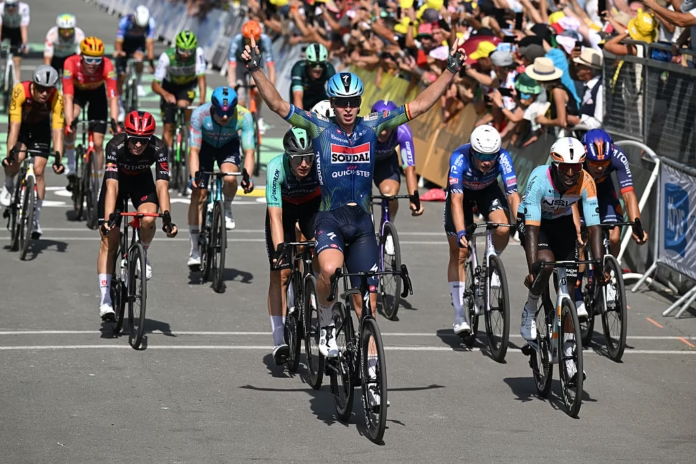
The Tour de France leaves the Massif Central behind on stage 11, replacing the steep roads around Le Lioran with one of the clearest sprint opportunities of the race.
The 161.3km route from Vichy to Nevers is officially classified as flat and contains around 1,400 metres of climbing. Two short category-four ascents interrupt the journey north, but neither should prevent the fast men from reaching the finish.
Tadej Pogačar strengthened his control of the race by attacking on the Col de Pertus and winning stage 10 at Le Lioran. He now leads Jonas Vingegaard by 3:36, giving the general classification riders every reason to seek a quieter afternoon.
For the sprinters, stage 11 is anything but quiet.
Tim Merlier arrives after consecutive victories in Bordeaux and Bergerac. Olav Kooij has already won in Pau, Biniam Girmay continues to score consistently and Jasper Philipsen reaches another suitable finish still waiting for his first stage victory of the Tour.
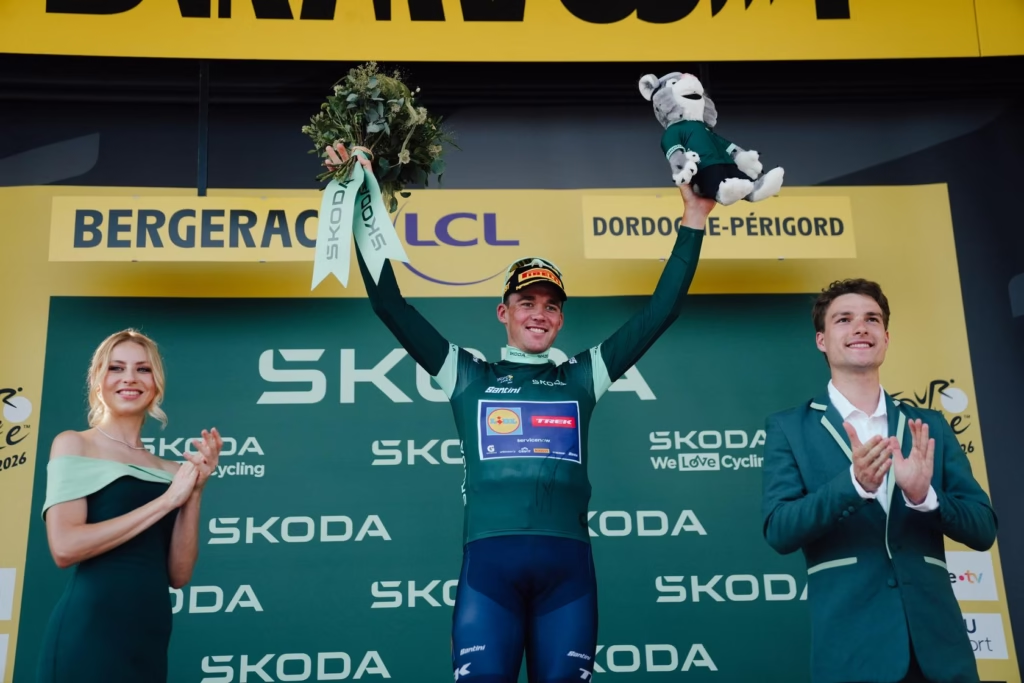
Mads Pedersen also has a green jersey to protect. He collected another 25 points at the intermediate sprint on stage 10, extending an advantage built through his ability to score on days when the pure sprinters are dropped.
The profile suggests a routine bunch finish. Heat, fatigue and the fight for position in Nevers should ensure it is not quite that simple.
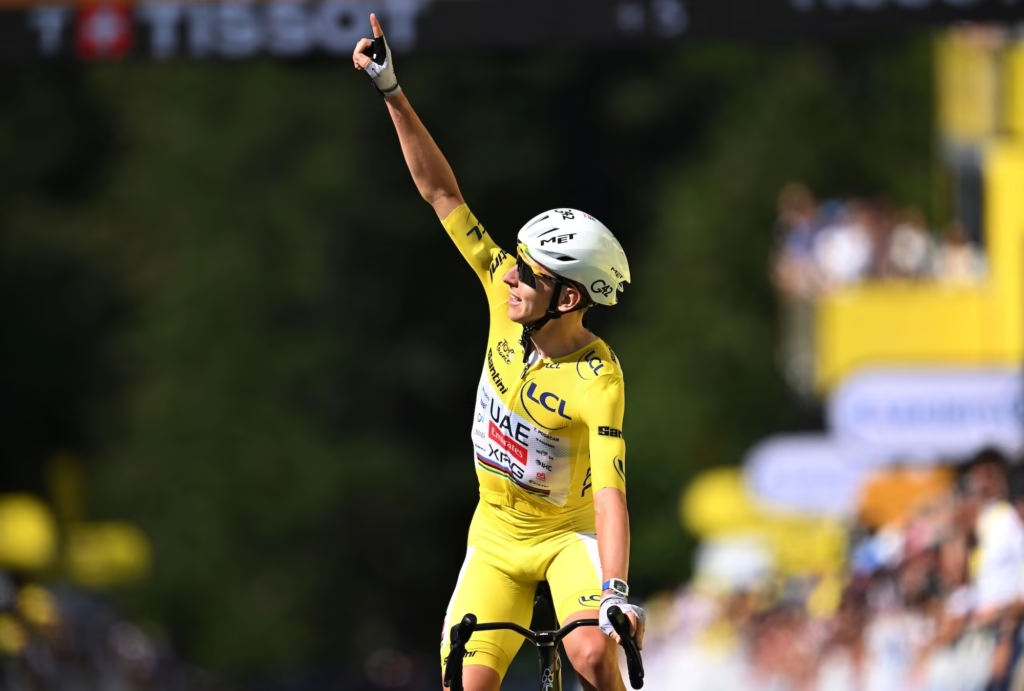
Tour de France 2026 stage 11 details
| Detail | Information |
|---|---|
| Date | Wednesday 15 July 2026 |
| Start | Vichy |
| Finish | Nevers |
| Distance | 161.3km |
| Stage type | Flat |
| Elevation gain | Around 1,400 metres |
| Categorised climbs | Two category-four climbs |
| Intermediate sprint | Saint-Pourçain-sur-Sioule after 27.9km |
| Neutralised start | 13:50 CEST, 12:50 BST |
| Expected finish | 17:31-17:50 CEST, 16:31-16:50 BST |
| Main favourites | Tim Merlier, Olav Kooij, Biniam Girmay, Jasper Philipsen |
The Tour de France 2026 full route guide identifies stages 11 and 12 as an important two-day block for the sprinters before the race turns back towards the hills, Vosges and Jura.
Stage 11 in one sentence
Stage 11 is a short, mostly flat transition from Vichy to Nevers in which an early battle for green jersey points should give way to a high-speed bunch sprint.
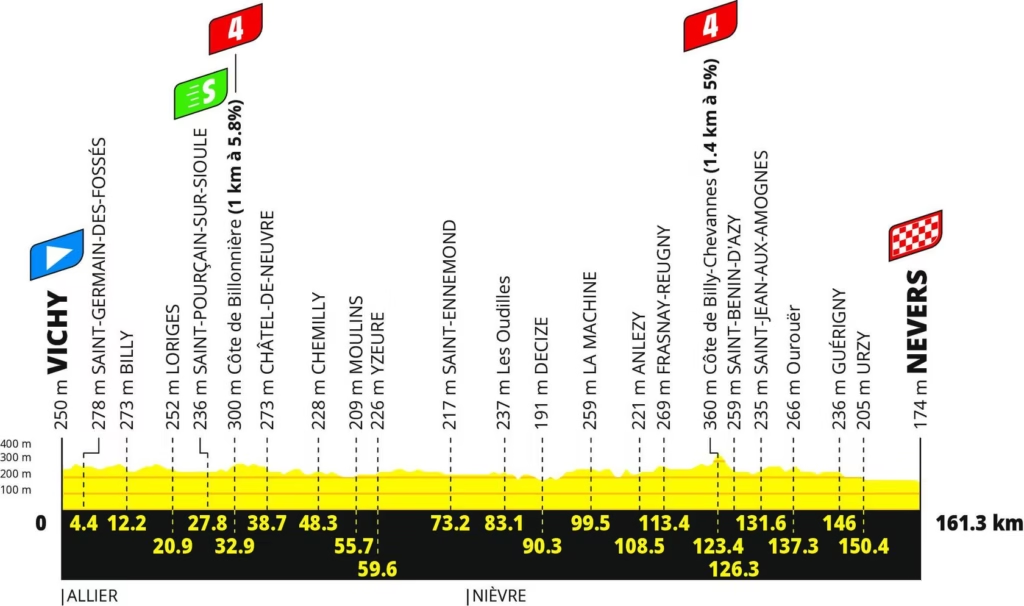
Tour de France stage 11 route
The stage begins in Vichy and initially follows the Allier valley northwards.
The opening section should be fast because the intermediate sprint arrives after only 27.9km in Saint-Pourçain-sur-Sioule. Teams interested in the points classification will need to organise immediately, while riders hoping to enter the breakaway may attempt to use that early competition to escape.
Only five kilometres later, the peloton reaches the Côte de Billonnière. It is the first of two category-four climbs and measures 1.1km at 5.8%.
The gradient is not severe enough to trouble the sprinters. It may still disrupt the opening race if the breakaway has not settled, particularly after the green jersey contenders have completed a full sprint effort.
The route then continues towards Moulins before turning towards Decize and the Loire. This long middle section contains no major obstacle and should allow the sprint teams to establish control.
The second categorised climb arrives after 123.4km. The Côte de Billy-Chevannes is 1.5km at an average of 5%, with its summit 37.9km from the finish.
That is too far from Nevers to provide a realistic launchpad for a late attack. Its main effect should be to increase fatigue and reduce the number of domestiques available to some sprint teams.
From there, the race passes through Saint-Benin-d’Azy, Saint-Jean-aux-Amognes, Guérigny and Urzy before approaching Nevers from the north-east.
Stage 11 ranked among the strongest opportunities in the Tour de France 2026 sprint stages guide because it is short, relatively easy to control and lacks a climb close enough to the finish to change the likely winner type.
Tour de France 2026 stage 11 climbs
Côte de Billonnière
- Distance: 1.1km
- Average gradient: 5.8%
- Category: Four
- Summit: After 32.9km
- Distance to finish: 128.4km
The Côte de Billonnière comes immediately after the intermediate sprint and could become more animated than its modest statistics suggest.
Green jersey contenders may begin the climb after a full sprint effort, while breakaway riders attempt to take advantage of the sudden reduction in speed. A counterattack over the summit is possible if the original escape has not been allowed to establish itself.
Once the race reaches the flatter roads beyond the climb, the advantage should return to the peloton. There is too much distance remaining for Billonnière to influence the stage result directly.
Côte de Billy-Chevannes
- Distance: 1.5km
- Average gradient: 5%
- Category: Four
- Summit: After 123.4km
- Distance to finish: 37.9km
Billy-Chevannes is the final categorised climb, but it should not remove any of the leading sprinters unless the stage has been raced exceptionally hard.
The ascent is short, relatively shallow and followed by enough road for dropped riders to return. A team would need to set a severe pace and continue driving after the summit for it to become genuinely selective.
That is unlikely when so many squads have an interest in a bunch sprint.
The more realistic effect is gradual attrition. Lead-out riders who suffered at Le Lioran may lose contact, forcing their sprinter to improvise during the final approach.
The early intermediate sprint will shape the opening hour
The intermediate sprint at Saint-Pourçain-sur-Sioule arrives unusually early, after only 27.9km.
That placement should make the opening phase more aggressive because the points classification remains one of the most competitive races at the Tour.
Pedersen began the rest day with a 45-point advantage over Girmay and a 55-point lead over Merlier. He then strengthened his position on stage 10 by winning the intermediate sprint before the mountain terrain removed the pure sprinters.
That is the advantage Pedersen holds over his rivals. He can score heavily on hilly stages, reduced-group finishes and intermediate sprints while still collecting useful points in conventional bunch finishes.
The wider case for him taking the jersey to Paris is explored in whether Mads Pedersen can win green at the Tour de France 2026.
Lidl-Trek should again target the intermediate sprint on stage 11. The difference is that Merlier, Girmay, Philipsen and Kooij should all be present this time.
Girmay has every reason to contest both sprints. His consistency has kept him close enough to remain a threat, even without a stage victory.
Merlier may be more selective. The finish offers 70 points, making Nevers considerably more important than spending several riders to contest an early sprint.
The intermediate could also help the breakaway. Once the points have been awarded, the peloton may briefly hesitate, giving attackers a chance to create separation on the Côte de Billonnière.
Can the breakaway survive?
The breakaway’s chances are limited.
Stage 11 is short, relatively flat and followed by another likely sprint opportunity on stage 12. Teams that have spent much of the Tour waiting for this terrain cannot afford to let the stage disappear.
A small move of two to four riders is the most likely outcome. The peloton may allow it a few minutes before gradually reducing the gap through the middle of the stage.
The presence of Merlier can complicate the chase. Rival teams know that helping to bring the break back may simply deliver the fastest rider in the race into another winning position.
If Soudal Quick-Step refuses to carry most of the workload, hesitation could allow the escape a larger advantage than expected.
Even then, the numbers favour the peloton.
Decathlon CMA CGM will ride for Kooij, NSN Cycling Team has Girmay and Alpecin-Premier Tech needs a result from Philipsen. Lidl-Trek has both stage and green jersey interests through Pedersen, while XDS Astana Team, Uno-X Mobility, Jayco AlUla and Cofidis all have realistic top-five options.
With so many teams able to contribute one rider to the chase, the escape should remain under control.
The route sits near the bottom of the Tour de France 2026 breakaway stages ranking because there is little difficult terrain on which an escape can prevent the peloton from organising.
A breakaway victory would require a collective tactical mistake, worsening weather or a larger and stronger move than the sprint teams are prepared to allow.
 Photo Credit: Getty
Why this is not a recovery day for the sprinters
The profile may look gentle, but stage 11 follows immediately after a demanding mountain day at Le Lioran.
The sprinters and their lead-out riders still had to survive 3,800 metres of climbing on stage 10. Many finished well behind Pogačar and the general classification group, using most of the afternoon simply to remain inside the time limit.
A flat stage does not erase that fatigue.
Glycogen stores may not be fully restored, muscles remain damaged and the heat has created an additional recovery burden. Some riders will also have slept poorly after a late transfer, treatment or difficulty cooling down.
The effects often become visible in the final hour. A domestique who would normally lead for two kilometres may only manage one. A sprinter who prefers a structured train may suddenly find himself isolated and forced to use rival wheels.
Our explainer on why Tour de France sprinters struggle the day after a mountain stage covers why apparently easy transition days can expose fatigue left by the previous afternoon.
Merlier has already shown that he can win without a perfect formation. The loss of Bert Van Lerberghe weakened his established lead-out, but he responded by navigating Bordeaux and Bergerac with patience before producing the strongest acceleration.
Other teams may have more riders but less clarity. The middle of a Grand Tour is often when sprint trains become disorganised because riders are tired, injured or working in altered roles.
That increases the chance of a messy finish even when the route itself is straightforward.
The final approach to Nevers
The last 15km begin around Guérigny before the race continues through Urzy and Saint-Martin-d’Heuille.
The roads are mostly flat, allowing the pace to rise beyond 60km/h as teams begin moving their sprinters forward. There is no late climb capable of changing the type of rider who can win.
The race approaches Nevers through a sequence of bends rather than one continuous straight road. That should encourage teams to move early because losing position before a corner can cost several places at once.
The final profile is essentially level. There is no meaningful uphill drag that would move the advantage towards Pedersen or Girmay, and no descent that would make a long launch particularly difficult to control.
The main danger is congestion.
Sprint teams will want control of the same road space that the GC squads need to protect Pogačar, Vingegaard, Remco Evenepoel and the other overall contenders. That can place 12 or more teams near the front before the three-kilometre mark.
The decisive positioning battle should begin well outside Nevers. Any sprinter sitting beyond the first 20 riders with three kilometres remaining will have a difficult task finding a clean route forward.
Could the wind produce echelons?
The expected wind does not appear strong enough to make echelons the main stage narrative.
The route also changes direction several times, preventing one sustained crosswind section from defining the entire afternoon.
There are exposed agricultural roads where teams may still increase the pace if the conditions strengthen. GC squads will remain attentive because even the threat of a split can force leaders towards the front.
That nervousness can itself create problems.
A stage does not need to produce a successful echelon for the wind to influence it. The possibility is enough to increase the speed, stretch the peloton and make crashes more likely.
The more important weather concern may again be heat. Another hot afternoon will place greater pressure on cooling and hydration, particularly for riders still recovering from Le Lioran.
What stage 11 means for the yellow jersey contenders
The general classification riders should finish together, but that does not make the stage irrelevant to them.
Their main objective is to avoid crashes and splits.
The final 20km will become increasingly nervous as sprint teams occupy the front and GC squads attempt to place their leaders in the same positions. That creates congestion between teams pursuing entirely different objectives.
Pogačar begins the day 3:36 ahead of Vingegaard after extending his lead at Le Lioran. Evenepoel sits third at 4:06, with Juan Ayuso and Paul Seixas completing a changed top five.
None should have any interest in attacking on stage 11. They still cannot drift towards the rear and assume the peloton will remain intact.
UAE Team Emirates-XRG, Visma-Lease a Bike, Red Bull-Bora-Hansgrohe and the other GC teams will move forward before the sprint formations take complete control. Once the protected closing kilometres are reached, they can begin reducing their involvement.
For Pogačar, it should be a day of spending as little energy as possible. The Vosges, Jura, individual time trial and Alps matter far more than anything likely to happen between Vichy and Nevers.
The danger is not losing time through physical weakness. It is losing it through a crash, mechanical problem or badly timed split.
Stage 11 favourites
Tim Merlier
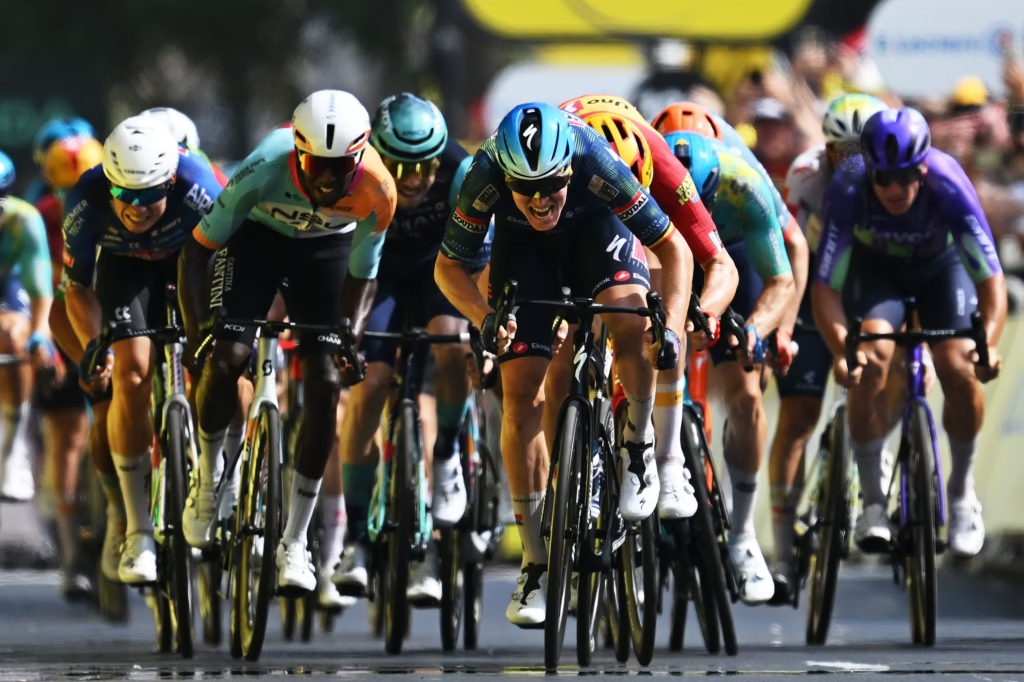
Tim Merlier is the clear favourite after winning consecutive stages in Bordeaux and Bergerac.
Both victories demonstrated his ability to remain calm when the sprint became disorganised. He did not require a dominant train or a perfectly clear route to the line. He found space, waited and then produced a finishing speed his rivals could not match.
His back-to-back victory in Bergerac confirmed that Bordeaux was not a one-off result.
Nevers should suit him. The final five kilometres are flat, and the high-speed approach removes the short climbs that could move the balance towards Girmay or Pedersen.
The main question is whether Soudal Quick-Step can control enough of the stage without exhausting its reduced lead-out. Rival teams will be reluctant to do all the chasing for the strongest sprinter in the race.
Merlier may again need to use another team’s train during the final kilometre. On current form, that is not a significant weakness.
Olav Kooij
Olav Kooij won the first bunch sprint of the Tour in Pau and has remained one of the most credible alternatives to Merlier.
His Decathlon CMA CGM team offers useful support, but Kooij has also shown that he can accelerate from a crowded group rather than requiring a long and dominant lead-out.
The flat finish suits him. He needs to begin his sprint closer to Merlier than he did in Bergerac because allowing the Belgian a clear acceleration makes the task considerably harder.
Kooij’s greatest strength may be consistency. He has already demonstrated enough speed to win and should remain competitive even if the final kilometre becomes chaotic.
The significance of his breakthrough victory and what it changed for Decathlon is covered in our analysis of whether Olav Kooij could follow his Pau win with further Tour success.
 Photo Credit: Getty
Biniam Girmay
Biniam Girmay has been one of the most reliable sprinters of the Tour without yet taking a stage.
He finished third in Bordeaux and second in Bergerac, improving while Merlier completed his double. He also continued scoring on stages 9 and 10, maintaining pressure on Pedersen in the points classification.
Girmay is particularly effective when a stage contains enough difficulty to remove some pure sprinters, but his recent results show that he can also compete on flatter finishes.
NSN Cycling Team has two objectives. It needs to help Girmay score at Saint-Pourçain-sur-Sioule while retaining enough support for Nevers.
He may not possess Merlier’s outright final acceleration, but his positioning and consistency make him extremely difficult to leave out of the leading contenders.
Jasper Philipsen
Jasper Philipsen reaches stage 11 under increasing pressure.
Alpecin-Premier Tech has repeatedly placed him in strong positions, but the expected victory has not followed. He faded to fifth in Bordeaux after being delivered early and finished fourth in Bergerac.
Philipsen remains one of the fastest riders at the Tour. Mathieu van der Poel’s stage 9 victory has also removed some of the wider pressure from the team, allowing Alpecin to concentrate on improving its sprint execution.
The concern is that the same problems have repeated. Philipsen has either been released too early, boxed in or unable to match the final acceleration of his rivals.
Our analysis of what is going wrong for Jasper Philipsen looks at why the problem appears to be execution rather than a complete absence of speed.
Nevers offers another clean opportunity. A defeat would not end his Tour, but the number of suitable stages is gradually shrinking.
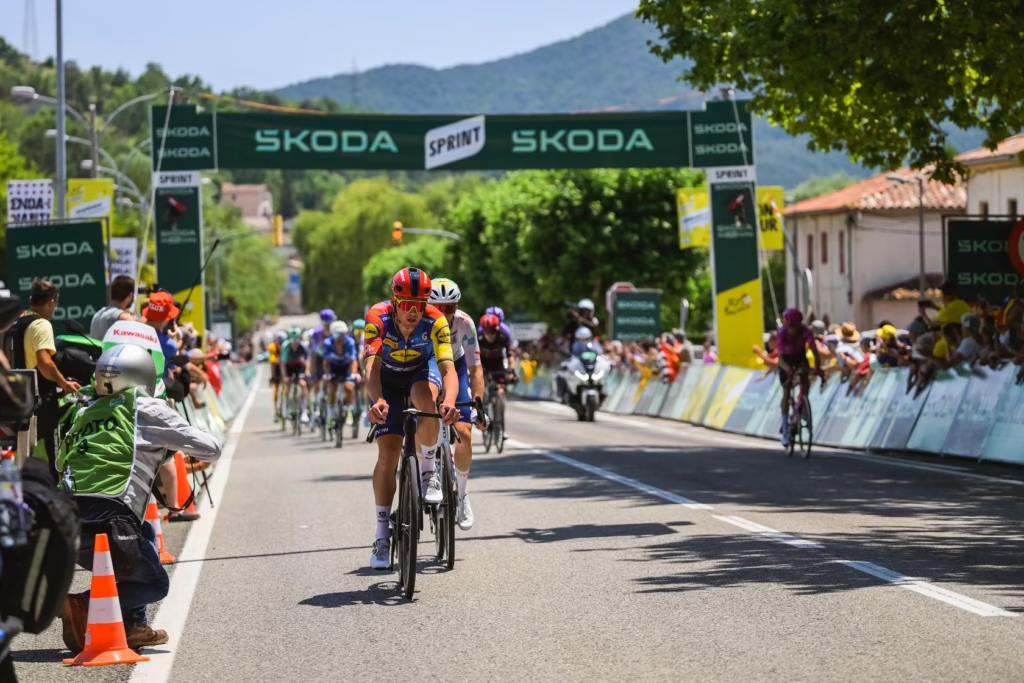 Photo Credit: A.S.O./Charly López
Mads Pedersen
Mads Pedersen may be the most important rider across the entire stage rather than the most likely winner in Nevers.
Lidl-Trek will target the intermediate sprint because every point strengthens his hold on green. Pedersen can then contest the finish, where another top-five result may be more useful to his classification campaign than risking everything for the stage victory.
The flat final does not suit him as well as a harder, more selective stage. Merlier, Kooij and Philipsen possess greater maximum speed when the entire peloton reaches the line.
Pedersen’s strength is durability. After the mountain stage and more than a week of intense heat, he may arrive fresher than sprinters who have spent much of the Tour fighting the time limit.
He also has the freedom to begin his sprint earlier. A long acceleration could disrupt the timing of the pure fast men, particularly if Lidl-Trek controls the approach.
Max Kanter
Max Kanter finished second behind Kooij in Pau and remains prominent in the points classification.
XDS Astana Team produced one of the strongest lead-outs on stage 5, but Kanter has not yet converted that organisation into a victory. Nevers provides terrain on which the team can rebuild the same formation.
He is unlikely to beat Merlier through raw speed alone. His best route is a perfectly timed lead-out that forces the favourites to begin their efforts from behind.
Kanter should be considered a strong podium candidate rather than the leading favourite.
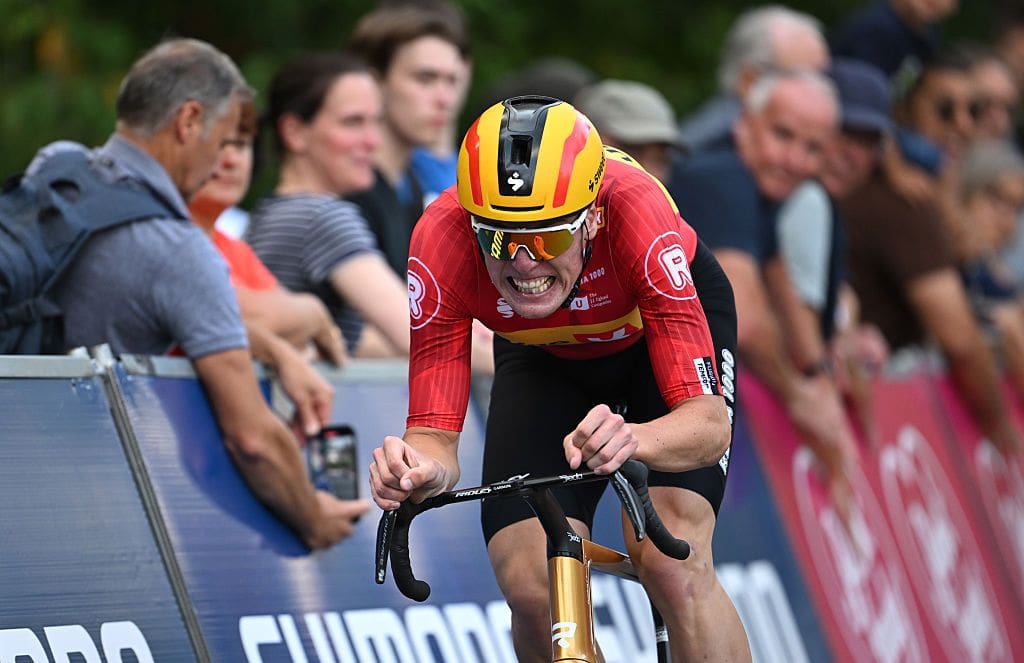 Photo Credit: Getty
Søren Wærenskjold
Søren Wærenskjold came close in Bordeaux, finishing second after Uno-X Mobility delivered him into a winning position.
His size and sustained power allow him to start the sprint from further out than some rivals. That can be valuable on a flat finish if hesitation develops behind.
The disadvantage is his final acceleration. Merlier came past him decisively in Bordeaux, showing the difference between a powerful long sprint and the explosive speed of an elite pure finisher.
Wærenskjold will need to use his team and launch before Merlier reaches full speed.
The broader Tour de France 2026 sprinters guide sets out how the leading fast men differ in pure speed, durability, lead-out support and points-classification potential.
Stage 11 outsiders
Pascal Ackermann
Pascal Ackermann remains capable of a high placing when Jayco AlUla delivers him into the correct position.
His experience helps on disorganised finishes, but he has not yet shown the speed of the leading three sprinters. A podium would represent a strong result.
Milan Fretin
Milan Fretin has consistently reached the top section of the sprint without threatening victory.
Cofidis needs results, and Fretin should receive complete support on one of the clearest remaining opportunities. His best chance comes through positioning rather than attempting to pass Merlier from behind.

Fernando Gaviria
Fernando Gaviria is still capable of producing a fast sprint, particularly when the final kilometres become chaotic.
Caja Rural-Seguros RGA lacks the strength of the leading sprint trains, meaning Gaviria will need to follow wheels and choose his own route. That independence can occasionally become an advantage in a congested finish.
Anthony Turgis
Anthony Turgis is not a pure sprinter, but his durability and positioning can carry him into the top ten.
A more selective finale would improve his chances. With the profile expected to keep almost everyone together, victory looks unlikely.
Previous Tour de France finishes in Nevers
Nevers hosts a Tour de France finish for the fourth time.
Eric Leman won the first in 1971, followed by Guido Bontempi in 1986. The race last finished here in 2003, when Alessandro Petacchi won the bunch sprint during a Tour in which he claimed four stages.
That history fits the expected outcome in 2026. Nevers has not been used frequently, but each previous finish rewarded a fast rider.
The long gap since Petacchi’s victory also means the current peloton has little recent Tour experience of racing into the city. Teams will rely on route reconnaissance and information from the morning briefing rather than established memory.
How to watch Tour de France stage 11
Stage 11 begins with the neutralised rollout from Vichy at 13:50 CEST, which is 12:50 BST in the UK.
The finish in Nevers is expected between 17:31 and 17:50 CEST, or 16:31 and 16:50 BST, depending on the average speed.
Viewers interested primarily in the sprint should aim to join with around 40km remaining, shortly before the Côte de Billy-Chevannes. The final 20km should begin shortly after 17:00 CEST at the fastest schedule.
In the UK, every stage is available live through TNT Sports and HBO Max, with free-to-air highlights on 5. US coverage is on Peacock, Canadian viewers can watch through FloBikes, while SBS and SBS On Demand provide free coverage in Australia.
The Tour de France 2026 TV schedule and daily start times contains the full race timetable, while the live stream guide by country covers the international broadcaster options.

Tour de France 2026 stage 11 prediction
Merlier has earned the position of clear favourite.
Kooij has already shown that he can beat the Tour’s sprinters, while Girmay’s consistency makes him difficult to leave out of the leading three. Philipsen has the speed to win but still needs Alpecin-Premier Tech to produce a cleaner final kilometre.
Pedersen should score well, particularly at the intermediate sprint, but the flat finish gives the pure sprinters a clearer advantage.
A breakaway victory would require the sprint teams to make a collective tactical error. With 70 points and a Tour stage available in Nevers, that is difficult to imagine.
Frequently asked questions
What is the route for Tour de France 2026 stage 11?
Stage 11 runs for 161.3km from Vichy to Nevers. It travels north through Saint-Pourçain-sur-Sioule and Moulins before crossing towards Decize and approaching Nevers from the north-east.
Is Tour de France stage 11 a sprint stage?
Yes. The stage is officially classified as flat and contains only two category-four climbs. A bunch sprint is the overwhelmingly likely outcome.
How much climbing is on stage 11?
The official route contains approximately 1,400 metres of elevation gain.
What are the climbs on stage 11?
The Côte de Billonnière is 1.1km at 5.8%, while the Côte de Billy-Chevannes is 1.5km at 5%.
Where is the intermediate sprint?
The intermediate sprint is in Saint-Pourçain-sur-Sioule after 27.9km.
How many green jersey points are available?
The intermediate sprint awards 25 points to the winner, while the stage finish in Nevers awards 70 points.
What time does stage 11 start?
The neutralised start is scheduled for 13:50 CEST, or 12:50 BST.
What time will stage 11 finish?
The race is expected to finish between 17:31 and 17:50 CEST, equivalent to 16:31-16:50 BST.
Who is the favourite for stage 11?
Tim Merlier is the favourite after winning consecutive sprint stages in Bordeaux and Bergerac.
Who leads the Tour de France before stage 11?
Tadej Pogačar leads the Tour by 3:36 over Jonas Vingegaard after winning stage 10 at Le Lioran.
When did the Tour last finish in Nevers?
The Tour de France last finished in Nevers in 2003, when Alessandro Petacchi won the stage in a bunch sprint.

