
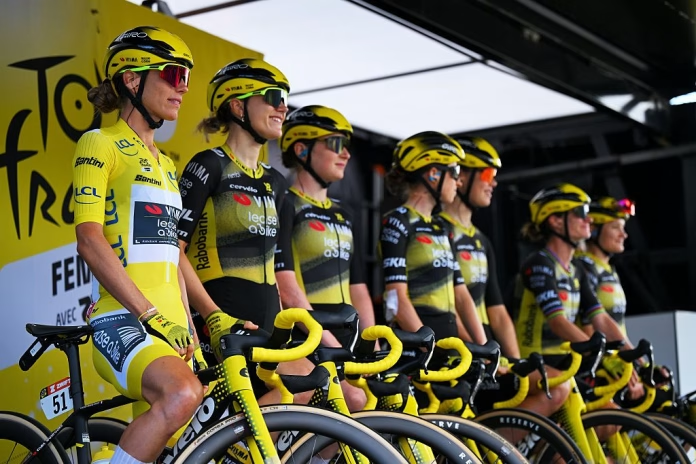
The Tour de France Femmes 2026 begins in Lausanne on Saturday 1 August, with nine stages taking the peloton through Switzerland and France before the race finishes in Nice on Sunday 9 August.
The final field is made up of 21 teams with seven riders each, giving a maximum start list of 147 riders. All 14 UCI Women’s WorldTeams are included alongside seven Women’s ProTeams, creating a field containing the leading GC riders, sprinters and stage hunters in the women’s peloton.
Tour de France Femmes 2026 full start list
Data powered by FirstCycling.com
How many riders are starting the Tour de France Femmes 2026?
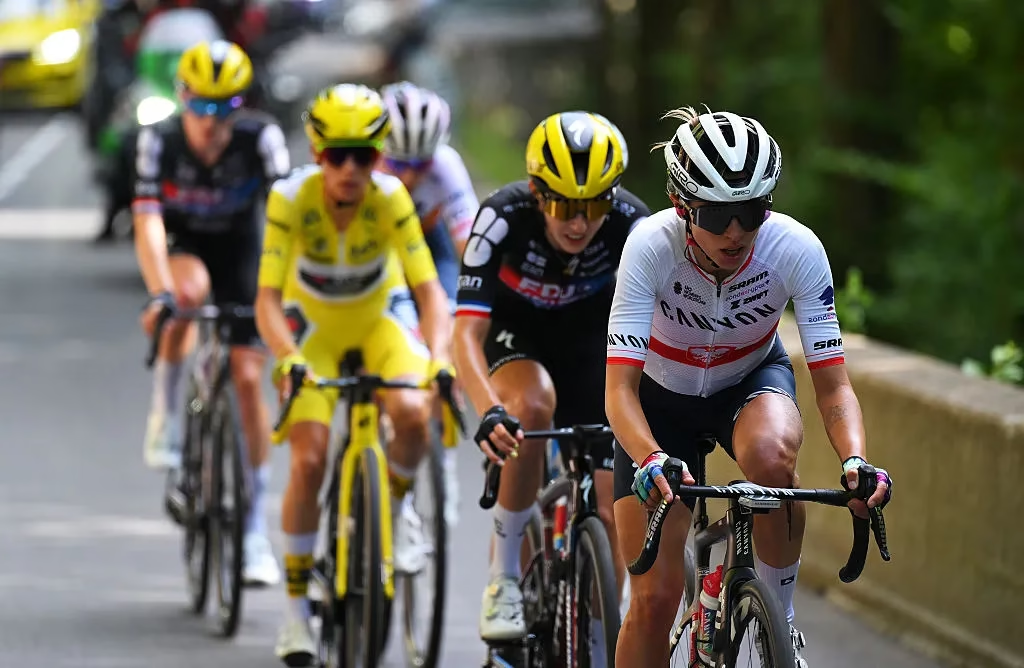
The full field consists of 147 riders across 21 teams, with seven riders selected by each squad. That is a relatively small team size for a race covering nine very different stages, meaning every selection has to balance several jobs.
There are 14 Women’s WorldTeams and seven Women’s ProTeams in the race. For the complete team breakdown and more on how the seven-rider squads work, see our guide to how many riders and teams are in the Tour de France Femmes 2026.
Those seven places become particularly valuable on the 2026 route. Teams chasing yellow need riders capable of protecting a leader through the opening Swiss stages, supporting her in the 21km Dijon time trial and still providing climbing help once the race reaches Mont Ventoux and Nice.
Who are the main GC riders on the start list?
The yellow jersey battle is headed by three riders with particularly strong claims.
Demi Vollering offers the most complete combination of time trialling, sustained climbing and consistency. Pauline Ferrand-Prévot returns as defending champion after winning the 2025 Tour, while Paula Blasi arrives after a breakthrough 2026 season that has established her among the leading stage racers in the world.
Behind them, Marlen Reusser, Anna van der Breggen, Kasia Niewiadoma-Phinney and Elisa Longo Borghini give the GC field considerable depth. Antonia Niedermaier, Niamh Fisher-Black, Kim Le Court-Pienaar and Cédrine Kerbaol are among the riders capable of pushing towards the podium or top five.
The route makes the strength of the full seven-rider squad particularly important. The Tour de France Femmes 2026 route guide covers 1,175km and 18,795 metres of climbing, with three flat stages, three hilly days, two mountain stages and the Dijon individual time trial.
The sprint field is headed by Lorena Wiebes
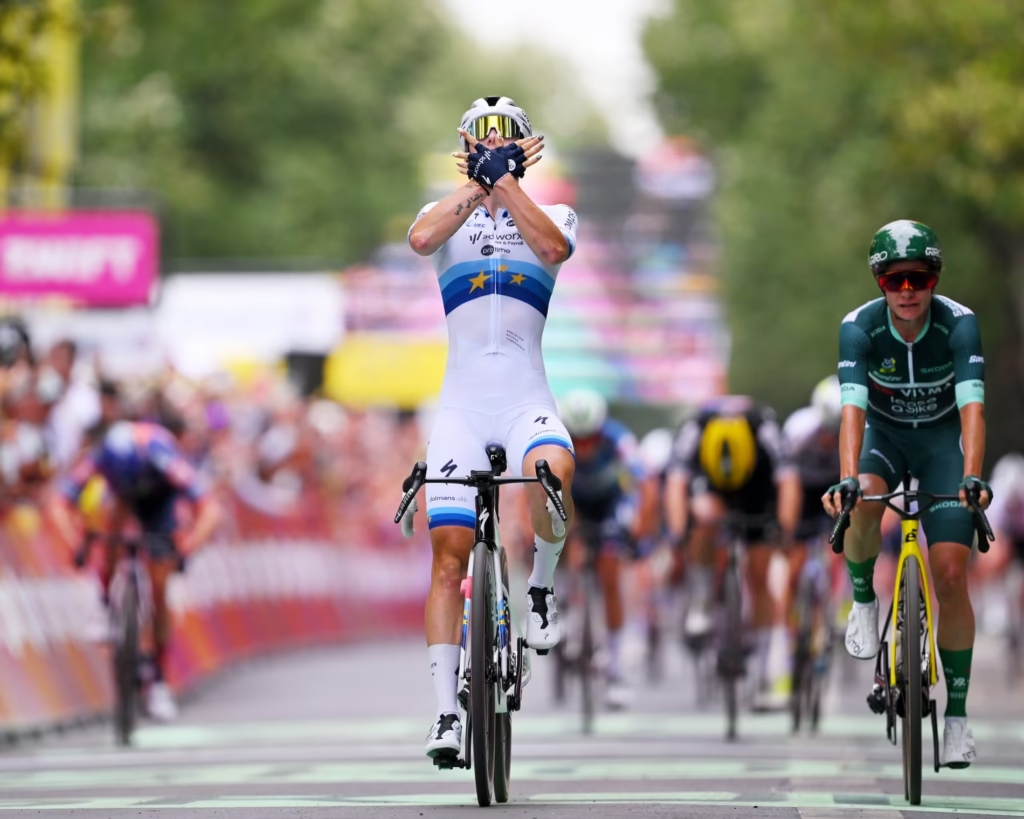
Lorena Wiebes is the obvious reference point whenever the 2026 Tour reaches a sprint.
She has the outright speed to dominate a conventional bunch finish but also climbs well enough to remain involved on stages that are too difficult for some of the other fast finishers. That potentially gives her opportunities beyond the most obvious sprint into Geneva.
Elisa Balsamo is the clearest challenger from a full peloton, while Marianne Vos, Lotte Kopecky and Kim Le Court-Pienaar become increasingly dangerous when the terrain makes the finish more selective.
Our Tour de France Femmes 2026 riders to watch guide covers the GC favourites, sprint hierarchy and leading stage hunters in more detail.
The seven-rider selections reveal each team’s priorities
A Tour de France Femmes start list tells you considerably more than who is racing.
A team arriving with one clear GC leader and several climbers is signalling that everything revolves around yellow. A squad carrying a specialist sprinter needs enough riders to form a lead-out while still having support available on harder terrain. Other teams may deliberately avoid building around one leader and instead select several riders capable of attacking breakaways.
That becomes especially important in a race with only seven riders per squad. A team cannot bring every possible climber, rouleur, sprinter and lead-out specialist, so compromises are unavoidable.
The stage hunters should become particularly important through the middle of the race. Riders such as Kristen Faulkner, Magdeleine Vallières, Puck Pieterse, Liane Lippert, Cédrine Kerbaol and Célia Géry fit stages where the terrain is too difficult for a conventional sprint but not hard enough for the GC favourites to control everything themselves. Our Tour de France Femmes 2026 breakaway specialists guide looks at those riders and the stages where they are most likely to get freedom.

Why the Swiss Grand Départ could shape team selection
The race begins with three days in and around Switzerland before moving into France, and the opening stages are more difficult than their labels initially suggest.
Stage 1 starts and finishes in Lausanne and ends with a rising finale towards Côte Saint-François, making the first yellow jersey potentially accessible to a fast all-rounder rather than a pure sprinter. Stage 2 from Aigle to Geneva is a more conventional sprint opportunity, before Stage 3 heads from Geneva towards the Jura and Poligny.
That creates competing demands immediately. GC teams need riders who can protect their leaders through nervous opening stages, sprint squads want enough firepower to control Geneva, and teams hunting stages may see opportunities before the Tour has even reached France.
The Tour de France Femmes 2026 Grand Départ guide covers the opening Swiss stages and where the first differences could appear.
When is the Tour de France Femmes 2026 start list final?
Team selections become increasingly firm during the final week before Stage 1, but late changes can still happen because of injury or illness.
That means an announced seven-rider squad is not necessarily the exact seven riders who eventually line up in Lausanne. Replacements can be made before the race under the relevant regulations, while a rider who becomes unavailable at the last moment may disappear from the start list.
The embedded FirstCycling list above is therefore the most useful part of this page as race day approaches. It can reflect changes without requiring a manually written 147-rider list to be rebuilt every time a team makes a late substitution.
The final picture should be one of the strongest fields of the season. The defending champion, the leading GC riders of 2026, the fastest sprinters in the peloton and a deep group of stage hunters are all being drawn towards a route that offers almost every type of rider something to target.
What those 147 names also reveal is how each team thinks the Tour can be won.

