
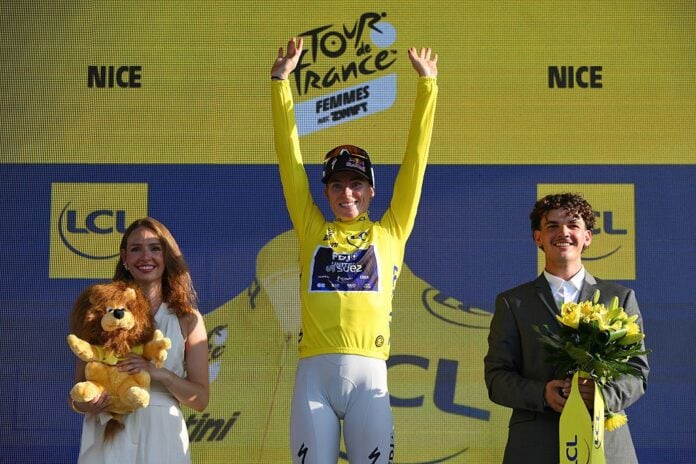
The Tour de France Femmes often feels like the point at which the hierarchy of the women’s peloton becomes clearest. In 2026, it may also prove to be the point at which the main part of the season effectively ended for several of its biggest names.
Demi Vollering leaves Nice as a two-time Tour champion after completing the Giro-Tour double. Kasia Niewiadoma-Phinney has another Tour podium and one of the rides of the season on Mont Ventoux, but also another painful defeat to process. Lorena Wiebes reinforced her position as the benchmark sprinter, Marlen Reusser demonstrated that her GC ambitions now extend well beyond winning time trials, while Paula Blasi, Antonia Niedermaier and Isabella Holmgren all emerged from the race with greater status than they had nine days earlier.
There is still racing to come, but not much of it at Women’s WorldTour level. Following the Tour, there are only four WWT events remaining in 2026, and two of those take place in China in October. The cancellation of the Tour de Romandie Féminin for this year and the removal of the Simac Ladies Tour from the WorldTour calendar have left an unusually sparse conclusion to the top-level European season.
That makes what happened at the 2026 Tour de France Femmes even more important. For many of the riders who shaped the last nine days, Nice may already have produced the result by which their 2026 season is remembered.
Only four Women’s WorldTour races remain
The remaining Women’s WorldTour programme is short:
| Date | Race | Country | Type |
|---|---|---|---|
| 19-23 August | Tour of Britain Women | Great Britain | 2.WWT |
| 29 August | Classic Lorient Agglomération | France | 1.WWT |
| 13-15 October | Tour of Chongming Island | China | 2.WWT |
| 18 October | Tour of Guangxi | China | 1.WWT |
The most significant absence is the Tour de Romandie Féminin, which had been scheduled for September but has been postponed until 2027 because of financial and logistical pressures.
That leaves the Tour of Britain Women and Classic Lorient Agglomération as the final two European Women’s WorldTour events of the season. After Lorient on 29 August, the series disappears for more than six weeks before returning for its Chinese conclusion.
For the riders who have just completed the hardest Tour de France Femmes yet, that matters. There is no substantial September WorldTour block in which the leading GC riders can simply carry their form from France into another sequence of major stage races.
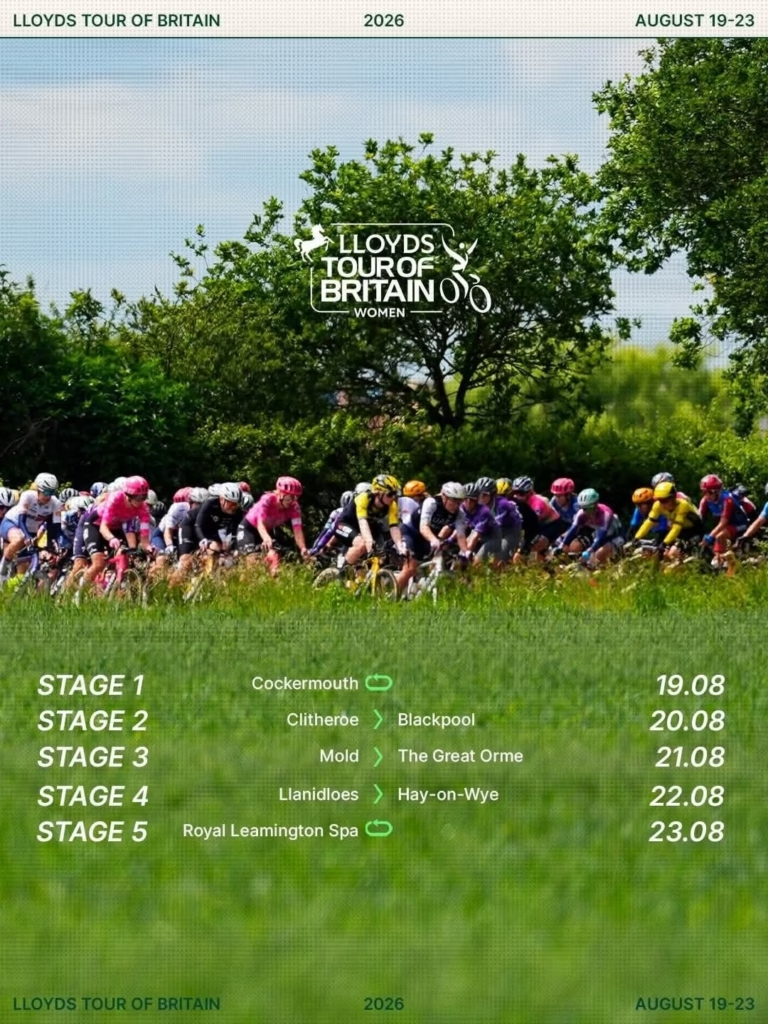
Tour of Britain becomes the final major European stage-race opportunity
The 2026 Tour of Britain Women now has unusual importance.
It begins in Cockermouth on 19 August, only ten days after the Tour finished in Nice, and runs for five stages before concluding in Royal Leamington Spa. Its 635.8km route includes almost 8,900 metres of climbing and a summit-style finish on the Great Orme, giving it enough difficulty to produce a meaningful GC contest rather than simply acting as a post-Tour sprint race.
The problem for the biggest Tour names is the turnaround.
Vollering, Niewiadoma-Phinney, Longo Borghini, Niedermaier and Blasi have just completed nine stages containing a time trial, almost 19,000 metres of climbing, Mont Ventoux and a final weekend raced at full GC intensity. There is little reason to assume all of them will immediately start another five-day WorldTour race.
That could make Britain particularly interesting. Riders who missed the Tour, worked as domestiques in France or emerged from it with unexpectedly good form may receive leadership opportunities that would be harder to find if every major GC star arrived.
The race has effectively become the last proper European WorldTour stage-racing chance of 2026.
Vollering has very little left to prove
For Vollering, the Tour has probably settled the most important argument of her season.
She won the Giro d’Italia Women and has now added her second Tour, doing so with three stage victories and a final advantage of 1:18 over Niewiadoma-Phinney. Her 2026 season was built around major stage-race targets, and she has delivered at the two biggest she contested this summer.
Whatever happens from here, 2026 will be remembered primarily for the Giro-Tour double.
That changes the value of adding more stage races. Vollering does not need the Tour of Britain to rescue her year or prove her form. FDJ United-Suez also have little reason to push her through another demanding race simply because there is a WorldTour event available.
The more interesting late-season objectives may sit outside the Women’s WorldTour itself, particularly once championship racing and national-team ambitions enter the equation.
Her final weekend in France also provided a strong natural conclusion to the stage-racing story. After losing yellow to Niewiadoma-Phinney on Mont Ventoux, she attacked back into the lead on Stage 8 before winning Stage 9 alone from the yellow jersey.
There is very little left that another minor GC victory could add to that.
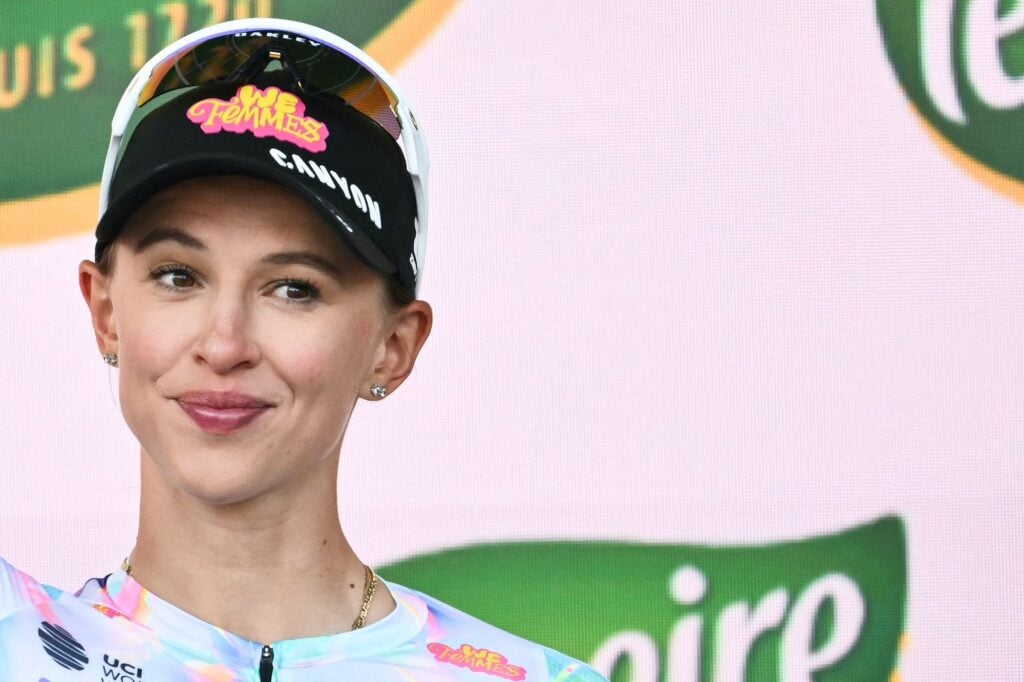 Photo Credit: Getty
Niewiadoma-Phinney has fewer chances to answer the disappointment
Niewiadoma-Phinney leaves the Tour with a much more complicated result.
Her Mont Ventoux victory was arguably the finest tactical ride of the race. She started Stage 7 behind both Reusser and Vollering, attacked while her two rivals hesitated and finished the day in yellow. For 24 hours, it looked as though she had found the decisive move required to become the first two-time winner of the modern Tour.
Then Vollering took the jersey back.
The final stage turned what had begun as an eight-second contest into a 1:18 defeat, leaving Niewiadoma-Phinney second overall. That remains an excellent Tour result, but it will inevitably feel different after having been in yellow with two stages remaining.
Normally the calendar would provide more immediate opportunities to turn that frustration into another important GC result. This year there is Britain, followed by a one-day race in Lorient, and then no WorldTour racing until October.
Unless Canyon SRAM take her to China, there may not be another serious WorldTour stage-racing objective in which Niewiadoma-Phinney can change the final impression of her season.
That makes Ventoux and Nice unusually definitive.
Reusser’s final GC position disguises a major step forward
Marlen Reusser eventually finished 14th overall after being dropped and crashing during Stage 9, but the final classification badly understates what her Tour demonstrated.
Her carefully targeted Dijon time trial worked exactly as intended. Reusser won the stage, took yellow and then defended it through terrain which was substantially less suited to her than to Vollering or Niewiadoma-Phinney. She reached Mont Ventoux still leading the race and remained third overall after the climb.
That changes the way future stage races should be viewed.
Reusser is no longer simply a time triallist who can briefly inherit GC positions when the route allows it. The 2026 Tour showed a credible model for building an overall challenge around her biggest strength, particularly when enough time-trial kilometres are available before the major mountains.
Her final-day collapse does not undo that lesson. Movistar now know that a route with the right balance can put Reusser into yellow deep into a Grand Tour.
The consequences may therefore be more important for 2027 than for the four WorldTour races still to come this year.
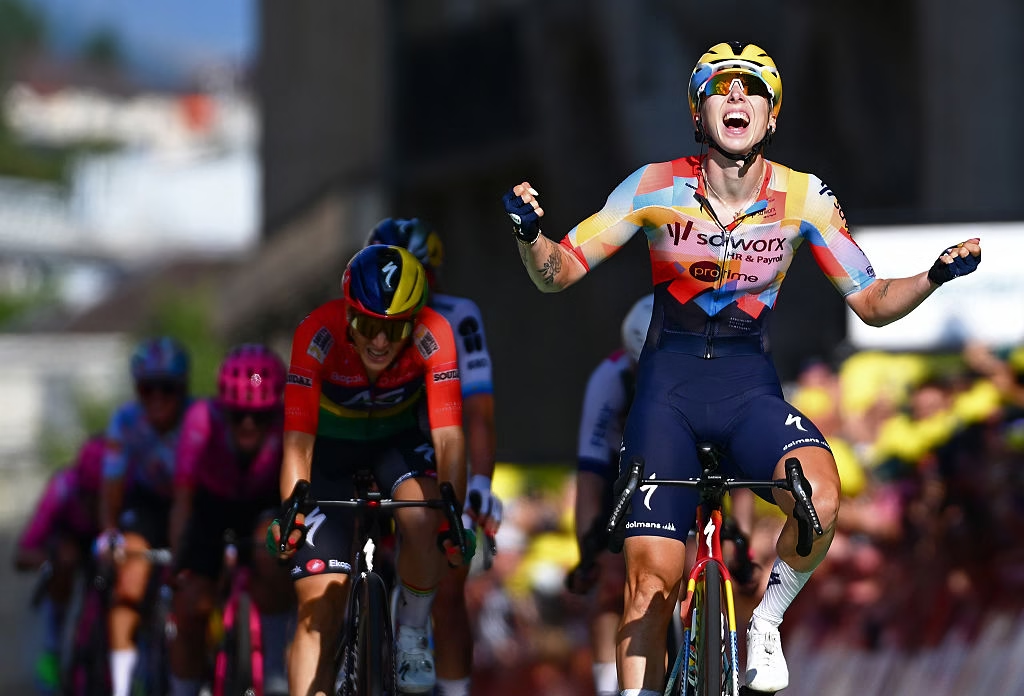
Wiebes still has races that make sense
The remaining calendar looks rather more useful for Lorena Wiebes.
Her Tour followed a clear pattern. She won the opening two stages and established control of the green jersey before the increasingly mountainous route moved away from her. By Nice, she had comfortably secured the points classification without needing another stage victory.
That reaffirmed the existing sprint hierarchy rather than creating a new one. If a race can be controlled and Wiebes survives the terrain, she remains exceptionally difficult to beat.
Both the Tour of Britain and Tour of Chongming Island contain obvious reasons for a sprinter to be interested. Britain should provide opportunities amid its harder stages, while Chongming has traditionally been one of the most sprint-friendly WorldTour stage races.
Whether Wiebes needs to travel to China is another question, but the remaining races at least offer terrain directly relevant to her strengths. The same cannot necessarily be said for Vollering or Niewiadoma-Phinney.
Blasi, Niedermaier and Holmgren leave France with different status
Some of the most important consequences of the Tour concern riders who did not win one of the headline classifications.
Paula Blasi finished fifth overall and was second on the final stage. Antonia Niedermaier finished fourth and won white. Isabella Holmgren reached eighth overall and was aggressive enough on Stage 9 to become part of the final-day story rather than simply protecting a top-10 position.
Those performances should affect how their teams use them.
Blasi has moved beyond being merely an interesting young climbing prospect. UAE Team L’IMAD can now reasonably consider her for leadership in major stage races, particularly after she remained competitive deep into a Tour where several established names disappeared from contention.
Niedermaier strengthened an already substantial GC reputation, while Holmgren’s first full demonstration at this level suggests Lidl-Trek have another rider capable of developing into much more than a support option.
If the established stars reduce their programmes after August, the remaining races could provide exactly the environment in which those riders receive greater responsibility.
The Tour does not merely decide who is strongest now. It often changes who gets to lead next.
The new participation rule makes China more complicated
The Chinese races have traditionally occupied an awkward place on the Women’s WorldTour calendar.
They come extremely late in the year, require substantial travel from Europe and have not always attracted the depth of WorldTeam participation associated with the major spring and summer races. Tour of Chongming Island in particular is highly specialised towards faster riders, giving many of the leading climbers relatively little sporting incentive to extend their seasons into October.
The 2026 participation rules change that equation.
Women’s WorldTeams are now expected to contest the entire Women’s WorldTour, with only one non-Grand-Tour race permitted to be skipped. ProCyclingUK looked at the implications when the UCI participation rule changes were announced, while our 2026 Women’s WorldTour guide covers how the system applies across the season.
Eight WorldTeams have already used their permitted skip, meaning those squads no longer have the straightforward option of simply leaving one of the Chinese races off their calendar. That should make the October races better attended at team level than they might otherwise have been.
It does not necessarily mean they will be filled with Tour de France stars.
Mandatory attendance is not the same as mandatory star riders
This is the important distinction when looking towards Chongming and Guangxi.
The participation rule applies to the team, not to Vollering, Niewiadoma-Phinney or any other individual rider. A WorldTeam which has to race in China can still send a line-up built around riders whose programmes and characteristics make sense for October.
That may actually create useful opportunities.
Chongming’s sprint-heavy format can suit riders whose seasons have been built differently from the major GC leaders, while Guangxi can give teams one final WorldTour objective for riders who still have form and motivation late in the year.
What the new regulations should improve is the depth of WorldTeam representation rather than automatically transforming the events into another Tour-quality gathering of the sport’s biggest names.
That is worth keeping in mind when assessing how much meaningful racing remains for the riders who dominated in France.
Classic Lorient becomes the final European WorldTour day
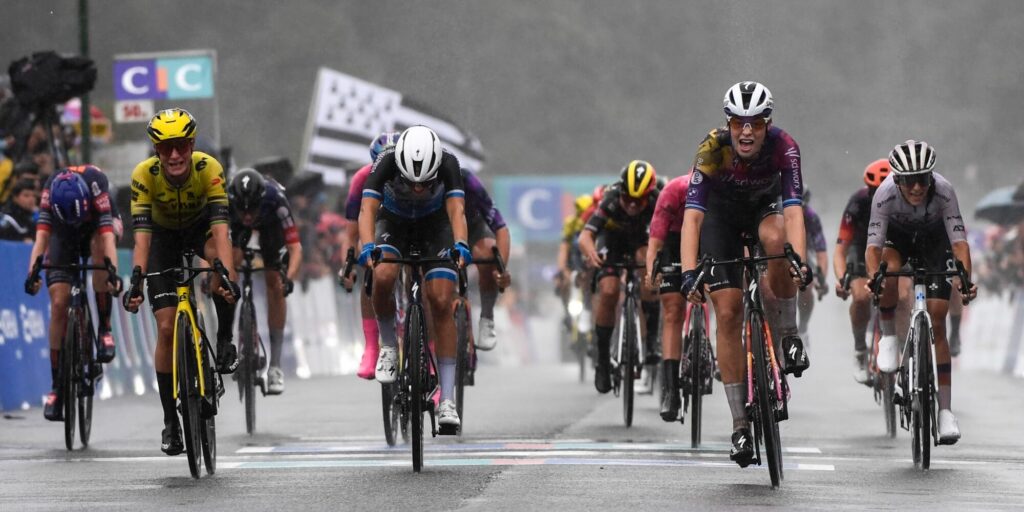
Six days after the Tour of Britain concludes, Classic Lorient Agglomération brings the European Women’s WorldTour season to an end on 29 August.
For riders whose strengths sit closer to the Classics than Grand Tour GC racing, that is still an important target. The Tour has dominated attention for most of August, but riders such as Lotte Kopecky, Puck Pieterse and the peloton’s punchier one-day specialists have a much clearer reason to extend their European WorldTour campaigns into Brittany.
For Vollering, Niewiadoma-Phinney and some of the other riders who have just emptied themselves across the Tour’s final weekend, the value is less obvious.
That split could make the post-Tour WorldTour feel very different. The riders who dominated Nice do not necessarily need to dominate the remaining calendar.
-
 Photo Credit: Getty

Ferrand-Prévot’s next race will be watched closely
Pauline Ferrand-Prévot leaves the Tour with perhaps the biggest unanswered question among the pre-race favourites.
Her title defence had already suffered badly before Mont Ventoux, where she finished 18th and lost more than ten minutes to Niewiadoma-Phinney. The following morning Team Visma | Lease a Bike announced that she was feeling unwell and would not start Stage 8.
The team did not give a specific diagnosis, so the illness should not retrospectively be used as a complete explanation for every difficulty she experienced earlier in the race. What is clear is that her 2026 Tour bore almost no resemblance to the mountain domination with which she won in 2025.
Her Stage 8 DNS therefore makes her next appearance particularly interesting.
There is no obvious reason for Visma to rush her back simply to provide an immediate answer. Ferrand-Prévot has already proved through her 2025 victory that she can win the Tour. One difficult edition does not remove that evidence.
What it does do is alter the immediate hierarchy. Vollering leaves France as champion, Niewiadoma-Phinney has again demonstrated Tour-winning level and several younger riders have taken significant steps forward.
Ferrand-Prévot will return to a conversation which has moved on while she was struggling.
The Tour may already have settled the season’s biggest arguments
There are four Women’s WorldTour races left, so the season is plainly not finished.
But its centre of gravity has shifted.
The Tour was the last WWT race of 2026 at which virtually every major stage-race contender could be expected to arrive with a programme designed around winning it. From here, objectives fragment. Some riders will go to Britain, others will move towards championship targets, several will recover and teams will eventually fulfil their October commitments in China with squads shaped by very different priorities.
That gives Nice unusual finality.
Vollering’s victory, combined with the Giro, settles the year’s stage-racing hierarchy more firmly than another minor late-season result is likely to change. Niewiadoma-Phinney’s Ventoux attack and eventual second place have probably defined her WorldTour stage-racing season. Reusser has established a new level for her GC ambitions, while Wiebes leaves with the sprint hierarchy intact.
Behind them, Blasi, Niedermaier and Holmgren have created expectations they did not have at the beginning of August.
The remaining races can still produce important winners and shape the riders who emerge into 2027.
For many of the biggest names in women’s cycling, though, the most important part of 2026 probably ended on the Col d’Èze.

