
The 2026 Renewi Tour brings together one of the strongest combinations of Classics riders and sprinters on the WorldTour calendar, with five stages across Belgium from 19 to 23 August and no individual time trial to create an obvious hierarchy among the overall contenders.
Defending champion Arnaud De Lie returns with Lotto Intermarché, while Tim Wellens goes in search of a record fifth overall victory for UAE Team Emirates-XRG. Alec Segaert, Florian Vermeersch, Tiesj Benoot and Magnus Sheffield are among the other riders with realistic GC ambitions, while the sprint field contains Jasper Philipsen, Tim Merlier, Jonathan Milan, Olav Kooij, Biniam Girmay, Dylan Groenewegen and Søren Wærenskjold.
The key terrain comes on Stage 3 from Celles to Geraardsbergen, where the Muur van Geraardsbergen and Bosberg should provide the biggest GC selection, although the rolling opener around Diest and the final Classics-style stage in Leuven could also matter. The Renewi Tour 2026 route guide breaks down all five stages, while the Beginner’s guide to the Renewi Tour 2026 explains why this race tends to favour powerful Classics riders rather than conventional Grand Tour climbers.
Selections can still change before Wednesday’s opening stage. The latest riders can be checked in ProCyclingUK’s full Renewi Tour 2026 start list.
 Photo Credit: Getty
Lotto Intermarché
Key riders: Arnaud De Lie, Jenno Berckmoes, Toon Aerts
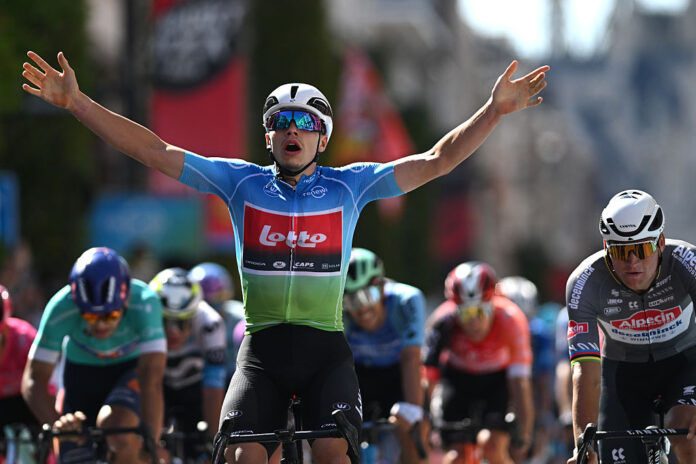
Everything begins with Arnaud De Lie, the defending champion and probably the rider against whom every other GC strategy must be measured. Jasper De Buyst provides his usual support for the faster finishes, while Jenno Berckmoes, Toon Aerts and Huub Artz give Lotto considerably more strength when the race becomes selective.
De Lie’s advantage is that he does not necessarily need to drop Wellens, Benoot or the other Classics specialists to beat them overall. If he stays close through Geraardsbergen and Leuven, his ability to collect bonus seconds gives him a route to victory unavailable to most of his rivals.
That should shape Lotto’s entire week. They do not need to make every GC stage excessively difficult themselves because other teams have a greater need to distance De Lie. Instead, they can protect him, use their secondary riders to cover moves and force the more traditional GC contenders to take responsibility.
The question is condition after a difficult Tour de France. If De Lie is back near his best, the 2026 route again looks extremely well suited to him.
UAE Team Emirates-XRG
Key riders: Tim Wellens, Florian Vermeersch, Sebastián Molano
UAE Team Emirates-XRG arguably have the strongest outright GC squad.
Tim Wellens has already won this race four times, in 2014, 2015, 2023 and 2024, while Florian Vermeersch finished second overall behind him in 2023. That gives UAE two riders with proven ability to turn the short climbs, cobbles and positioning battles of the Renewi Tour into an overall result.
Wellens remains central to the plan and will stay with UAE through 2027 after extending his contract with UAE Team Emirates-XRG. Mikkel Bjerg and Filippo Baroncini provide huge power for controlling exposed roads, while Sebastián Molano ensures UAE can remain involved in the sprint stages rather than focusing exclusively on GC.
The lack of a time trial places more emphasis on tactical aggression. Wellens cannot simply wait to gain time against the clock, so Vermeersch becomes particularly valuable as a second card. If he attacks, Lotto and Decathlon have to decide whether they can afford to let him go while Wellens sits behind.
Few teams have that luxury.
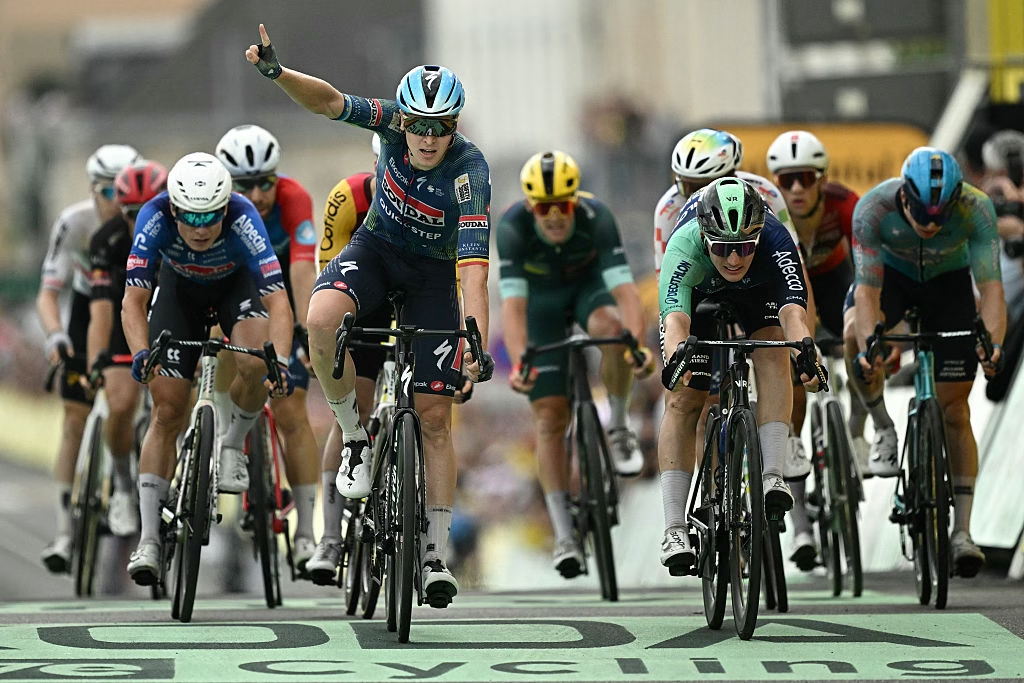 Photo Credit: Getty
Alpecin-Premier Tech
Key riders: Jasper Philipsen, Florian Sénéchal
Alpecin-Premier Tech’s priorities are much clearer.
Jasper Philipsen is here to win stages. The flatter finishes in Ardooie and Bilzen-Hoeselt are the obvious targets, although the opening day around Diest could also suit him if the repeated short climbs fail to produce a meaningful selection.
The supporting cast contains experienced Classics strength through Florian Sénéchal and Silvan Dillier, which should be especially useful on narrow Belgian roads where keeping Philipsen out of trouble matters almost as much as the final lead-out.
There is no obvious rider around whom Alpecin need to build a five-day GC campaign, which simplifies their race. Protect Philipsen when there is a realistic sprint, send riders into moves when there is not and avoid spending unnecessary energy helping teams with overall ambitions.
Multiple stage victories would represent an excellent week.
Soudal Quick-Step
Key riders: Tim Merlier, Dylan van Baarle, Dries Van Gestel
Soudal Quick-Step have another of the headline sprinters in Tim Merlier, who arrives after an outstanding Tour de France in which he won three stages.
The third of those victories came in Chalon-sur-Saône, where Merlier completed his Tour hat-trick on Stage 12. He now heads into a Renewi Tour where the depth of the sprint field means even his best lead-out will face serious competition from Milan, Philipsen and Kooij.
Bert Van Lerberghe remains the key finishing ally, while Dylan van Baarle and Dries Van Gestel give Quick-Step riders capable of becoming involved on the difficult stages without compromising Merlier’s sprint.
The absence of a major GC leader should create freedom. Van Baarle and Van Gestel can attack around Geraardsbergen rather than being forced to work for a classification rider, while Merlier can concentrate almost entirely on the stages that suit him.
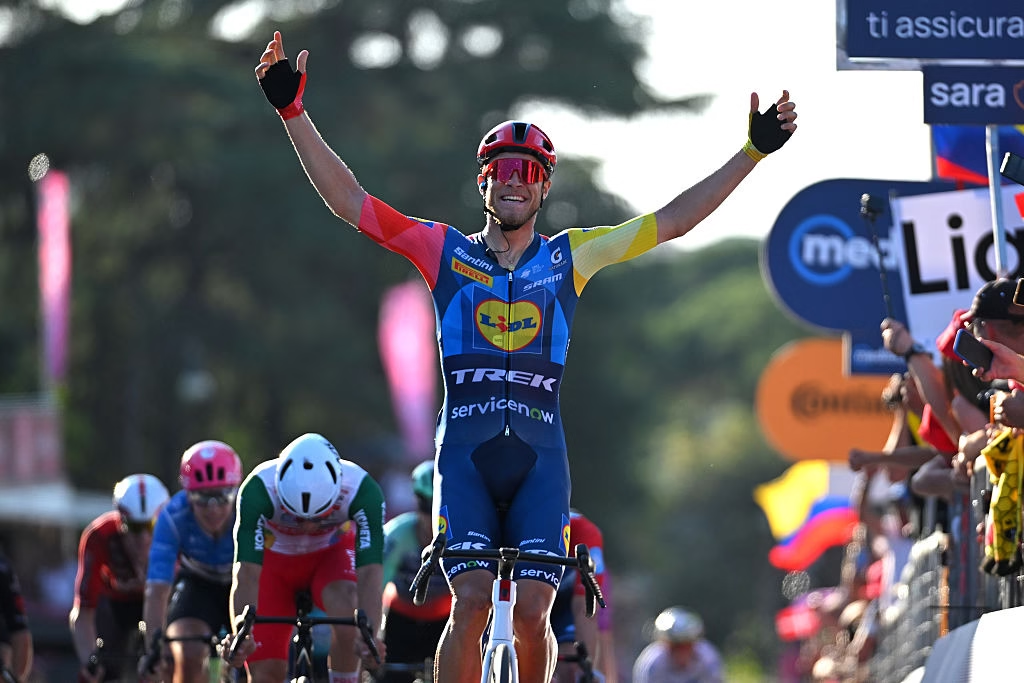 Photo Credit: Getty
Lidl-Trek
Key riders: Jonathan Milan, Søren Kragh Andersen, Toms Skujiņš
Lidl-Trek bring one of the strongest conventional sprint structures in the race.
Jonathan Milan is supported by Simone Consonni, Edward Theuns and Tim Torn Teutenberg, giving the Italian the sort of lead-out depth required when virtually every major sprint team is trying to occupy the same stretch of road.
Milan’s pure speed makes him one of the favourites for every flat finish, but Lidl-Trek are not entirely one-dimensional. Søren Kragh Andersen and Toms Skujiņš give them serious options on the more difficult stages, while Jakob Söderqvist adds another enormous engine.
That depth means the team do not need to use Milan’s lead-out riders to cover every attack. Kragh Andersen and Skujiņš can race separately when the road becomes harder, preserving Consonni and the other sprint specialists for the stages where Milan should be central.
The biggest danger may be the exposed Belgian terrain rather than the climbs themselves. Keeping Milan near the front if crosswinds appear will be essential.
Bahrain Victorious
Key riders: Alec Segaert, Matej Mohorič, Vlad Van Mechelen
Bahrain Victorious have one of the more intriguing GC combinations.
Alec Segaert finished second overall in 2024, while Matej Mohorič is a former winner of the race. Their strengths overlap enough to make Bahrain dangerous but are different enough to give the team genuine tactical flexibility.
The lack of a time trial is probably a greater disadvantage to Segaert than to several of his rivals because it removes an obvious opportunity to turn his power against the clock into seconds. He will instead need to stay with Wellens and De Lie on the short climbs and perhaps create separation through aggressive racing.
Mohorič is ideal for that approach. He can anticipate moves rather than waiting for the favourites to attack, forcing other teams to decide whether Segaert is their only concern.
Vlad Van Mechelen provides another option for faster finishes, but the overall classification should be Bahrain’s biggest opportunity.
Decathlon CMA CGM Team
Key riders: Tiesj Benoot, Olav Kooij, Paul Lapeira
Decathlon CMA CGM have perhaps the cleanest division of responsibilities in the race.
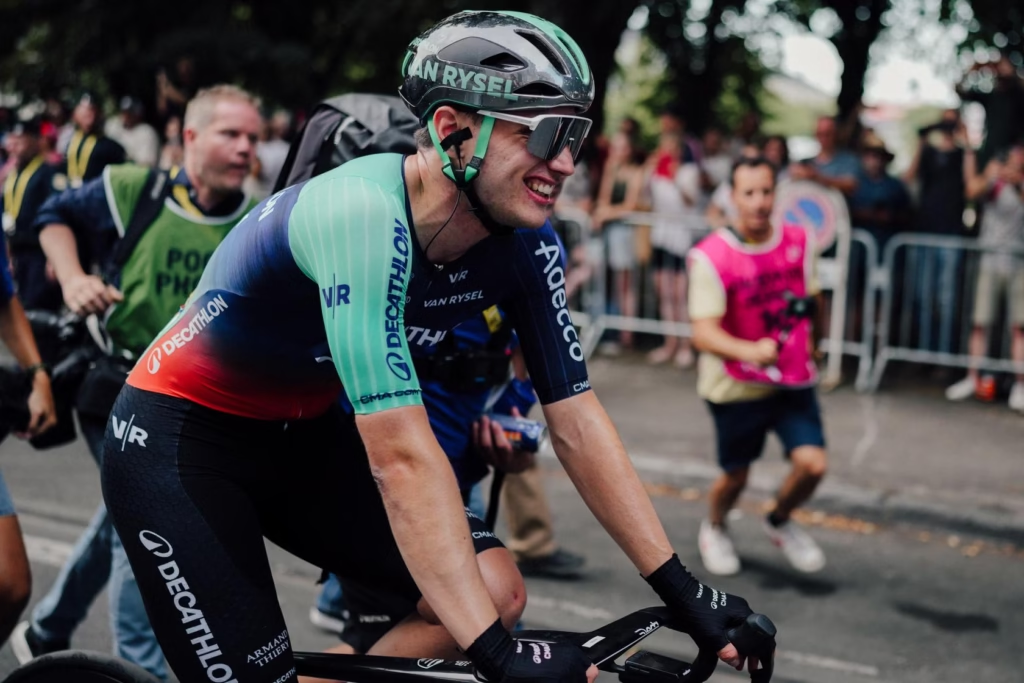
Tiesj Benoot can concentrate on the GC while Olav Kooij targets the sprints. That should prevent the sort of tactical compromise that can affect teams trying to use the same rider for both objectives.
Kooij arrives with major confidence after taking his first Tour de France stage victory this summer, winning the reduced sprint in Pau on Stage 5. Cees Bol and Robbe Ghys provide finishing support, while Oliver Naesen and Daan Hoole bring the strength required before the sprint becomes relevant.
Benoot’s problem is bonus seconds. Simply finishing alongside De Lie on every difficult stage may not be enough. He needs Geraardsbergen and Leuven to produce actual separation, particularly if De Lie has already collected seconds at finishes.
Paul Lapeira adds another versatile option and makes this one of the most balanced seven-rider teams in the race.
EF Education-EasyPost
Key riders: Kasper Asgreen, Michael Valgren, Madis Mihkels
EF Education-EasyPost look more suited to opportunistic stage hunting than defending a conventional GC challenge.
Kasper Asgreen and Michael Valgren are the obvious experienced Classics options, while Madis Mihkels and Luke Lamperti provide faster finishes. That combination should encourage EF to race proactively rather than waiting for the established favourites to decide everything.
Asgreen in particular should be interested in Geraardsbergen and Leuven. Long-range moves may suit him better than repeated explosive accelerations against De Lie and Wellens, particularly if the GC teams begin watching one another.
Mihkels becomes increasingly dangerous if a sprint stage turns harder than expected. He is unlikely to beat Milan, Philipsen and Merlier through raw speed alone, but a reduced finish changes the equation considerably.

Groupama-FDJ United
Key riders: Kévin Geniets, Thibaud Gruel
Groupama-FDJ United arrive without one overwhelming favourite but with several riders capable of getting involved across the week.
Kévin Geniets is the most obvious option when the road becomes harder, while Thibaud Gruel offers a useful combination of speed and resilience. Johan Jacobs and Clément Russo add further Classics experience.
Gruel is unlikely to want a perfectly straightforward sprint against the biggest fast men, so a difficult approach to the finish should suit Groupama better. Geniets can also attack rather than being tied entirely to supporting a designated sprinter.
An overall victory would be a surprise, but stage results are realistic on several days.
Movistar Team
Key riders: Iván García Cortina, Jon Barrenetxea
Movistar do not arrive with an obvious GC favourite or one of the headline sprinters, which should make their tactical objective straightforward: attack.
Iván García Cortina remains their strongest option from reduced groups and is well suited to the short climbs, exposed roads and positioning battles that define this race. Jon Barrenetxea gives them another aggressive card, while Filip Maciejuk supplies considerable power.
There is little value in Movistar helping Lidl-Trek, Alpecin or Quick-Step deliver their sprinters into ideal finales. The opening stage, Geraardsbergen and Leuven are where they need to create opportunities rather than wait for them.
 Photo Credit: Getty
Netcompany Ineos
Key riders: Magnus Sheffield, Ben Turner, Sam Welsford
Netcompany Ineos bring plenty of quality even if their provisional selection is shorter than some rivals.
Magnus Sheffield is the most obvious GC option. A time trial would ordinarily increase his chances, but his power on short climbs and ability on Classics terrain still make him one of the more interesting outsiders for the overall victory.
Ben Turner and Sam Watson give Ineos options for an aggressive race, while Sam Welsford provides genuine sprint speed on the flatter days.
The challenge is making Sheffield’s strengths produce actual time. Following Wellens and De Lie up every climb is unlikely to be sufficient if De Lie is collecting bonuses. Ineos need to make some of the harder stages selective enough for Sheffield’s sustained power to matter.
NSN Cycling Team
Key riders: Biniam Girmay, Corbin Strong, Tom Van Asbroeck
NSN Cycling Team bring an excellent pair of fast riders in Biniam Girmay and Corbin Strong.
Girmay is now in his first season with NSN after signing a three-year deal through 2028, and the Renewi Tour should suit his ability to sprint after considerably harder racing than some pure finishers prefer.
That could even make him relevant to the GC discussion if he avoids losing time on Geraardsbergen. His sprint creates the same basic advantage enjoyed by De Lie, although surviving the hardest stage close enough to the true Classics specialists will be the challenge.
Strong gives NSN another excellent option if the race becomes selective, while Ryan Mullen provides the sort of power that can be crucial if crosswinds appear.
This is a team capable of winning from several different race scenarios.

Red Bull-BORA-hansgrohe
Key riders: Laurence Pithie, Mick van Dijke, Tim van Dijke
Red Bull-BORA-hansgrohe arrive without one of the elite pure sprinters, which should push them towards making the race more difficult.
Laurence Pithie is the natural leader and has enough speed to remain relevant from reduced groups, but his chances improve markedly if Milan, Philipsen and Merlier have already been placed under pressure.
Mick and Tim van Dijke give Red Bull considerable strength on technical and exposed roads, while Nico Denz is exactly the type of rider who becomes dangerous once the GC favourites start looking primarily at one another.
The team should welcome an aggressive week. A series of controlled bunch sprints offers them considerably less than a race broken up by wind, short climbs and attacks.
Team Jayco AlUla
Key riders: Jelte Krijnsen, Luka Mezgec, Dries De Bondt
Jayco AlUla appear better equipped to chase stage victories than a five-day classification.
Luka Mezgec and Amaury Capiot give them speed, while Dries De Bondt, Jelte Krijnsen and Luke Durbridge provide several riders capable of getting into dangerous moves.
De Bondt is particularly useful in a race where breakaways can gain an advantage once the major teams become preoccupied with GC and sprint responsibilities. Jayco have enough power to make sure they are represented when those opportunities emerge.
A stage win from a break or reduced group would be a more realistic objective than trying to defend a minor GC position all week.
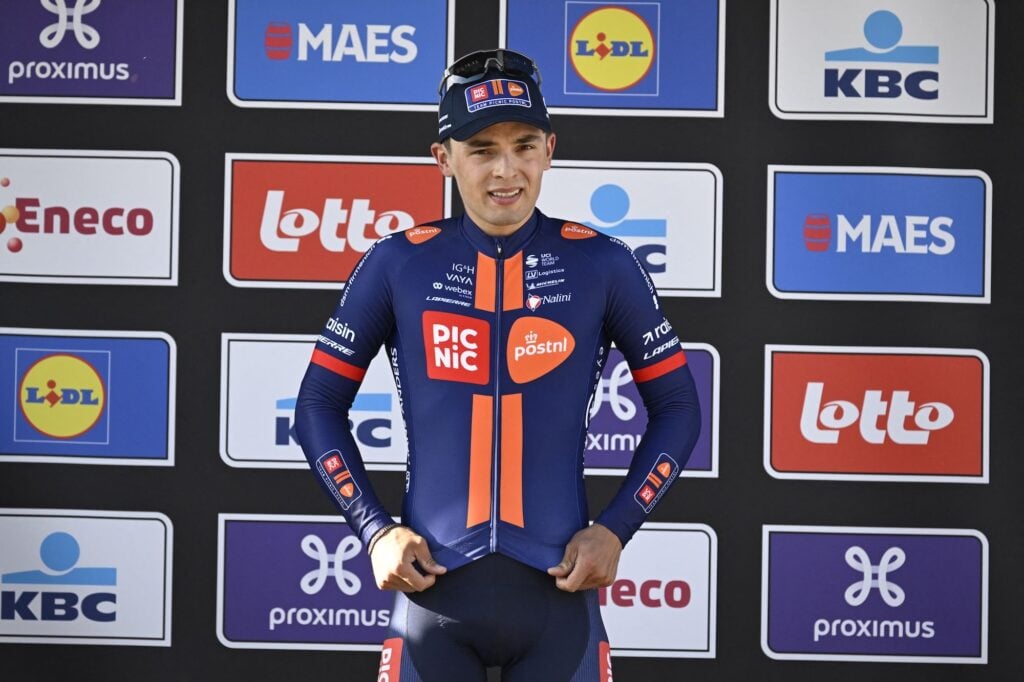
Team Picnic PostNL
Key riders: Pavel Bittner, Nils Eekhoff
Pavel Bittner gives Picnic PostNL a clear sprint leader and one whose durability makes him well suited to a race where ostensibly flat stages can suddenly become difficult.
Bittner’s longer-term future has already been decided, with the Czech rider joining Pinarello-Q36.5 from the start of 2027, but he still has plenty of opportunities to add to his Picnic record before leaving.
Nils Eekhoff provides another important card for the harder stages. He can remain involved when a pure sprint is no longer realistic and gives the team a reason to race aggressively around Geraardsbergen.
Bittner is unlikely to begin as the favourite against Milan, Merlier, Philipsen and Kooij, but he is exactly the sort of rider who can profit if one of the sprint stages becomes unexpectedly selective.
Team Visma | Lease a Bike
Key riders: Per Strand Hagenes, Niklas Behrens, Louis Barré
Visma arrive without a pure sprinter or an established Renewi Tour GC favourite, which should free them to race aggressively.
Per Strand Hagenes looks particularly well suited to the structure of the race. Short climbs, narrow roads and Classics-style racing play to his strengths, while Niklas Behrens and Louis Barré give Visma other riders capable of surviving a difficult finale.
Edoardo Affini should be invaluable whenever positioning and crosswinds become important, while Owain Doull adds experienced support.
The absence of a fast finisher changes Visma’s GC tactics. They cannot rely on collecting bonus seconds, so they need to create actual gaps. Expect them to be among the teams trying to make Geraardsbergen and Leuven harder rather than waiting for De Lie to dictate the outcome.
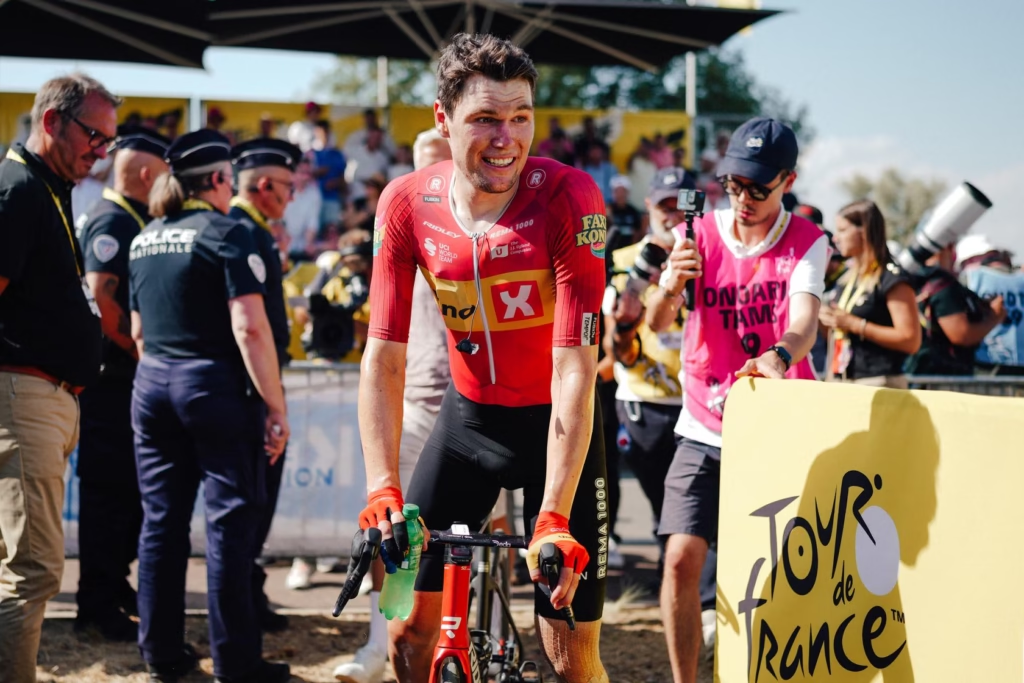 Photo Credit: A.S.O./Thomas Maheux
Uno-X Mobility
Key riders: Søren Wærenskjold, Jonas Abrahamsen, Markus Hoelgaard
Uno-X Mobility have a squad almost perfectly suited to the Renewi Tour.
Søren Wærenskjold provides the sprinting power and arrives after the biggest road victory of his career, having won Stage 11 of the Tour de France in Nevers ahead of Kooij and Philipsen.
The important point is that Wærenskjold does not require an entirely straightforward race. He has the power to survive a difficult approach and remains extremely fast once more conventional lead-out trains begin losing riders.
Jonas Abrahamsen and Markus Hoelgaard give Uno-X strong attacking options for Stages 1, 3 and 5, while Carl-Frederik Bévort adds another powerful rider for exposed roads.
They may not dominate the GC battle, but few teams have as many realistic routes to winning a stage.
XDS Astana Team
Key riders: Alberto Bettiol, Davide Ballerini, Max Kanter
XDS Astana bring one of the deeper multi-purpose selections.
Alberto Bettiol is the obvious rider for the GC and difficult stages, while Davide Ballerini and Max Kanter give the team different sprint options. Mike Teunissen adds further experience and versatility.
Bettiol should be particularly dangerous around Geraardsbergen. He has the power to attack before the steepest sections rather than waiting for the more explosive riders to accelerate, which may be necessary if he wants to create meaningful GC gaps.
Ballerini is useful because he allows Astana to remain competitive in reduced finishes without forcing Bettiol to cover every possibility.
The team have enough depth to let the race develop before committing fully to one leader.
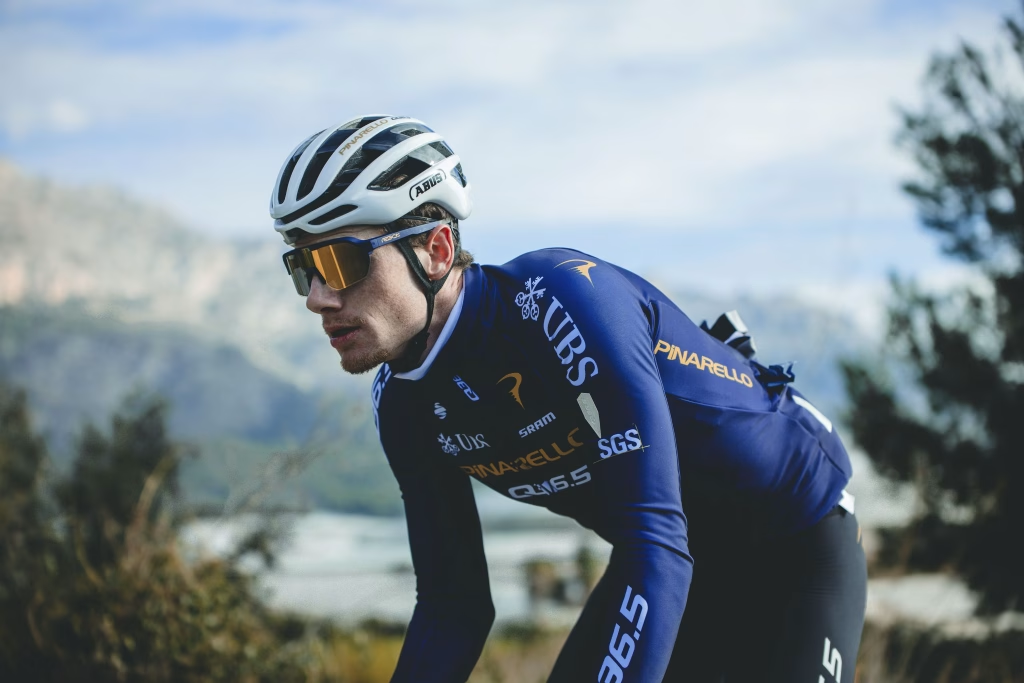 Photo Credit: Getty
Pinarello-Q36.5 Pro Cycling Team
Key riders: Sam Bennett, Fred Wright, Fabio Christen
Pinarello-Q36.5 have Sam Bennett for the pure sprints but considerably more tactical depth than a conventional lead-out team.
Fred Wright, Fabio Christen, Brent Van Moer and Frederik Frison all give them reasons to attack when Bennett’s sprint is no longer relevant.
Bennett faces an enormous challenge on the flatter stages simply because of the quality around him. Even a perfectly executed lead-out still leaves Milan, Philipsen, Merlier, Kooij and several others to beat.
That should encourage Pinarello-Q36.5 to use their depth. Wright and Christen in particular can take advantage of the GC teams watching one another on the more difficult stages.
Tudor Pro Cycling Team
Key riders: Arvid de Kleijn, Luca Mozzato, Matteo Trentin
Tudor have a similarly flexible selection.
Arvid de Kleijn provides their greatest outright sprint speed, while Luca Mozzato is better suited if the approach becomes more selective. Matteo Trentin gives the team vast experience of the type of Classics-style racing that defines the harder Renewi stages.
That creates a useful progression through the week. De Kleijn can target the clearest flat finishes, Mozzato can take over if the terrain begins eliminating pure sprinters, and Trentin can attack when a sprint is unlikely altogether.
For an invited ProTeam, Tudor have enough quality to race on equal tactical terms with many of the WorldTour squads.
Team Flanders-Baloise
Key riders: Michiel Lambrecht, Jules Hesters, Henri Vandenabeele
The Renewi Tour is an important opportunity for Team Flanders-Baloise to race on home roads against the full WorldTour field.
They are not expected to control stages or beat the biggest sprint trains head-to-head, so visibility and opportunism become central to their strategy.
Jules Hesters gives them some speed, while Michiel Lambrecht and Henri Vandenabeele should have more freedom on the harder terrain. Getting riders into breakaways is likely to be important from the opening stage onwards.
The best opportunity may come when the WorldTour teams become consumed by their own GC battle. A well-timed move on one of the transitional stages could suddenly become much more difficult to chase.
Unibet Rose Rockets
Key riders: Dylan Groenewegen, Lukáš Kubiš
Unibet Rose Rockets have two leaders with almost opposite strengths.
Dylan Groenewegen remains one of the fastest pure sprinters in the field and should be focused heavily on Ardooie and Bilzen-Hoeselt. Elmar Reinders gives him an experienced finishing ally.
Lukáš Kubiš is the more interesting option when the race becomes difficult. He can survive harder Classics terrain and could become the team’s most relevant rider on Geraardsbergen and Leuven.
That division gives Unibet an answer to almost every stage. Groenewegen does not need to be dragged over climbs that do not suit him simply to preserve the team’s relevance, because Kubiš can take responsibility instead.
Which teams have the strongest GC squads?
UAE Team Emirates-XRG start with the most obvious numerical advantage through Wellens and Vermeersch. Both have already demonstrated that this race suits them, and the ability to alternate attacks could prove particularly important without a time trial.
Lotto Intermarché have the defending champion and perhaps the most valuable weapon in the entire GC battle: De Lie’s sprint. If he survives the difficult stages without conceding meaningful time, every bonus opportunity works in his favour.
Decathlon CMA CGM have an excellent split between Benoot for GC and Kooij for stages, while Bahrain Victorious can use Segaert and Mohorič together. Sheffield gives Netcompany Ineos a potentially dangerous outsider, particularly if the race becomes more attritional than tactical.
The wider history of why riders such as Wellens have repeatedly excelled here is covered in ProCyclingUK’s brief history of the Renewi Tour.
-
 Photo Credit: Cor Vos
Which teams have the strongest sprint trains?
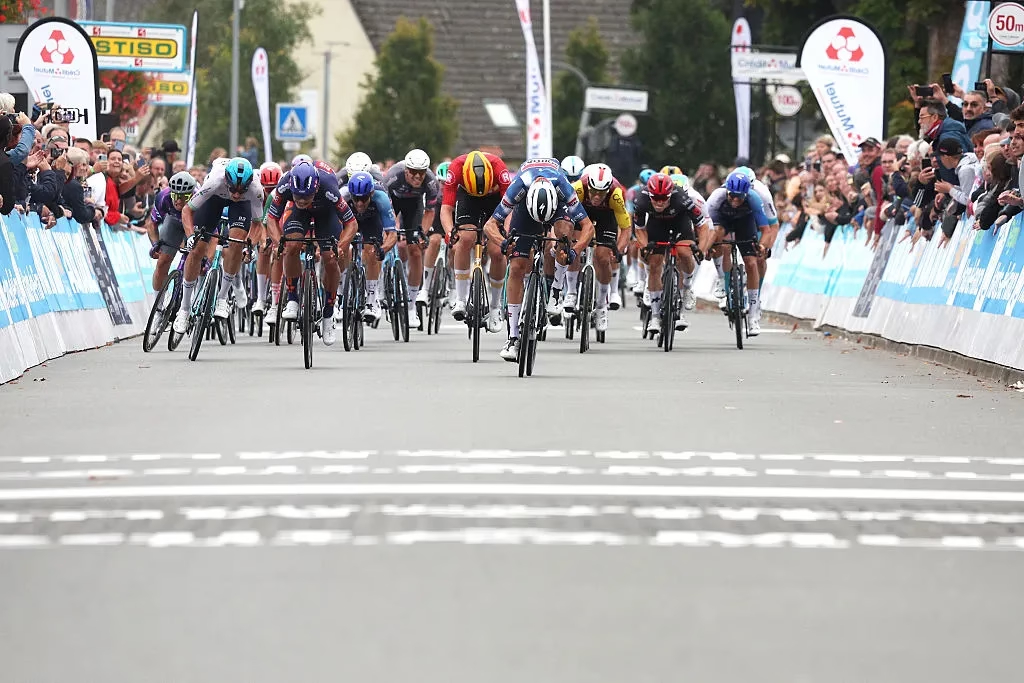
The sprint battle is almost absurdly deep.
Lidl-Trek have Milan and Consonni, Soudal Quick-Step pair Merlier with Van Lerberghe, Decathlon CMA CGM bring Kooij with Bol and Ghys, while Alpecin-Premier Tech are built around Philipsen.
Behind those four sit Girmay, Wærenskjold, Groenewegen, Bennett, De Kleijn, Bittner, Welsford, Kanter and Molano.
That depth creates an important tactical problem. No single team wants to spend 150km controlling the breakaway while eight rival sprint squads conserve energy behind them. Negotiating who actually commits riders to the chase may become almost as important as the lead-out itself.
Stage 3 should reveal everyone’s real GC intentions
The Celles to Geraardsbergen stage on Friday 21 August is where the tactical picture should become much clearer.
The Muur van Geraardsbergen and Bosberg give Wellens, De Lie, Benoot, Segaert, Sheffield and the other GC riders their best terrain for producing genuine separation. With no time trial later in the race, anyone waiting for another obvious opportunity risks discovering that it never comes.
The strength of UAE becomes particularly important here. If Vermeersch attacks, Lotto must decide whether De Lie can afford to let him go. If Benoot follows, does Wellens respond himself or trust his teammate? If Sheffield wants to compensate for De Lie’s superior sprint, how early does Netcompany Ineos need to start racing?
The final stage in Leuven means nothing is guaranteed to be settled on Friday, but Geraardsbergen should expose which teams genuinely believe they can win the overall race and which have already shifted towards stage hunting.
That tension between the GC teams and the extraordinary number of sprint squads is what makes the 2026 edition particularly interesting. UAE may have the strongest traditional classification hand, Lotto have the defending champion and his bonus-second threat, while several teams know their only realistic chance comes from attacking before either group can impose control.
UK viewers can find the latest broadcast details in ProCyclingUK’s How to watch the Renewi Tour 2026 in the UK guide.

