

The Chrono Féminin de Gatineau has extra significance in 2026. Four days before the elite women’s individual time trial opens the UCI Road World Championships in Montréal, several riders heading to Worlds will get one final competitive run on their time trial bikes.
The 22.2km UCI 1.1 race takes place in Gatineau on Wednesday 16 September, with Marlen Reusser the outstanding name on the start list. The defending world champion will face Swiss teammate Jasmin Liechti, Australian champion Felicity Wilson-Haffenden, Canadian champion Nadia Gontova, Anniina Ahtosalo, Lauretta Hanson, Georgia Baker and several of the riders who will contest the under-23 World Championship on Monday.
Gatineau is much shorter than the 39.2km elite Worlds course and considerably more rolling, so the finishing order cannot simply be transferred across to Montréal. What it does provide is something much more useful than another training session. Riders have to go through their full race-day process, settle into their position at competition speed and find out exactly how their legs respond before the biggest time trial of the season.
For Marlen Reusser, anything other than victory would be a surprise. The gaps behind her could tell us rather more.
Chrono Féminin de Gatineau 2026 race details
| Detail | Chrono Féminin de Gatineau 2026 |
|---|---|
| Date | Wednesday 16 September |
| Location | Gatineau, Québec, Canada |
| Classification | UCI 1.1 |
| Format | Individual time trial |
| Distance | 22.2km |
| Elevation | 238 metres |
| First start | 10:45 EDT / 15:45 BST |
| Live coverage | FloBikes from 10:35 EDT / 15:35 BST |
| 2025 winner | Lieke Nooijen |
The route starts and finishes in downtown Gatineau, with enough elevation to break up the rhythm rather than producing a completely flat power test.
Lieke Nooijen averaged more than 46km/h when she won the 2025 Chrono Féminin de Gatineau, beating Emily Ehrlich by 41 seconds. Nooijen is not back to defend the title, and Reusser considerably raises the level required to win this year’s edition.
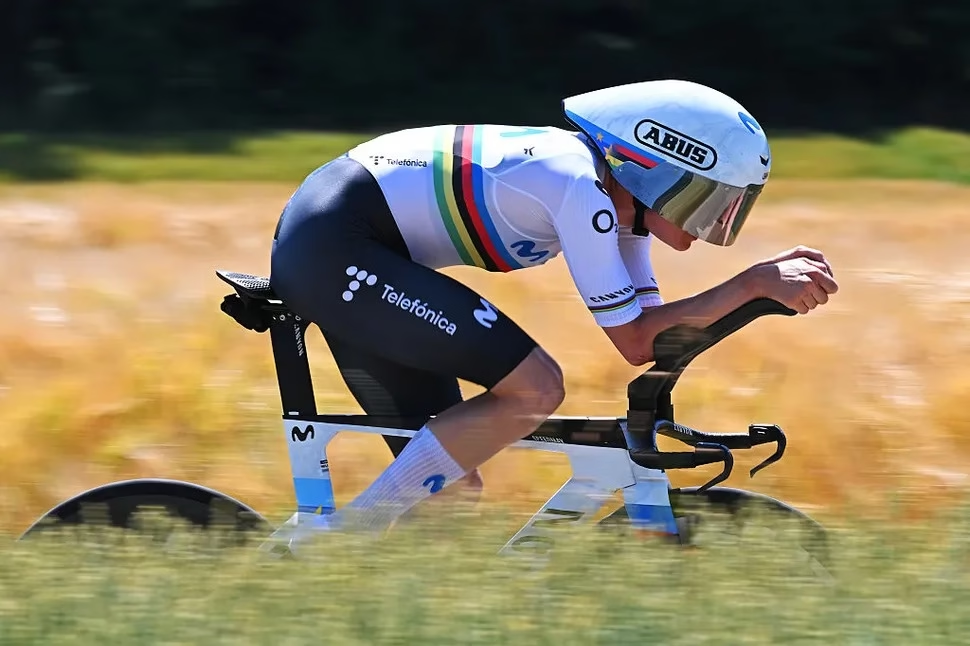 Photo Credit: Getty
Marlen Reusser is the clear rider to beat
There is little ambiguity around the favourite.
Reusser is the reigning world time trial champion and has repeatedly demonstrated this season that she remains the benchmark over distances close to Gatineau’s.
She won the 23.7km time trial at the Tour de Suisse Women in June, beating Zoe Bäckstedt by 11 seconds and everyone else by more than 50 seconds. That performance moved her into yellow and laid the foundation for her eventual overall victory.
The full story of that ride is covered in our Tour de Suisse Women stage 4 report.
Reusser then delivered again at the Tour de France Femmes, winning the 21km Stage 4 time trial from Gevrey-Chambertin to Dijon and taking the yellow jersey.
That was another course where outright power was only part of the requirement. The Tour de France Femmes time trial guide highlighted the changes in rhythm around Marsannay and Corcelles-les-Monts, and Reusser managed them without sacrificing her advantage on the faster sections.
Gatineau falls into a similar duration to both of those efforts.
The bigger difference comes on Sunday. The elite World Championship time trial is 39.2km, requiring Reusser to sustain her position and power for much longer.
Wednesday is therefore more about sharpening than building.
Reusser has not raced since the Tour de France Femmes, giving her enough time to recover and complete a specific Worlds training block. Gatineau now gives her one opportunity to reproduce the opening, pacing and equipment routine under proper racing conditions before the rainbow jersey goes on the line.
She should win. The question is how emphatically.
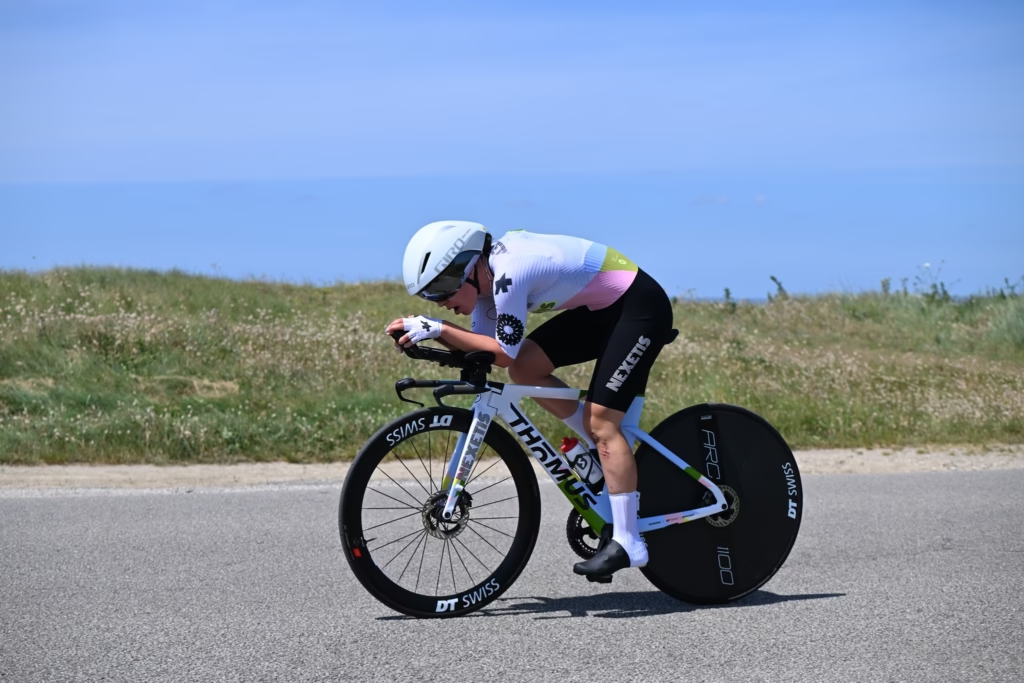
Jasmin Liechti has become a serious time trial rider
Jasmin Liechti gives Switzerland another rider worth following closely.
The 23-year-old has made a substantial step forward in 2026 and time trialling has been central to it.
Her breakthrough came at the Bretagne Ladies Tour, where she dominated the 24.7km individual time trial in Plomodiern. Liechti averaged more than 48km/h, won by 27 seconds and took control of the general classification before sealing overall victory the following day.
That performance is covered in our Bretagne Ladies Tour stage 2 report.
Liechti subsequently became Swiss elite time trial champion and will join Reusser in the elite Worlds race on Sunday.
Her progression through the Swiss development system has been steady rather than sudden. She was already a World Championship U23 silver medallist against the clock in Zürich in 2024, but 2026 has shown that she can now translate that ability into senior racing.
Reusser remains several levels above almost everyone when she is at her best, so Liechti does not need to finish within a handful of seconds to leave Gatineau encouraged.
A strong second tier behind the world champion would be enough to make her one of the riders worth watching in Montréal.
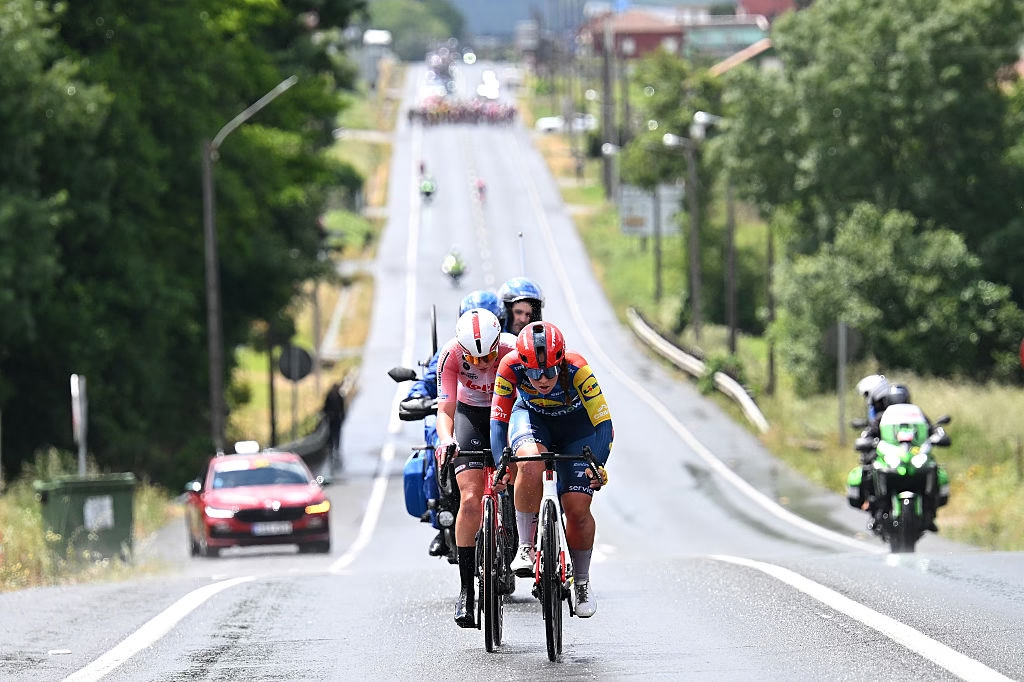 Photo Credit: Getty
Felicity Wilson-Haffenden brings elite national champion form
Felicity Wilson-Haffenden is one of the most interesting riders on the start list because her main World Championship target comes a day later than Reusser’s.
The Australian races the women’s U23 time trial on Monday.
She arrives as the Australian elite time trial champion after beating Brodie Chapman by four seconds over 29.3km in Perth at the beginning of the season.
It was a significant result for a rider still only 20 at the time, and our Australian national time trial report looked at how composed Wilson-Haffenden was despite stepping up against the elite field.
She has backed it up since.
Wilson-Haffenden finished second to Bäckstedt in the longer time trial at the Baloise Ladies Tour and already knows what it is like to be close to a World Championship medal. She finished fourth in the U23 time trial in Kigali last September, only ten seconds outside the podium.
Gatineau gives her a rare opportunity to measure herself directly against Reusser immediately before trying to win a rainbow jersey of her own.
Matching the Swiss rider is an unrealistic requirement.
Being one of the closest riders would be much more relevant.
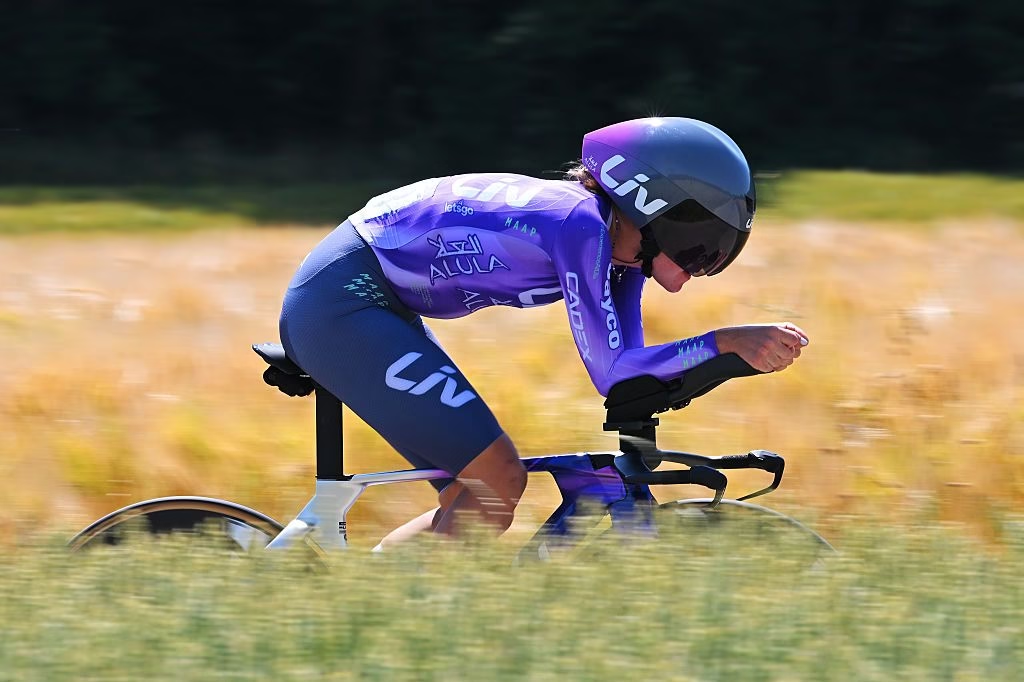 Photo Credit: Getty
Nadia Gontova has already gone close in Gatineau
Nadia Gontova brings the strongest combination of current Canadian time trial form and previous experience on these roads.
She finished second here in 2024, losing to Franziska Brauße by only four seconds. That result remains one of the closest editions in the race’s recent history and is covered in our 2024 Chrono Féminin de Gatineau report.
Two years later, Gontova arrives as Canadian elite time trial champion.
Her development has generally been built around climbing rather than becoming a pure specialist against the clock. The move to Liv AlUla Jayco for 2026 followed a breakthrough period in which she established herself as one of Canada’s strongest emerging stage racers, as outlined when Gontova’s WorldTour move was announced.
The Canadian title has added another dimension.
Gontova will represent Canada in Sunday’s elite time trial, so Wednesday is about more than trying to improve on her 2024 second place. It gives her a race-speed effort on home soil four days before the biggest home championship of her career.
If Reusser establishes the expected winning standard, Gontova’s place relative to Liechti, Wilson-Haffenden and Hanson should provide a useful indication of what a strong Montréal result might look like.

Anniina Ahtosalo’s time trial ability should not be overlooked
Anniina Ahtosalo is still primarily associated with sprinting and fast one-day racing, but that can obscure how good she is against the clock.
The Finnish rider has won multiple national time trial titles and was European U23 champion in the discipline in 2024.
Her career profile reflects how closely those two sides of her racing have developed together. The same power that makes her dangerous in a sprint can translate well to shorter individual efforts.
That makes Gatineau particularly interesting.
At 22.2km, today’s race should suit Ahtosalo better than the 39.2km World Championship test. She can ride close to the limit for a relatively short period rather than having to sustain an aerodynamic effort approaching an hour.
Sunday will require much more controlled pacing.
Ahtosalo therefore has a realistic chance of finishing high today without that automatically making her one of the principal medal favourites for Montréal. Equally, a strong result against established specialists would confirm that she arrives at Worlds with genuine form rather than simply a national championship result on her palmarès.
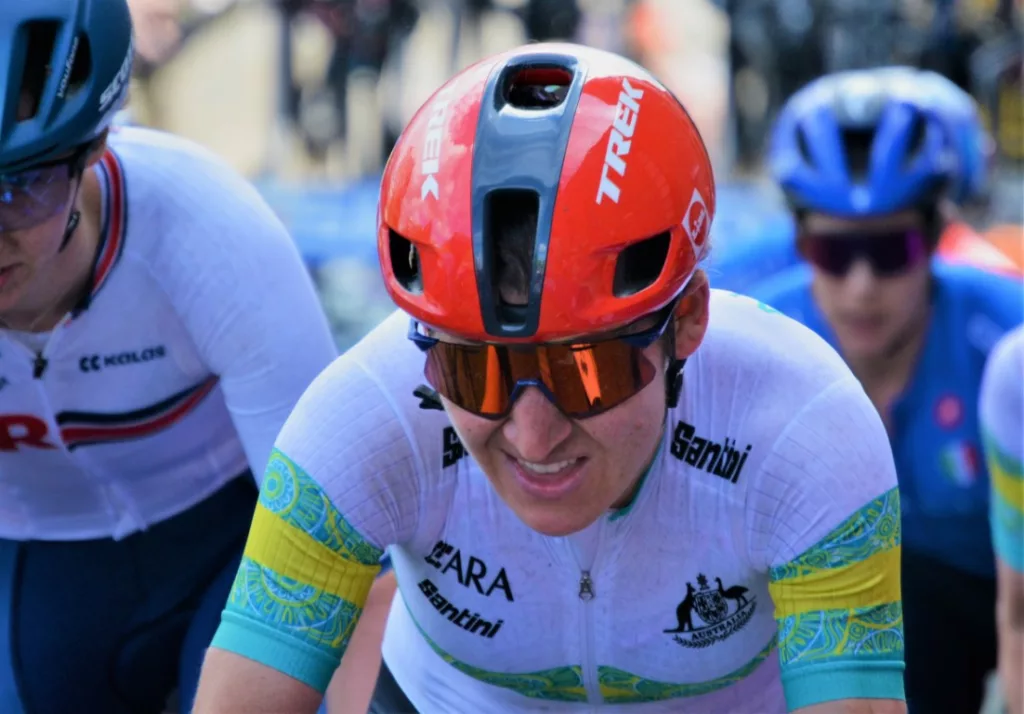
Lauretta Hanson has a World Championships reason to go hard
Lauretta Hanson deserves more attention than her reputation as a road captain and Classics domestique sometimes allows.
She finished ninth in Reusser’s Tour de Suisse time trial, a significant result given the strength of that field, and Australia have selected her for the elite World Championship time trial.
The Lidl-Trek rider therefore has exactly the same practical reason as Reusser to take Gatineau seriously.
Sunday is only four days away.
Nobody wants to arrive at a World Championship having emptied themselves unnecessarily, but a 22km time trial is short enough to provide a high-quality final effort without creating the recovery problems associated with a long road race.
Hanson is unlikely to match Reusser’s outright speed. Finishing around the front of the chasing group would be a useful final marker before Montréal.

Georgia Baker could benefit from the shorter distance
Georgia Baker provides another experienced Australian option today.
Baker’s track background gives her the sort of sustained power that can work particularly well in a shorter time trial. She also finished fourth at the Australian championships in January, behind Wilson-Haffenden, Chapman and Amber Pate.
She is not as established as a road time trial specialist as Reusser or Liechti, but Gatineau does not require an hour in the extensions.
That makes her more dangerous here than she would be over the full 39.2km Worlds distance.
If the course becomes a succession of hard accelerations and sustained power sections rather than a perfectly even pacing exercise, Baker has the engine to challenge for a strong placing.
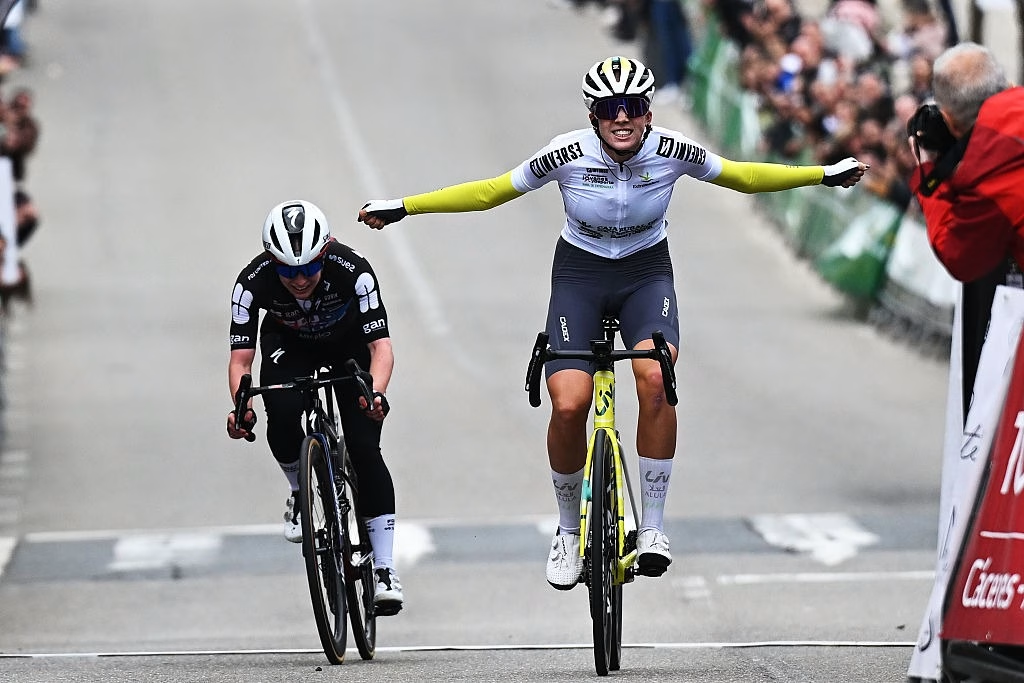 Photo Credit: Getty
Mackenzie Coupland and Ava Holmgren have U23 Worlds in sight
The race also contains several riders whose real championship arrives on Monday.
Mackenzie Coupland joins Wilson-Haffenden among Australia’s U23 options, while Canada’s Ava Holmgren is another rider using Gatineau as her final race-speed time trial before Montréal.
Holmgren has already won a Canadian U23 title against the clock and finished tenth in the U23 World Championship time trial last year. Her multi-discipline background gives her strong technical ability as well as the aerobic engine required for a course like this.
The difficulty for all of the U23 riders is separating today’s result from Monday’s target.
A rider can be several places behind Reusser and still produce exactly the performance she needs before Worlds. The more useful comparison is against the other young specialists.
Wilson-Haffenden, Coupland and Holmgren will all get that comparison today.
Tabea Huys can push towards the front group
Tabea Huys is another rider who should not be lost among the better-known WorldTour names.
The Austrian has already demonstrated strong national-level time trial ability and continues to develop quickly at only 20.
Gatineau is the sort of UCI 1.1 event where that progression can become easier to measure. There is one world-class benchmark in Reusser, several established professionals and a group of strong young time trial riders around her age.
A top-five or top-ten ride would represent another useful step.

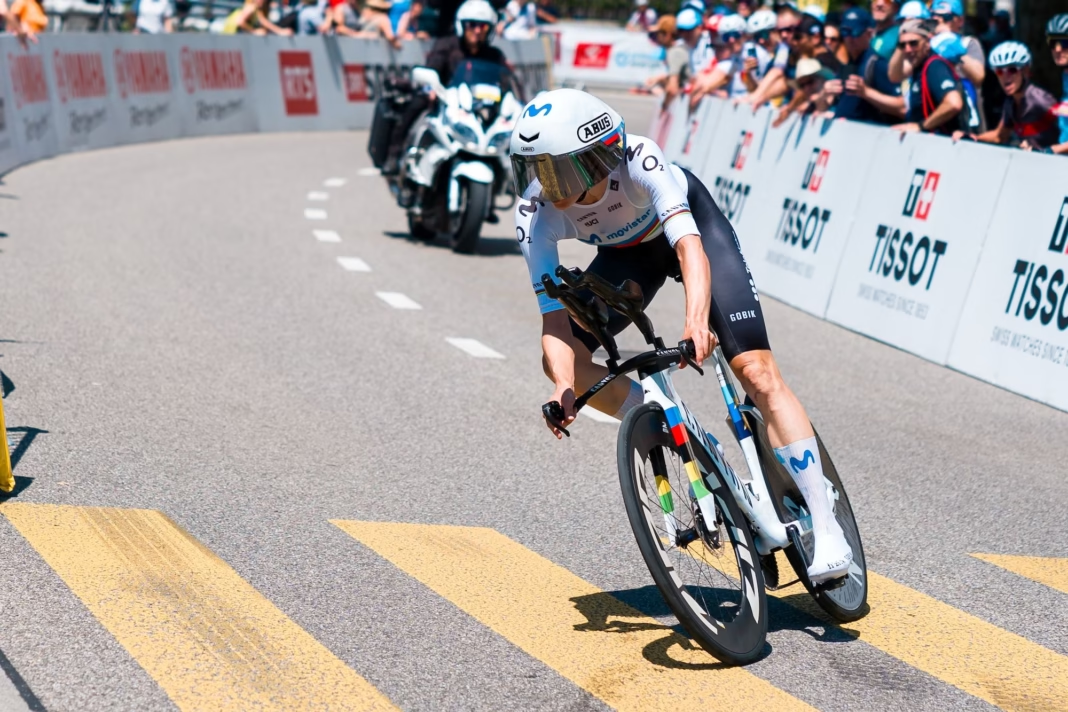
Why the World Championships comparison has limits
The timing makes Gatineau important, but it is not a miniature version of Sunday’s race.
The elite World Championship time trial covers 39.2km with 220 metres of climbing. It uses long, fast sections through Montréal and includes a passage around the Circuit Gilles-Villeneuve before the riders return towards the finish beside Parc Jeanne-Mance.
The full Montréal World Championships course guide shows why sustained aerodynamic efficiency should matter so much.
Gatineau is much shorter.
A rider can afford to be more aggressive from the start and spend a greater proportion of the race above the intensity she could sustain for 39km. The repeated changes around the downtown circuit also interrupt the effort more frequently.
That means a rider could finish close to Reusser today and still lose considerably more time on Sunday.
The value is in seeing form, execution and equipment under pressure.
Reusser can check that everything works.
Liechti can establish another elite benchmark.
Gontova, Ahtosalo and Hanson can find out where they sit before Sunday’s championship.
Wilson-Haffenden, Coupland and Holmgren can do the same before the U23 title is decided on Monday.
Reusser is the benchmark, but the gaps are worth watching
The strength of Reusser’s 2026 time trial season makes her the obvious favourite.
She won in Aarburg. She won in Dijon. She arrives in Canada as defending world champion and with Sunday’s 39.2km Montréal test built around exactly the sort of sustained power that has defined her career.
Gatineau should be hers to lose.
The more interesting information may come immediately behind.
Liechti has a chance to show how close she has moved towards the elite specialists. Wilson-Haffenden can test herself against the world champion before chasing an U23 rainbow jersey. Gontova gets another opportunity on roads where she has already come within four seconds of victory, while Ahtosalo and Hanson both have good reasons to treat the race as more than a warm-up.
The first rider starts at 15:45 BST, with FloBikes coverage beginning ten minutes earlier.
Four days later, several of the same bikes will be on another start ramp in Montréal.
This time there will be a rainbow jersey waiting at the other end.

