
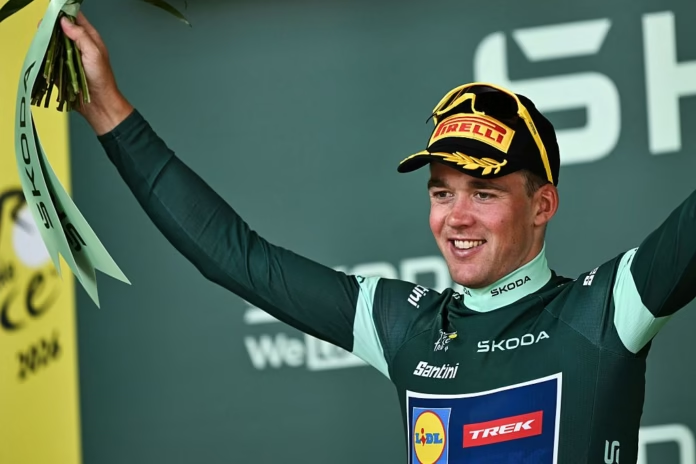
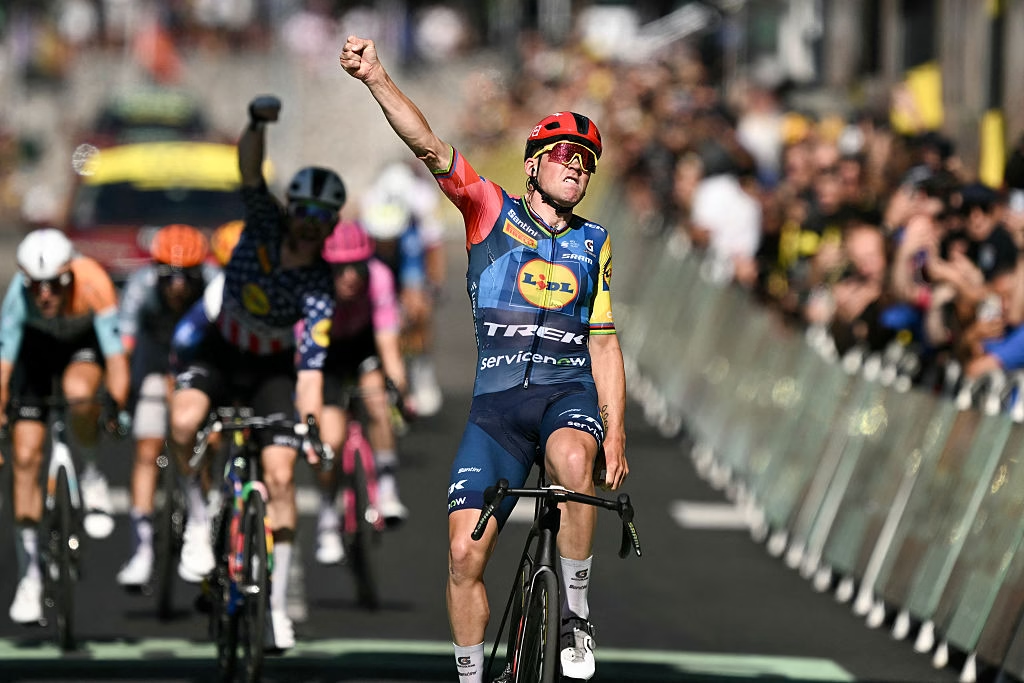
Mads Pedersen cannot mathematically secure the 2026 Tour de France green jersey on Stage 17, but he can make the classification extremely difficult for Jasper Philipsen and Biniam Girmay to overturn.
Pedersen starts the 174.7km stage from Chambéry to Voiron with 417 points. Philipsen is 31 points behind on 386, while Girmay trails by 56 points on 361.
Stage 17 offers 25 points at the intermediate sprint and 50 at the finish. A maximum of 75 points is therefore available to one rider, creating the final major opportunity for the pure sprinters to produce a large swing before the race enters the Alps.
Pedersen does not need to win in Voiron. He needs to keep scoring, avoid being isolated during the hilly opening and prevent Philipsen from combining an intermediate sprint victory with a stage win.
The green jersey has reached the point where consistency matters more than one spectacular result.
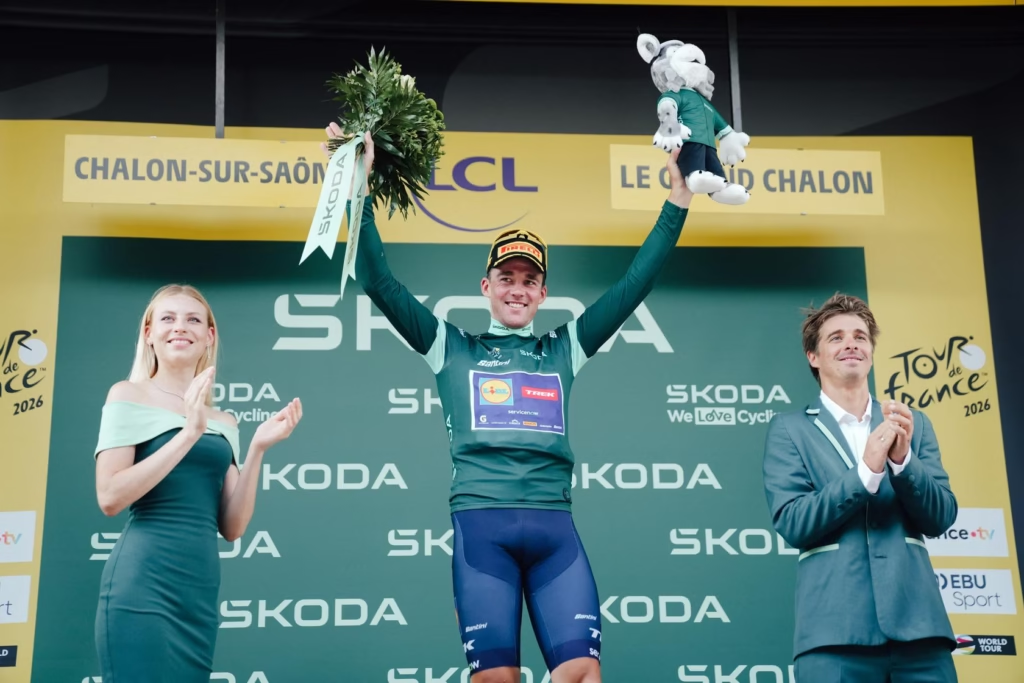 Photo Credit: A.S.O./Thomas Maheux
Can Pedersen win the green jersey on Stage 17?
Pedersen cannot officially win the green jersey on Stage 17 because points remain available on every stage through Paris. However, a strong result in Voiron could give him an advantage that is practically decisive.
The three Alpine stages that follow still contain intermediate sprints and points at the finish. Stage 21 in Paris then offers another 25 points during the stage and 50 on the Champs-Élysées.
In total, 220 points remain available after Stage 17. That means even a dominant Pedersen performance cannot make him mathematically uncatchable on Wednesday afternoon.
The theoretical calculation does not reflect the practical race.
Philipsen and Girmay are unlikely to win summit finishes at Orcières-Merlette or Alpe d’Huez. The intermediate sprints on the mountain stages also arrive after significant climbing, making them difficult targets for the pure sprinters.
If Pedersen leaves Voiron more than 75 points ahead, his rivals could no longer overhaul him through Paris alone. They would need to score during the Alpine stages as well.
That would effectively place the green jersey under Pedersen’s control.
Tour de France green jersey standings before Stage 17
| Position | Rider | Team | Points | Gap |
|---|---|---|---|---|
| 1 | Mads Pedersen | Lidl-Trek | 417 | Leader |
| 2 | Jasper Philipsen | Alpecin-Premier Tech | 386 | -31 |
| 3 | Biniam Girmay | NSN Cycling Team | 361 | -56 |
| 4 | Max Kanter | XDS Astana Team | 271 | -146 |
| 5 | Olav Kooij | Decathlon CMA CGM | 210 | -207 |
The wider classification picture is covered in GC and jerseys after Tour de France 2026 Stage 16.
Pedersen’s advantage is useful rather than comfortable.
Philipsen can take the jersey on Stage 17 if he produces a near-perfect day and Pedersen fails to score heavily. Girmay needs a larger swing, but the 75 points available keep him firmly in the contest.
Everyone below Girmay now requires a combination of victories, Alpine intermediate points and a collapse from Pedersen. The realistic green jersey battle has narrowed to three riders.
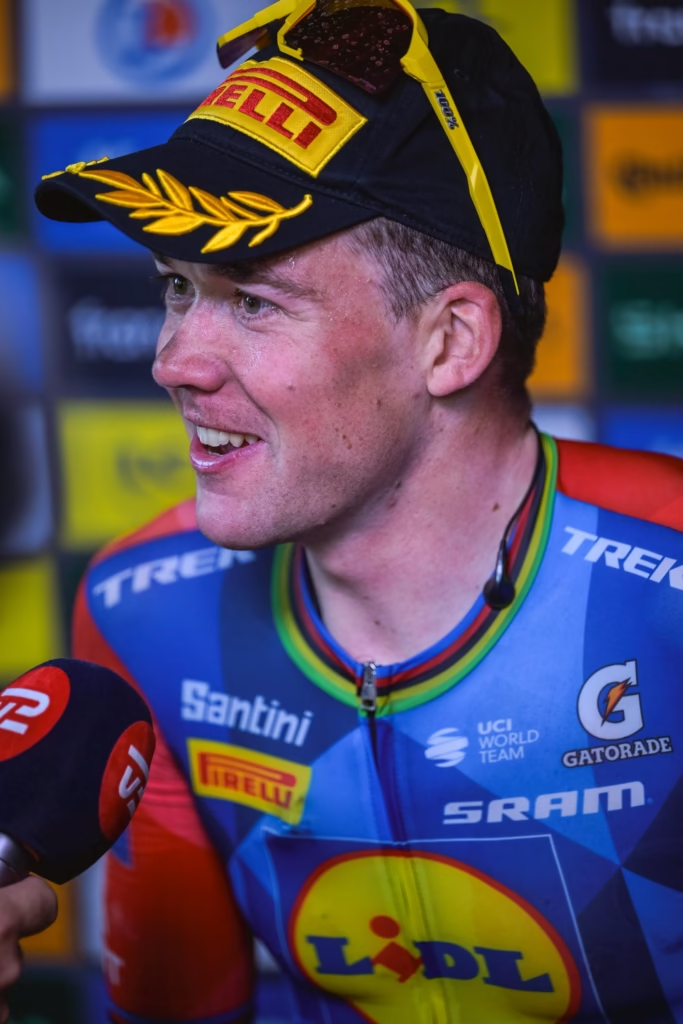 Photo Credit: A.S.O./Charly López
How many points are available on Stage 17?
Stage 17 contains two major scoring opportunities.
Intermediate sprint in Colombe
| Position | Points |
|---|---|
| 1st | 25 |
| 2nd | 20 |
| 3rd | 16 |
| 4th | 14 |
| 5th | 12 |
| 6th | 10 |
| 7th | 9 |
| 8th | 8 |
| 9th | 7 |
| 10th | 6 |
Points continue down to 15th place.
Stage finish in Voiron
| Position | Points |
|---|---|
| 1st | 50 |
| 2nd | 30 |
| 3rd | 20 |
| 4th | 18 |
| 5th | 16 |
| 6th | 14 |
| 7th | 12 |
| 8th | 10 |
| 9th | 8 |
| 10th | 7 |
The gap between first and second at the finish is especially important. A stage victory is worth 20 more points than second place.
That is why Pedersen cannot simply follow Philipsen into the final kilometre and accept being beaten. He does not need to win, but he cannot afford to allow Philipsen to take maximum points while finishing several positions behind.
The Tour de France 2026 jerseys explained guide covers how finish positions and intermediate sprints combine to decide the green jersey.
What does Pedersen need to do on Stage 17?
Pedersen’s first target is to remain close to Philipsen and Girmay at the intermediate sprint.
His second is to finish near them in Voiron.
If he scores within five or ten points of his main rivals across the two opportunities, the overall advantage remains broadly unchanged. That would be a successful day because the next three stages suit Pedersen’s rivals far less than Stage 17.
A top-five finish and a solid intermediate sprint may therefore be enough.
The danger comes if Pedersen loses position, misses a split or allows Philipsen to score freely at both points.
Stage 17 contains approximately 2,200 metres of climbing, with four categorised ascents inside the opening 60km. Pedersen should cope with that terrain better than most sprinters, but the aggressive start creates opportunities for a large breakaway or a split in the peloton.
The route and likely race scenarios are covered in the Tour de France 2026 Stage 17 preview.
The Stage 17 live viewing and start time update includes the estimated timing for the intermediate sprint and finish.
The scenarios that could decide green
The starting gap between Pedersen and Philipsen is 31 points.
That is large enough to give Pedersen tactical flexibility, but small enough to disappear through one poor stage.
If Pedersen and Philipsen finish together
If Pedersen finishes directly behind or directly ahead of Philipsen at both scoring points, very little changes.
That is the simplest route towards defending green.
Pedersen does not have to take unnecessary risks to win the intermediate sprint. He needs to remain aware of Philipsen and prevent a major difference.
Even if Philipsen gains five or ten points, Pedersen would still reach the Alps in the lead.
If Pedersen wins both sprints
A victory at the intermediate sprint and stage finish would give Pedersen 75 points, taking his total to 492.
If Philipsen finished second at both, he would score 50 and move to 436. Pedersen’s advantage would increase from 31 to 56 points.
That would not mathematically end the contest, but it would leave Philipsen needing to recover points during the Alps or produce a major swing in Paris.
If Philipsen scored fewer than 30 points across the day, Pedersen could extend his lead beyond 75. At that point, Paris alone would no longer be enough for Philipsen to overturn the classification.
If Philipsen takes maximum points
Philipsen can move into green if he wins both the intermediate sprint and the stage while Pedersen has an ordinary rather than disastrous day.
If Pedersen finished third at both scoring points, he would collect 36 points. Philipsen would gain 75, producing a 39-point swing.
The new totals would be:
- Jasper Philipsen: 461
- Mads Pedersen: 453
Philipsen would lead by eight points.
That example shows why consistency alone has limits. Pedersen must keep scoring, but he also needs to prevent Philipsen from winning everything.
If Pedersen fails to score
The worst-case scenario is straightforward.
If Pedersen scores no points and Philipsen takes the maximum 75, Philipsen would end Stage 17 with 461 points and a 44-point lead.
Girmay would also move ahead of Pedersen if he won both scoring opportunities, reaching 436 points.
A complete failure is unlikely because Pedersen is particularly well suited to the route. A crash, mechanical problem or poorly timed split can still change the classification quickly.
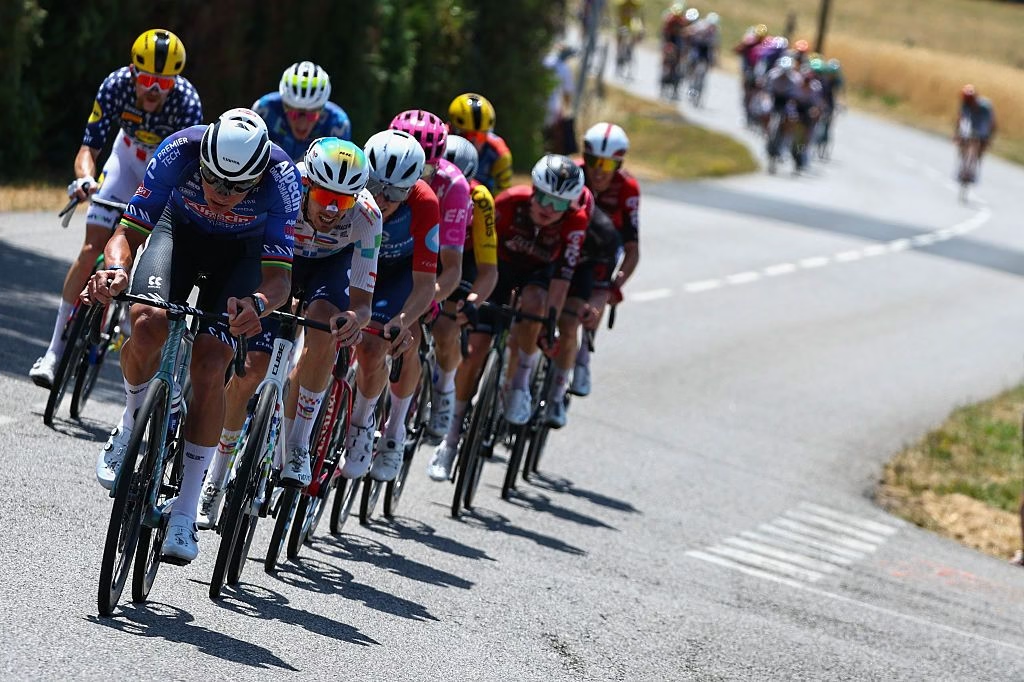
A breakaway may actually help Pedersen
Lidl-Trek face an unusual tactical calculation.
Pedersen is the Stage 17 favourite, so the team have a clear reason to chase. Winning would strengthen his green jersey position and add another major victory to his Tour.
However, a successful breakaway could also protect him.
If a large group takes the leading positions at the intermediate sprint and finish, fewer points remain available to Philipsen and Girmay. Pedersen could retain most or all of his 31-point advantage without Lidl-Trek spending the entire day controlling the race.
That makes Stage 17 different from a normal sprint stage.
Philipsen needs the breakaway caught because the 50-point finish is his best remaining opportunity to reverse the classification. Pedersen can afford a more patient approach.
Lidl-Trek should still protect him near the front, particularly during the hilly opening. They do not necessarily need to carry the full chase if Alpecin-Premier Tech, NSN Cycling Team and Decathlon CMA CGM also want a sprint.
The strange balance between the sprint and breakaway is explained in why Stage 17 is the sprinters’ last real chance before Paris.
Pedersen’s advantage was built through consistency
Pedersen does not lead green because he has been the fastest rider in every conventional sprint.
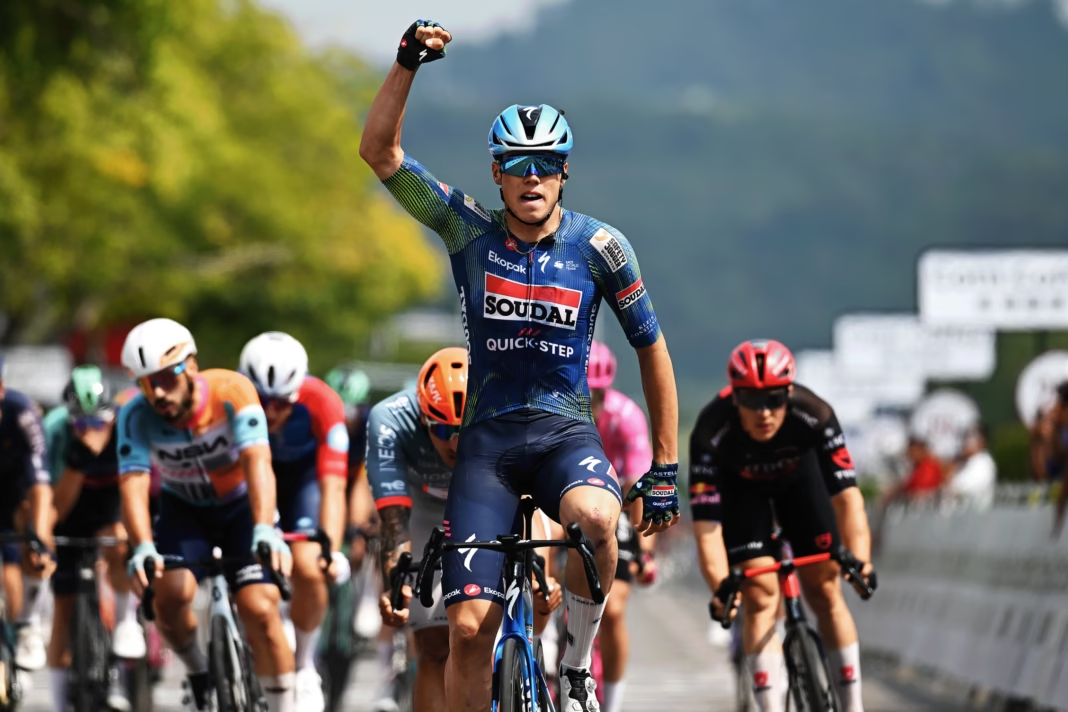
Tim Merlier has won three stages. Philipsen has repeatedly placed near the front. Girmay and Kooij have also collected significant points.
Pedersen’s strength has been his ability to score across a wider variety of stages.
He can contest normal bunch finishes, intermediate sprints and harder finales. He has remained involved on days where some of the pure sprinters have been reduced to surviving inside the time limit.
That was the central argument in ProCyclingUK’s pre-race Tour de France 2026 sprinters and green jersey guide.
The green jersey rewards repeated scoring more than isolated speed. Pedersen has converted third, fourth and fifth places into a classification lead while the stage victories have been divided between several rivals.
Stage 17 is another test of the same approach.
He does not have to beat every sprinter. He needs to remain part of the contest.
The route suits Pedersen better than Philipsen
Stage 17 was identified before the Tour as one of Pedersen’s most important opportunities.
The opening climbs can weaken sprint trains and remove riders who rely on an entirely controlled race. The final rise near Voiron also favours a sprinter who can absorb repeated efforts without losing his position.
Pedersen fits that profile.
He can survive if the breakaway battle continues across the early climbs. He can contribute to Lidl-Trek’s chase rather than waiting passively for the final kilometres. He is also capable of responding if the race becomes a reduced sprint rather than a full peloton finish.
Philipsen remains faster in a clean sprint, but his best scenario requires Alpecin-Premier Tech to manage the breakaway and preserve enough lead-out support for the finale.
Girmay should also handle the climbing well, although he begins 56 points behind and needs a more significant result.
The route-specific case was already made in Mads Pedersen at the Tour de France 2026: stages, green jersey and hard days.
Why the Alps favour Pedersen’s position
There are still substantial points available on Stages 18, 19 and 20, but they are positioned on demanding mountain routes.
Stage 18 offers 25 points at the intermediate sprint in Corps and 30 at the summit finish in Orcières-Merlette. Before reaching the sprint, the race crosses the Côte d’Engins, Côte de Monteynard and Côte des Terrasses.
Stage 19 places its intermediate sprint after the Col Bayard and Col du Noyer. Stage 20 does not reach its sprint until after the Col de la Croix de Fer.
Philipsen and Girmay could theoretically join breakaways or compete from the gruppetto for those points. Doing so would require significant effort on days when their priority is normally reaching the finish inside the time limit.
Pedersen is also more capable of surviving hard terrain and chasing intermediate points if Lidl-Trek decide further scoring is necessary.
That is why the classification can become practically settled without becoming mathematically complete.
A lead of 40 or 50 points after Voiron would force Philipsen to do more than wait for Paris. A lead above 75 would require him to score in the Alps.
Paris is not a guaranteed rescue opportunity
The final stage still offers a maximum of 75 points, but the Paris route is harder than the traditional Champs-Élysées finish.
The riders climb the Côte du Pavé des Gardes before completing three ascents of the Côte de la Butte Montmartre. The final Montmartre climb comes only 10.3km from the finish.
That structure may suit Pedersen more than the pure sprinters.
He has the strength to survive a selective circuit and the speed to score from a reduced group. Philipsen may still win if the peloton regroups, but Paris is no longer a stage where Alpecin can safely expect a conventional lead-out.
The Tour de France 2026 sprint stages ranking identified both Voiron and Paris as unusually complicated opportunities.
Pedersen therefore has two advantages. He already leads the classification, and the remaining flat stages suit his durability.
Lidl-Trek cannot focus entirely on green
Pedersen’s pursuit of the jersey is not Lidl-Trek’s only objective.
Juan Ayuso sits fifth overall, while Mattias Skjelmose is sixth and less than a minute behind his teammate. The squad also lead the team classification by only 23 seconds over UAE Team Emirates-XRG.
That means several Lidl-Trek riders must be preserved for the Alpine stages.
The team cannot necessarily use every domestique to chase the breakaway for 150km. Doing so could leave Ayuso and Skjelmose with less support during the most important GC block of the race.
Pedersen’s existing lead gives Lidl-Trek room to compromise.
They can contribute to the chase without taking full responsibility. They can allow a strong but non-threatening breakaway to absorb points. They can also focus on delivering Pedersen safely to the intermediate sprint and final rise rather than building a textbook lead-out.
The green jersey does not need to be sealed through domination. It can be defended through control.
-
 Photo Credit: Getty
What result would count as a successful Stage 17?
Pedersen’s day should be judged against Philipsen and Girmay rather than the stage winner.
A victory would be the ideal result, but each of the following would represent a positive outcome:
- Finishing ahead of Philipsen and Girmay
- Scoring at both the intermediate sprint and finish
- Keeping his lead above 30 points
- Reaching the Alps without a crash or mechanical problem
- Preventing either rival from taking the full 75 points
- Allowing a breakaway to absorb points if Lidl-Trek cannot control the stage efficiently
A small loss is manageable.
If Philipsen gains five or ten points, Pedersen still holds the advantage and moves closer to the terrain that suits him best.
A swing of 20 points or more would reopen the contest. Losing green outright would give Pedersen a much more complicated final four stages.
Verdict: Pedersen can effectively seal green without winning
Pedersen does not need to win Stage 17 to place one hand on the green jersey.
He needs to remain visible at the intermediate sprint, finish close to Philipsen and avoid the kind of incident that can turn a 31-point lead into a deficit.
His consistency has created that position. While the pure sprinters have divided the stage victories, Pedersen has repeatedly collected points across different types of terrain.
Voiron is the final major test of that strategy.
If Pedersen leaves Stage 17 with a lead of around 40 points or more, Philipsen and Girmay will need to find points in the Alps or produce an exceptional final day in Paris.
If he extends the gap beyond 75, the contest will not be mathematically finished, but it will be close to over in practical terms.
Pedersen does not have to win the stage.
He has to make sure nobody else wins the classification while doing so.

