
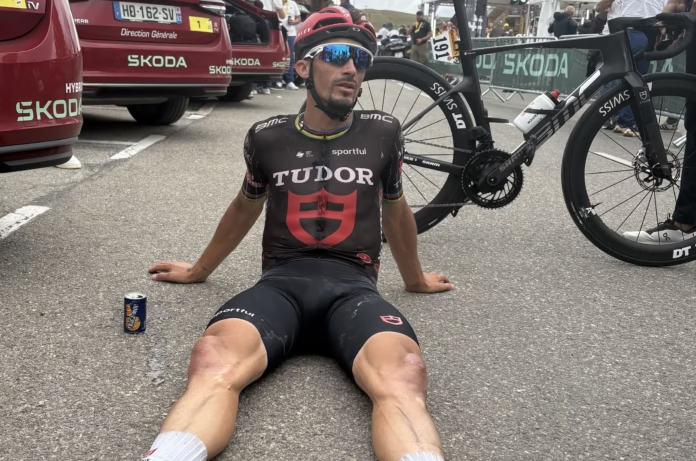
Julian Alaphilippe has decided to retire from professional cycling at the age of 34, bringing an immediate end to a career that included two world road race titles, six Tour de France stage wins and victories at Milan-San Remo, Strade Bianche and La Flèche Wallonne.
The Frenchman will not race again in 2026 and is set to give up the final year of his contract with Tudor Pro Cycling, which had been due to run through the end of 2027. That means the 2026 Tour de France was the final race of his professional career, closing one of the most distinctive and popular careers of the modern era.
Alaphilippe had already strongly hinted during the Tour that retirement was approaching. His comments after the Alpe d’Huez stage carried the tone of a rider who knew the end was close, and the decision now appears to have been shaped by a growing feeling that he could no longer race in the way that had defined his peak years.
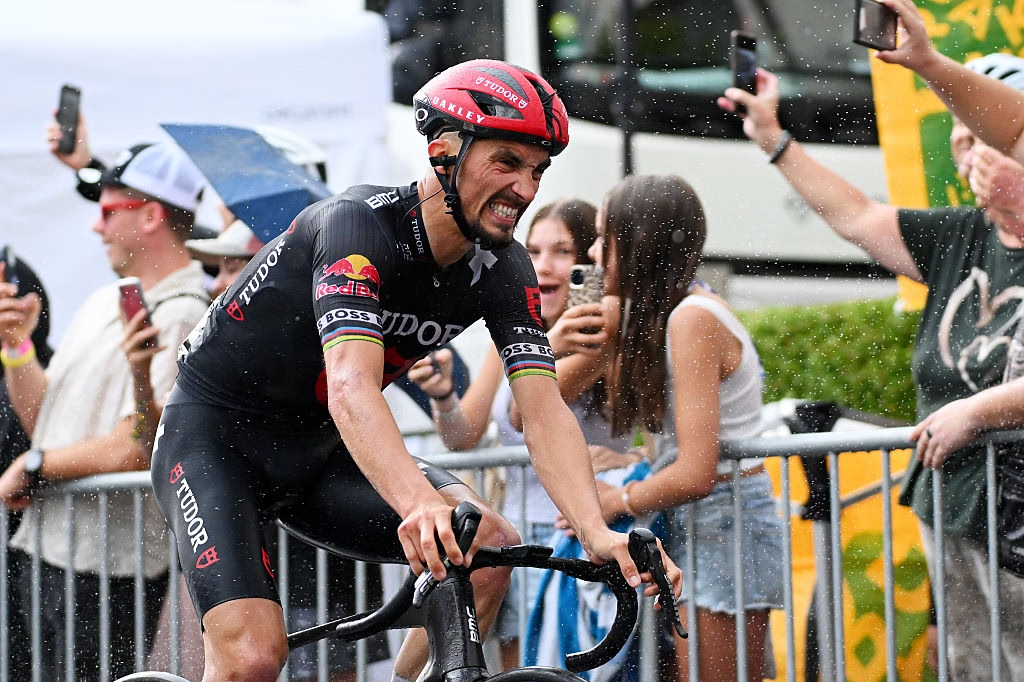
Alaphilippe had already hinted that the end was close
The possibility of retirement became increasingly apparent during the final days of the Tour de France. After the Alpe d’Huez stage, Alaphilippe openly questioned whether he would return to the race, having spent another day attacking without being able to reproduce the explosiveness that once made him one of the most feared puncheurs in the peloton.
His presence at the 2026 Tour had still been one of the central stories within Tudor’s line-up. ProCyclingUK’s Tour de France 2026 team-by-team guide identified Alaphilippe and Marc Hirschi as the team’s principal punchy stage-hunting options, but the race gradually became less about another victory and more about whether Alaphilippe still wanted to continue at all.
That uncertainty now appears to have been resolved. Rather than returning for an autumn programme or attempting one final season in 2027, Alaphilippe has chosen to stop immediately.
The Tour de France becomes Alaphilippe’s final race
Alaphilippe’s final professional appearance therefore came at the 2026 Tour de France, the race with which his career became most closely associated. He completed the three weeks and reached Paris, but the familiar attacking instinct was no longer producing the same results.
That approach had defined so much of his Tour career. Alaphilippe won six stages, repeatedly animated hilly days and spent 18 days in the yellow jersey across his career, including the extraordinary 2019 edition when he held the race lead deep into the mountains and briefly made an unlikely overall challenge feel possible.
Even in the later phase of his career, the instinct to attack never really disappeared. That was evident at the 2025 Tour, when a crash and shoulder problem did not stop him forcing his way back into the action. ProCyclingUK covered that memorable day in Alaphilippe’s Stage 15 celebration blunder after an early crash and shoulder injury.
The results were becoming harder to find, but the way he raced remained recognisable right to the end.
Two world titles defined Alaphilippe at his peak
Alaphilippe retires as one of the most successful French riders of his generation, with his greatest achievements coming at the Road World Championships. He won his first elite men’s road race world title at Imola in 2020, attacking on the final climb and holding off the chasers to take a solo victory.
A year later he successfully defended the rainbow jersey in Leuven, becoming one of the very few riders to win consecutive elite men’s world road race titles. Those victories captured Alaphilippe at his best: aggressive, instinctive and willing to commit before the safest moment.
That willingness to attack early was central to his popularity. He was not a rider who always chose the most efficient path to victory, and many of his best races became memorable because he forced everyone else to react to him.

Milan-San Remo, Strade Bianche and three Flèche Wallonne wins
Alaphilippe’s palmarès extends far beyond the rainbow jersey. He won Milan-San Remo in 2019, attacking on the Poggio before beating the reduced leading group on the Via Roma, and also won Strade Bianche that same season.
The Mur de Huy became another defining venue. Alaphilippe won La Flèche Wallonne three times, in 2018, 2019 and 2021, with his acceleration on the final climb becoming one of the most recognisable finishing moves in the sport.
Even as that dominance faded, he remained central to Tudor’s Ardennes plans. ProCyclingUK’s 2026 La Flèche Wallonne team-by-team guide again placed Alaphilippe alongside Marc Hirschi as one of the team’s main leadership options, although by then the consistency of his best years had become increasingly difficult to reproduce.
Six Tour de France stage wins and the unforgettable 2019 yellow jersey run
Alaphilippe’s relationship with the Tour de France deserves particular attention because the race transformed his standing in French cycling. In 2018, he won the mountains classification after repeatedly attacking from breakaways, but it was the following year that changed everything.
Alaphilippe took yellow with an attacking victory at Épernay, briefly lost the jersey and then regained it before holding the race lead for much longer than almost anyone expected. His individual time trial victory in Pau turned an unlikely yellow-jersey run into something far more serious, and for a period he looked capable of challenging for the overall Tour.
He eventually finished fifth, but the result itself scarcely captured the importance of that edition. Alaphilippe had worn yellow for 14 days, captivated the French public and turned what should have been a stage-hunting campaign into one of the defining stories of the race.
ProCyclingUK’s 2019 Tour de France prize-money review reflected how central Alaphilippe had been to that year’s Tour, both through his stage success and the long period in yellow.
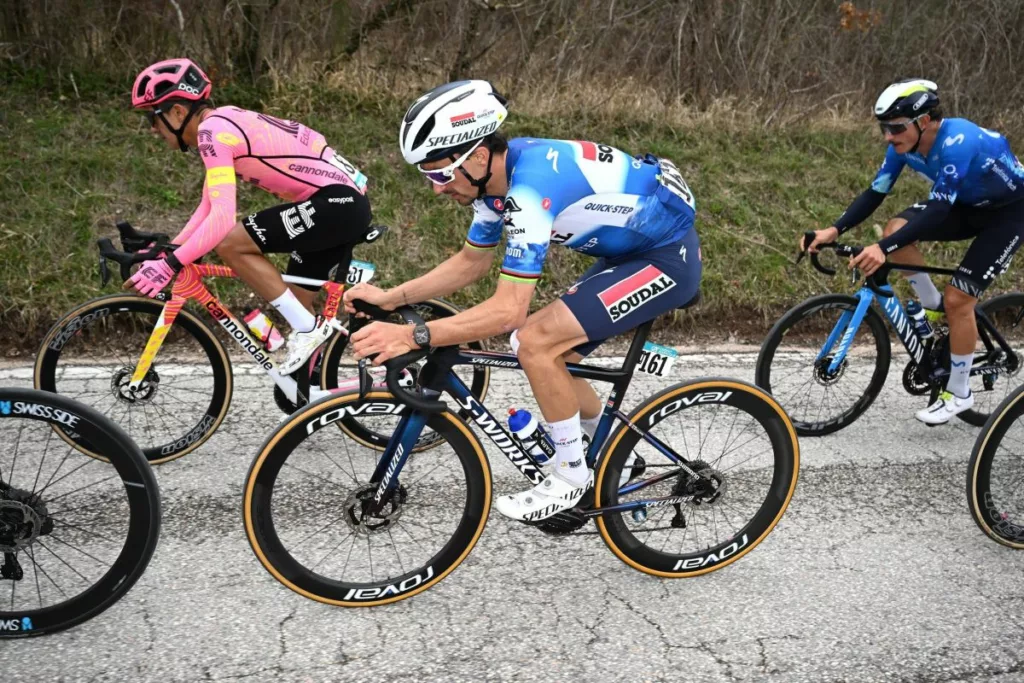
The final Quick-Step years became increasingly difficult
The latter part of Alaphilippe’s time with Quick-Step was considerably more complicated. Crashes and injuries repeatedly interrupted his momentum, most notably the severe crash at Liège-Bastogne-Liège in 2022, while his results became less consistent and his relationship with team manager Patrick Lefevere increasingly became a public story.
When the split finally came at the end of 2024, it genuinely felt like the end of an era. ProCyclingUK covered that transition when Julian Alaphilippe’s move to Tudor Pro Cycling was confirmed, with the Frenchman signing what was originally a three-year contract after spending 12 seasons within the Quick-Step structure.
Lefevere’s reaction to the departure was covered separately in Patrick Lefevere reflects on Julian Alaphilippe’s departure to Tudor.
Tudor offered Alaphilippe a fresh start
The switch to Tudor was intended to give Alaphilippe a different environment and greater freedom, while also acting as a statement signing for a team with ambitions to become a permanent fixture in the biggest races.
For Tudor, landing a rider of Alaphilippe’s stature was significant. He brought WorldTour victories, Grand Tour success, rainbow jerseys and a global profile to a team still establishing itself at the highest level. For Alaphilippe, the move offered the chance to reset after several difficult seasons at Quick-Step.
The change did not restore the sustained dominance of his peak years, but there were still flashes of the rider Tudor had hoped to unlock.

Québec gave Alaphilippe one final major victory
The clearest example came at the 2025 Grand Prix Cycliste de Québec, where Alaphilippe took his only victory of the season. It was an important result for both rider and team, showing that his attacking instincts could still produce a major WorldTour success even if those days were becoming less frequent.
He also remained competitive elsewhere. At the 2025 Tour of Britain, Alaphilippe finished third overall after challenging on the decisive climbing stages. ProCyclingUK covered his late GC push in the Stage 4 report from Burton Dassett and his eventual podium in the final Tour of Britain report.
Those performances suggested there was still enough left for another productive season, but 2026 proved more difficult and the Tour increasingly looked like a final attempt to find something close to his old level.
-
 Photo Credit: A.S.O./Billy Ceusters
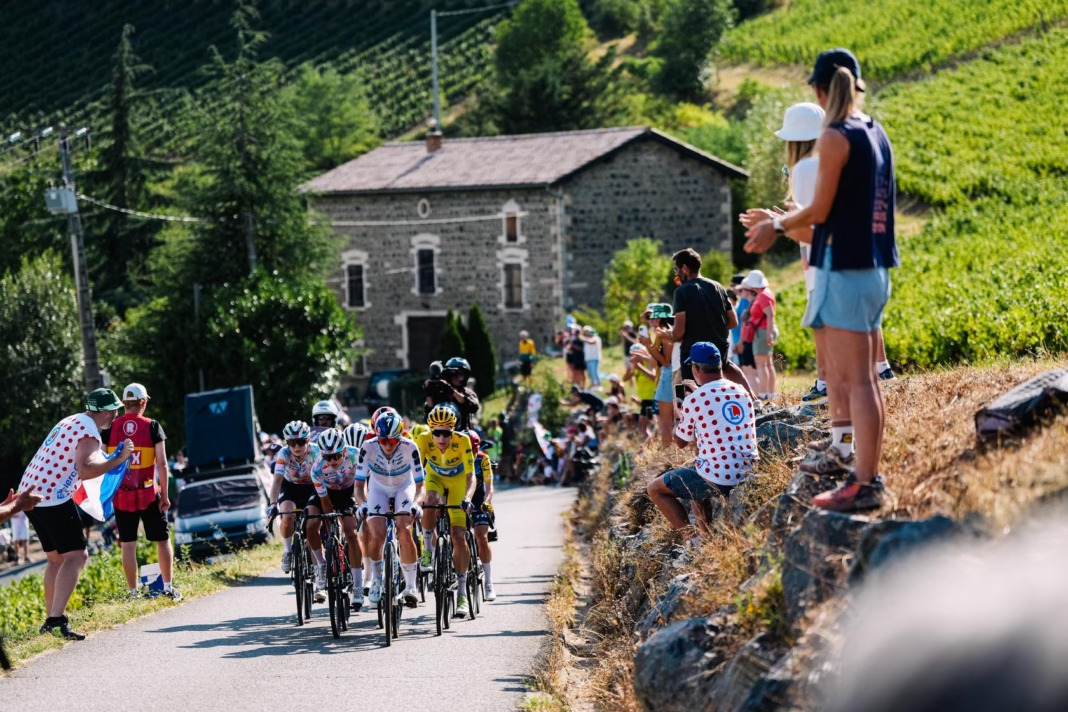
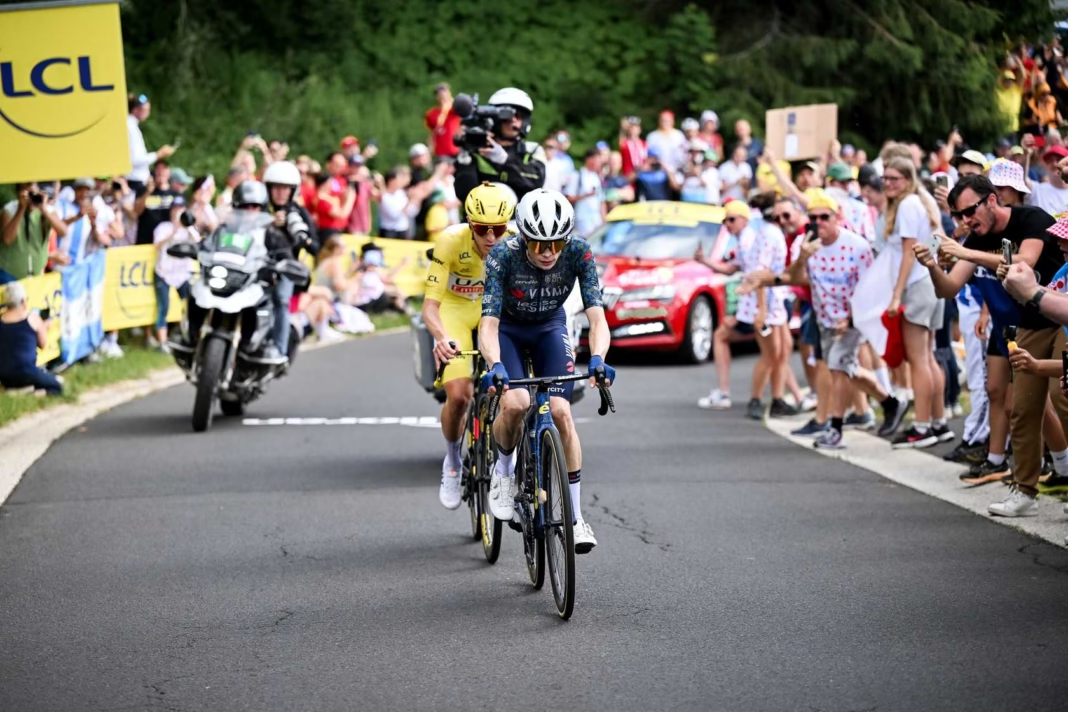
Alaphilippe gives up the final year of his Tudor contract
The timing of the retirement is particularly notable because Alaphilippe was contracted through 2027. When he joined Tudor, the three-year agreement was supposed to take him through three complete seasons with the Swiss team.
Instead, his career ends after two.
That means Tudor will enter 2027 without one of the riders around whom much of their rapid development had initially been built. It also changes the context around their upcoming racing plans, including the Tour of Britain, where Alaphilippe had been a major presence in 2025.
Earlier this month, ProCyclingUK’s Tour of Britain Men 2026 team line-up announcement noted the possibility of Alaphilippe returning after his podium last year. That will no longer happen.
There will be no autumn farewell programme and no final Classics campaign in 2027.
A career remembered as much for how he raced as what he won
Alaphilippe’s career numbers alone place him among the outstanding riders of his era: two consecutive world road race titles, six Tour de France stage wins, three victories at La Flèche Wallonne, Milan-San Remo, Strade Bianche and 18 days in the Tour de France yellow jersey.
But the appeal of Alaphilippe was never entirely explained by the palmarès. His best races were unpredictable because he attacked when waiting might have been safer, committed to moves that occasionally failed and repeatedly forced rivals to make tactical decisions earlier than they wanted.
That style sometimes cost him results, but it also made him one of the defining riders of the last decade.
The end has arrived without the carefully planned farewell season that often accompanies a rider of his stature. Instead, Julian Alaphilippe’s professional career ends at the Tour de France, the race where his attacking style, yellow jersey runs and willingness to take risks became part of modern French cycling history.

