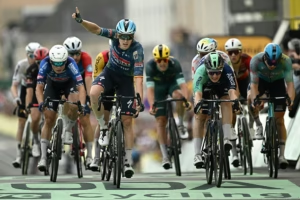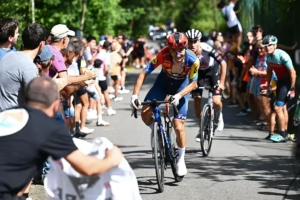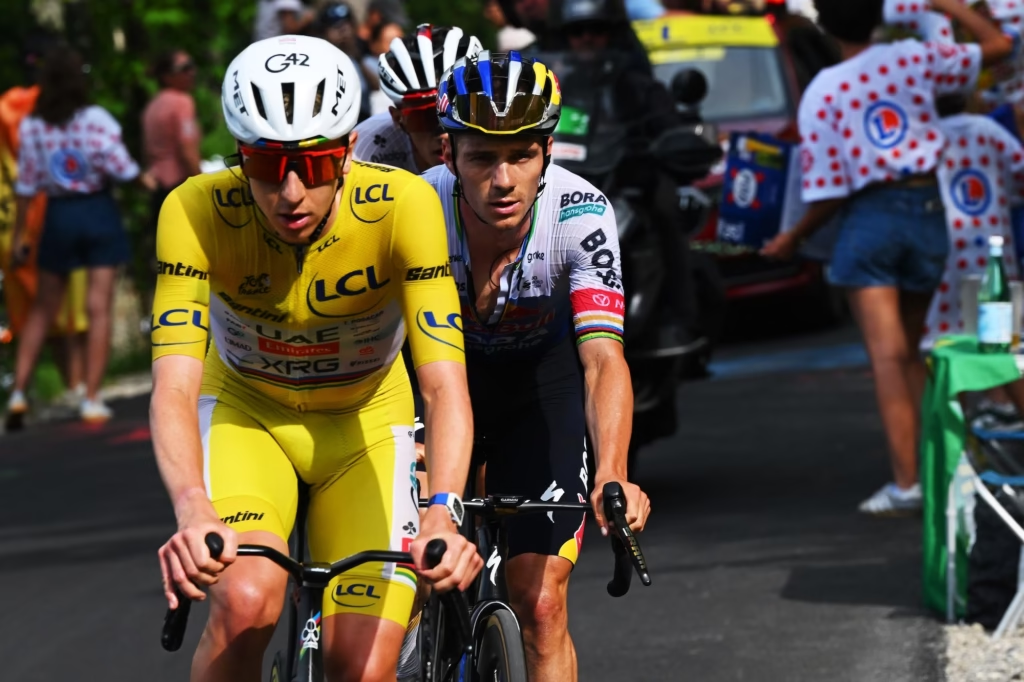
Tour de France stage 18 begins the decisive Alpine trilogy with a 185.2km mountain stage from Voiron to Orcières-Merlette.
The route contains approximately 3,900 metres of climbing and five categorised ascents. The final climb measures 7.1km at 6.7%, making it less severe than the two Alpe d’Huez stages that follow but still difficult enough to expose fatigue and create meaningful general classification gaps.
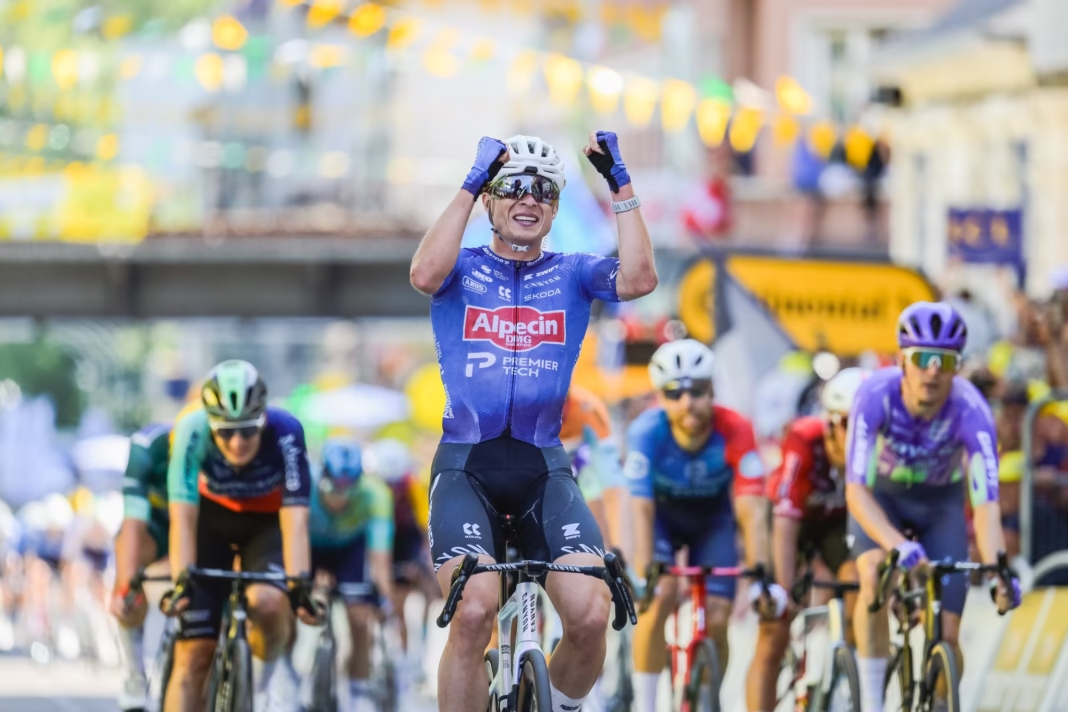
Tadej Pogačar starts the day with a 4:32 advantage over Remco Evenepoel after the main GC riders finished together during a chaotic stage 17 won by Jasper Philipsen in Voiron.
The yellow jersey battle is firmly in Pogačar’s control. The more immediate tension sits behind him. Isaac del Toro leads Paul Seixas by only 20 seconds in the fight for third and the white jersey, while Juan Ayuso, Mattias Skjelmose, Lenny Martinez and Tom Pidcock all enter the Alps with positions still worth attacking.
Stage 18 may not decide the Tour by itself. Its importance comes from being the first of three consecutive summit finishes. It will reveal who has recovered, who is beginning to fade and which teams still have enough mountain support to influence the final weekend.
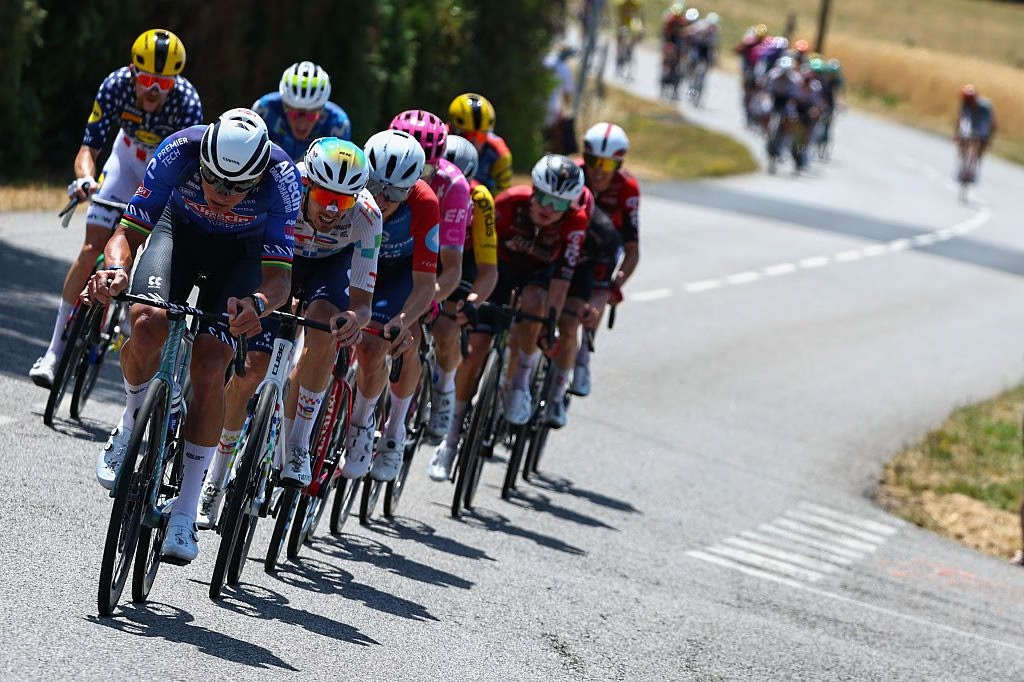
Tour de France stage 18 route at a glance
| Detail | Information |
|---|---|
| Date | Thursday 23 July 2026 |
| Start | Voiron |
| Finish | Orcières-Merlette |
| Distance | 185.2km |
| Stage type | Mountain |
| Total climbing | Approximately 3,900 metres |
| Categorised climbs | Five |
| Final climb | 7.1km at 6.7% |
| Finish altitude | 1,825 metres |
| Neutralised start | 11:35 BST |
| Expected finish | 16:12-16:40 BST |
| Most likely outcome | Breakaway victory or late GC battle |
The wider context of the final mountain block is covered in the Tour de France 2026 Alps guide.
Stage 18 is followed by a shorter stage from Gap to Alpe d’Huez and then the Tour de France 2026 queen stage, which includes the Croix de Fer, Télégraphe, Galibier, Sarenne and a second finish on Alpe d’Huez.
General classification before stage 18
| Position | Rider | Team | Gap |
|---|---|---|---|
| 1 | Tadej Pogačar | UAE Team Emirates-XRG | Leader |
| 2 | Remco Evenepoel | Red Bull-Bora-Hansgrohe | +4:32 |
| 3 | Isaac del Toro | UAE Team Emirates-XRG | +6:51 |
| 4 | Paul Seixas | Decathlon CMA CGM | +7:11 |
| 5 | Juan Ayuso | Lidl-Trek | +9:22 |
| 6 | Mattias Skjelmose | Lidl-Trek | +10:14 |
| 7 | Lenny Martinez | Bahrain Victorious | +12:50 |
| 8 | Tom Pidcock | Pinarello-Q36.5 Pro Cycling Team | +12:58 |
The leading positions remained unchanged on stage 17. The gaps were created during the stage 16 individual time trial, where Evenepoel gained 28 seconds on Pogačar and strengthened his hold on second.
The complete classification picture is available in GC and jerseys after Tour de France 2026 stage 16.
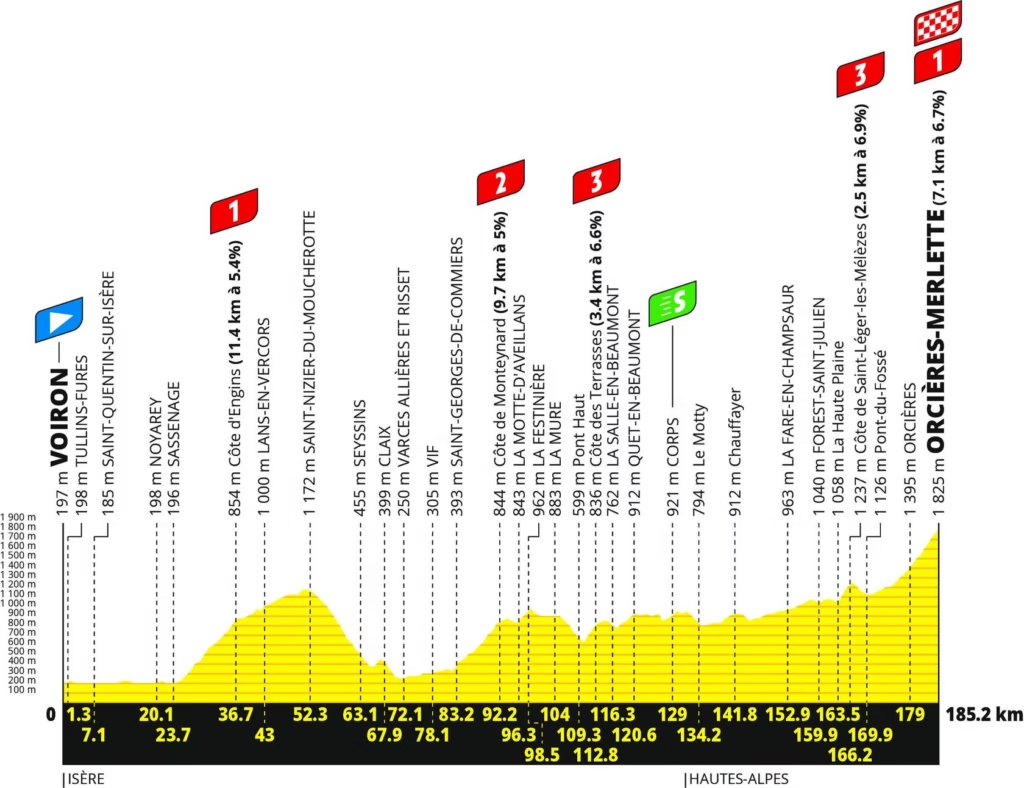
Tour de France stage 18 profile
Stage 18 is not built around one enormous Alpine pass before the summit finish. Its difficulty comes through accumulated climbing and a route that offers few genuinely flat sections once the riders leave Voiron.
The first 25km provide the final opportunity for riders to organise before the Côte d’Engins begins the serious climbing. At 11.5km and 5.4%, it is long enough for a high-quality breakaway to form and difficult enough to remove riders who follow the attacks without the strength to sustain them.
The race then crosses the Vercors before descending towards the Grenoble area and entering another long climbing sequence.
The Côte de Monteynard measures 9.7km at 5%. It is followed by the shorter Côte des Terrasses, which climbs for 3.4km at 6.6%.
After the intermediate sprint in Corps, the riders face the Côte de Saint-Léger-les-Mélèzes with only 19km remaining. That 2.5km ascent at 6.9% should begin the final selection before a short transition leads into the climb to Orcières-Merlette.
Stage 18 climbs
| Climb | Summit position | Length | Average gradient | Category |
|---|---|---|---|---|
| Côte d’Engins | 36.7km | 11.5km | 5.4% | Category 1 |
| Côte de Monteynard | 92.2km | 9.7km | 5.0% | Category 2 |
| Côte des Terrasses | 112.8km | 3.4km | 6.6% | Category 3 |
| Côte de Saint-Léger-les-Mélèzes | 166.2km | 2.5km | 6.9% | Category 3 |
| Orcières-Merlette | 185.2km | 7.1km | 6.7% | Category 1 |
The Tour de France 2026 climbs guide places Orcières-Merlette within a final sequence designed around repeatability rather than one isolated mountain performance.
A rider can look strong on Thursday and still lose everything on Alpe d’Huez. Teams must therefore decide how much energy to spend before the harder stages arrive.
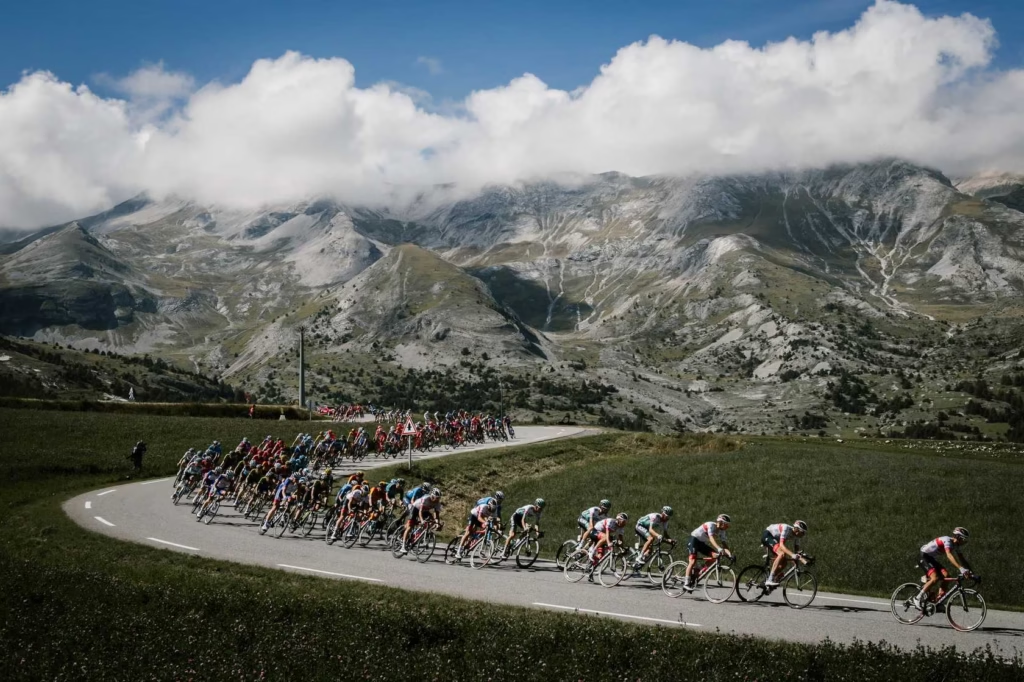 Photo Credit: A.S.O./Pauline Ballet
How difficult is Orcières-Merlette?
Orcières-Merlette is the least severe of the Tour’s five official summit finishes when judged purely by the final climb.
The ascent is 7.1km long at an average of 6.7%. It is not as steep as Plateau de Solaison, nor as long as Alpe d’Huez. Its steadier gradients should also allow teammates to provide a drafting benefit deeper into the climb.
That does not make it easy.
The riders reach the foot after 178km and almost 4,000 metres of accumulated climbing. Saint-Léger-les-Mélèzes arrives immediately before the finale, leaving little time for anyone distanced there to recover.
Orcières-Merlette is therefore more likely to expose weakness than encourage an ambitious long-range attack from the yellow jersey group.
A rider who is already struggling could lose one or two minutes. The strongest contenders may remain together until the final three kilometres, where repeated accelerations and the 10, six and four-second finish bonuses become more important.
The climb’s place among the race’s decisive uphill finishes is examined in the Tour de France 2026 summit finishes guide.
A climb with one of the Tour’s greatest historical ambushes
Orcières-Merlette is most strongly associated with Luis Ocaña’s extraordinary victory in 1971.
Ocaña attacked Eddy Merckx and finished almost nine minutes ahead of the defending champion, taking control of the Tour through one of the most famous mountain performances in the race’s history.
He did not eventually win that edition, abandoning after a crash in the Pyrenees, but the stage remains central to the mythology of his rivalry with Merckx.
Lucien Van Impe won there in 1972, Pascal Simon followed in 1982 and Steven Rooks won a mountain time trial at the resort in 1989.
Primož Roglič took the most recent Tour stage finish at Orcières-Merlette in 2020. That race stayed together until late, with Roglič beating a reduced group of favourites rather than creating a major solo separation.
The modern profile points towards something similar. The climb is capable of producing gaps, but its gradients make a late GC acceleration more likely than a 1971-style raid.
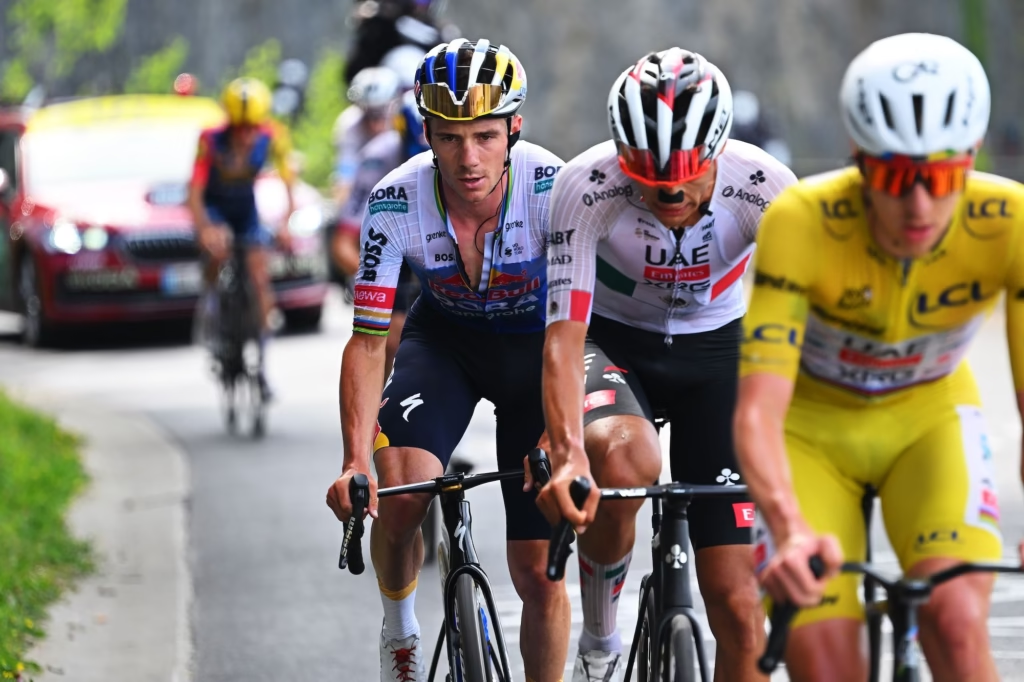 Photo Credit: Getty
Why stage 18 may matter more for the podium than yellow
Pogačar does not need to attack.
He holds a 4:32 advantage over Evenepoel and has two harder mountain stages still to come. UAE Team Emirates-XRG can ride defensively, maintain a controlled pace and allow other teams to carry the responsibility for changing the race.
That freedom does not exist behind him.
Del Toro has only 20 seconds over Seixas. Ayuso is 2:31 from the podium, while Skjelmose is 3:23 away. Martinez and Pidcock are separated by eight seconds in seventh and eighth.
Every one of those riders has a reason to test the race.
Stage 18 may therefore become less about whether Evenepoel can overturn Pogačar and more about whether Seixas can reach the podium, Lidl-Trek can move both leaders closer and Pidcock can continue his rise through the top 10.
The route was identified as one of the best Tour de France 2026 days for GC attacks, but its place before two harder stages complicates the tactical calculation.
A podium contender cannot afford to waste an opportunity. They also cannot afford to spend everything with Alpe d’Huez still waiting.
Pogačar can choose how much racing he wants
Pogačar is the clear favourite if the stage victory is decided by the GC group.
The final climb suits his acceleration. It is steep enough for him to create a gap, but short and regular enough for his finishing speed to become decisive if several riders remain together.
He still has no sporting need to attack.
A controlled ride behind UAE teammates would protect yellow and preserve energy for the back-to-back Alpe d’Huez stages. Pogačar can follow Evenepoel, monitor the podium contenders and allow the breakaway to take the stage.
That does not mean he will.
Pogačar has repeatedly converted favourable situations into stage victories during this Tour. If the breakaway is close at the foot of Orcières-Merlette, UAE may increase the pace and create another opportunity.
The finish bonuses also reward a relatively low-risk attack. Pogačar can gain time through one acceleration inside the final kilometre without turning stage 18 into a full mountain raid.
His wider relationship with the route is covered in Tadej Pogačar at the Tour de France 2026.
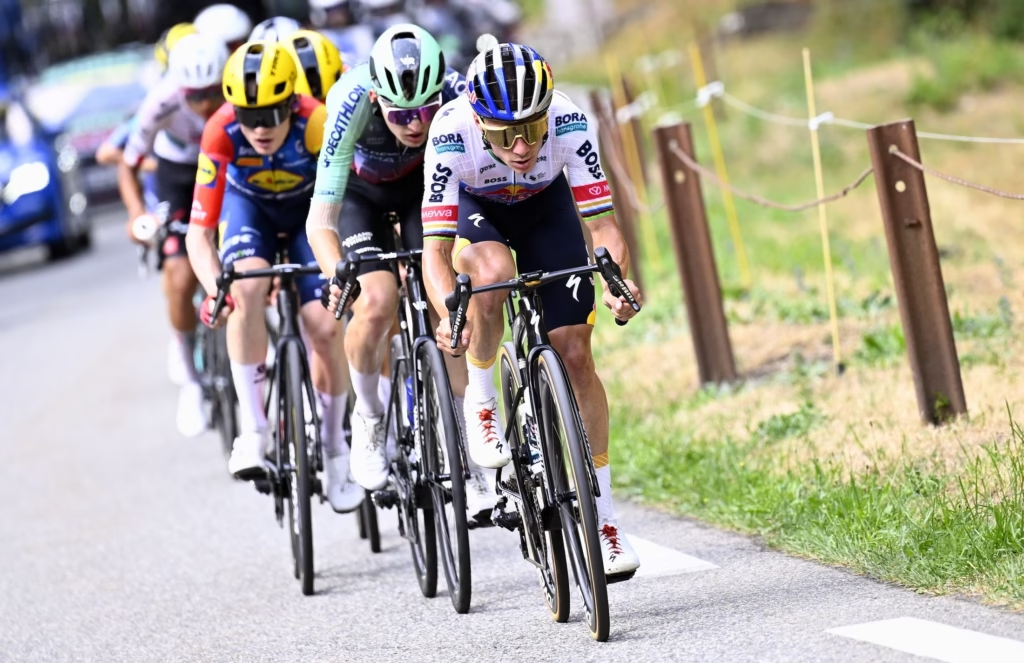 Photo Credit: Getty
Evenepoel faces the first part of a three-day defensive test
Evenepoel strengthened his hold on second place by winning the stage 16 time trial.
He now leads Del Toro by 2:19 and Seixas by 2:39. That gives him a useful buffer, but it must survive three consecutive summit finishes.
Orcières-Merlette should suit him better than the longer climbs that follow.
The gradients are relatively steady and the final ascent is only 7.1km. Evenepoel can maintain a high tempo and use his power without facing the extended climbing load of the Galibier or the full Alpe d’Huez ascent.
Stage 18 may therefore be an opportunity to strengthen second rather than merely defend it.
The larger problem is team strength. Florian Lipowitz’s stage 16 crash and abandonment removed Red Bull-Bora-Hansgrohe’s second highly placed GC rider and one of Evenepoel’s most valuable Alpine options.
Lipowitz could have attacked and forced UAE to make decisions. Without him, Red Bull’s strategy is more predictable. They must protect Evenepoel directly and hope Jai Hindley and the remaining mountain support can stay close enough to help.
Evenepoel’s broader challenge is covered in Remco Evenepoel at the Tour de France 2026.
Del Toro has two classifications to defend
Del Toro begins stage 18 in third overall and leads the young rider classification.
Both positions are threatened by the same rider.
Seixas is 20 seconds behind in the general classification and white jersey standings. One late attack, a small road gap and the finish bonuses could reverse both competitions.
The final climb should suit Del Toro. He can respond to changes of pace and has enough finishing speed to contest a reduced sprint among the GC contenders.
He also benefits from Pogačar’s presence.
UAE will control the race to protect yellow, and that pace naturally supports Del Toro. He does not need to chase every speculative move while his team leader remains ahead of every other contender.
The concern is the condition of UAE’s support.
Adam Yates struggled with illness during stage 17 and finished well behind the main peloton. His ability to recover overnight could be important. If he cannot provide his usual mountain support, greater responsibility will fall on Felix Großschartner and the remaining UAE riders.
Del Toro may have to manage the final kilometres himself if Decathlon or Lidl-Trek begin applying pressure before Orcières-Merlette.
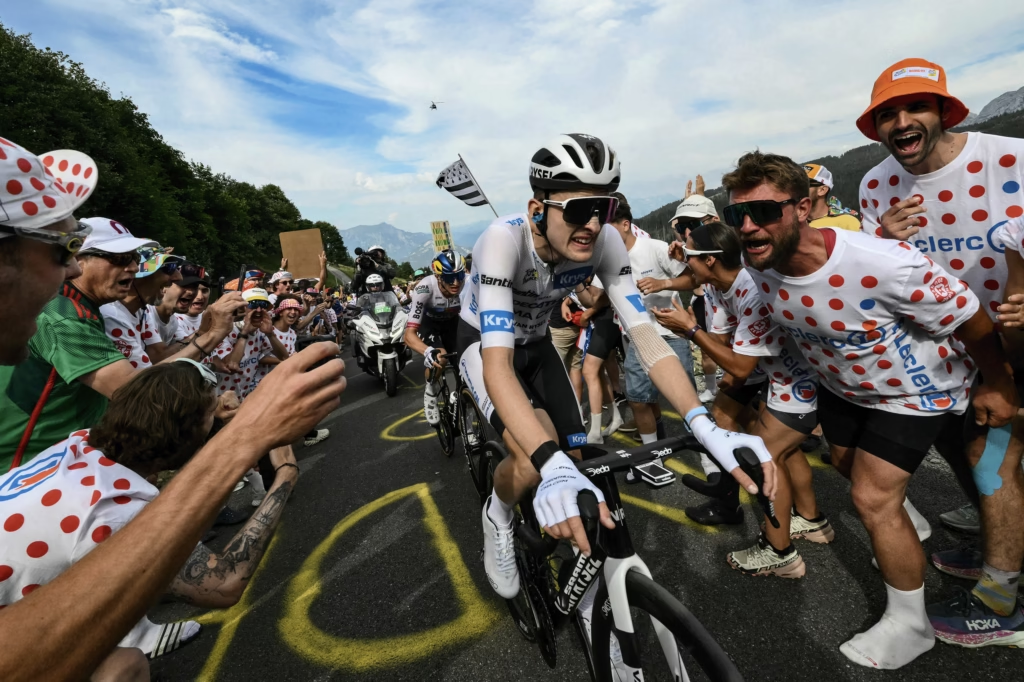 Photo Credit: Getty
Seixas is close enough to attack the podium directly
Seixas enters the Alps with the clearest numerical target.
He does not need a spectacular long-range attack to move into third. Twenty seconds can disappear through one acceleration, a finish bonus or a moment of hesitation from Del Toro.
Waiting for the final kilometre may still favour the Mexican.
Del Toro has a quick finish and Pogačar can dictate the pace around him. Seixas may need Decathlon CMA CGM to make the race more difficult before the final ascent.
The Côte de Saint-Léger-les-Mélèzes provides an obvious platform. An attack there would force UAE to respond, weaken the support around Del Toro and make the transition towards Orcières-Merlette less controlled.
Decathlon can also place a rider in the breakaway. That would give Seixas a potential teammate ahead while forcing UAE to consider whether the move could later influence the podium battle.
Stage 18 is not his final opportunity, but it may be the safest one. Stage 20 offers more scope to gain time, yet it also carries a much greater risk of losing several minutes.
Lidl-Trek have two riders but one looming leadership question
Lidl-Trek begin the Alpine block with Ayuso fifth and Skjelmose sixth.
Only 52 seconds separates them.
Ayuso holds the stronger general classification position, but Skjelmose was clearly faster during the stage 16 time trial. The Dane gained 1:18 on his teammate and entered the final mountain block with an improving form line.
Both remain close enough to the podium to justify an attack.
Ayuso is 2:31 behind Del Toro. Skjelmose trails third by 3:23. Waiting for UAE and Decathlon to weaken each other may allow Lidl-Trek to move closer, but it is unlikely to create enough separation on its own.
The team have the numbers to alternate moves.
One rider can attack on Saint-Léger-les-Mélèzes or the lower slopes of Orcières-Merlette while the other remains with the favourites. UAE would then have to decide whether to chase immediately or trust Del Toro to respond later.
That strategy only works if Lidl-Trek are willing to allow the road to decide their hierarchy.
Protecting both riders equally may preserve fifth and sixth. Using them against each other could create a podium challenge.
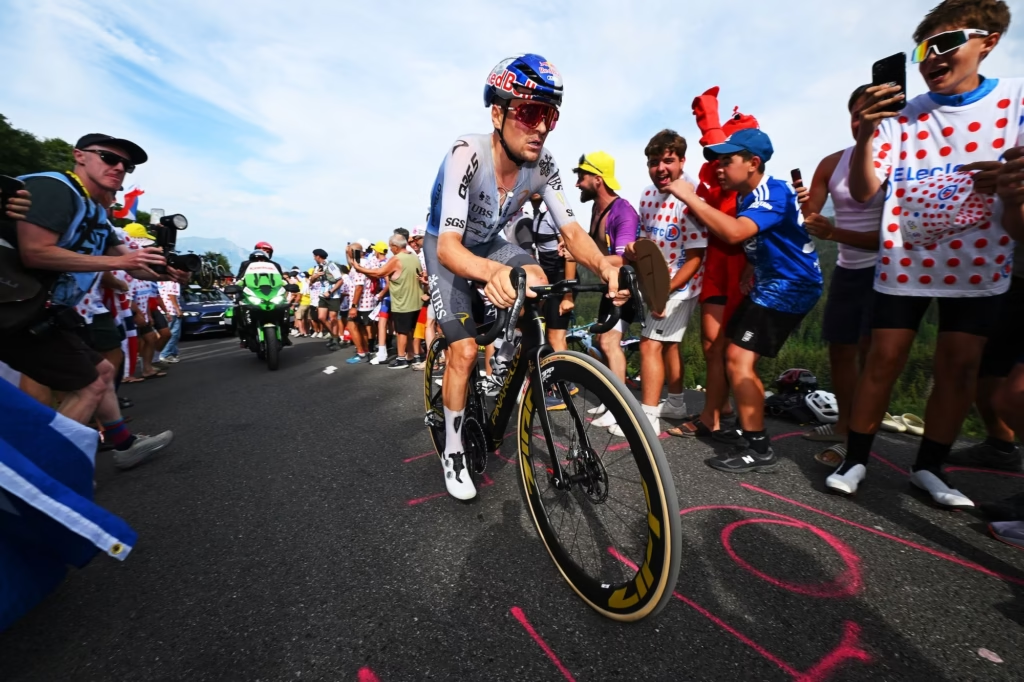 Photo Credit: Getty
Pidcock has another route into the top seven
Pidcock begins stage 18 only eight seconds behind Martinez.
The British rider was involved in a crash during stage 17 but completed the stage with the main group. His condition will need to be assessed once the climbing begins.
If he has recovered, the route gives him two possible strategies.
Pidcock can remain with the GC group and attempt to gain eight seconds on Martinez during the final climb. He can also enter the breakaway and force Bahrain Victorious to decide whether seventh place justifies helping control the race.
He has already used an escape to transform his general classification during this Tour, gaining more than seven minutes on stage 13 into Belfort.
The podium is now more than six minutes away, but a place inside the top six is not impossible if Ayuso or Skjelmose struggles across the Alpine sequence.
The wider question of his final-week ceiling is examined in can Tom Pidcock make the Tour de France podium?.
The breakaway has a genuine chance of surviving
Stage 18 is a strong breakaway opportunity despite ending at a summit.
The Côte d’Engins arrives early enough for the best mountain stage hunters to create a serious selection. Once the move forms, UAE have little reason to chase riders who sit far behind Pogačar in the general classification.
Pogačar already has a commanding advantage and several stage victories. UAE’s priority is managing three consecutive mountain days, particularly if Yates remains below his normal level.
The stage’s position among the race’s breakaway opportunities is examined in both the Tour de France 2026 breakaway stages ranking and the guide to the best route days for breakaways.
The escape still needs enough time.
Orcières-Merlette’s moderate gradients allow a strong breakaway climber to maintain speed, but the GC group could recover ground quickly if Decathlon, Lidl-Trek or UAE begin racing for the podium and stage win.
A lead of two minutes at the foot should leave the breakaway vulnerable. Three to four minutes may be enough, particularly if the favourites watch one another before attacking.
Richard Carapaz
Carapaz is one of the strongest breakaway candidates.
He no longer has a GC position that prevents him from receiving freedom and has repeatedly looked for mountain opportunities during the race.
The sequence of medium-length climbs suits his ability to attack, recover and then accelerate again. He also has a clear interest in the mountains classification.
Carapaz starts stage 18 third in that competition. A successful day in the breakaway could move him closer to Pogačar or even place him in provisional control before the two Alpe d’Huez stages.
His best strategy is unlikely to involve waiting for Orcières-Merlette. He should attempt to make the breakaway selective on the Côte de Monteynard or Côte des Terrasses, reducing the number of faster riders before the finale.
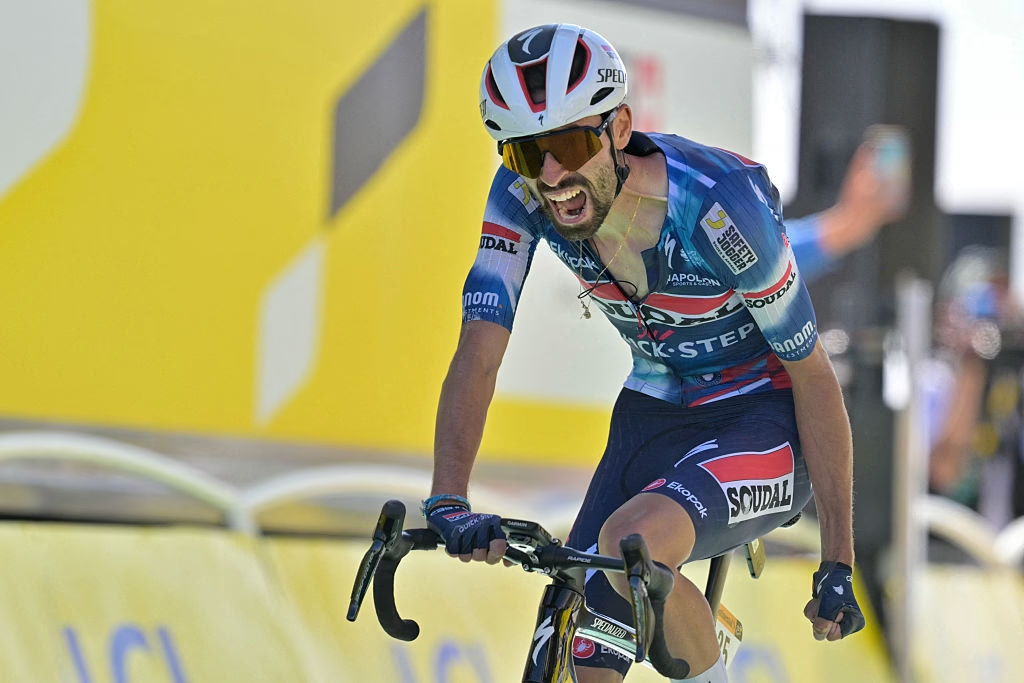 Photo Credit: Getty
Valentin Paret-Peintre
Paret-Peintre begins the stage second in the mountains classification.
Because Pogačar leads both the general and climbing standings, the Frenchman is expected to wear the polka-dot jersey on the road.
The Category 1 Côte d’Engins offers 10 points and is an obvious early target. Winning there would immediately narrow the gap to Pogačar and place pressure on Carapaz.
Paret-Peintre must still balance the classification against the stage.
Contesting every summit at maximum effort may leave him short of energy before Orcières-Merlette. He needs points, but a stage victory would also bring 10 at the summit and give him the strongest possible platform before the final weekend.
The wider battle is covered in the Tour de France 2026 climbers and polka-dot jersey guide.
Jai Hindley
Hindley’s role changed when Lipowitz left the race.
Red Bull-Bora-Hansgrohe still need to protect Evenepoel, but the Belgian’s 2:19 podium buffer may give Hindley some freedom if the right breakaway forms.
The route should suit him. Its accumulated climbing rewards stage-race endurance, while the final ascent is long enough for a specialist climber to separate from heavier breakaway riders.
Hindley will want the escape to become selective before the final kilometre. He is unlikely to beat a rider such as Pidcock in a small sprint, so his opportunity depends on sustaining a hard climbing pace and removing faster rivals.
His presence ahead could also help Evenepoel later. If the GC group catches the breakaway, Hindley can drop back and support his leader on Orcières-Merlette.
Egan Bernal
Bernal has shown a willingness to enter mountain breakaways and should view the Alpine block as his best remaining route towards a stage victory.
Stage 18 may suit him better than the shorter first Alpe d’Huez stage.
The accumulated climbing gives him room to use endurance rather than relying on one explosive final effort. He can also afford to attack earlier because he does not carry a meaningful GC position that needs protecting.
INEOS Grenadiers must decide whether this is their best opportunity or whether Bernal should conserve energy for the harder stage 20 route.
Waiting carries its own risk. The queen stage may be controlled far more aggressively by the GC teams, leaving the breakaway with less freedom than it receives on Thursday.
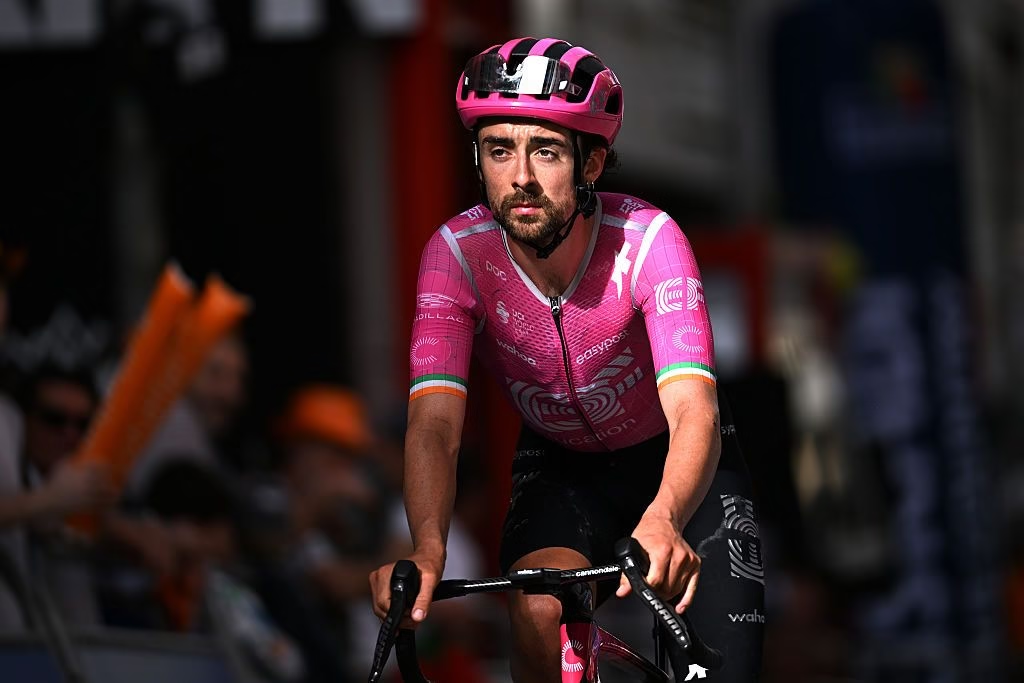 Photo Credit: Getty
Ben Healy
Healy remains one of the most dangerous long-range attackers in the race.
A straightforward summit sprint does not suit him as well as it suits Carapaz, Hindley or Bernal. His best route involves breaking the stage apart before Orcières-Merlette.
The Côte de Monteynard and Côte des Terrasses provide terrain where Healy can create separation and force pure climbers to chase.
He does not need to arrive at the final climb with the strongest climbing group. He needs to begin it with enough of an advantage that the riders behind are forced into an immediate pursuit.
The mountains classification could change dramatically
Pogačar leads the mountains classification with 70 points.
Paret-Peintre has 46 after collecting a point on stage 17, while Carapaz moved to 40. Evenepoel sits fourth on 36, with Seixas next on 34.
Stage 18 offers:
- 10 points on the Côte d’Engins
- Five points on the Côte de Monteynard
- Two points on the Côte des Terrasses
- Two points on the Côte de Saint-Léger-les-Mélèzes
- 10 points at Orcières-Merlette
A rider taking the maximum can collect 29 points.
That gives Paret-Peintre and Carapaz a direct route towards the jersey. Either could move ahead of Pogačar before the finish if they dominate the early climbs.
Pogačar does not need to respond immediately. The two Alpe d’Huez stages contain enough points for him to regain control through the GC battle.
The competition therefore depends on whether the breakaway specialists can build a meaningful buffer before Pogačar begins scoring heavily again.
Warm conditions will add to the fatigue
The current forecast suggests dry and sunny conditions across the stage.
Temperatures around Voiron may reach 29°C to 31°C during the early afternoon. The summit should be cooler, but conditions near Orcières-Merlette are still expected to reach approximately 24°C to 25°C.
The weather should not create a major technical threat, but the heat will add to the accumulated physical demand.
Riders must also cope with the changing altitude. The race moves from warm valley roads to a finish above 1,800 metres, where wind exposure and cooling can affect riders differently after almost five hours of racing.
Hydration and pacing will matter, particularly for riders trying to attack repeatedly through the middle of the stage.
How stage 18 is likely to unfold
The opening kilometres should be fast as teams attempt to place climbers into the move before the Côte d’Engins.
The breakaway battle may continue onto the first climb if Carapaz, Paret-Peintre, Hindley, Bernal or other leading stage hunters miss the initial selection.
Once a strong group forms, UAE should allow it a useful advantage provided nobody represents a realistic threat to Del Toro’s podium position.
The Côte de Monteynard and Côte des Terrasses should begin reducing the breakaway. Teams with multiple riders ahead can use one to attack while keeping another for the final climb.
The peloton is likely to remain comparatively controlled until Saint-Léger-les-Mélèzes.
That short ascent is where Decathlon or Lidl-Trek can begin applying pressure. A hard pace would remove domestiques, test Yates’ recovery and force Del Toro to respond before the official summit finish begins.
Orcières-Merlette should then produce two races.
The remaining breakaway riders will compete for the stage, while Pogačar, Evenepoel, Del Toro, Seixas, Ayuso and Skjelmose fight over the classification behind.
A major yellow jersey attack is possible but unnecessary. The more likely GC outcome is a series of late accelerations creating differences measured in seconds rather than minutes.
Tour de France stage 18 favourites
Leading GC favourites
- Tadej Pogačar
- Remco Evenepoel
- Isaac del Toro
- Paul Seixas
- Juan Ayuso
- Mattias Skjelmose
Leading breakaway contenders
- Richard Carapaz
- Jai Hindley
- Egan Bernal
- Valentin Paret-Peintre
- Ben Healy
- Tom Pidcock
Other riders to watch
- Lenny Martinez
- Nicolas Prodhomme
- Harold Tejada
- Jordan Jegat
- Yannis Voisard
- Aurélien Paret-Peintre
Stage 18 prediction
The breakaway has a serious chance because Pogačar does not need another stage victory and UAE should prioritise the full three-day Alpine block.
Carapaz and Paret-Peintre have additional motivation through the mountains classification, although that may encourage them to expend valuable energy contesting the early summits.
Hindley has the right combination of climbing strength, Grand Tour endurance and tactical freedom following Lipowitz’s withdrawal. His ability to serve as a rider ahead for Evenepoel also gives Red Bull-Bora-Hansgrohe a clear reason to place him in the escape.
Behind, Pogačar remains the strongest favourite if the GC group catches the breakaway. Seixas is the rider with the greatest reason to attack because only 20 seconds separates him from Del Toro and the podium.
Prediction: Jai Hindley to win from the breakaway, with Seixas testing Del Toro and Pogačar finishing safely inside the leading GC group.