
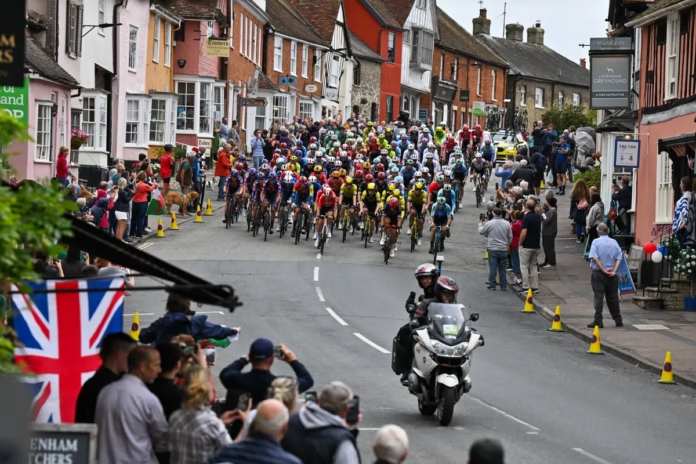
The 2026 Lloyds Tour of Britain Men begins in Lincoln on Wednesday with a route that looks relatively straightforward until you examine where its difficulty has been placed. There is no summit finish, no individual time trial and no single mountain capable of creating minutes between the general classification contenders. Instead, five days across Lincolnshire, Yorkshire and the Scottish Borders should reward riders who can repeatedly handle short climbs, stay well positioned and exploit bonus seconds whenever they appear.
That immediately helps explain why Benoît Cosnefroy enters as the leading overall favourite. The Frenchman has the punch required for Michaelgate on Stage 1, enough climbing strength for the Yorkshire Dales on Stage 4 and one of the deepest teams in the race around him. UAE Team Emirates-XRG can also use Tim Wellens, Florian Vermeersch and Felix Großschartner tactically, giving them far more options than simply protecting one rider from Lincoln to Earlston.
The final start list has also changed the complexion of the race compared with some of the earlier provisional announcements. Tom Pidcock and Jhonatan Narváez are not among the confirmed 108 starters, removing two riders who would otherwise have been obvious overall contenders. Romain Grégoire, who won the 2025 Tour of Britain by just two seconds ahead of Remco Evenepoel, is also absent, guaranteeing a new champion.
At the same time, the sprint field is excellent for a five-day ProSeries race. Olav Kooij and Tim Merlier, both Tour de France stage winners this summer, headline a group that also includes Ethan Vernon, Sam Welsford, Cees Bol, Matteo Moschetti and Sam Bennett. Kooij already has seven Tour of Britain stage victories and needs three more to equal Mark Cavendish’s men’s record of ten.
Tour of Britain Men 2026 at a glance
| Detail | 2026 Tour of Britain Men |
|---|---|
| Dates | 2-6 September 2026 |
| Classification | UCI 2.Pro |
| Stages | 5 |
| Start | Lincoln |
| Finish | Earlston |
| Total distance | 879.6km |
| Total climbing | 6,885m |
| Riders | 108 |
| Teams | 18 |
| WorldTour teams | 5 |
| Defending champion | Romain Grégoire, not racing |
| Likely decisive stages | Stage 1 and Stage 4 |
| Leading GC favourite | Benoît Cosnefroy |
| Leading sprinters | Olav Kooij and Tim Merlier |
The five WorldTour teams are UAE Team Emirates-XRG, Decathlon CMA CGM, Netcompany INEOS, Soudal Quick-Step and NSN Cycling. They are joined by four ProTeams, eight Continental squads and the Great Britain Cycling Team, with the full Tour of Britain Men 2026 team line-up reflecting a noticeably broader mix of team levels than the 2025 edition.
The race is also part of an expanded British programme in 2026, with the men’s and women’s Tours both running for five days for the first time. The background to that change is covered in ProCyclingUK’s look at why the 2026 Tour of Britain became the biggest combined edition yet.
A Tour of Britain without one obvious GC stage
The most interesting feature of the route is what it does not contain.
There is no long time trial where Filippo Ganna can simply turn superior sustained power into a large advantage, and there is no summit finish where Ilan Van Wilder or one of the lighter climbers can expect to take a minute in a single effort. Even the hardest stage, through the Yorkshire Dales on Saturday, finishes in Leyburn rather than at the top of one of its main climbs.
That makes accumulation unusually important.
Stage 1 can already produce meaningful seconds because the riders tackle Michaelgate five times on the Lincoln finishing circuit. Stage 3 ends after repeated laps around Beverley, with a slightly rising conclusion. Stage 4 contains 2,699 metres of climbing and should create the biggest physical selection, while Stage 5 still contains 2,236 metres through the Scottish Borders when everyone is carrying four days of fatigue.
The race may therefore be decided through several relatively small differences rather than one spectacular attack. Ten seconds lost in Lincoln, another eight in Yorkshire and a missed bonus at a finish can become an impossible deficit when there is no time trial or mountain-top finale left in which to recover it.
That is also why riders with a fast finish are unusually relevant to the GC.
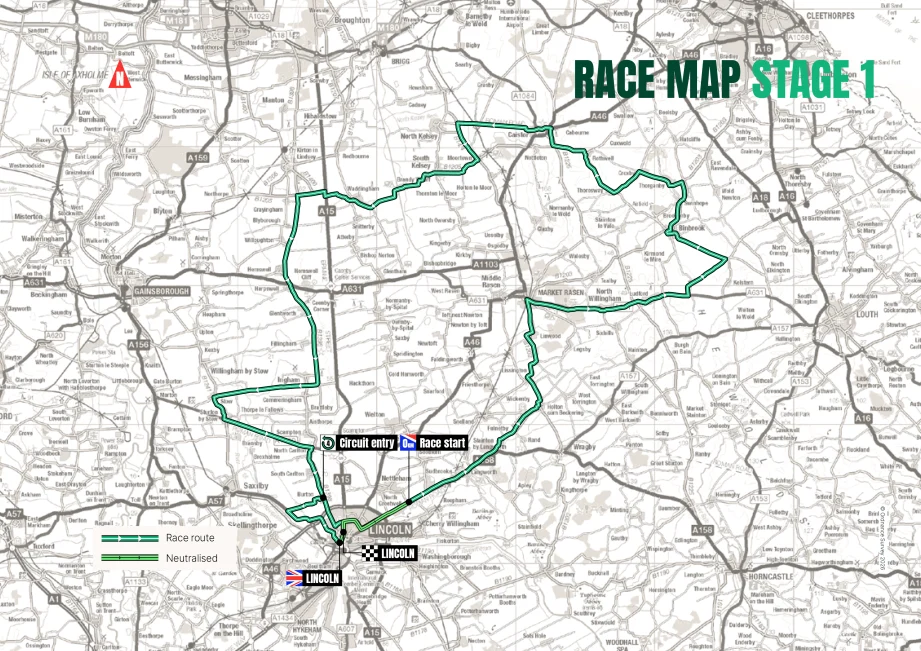
Stage 1: Michaelgate immediately puts the favourites under pressure
Lincoln to Lincoln, 182.5km, 1,393m climbing
The opening stage may be the most important day of the race relative to how modest its overall climbing figure appears.
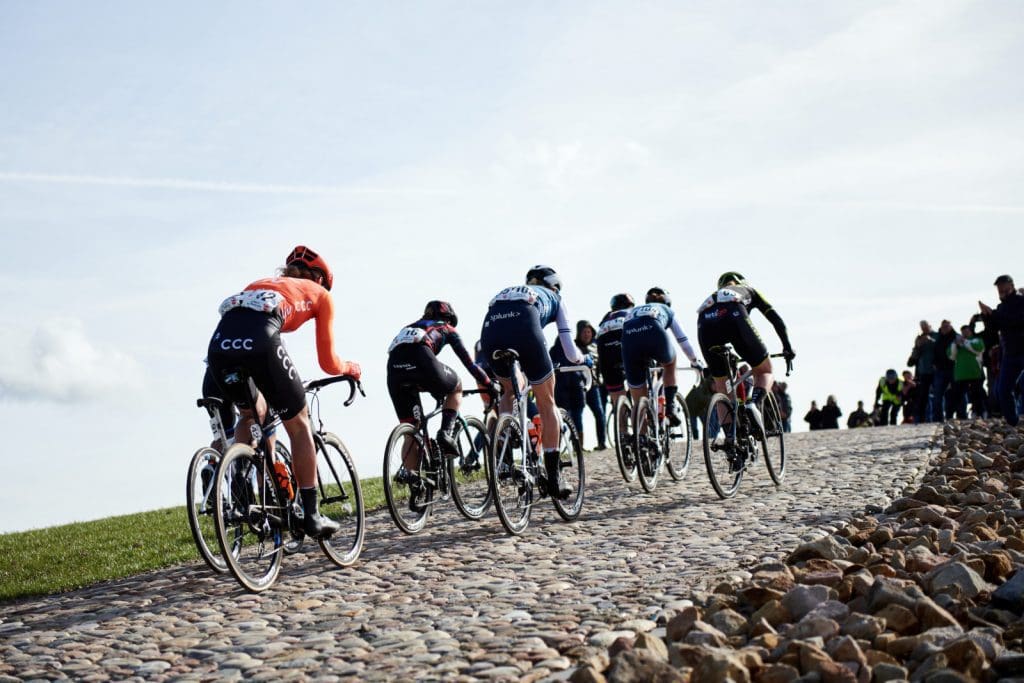
After travelling through the Lincolnshire Wolds, the peloton returns to Lincoln for five passages over Michaelgate, the cobbled climb at the heart of the Lincoln Grand Prix circuit. Its average gradient is 11.3%, and although the effort is short, repeating it five times after more than 100km of racing should progressively reduce the field.
This is excellent Cosnefroy terrain. He does not need to produce a sustained ten-minute climbing effort, only stay positioned and repeatedly accelerate over a steep climb. Wellens should also thrive, while Jasper Stuyven, Lewis Askey, Rick Pluimers, Fabio Christen, Ganna and Vermeersch all possess enough power and one-day racing ability to be relevant.
Kooij is the fascinating complication. Assuming a leading sprinter will automatically disappear on Michaelgate would be dangerous, particularly given his increasing ability to survive short climbs. If Decathlon CMA CGM can keep him attached to the front group, very few of the nominal GC contenders will want to take one of the world’s fastest finishers towards the line.
That possibility makes the opening stage important for much more than the first leader’s jersey. Kooij’s 2025 Tour of Britain began with victory on Stage 1 in Southwold before he eventually collected three victories during the week. He has since moved to Decathlon CMA CGM on a three-year contract, giving his new team an obvious reason to investigate whether his sprint speed can also be turned into a GC weapon.
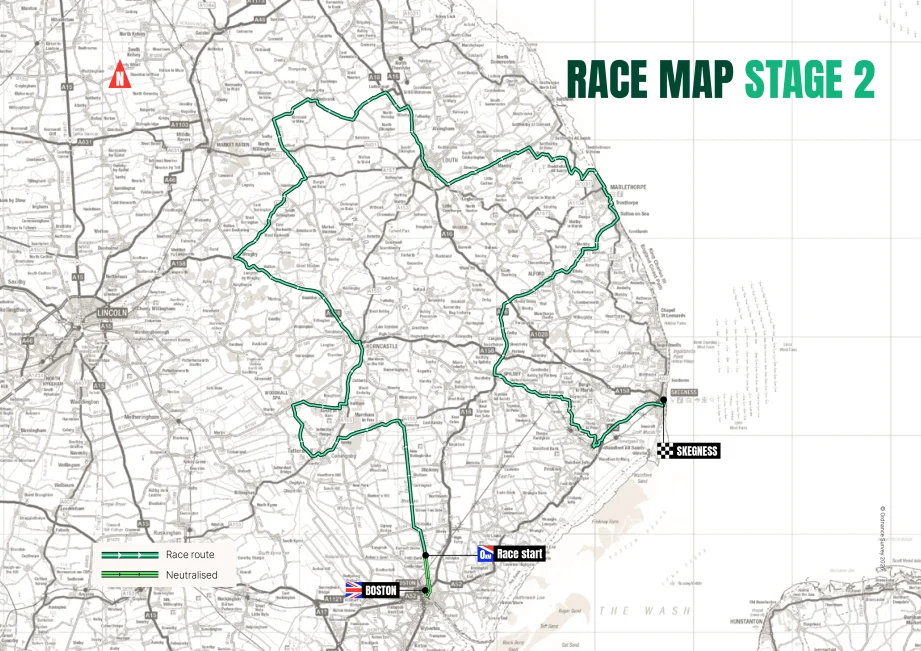
Stage 2: Kooij and Merlier get their cleanest sprint
Boston to Skegness, 181.1km
Thursday provides the clearest sprint opportunity of the race.
Boston to Skegness contains approximately 945 metres of climbing, comfortably the lowest total of the week, and the roads towards the Lincolnshire coast should allow the sprint teams to establish control. A final rise around Langton Hill provides some late terrain, but the overriding expectation is a fast finish in Skegness.
The obvious contest is Kooij against Merlier.
Merlier won three stages at this year’s Tour de France, while Kooij collected his first Tour stage victory. They now meet in a field where both possess strong support but have slightly different objectives. Soudal Quick-Step can concentrate heavily on delivering Merlier on the straightforward days, whereas Decathlon may also have to consider Kooij’s position in the overall classification if he survives Lincoln without losing time.
Ethan Vernon should see this as one of his biggest opportunities of the week. The NSN rider has repeatedly come close to a Tour of Britain stage victory and enters as one of the strongest British sprinters in the field. Netcompany INEOS have Sam Welsford, while Pinarello Q36.5 can turn to Sam Bennett or Matteo Moschetti depending on how they choose to structure their sprint.
The other obvious variable is the wind. Flat Lincolnshire roads can become far more complicated if exposed sections are hit by crosswinds, and any GC rider caught behind a split would have very little terrain available to repair the damage.
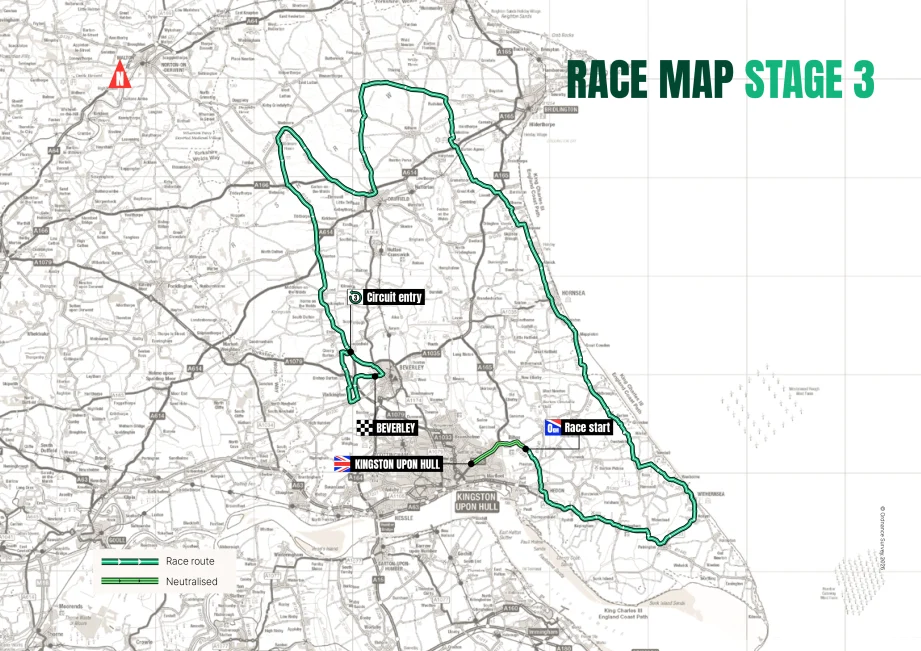
Stage 3: Beverley gives the sprinters a harder examination
Hull to Beverley, 194.1km, 1,612m climbing
Friday’s stage starts in Hull before heading towards the East Yorkshire coast and eventually turning inland towards Beverley. It is considerably harder than the previous day, with a series of climbs before the race reaches a 16km finishing circuit around Beverley for four passages.
The slightly uphill finish towards Beverley Racecourse makes this a different sprint problem from Skegness.
Kooij should again be extremely dangerous because this is precisely the type of day where his durability can work in his favour. Merlier remains quick enough to win if the race reaches the finish in a sufficiently large group, but teams interested in removing him now have substantially more terrain in which to try.
Vernon, Askey, Stuyven and Trentin are particularly interesting because none needs a completely flat finish. The repeated circuit also gives stronger Classics riders an opportunity to attack before the conventional sprint trains can fully organise.
GC bonus seconds may matter here as well. Cosnefroy cannot afford to casually surrender six or ten seconds to another overall contender simply because the stage has initially been labelled as one for the sprinters. In a race lacking a time trial or major summit finish, small gains can carry all the way to Sunday.
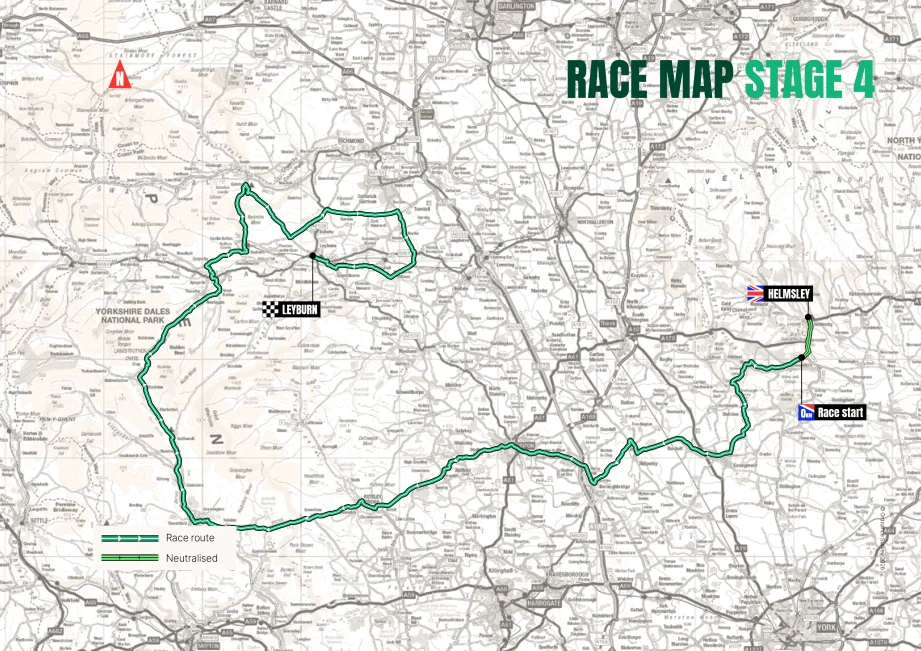
Stage 4: the Yorkshire Dales should decide the GC
Helmsley to Leyburn, 165.8km, 2,699m climbing
Saturday is the stage every overall contender will have marked.
The race travels from Helmsley through North Yorkshire and into the Yorkshire Dales, accumulating 2,699 metres of climbing across 165.8km. It is comfortably the biggest climbing day of the week and the most obvious place to create meaningful GC separation.
The difficulty comes through repeated British climbs rather than one mountain. The route includes Greenhow Bank, Kidstones, Greets Moss and Grinton Moor, producing a succession of medium-length efforts on roads where positioning and repeated changes of rhythm should matter almost as much as pure watts per kilogram.
Cosnefroy should be capable of surviving, but this is where his status as favourite will be genuinely tested.
Ilan Van Wilder has the clearer pure climbing profile and needs to use that advantage. Yannis Voisard has similar incentives, while Alessandro Pinarello, Mark Donovan and several of the less fancied contenders cannot afford to simply follow UAE and hope for bonus seconds in Leyburn.
The larger tactical problem is UAE’s depth.
Cosnefroy does not have to answer everything because Wellens, Großschartner and Vermeersch can each become dangerous themselves. Nils Politt and Mikkel Bjerg give UAE further power for controlling the race before the decisive climbs.
If Van Wilder attacks with 40km remaining and Wellens follows, Cosnefroy can remain behind and ask Soudal Quick-Step what they intend to do. If somebody chases Wellens, Vermeersch can counter. If the race stays together, Cosnefroy retains his own finishing speed.
That is substantially more difficult to manage than racing against one dominant leader.
The absence of a summit finish also makes waiting risky. A strong group escaping across the later Dales climbs could have enough quality to remain clear towards Leyburn, particularly once the GC teams have been reduced to only a few riders.
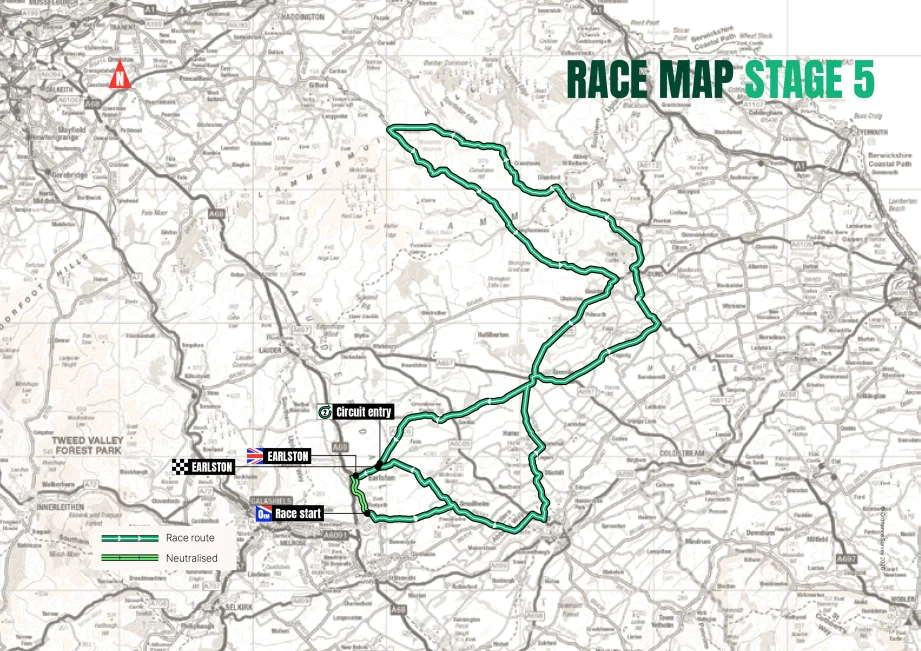
Stage 5: Earlston leaves one final chance to overturn the race
Earlston to Earlston, 156.1km, 2,236m climbing
Calling the final stage flat would badly misrepresent it.
The 156.1km loop through the Scottish Borders contains 2,236 metres of climbing, taking the riders towards Kelso before travelling through Greenlaw and Duns and into the Lammermuir Hills. The route passes Whiteadder Water before the climbs towards Redstone Rig and Duddy Bank, then returns to Earlston for two laps of a 19km finishing circuit.
There may be no climb as obviously decisive as those in Yorkshire, but the accumulated terrain offers more than enough opportunity to attack a narrow race lead.
If the green jersey begins Sunday with 40 seconds in hand, the task becomes primarily one of defence. If the leading riders are separated by ten seconds or less, the stage could become extremely difficult to control because bonus seconds remain relevant and several of the likely GC contenders are also accomplished one-day racers.
Stuyven, Wellens, Cosnefroy, Askey, Vermeersch and Trentin do not need a major mountain to attack. They can exploit short climbs, crosswinds, small groups and moments when a rival is temporarily isolated.
The sprint teams will still hope everything reforms before Earlston, but the GC situation should dictate whether anybody is willing to help them.

Benoît Cosnefroy has the most complete route for winning overall
The pre-race market makes Cosnefroy the clear favourite, and there is a strong racing argument behind it rather than simply reputation.
His biggest strength is that there is almost nowhere on this route where he should be uncomfortable. Michaelgate is ideal. Beverley’s finale is manageable. Stage 4 is hard enough to test him without containing a sustained high mountain where the lightest climbers automatically gain an advantage. He can also finish quickly enough from reduced groups to collect the bonus seconds that may decide the race.
The biggest question is whether UAE treat him as their sole leader.
They have no need to do so immediately. Wellens is himself a realistic overall contender, Großschartner offers stronger sustained climbing and Vermeersch provides another powerful option for aggressive racing.
That may actually make Cosnefroy harder to beat. Instead of carrying the responsibility from kilometre zero in Lincoln, UAE can force everyone else to decide which rider represents the real threat.
His route towards victory does not require domination. Consistently finishing in the front group while his team prevents anybody else creating a decisive gap could be enough.
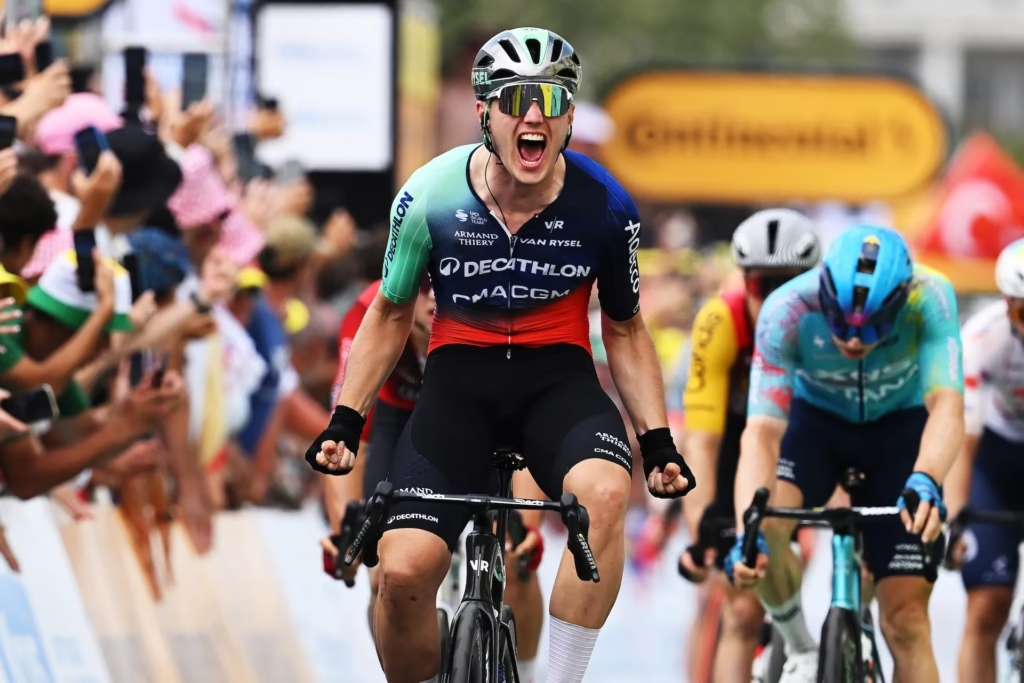 Photo Credit: Getty
Olav Kooij is a genuine GC complication
Kooij being among the shortest-priced riders for the overall initially looks aggressive for someone known primarily as one of the world’s best sprinters.
The route explains why it is not absurd.
There is no time trial and no major summit finish. Bonus seconds are valuable. Stages 1, 2, 3 and potentially 5 all give Kooij opportunities to gain time rather than lose it.
Everything depends on Yorkshire.
If Kooij loses several minutes on Stage 4, the GC discussion disappears and his Tour becomes entirely about stage victories. If he can limit the damage to 20 or 30 seconds, the final day becomes far more interesting because another stage win and bonus seconds can recover part of that deficit.
The more realistic target remains stages and Cavendish’s record. Kooij won three times at the 2025 Tour of Britain finale after taking the opening two stages and Cardiff, bringing his career total at the race to seven.
Three wins from five stages in 2026 would draw him level with Cavendish on ten. Given his history in Britain and the opportunities available, even that is not completely implausible.
 Photo Credit: Getty
Filippo Ganna needs an aggressive race
Filippo Ganna is one of the hardest riders to assess because the most obvious route to a stage-race victory for him has been removed.
Put a 15km individual time trial into this Tour of Britain and Ganna would probably begin among the strongest overall favourites.
Without one, he needs to manufacture his seconds elsewhere.
Lincoln provides an opportunity because Ganna has the power to repeatedly force himself over Michaelgate and the flat speed to attack around the circuit. Beverley also suits a rider capable of carrying high power through rolling terrain and then producing a long-range move before quicker finishers can organise.
Stage 4 is the bigger uncertainty.
Ganna climbs remarkably well for a rider of his size, but 2,699 metres through the Yorkshire Dales is a different challenge from producing one controlled threshold effort. Repeated accelerations on narrow and irregular climbs give lighter riders opportunities to make his weight expensive.
Netcompany INEOS therefore need to be proactive. Simply following UAE until Leyburn and hoping Ganna can find bonus seconds is unlikely to create enough margin.
His best weapon is making the race uncomfortable when everyone expects it to settle.
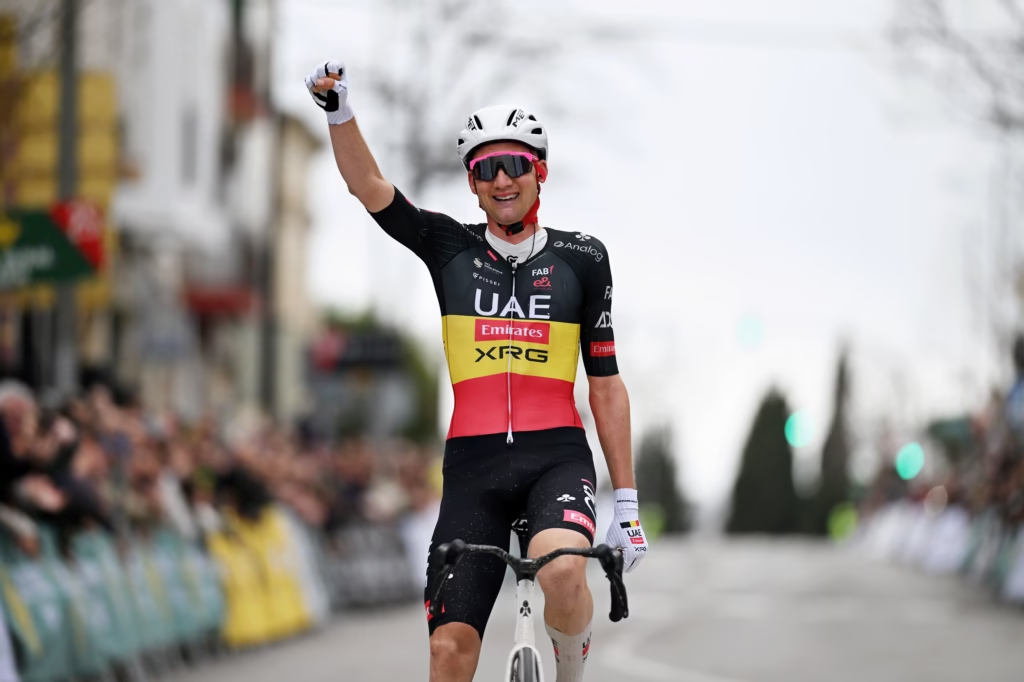
Tim Wellens may be UAE’s most dangerous tactical card
It would be easy to describe Tim Wellens merely as support for Cosnefroy and miss the obvious point: he can win the race himself.
The Belgian’s combination of strength, climbing durability and ability to attack from distance fits a five-stage race with no mountain-top finish exceptionally well. He is also exactly the sort of rider rival teams cannot casually allow 30 seconds because they assume UAE will eventually chase him down.
They may not.
If Cosnefroy is sitting comfortably in a chasing group while Wellens rides ahead, responsibility immediately transfers to Soudal, INEOS, NSN or Tudor.
That is why UAE’s strength matters beyond having several individually good riders. Their numbers allow them to create situations in which every rival is forced to make an uncomfortable decision.
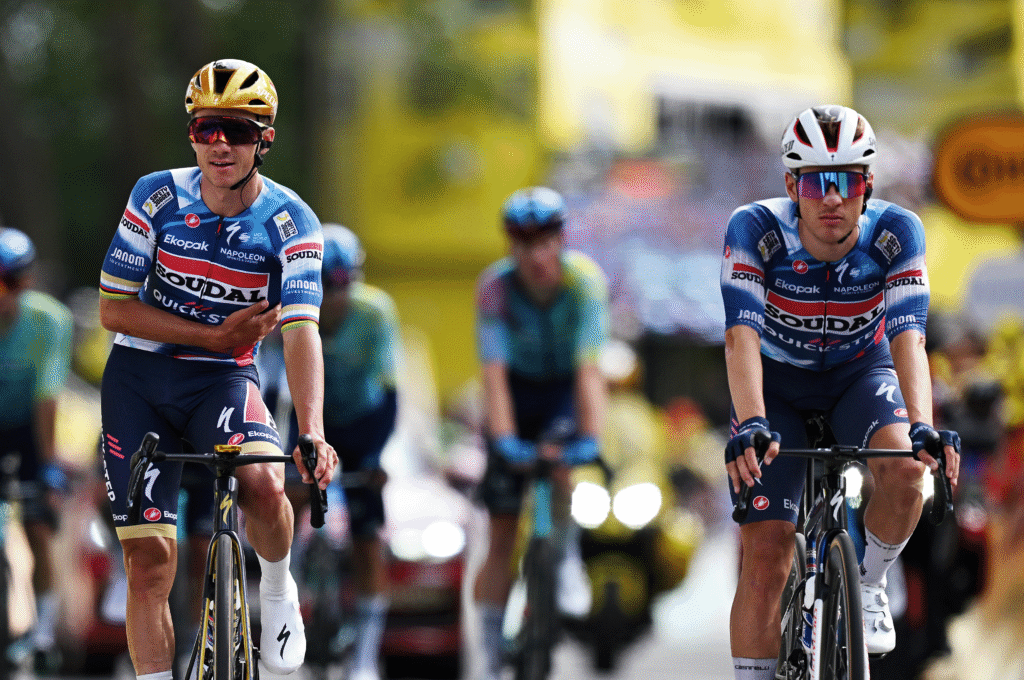 Photo Credit: RCS
Ilan Van Wilder needs Yorkshire to be genuinely hard
Ilan Van Wilder probably possesses stronger sustained climbing than most of the leading GC candidates, but the route does not automatically reward that advantage.
He is unlikely to take meaningful time on Cosnefroy through one Michaelgate acceleration and may concede bonus seconds if reduced groups reach the finishes together. That puts pressure on Soudal to make Stage 4 count.
Van Wilder does not necessarily need to arrive alone in Leyburn, but he needs the Yorkshire climbs to create a race where the more explosive puncheurs begin losing contact rather than continually returning after each ascent.
Soudal have useful tactical alternatives. Stuyven can anticipate attacks, Dylan van Baarle brings enormous one-day experience and Merlier gives the team obvious objectives on the flatter stages.
Their challenge is knowing exactly when the race needs to switch from chasing stage victories to trying to break UAE’s grip on the overall.
 Photo Credit: Getty
Rick Pluimers has a route made for an outsider
Rick Pluimers sits in an interesting middle category.
The Tudor rider is quick enough for reduced finishes and strong enough across rolling terrain to avoid being defined as a pure sprinter. That is a useful combination in a Tour of Britain where bonus seconds and short climbing efforts could matter more than long ascents.
Tudor can also use Yannis Voisard as the stronger climbing threat and Matteo Trentin as an experienced tactical option.
Pluimers does not need to arrive in Lincoln as an obvious protected leader. If he simply stays close through the opening stages and reaches Yorkshire without losing time, his speed can become increasingly valuable as the week develops.
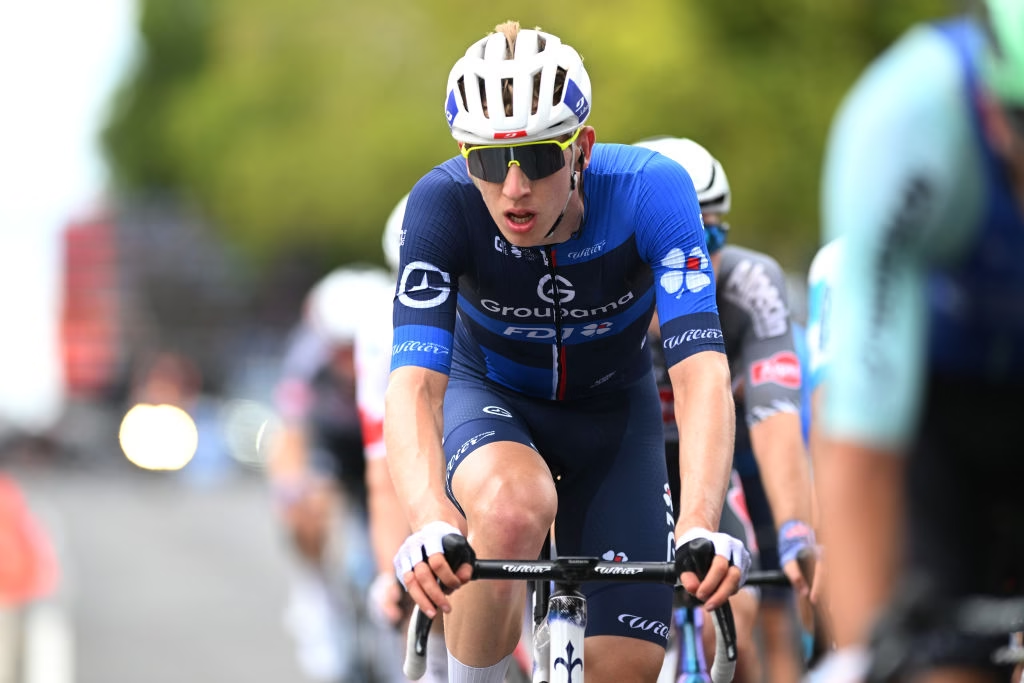 Photo Credit: Getty
Lewis Askey could turn home roads into a major result
Lewis Askey has one of the more interesting British opportunities.
NSN bring a strong home group featuring Askey, Ethan Vernon and Jake Stewart. Vernon will naturally attract attention during the sprints, while Askey has the broader profile required to remain competitive through the harder stages.
His runner-up finish at the British road championships reinforces the sense that he can play a much bigger role than simply supporting Vernon.
Lincoln suits him. So does the aggressive racing likely to develop through Yorkshire and the Scottish Borders.
Winning the GC would require another step, particularly against UAE’s depth, but a top-five challenge and a stage result are realistic ambitions if he begins the week well.
 Photo Credit: Getty
Fabio Christen belongs among the serious outsiders
One rider who deserves more attention than his name recognition may initially generate is Fabio Christen.
The Swiss rider gives Pinarello Q36.5 another strong option after the final start list changed considerably from the provisional version that had included Pidcock. Christen has the blend of punch and one-day strength required to survive the opening stage and remain relevant when the roads become harder.
Mark Donovan offers the team a different profile and has already finished fifth overall at the Tour of Britain, while Sam Bennett and Moschetti give them obvious sprint options.
Without Pidcock, Pinarello Q36.5 do not possess one overwhelming GC leader. That could actually encourage more aggressive racing, with Christen and Donovan able to pursue opportunities rather than spending the week protecting one rider.
Florian Vermeersch and Jasper Stuyven can make the race tactical
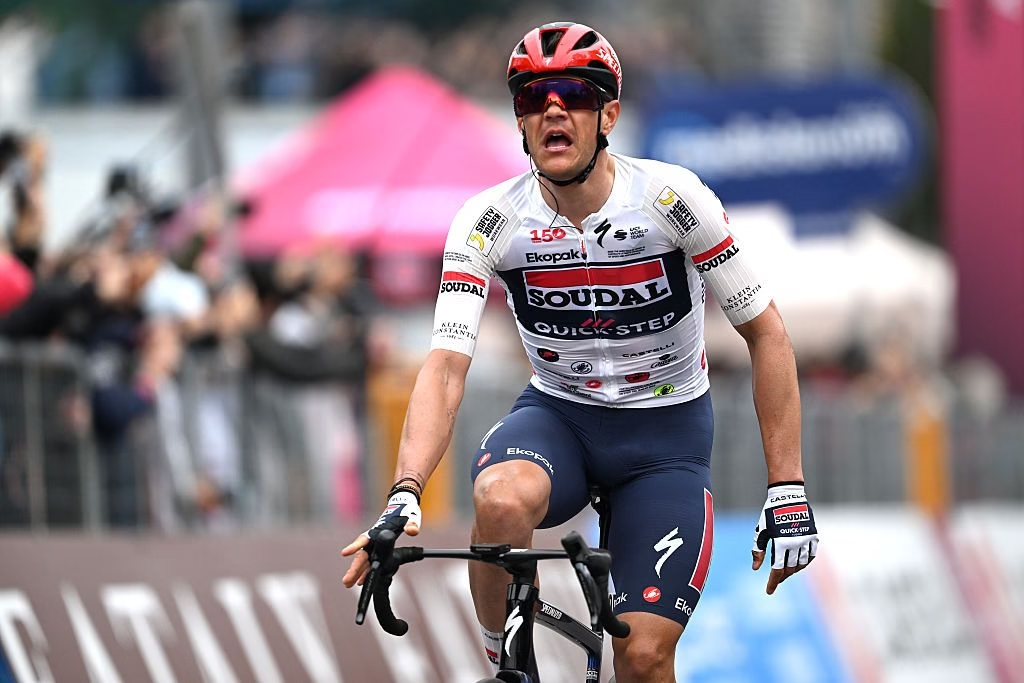
Two riders who should not be judged simply by whether they can out-climb Van Wilder are Florian Vermeersch and Jasper Stuyven.
Both are dangerous precisely because this is not a conventional climbing race.
Stage 1 provides repeated short efforts. Stage 3 combines rolling terrain with circuits. The final day through the Scottish Borders could become a Classics-style contest if the GC remains tight.
Neither rider needs to wait for the favourite to attack.
Vermeersch adds another layer to UAE’s numerical advantage, while Stuyven gives Soudal a rider capable of anticipating the more climbing-focused GC battle. If a strong group escapes 40 or 50km from the finish on either of the final stages, both have enough strength to turn it into something much more serious than a speculative move.
Those are exactly the situations Cosnefroy’s rivals need if they want to stop UAE controlling the race through numbers.
The sprinter battle could be as good as the GC fight
Even if the overall ultimately revolves around Cosnefroy and the Yorkshire stage, Kooij against Merlier may produce the most obvious repeated rivalry of the week.
Merlier has the greater pure speed when everything is perfectly organised. Three Tour de France stage victories this summer demonstrated that emphatically.
Kooij offers more flexibility. He is more likely to survive a difficult Stage 3 and has a realistic chance of remaining involved on stages where Merlier is removed. Decathlon can also use Cees Bol as an important part of his sprint structure.
Kooij’s move from Visma | Lease a Bike to his new French team was confirmed after last year’s Tour of Britain, with the Dutch sprinter signing a three-year Decathlon CMA CGM contract that immediately made him one of the central figures in its sprint project.
Vernon badly wants the home victory that has repeatedly escaped him at this race, while Welsford gives INEOS another genuine sprint option. Bennett, Moschetti, Trentin and Jake Stewart add further depth once the finishes become less straightforward.
Ben Swift begins his farewell on home roads
The race carries particular significance for Ben Swift, who announced on the eve of the Tour that he will retire at the end of the 2026 season.
Swift has deliberately chosen the Tour of Britain as part of his final racing block after 18 professional seasons. He lines up for Netcompany INEOS alongside cousin Connor Swift, while Stages 3 and 4 take the race through Yorkshire, where both riders grew up.
His role is more likely to involve supporting Ganna, Welsford and the team’s wider objectives than pursuing the overall himself. That is fitting in itself. Swift began the most successful part of his career as a fast finisher capable of challenging for Milan-Sanremo and ends it as one of the most experienced road captains in the peloton.
There is also a neat symmetry with last year’s race. Swift crossed the line alongside Geraint Thomas in Cardiff as Thomas completed his own final professional race, part of an emotional finale covered in ProCyclingUK’s 2025 Tour of Britain final-stage report.
One year later, Swift begins his own goodbye.
The Great Britain team offers another look at the next generation
The national selection is led by Matt Bostock and also contains Ollie Wood, Elliot Rowe, Ben Wiggins, Jacob Bush and William Smith.
These selections are rarely simply about protecting one rider for the overall. The Great Britain team can animate breakaways, pursue intermediate classifications and give developing riders the experience of racing against WorldTour opposition without the same tactical restrictions they may face within a trade team.
Wiggins arrives as the British under-23 time trial champion, while Rowe holds the under-23 national road title. Bostock and Wood bring substantially more experience, providing useful balance around the younger riders.
With eight Continental teams also in the field, the early breakaway battles should be aggressive. For many riders outside the WorldTour squads, waiting for UAE, Soudal and Decathlon to decide every stage offers almost no value.

The final day means Stage 4 cannot be treated as the finish line
The temptation is to look at the profiles and declare that whoever leads after Leyburn will win the Tour of Britain.
That may eventually prove correct, but it should not be assumed.
Stage 5 still contains 2,236 metres of climbing and a difficult section through the Lammermuir Hills before the two Earlston circuits. If the lead is only a handful of seconds, bonus seconds alone keep the general classification alive. A well-timed attack could do considerably more.
The strongest scenario for Cosnefroy is therefore arriving in Scotland with enough of an advantage that UAE can simply mark the important moves. The worst is holding the race lead by five or ten seconds while Van Wilder, Stuyven, Ganna, Askey, Voisard, Pluimers and several of his own teammates remain close enough to attack.
That would transform the final stage from a possible sprint into one of the hardest days of the week to control.
Who will win the 2026 Tour of Britain?
Cosnefroy deserves to start as favourite because he combines almost every characteristic this route demands. He is explosive enough for Lincoln, strong enough for Yorkshire, fast enough to exploit bonus seconds and surrounded by a UAE squad capable of putting several riders into threatening positions.
The biggest threat may not be one individual rival but the way the race develops around him. Without a time trial or mountain-top finish, it will be difficult for anyone to build a comfortable advantage. Cosnefroy could therefore spend much of the week defending seconds rather than minutes, keeping tactical attacks relevant almost until Earlston.
Van Wilder has the climbing ability to expose him if Stage 4 becomes sufficiently hard. Wellens can win through UAE’s tactical strength rather than merely working for it. Ganna needs to turn his enormous power into an aggressive race, while Pluimers, Askey, Christen, Stuyven and Voisard all have enough versatility to punish hesitation.
Kooij remains the wildcard. If he survives Yorkshire substantially better than expected, the whole complexion of the race changes because nobody wants to begin the final stage defending a handful of seconds against a rider capable of taking ten through a stage victory.
The most likely outcome is still Benoît Cosnefroy winning a close Tour of Britain, with UAE’s depth ultimately proving as important as his own form. What makes the 2026 edition compelling is that there is no single climb or time trial where he can settle the argument.
From five ascents of Michaelgate on Wednesday to the final Lammermuir roads on Sunday, this looks like a Tour of Britain that could remain a contest measured in seconds.

