
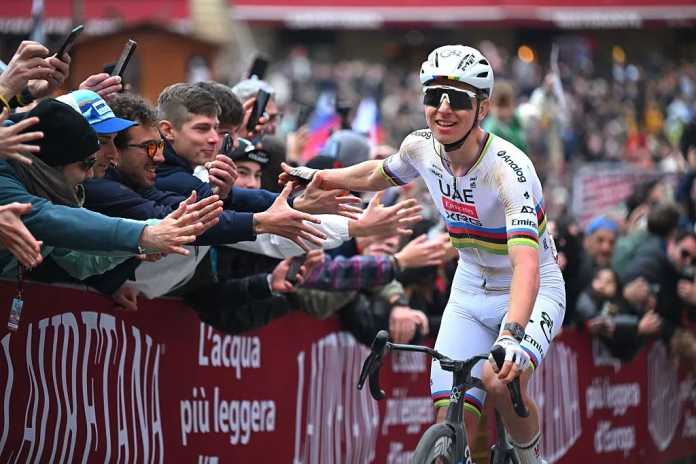
Bonus seconds are one of the Tour de France’s simplest rules, but they can have a far bigger effect than they first appear to. In a race often decided by minutes in the high mountains, a few seconds at the finish line might look minor. In practice, they can shape sprint finishes, change who wears the yellow jersey early in the race, encourage general classification riders to contest reduced bunch sprints, and sometimes turn a tactical stalemate into a final-kilometre fight.
For the 2026 Tour de France, the organiser lists finish-line time bonuses of 10, 6 and 4 seconds for the first three riders on a stage. That means the stage winner has 10 seconds deducted from his overall general classification time, the runner-up has 6 seconds deducted, and the third-placed rider has 4 seconds deducted.
That is the key point. Bonus seconds do not add time to rivals. They subtract time from the rider who earns them. If two riders finish in the same group and are given the same stage time, the one who wins the stage can still gain 10 seconds in the general classification through the bonus.
For broader race context, our Tour de France 2026 full route guide explains how those seconds fit into a route that starts in Barcelona, reaches the Pyrenees early, crosses the Massif Central, Vosges and Jura, then finishes with a brutal Alpine block around Alpe d’Huez.
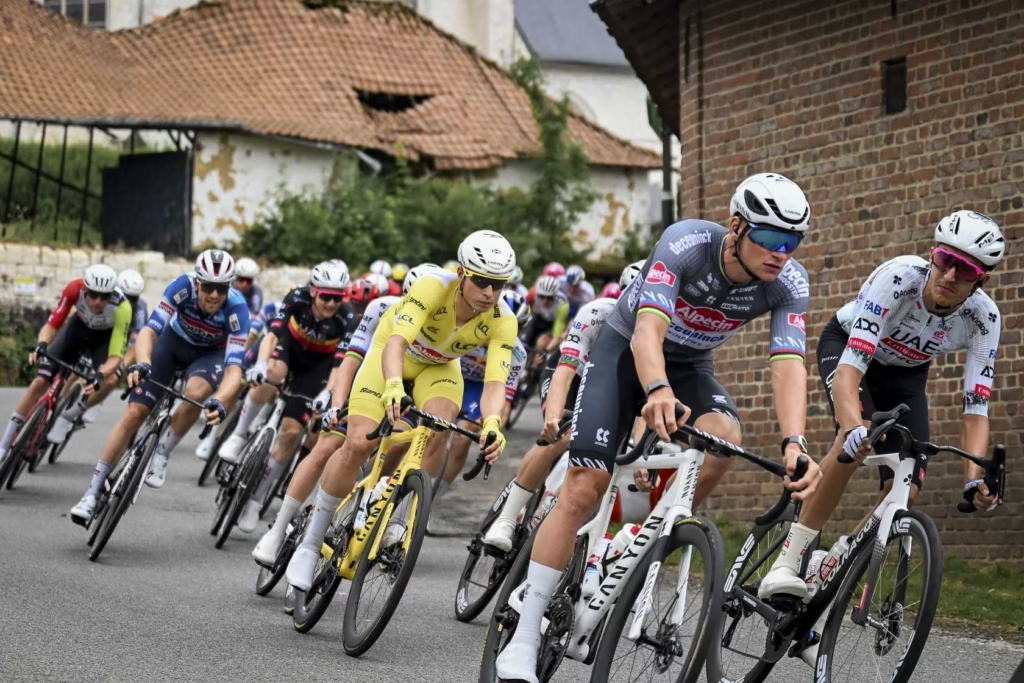 Photo Credit: A.S.O./Billy Ceusters
Tour de France bonus seconds at a glance
| Question | Answer |
|---|---|
| How many bonus seconds are awarded at the Tour de France? | The first three riders on a stage can receive 10, 6 and 4 seconds. |
| Do bonus seconds count towards the yellow jersey? | Yes. Bonus seconds are deducted from a rider’s general classification time. |
| Does the winner gain time if everyone finishes together? | Yes. If the stage winner receives the same stage time as his rivals, the 10-second bonus still reduces his overall time. |
| Are bonus seconds the same as a time gap? | No. A time gap is created on the road. A bonus second is an extra time deduction awarded after the finish. |
| Can bonus seconds decide the Tour de France? | They rarely decide the whole race alone, but they can shape the yellow jersey battle, especially in the opening week or in a close GC contest. |
| Why do teams chase bonus seconds? | Bonus seconds can help a leader move up the general classification without needing to drop rivals on the road. |
| Do sprinters affect the GC through bonus seconds? | Yes. If sprinters take the bonuses, they can prevent GC riders from gaining those seconds. |
What are bonus seconds?
Bonus seconds are time rewards given to riders for finishing in the top positions on selected parts of a race. At the Tour de France, the main system is attached to stage finishes. The first three riders across the line receive small deductions from their overall time.
In the 2026 Tour, the listed finish bonuses are:
1st place: 10 seconds
2nd place: 6 seconds
3rd place: 4 seconds
So, if a rider begins the day 3 seconds behind the yellow jersey and wins the stage from the same group as the race leader, he does not just take a stage win. He also moves ahead overall, because the 10-second bonus is taken off his cumulative time.
This is why bonus seconds are often most important in the opening week, on punchy stages, and in finales where general classification riders and fast finishers overlap. They can decide who wears yellow after the first few days, especially before the race has reached its biggest mountain stages.
For readers still getting familiar with the wider race structure, our beginner’s guide to Men’s Tour de France 2026 sets out how the yellow jersey, stage racing and classification battles fit together.
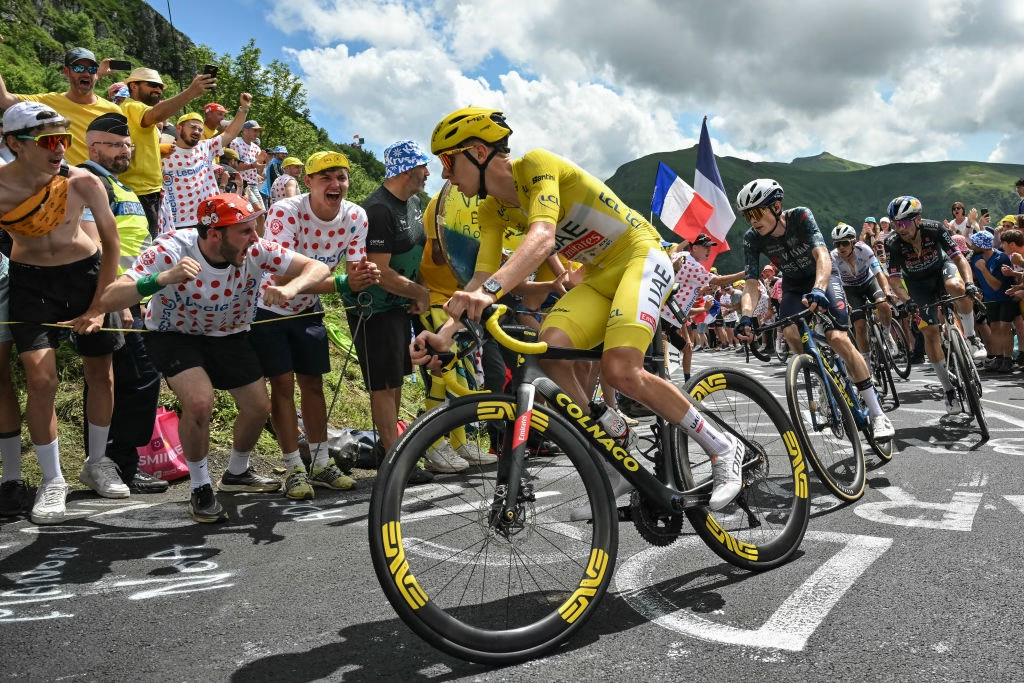
How bonus seconds affect the general classification
The Tour de France general classification is based on accumulated time. Every rider’s stage times are added together across the race. The rider with the lowest total time leads the race and wears the yellow jersey.
Bonus seconds are deducted from that total.
Imagine two riders finish a hilly stage in the same front group. They are both given the same finishing time, but one wins the sprint and the other finishes fourth.
The stage winner receives a 10-second bonus. The fourth-place rider receives nothing. On the official stage result they may appear in the same time group, but in the general classification the winner has gained 10 seconds.
That is why bonus seconds matter most when the physical difference between riders is small. They do not usually overturn a race where one rider is clearly stronger across the mountains and time-trials. They do, however, reward sharpness, positioning and finishing speed.
In a Tour where Tadej Pogačar, Jonas Vingegaard, Remco Evenepoel and other general classification contenders may be separated by slim margins before the major climbs, a 10-second bonus can be useful. It is not the same as dropping a rival on a mountain, but it is still real time. Over several stages, those seconds can accumulate.
Our Tour de France 2026 dark horses for the general classification piece looks at riders who may need to collect small advantages wherever they can. Bonus seconds are exactly the kind of marginal gain that can help a podium outsider stay in the conversation.
Why stage finishes matter more than the rule sounds
On paper, 10 seconds is not much. On the road, it changes behaviour.
Without bonus seconds, a general classification rider in a reduced front group might be happy simply to finish safely. If there are bonuses available, the same rider has a reason to contest the sprint, launch a late acceleration, or ask his team to control the final kilometres.
That can make hilly stages more tense. A stage that might otherwise go to a breakaway can become attractive to yellow jersey contenders if the finish suits them. A stage with a short climb near the end can turn into a fight for position, not only because the stage win is available, but because the bonus can affect the overall standings.
It also changes the way teams ride. A team with a punchy GC leader may chase harder if the stage finish offers a realistic chance of bonus seconds. A team defending yellow may do the opposite, controlling the breakaway gap or allowing non-threatening riders to take the bonuses up the road.
This is one of the subtle tactical layers of the Tour. Bonus seconds are small enough not to dominate the whole race, but large enough to influence decisions in the final hour of a stage. Our Tour de France 2026 route analysis looks at the stages where those tactical decisions could become especially important.

Why sprinters can affect the yellow jersey race
Bonus seconds are not only for general classification riders. Sprinters win many of them, especially on flat stages. That can actually protect the GC standings.
If a pure sprinter wins a bunch sprint, the 10-second bonus goes to a rider who is unlikely to threaten the overall classification. That means the GC riders finish safely in the bunch without any meaningful change between them.
The situation becomes more interesting on mixed stages. If the finish is too hard for the pure sprinters but not hard enough for a full mountain selection, the bonus seconds may fall to versatile riders. That is where the yellow jersey contenders need to be alert.
A rider such as Pogačar, who can sprint from a reduced group, can turn a punchy finish into a GC gain. A rider with less finishing speed may need to prevent that by attacking earlier, relying on team strength, or simply accepting the small loss and waiting for harder terrain.
The Tour de France 2026 route has several stages where this could matter. The Barcelona opening block, the early Pyrenean stages, the Massif Central, and the Vosges and Jura all contain days where the race may not be straightforwardly flat or mountainous. Our Tour de France 2026 Pyrenees guide and Tour de France 2026 Vosges and Jura guide explain why those transition blocks could be more important than they appear at first glance.
Do bonus seconds apply in time-trials?
This is where the exact race regulations matter. In many stage races, time-trials are treated differently from road stages when it comes to bonus seconds. The logic is simple: a time-trial is already a pure test against the clock, so extra finish bonuses can distort the result.
For the 2026 Tour de France, the official route page lists a general finish-line bonus system of 10, 6 and 4 seconds. The race also begins with a Barcelona team time-trial and includes an individual time-trial on stage 16 from Évian-les-Bains to Thonon-les-Bains. The full race regulations normally provide the stage-by-stage detail, so it is worth checking the final rule book when it is published if the exact application on time-trial days is important.
The Barcelona opener is already unusual because it is a team time-trial with individual general classification consequences. Our Tour de France 2026 team time-trial explained feature covers why that stage is not a standard collective test. It could shape the early yellow jersey picture before bonus seconds become part of the daily road-stage rhythm.

How bonus seconds can decide yellow in the first week
The opening week is where bonus seconds are often most visible. Before the biggest climbs, the general classification can be tightly packed. Riders may be separated by only a handful of seconds after the first few stages, especially if the early route includes bunch finishes or small-group arrivals.
That creates yellow jersey scenarios that are easy to miss.
A rider can take the race lead without dropping anyone. A rider can lose yellow despite finishing safely in the same group as his main rival. A team can spend the final kilometres chasing not only for a stage win, but for a 10-second deduction that changes the jersey ceremony.
In 2026, this could be particularly relevant because the Tour starts with a team time-trial in Barcelona, then remains in Catalonia before heading towards Les Angles and the Pyrenees. The first days should create time gaps, but the race may still be close enough for bonus seconds to affect the yellow jersey. For the opening weekend detail, see our Tour de France 2026 Grand Départ guide.
The yellow jersey can change hands quickly in that kind of opening block. Our Tour de France 2026 jerseys explained guide covers the four main classifications and how they sit alongside the stage-by-stage fight.
Why bonus seconds can discourage attacks as well as encourage them
It is tempting to think bonus seconds always make racing more aggressive. Sometimes they do. A rider who backs his sprint may chase a stage win more actively because the reward is doubled: stage victory and a time gain.
But bonus seconds can also make riders more cautious. If a GC contender knows a rival is faster in a small-group sprint, he may refuse to work in the final kilometres. He may attack earlier to avoid that sprint, or he may sit on and limit the damage. Teams may also mark each other more closely, especially if the finish is likely to produce a 10-second swing.
This is why bonus seconds are tactically interesting. They do not automatically produce attacks. They alter incentives. Sometimes that creates a sharper finale. Sometimes it creates more watching, more bluffing and more hesitation.
The best racing often comes when several riders have different reasons to chase. A sprinter wants the stage. A GC rider wants the bonus. A breakaway rider wants survival. A yellow jersey team wants to keep dangerous bonuses away from rivals. Those overlapping aims can make the final 20km far more complicated than the stage profile suggests.
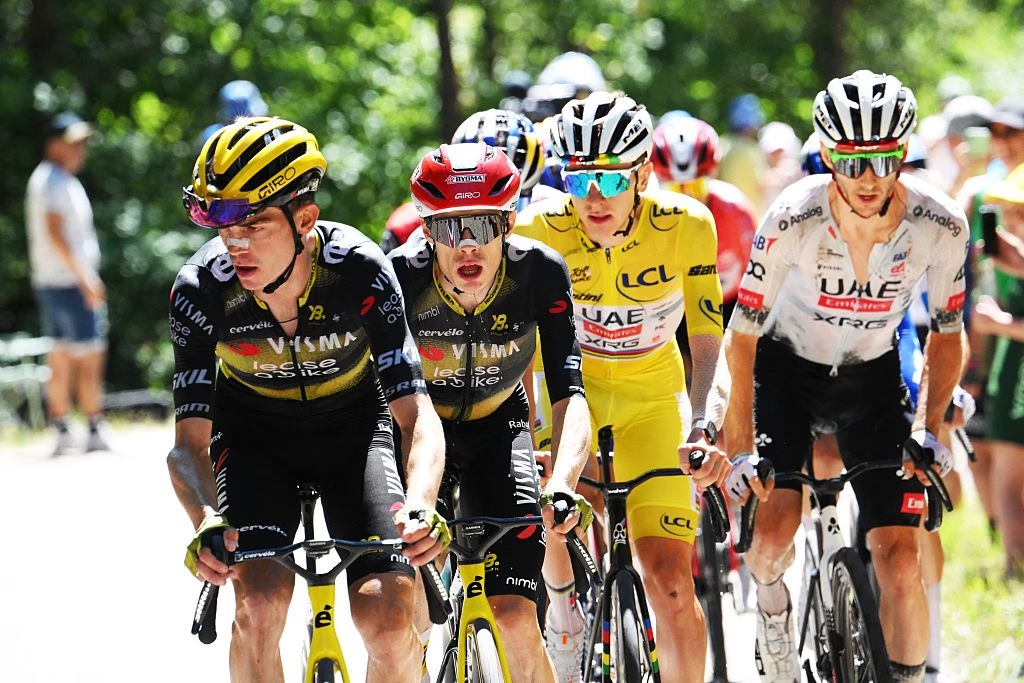 Photo Credit: Getty
The difference between bonus seconds and time gaps
Bonus seconds are separate from actual time gaps on the road.
If a rider wins a stage by 3 seconds, then receives a 10-second bonus, he gains 13 seconds overall on a rival who finishes behind him without a bonus. The 3 seconds are the real road gap. The 10 seconds are the bonus.
If a rider wins from a group and everyone in that group is given the same time, he gains only the bonus.
This distinction is important because race results can show several riders on the same stage time, while the general classification still changes. The bonus seconds are applied after the stage time has been recorded.
For casual viewers, this can look confusing. A rider may appear to have finished alongside the yellow jersey, then still move closer overall. The explanation is usually the bonus.
Can bonus seconds decide the Tour de France?
They can, but only in certain circumstances. Bonus seconds are unlikely to decide a Tour where one rider is clearly superior across the mountains and time-trials. Over three weeks, the decisive gaps usually come from climbs, time-trials, crashes, crosswinds, bad days and team strength.
But when two riders are closely matched, bonus seconds become part of the equation. A rider who repeatedly takes 4, 6 or 10 seconds can build a cushion. A rider who repeatedly loses those sprints may be forced to attack later in the race. Even if the final winning margin is larger, early bonuses can influence how the race is ridden.
They also matter psychologically. Taking bonus seconds sends a message. It says a rider is alert, confident and willing to fight for every small advantage. Losing them repeatedly can create pressure, especially if the same rival keeps appearing ahead at the finish.
The Tour is rarely won by bonus seconds alone. It can certainly be shaped by them.
-
 Photo Credit: Getty


Tour de France bonus seconds FAQ
How many bonus seconds are awarded at the Tour de France?
At the 2026 Tour de France, the official route information lists finish-line time bonuses of 10, 6 and 4 seconds for the first three riders on a stage. The stage winner receives 10 seconds, second place receives 6 seconds, and third place receives 4 seconds.
Do bonus seconds count towards the yellow jersey?
Yes. Bonus seconds count towards the general classification, which decides the yellow jersey. They are deducted from a rider’s overall race time, so they can help a rider move closer to the race lead or take the yellow jersey outright.
Are bonus seconds added to other riders’ times?
No. Bonus seconds are not penalties for rivals. They are deductions from the time of the rider who earns them. If a rider wins a stage and earns a 10-second bonus, his own overall time is reduced by 10 seconds.
Can a rider gain time without creating a gap?
Yes. If a rider wins from a group and everyone in that group is awarded the same stage time, the winner can still gain time overall through the bonus seconds. That is why small-group sprints can matter in the yellow jersey race.
Are bonus seconds different from time gaps?
Yes. A time gap is the actual difference between riders at the finish. Bonus seconds are extra time deductions awarded for placing. If a rider wins by 3 seconds and also receives a 10-second bonus, he gains 13 seconds overall on a rival who receives no bonus.
Can bonus seconds decide the Tour de France?
They can influence the Tour, but they rarely decide it alone. The biggest differences usually come from climbs, time-trials, crashes, crosswinds and bad days. In a very close race, however, repeated bonuses of 4, 6 or 10 seconds can become important.
Why do GC riders sprint for third place?
A GC rider may sprint for third place because third place can still bring a 4-second bonus. In a close race, even 4 seconds can matter, especially early in the Tour or when two contenders are evenly matched.
Do bonus seconds make the race more attacking?
Sometimes. Bonus seconds can encourage riders and teams to chase stage wins or contest reduced sprints. They can also make some riders more cautious if they know a rival has a stronger finish.
Why they matter for watching the race
For viewers, bonus seconds make the finish line more important even when there is no obvious time gap. They are the reason a GC contender might sprint for third on a hilly stage. They explain why a team might chase a breakaway that contains no major overall threat. They help explain why riders who are not pure sprinters fight so hard for position on certain finishes.
They also make the stage result and general classification feel connected. A stage win is never only a stage win if the winner is close overall. It can change the yellow jersey, shift the podium battle, or alter the pressure before the next mountain stage.
That is also why the live pictures matter. The final sprint for third on a lumpy day can be just as relevant to the overall race as the obvious stage winner. UK broadcast details for the race are covered in our guide on how to watch Tour de France 2026 in the UK, while our wider Tour de France hub brings together route guides, rider analysis, viewing information and race explainers.
That is the simplest way to understand bonus seconds at the Tour de France. They are small deductions from a rider’s total time, but they create big tactical consequences. In a race built around accumulation, fatigue and control, every second has a value. Bonus seconds are the most visible proof of that.

