
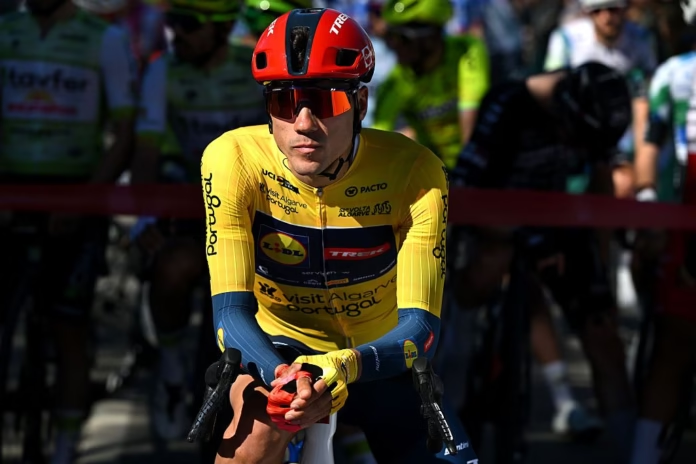
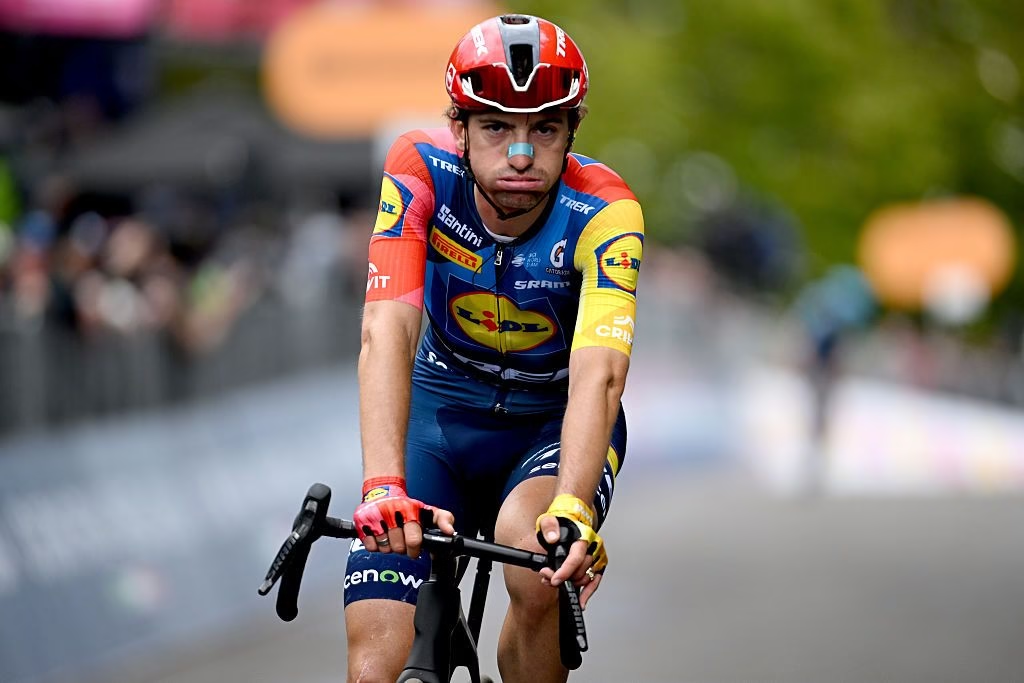
Juan Ayuso arrives at the Tour de France 2026 with more than just potential around his name. He arrives with expectation. The move to Lidl-Trek, the early statement of ambition, the break from UAE Team Emirates-XRG and the shape of the 2026 route all make this a defining July for one of Spain’s most talented stage-race riders.
Ayuso has already shown enough to be taken seriously as a Grand Tour contender. He can climb, he can time-trial, he can accelerate on punchy finishes and he has the confidence of a rider who expects to be in the front group. But the Tour de France is a different test to almost everything else. It does not only ask whether a rider has the physical level. It asks whether he can manage pressure, positioning, team hierarchy, bad days, leadership, media attention and tactical restraint for three weeks.
That is where Ayuso’s 2026 Tour becomes so interesting. This is not simply a question of whether he is talented enough. He is. The bigger question is whether this version of Ayuso, in this team, on this route, is ready to convert that talent into a top-tier Tour de France general classification result.
For the full route context, our Tour de France 2026 full route guide explains how the race moves from Barcelona through the Pyrenees, Massif Central, Vosges, Jura and Alps before finishing in Paris.
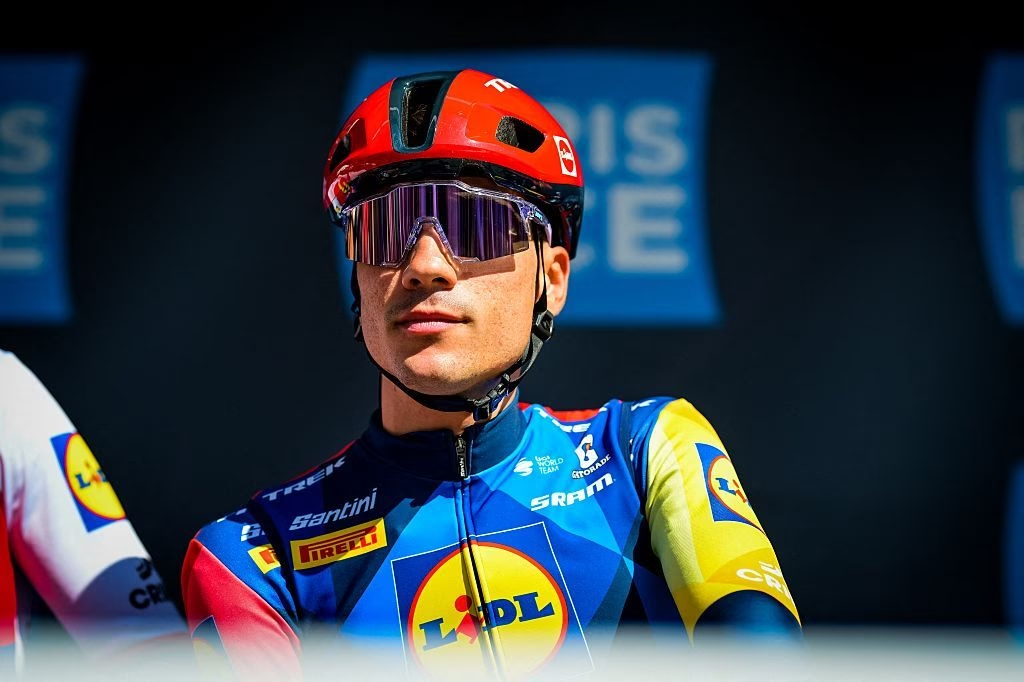
Juan Ayuso at the Tour de France 2026 at a glance
| Question | Answer |
|---|---|
| Team | Lidl-Trek |
| Age during the 2026 Tour | 23 |
| Role | GC leader or co-leader |
| Main strength | Climbing and time-trial balance |
| 2026 route fit | Strong, especially if he survives the Barcelona opener and early Pyrenees |
| Biggest opportunity | Five summit finishes and a route with repeated GC tests |
| Biggest risk | Pressure, consistency and team balance within Lidl-Trek |
| Realistic target | Top five to top 10 overall |
| Upside scenario | Podium if the race opens up and he avoids a bad day |
| Main question | Can he turn potential into Tour de France authority? |
Why Ayuso matters at the 2026 Tour
Ayuso matters because he sits in the most volatile category of Tour de France contender. He is not a rider whose ceiling is easy to define. He is not just a stage hunter, not just a young rider, not just a support option, and not yet an established Tour podium guarantee. He is somewhere in the gap between promise and confirmation.
That is often the most interesting part of the GC field. Tadej Pogačar and Jonas Vingegaard begin the race with obvious status. Remco Evenepoel brings a different kind of expectation. Isaac del Toro, João Almeida, Paul Seixas, Florian Lipowitz, Tom Pidcock and others shape the deeper field. Ayuso sits among that group, but with a sharper edge because the pressure around him feels more personal.
He changed teams to step into a different role. He is no longer one of several elite options inside UAE Team Emirates-XRG. At Lidl-Trek, the expectation is clearer: he is there to matter in the races that define a season.
Our Tour de France 2026 GC favourites ranked guide places Ayuso firmly inside the second line of contenders, behind the biggest yellow jersey favourites but close enough to make the podium conversation interesting.
The Lidl-Trek move changes the story
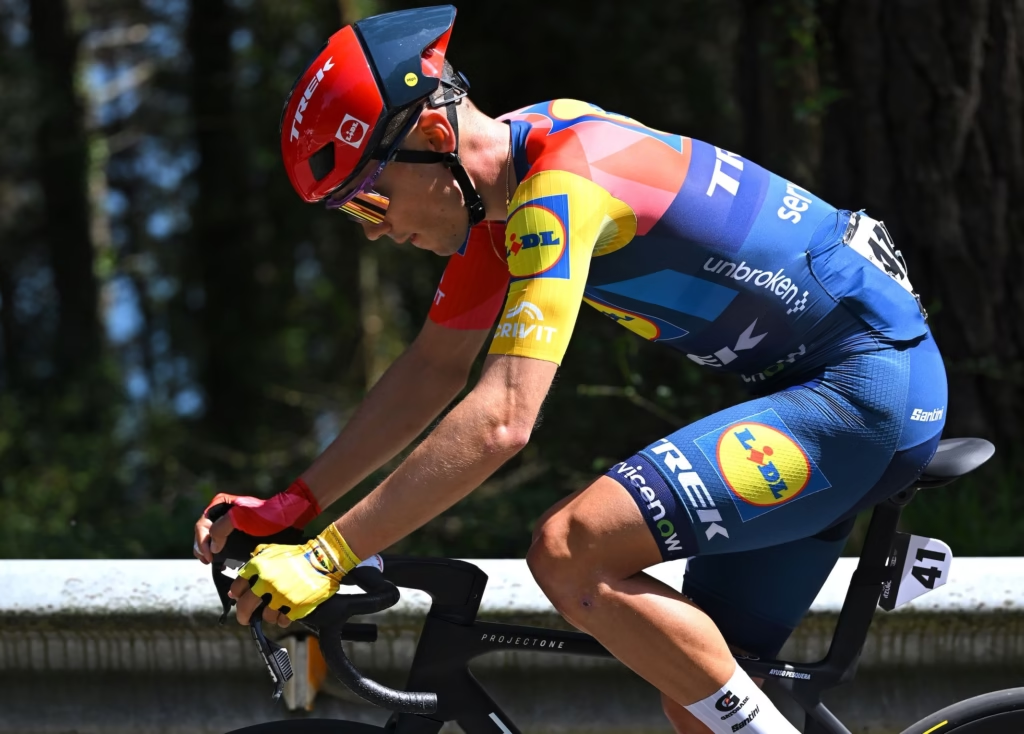
Ayuso’s move to Lidl-Trek changed the way his Tour de France ambitions are viewed. At UAE Team Emirates-XRG, he was part of a super-team structure built around Pogačar, Almeida, Adam Yates, Isaac del Toro and other elite options. That environment offered depth, support and success, but it also created obvious leadership limits.
At Lidl-Trek, Ayuso gets something different. He gets space. He gets responsibility. He gets a team that can build around him more clearly in Grand Tours, while still carrying other strong cards such as Mads Pedersen, Jonathan Milan, Mattias Skjelmose, Giulio Ciccone and Quinn Simmons depending on final selection.
That is both an opportunity and a burden. Freedom is valuable only if a rider can use it. Ayuso no longer has the same shelter of being one talented option within a dominant UAE structure. If he struggles, the questions come directly to him. If he succeeds, the result belongs much more clearly to him.
That makes the 2026 Tour a proper leadership test. It is not only about whether Ayuso can climb with the best for one day. It is about whether Lidl-Trek can ride like a GC team around him, and whether Ayuso can carry the emotional and tactical weight that comes with that.
What 2026 has already told us
Ayuso’s 2026 season has not been a perfectly clean rise into July. That matters because Tour de France narratives often simplify riders into form lines that are too neat. His year has had both positives and interruptions.
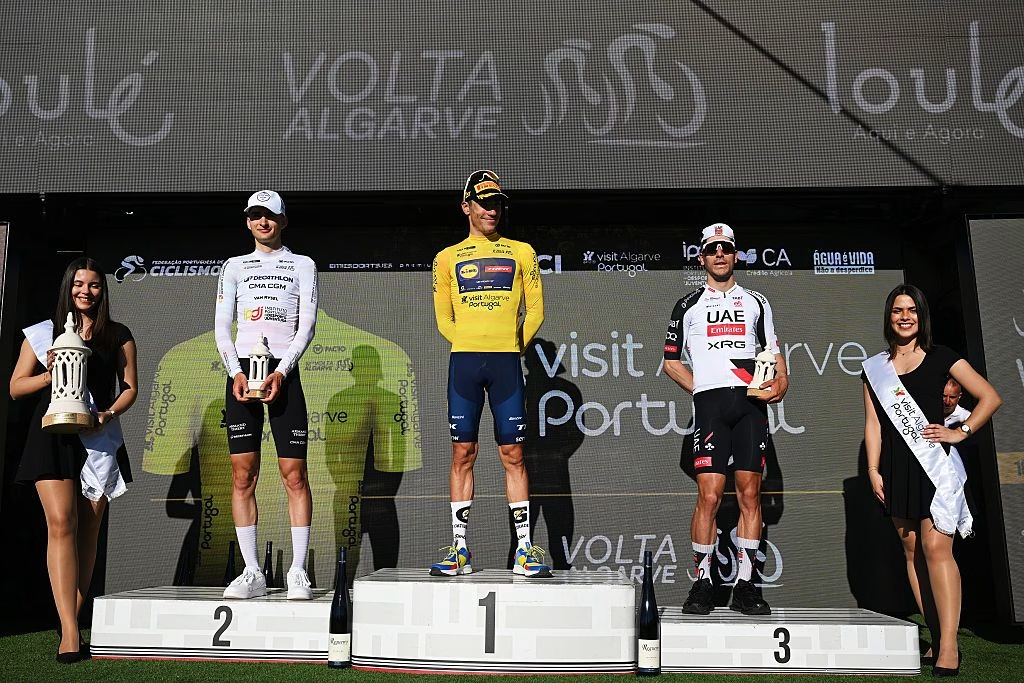
The Volta ao Algarve win showed that the baseline level was still there. It was an important early result, not just because of the victory itself, but because it immediately gave his Lidl-Trek move sporting credibility. A rider changing teams under pressure needs early confirmation, and Ayuso found some.
The spring was less smooth. Crashes, interruptions and race disruption meant the road to July was not as simple as it might have looked on paper. That made Tour Auvergne – Rhône-Alpes important. His 3rd overall there, including a strong final-stage performance, did not make him a Tour favourite, but it gave a useful answer. He looked closer to the level required for July than he had earlier in the season.
Our piece on what Tour Auvergne – Rhône-Alpes 2026 means for the season explains why that result mattered for Ayuso’s Tour build-up, even if it did not carry the headline impact of a major win.
Where the 2026 Tour route suits Ayuso
The 2026 Tour route gives Ayuso a genuine platform. It is not an easy route for him, but it is a route with enough climbing, enough time-trial relevance and enough repeated GC pressure to reward a complete stage racer.
The race starts in Barcelona, which adds immediate personal and symbolic weight. Ayuso was born in Barcelona, and beginning the Tour in Spain only increases the attention around him. That can be motivating, but it can also be draining. The first three stages will be loud, emotional and tactically important.
Stage 1 is a team time-trial in Barcelona. That is the first test of Lidl-Trek’s GC structure. A strong collective performance can put Ayuso into a useful early position. A poor one can force him to chase before the race has properly begun. Our Tour de France 2026 team time-trial explained feature looks at why the Barcelona opener has individual GC consequences despite being a team event.
Stage 2, from Tarragona back to Barcelona, has a Montjuïc finale that could also matter. It is not a pure mountain stage, but it is exactly the kind of nervous, high-pressure road stage where GC riders can lose time through poor positioning. Ayuso does not need to win there. He needs to stay calm and avoid damage.
The first major mountain question comes quickly in the Pyrenees. That suits Ayuso in one sense, because he should not need two weeks to ride into form. It also raises the stakes early. If he is already on the back foot after the team time-trial and opening Catalan stages, the Pyrenees could become defensive rather than opportunistic.
The Pyrenees as the first real test
The Pyrenees are likely to show whether Ayuso is truly ready for a top-five Tour bid. They may not decide the whole race, but they should separate real contenders from riders simply hoping to survive.
Ayuso has the climbing ability to handle the Pyrenean stages. The question is how he handles the rhythm of the race around them. At the Tour, climbs are not isolated tests. They come after positioning fights, nervous approaches, team pressure, heat, media attention and repeated accelerations from rivals who know exactly when to apply pressure.
This is where Ayuso’s profile becomes intriguing. He is not a passive climber. He has a sharpness that can make him dangerous when the race becomes selective. He is not simply trying to follow wheels. On the right day, he can attack. But the Tour may reward restraint as much as aggression.
In the Pyrenees, the first job is not to win the Tour. It is to avoid losing it. Ayuso needs to come through that block still inside the serious GC conversation. If he does, the route gives him more chances later.
Our Tour de France 2026 Pyrenees guide breaks down why this early mountain block could reveal which contenders are genuinely ready for the three-week fight.
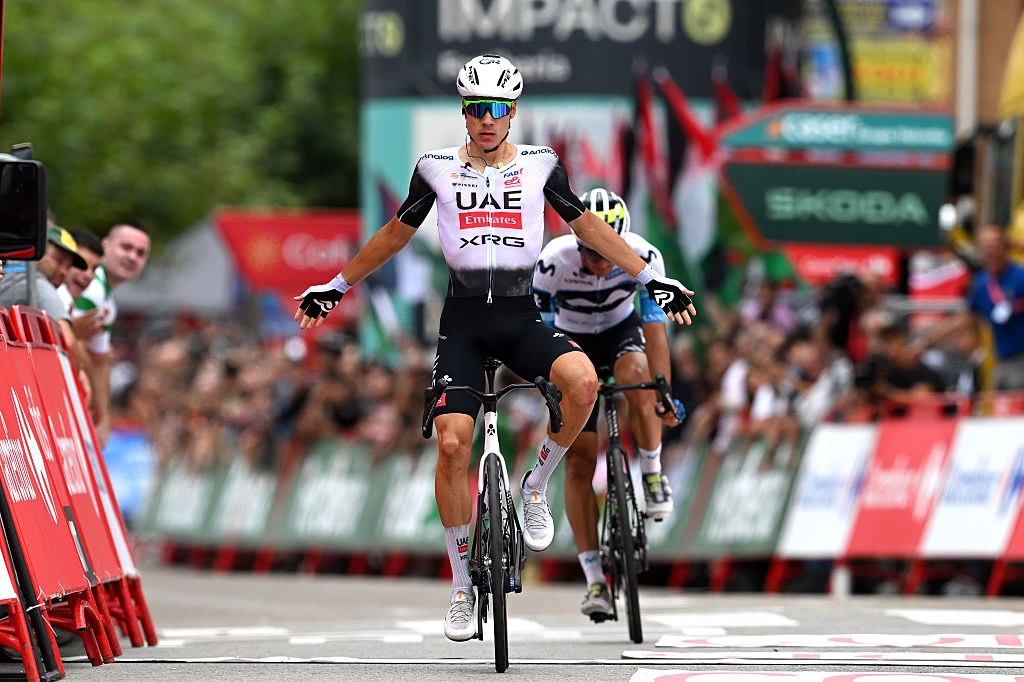
The time-trial question
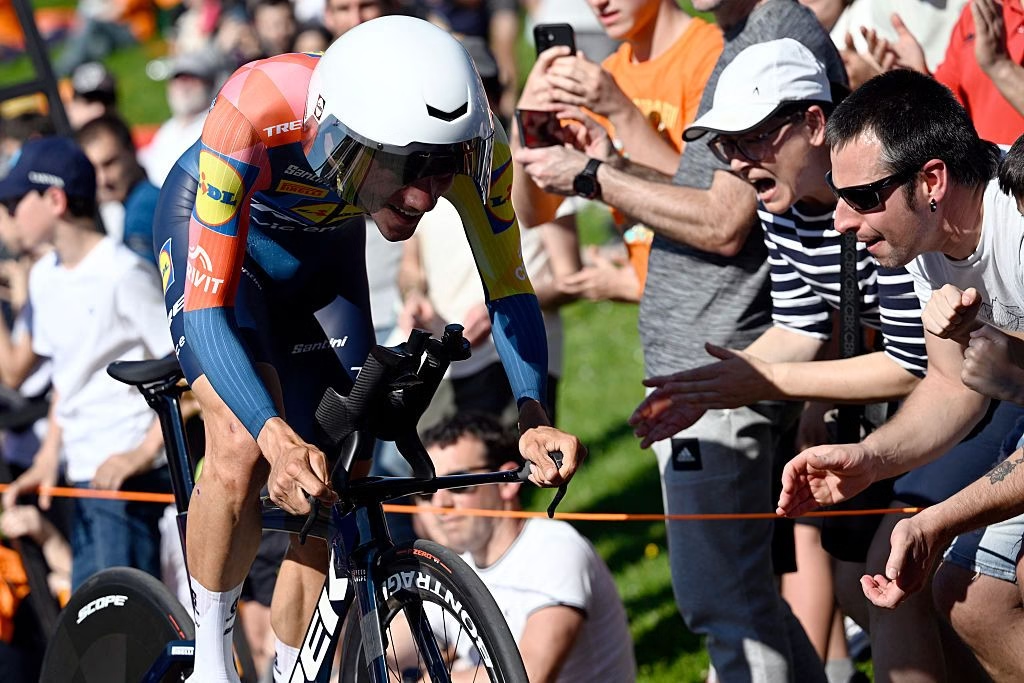
Ayuso’s time-trialling is one of the reasons his GC potential is so serious. He is not just a climber hoping to limit losses. He has the ability to use time-trials as part of a wider stage-race package.
That matters twice in 2026. First, there is the Barcelona team time-trial. Second, there is the stage 16 individual time-trial from Évian-les-Bains to Thonon-les-Bains. That individual test comes late enough in the race for fatigue to matter and short enough for a strong GC rider to limit losses without needing to be a pure specialist.
Ayuso is unlikely to use the time-trial in the same way as Remco Evenepoel. He does not need to. For him, the target is efficiency. Avoid a damaging team time-trial. Stay close enough through the first two weeks. Then use stage 16 to either defend a high position or move past riders who are more vulnerable against the clock.
That is where his route fit becomes stronger than some climber-only contenders. A rider who can climb and time-trial does not need to gamble every mountain day. He can accumulate time differently.
Our best time-triallists at the Tour de France 2026 guide places Ayuso within the wider time-trial picture, especially among the GC riders who can turn stage 16 into a meaningful classification day.
The pressure of being a Spanish contender
Ayuso’s nationality matters because Spain has been waiting for its next major Tour de France contender. That does not mean every Spanish rider should be forced into an Alberto Contador-shaped comparison, but the expectation is real. When a Spanish rider with Ayuso’s talent reaches the Tour as a GC leader, the story naturally grows.
The 2026 start in Barcelona amplifies that. This is not just another foreign Grand Départ. It is a Spanish Grand Départ, in Ayuso’s birth city, with the first days of the race carrying local attention, Spanish media pressure and emotional weight. That can lift a rider. It can also make the opening weekend feel heavier than it should.
Ayuso has always carried confidence, and that is part of what makes him so good. But Grand Tour leadership is not only about confidence. It is about control. The best Tour riders know when to ignore noise, when to save energy, when to let a stage go, and when to respond. That emotional discipline may be as important as his climbing legs.
Our guide to how to visit the Tour de France 2026 Grand Départ in Barcelona covers the scale of the opening weekend and why the Catalan start should feel like one of the most atmospheric Grand Départs in years.
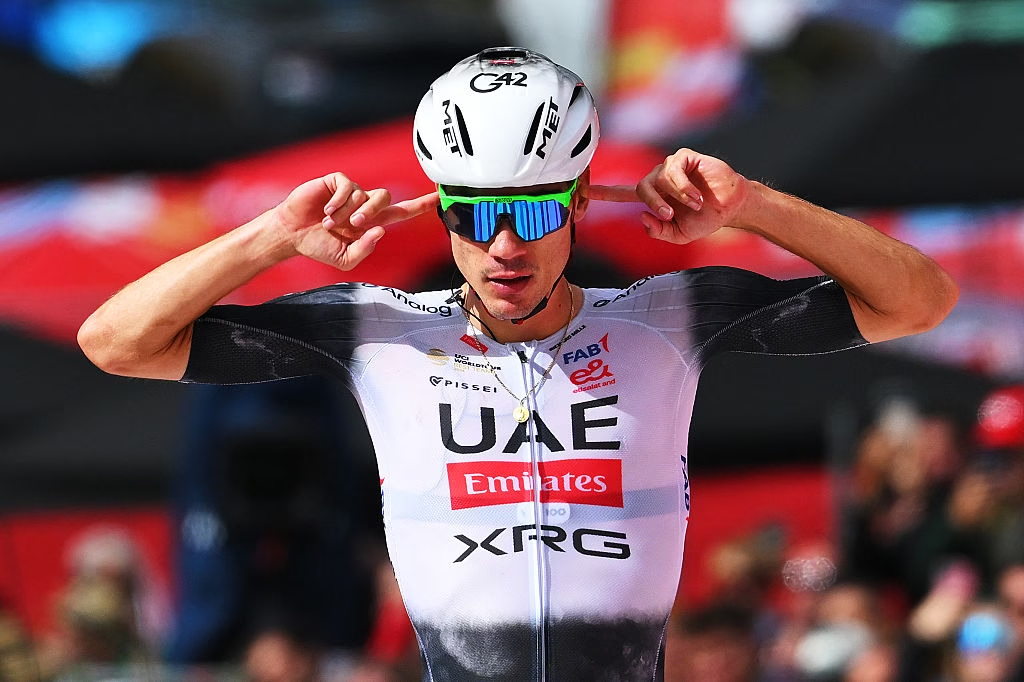
The team balance with Mads Pedersen and Jonathan Milan
Ayuso may be Lidl-Trek’s GC headline, but he will not be the only major story inside the team. Mads Pedersen and Jonathan Milan are too important to ignore. If both start, Lidl-Trek could have one of the strongest points-jersey and stage-winning units in the race. That gives the team huge firepower, but it also creates tactical complexity.
A full GC team is different from a stage-win team. A GC squad needs riders positioned around Ayuso, protecting him before climbs, managing stress, covering dangerous moments and sacrificing personal chances. A sprint or green-jersey plan needs lead-out strength, control on flat stages, intermediate sprint focus and a willingness to spend energy day after day.
The challenge for Lidl-Trek is not that those goals are incompatible. They can work together. Pedersen’s strength on hard days can help keep the team aggressive, while Milan offers a more direct route to flat-stage success if selected. But resources are limited. Every Tour team only has eight riders. Every selection choice says something.
Ayuso’s GC campaign will depend partly on whether Lidl-Trek can build a team that protects him without stripping away the stage-winning identity that makes the squad so dangerous.
Our Mads Pedersen at the Tour de France 2026 analysis looks at how Pedersen’s own ambitions could fit alongside the team’s wider race plan, while our Jonathan Milan at the Tour de France 2026 feature examines the other major Lidl-Trek points-jersey thread.
Ayuso and Lidl-Trek’s mountain depth
The other important Lidl-Trek question is mountain depth. Ayuso cannot challenge for a top-five Tour result alone. He needs support in the Pyrenees, the Alps and the complicated middle of the race.
That is where riders such as Giulio Ciccone and Mattias Skjelmose become important, depending on final selection and form. Ciccone brings climbing experience, stage-hunting instinct and polka-dot jersey relevance. Skjelmose offers another high-level stage-race option. The advantage is flexibility. The risk is hierarchy.
If Ayuso is clearly the GC leader, those riders can strengthen the team around him. If the race becomes unclear, Lidl-Trek may have several cards but no obvious order. That can be useful in breakaways and stage hunting. It is more complicated when a team is trying to defend one rider’s overall position against UAE Team Emirates-XRG, Visma-Lease a Bike, Red Bull-BORA-hansgrohe and Soudal Quick-Step.
The key is clarity. Ayuso needs support, not ambiguity. Lidl-Trek can still use Ciccone, Skjelmose and others aggressively, but the race plan has to protect the GC project if that is the main objective.
Our Tour de France 2026 climbers guide explains how Lidl-Trek could also become relevant in the mountains classification if the race opens up.
What would count as a successful Tour for Ayuso?
Ayuso’s success should be measured against both his talent and his current career stage. A podium is the dream, but a top-five finish would be a major result. A top-10 with signs of progression would still be valuable, especially in a deep Tour field.
The difficult outcome would be a race where he is never truly in the GC fight but also never free enough to chase stages. That is the danger zone for riders between roles. Ayuso is too good to drift anonymously through the Tour. Lidl-Trek need to avoid that middle ground.
| Result | Meaning |
|---|---|
| Podium | A major breakthrough and proof he is a true Tour leader |
| Top five | Clear confirmation that the Lidl-Trek move is working |
| Top 10 | Solid, but dependent on how he races and how close he is |
| Stage win | Valuable, especially if GC slips away |
| Outside top 10 without a stage | Disappointing given the expectation around him |
| Early GC collapse | Would raise questions about pressure, preparation and team structure |
A strong Tour does not have to mean beating Pogačar or Vingegaard. That may be unrealistic for now. But Ayuso needs to look like he belongs in the next group, and he needs to do it consistently.
Where Ayuso could gain time
Ayuso’s best route to a strong GC result is not one giant attack. It is accumulation. Limit losses in the team time-trial. Stay calm in Barcelona. Survive the Pyrenees. Use the medium-mountain days to stay attentive. Time-trial well on stage 16. Then see what is left in the Alps.
He could gain time in three main ways:
| Area | Why it matters |
|---|---|
| Team time-trial | Lidl-Trek can put him in a good position before the road stages |
| Stage 16 individual time-trial | Ayuso can move past weaker time-trial riders late in the race |
| Selective mountain days | His acceleration can punish riders who are riding only defensively |
The Alps are the obvious final test. The 2026 route includes summit finishes at Orcières-Merlette and Alpe d’Huez, with Alpe d’Huez used twice. That block is hard enough to change everything, but also hard enough to expose any weakness from earlier in the race.
Our Tour de France 2026 summit finishes guide covers the mountain finishes that will define the GC picture, while the Tour de France 2026 queen stage guide explains why stage 20 could be the final decisive test.
Where the pressure could hurt him
Pressure can affect a Tour contender in different ways. It can lead to poor positioning because a rider is nervous. It can lead to wasted energy because every acceleration feels like a threat. It can create tactical impatience, especially for a rider who likes to race on instinct.
Ayuso’s challenge is to stay ambitious without becoming reactive. He cannot follow every move from riders who are not his direct rivals. He cannot afford to respond emotionally to every acceleration from Pogačar or Vingegaard if the numbers say it is too much. He cannot chase stage glory at the cost of the overall if the GC remains realistic.
That is where Grand Tour maturity comes in. The Tour rewards riders who understand that not every stage has to be won. Sometimes losing 15 seconds instead of 45 is the right result. Sometimes ignoring an attack is a sign of confidence, not weakness.
Ayuso has the talent to make spectacular moves. The pressure of the 2026 Tour will test whether he also has the patience to choose the right ones.
How Ayuso compares to the other young GC riders
Ayuso’s generation is not short of stage-race talent. Isaac del Toro, Paul Seixas, Florian Lipowitz, Oscar Onley, Kévin Vauquelin and others all bring different kinds of promise to the 2026 Tour conversation.
Ayuso’s advantage is balance. He is not only a climber, not only a puncheur and not only a time-trial rider. His best version is a complete GC rider with enough acceleration to create gaps and enough time-trial ability to defend them.
The question is whether he can be as consistent as the very best. Del Toro has brought extraordinary momentum into 2026. Seixas has huge French expectation behind him. Lipowitz is developing inside a powerful Red Bull-BORA-hansgrohe structure. Pidcock has the Vuelta podium but a more unpredictable race profile. Ayuso sits in that group with perhaps the clearest sense of unfinished business.
Our Tour de France 2026 young riders to watch guide places Ayuso within that wider generational fight.
-
 Photo Credit: Getty
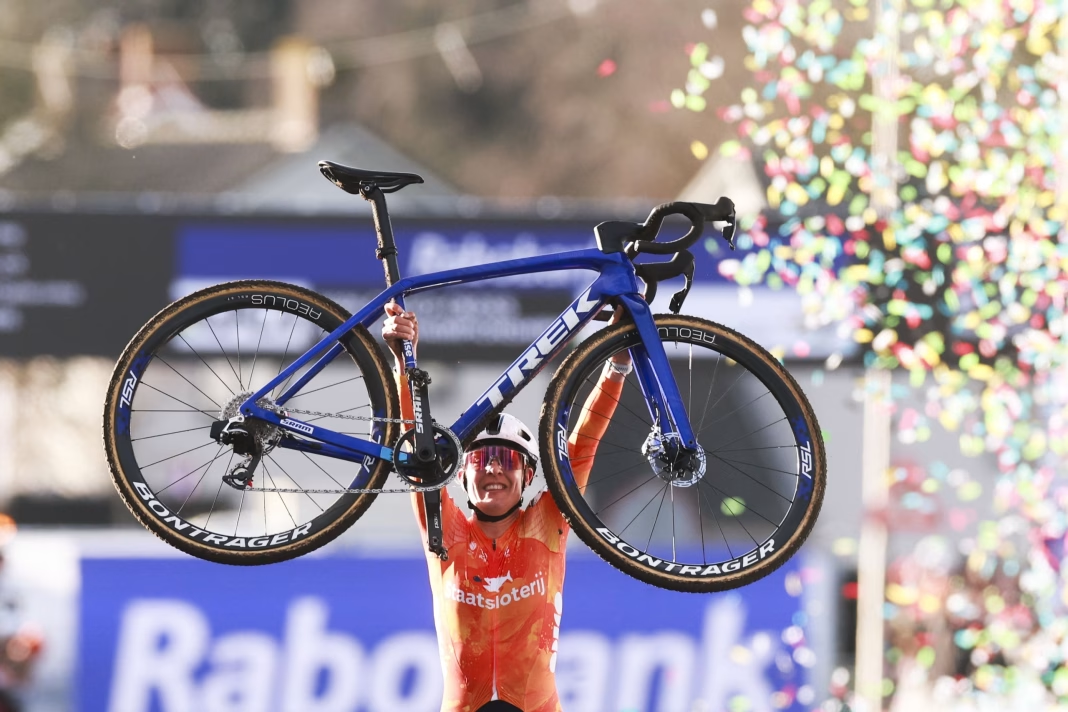

Juan Ayuso Tour de France 2026 FAQ
Is Juan Ayuso racing the Tour de France 2026?
Juan Ayuso is expected to race the Tour de France 2026 with Lidl-Trek. He is one of the team’s main general classification options.
What team does Juan Ayuso ride for in 2026?
Juan Ayuso rides for Lidl-Trek in 2026, after leaving UAE Team Emirates-XRG.
Can Juan Ayuso win the Tour de France 2026?
Winning the Tour de France 2026 looks unlikely given the strength of riders such as Tadej Pogačar, Jonas Vingegaard and Remco Evenepoel. A podium, top five or top-10 finish is a more realistic target.
What is Juan Ayuso’s biggest strength?
Ayuso’s biggest strength is his all-round stage-race profile. He can climb, time-trial and handle punchy terrain, which makes him more complete than a pure climber.
Does the 2026 Tour route suit Juan Ayuso?
Yes. The 2026 route suits Ayuso because it includes a team time-trial, an individual time-trial and multiple mountain stages. The early Pyrenees and final Alpine block will be the biggest tests.
What is the biggest risk for Ayuso at the Tour?
The biggest risk is not talent, but consistency and pressure. Ayuso needs to avoid a bad day, manage the leadership weight at Lidl-Trek and stay calm through the opening Spanish stages.
Could Ayuso win the white jersey?
Ayuso is young enough to be relevant to the young rider classification, but his role will depend on the final start list and the strength of other eligible contenders. If he rides a strong GC race, the white jersey could become part of the picture.
The verdict: Ayuso has the route, now he needs the authority
Juan Ayuso has the tools to be one of the defining riders of the Tour de France 2026. The route suits his balance of climbing and time-trialling. The Barcelona start gives him a powerful storyline. Lidl-Trek gives him a clearer leadership platform than he had at UAE Team Emirates-XRG. His Tour Auvergne – Rhône-Alpes result suggests his form is moving in the right direction.
But the pressure is real. This is the Tour where potential needs to become authority. Not necessarily victory. Not necessarily a podium. But authority in the way he rides, the way he handles bad moments, the way he leads Lidl-Trek and the way he stays present across three weeks.
A top-five finish would be a major statement. A top-10 would still be useful if he races assertively and stays close to the best. A podium would change his career. The danger is a Tour where he is neither close enough for GC nor free enough to chase stages.
Ayuso’s 2026 Tour is therefore not only about what he can do on the climbs. It is about whether he can carry the weight that now comes with his name. The talent has been obvious for years. July will show how much of it can be converted into Tour de France leadership.
For wider race build-up, the Tour de France hub brings together route guides, rider analysis, start-list updates and explainers for the 2026 edition.

